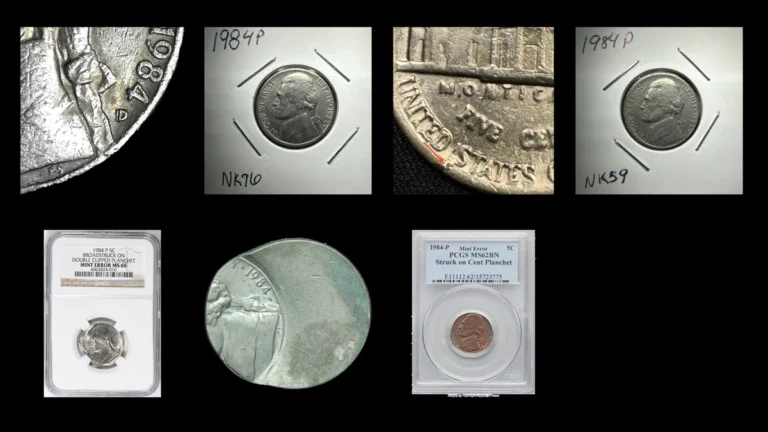
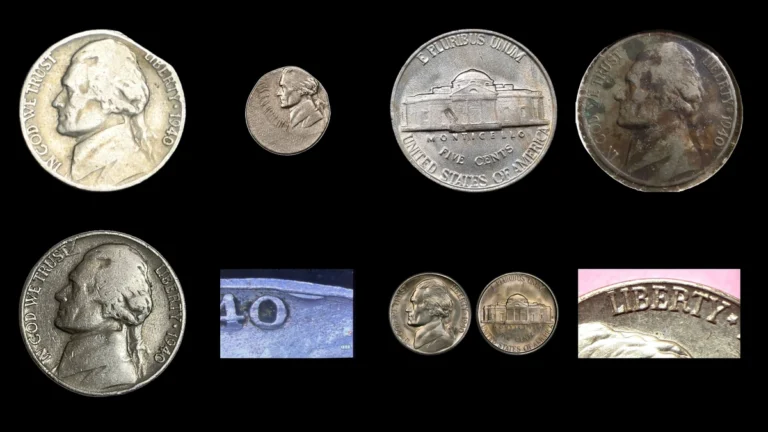
Rare 1999 Nickel Errors (List & Pictures)
A nickel design on a dime brought a reported $5,462.50 in 2008, but many 1999 nickel errors fall much closer to $5–$300. The supplied categories span roughly $5–$6,500, depending on the error, condition, and surviving design.
Start with the coin’s size and outline, then examine both faces for displaced, missing, or repeated details. The distinctions below explain why a small blank, a struck coin, and a coin trapped in the press can produce very different collectibles.
1. 1999 Nickel A Smaller Disc With Nickel Details: Wrong Planchet Error
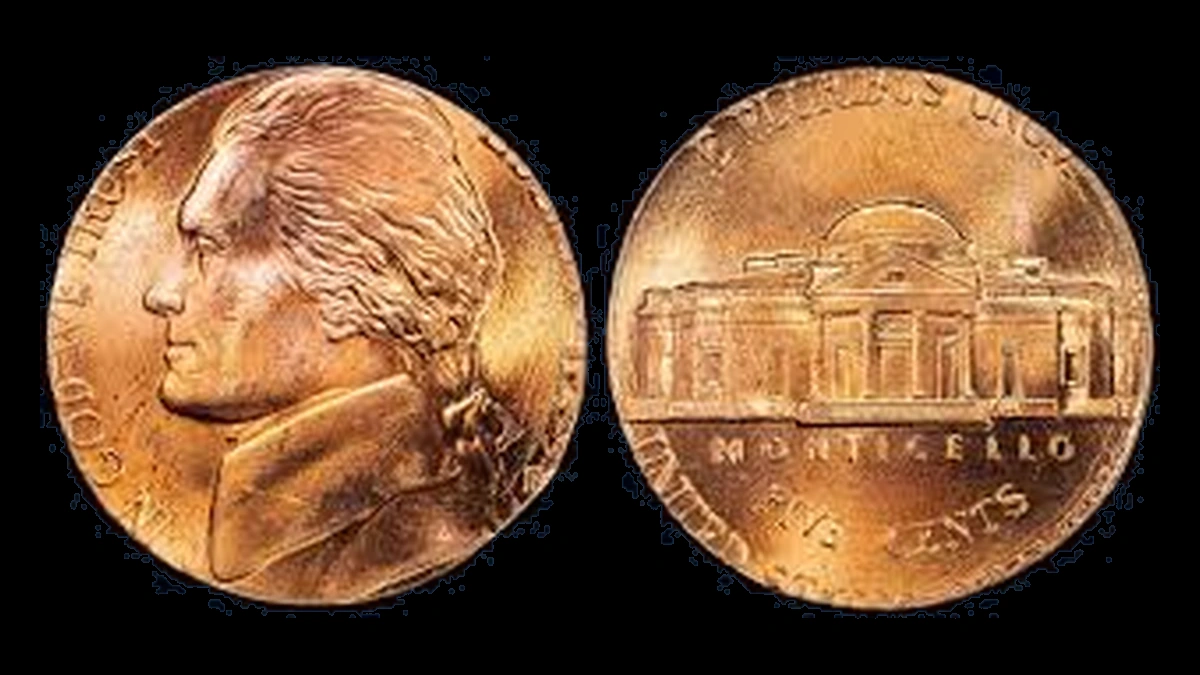
A normal 1999 nickel weighs 5 grams, measures 21.2 millimeters, and has a plain edge. Its copper-nickel composition also differs from the layered construction of a dime and the copper-colored surface of a modern cent.
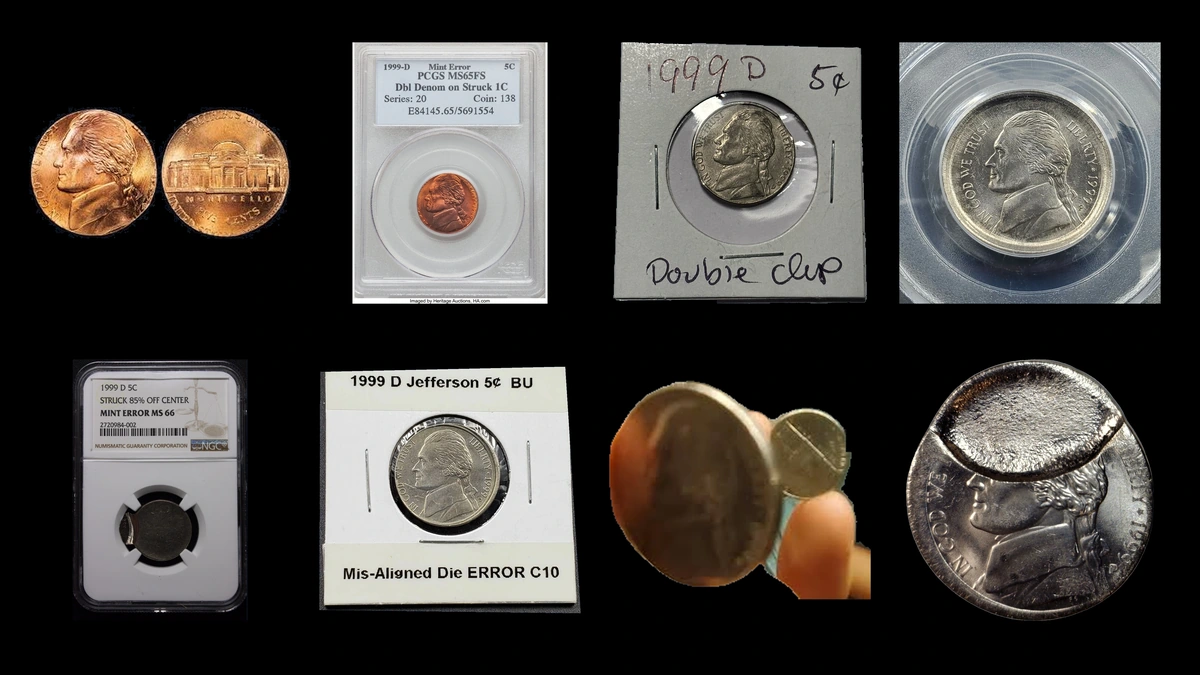
When a cent or dime blank enters the nickel press, the nickel dies strike a disc too small to receive the complete design. These wrong-planchet errors do not need to show an earlier coin design: the disc was still blank when it entered the wrong press.
How to Identify
Check the missing outer design against the disc’s diameter, weight, and metal together. The supplied 1999-P cent-planchet example weighs 2.5 grams and was graded NGC MS66 Red; a 1999-D cent-planchet example is also recorded, but no measured weight is supplied for it.
| Possible blank | Normal blank specifications | Useful distinction |
|---|---|---|
| Modern cent | 2.5 grams; 19.05 millimeters | Copper-colored surface and a smaller disc |
| Dime | 2.27 grams; 17.91 millimeters | Layered metal and an even smaller disc |
The dime figures are standard specifications, not a reported measurement of the pictured 1999-P error. Cutting down an ordinary nickel may change its dimensions, but it does not establish the correct metal or the way the design was struck.
What It’s Worth
$250–$800 covers the supplied wrong-planchet examples. Three 1999-P cent-planchet coins in different unworn grades sold for $360, $372, and $588 in September 2024; a 1999-P dime-planchet coin brought $396 in the same auction period.
2. 1999 Nickel Two Denominations on One Coin: Overstrike Error
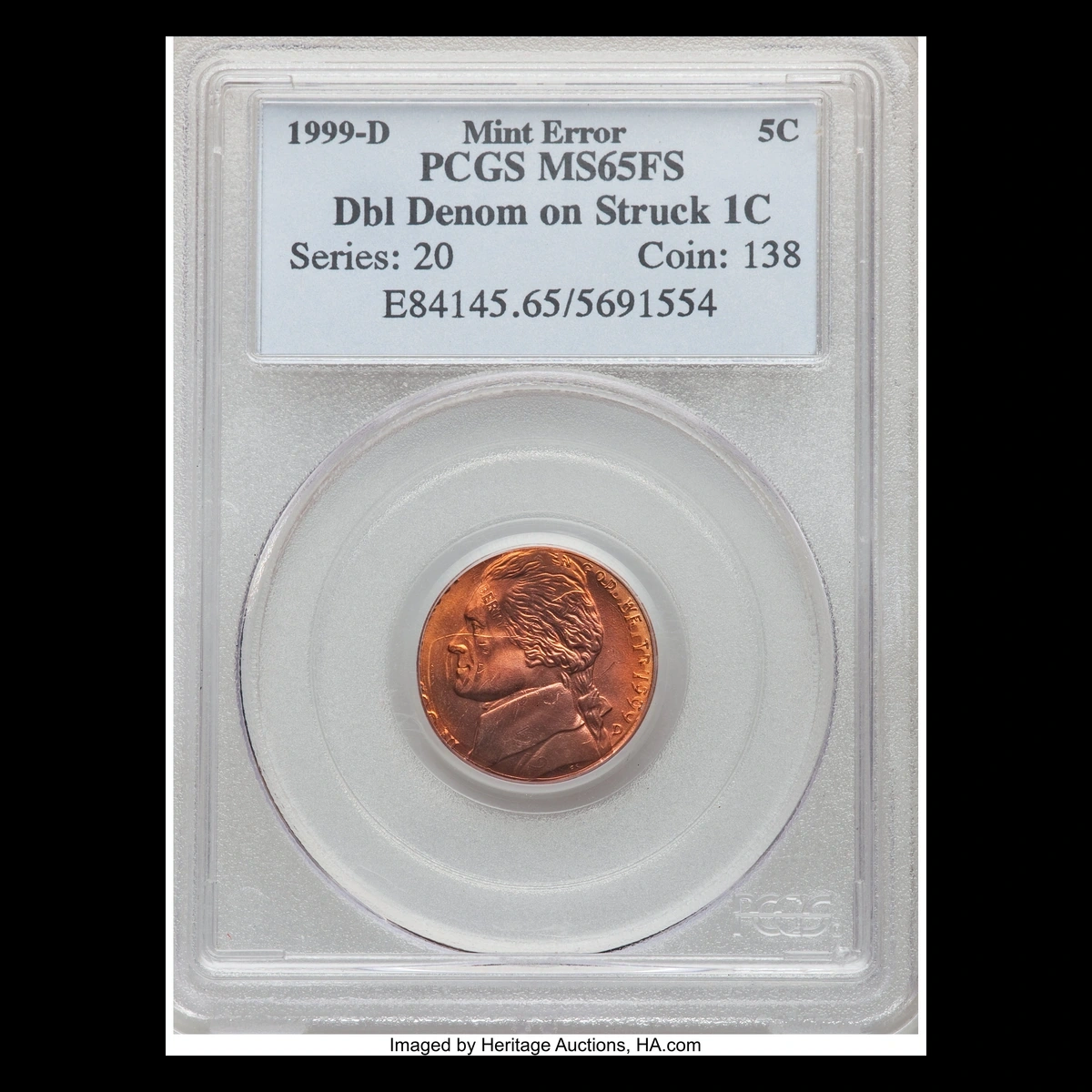
Traces of a cent or dime beneath Jefferson’s portrait point to a different event. Here the nickel dies struck a coin that had already received another denomination’s design.
How to Identify
Find recognizable portions of the earlier design within or between the nickel details. They may be flattened by the later blow, but they should form a coherent underlying coin rather than a collection of unrelated scratches.
A recessed, backward impression instead suggests a brockage, discussed below. The date of the nickel design also does not automatically identify the date or mint of the underlying coin.
What It’s Worth
$600–$2,500 for nickel-over-cent errors and $1,500–$6,500 for nickel-over-dime errors are the supplied ranges. A 1999-D nickel struck over a 1999-D cent sold for $1,320 in September 2024.
A 1999-P nickel over a struck dime reportedly realized $5,462.50 in the 2008 auction results reported by Mint Error News. The supplied account does not establish the underlying dime’s year and mint.
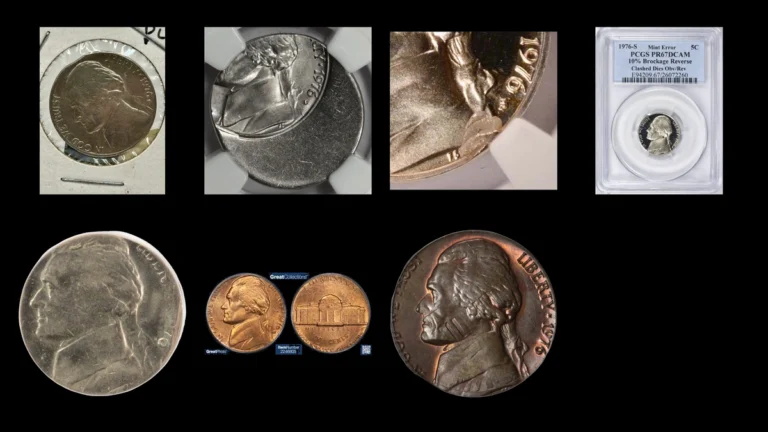
3. 1999 Nickel A Curved Bite at the Edge: Clipped Planchet Error
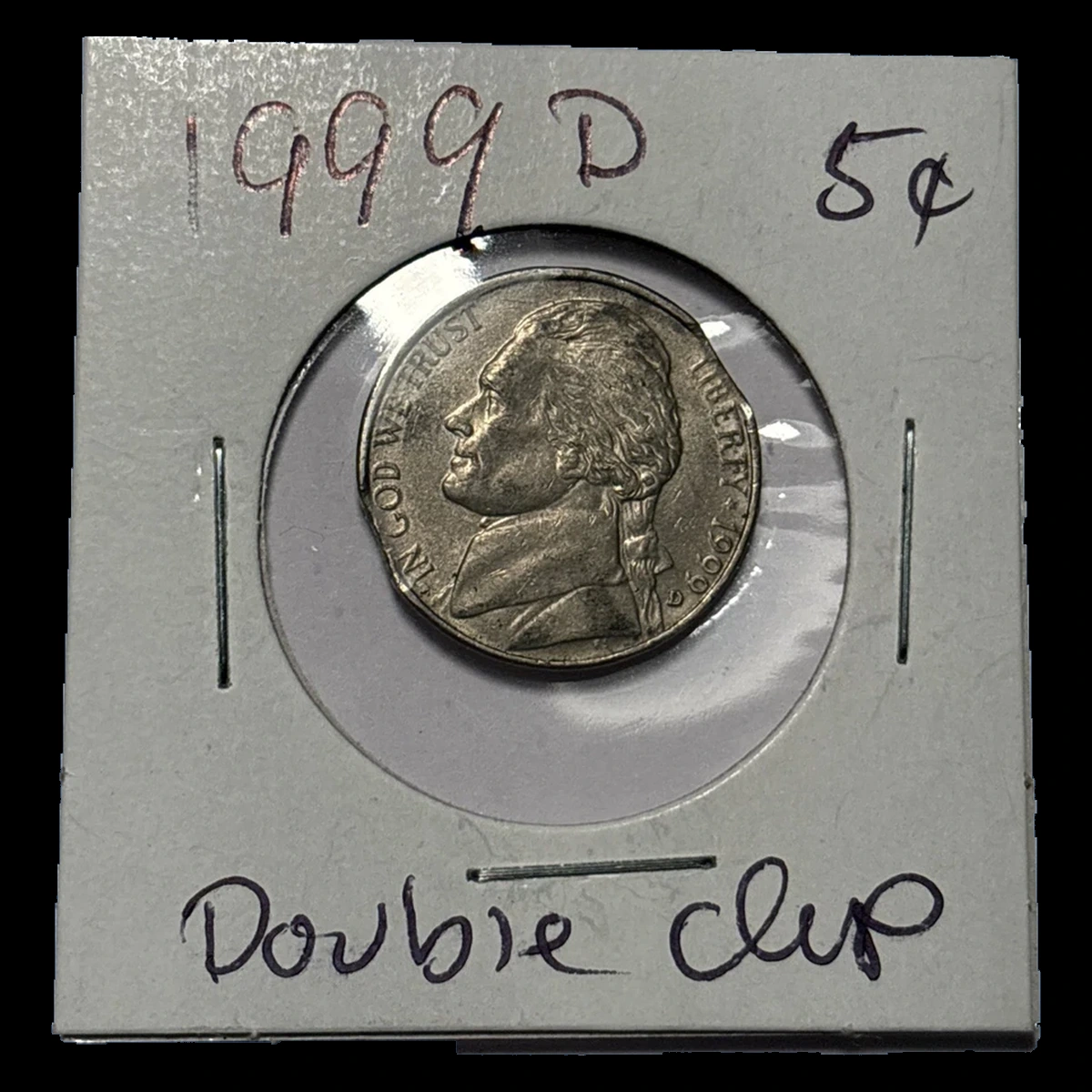
A curved missing section can originate while blanks are punched from metal strip. If the punch overlaps a hole left by an earlier blank, the new disc leaves the strip with part of its outline missing.
How to Identify
Inspect the transition from the struck surface to the curved gap, including the rims beside it. A fresh cut, tool marks, or displaced metal may indicate later alteration.
The documented 1999-P example combines a 20% curved clip with a 5% off-center strike. Weakness opposite a genuine clip can help identification, but its absence does not by itself rule one out; the quoted clip percentage is not a precise formula for expected weight.
What It’s Worth
$20–$175 for marked or worn pieces and $175–$400 for attractive examples provide a working range. The 1999-P combination error, graded PCGS MS60, sold for $54 on March 31, 2025.
4. 1999 Nickel A Wide Coin With Complete Designs: Broadstrike Error
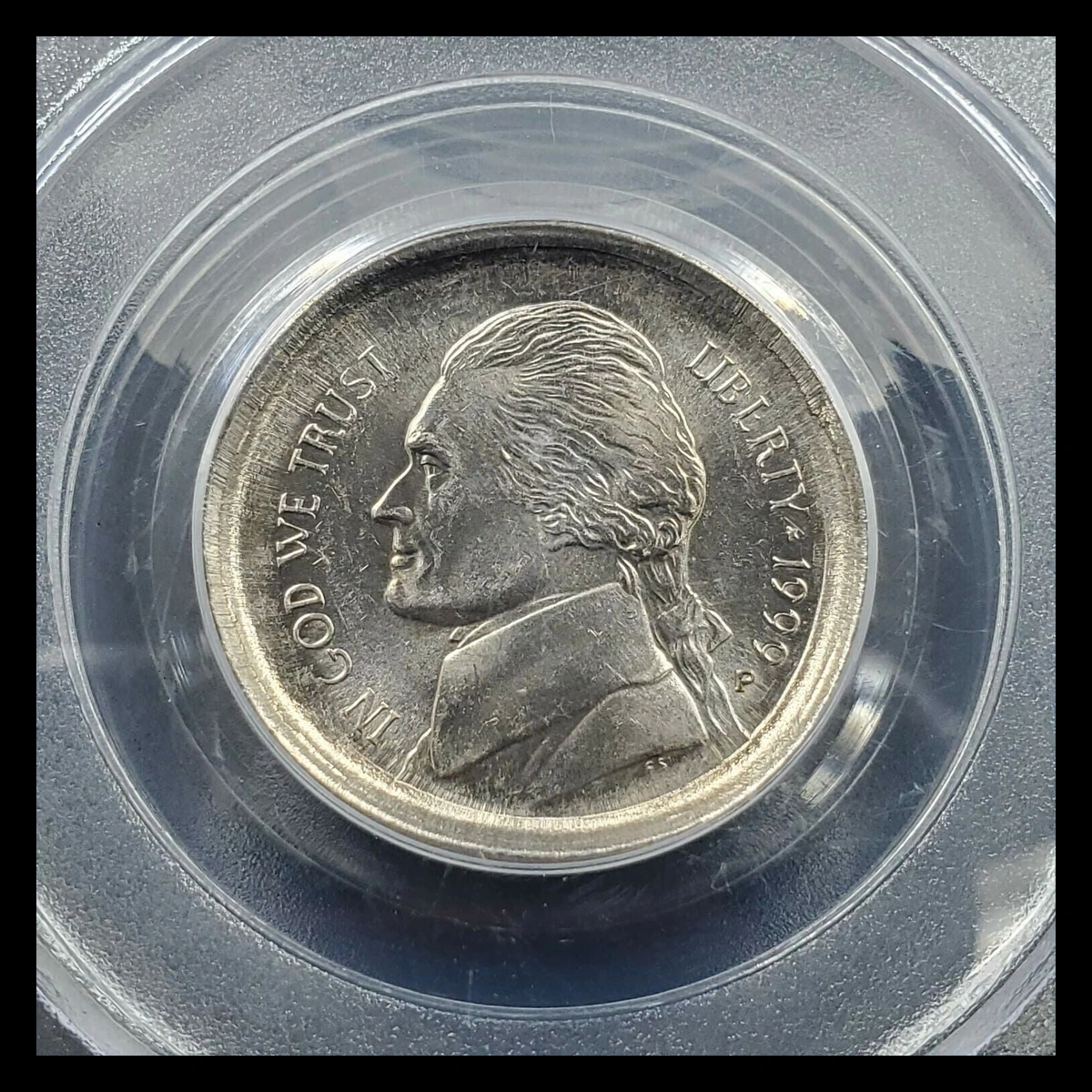
A broadstruck nickel spreads beyond its normal diameter because the retaining collar does not contain the metal during the blow. The designs can remain complete on both faces, with extra metal extending outside them.
How to Identify
Follow the lettering around each face and check whether the whole design is present. A broadstrike may spread unevenly, but a missing portion of the design points toward an off-center strike instead.
A smooth edge proves little here because ordinary nickels already have plain edges. Look for the overall spread and the relationship between the design and the expanded rim.
What It’s Worth
$30–$150 for worn or marked broadstrikes and $150–$350 for cleaner examples are reasonable supplied estimates. A 1999-P graded PCGS MS63 realized $89 on March 31, 2025.
5. 1999 Nickel Design on One Side of the Disc: Off-Center Strike Error
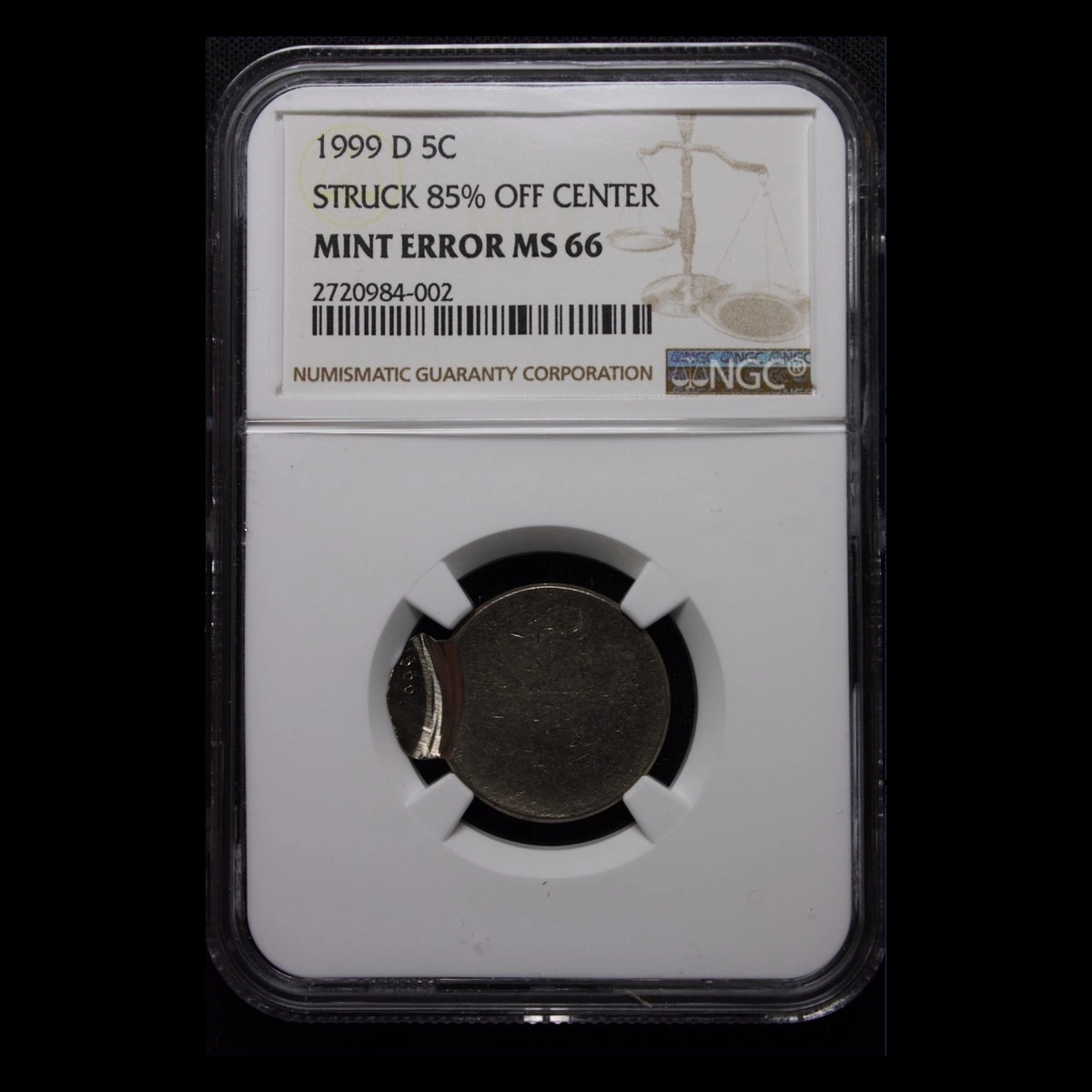
If a blank arrives partly outside the dies, only part of it receives a design. The unstruck crescent and the missing design should correspond on the two faces.
How to Identify
Compare the struck area with the blank portion while keeping the coin in the same orientation. This error normally displaces the design without removing metal; an actual bite from the disc requires a separate explanation, such as a clip.
A visible date helps establish the year, especially on a heavily displaced strike. The supplied auction records describe a 1999-P at 15% off center and a 1999-D at 65%, without specifying their directions or grades.
What It’s Worth
$25–$200 for clear examples and $200–$500 for exceptional pieces with useful surviving details is the supplied range. The 15% 1999-P brought $64 in March 2025, while the 65% 1999-D sold for $75 in September 2024.
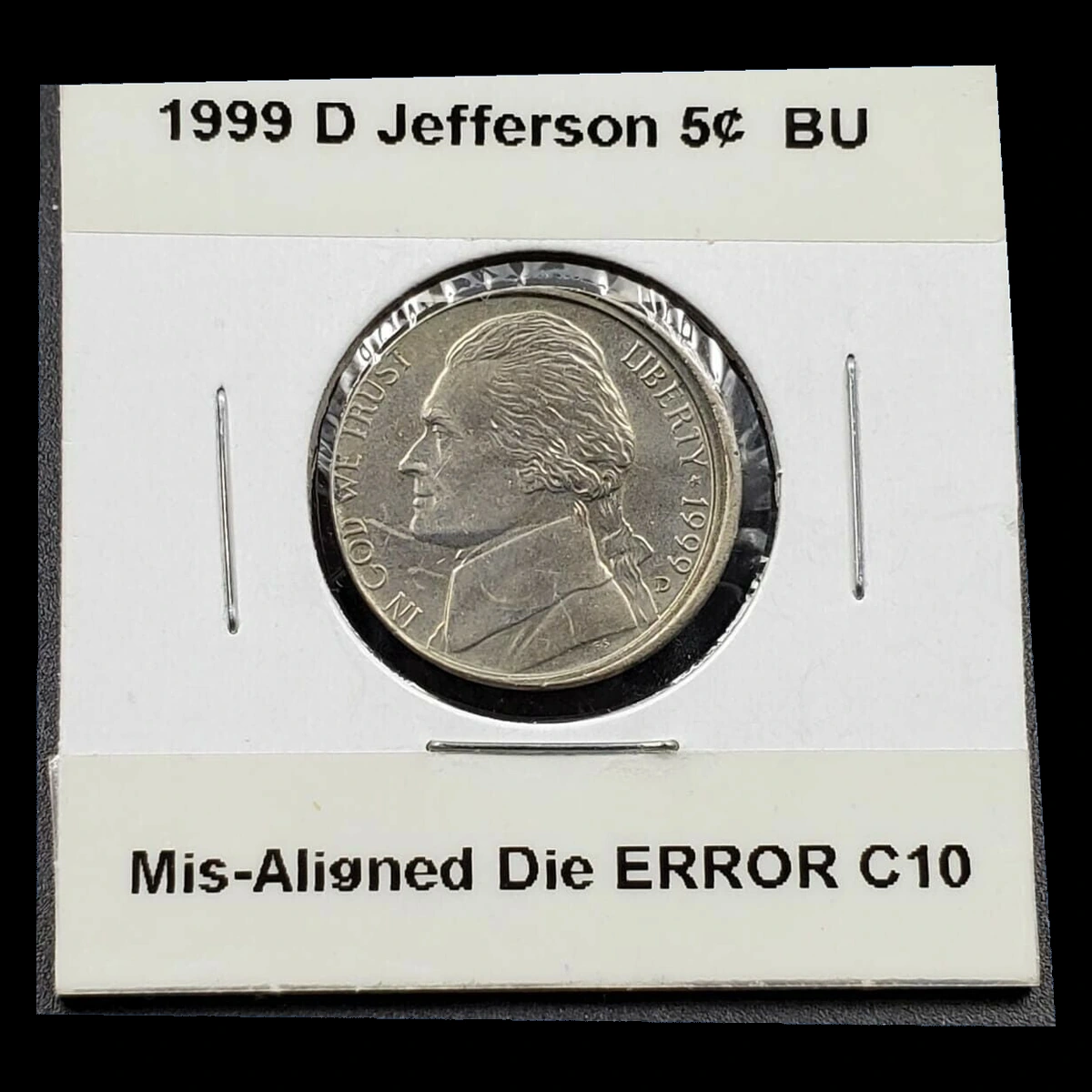
6. 1999 Nickel One Face Crowds the Rim: Misaligned Die Error
When one die sits out of position, its design can move toward the edge while the opposite design stays centered. The blank need not have entered the press off center.
How to Identify
Compare the spaces between the lettering and the rim on both faces. Unequal spacing on just one face supports a die alignment problem more strongly than two similarly displaced designs.
Check that an impact has not flattened or pushed the rim inward. The supplied 1999 category has no established mint, angle, or certification number, so it should not be treated as a single precisely attributed variety.
What It’s Worth
$5–$75 is the estimate for the reported category, with no individual sale supplied. A small shift that leaves the design intact generally has less visual appeal than an obvious displacement.
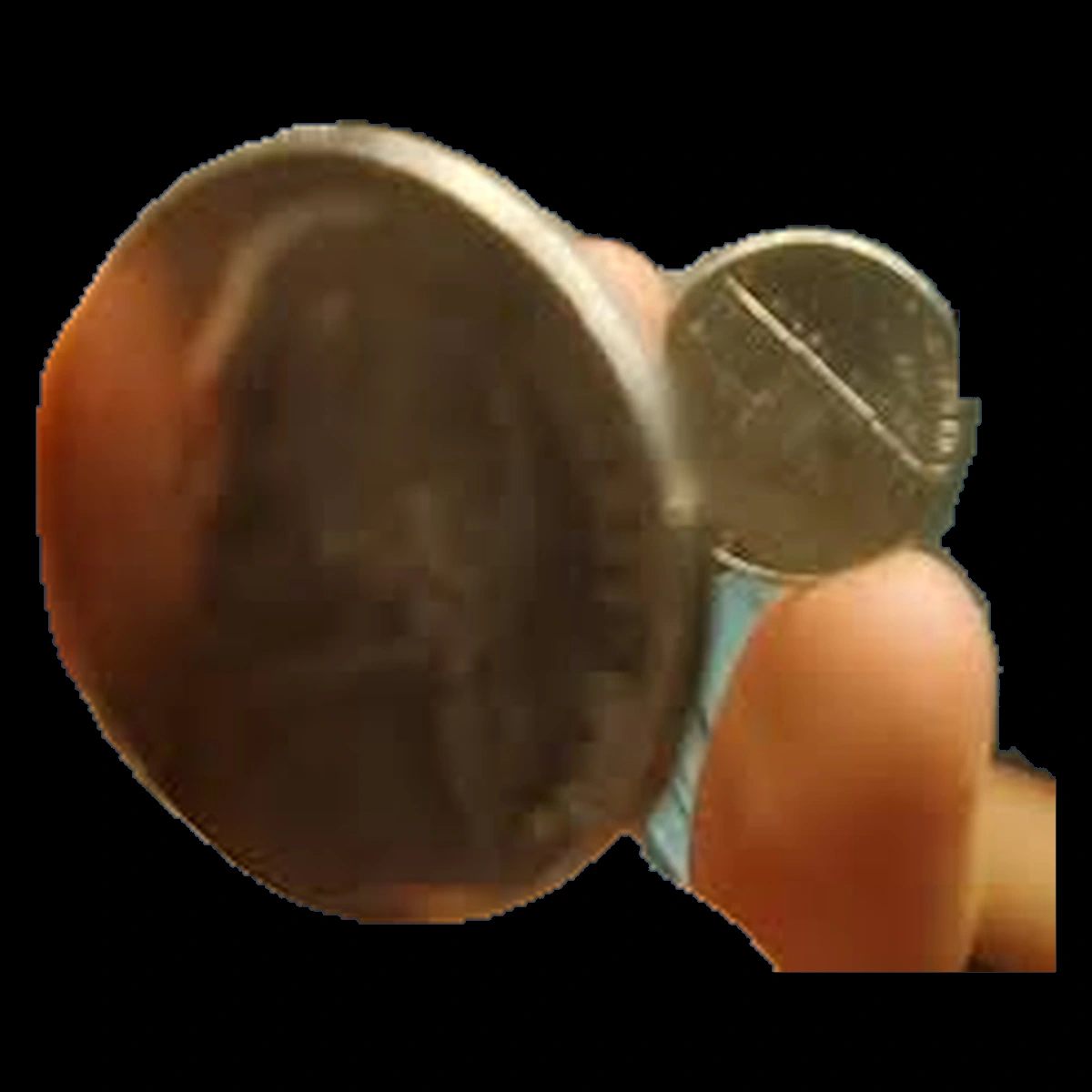
7. 1999 Nickel Monticello Turns the Wrong Way: Rotated Dies Error
Hold Jefferson upright and turn the nickel over from top to bottom. On a normally aligned United States coin, the reverse should then be upright too.
A rotated die changes this relationship because one die has turned around its axis. It does not require either face to be off center.
How to Identify
Repeat the flip while keeping the same top-to-bottom axis; a sideways turn gives a misleading result. The supplied error collection listing includes a 1999-P graded PCGS AU55 with a 170-degree rotation.
No clockwise or counterclockwise direction is provided for that example. Do not assign one from a loosely positioned photograph.
What It’s Worth
$75–$300 is the supplied estimate for a substantial 1999 rotation. For context, an unworn 2015-D nickel with a 90-degree rotation sold for $79 in October 2021; that is a different date and angle, not a sale of the 1999-P.
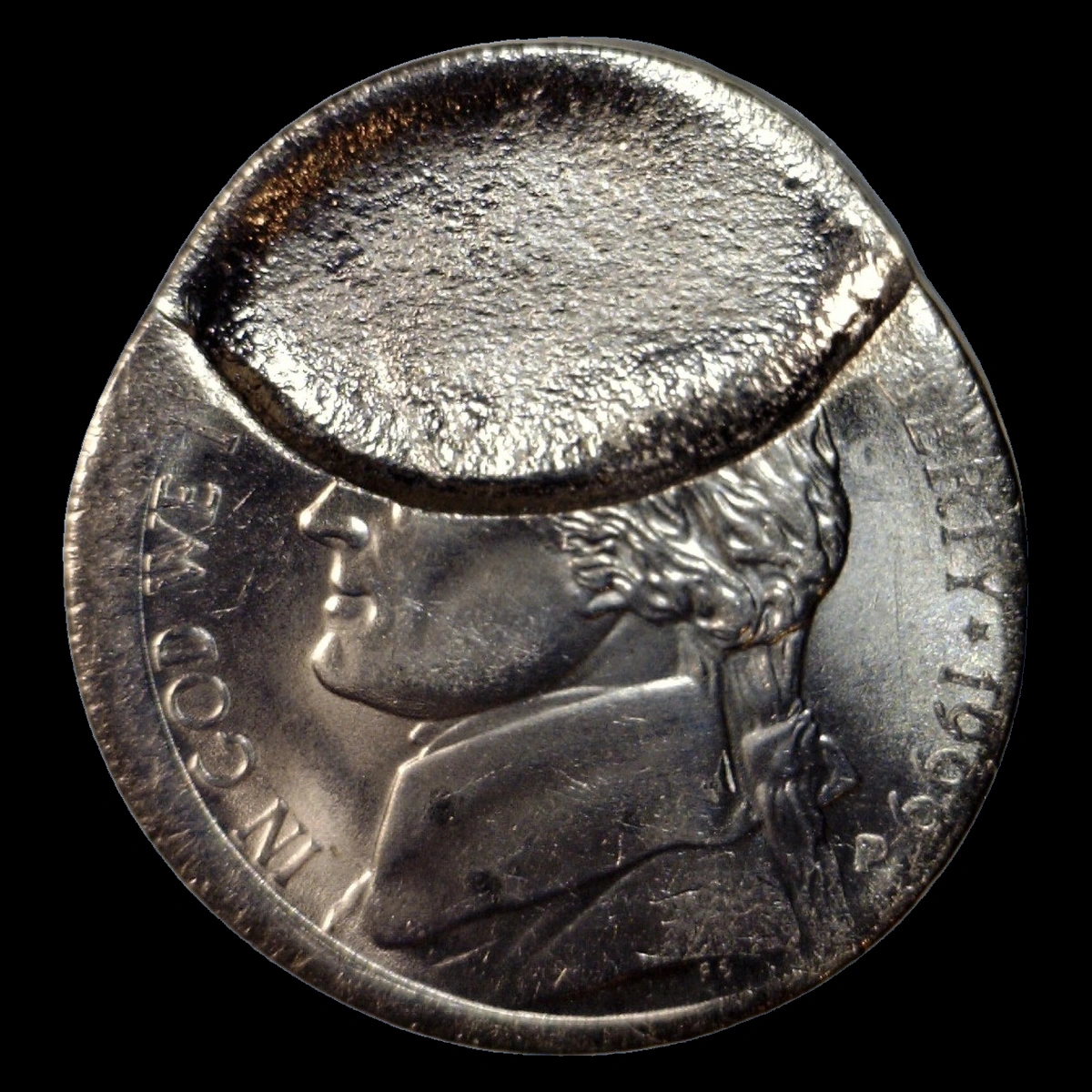
8. 1999 Nickel A Smooth Hollow in the Face: Indent Error
A second blank partly overlapping the nickel can shield an area from the die and press a hollow into it. Unlike a brockage, an indent made by an unstruck blank lacks a recognizable transferred coin design.
How to Identify
The described 1999-P broadstrike has an indent covering about 30% of its front and a small metal crack along the hollow’s lower boundary. Examine the curve and the surrounding struck metal together rather than treating any dent as a mint error.
A separate NGC MS66 example carries a six-steps designation for the reverse detail. That coin should not inherit the first specimen’s crack or other exact features.
What It’s Worth
$100–$500 is the supplied estimate; no sale for these particular indented nickels is given. The $89 ordinary broadstrike mentioned earlier is a simpler comparison, not an indent transaction.
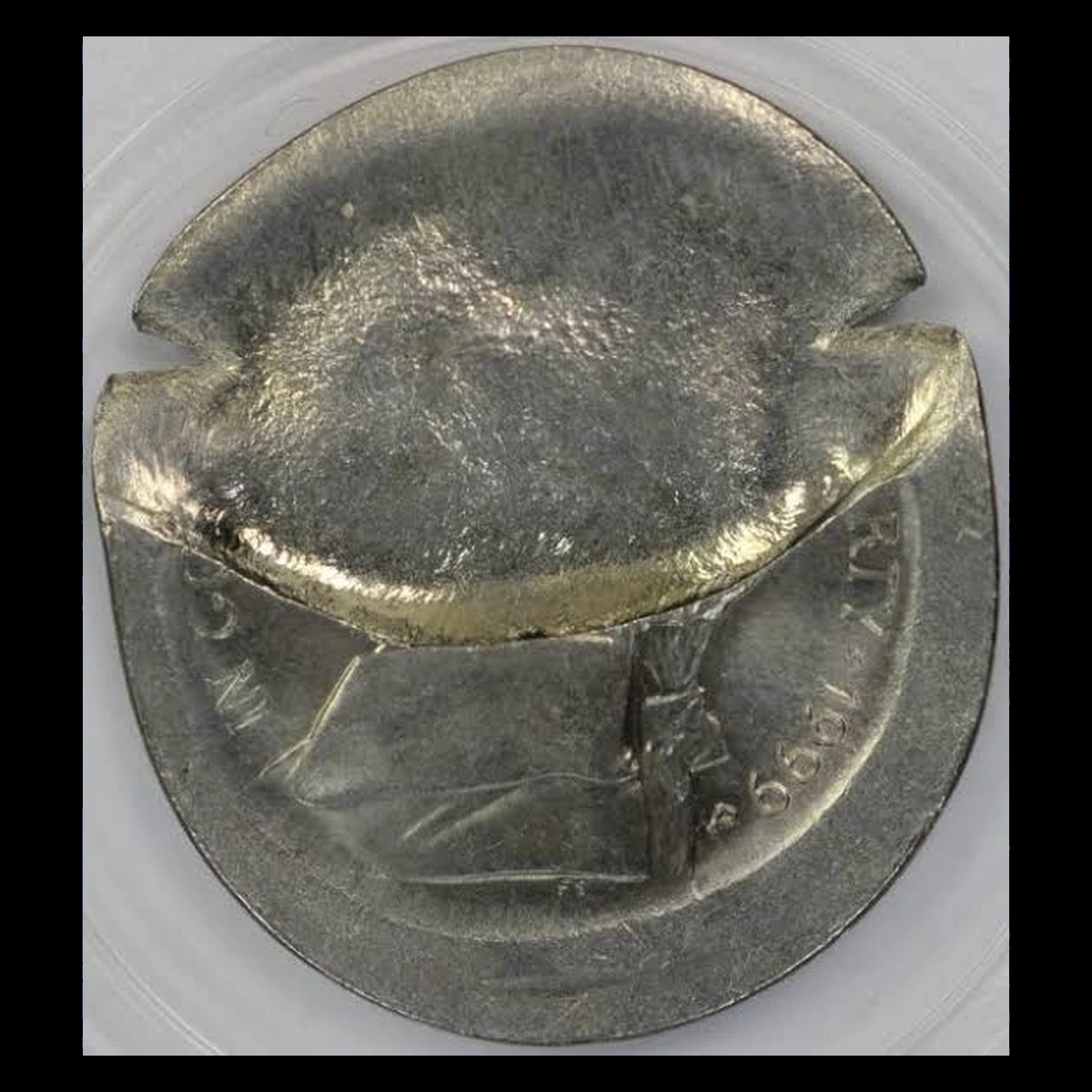
9. 1999 Nickel A Backward Design Pressed Into the Surface: Brockage Error
A struck coin trapped against a fresh blank can serve as an unintended die. Its raised design presses a recessed, backward image into the next coin.
How to Identify
Look for reversed lettering or other recognizable design elements inside the sunken area. A smooth hollow is more consistent with an indent, while raised remnants of a different denomination belong to an overstrike.
The supplied examples include a 1999-P broadstrike with a 30% front brockage and a separately reported reverse brockage. A coin pressed against another after leaving the Mint can imitate some features, so the surfaces and metal flow need to agree with a press-made error.
What It’s Worth
$150–$800 for partial brockages and $800–$1,500 for especially strong examples are the supplied estimates. A two-coin 1999 error pair sold for $1,260 in September 2025, but that combined result is not the price of a single brockage.
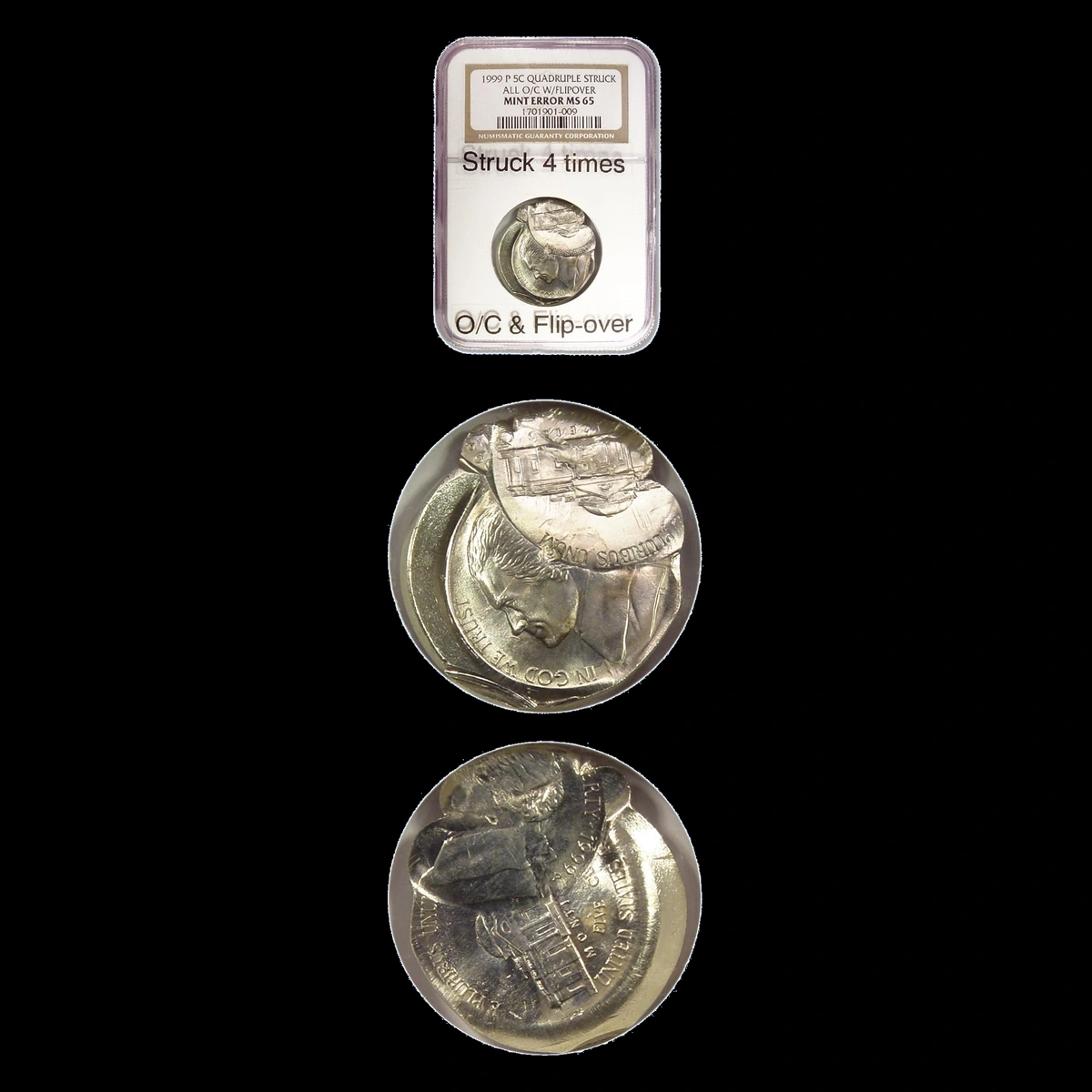
10. 1999 Nickel More Than One Set of Details: Multiple Strikes Error
A nickel that fails to leave the press can receive another blow. Depending on how it moves, the result may contain closely overlapping details, widely separated impressions, or additional contact with nearby blanks.
How to Identify
A supplied 1999-P was double struck inside the collar; another reported piece combines repeated striking, a broad shape, and two front indents. These are different examples, so their features should not be assembled into one imagined coin.
A triple-strike combination also includes an indent, contact with a neighboring blank’s edge called a chain strike, and a face shielded from a die, called uniface striking. Count actual design positions where visible, and leave the complete sequence open when the surviving details cannot establish it.
What It’s Worth
$200–$1,500 for simpler multiple strikes and $1,500–$3,000 for complex combinations are the estimates. A 2007-D double strike with a large broadstrike sold for $1,260 in August 2025; it supplies context from another year.
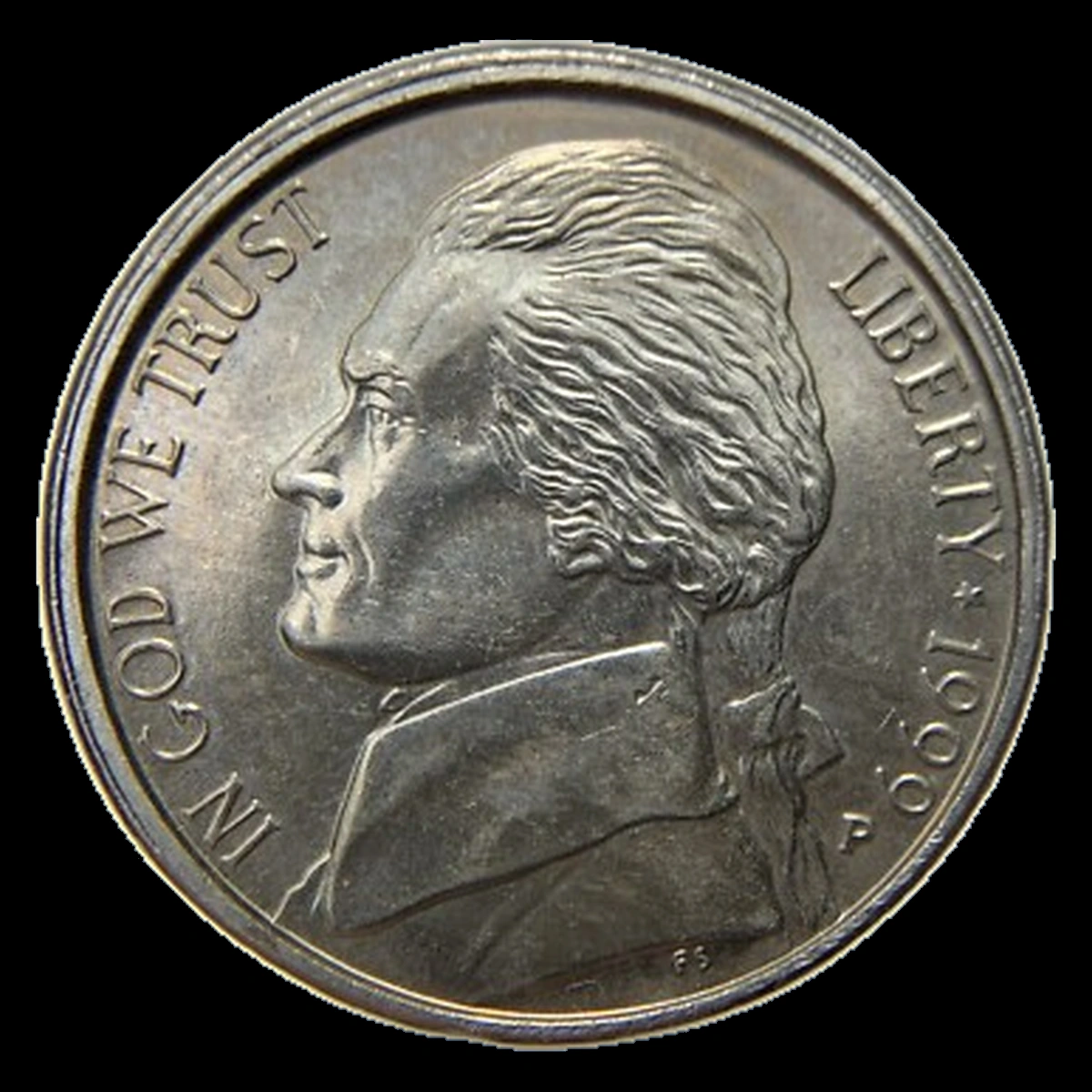
11. 1999 Nickel Two Separate Coins That Explain Each Other: Mated Pair Error
A mated pair preserves two coins from the same striking accident. Matching contact areas can reveal how the coins overlapped, making the pair more informative than either piece alone.
How to Identify
One supplied 1999-P pair combines double-coin striking with a broad brockage. Another pairs a 90% off-center coin with a front indent and partial-collar features.
On the latter pair, the heavily off-center coin has a small tongue near 1 o’clock, while its partner has a front indent near 7 o’clock without a corresponding tongue on the reverse. A stepped edge indicates that the collar contained only part of the coin during striking.
Corresponding shapes provide the evidence of a shared event; matching dates alone do not. Keep each documented pair’s details separate.
What It’s Worth
$500–$2,500 for both coins together is the supplied range. A different pair sold for $1,260 on September 29, 2025: it combined a 25% off-center brockage with a double-struck partner whose strikes were 35% and 85% off center.
12. 1999 Nickel Metal Rises Around the Die: Die Cap Error
A coin that sticks to a die can spread and curl around it during further strikes. The resulting cap is the trapped coin itself, with a cup-like shape or raised walls.
How to Identify
The records include a 1999-P ANACS MS63 single cap and a separately reported reverse cap. A more complex 1999-P consists of two bonded blanks forming a cap, with a complete front design and a right wall approaching half an inch in height.
Do not flatten the walls, pry apart bonded metal, or squeeze the object with calipers. An irregular or joined object need not match a normal nickel’s weight, and the coin beneath a capped die is a different error from the cap itself.
What It’s Worth
$300–$1,500 for a single cap and $1,000–$3,500 for a bonded cap are the supplied estimates. The $2,645 sale of the bonded split-die object below concerns a different construction, not a documented transaction for these caps.
13. 1999 Nickel Joined Metal With a Repeated Raised Line: Bonded Planchets and Split Die Error
The supplied 1999-P object preserves two blanks bonded along their borders after they met off center. Further blows left several impressions, while a split in the reverse die produced a raised horizontal line across Monticello.
How to Identify
The NGC MS67 object weighs 5.43 grams as it survives. Its upper portion received two more blows after the first, and the lower portion received at least three further blows while fresh blanks shielded its front.
Those additional blocking blanks are not all retained in the surviving object. Follow the repeated reverse design and its raised line together; a later scratch would cut into the surface rather than reproduce a die feature with successive impressions.
What It’s Worth
$1,000–$5,000 is the supplied range for similarly complex bonded objects. This particular piece sold for $2,645 at Heritage on August 13, 2010.
The price belongs to the complete combination. Adding separate price estimates for every strike and crack would misrepresent that sale.
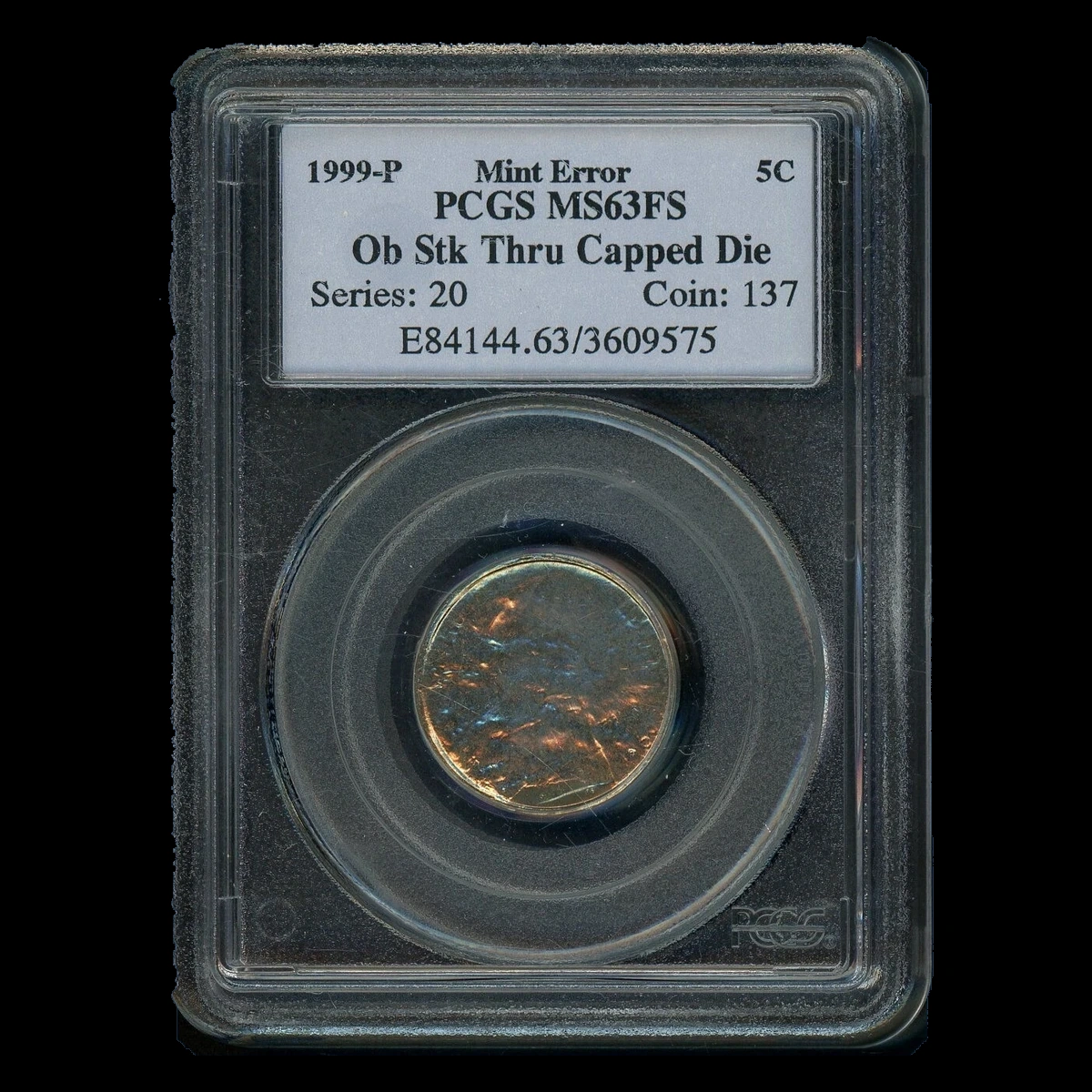
14. 1999 Nickel A Blurred Front With a Clearer Reverse: Capped-Die Strike Error
A cap covering the front die prevents the die from meeting the next blank directly. The receiving nickel may have a distorted or obscured front while its reverse receives clearer details from the uncovered die.
How to Identify
A documented 1999-P was graded PCGS MS64 Full Steps and identified as struck through a capped front die. Full Steps describes preserved staircase detail on the reverse, not the severity of the mint error.
This receiving coin need not have the raised walls of a die cap. Ordinary wear or grease-related weakness can also obscure details, so blurred features alone are insufficient.
What It’s Worth
$50–$300 is the supplied estimate. A 2000-D capped-die strike graded NGC MS64 Full Steps sold for $84 in September 2025, offering a nearby-year comparison rather than a sale of the 1999-P.
15. 1999 Nickel Raised Separation in Small Details: Doubled Die Error
The reported doubled-die category concerns LIBERTY, the date, or portrait details. A doubled die carries a duplicated design before it strikes coins, so the doubling is built into the impressions it leaves.
How to Identify
Use steady light and magnification to seek separated raised outlines or consistent notches. A flat shelf that narrows a letter can instead come from movement during striking.
No mint, recognized variety number, or precisely attributed specimen is supplied for this 1999 report. Do not expect every listed area to show doubling on one coin or assign a recognized variety without matching its diagnostics.
What It’s Worth
$10–$150 is a conditional estimate for a confirmed example with meaningful raised separation. No specific auction sale accompanies the reported category.
Conclusion
For a 1999 nickel, the most useful first distinction is whether metal is missing, the design is displaced, or another object interfered with the strike. Compare both faces before choosing a label, then use smaller details to separate related errors.
Preserve unusual shapes and keep matched coins together. The strongest price comparisons describe the same kind of error, similar condition, and the same number of coins being sold.