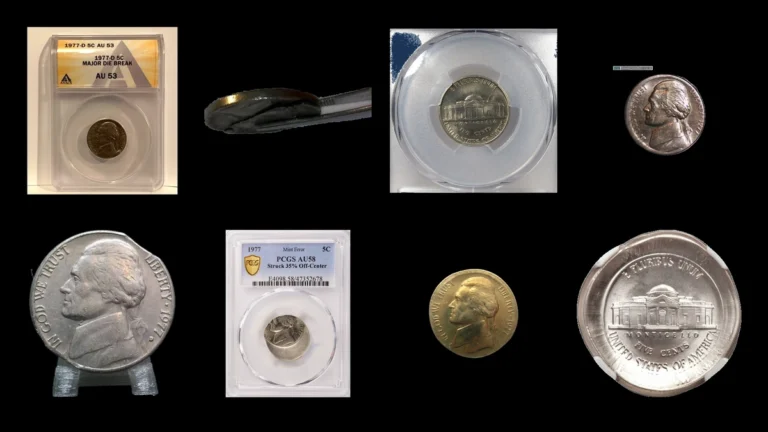
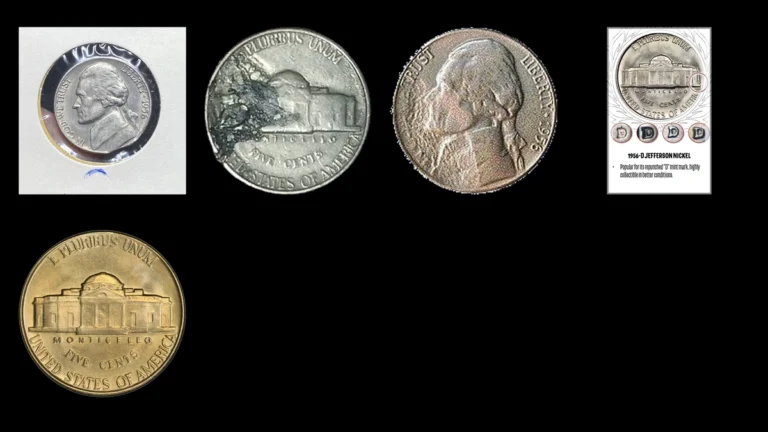
Rare 2016 Nickel Errors (List & Pictures)
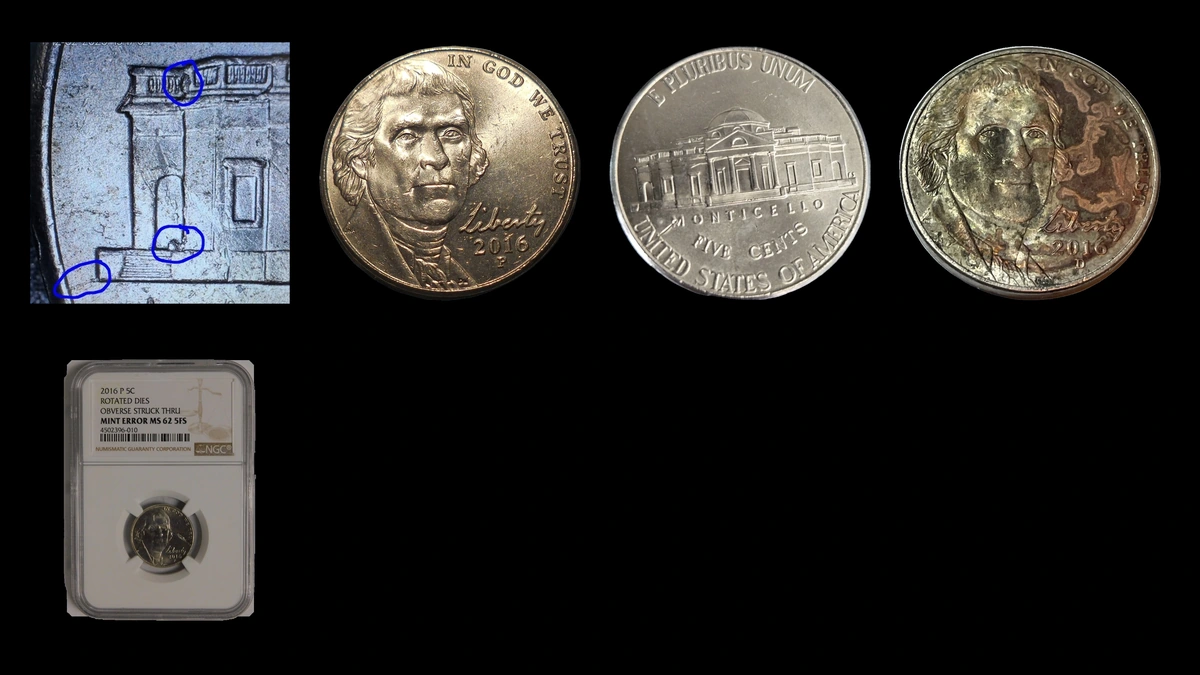
Small marks account for several reported 2016 nickel errors, but a tilted reverse or an incomplete blank requires a broader inspection. Estimated values across the categories run from $3 to $1,500.
A related 1984-P flipover double strike sold at auction for $480 in September 2024; the documented 2016-P rotation-and-blockage coin instead has a $124.99 fixed-price sale. Check the portrait and building first, then turn the coin over and examine its edge.
| Check | Possible explanation | Estimated range |
|---|---|---|
| Raised cheek line or small bump | Die crack or chip | $3–$50 |
| Portrait traces near the building | Die clash | $5–$60 |
| Extra building or letter outlines | Doubled reverse die | $5–$100 |
| Locally missing detail | Grease struck through | $5–$100 |
| Thin front surface lifts | Lamination | $10–$200 |
| Unusual overall color | Improper annealing | $30–$400 |
| Reverse tilt and front interruption | Rotation with struck through | $75–$350 |
| Curved missing edge | Clipped planchet | $15–$150 |
| Smooth depression within one face | Indent | $50–$300 |
| Missing design and stepped edge | Off center with partial collar | $50–$400 |
| Repeated design inside a round outline | In-collar double strike | $75–$600 |
| Size or metal inconsistent with a nickel | Reported wrong planchet | $200–$1,500 |
1. 2016 Nickel A Line across the Cheek or a Small Bump: Die Crack and Chip Error
The reported 2016-D cheek crack is often nicknamed Scarface. Metal filled a crack in the die during striking, leaving a raised line on Jefferson’s face.
Small die chips are separately reported on 2016-P coins. A chip leaves a raised patch where steel was missing, but the Philadelphia reports do not establish the same cheek location.
How to Identify
Side lighting should show whether the line stands above the surface or cuts into it. A scrape can leave a displaced ridge beside a cut, so follow the whole feature and check for an adjacent impact.
Use the D mintmark and cheek location together for the Scarface report. Do not transfer that nickname to an unrelated Philadelphia bump.
What It’s Worth
$3–$50 is an estimate for genuine small cracks and chips of this date. The feature’s visibility and the surrounding preservation matter more than a dramatic nickname.
No individual auction result is established for these reported marks. A barely visible speck does not receive the same comparison as an obvious raised cheek line.
2. 2016 Nickel Portrait Fragments beneath the Building: Die Clash Error
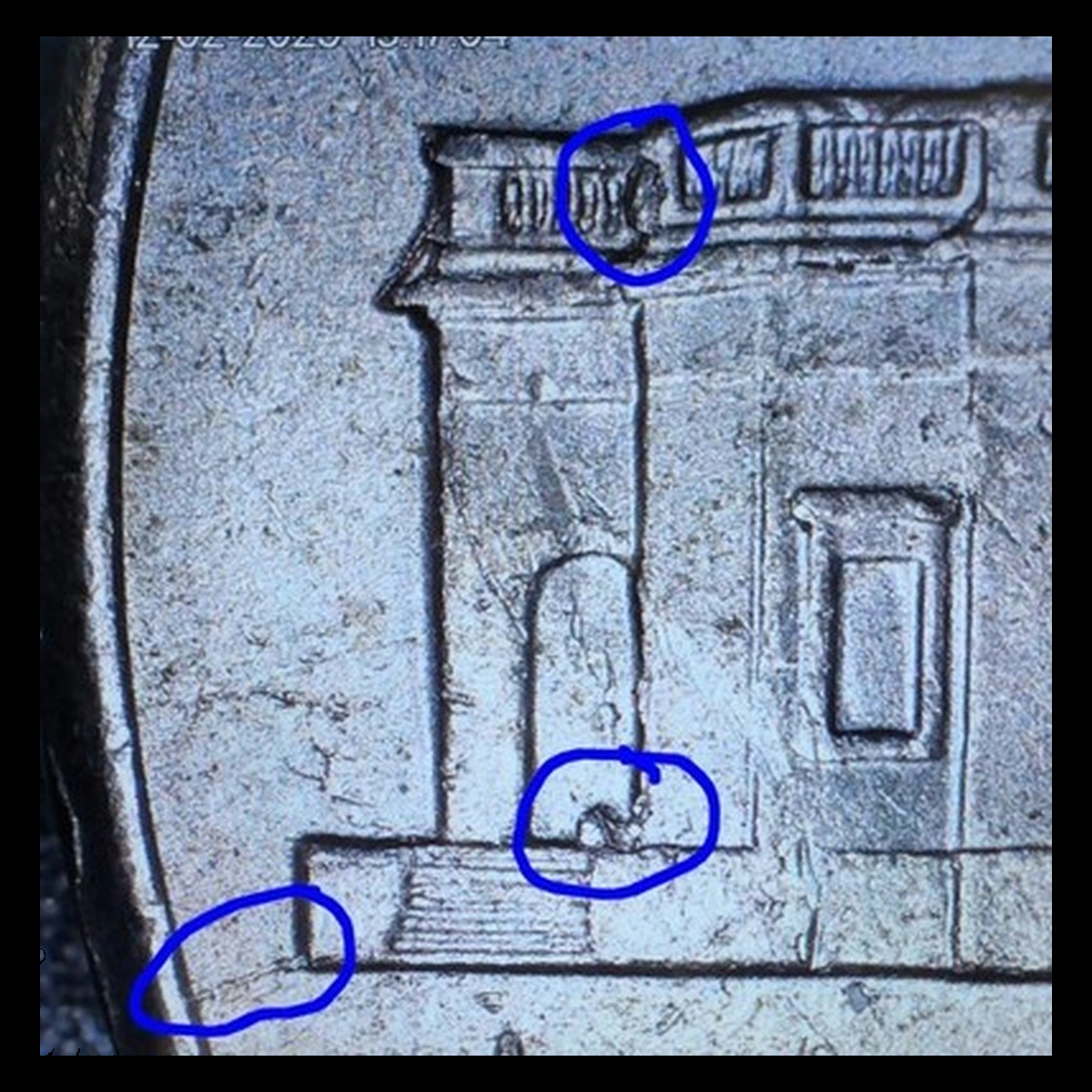
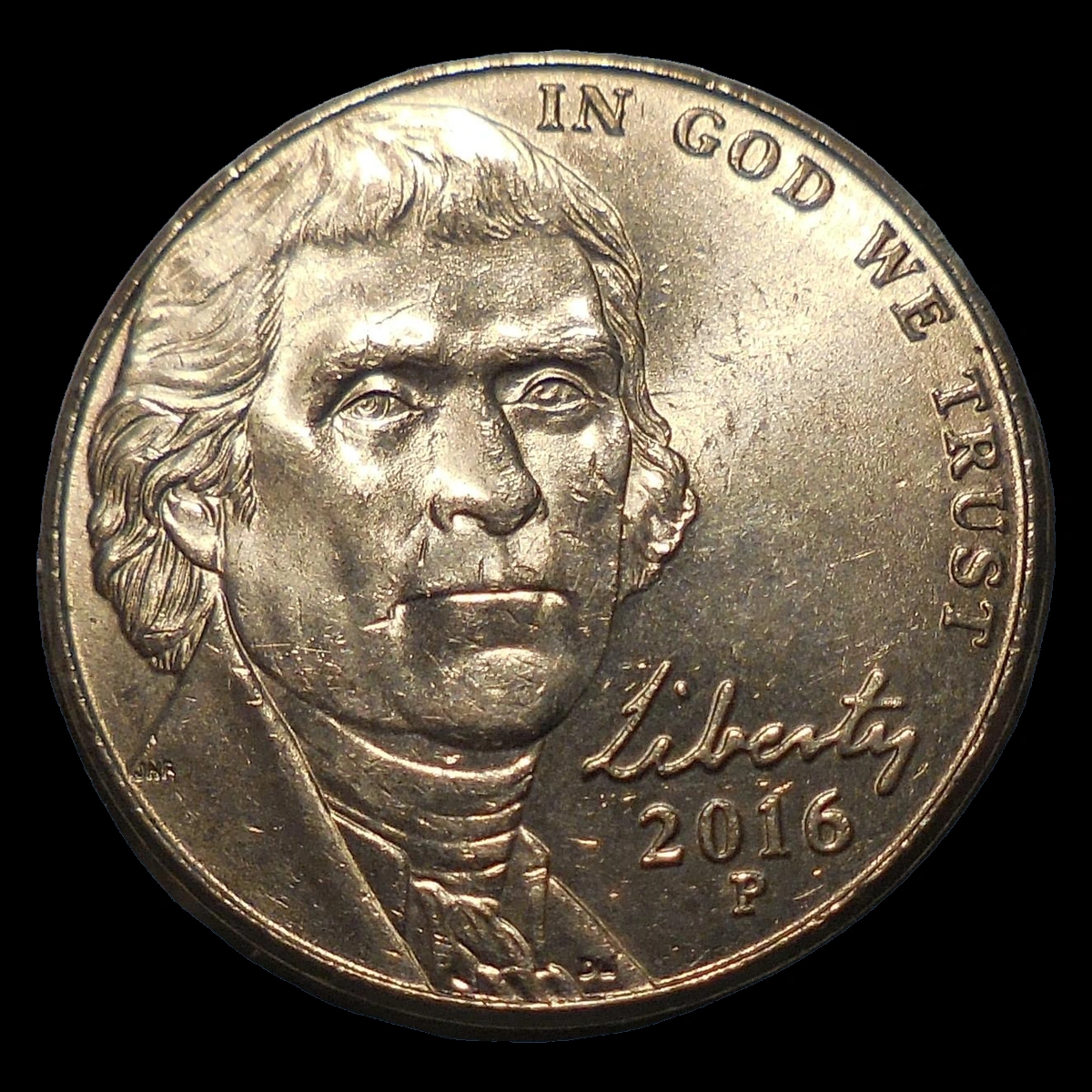
Reported clash traces occur below the steps and near MONTICELLO, including an eye-like outline. They are attributed to the dies contacting each other without a blank between them and transferring fragments of the opposing design.
How to Identify
Compare the proposed fragment’s shape and position with Jefferson’s portrait. A resemblance to an eye alone is less convincing than several details that fit the same transferred design.
Use an ordinary nickel to separate normal architecture from extra marks. A complete backward portrait pressed into the coin is a different effect from these small clash traces.
What It’s Worth
$5–$60 is the estimated range for recognizable 2016 clashes. Stronger traces on a clean coin generally make the explanation easier to demonstrate.
The supplied report does not include a completed sale amount. Scratches beneath the building should not receive an error value merely because their arrangement seems suggestive.
3. 2016 Nickel Added Outlines on Monticello: Doubled Reverse Die Error
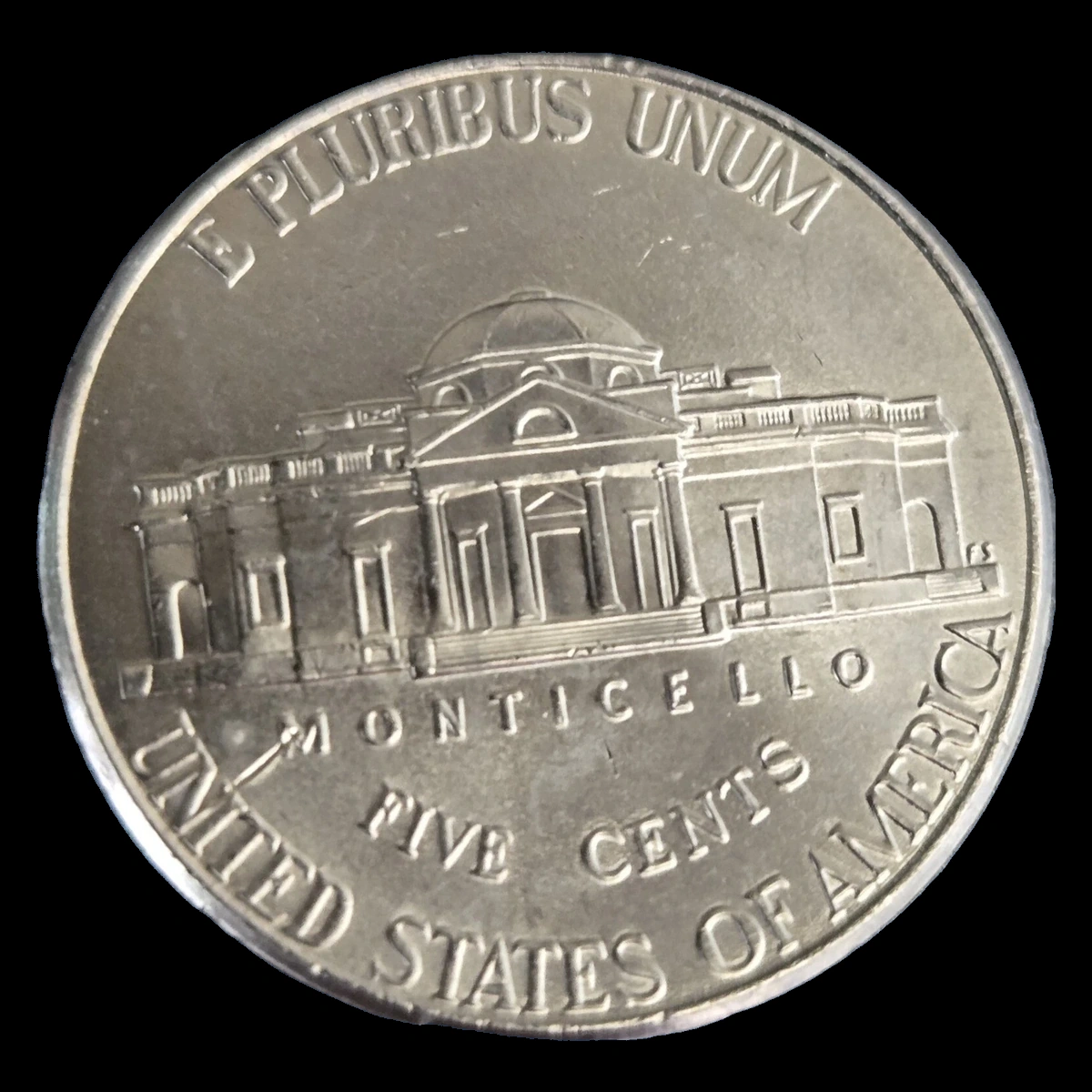
Reports for 2016-P describe added detail on the building or reverse lettering. A die made with duplicated design elements can reproduce that same pattern on multiple nickels.
How to Identify
Locate the precise feature on an attributed comparison coin, then check that its outline repeats on the candidate. General thickness across a word does not identify a variety.
Change the light to eliminate reflections, and examine the relief of the added edge. A low, flat shelf caused by movement during striking differs from a distinct extra shape already present in the die.
What It’s Worth
$5–$100 is an estimated range for clearly identified 2016-P reverse doubling. A persuasive variety match and unworn detail support stronger comparisons.
The figure is not a documented sale for every coin described as doubled. Wear can obscure the small elements needed to establish the attribution.
4. 2016 Nickel A Weak Patch beside Sharp Detail: Grease Struck Through Error
Grease or other debris can block part of a die and keep the corresponding design from forming fully. This category is reported on 2016-P nickels, independently of the rotation combination discussed below.
How to Identify
Compare the boundary between the interrupted area and sharper neighboring detail. General wear usually affects exposed high points more broadly, while scraping can leave directional lines or pushed metal.
Weak Monticello steps alone are insufficient because ordinary strike quality varies. Establish a localized loss of design before attributing it to a blockage.
What It’s Worth
$5–$100 is a working estimate for genuine grease-blocked areas. Large, easily recognized interruptions are more useful comparisons than a slightly soft letter.
A 2000-D nickel struck beneath a coin stuck to a die brought $84 in September 2025. Its different obstruction makes it only a general blocked-strike comparison.
5. 2016 Nickel A Thin Layer Lifts from the Front: Lamination Error
The reported Philadelphia lamination involves a separation within the portrait-side metal. A thin sheet can remain attached or fall away and leave a shallow opening.
How to Identify
Look for a layered boundary and original design continuing onto any retained flap. A foreign object stuck over an intact coin, or scattered corrosion pits, tells a different story.
Leave attached metal undisturbed. Nickels use a uniform copper-nickel alloy, so this is an internal split rather than the loss of an outer plated layer.
What It’s Worth
$10–$200 is the estimated range for genuine 2016-P lamination. A clear retained flap can make the defect easier to understand, though extensive peeling may also reduce visual appeal.
The supplied evidence gives no sale amount for a particular specimen. A local surface lift should not be priced as a complete split of the blank.
6. 2016 Nickel Brown or Dark Surfaces: Improper Annealing Error
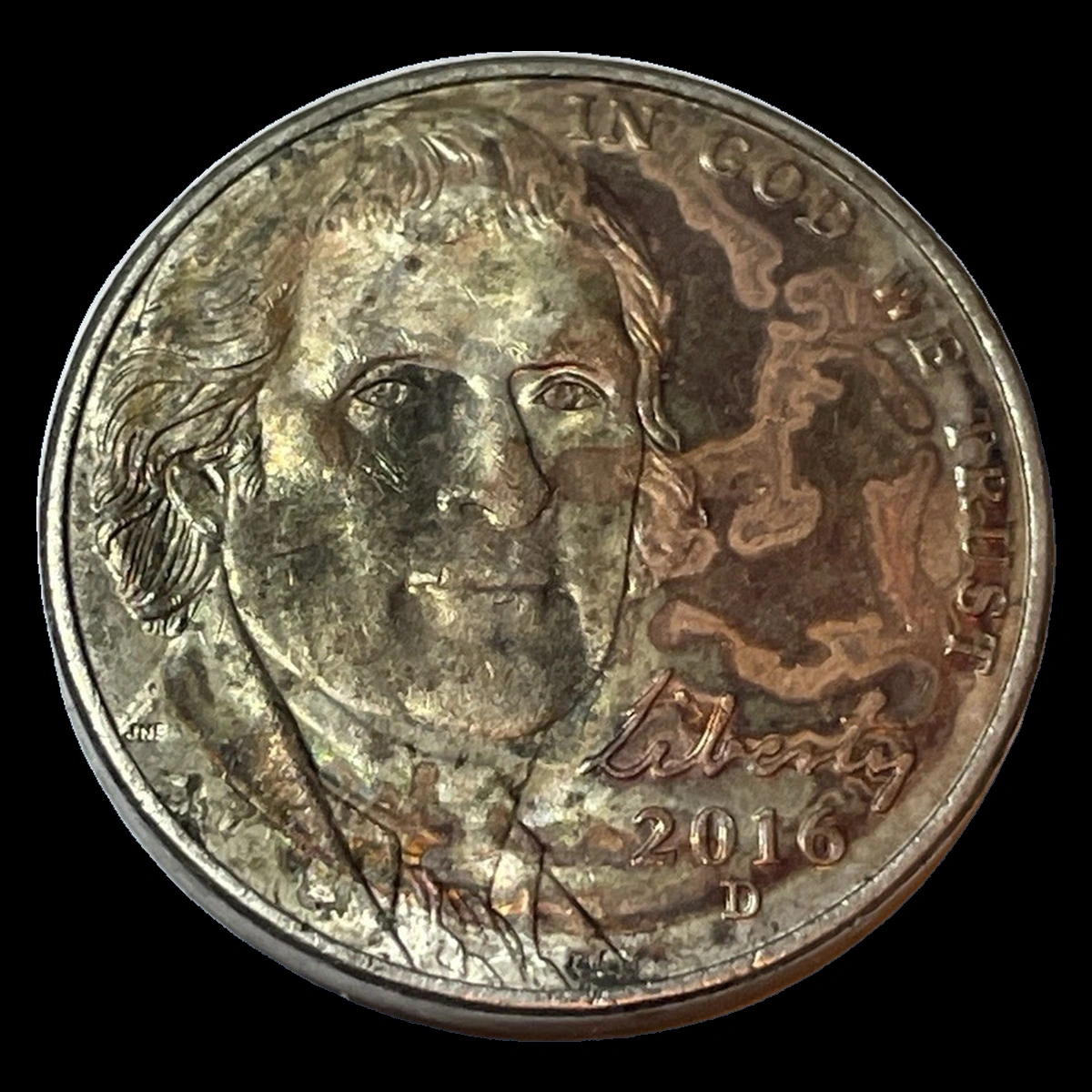
Philadelphia and Denver reports describe unusual color attributed to the heating stage used to soften blanks. Improper annealing can alter the surface, but a color name does not establish the cause.
How to Identify
Examine both sides and the edge under neutral light for residue, pitting and other evidence of later exposure. Chemicals, environmental damage and heat applied after minting can all change a nickel’s color.
Preserve the surface for examination rather than polishing it to see what is underneath. Correct dimensions cannot establish when a color change occurred.
What It’s Worth
$30–$400 is a conditional estimate for authenticated 2016 annealing errors. Unexplained brown or dark coins do not qualify automatically.
A 2005-D Bison nickel graded NGC MS62 and described as improperly annealed sold for $119 in December 2022. Its different design and date limit how directly that result applies here.
7. 2016 Nickel A Tilted Reverse and Blocked Front: Rotated Dies with Struck Through Error
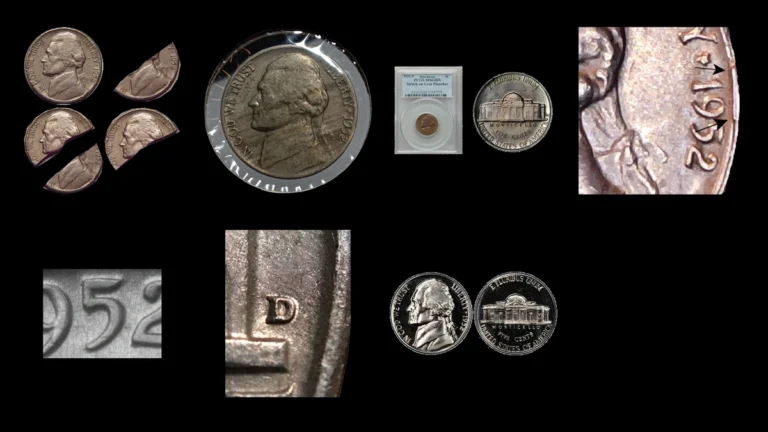
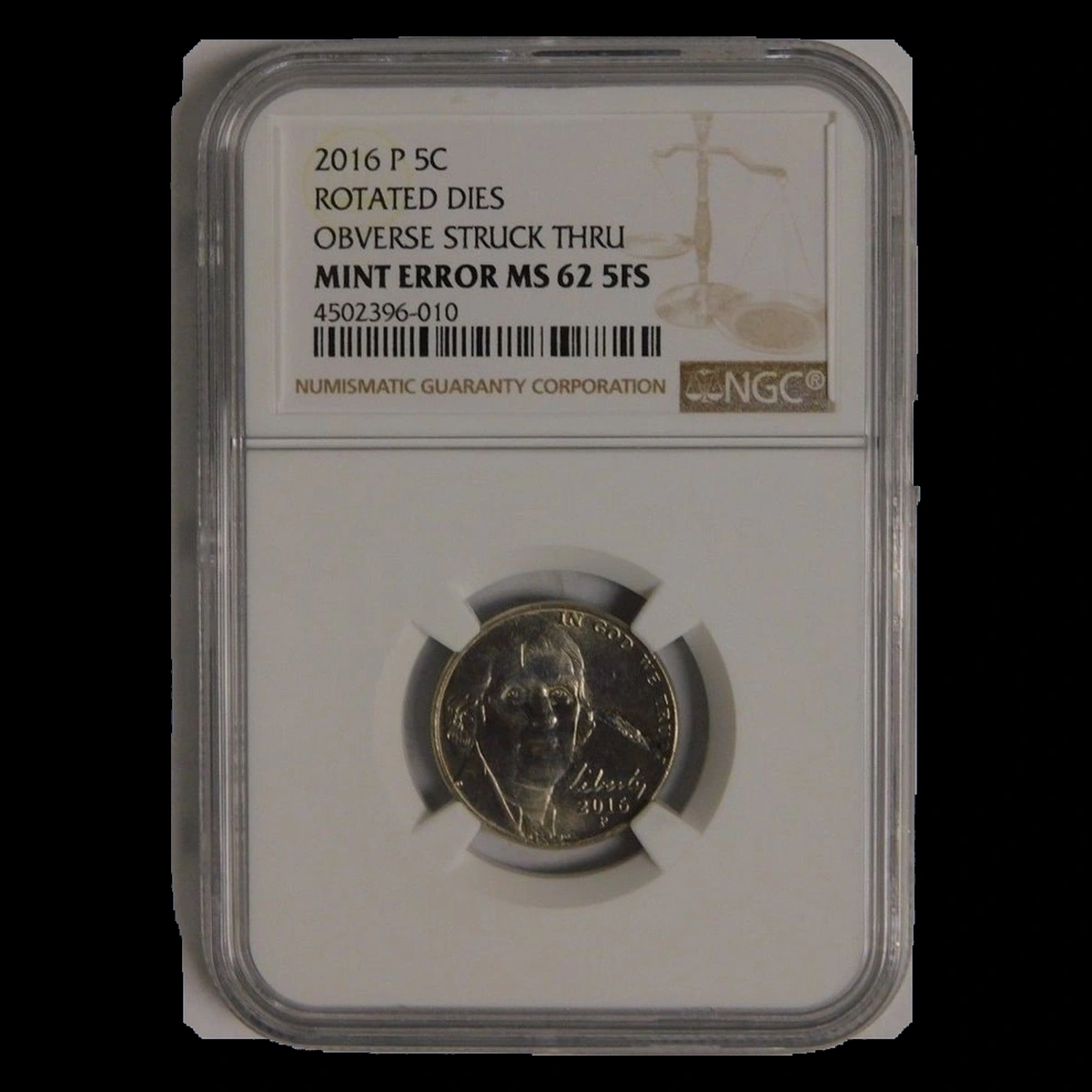
A recorded 2016-P combines two separate effects: the reverse is rotated relative to the front, and a struck-through area interrupts the portrait side. Its NGC MS62 5FS label describes an unworn coin with noticeable marks and five fully defined Monticello steps.
How to Identify
With Jefferson upright, flip the coin top to bottom without twisting sideways and observe Monticello’s remaining tilt. Repeat the motion using an ordinary nickel to rule out a handling error.
Measure the actual coin’s angle rather than inferring it from separately rotated photographs. Inspect the blocked front area on its own; die rotation does not cause missing detail there.
What It’s Worth
$75–$350 is an estimate for comparable 2016-P combinations. Both the rotation’s size and the visibility of the front interruption affect the whole-coin value.
PCGS records a $124.99 eBay Buy It Now transaction for the NGC example in September 2018. This was a fixed-price sale, and its two features should not be assigned separate full prices and added together.
8. 2016 Nickel A Curved Section Is Missing: Clipped Planchet Error
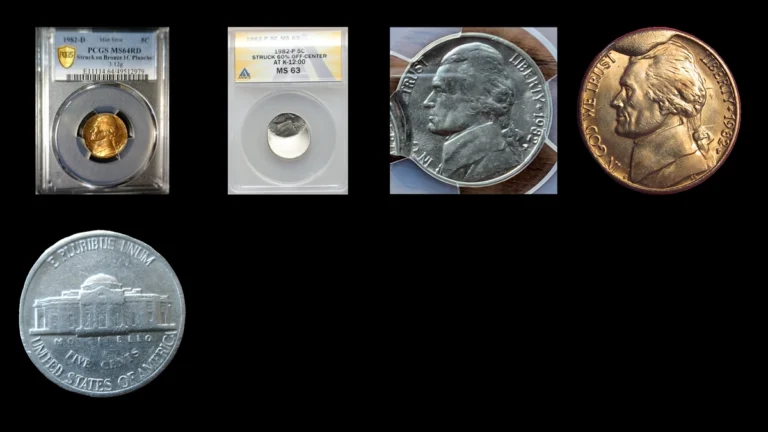
The documented 2016-P curved clip weighs 4.68 grams and is graded ANACS MS64. Its incomplete outline began when a blank-cutting punch overlapped a previously punched hole.
How to Identify
Inspect where the curve meets the struck face and the two ends of the remaining rim. Natural striking effects, sometimes including weakness opposite the opening, differ from sharp cutting ridges or repetitive file marks.
A normal nickel starts near 5.00 grams and 21.21 millimeters across, useful reference measurements for loose coins with missing metal or an unusual outline. Low weight supports a clip only when the boundary and design also agree; another clip need not weigh exactly 4.68 grams.
What It’s Worth
$15–$150 is an estimated range for 2016-P curved clips. The GreatCollections record for the ANACS MS64 example supports its identity and weight but supplies no sale amount here.
A 1997-P nickel with a 20% curved clip sold for $124 in March 2025. That percentage describes the earlier coin, not the documented 2016-P.
9. 2016 Nickel A Smooth Curved Depression: Overlapping-Blank Indent Error
A reported 2016-D indent affected one face when another blank overlapped it during striking. The upper blank occupied space between the die and lower coin, leaving a depressed area and preventing normal detail from forming there.
How to Identify
Trace the curved boundary and compare the opposite face for signs of later squeezing. An indent is a depression in the coin, not necessarily a piece removed from its outer edge.
A plain blank cannot contribute lettering of its own. Readable backward design inside the depressed area would indicate contact with an already struck coin and introduce brockage.
What It’s Worth
$50–$300 is an estimate for an authenticated Denver indent. A clear curved boundary, readable date and undamaged surrounding surfaces help display the error.
No completed sale price is supplied for the reported 2016-D specimen. A later round tool mark is not a mint indent merely because it has a similar outline.
10. 2016 Nickel Missing Design and a Stepped Edge: Off Center with Partial Collar Error
The reported 2016-P combination needs two observations: an unstruck area beside displaced design, and a step around part of the edge. The first reflects an out-of-position blank, while the second reflects incomplete support from the surrounding collar during the blow.
How to Identify
View the side to find a genuine change between two edge levels, then inspect both faces for matching strike displacement. A nickel’s edge is normally plain, so a change between reeded and smooth portions is not the relevant test.
Grinding can create a ledge, and flattening can erase letters. Both original unstruck metal and an appropriate collar step should be visible before applying the combined description.
What It’s Worth
$50–$400 is the estimated range for a confirmed 2016-P off-center and partial-collar combination. It prices one complete error coin, rather than two separate objects.
A simpler 1999-P nickel struck 15% off center realized $64 in March 2025. That comparison establishes neither the displacement percentage nor a partial collar for the 2016 report.
11. 2016 Nickel Repeated Detail within a Round Outline: In-Collar Double Strike Error
A listed 2016-P nickel certified ANACS AU58 received two strikes inside the collar. The surrounding ring kept the outline close to normal even though design fragments from separate blows survived.
How to Identify
Connect several fragments into a consistent second arrangement of the design on both faces. The later blow may have partly flattened earlier detail, so one thick letter is not enough evidence.
A doubled die produces its duplicated details in one blow, while this category requires separate strikes on the coin. Normal repeated proof striking without displaced designs also differs from the reported circulation coin.
What It’s Worth
$75–$600 is a working estimate for genuine 2016-P in-collar double strikes. The AU58 grade indicates slight wear, and no price is supplied for that listed specimen.
A 1984-P flipover double strike sold for $480 in September 2024. It turned over between blows, so its striking sequence is not the same as an ordinary same-facing in-collar double strike.
12. 2016 Nickel The Size or Metal Does Not Fit: Reported Wrong Planchet Error
A blank intended for another denomination can receive a nickel design if it enters the wrong press. The supplied 2016 report does not establish which foreign blank was involved.
How to Identify
Record actual weight and diameter before proposing a cent, dime or other blank. The remaining outer lettering and metal composition should agree with that proposed identification.
Look for filing, thinning or corrosion that could explain changed measurements after minting. A nondestructive composition check is more useful than treating a small silver-colored object as a dime blank by appearance alone.
What It’s Worth
$200–$1,500 is a conditional estimate for a 2016 nickel authenticated on a blank intended for another denomination. The blank’s identity, surviving date and preservation must be established first.
A 1981-P nickel on a cent blank sold for $372 in September 2025. That earlier cent metal differed from a modern zinc cent, and the sale does not identify the blank behind the 2016 report.
Conclusion
The strongest identification joins a visible feature to a specific production event. A raised cheek line, a clipped edge and two strike impressions should each have evidence suited to their cause.
Keep reported categories separate from documented specimen details, particularly the 4.68-gram clip and the $124.99 combination sale. Full photographs of both faces and the edge help preserve the information that a close-up alone can miss.