Rare 1993 Nickel Errors (List & Pictures)
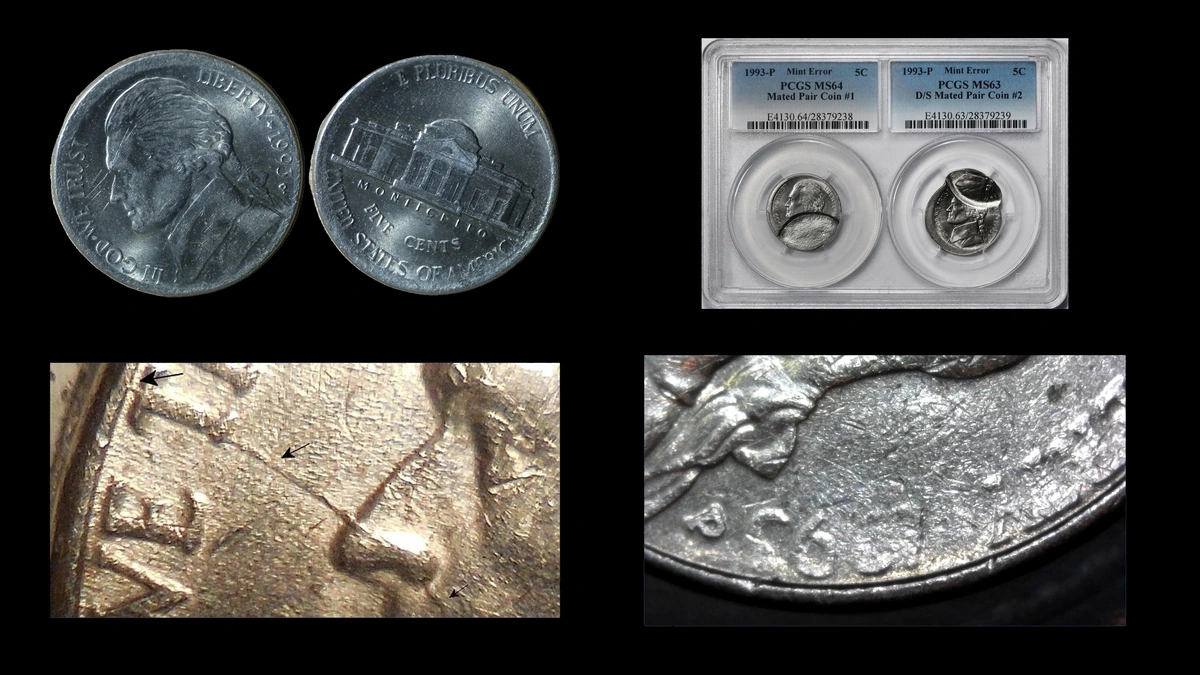
A nickel design dated 1993 over a cent dated 1992 sold for $6,900 in September 2010. Its two readable years explain a very different event from a nickel design on an unused cent blank.
The supplied 1993 nickel errors span estimated values of $5–$8,000. Check the size and metal before studying missing areas, repeated designs, and small surface features; even similarly colored coins can have different origins.
1. 1993 Nickel A Small Copper Disc Carries Only Nickel Details: Cent Planchet Error
An unused cent blank entering the nickel press cannot hold the full nickel design. Some outside lettering misses the smaller disc, while the visible design still belongs to Jefferson and Monticello.
The recorded Philadelphia example weighs 2.5 grams and was graded NGC MS66 Red. Its metal is the modern copper-plated zinc cent composition, not the alloy of a normal nickel.
How to Identify
Compare weight, color, and design cutoff together. A normal nickel weighs 5 grams and measures about 21.21 millimeters, whereas a modern cent blank begins near 2.5 grams and 19.05 millimeters before any spreading.
Inspect the edge for added plating and both faces for older Lincoln or Memorial details. Those older features would indicate an already struck cent rather than the unused blank described here.
What It’s Worth
$500–$2,000 is the supplied estimate for a clear cent-planchet error. The 2.5-gram Philadelphia NGC MS66 Red coin sold for $1,495 in August 2010.
A later two-coin lot also included a cent-planchet nickel dated 1978. Its group price cannot be assigned to the 1993 coin alone.
2. 1993 Nickel An Earlier Cent Design Survives: Double Denomination Error
A finished cent that enters the nickel press can retain portions of its original design beneath the new impression. Recorded Philadelphia examples include a 1993 nickel over a 1993 cent and a separate nickel over a cent dated 1992.
The older 1992 date is visible on the reverse of the cross-year example. It establishes that the disc was already a coin, not merely an unused copper-colored blank.
How to Identify
Record each date independently and locate other recognizable cent details. Photograph where those remnants intersect the newer nickel design rather than relying on color alone.
The modern cent’s starting weight and diameter provide useful comparisons, though overstriking can spread the disc. The overlapping designs establish the sequence; a backward dent from later pressure is a different kind of evidence.
What It’s Worth
$700–$8,000 is the supplied range for clearly identified examples, with exceptional preservation and two readable dates supporting the upper end. The 1993-over-1993 coin realized $1,140 in January 2023.
The separate NGC MS67 Red nickel over a 1992 cent brought $6,900 in September 2010. Its very well-preserved unworn surfaces belong to that specific price comparison.
3. 1993 Nickel Full Diameter but Extremely Low Weight: Thin Blank With Annealing Changes Error
Mike Diamond examined an unusual Philadelphia nickel weighing 2.14 grams despite retaining normal overall diameter. Its surface was mottled coppery and nickel-colored, and a front flake had detached.
An earlier label described a defective layered blank, but the edge showed no copper band and the exposed metal lacked a normal copper core. Annealing offered an explanation for the surface, while thin stock or a foreign blank remained possibilities for the unusual blank itself.
How to Identify
Compare weight, diameter, and thickness before drawing conclusions from color. Full width with very low mass differs from a small dime blank or a normal-size nickel that merely looks reddish.
Diamond’s examination did not support the old copper-core explanation. Inspect exposed metal without scraping it, and do not remove another flake to repeat that observation.
A chemically thinned or mechanically altered coin needs a different explanation. Neither a foreign denomination nor a definite stock type has been established for this unusual specimen.
What It’s Worth
$300–$1,500 is a working estimate for a professionally examined, comparably thin mint-made piece. No completed sale is supplied for Diamond’s coin.
The range concerns the documented combination of abnormal blank and surface appearance. Ordinary discoloration or an unsupported foreign-planchet label does not qualify a coin for it.
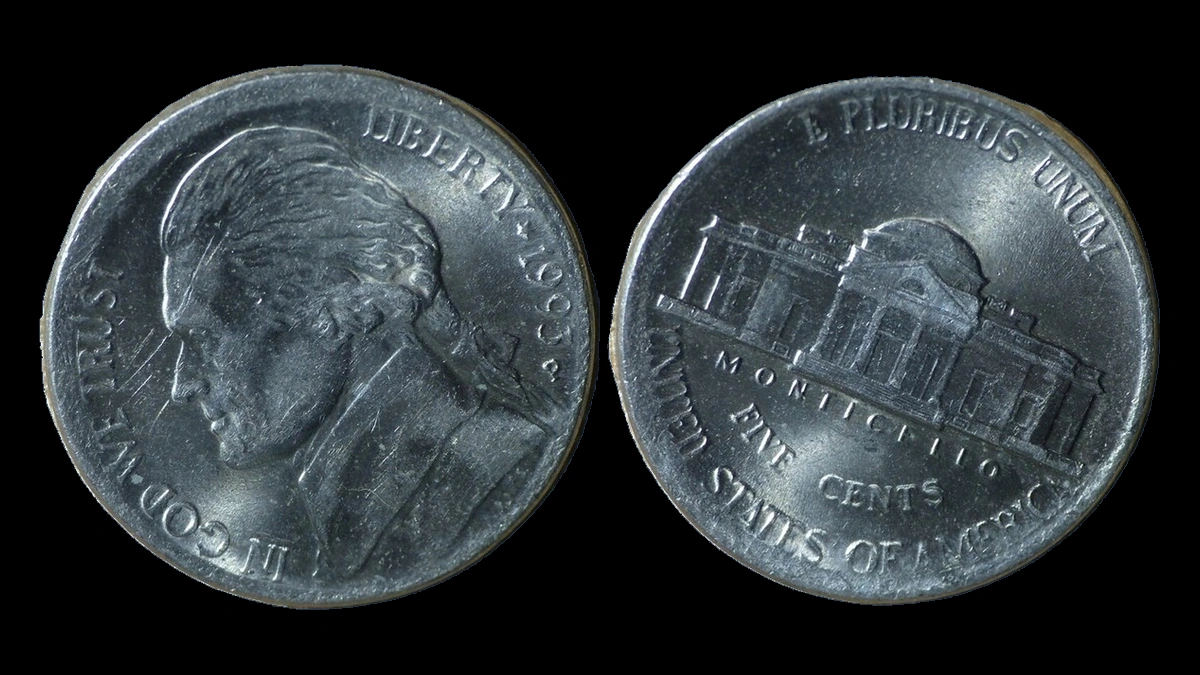
4. 1993 Nickel Complete Designs Sit Within Expanded Metal: Broadstrike Error
A broadstrike spreads outward when the collar fails to confine the blank normally. The coin remains identifiable by its complete designs rather than a portion of the image missing the disc.
Philadelphia records include a PCGS MS62 example and a separate older listing described as struck on a Type One blank. Type One refers to a blank that had not yet received its raised starting rim.
How to Identify
Follow the entire outer lettering on both faces and compare widths in several directions. Flattened letters, scraping, or impact marks may indicate later squeezing rather than original spreading.
The older Type One coin has an indentation at its left front edge, but that feature does not explain every broadstrike or automatically establish a second error. Extra width alone also cannot prove that the blank lacked its starting rim.
What It’s Worth
$15–$200 is the supplied estimate for genuine broadstrikes. The Type One listing sold for $6.90 in June 2000, an older result below the working range.
Its MS65 description was a catalog grade without a grading-service holder, not proof of third-party certification. The separate PCGS MS62 example has no usable public price in the supplied record.
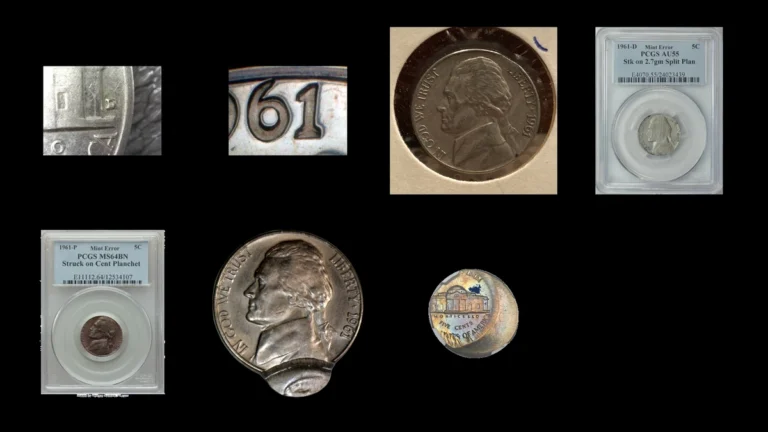
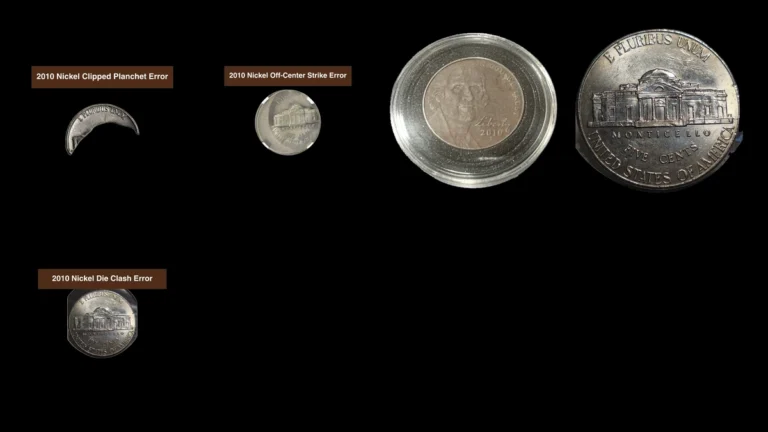
5. 1993 Nickel Bare Metal and a Missing Curved Section: Off-Center Strike With Clip Error
The recorded Philadelphia combination is 45% off center and has a 15% curved clip. One part of the disc missed the dies, while a different part was already missing before striking.
Other Philadelphia off-center nickels show varying displacement, and Denver examples are reported without a matched auction specimen. Their percentages must come from the individual coins.
How to Identify
Separate the solid unstruck crescent from the actual opening in the outline. Examine the clip boundary for original metal flow instead of saw marks or cutting through finished details.
Both designs should fit the same misplaced blank. Photograph the whole coin before estimating displacement, and remember that a clip can reduce weight while a simple off-center strike normally retains the metal.
What It’s Worth
$25–$300 for ordinary dated off-center coins and $100–$500 for attractive combinations with a genuine clip are the estimates. The documented 45%/15% combination was graded NGC MS65.
Its listing supplies no usable sale amount. The two features describe one coin and should not be valued by adding two separate full ranges.
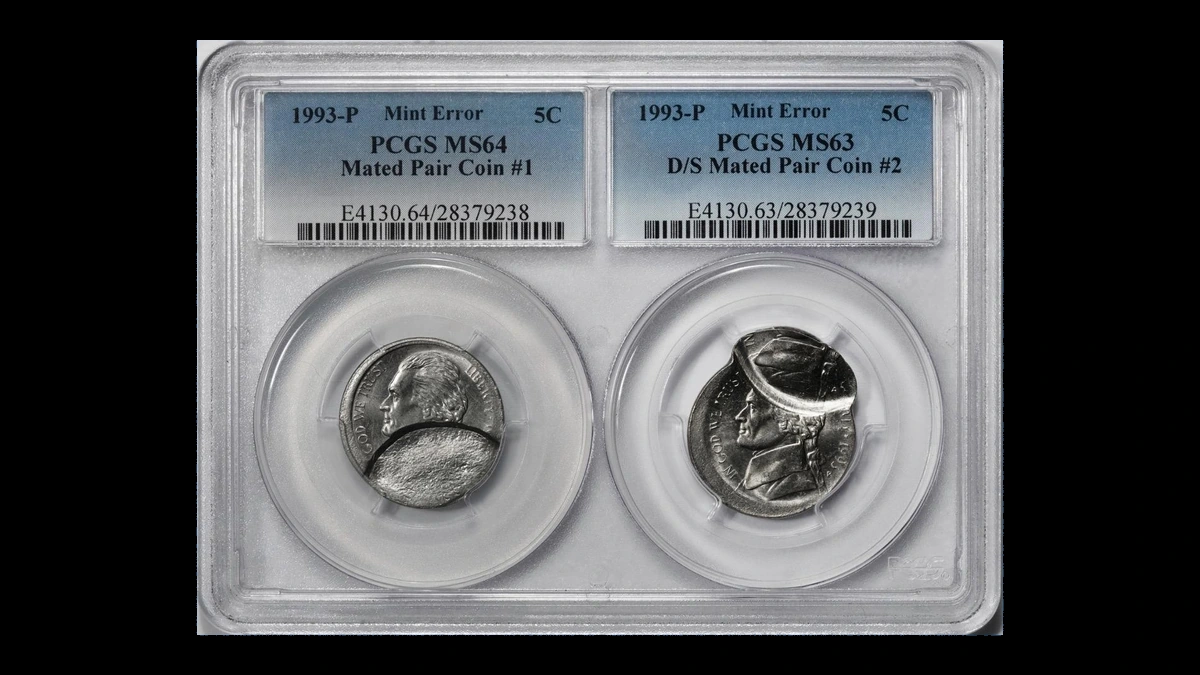
6. 1993 Nickel Portrait and Building Overlap on One Face: Double Strike or Flipover Error
A nickel remaining in the press can receive another impression after moving. If it flips over, Jefferson and Monticello can appear together on the same face.
The recorded Philadelphia NGC MS66 example is a flipover double strike with an off-center second blow. Another Philadelphia coin has a second strike 75% off center without the same flipover description.
How to Identify
Identify the designs on each face before counting blows. Two Jefferson outlines alone do not prove a flipover, since turning within the same plane does not expose the other side to the front die.
Trace each extra portrait or building into its strike boundary and compare the opposite face for the same sequence. A narrow shelf beside a letter or a recessed image from later squeezing is not another complete normal strike.
What It’s Worth
$100–$500 for a clear ordinary double strike and $400–$1,000 for an appealing flipover are the estimates. The Philadelphia NGC MS66 flipover brought $690 in October 2021.
That unworn coin had few marks and a readable portrait-and-building relationship. Its price should not be transferred automatically to the separate 75% second-strike example.
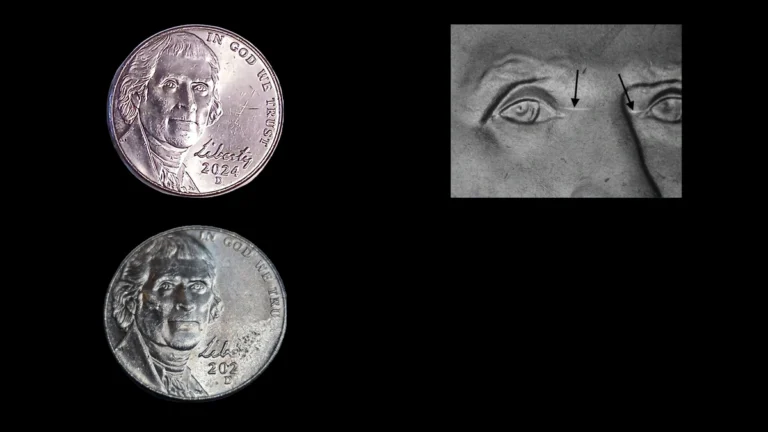
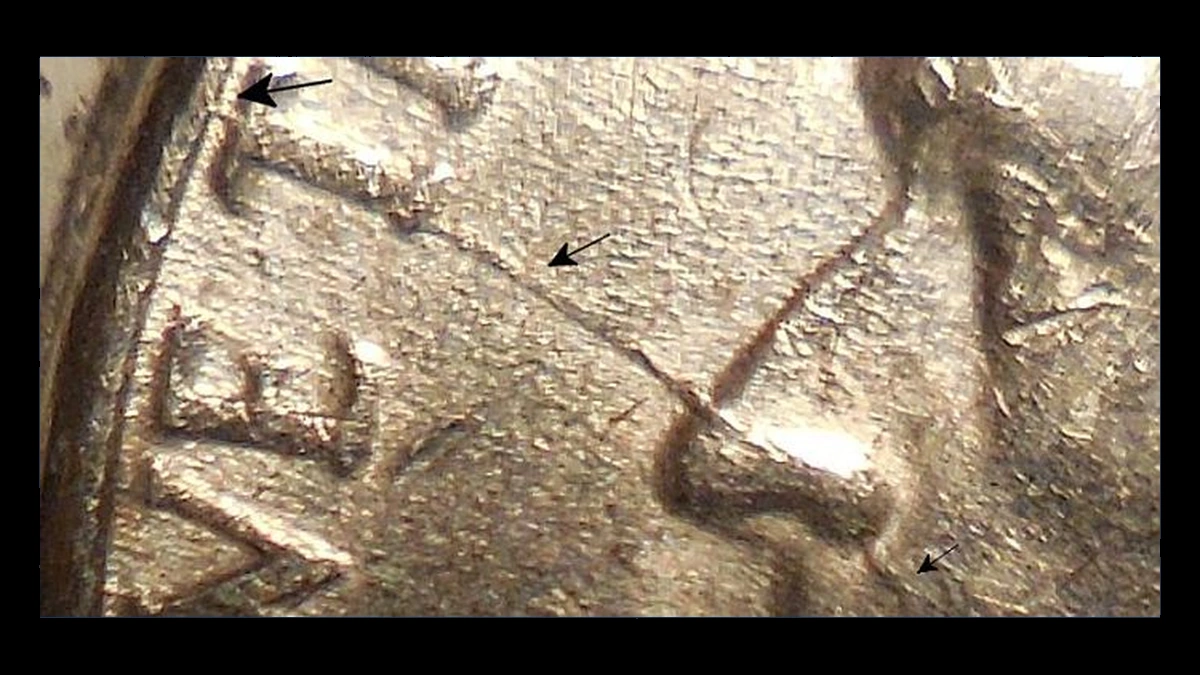
7. 1993 Nickel A Ridge Connects Jefferson’s Nose With the Rim: Spike Head Die Crack Error
Several Philadelphia examples have different raised paths near Jefferson’s nose and WE. These lines came from cracks in the dies, where coin metal entered openings during striking.
Two listed paths pass through different parts of E in WE. One example also has a reverse crack from Monticello’s left base toward the rim.
How to Identify
Trace the ridge through WE and compare its complete route with the Spike Head catalog photographs. A path through the center of E is not the same pattern as one farther right.
Check the reverse only for the corresponding listed example rather than requiring its left-base crack on every nose crack. Under low light, the feature should rise from the surface instead of forming a cut trench.
What It’s Worth
$5–$75 is the estimate for a clear nose-to-rim crack. Strong, easily photographed ridges generally offer more interest than lines that vanish in ordinary light.
The catalog identifies patterns but supplies no sales for them. A catalog entry does not by itself establish a rare or expensive coin.
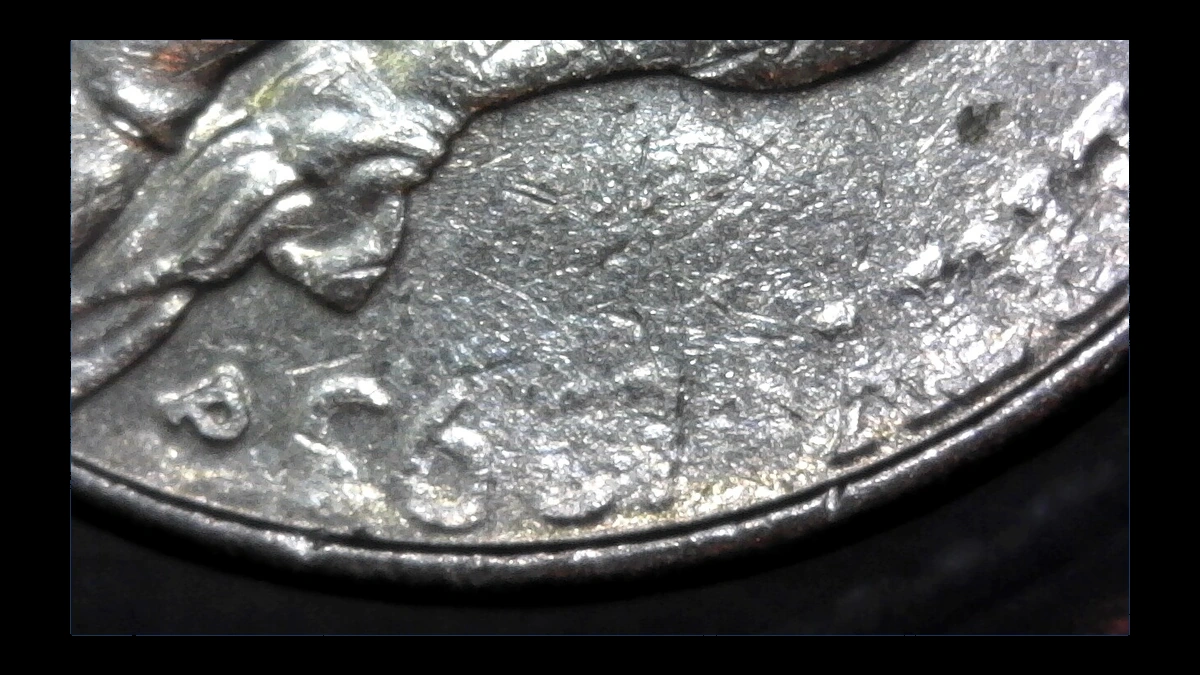
8. 1993 Nickel A Local Area Lacks Detail: Struck Through Grease Error
Material in a die can block part of the design while neighboring features form normally. The year report mentions the date, LIBERTY, and Jefferson’s hair without identifying a separate specimen for every location.
Grease mixed with debris is a common explanation for such weakness. Wear, polishing, chemical treatment, or an overall weak blow can produce other kinds of missing detail.
How to Identify
Compare the affected patch with nearby letters and the portrait’s exposed high points. Broad smoothing across cheek and hair may be circulation wear rather than a local obstruction.
Look for a transition into sharper undamaged details and check for fresh polishing scratches. Do not scrub the weak area to make it easier to photograph.
What It’s Worth
$5–$100 is the supplied estimate for clear blocked areas on ordinary 1993 nickels. Smaller weak details on worn coins generally belong nearer the lower end.
No original sale directly matches the report’s individual locations. A coin worn smooth across both faces is not a useful comparison for a localized mint-made interruption.
9. 1993 Nickel A Surface Layer Lifts From the Nickel: Lamination Error
The Philadelphia year list reports lamination without locating a particular photographed flaw. A weak layer within the nickel’s own metal can lift or detach, leaving an exposed shallow area.
Ordinary nickels have no separate outer coating that should peel away. The unusual 2.14-gram specimen lost a flake too, but its weight and blank history do not apply to every lamination.
How to Identify
Examine the boundary and exposed interior without lifting attached material. A layer separating within the alloy differs from paint or plating coming off the surface.
Use intact areas for safe measurements and avoid pressure near the flap. A deep gouge without layered evidence or a broad edge seam suggesting joined pieces needs another explanation.
What It’s Worth
$25–$250 is the estimate for an identifiable original separation on an otherwise ordinary nickel. No matched sale is supplied for a distinct Philadelphia example.
A visible intact layer can be more informative than a tiny rough patch. Corrosion and deep scratches remain condition problems rather than reasons to assume a higher error price.
10. 1993 Nickel Abnormal Color on Normal Nickel Metal: Improper Annealing Error
The recorded Denver annealing example was graded NGC MS63 and appeared with three other dated coins in an auction group. Its surface change is attributed to abnormal conditions during the heating used to prepare blanks for striking.
The Full Steps description concerns Monticello’s staircase detail, not another error. Other coins in the group should not supply this specimen’s exact color pattern.
How to Identify
Inspect both faces and the edge in neutral light for plating, rough corrosion, or signs of later heating. An intact full-size reddish nickel does not automatically establish mint annealing.
Keep the original surface untouched for examination. Unlike the specially thin specimen discussed earlier, this report does not establish an extreme shortage of metal or a different blank composition.
What It’s Worth
$25–$200 is the estimate for a correctly identified annealing error. Original texture, surface quality, and a convincing identification matter more than darkness alone.
The four-coin lot containing the 1993-D realized $322 in September 2010. That payment covered all four dates and cannot establish this nickel’s individual price.
Conclusion
Two distinctions prevent many mistakes with 1993 nickels: a cent blank differs from an already struck cent, and an ordinary colored nickel differs from the full-width 2.14-gram specimen. Similar appearances need not imply the same metal or history.
Match crack patterns and repeated designs to their own examples, and keep combined features within one valuation. Preserve the edge and any lifting layer while documenting both faces in full.