Rare 1918 Nickel Errors (List & Pictures)
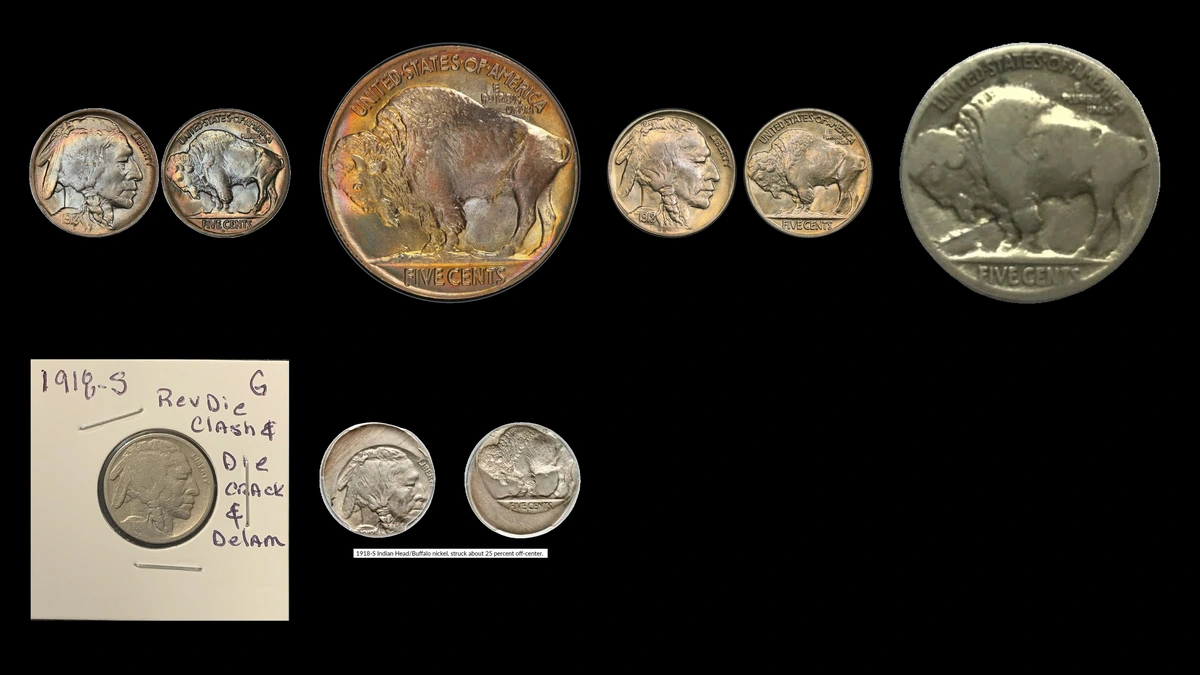
A genuine 7 beneath the final 8 identifies the famous Denver overdate. An exceptional example sold for $511,875 in February 2024, but most 1918 nickel errors belong in much lower price ranges.
This guide spans estimated whole-coin values of $5–$525,000. Start with the date and mint, then compare the design, metal, and outline without treating every extra line as the same variety.
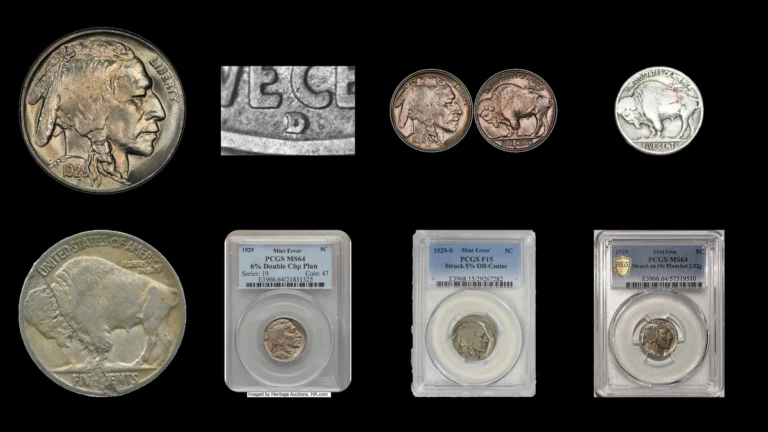
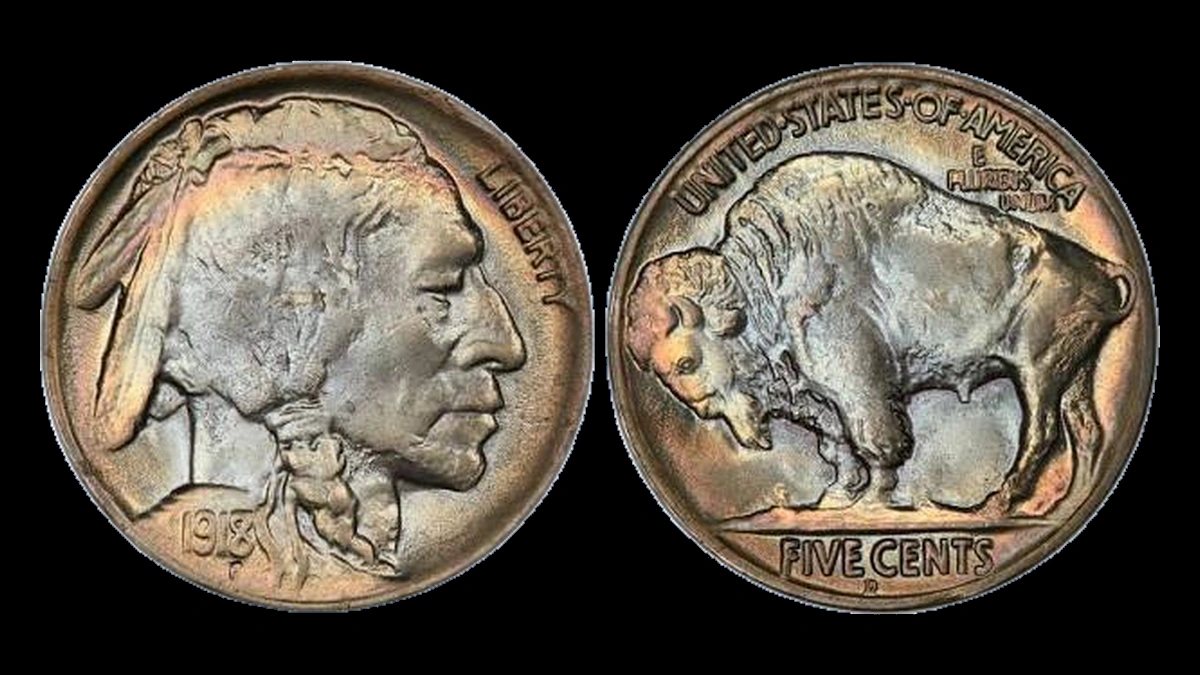
1. 1918 Nickel A 7 beneath the 8: 1918/7-D Overdate Error
The working die received design impressions from tools dated 1917 and 1918. The mixed date was already on that die when it struck coins.
This did not involve carving a new date into finished 1917 nickels. Genuine examples also have a D that leans left.
How to Identify
Compare the complete final numeral with an authenticated example and follow the underlying 7 through the 8. A single notch or added line is not enough.
Check the leaning D below FIVE CENTS and inspect the date for cuts, smoothing, or added metal. The mintmark supports the match but does not prove it by itself.
What It’s Worth
$500–$525,000 spans identifiable heavily worn examples through the finest auction-level coins. A separate MS64 brought $90,000 in January 2025.
The MS65+ overdate sold by GreatCollections reached $511,875 on February 11, 2024. That exceptional unworn coin is a very different comparison from a circulated discovery.
2. 1918 Nickel Other Repeated Design from Doubled Dies Error
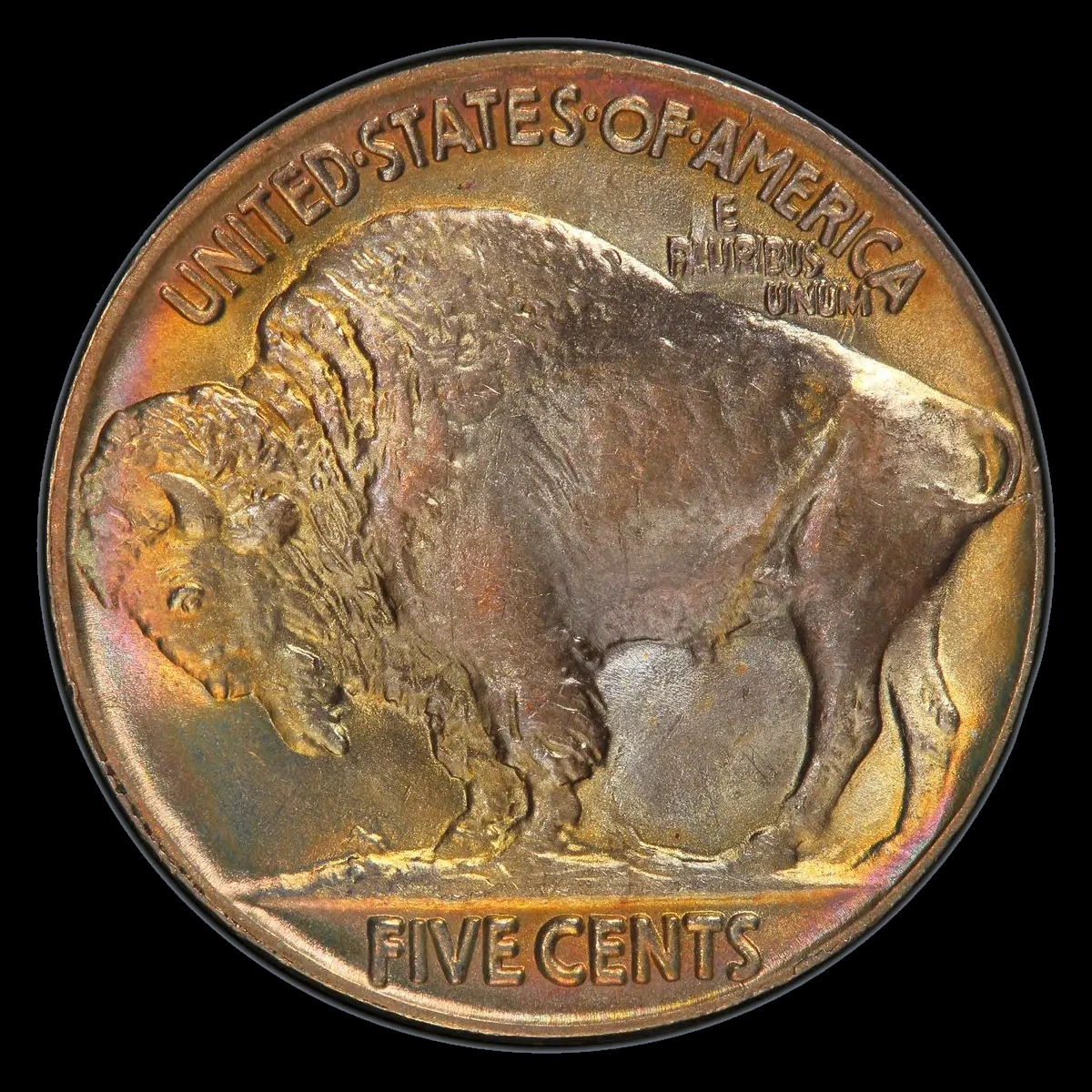
The Philadelphia FS-801 back variety repeats lettering and nearby design outlines. Its pattern came from the die rather than multiple blows on each coin.
Separate front reports mention the date and portrait contours without identifying a mint or certified specimen. They are not the Denver 8-over-7 variety.
How to Identify
Choose the affected face before selecting a comparison. For FS-801, follow several back letters and their extra outlines on an identified example.
A reported tail crack may support one specimen but cannot replace the doubled-design match. On a front candidate, distinguish repeated raised contours from flat strike-related shelves and move a suspected underdigit 7 to the overdate check.
What It’s Worth
$50–$12,000 spans the reported front category at a conditional $50–$500 and identifiable FS-801 back examples around $75–$12,000. Their different patterns need different comparisons.
A Philadelphia FS-801 MS67 sold for $10,575 in November 2012. Its exceptional preservation contributes heavily to the result, and it does not price an unconfirmed front outline.
3. 1918 Nickel Extra Mintmark Curves from Repunching Error
A shifted repeat punch can leave part of an earlier D or S on the die. The 1918 year list reports this category without fixing a direction or numbered variety.
The F below the date is designer James Earle Fraser’s initial. It is separate from the D or S below FIVE CENTS.
How to Identify
Trace a complete letter-shaped fragment around the back mintmark and compare it with an authenticated same-date, same-mint example. An isolated bump does not supply the missing variety match.
Keep the letter upright as the lighting changes. Flat shelves, corrosion, or a damaged corner can make an ordinary mintmark look repeated.
What It’s Worth
$20–$300 is a conditional estimate for a genuine identifiable minor repunched mintmark on an ordinary 1918 nickel. Wear and clarity affect its appeal.
A 1927-D FS-501 graded XF40 brought $335 on eBay in May 2021. That different-year variety does not establish a particular 1918 pattern or sale.
4. 1918 Nickel A Missing Small Feather: Two Feathers Error
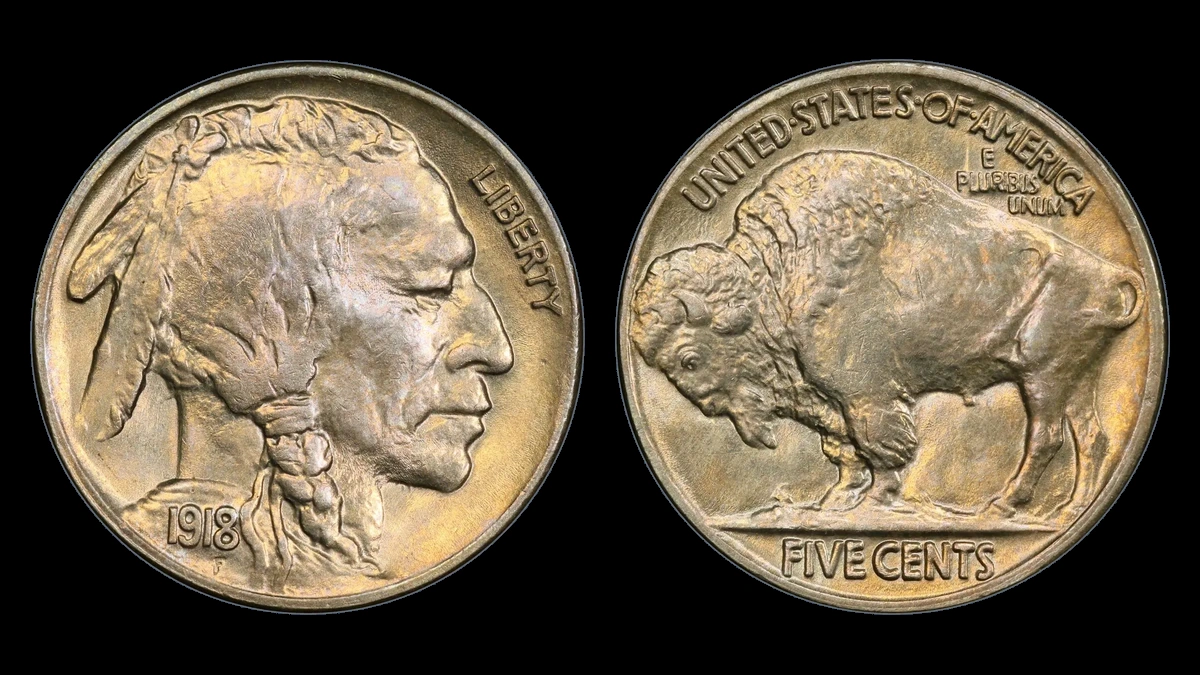
Heavy die polishing can remove the small inner feather beside the neck while leaving the two long feathers. Philadelphia examples are cataloged for 1918.
A collector’s San Francisco example combines reduced feather detail with a 20% off-center strike toward the bottom. Both features belong to that same coin.
How to Identify
Compare the small-feather area with the recognized variety from the same mint. Nearby long feathers and hair help show whether broad wear explains the loss instead.
Check for grinding or abrasive marks in the missing area. On the off-center S example, the feather region must remain within the struck design; detail that missed the blank cannot prove die polishing.
What It’s Worth
$50–$2,500 is the estimate for a matched Two Feathers variety without a major additional strike error. A 1927-S MS63 example sold for $2,280 in February 2021 as a different-year comparison.
The reported 1918-S with an offset needs one combined valuation. Its missing feather and displaced design should not receive two full values added together.
5. 1918 Nickel Opposite-Design Traces from Die Clashes Error
A clash occurs when the dies touch without a blank between them and transfer unwanted traces to later coins. A San Francisco auction example has marks behind the neck, while another report places them under the chin.
Philadelphia and back-lettering reports also exist. Their locations describe separate examples rather than one required collection of marks.
How to Identify
Compare connected stray shapes with the normal opposite design. Match the behind-neck or under-chin location only to the specimen that actually shows it.
Keep transferred traces separate from raised cracks and peeling seams. A cropped unexplained line provides less evidence than a view showing its relationship to the portrait.
What It’s Worth
$15–$500 is the estimate for ordinary worn examples with recognizable clashes. High-grade San Francisco coins may be worth much more because of their underlying rarity.
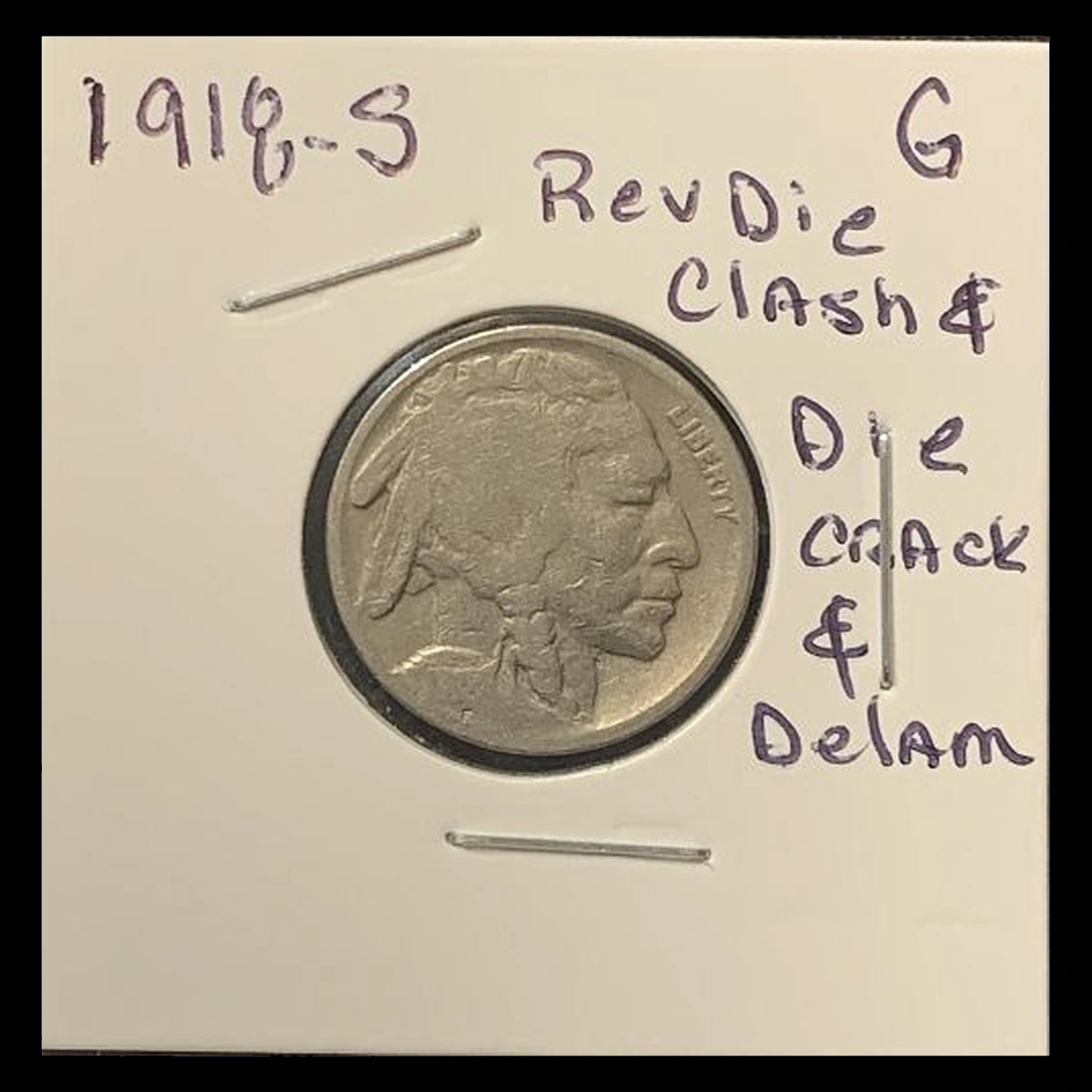
A worn 1918-S was advertised for $12 with a clash, crack, and lamination together. That asking price describes one coin rather than three separate completed sales.
6. 1918 Nickel Raised Cracks and Rim Cuds Error
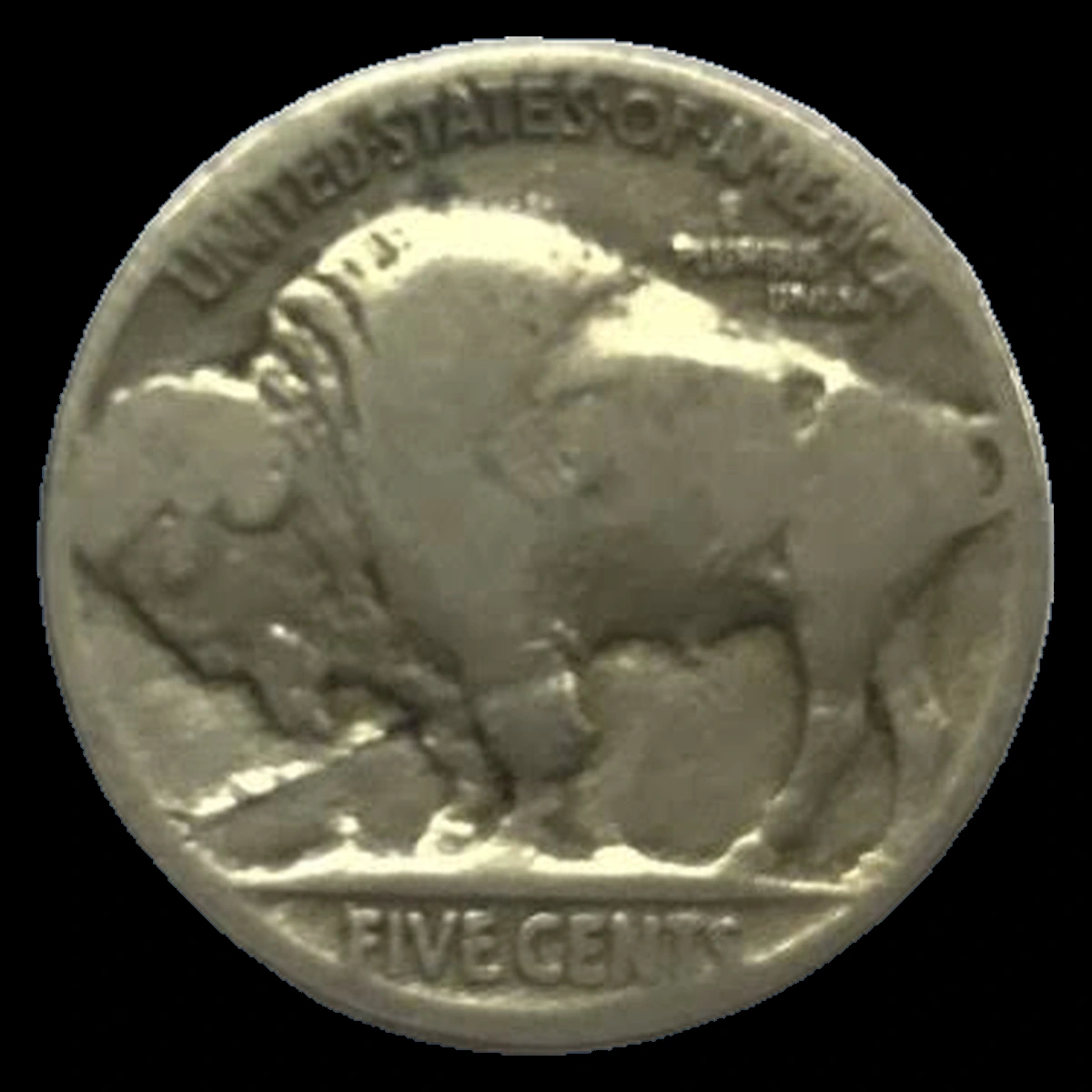
Two lines on a recorded 1918-S follow the leftmost feather and extend from its tip toward the rim. They formed as metal filled cracks in the die.
A separate Philadelphia doubled-back example has a reported tail crack. Cataloged Philadelphia and San Francisco rim cuds are larger raised patches from broken die edges.
How to Identify
Choose the line or patch that is actually present and compare its entire route. The San Francisco feather lines do not require a Philadelphia tail crack.
A cud must connect to the rim, while a die-crack ridge rises above the surface. Inspect a line’s center because a scratch can have raised sides around a sunken groove.
What It’s Worth
$15–$600 covers ordinary worn coins from small cracks to prominent cuds. The recorded feather-crack S coin is MS64, whose basic date-and-condition value can exceed this general range.
Its whole price should not be interpreted as payment for two lines. No sale amount is assigned here to the separately cataloged cuds.
7. 1918 Nickel A Lifted Layer from Lamination Error
The worn 1918-S seller example also has reported lamination without a specified peeling location. A weakness inside the copper-nickel alloy allowed a surface layer to separate.
This is different from a raised die-crack line. The coin’s metal is mixed throughout rather than covered by a removable nickel layer.
How to Identify
Photograph a flap in place and follow its internal boundary in side light. Original design continuing onto loose metal helps explain the separation.
A smooth scrape or pushed-up lip has a different structure. Normal starting specifications are about 5 grams and 21.2 mm, but an attached layer may preserve almost all the weight.
What It’s Worth
$5–$150 is the estimate for small laminations on ordinary worn 1918 nickels. Larger clear peels and stronger remaining detail can support more interest.
The seller’s $12 ask included lamination, clash, and crack on one S coin. Unusually valuable high-grade San Francisco examples need separate attention to their normal date value.
8. 1918 Nickel Missing Metal from a Clipped Blank Error
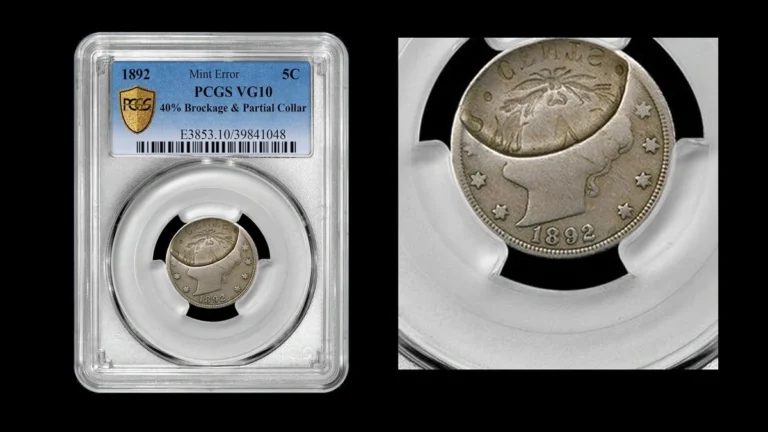
A Philadelphia MS61 example has a 5% clip near eleven o’clock. The incomplete blank received its design around that missing area.
Separate clipped Denver overdate reports include a VG10 coin and another described with a gap near eight o’clock. They should not be assumed to name the same specimen.
How to Identify
Inspect both ends of the gap for natural striking flow rather than saw or file marks. Opposite-rim weakness can provide support when present.
Then read the date and mint carefully. A genuine 7 under the final 8 on a D coin changes its identity and price comparison, even if its clip looks modest.
What It’s Worth
$30–$350 is the estimate for ordinary-date clips across worn and attractive unworn examples. The Philadelphia MS61 5% clip sold for $141 in August 2014.
A clipped 1918/7-D needs an overdate valuation instead. Its date variety and clip belong to one object, so the maximum figures from two ranges should not be added.
9. 1918 Nickel A Complete Design on a Broadstrike Error
A broadstrike spreads outward when the collar does not contain the blank during the blow. The complete design remains within the larger outline.
The 1918 year report does not establish a particular authenticated specimen or mint. The candidate itself must demonstrate the expansion.
How to Identify
Measure several spans and follow the entire outer design. Bare metal opposite design lost beyond the edge fits an off-center strike instead.
Inspect the expanded margin for hammering, filing, or an added ring. A wide-looking rim alone does not show how the outline formed.
What It’s Worth
$100–$750 is the conditional estimate for an ordinary dated 1918 broadstrike. Strong visible spread and attractive original surfaces support the higher portion.
A 1999-P Jefferson MS63 broadstrike brought $89 in March 2025 as a different-design comparison. High-grade branch-mint Buffalo nickels can have substantial ordinary value beyond this broad estimate.
10. 1918 Nickel A Shifted Design from an Off-Center Strike Error
A Denver example is 10% off center toward seven-thirty, retaining its full date and D while losing part of the buffalo’s head. A separate Denver report gives a 12% shift toward ten o’clock.
The San Francisco collector coin is 20% off center toward the bottom and also has reduced feather detail. Its features should remain with that specimen.
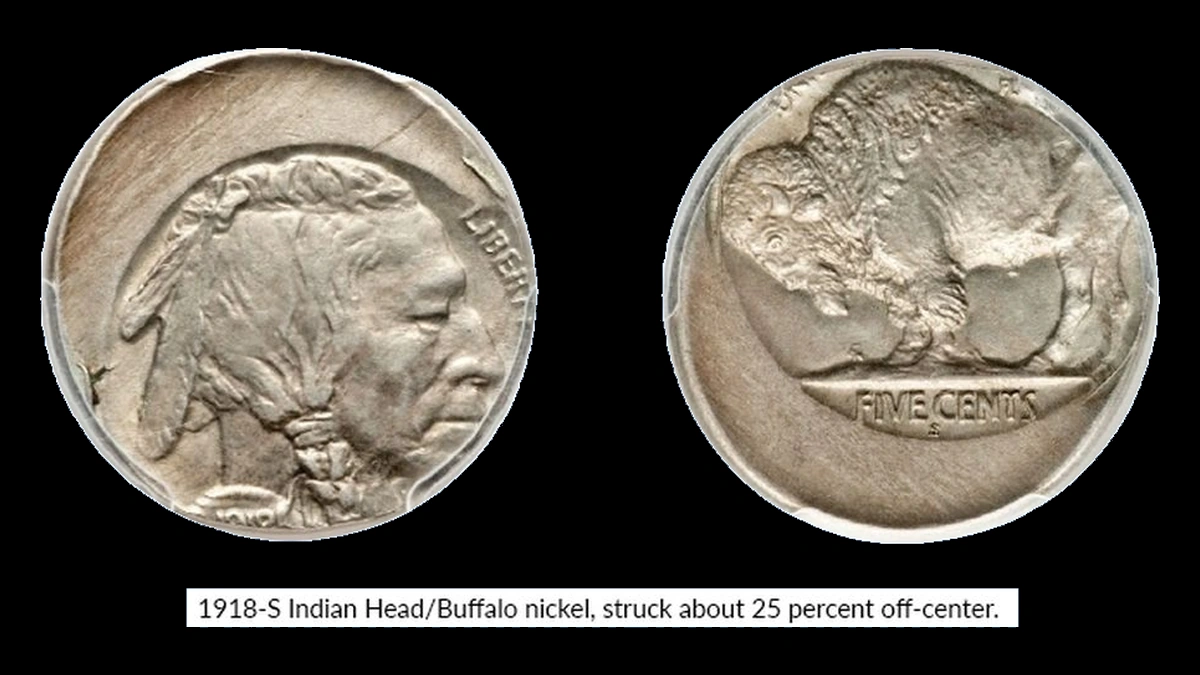
How to Identify
Compare design lost at one edge with untouched metal opposite on both faces. Check the date and mintmark before borrowing a recorded direction or percentage.
Inspect the edge for trimming and the blank area for scraping. On the S combination, the missing feather must fall within the struck area to support the separate polishing variety.
What It’s Worth
$150–$4,000 covers ordinary worn through attractive unworn dated examples. The Denver 10% coin graded MS66 sold for $3,120 on January 3, 2022.
Its exceptional preservation contributes substantially to that price. A larger percentage alone does not make another example equivalent, and the S combination requires its own complete assessment.
11. 1918 Nickel Two Strikes with an Indent and Partial Collar Error
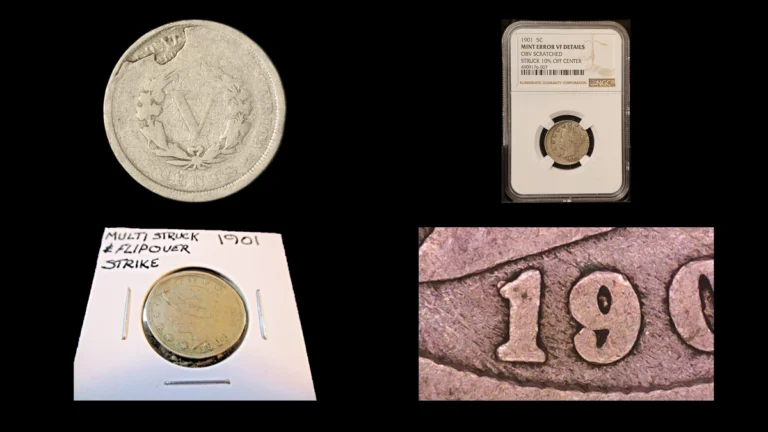
A reported Philadelphia coin combines a double strike, a back indent covering about 5%, and a partial collar. The indent records overlapping metal, while the edge step records partial confinement by the collar.
The depression need not contain a backward design. All three effects belong to the same specimen.
How to Identify
Use front, back, and side views oriented consistently. Trace repeated design, inspect where detail stops at the back depression, and follow the edge’s change in level.
A small doubled-die outline is not the same as a second whole strike. The partial collar should show constrained and expanded metal without requiring edge grooves on this plain-edged coin.
What It’s Worth
$500–$3,500 is the working estimate for the combined error, depending on preservation and clarity. The collector display supplies no sale amount.
A 1940 Jefferson double strike with a partial collar sold for $517.50 in October 2010. It offers a different-design comparison for two mechanisms, while the 1918 combination remains one complete coin price.
12. 1918 Nickel Nickel Designs on Copper or Silver Blanks Error
The Philadelphia copper-cent-blank example weighs 3.1 grams and has later tooling on its back. A separate Denver copper example is recorded without a measured weight supplied here.
The literature also records a silver dime-blank PCGS AU58 coin. References differ on its mint, so Denver should not be assigned without checking the actual back.
How to Identify
Combine metal identification with weight and naturally truncated nickel design. Standard blanks are roughly 3.11 grams for a period cent and 2.50 grams for a silver dime, compared with 5 grams for a nickel.
Those standards are not measurements of every reported error. Inspect the edge for plating or trimming, and keep later back tooling on the Philadelphia coin separate from its original wrong-blank strike.
What It’s Worth
$1,500–$20,000 spans copper examples around $1,500–$7,500 and the silver type around $10,000–$20,000. Their different materials require separate comparisons.
The 3.1-gram Philadelphia cent-blank coin brought $2,340 in January 2022 despite its tooled back. The silver-blank literature records a $14,400 Heritage sale in January 2020 after an earlier $27,000 asking price.
Conclusion
A readable old 7, a small mintmark curve, and a displaced whole design answer different questions on a 1918 nickel. Establish the coin’s date, mint, and material before selecting a price record.
Keep combined errors together in the valuation, especially clipped overdates and the off-center Two Feathers example. High-grade branch-mint value can also outweigh a small flaw, so a whole-coin auction result is not automatically an error premium.