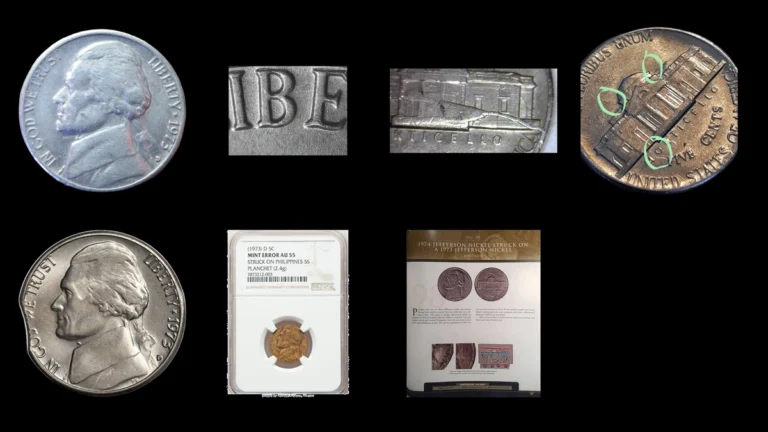
Rare 2010 Nickel Errors (List & Pictures)
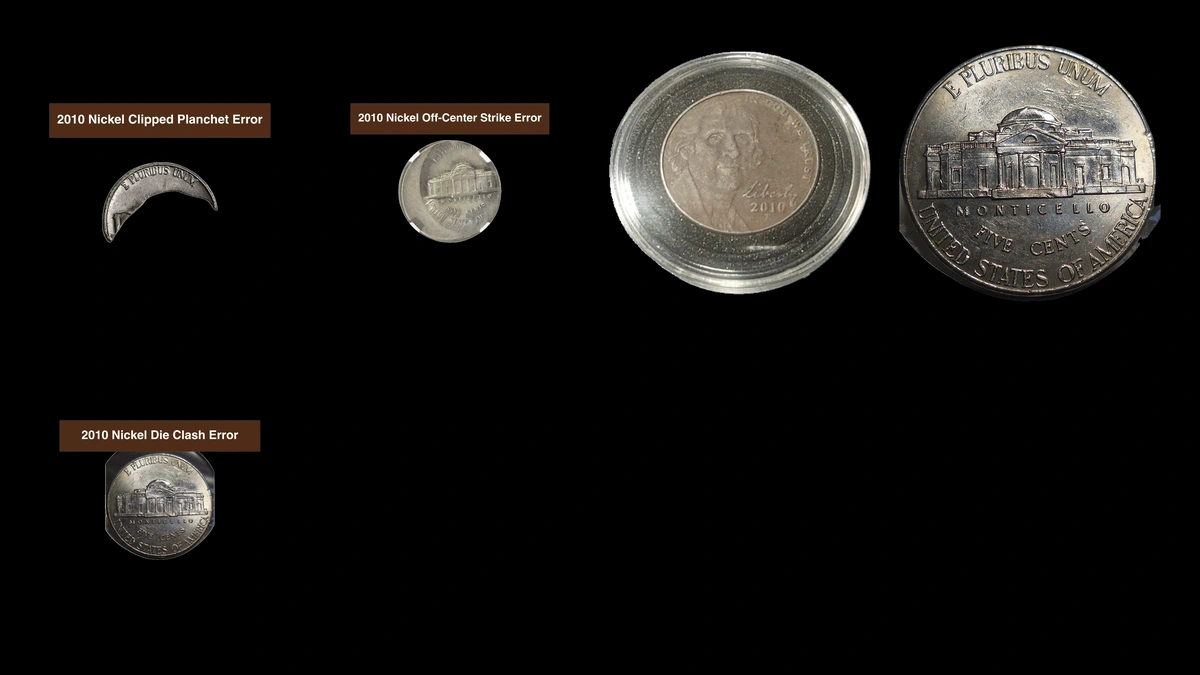
A retained-staple nickel sold for $780 in 2021, but that comparison was dated 1959-D. The supplied evidence for 2010 Jefferson nickel errors supports estimated ranges of $5–$1,500 across several reported types.
Use the visible problem to choose your next check: outline, loose metal, trapped material or altered design.
| Clue | Error to investigate | Estimated range |
|---|---|---|
| Incomplete outline | Clipped blank | $15–$200 |
| Wide coin with complete design | Broadstrike | $25–$250 |
| Unused metal beside cropped design | Off-center strike | $25–$350 |
| Small or unusual-metal disk | Wrong blank | $300–$1,500 |
| Joined opening through thickness | Clamshell split | $75–$500 |
| Material still embedded | Retained strike-through | $50–$750 |
| Different reverse color | Improper annealing | $20–$175 |
| Raised line or rim patch | Die crack or cud | $5–$300 |
| Parallel lines | Feeder-related mark | $10–$150 |
| Traces of opposite design | Die clash | $10–$75 |
| Extra doorway outline | Doubled die | $10–$100 |
For reference, an ordinary 2010 nickel weighs 5 grams and measures 21.21 millimeters with a plain edge. Photograph both faces and the edge, then use magnification and measurements where the suspected error calls for them.
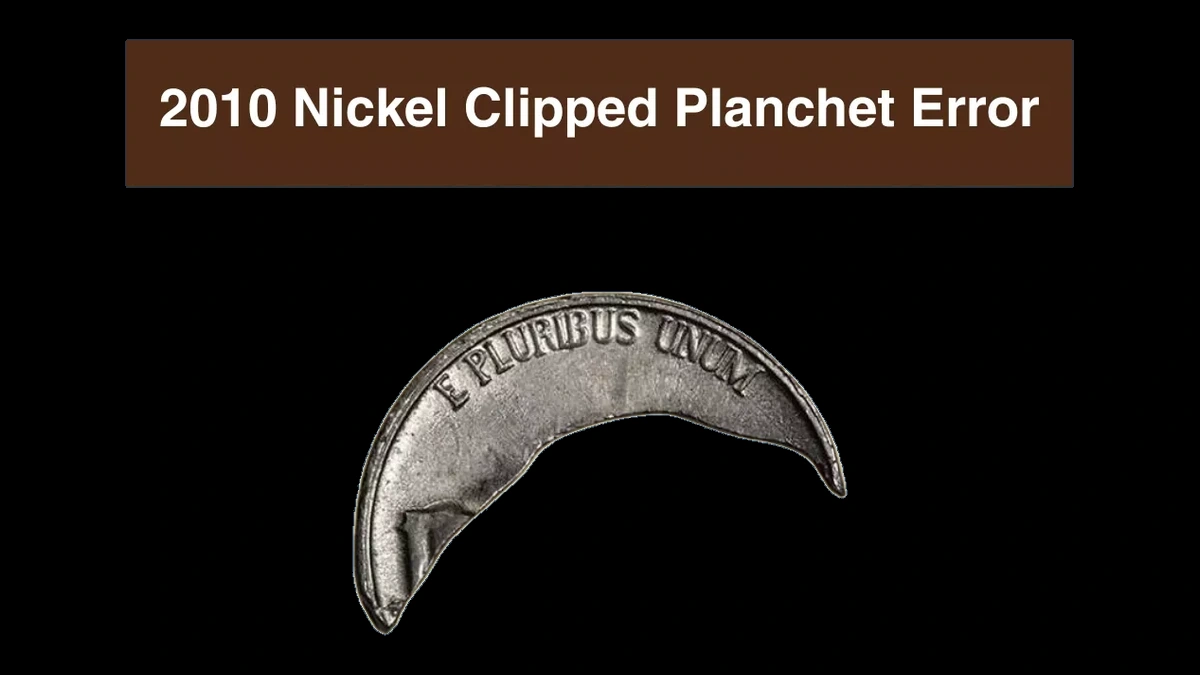
1. 2010 Nickel A Missing Piece of the Outline: Clipped Blank Error
The ends of a gap often reveal more than its size. A blank that was incomplete before striking can show design flowing toward the opening instead of abruptly cut lettering.
A dated 2010-P clip is reported without a confirmed shape or percentage. Such blanks can result from the cutting punch overlapping a hole already present in the metal strip.
How to Identify
Examine the opening and its two ends for natural metal flow, then check the opposite rim for supporting weakness. Saw marks, sharp burrs or file strokes suggest later removal.
Reduced weight supports missing metal but cannot date its removal. Keep the date, mint letter and gap together in a full-coin photograph.
What It’s Worth
Genuine clips are estimated at $15–$75 for modest examples and $75–$200 for larger attractive pieces. An intact date makes the coin easier to identify.
A 1997-P nickel with a 20% curved clip brought $124 in March 2025. That separate coin does not establish the 2010 report’s clip size.
2. 2010 Nickel Extra Width Around a Full Design: Broadstrike Error
If all the design remains inside an enlarged border, investigate a broadstrike. The collar, a ring that normally restrains the blank during striking, failed to contain the spreading metal.
A 2010-D example is reported without an established diameter. The plain edge itself offers no proof because it is normal for a nickel.
How to Identify
Follow the outside words on both faces to see whether they survive in full. Missing design beyond one edge points toward an off-center strike instead.
Record the widest and narrowest spans without squeezing the border. Crushed lettering or hammer marks can reveal a coin widened after minting.
What It’s Worth
Estimated values are $25–$100 for moderate spreading and $100–$250 for a dramatic clean example. Original striking detail should explain the extra width.
A 1999-P broadstrike sold for $89 in March 2025. This is a different-year comparison rather than a sale of the reported Denver coin.
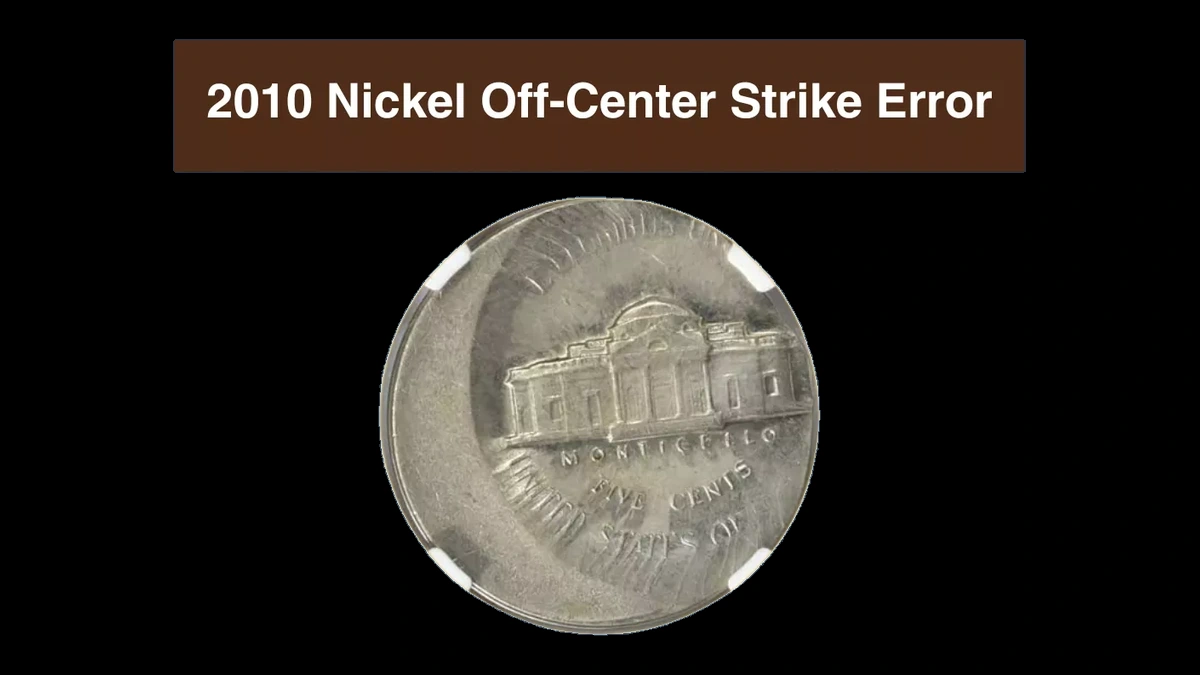
3. 2010 Nickel A Blank Crescent Along One Side: Off-Center Strike Error
Solid unused metal beside an incomplete design can show where a misplaced blank extended outside the dies. The dies are the steel tools that stamp the two faces.
Denver off-center nickels are reported for 2010, without a shared percentage or direction. The unused section is present metal, unlike the opening in a clip.
How to Identify
Orient the surviving date upright and record both faces. One misplaced blank should account for the design lost on each side.
If only one design is shifted, investigate die alignment instead. Inspect the blank-looking area for grinding that may have erased finished detail.
What It’s Worth
Dated modest offsets are estimated at $25–$100, with more dramatic appealing pieces around $100–$350. Heavy damage or a lost date can limit demand.
A damaged 2011-P off-center nickel brought $63 in January 2022. A noticeable offset does not guarantee a high result.
4. 2010 Nickel Nickel Designs on a Different Disk: Wrong Blank Error
When size, metal and weight all seem unusual, consider whether another denomination’s blank entered the nickel press. The larger nickel design may extend beyond that smaller disk.
The supplied 2010 reports do not establish a specific cent-blank or dime-blank specimen. These are possibilities to authenticate, not confirmed discoveries merely because a coin looks coppery or small.
How to Identify
A modern cent blank starts near 2.50 grams and 19.05 millimeters, with copper plating over zinc. A clad dime blank starts near 2.268 grams and 17.91 millimeters, with a copper core between lighter layers.
Allow for spreading during the nickel strike and examine naturally cropped detail. Grinding and coatings can change an ordinary nickel’s appearance without making it a wrong-blank error.
Confirm a readable 2010 date on the coin itself. Surviving earlier designs would indicate an already struck host coin, which differs from an unused blank.
What It’s Worth
Conditional estimates are $300–$1,000 for a confirmed modern cent blank and $400–$1,500 for a confirmed dime blank. The denomination and original surfaces must support the choice of range.
A 1995-P nickel on a dime blank sold for $336 in July 2022. Its auction history does not establish a 2010-dated example.
5. 2010 Nickel A Coin Opening Through Its Thickness: Clamshell Split Error
A joined split can leave the two sides of a nickel opening like a shell. The reported 2010-D type involves a weakness inside the metal, rather than a small surface flake.
Nickels contain one copper-nickel mixture throughout. Their normal construction has no separate outer sheet that should detach from a copper center.
How to Identify
Leave the opening exactly as found and examine any naturally visible inner surfaces. Saw marks or prying scars can expose a later attempt to separate the coin.
Photograph the remaining connection and the split’s route through the edge. Do not pull the halves farther apart or close measuring jaws across them.
What It’s Worth
A genuine joined split is estimated at $75–$200, reaching $200–$500 for a clearer attractive example. Original inner surfaces and the surviving connection are important parts of its condition.
A 1959-D clamshell split sold for $159 in June 2024. Its recorded 3.58-gram weight is not a measurement of the reported 2010-D coin.
6. 2010 Nickel Material Still in the Surface: Retained Strike-Through Error
An obstruction sometimes stays embedded after the strike that pressed it against the blank. The nearby design can stop or weaken where that material blocked the die.
A retained-object strike-through is reported for 2010-D without a confirmed object identity. Calling it wire, cloth or a staple would go beyond the supplied description.
How to Identify
Inspect where lettering or another design line meets the object. The interruption should fit material present during striking.
Check for glue, coatings or a later dent filled with debris. Protect the object from handling and packaging pressure instead of testing whether it can be removed.
What It’s Worth
Estimated values are $50–$250 for genuine retained material and $250–$750 for a larger distinctive example. These ranges price the entire coin with the object in place.
A 1959-D nickel with a retained staple on its front brought $780 in October 2021. That identified object and different date cannot be transferred to the 2010 report.
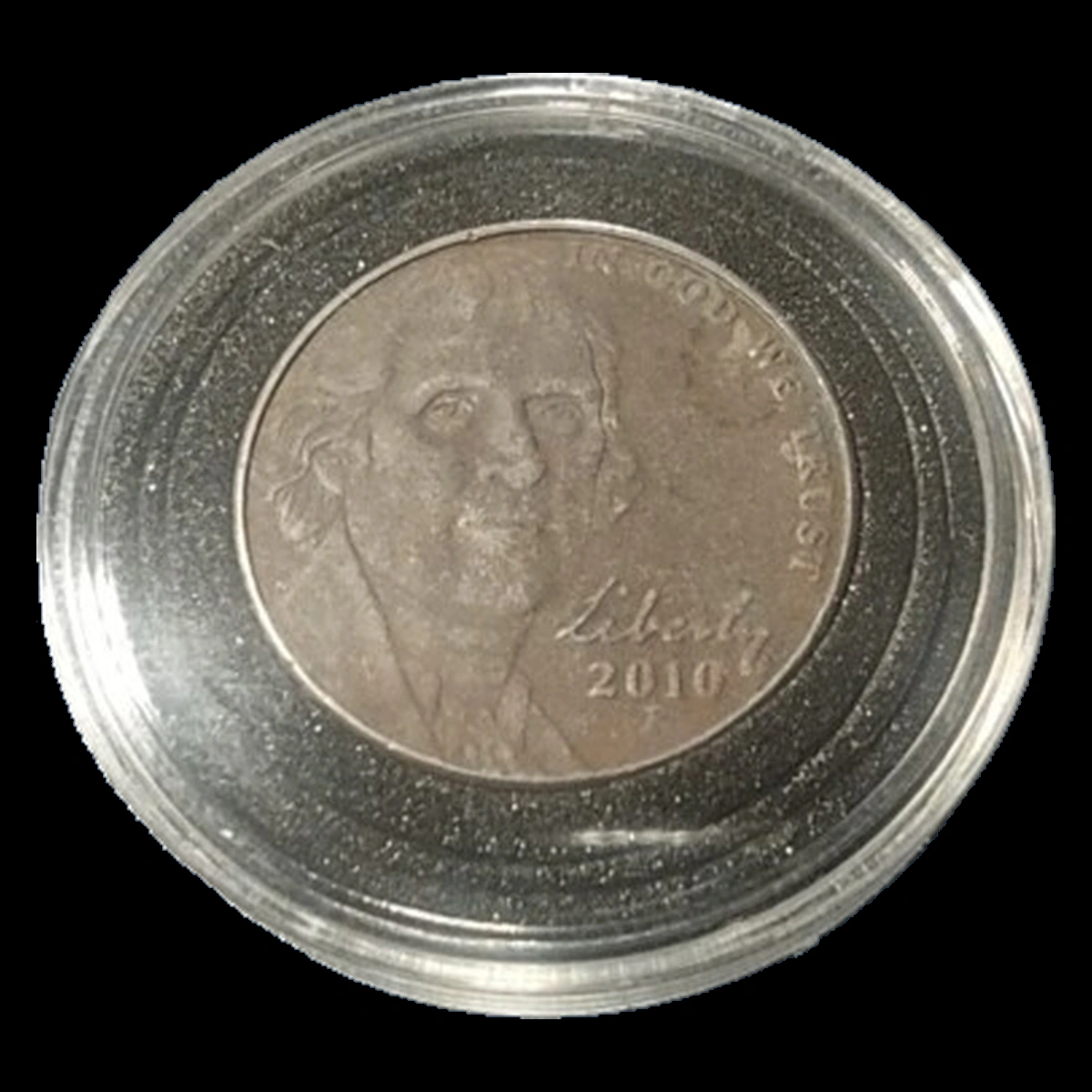
7. 2010 Nickel A Different-Colored Reverse: Improper Annealing Error
The reported 2010-D annealing error has a color difference between its two faces. Annealing means heating a blank to soften it before striking.
A problem during heating can affect its surface, but a normal-looking front cannot establish why the back is dark. Later chemicals, burial and heat remain possible explanations.
How to Identify
Photograph both sides under the same neutral light. Look around protected lettering for corrosion, pooled coatings or paint.
Keep the original surface intact for examination. Polishing away a dark patch removes evidence instead of proving a Mint cause.
What It’s Worth
An authenticated original heating error is estimated at $20–$175. Color intensity matters only after the surface supports that identification.
A 2005-D improperly annealed nickel sold for $119 in December 2022. The sale does not establish the color pattern or value of the reported 2010-D reverse.
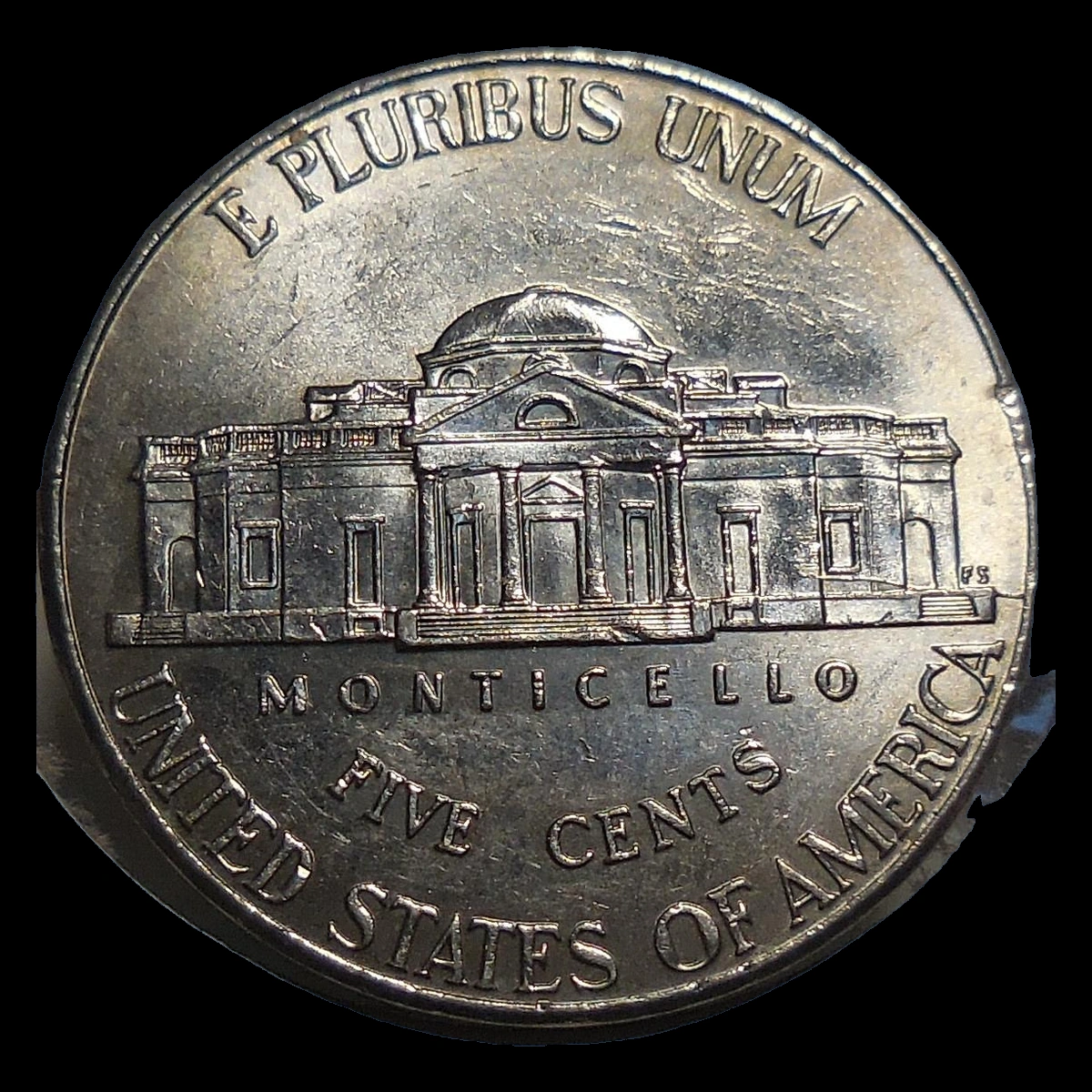
8. 2010 Nickel A Raised Line or Edge Patch: Die Crack and Cud Error
A fine ridge can trace a crack in the die, while a broad raised patch touching the rim can indicate missing die steel. The latter edge break is called a cud.
Separate 2010-D reports concern a front crack and a cud. No single route across Jefferson is established for the crack.
How to Identify
For a suspected cud, show the continuous connection to the rim. An isolated interior lump is not the same kind of break.
Check for solder seams and nearby impact damage, including on the opposite face. For a narrow line, distinguish a raised ridge from a scratch with a sunken center.
What It’s Worth
Minor die cracks are estimated at $5–$40, and clear rim-connected cuds at $40–$300. A crack leading into a cud is part of one coin’s value, not an additional full price.
A worn 1983-P cud nickel brought $63 in July 2022. Its different year and condition remain part of that comparison.
9. 2010 Nickel Parallel Front Lines: Feeder-Related Marks Error
Reports associate parallel front lines on a 2010-P nickel with feeding equipment. A feeder finger can scrape the die, leaving grooves that produce raised lines on later coins.
An object pressed directly into one blank is another mechanism. Parallel appearance alone cannot decide which event occurred.
How to Identify
Use side lighting to establish whether the marks rise above or cut into the surface. Follow them across letters and portrait detail, where later abrasion may be easier to recognize.
Show several lines together for specialist comparison. Neither a fixed direction nor a particular direct-object impression is established for the reported coin.
What It’s Worth
Correctly identified feeding-related marks are estimated at $10–$150. A faint group of die lines usually warrants a different comparison from a distinctive supported impression.
No verified sale accompanies the Philadelphia report. Scratches and polishing marks acquired later do not receive this error premium.
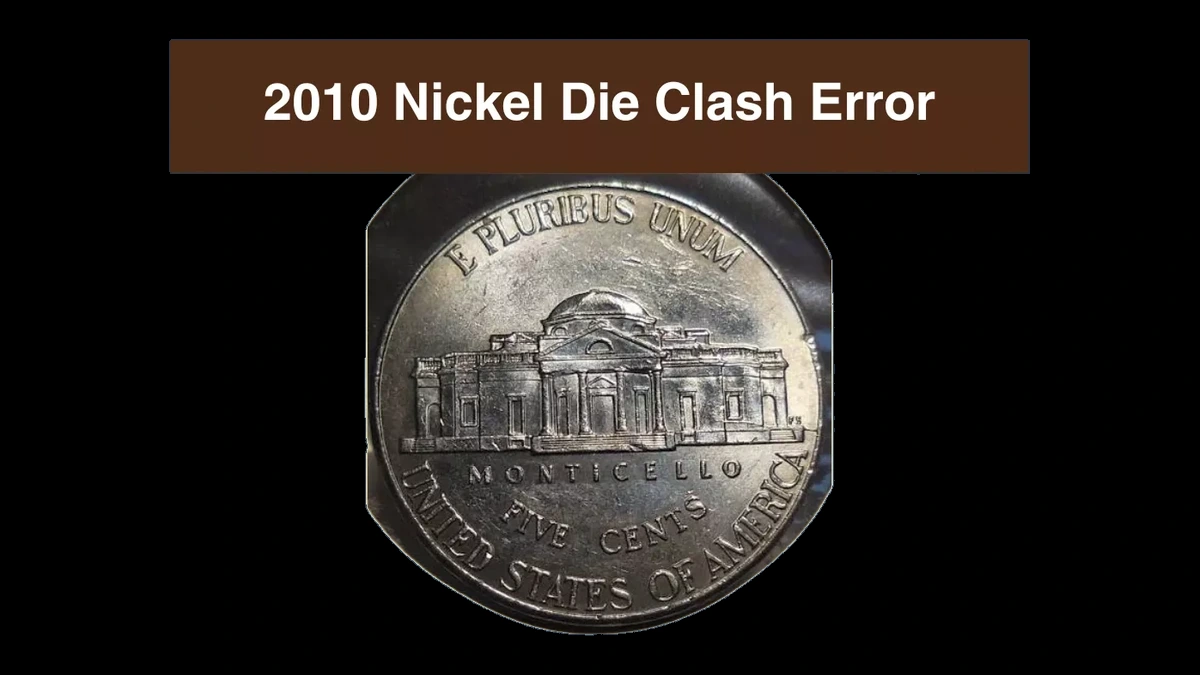
10. 2010 Nickel Fragments from the Other Face: Die Clash Error
An unexplained curve becomes more informative when it matches a part of the opposite design. Two dies can touch without a blank between them, damaging their faces.
Later coins can carry traces of that contact. The supplied 2010 clash reports do not establish a fixed mint or position.
How to Identify
Use the correct forward-facing 2010 portrait in comparisons. An older side-profile Jefferson provides the wrong shapes.
Trace more than one recognizable fragment where possible and inspect both faces for squeezing damage. One random scratch is not enough to demonstrate a clash.
What It’s Worth
A recognizable original die clash is estimated at $10–$75. Clear matching shapes and preserved surrounding detail improve the comparison.
The range is an estimate for reported examples, without an identified 2010 auction result. Marks pressed into a finished coin later have a different origin.
11. 2010 Nickel Repeated Doorway Detail: Doubled Die Error
Look just below the upper frame of Monticello’s central door on the recorded Philadelphia variety. An additional outline belongs to the die’s design, so a coin did not need two strikes to receive it.
A separate Denver report concerns front doubling. It does not establish that the Philadelphia doorway coin also has a doubled portrait.
How to Identify
Find the mint letter, then compare the reverse with the 2010-P doorway listing. Include the steps below the doorway to make the location clear.
Move the light to distinguish a fixed raised outline from a reflection. Sharp steps, thick letters and flat shelves caused by striking movement do not establish this variety.
What It’s Worth
Matched minor varieties are estimated at $10–$40, with clearer well-preserved examples around $40–$100. The catalog supplies diagnostic photographs rather than a completed sale for this range.
A Denver front requires its own matching evidence. Wear that obscures the small doubled feature can prevent a useful attribution.
Conclusion
For a 2010 nickel, identify the physical event before choosing a price comparison. Missing metal, an enlarged complete design and a smaller wrong blank may all change the outline, but their evidence differs.
Fragile splits and retained objects deserve untouched photographs, while tiny varieties need a mint-specific match. Keep different-year auction results attached to their actual coins and treat unsupported 2010 descriptions as reports until the specimen supplies the missing details.