Rare 1886 Nickel Errors (List & Pictures)
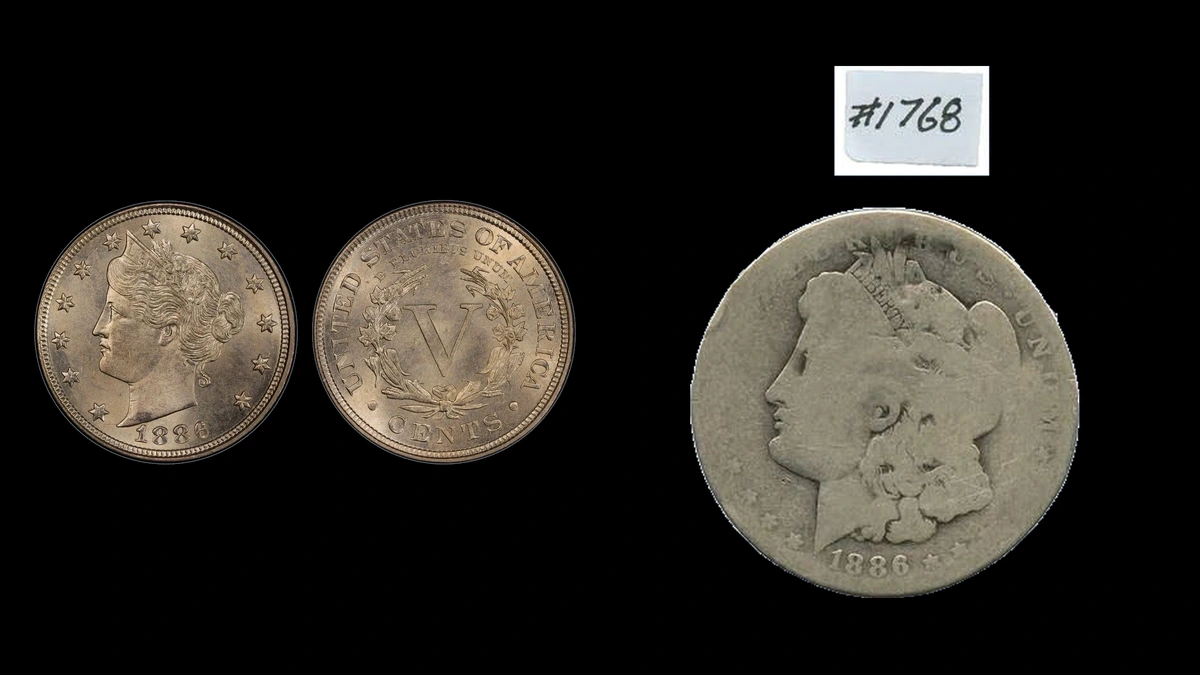
With 1886 Liberty Nickel errors, a valuable date can account for much of the price before an unusual feature adds anything. Estimated whole-coin values span $150–$5,000, and one MS64 repunched-date coin with a small reverse void sold for $3,120 in August 2023.
Compare the outline first, then examine the date and the small hollow described below. The hollow and repunched date occur together on that recorded specimen but have separate causes.
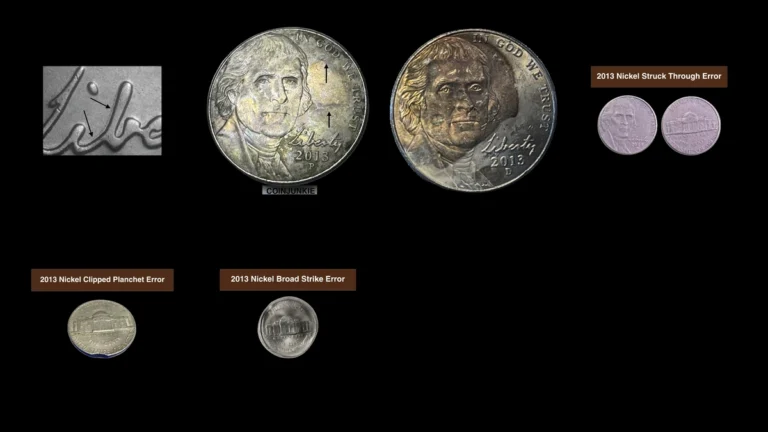
1. 1886 Nickel All the Design Fits on a Wider Coin: Broadstrike Error
The outside stars and lettering help explain a broadstrike more clearly than size alone. They remain on the metal even though the blank spreads beyond its usual outline.
The collar, a steel ring around the blank, normally contains that expansion. If it fails to restrain the strike, the extra border can be uneven instead of perfectly circular.
An 1886 example is recorded in an NGC VF35 holder. That grade describes a circulated coin with substantial detail still visible.
How to Identify
Check both faces for complete outer lettering, stars, and border details. Their position within the expanded metal distinguishes broadstriking from an off-center strike that loses part of the design beyond the edge.
A normal loose Liberty nickel is about 5 grams and 21.2 millimeters, with a plain edge. Measurements in several directions can document expansion, while a weight near normal supports spreading without major metal loss.
Look closely for crushed letters, repeated hammer marks, or a rolled edge. Later flattening can produce a large thin coin without explaining an original complete strike inside the expanded outline.
What It’s Worth
Authenticated examples are estimated at $200–$2,000. This includes the underlying value of the scarcer 1886 date as well as the broadstrike and its condition.
The NGC VF35 listing establishes a circulated example, but no final selling price is adopted here. An opening or unfinished bid cannot be treated as a completed result.
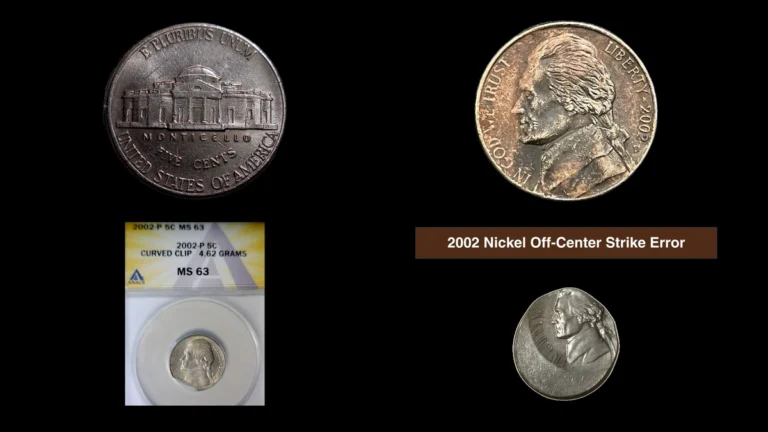
2. 1886 Nickel A Blank Crescent Faces Missing Design: Off-Center Strike Error
When the blank misses its proper position, part of the design falls beyond the metal and leaves an unused crescent on the other side. On a recorded 1886 PCGS Fine 12 coin, the strike is 25% off center toward 1 o’clock.
Its full date and about half the front stars remain visible. The reverse retains the V and most of the wreath.
A separate professional catalog entry records a smaller 7% offset. It describes another specimen, not another blow on the 25% coin.
How to Identify
Locate the 1886 date and inspect both sides for the same displacement. A rim that looks uneven on only one face needs a different explanation.
Photograph the transition between struck design and unused metal, with enough of the coin visible to show what is missing opposite it. Cutting, grinding, or scraping can remove design after striking and should not be confused with an original blank crescent.
The Fine 12 coin’s surviving stars, V, and wreath provide a specific comparison. A candidate with a different offset does not need to reproduce that exact arrangement.
What It’s Worth
Dated 1886 off-center nickels are estimated at $300–$3,000, allowing for different amounts of displacement and wear. The Fine 12 example sold for $930 on August 16, 2019.
A separate PCGS VG10 coin described as 25% off center brought $1,725 in January 2006, including the auction premium. The higher result for the lower grade shows why grade alone cannot set the price.
Neither sale belongs to the cataloged 7% example. Readable identity, appearance, and the individual transaction all matter when selecting a comparison.
3. 1886 Nickel Extra Numeral Strokes Surround the Date: Repunched Date Error
A worker’s repeated date punch could leave remnants of an earlier position in the die, the tool that stamps the coin. Coins made from that die then repeat the same extra numeral strokes.
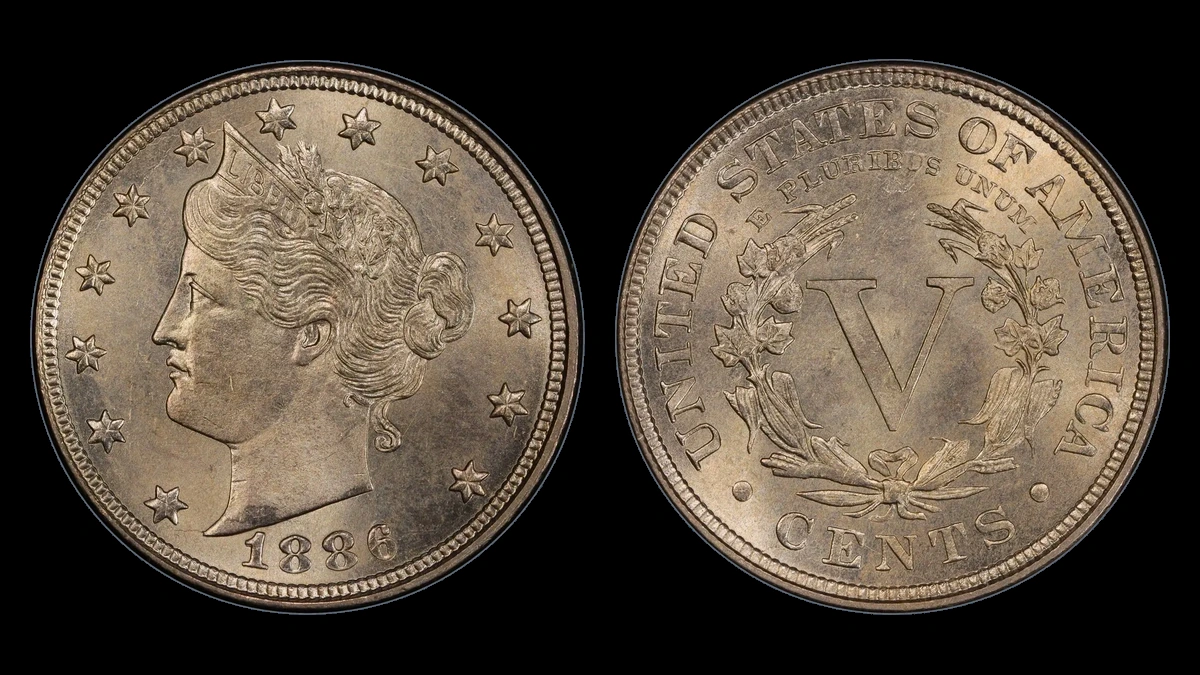
The recorded 1886 variety is called FS-301, also cataloged as VP-001. Its examination includes the final 86 and traces at an earlier digit.
This date variety appears on the MS64 coin that also has a small reverse hollow. Finding one feature does not establish the presence of the other.
How to Identify
Compare the full date with an identified FS-301 image, keeping the viewing angle consistent. Follow the extra numeral outlines through several parts of the pattern rather than deciding from one thick digit.
Side lighting can separate rounded raised strokes from a flat shelf or a cut. Wear may hide some remnants, so a partial match needs more care than a clear complete pattern.
The reverse hollow is a characteristic of one recorded specimen, not a required marker for every FS-301 coin. Identification rests on the date itself.
What It’s Worth
Identified examples are estimated at $200–$5,000, including the basic value of the 1886 date. Preservation and the clarity of the extra strokes influence the comparison.
The PCGS MS64 auction record reports $3,120 at Stack’s Bowers in August 2023. That is the whole coin’s price, including its condition and small reverse void.
A worn or cleaned example needs a condition-appropriate comparison even when the variety matches. The shared date attribution does not erase those differences.
4. 1886 Nickel A Shallow Hollow Sits below STATES: Planchet Void Error
Below the final S in STATES, the cataloged MS64 coin has a small shallow hollow described as an original metal flaw. A planchet void is an area where the blank lacked a normal solid surface when the coin was made.
The feature is distinct from the repunched date on the front. One concerns the blank’s metal, while the other originated in the die.
How to Identify
Keep the final S and surrounding lettering in the photograph so the location remains clear. Low side lighting helps reveal the boundary and texture inside the shallow hollow.
A later punch can displace metal around a depression, and corrosion can leave rough pits with disturbed nearby surfaces. Compare those possibilities before accepting an original production flaw.
A tiny void may barely affect the coin’s weight or diameter. Normal measurements therefore cannot establish when a depression formed.
What It’s Worth
Comparable small original voids occur on coins estimated at $150–$3,500, largely according to the whole coin’s condition. This is not a guaranteed large premium for a tiny hollow.
The MS64 repunched-date coin sold for $3,120 in August 2023, as described above. There is no separate payment to add for its void and no breakdown allocating the price between the two features.
Conclusion
An 1886 Liberty nickel’s date and preservation can contribute more to its price than a modest original flaw. Identify the visible feature before deciding how much of a comparison depends on the error.
A widened complete design differs from an off-center one, and extra date strokes differ from a void in the blank. Keep the MS64 coin’s two features tied to its single sale rather than counting that result twice.