Rare 1879 Nickel Errors (List & Pictures)
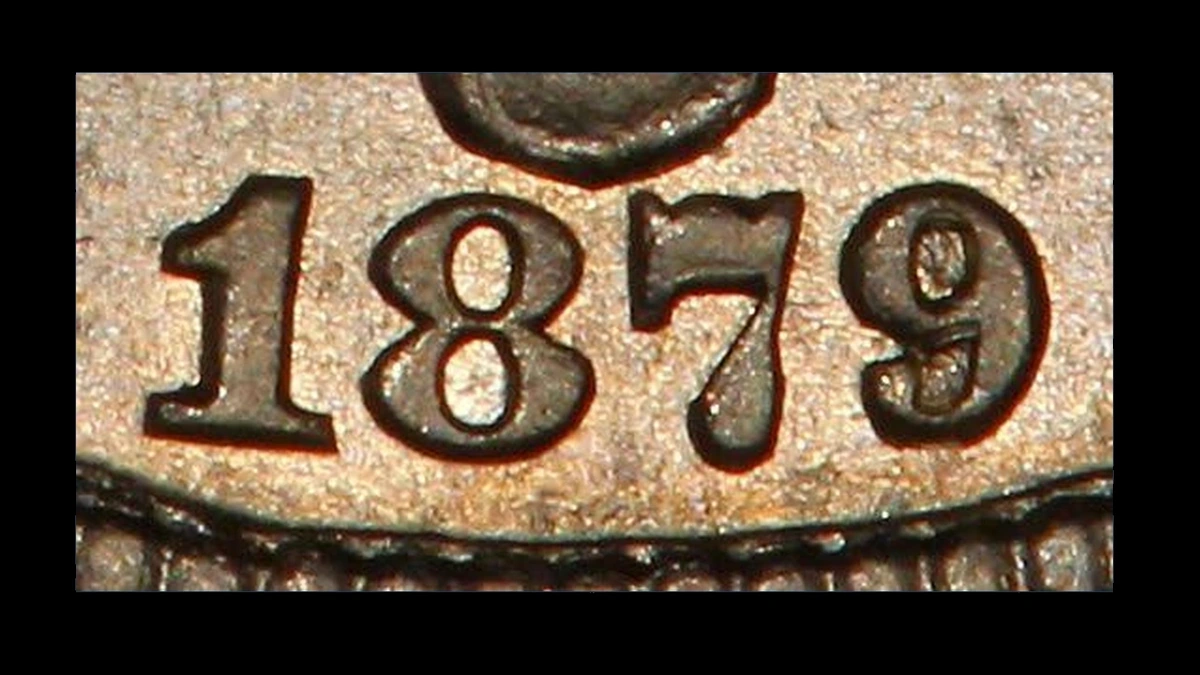
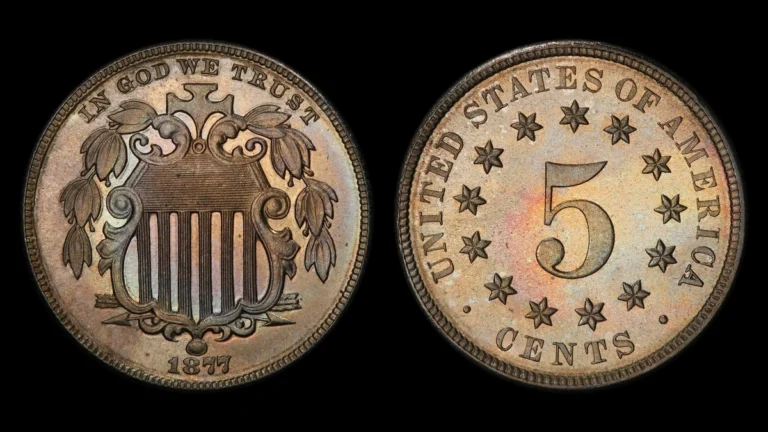
On an 1879 Shield nickel Proof, the position of an extra date stroke can distinguish a repeated numeral from an older numeral underneath it. A flat shelf beside the date can have a third explanation: movement during striking.
Estimated whole-coin values for 1879 nickel errors range from $300 to $84,000, including an exceptional 1879/8 Proof sold for $84,000. Compare the strokes beside the digits first, then inspect inside the final 9.
1879 Nickel Extra Strokes Lie beside Several Digits: Repunched Date Error
The repunched-date Proof has remnants to the left of 1, 8, and 9. These traces came from the date being punched into the die again in a slightly shifted position.
Each coin struck from that die could reproduce the same small remnants. The visible effect is concentrated in the date rather than a second impression of the entire shield design.
How to Identify
Look at all three affected numerals instead of choosing whichever edge appears most dramatic. The Shield Nickel variety listing places the earlier strokes to their left.
Some examples also have strong mechanical doubling, which creates flat ledges through movement during striking. Separate those shelves from the smaller rounded date remnants before making the attribution.
Confirm Proof manufacture using the coin’s full surfaces and an identified comparison. Shine alone is insufficient because polishing can make a circulation coin reflective.
A loose Shield nickel normally weighs about 5 grams, measures 20.5 millimeters across, and has a plain edge. These measurements support its basic identity but do not prove repunching, and an encapsulated Proof should remain in its holder.
What It’s Worth
$300–$3,500 is an estimated range for an identified repunched-date Proof, with surface preservation a major factor. This is the value of one complete coin, not a separate charge for each affected digit.
A normal-date 1879 Proof graded PR67+ brought $3,055 in May 2021. That exceptionally well-preserved comparison helps illustrate the underlying Proof value, but does not establish a measured premium for repunching.
Cleaning scratches or other impaired surfaces can reduce the relevance of such a high-grade result. A visible variety does not erase the effect of condition.
1879 Nickel A Curved Remnant Survives inside the 9: 1879/8 Overdate Error
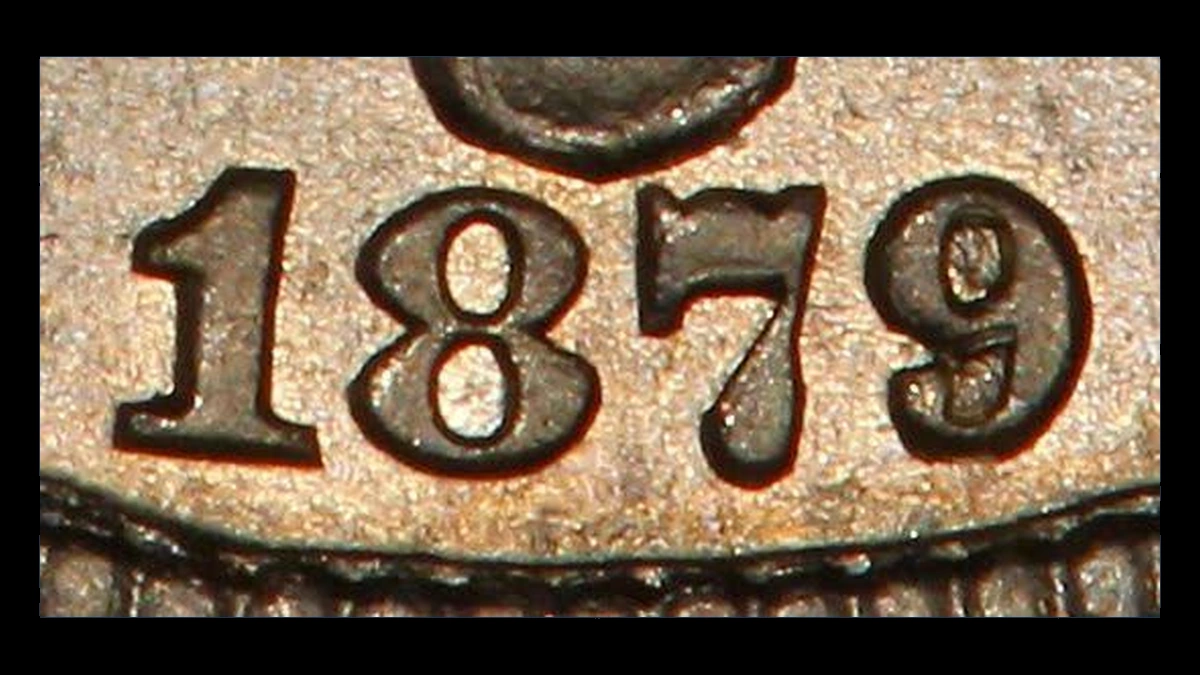
The lower interior of the final 9 contains the important remnant on this variety. Its shape belongs to an earlier 8 that was incompletely covered when the die’s date was changed.
This is an overdate because a different numeral replaced the old one. It is distinct from the shifted impressions of the same digits in the repunched date above.
How to Identify
Establish the recognized Proof identity and compare the final digit with an attributed 1879/8 photograph. Follow the lower internal curve of the 9 under changing light to determine whether it contains matching raised remnants.
Dirt or a scratched groove can create misleading shapes in the opening. Do not scrape it clean, and do not use ordinary mechanical doubling beside the numeral as a substitute for the older 8.
What It’s Worth
$400–$10,000 is a broad working estimate across lower through excellent Proof grades, with the exceptional recorded sale extending to $84,000. PCGS records the nearly flawless PR69 example selling at Heritage for $84,000 in January 2019.
A PR68 example brought $8,640 in December 2022. The large difference between these two whole-coin results shows why the maximum should not be treated as a routine price for any readable overdate.
Conclusion
Use the location and shape of the extra metal to sort these 1879 Proof varieties. Repeated strokes beside several digits point toward repunching, while a matching older 8 within the final 9 identifies the overdate.
Flat mechanical doubling needs a separate explanation. Preserve the date and reflective surfaces, and compare the grade as carefully as the variety before applying an exceptional auction result to another coin.