Rare 1993 Dime Errors (List & Pictures)
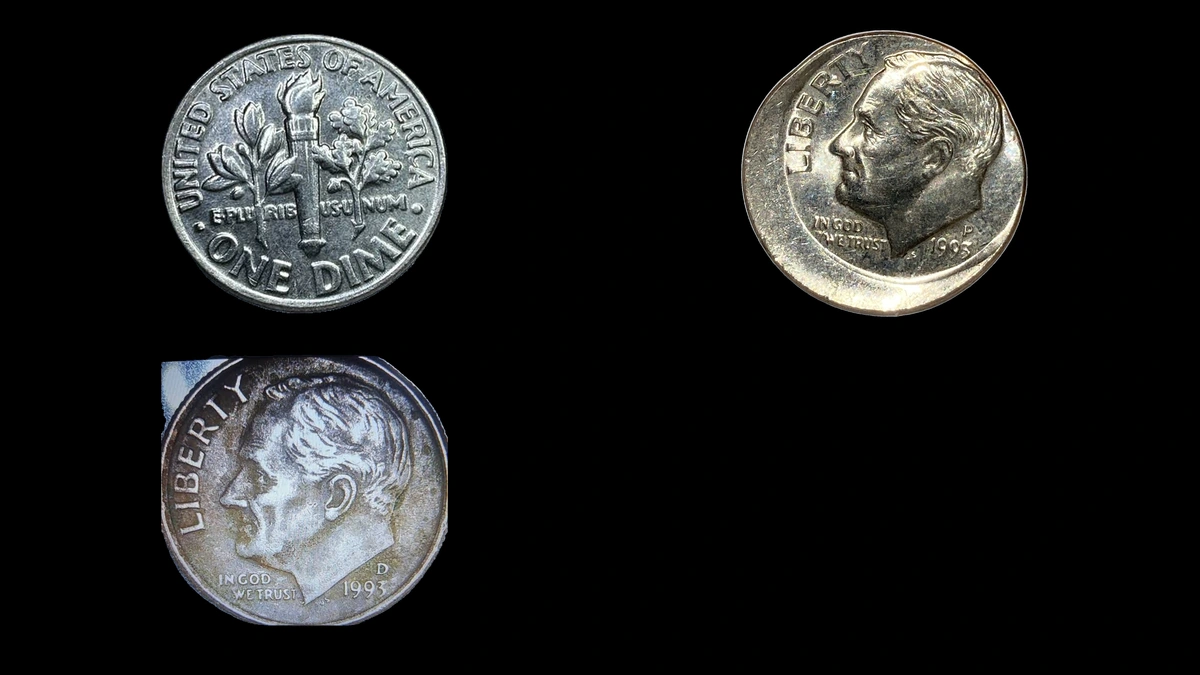
A finished 1993 dime later struck with a 1994 cent design preserves two denominations on one piece of metal. That PCGS MS66 example sold for $3,120.
Estimated values for 1993 dime errors range from $5 to $4,500, including much smaller and less certain features. Begin with the mint mark and local design, then compare alignment, missing metal, surface color, and any overlapping second denomination.
| Visible clue | Category or report | Estimated range |
|---|---|---|
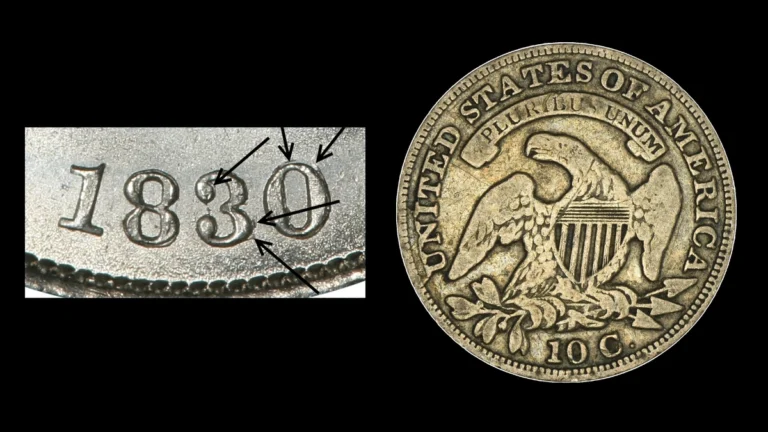
| Narrow S on a Proof | Unconfirmed thin-S style | $5–$100 for the whole Proof |
| Local weak or missing design | Strike-through | $10–$350 |
| Shifted front with opposite-design traces | Misaligned die and clash | $10–$250 |
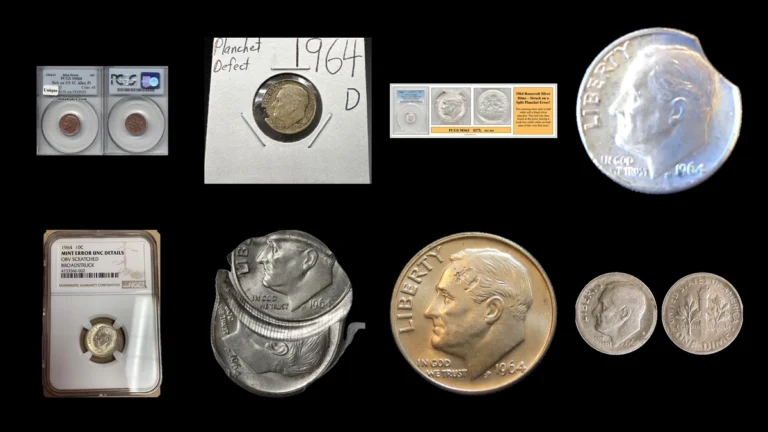
| Curved missing section | Clip | $20–$300 |
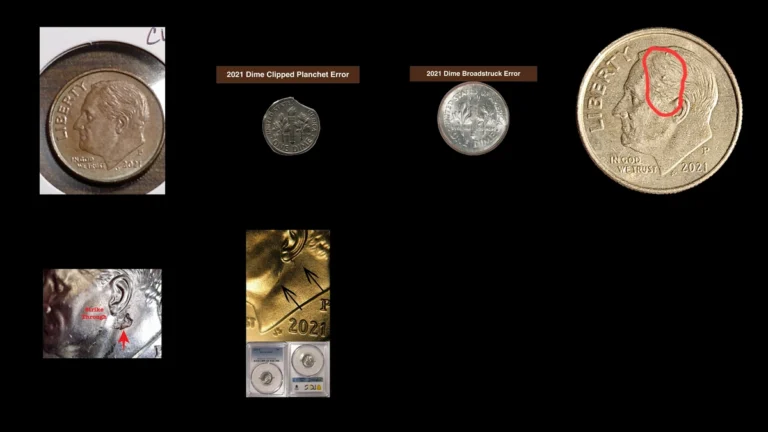
| Expanded complete design | Broadstrike | $25–$400 |
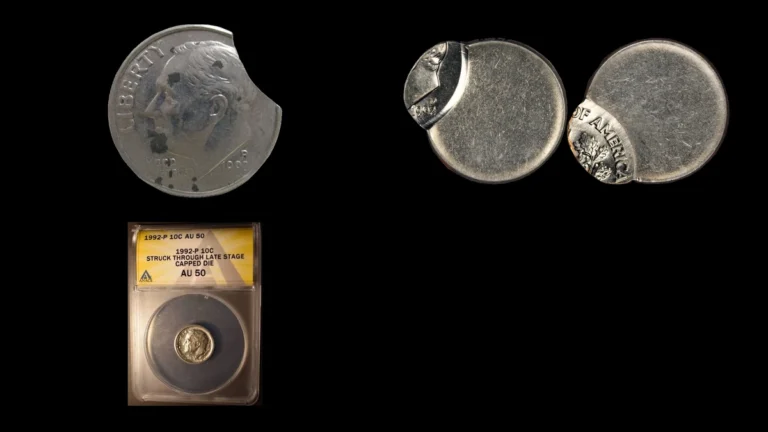
| Displaced incomplete design | Off-center strike | $30–$500 |
| Physical loss of an outer layer | Missing clad layer | $100–$750 |
| Abnormal original surface color | Reported annealing error | $20–$200 |
| 1994 cent over a struck 1993 dime | Double denomination | $1,500–$4,500 |
1. 1993 Dime A Proof’s S Looks Unusually Narrow: Reported Thin Mint Mark Error
A historical dealer listing questioned the thin appearance of an S on a dime still inside a complete 1993 Proof set. The question did not establish a recognized Type 2 variety.
How to Identify
Compare the entire S with a normal 1993-S Proof under the same lighting, ruling out glare and holder scratches. Consistent thinness is an observation, not independent proof of a new mint-mark style.
Check the original set’s identity without opening it: 1993-S Proof dimes exist in regular clad and 90%-silver versions. Their normal weights are about 2.268 and 2.50 grams respectively, with a 17.91-millimeter diameter and reeded edge.
What It’s Worth
$5–$100 is a whole-coin estimate for the individual Proof based on metal and preservation, not an established thin-S premium. The historical listing requested a $25 minimum bid for the entire set.
That threshold was neither a completed sale nor a separate dime price. A narrow-looking letter alone does not establish a major rarity.
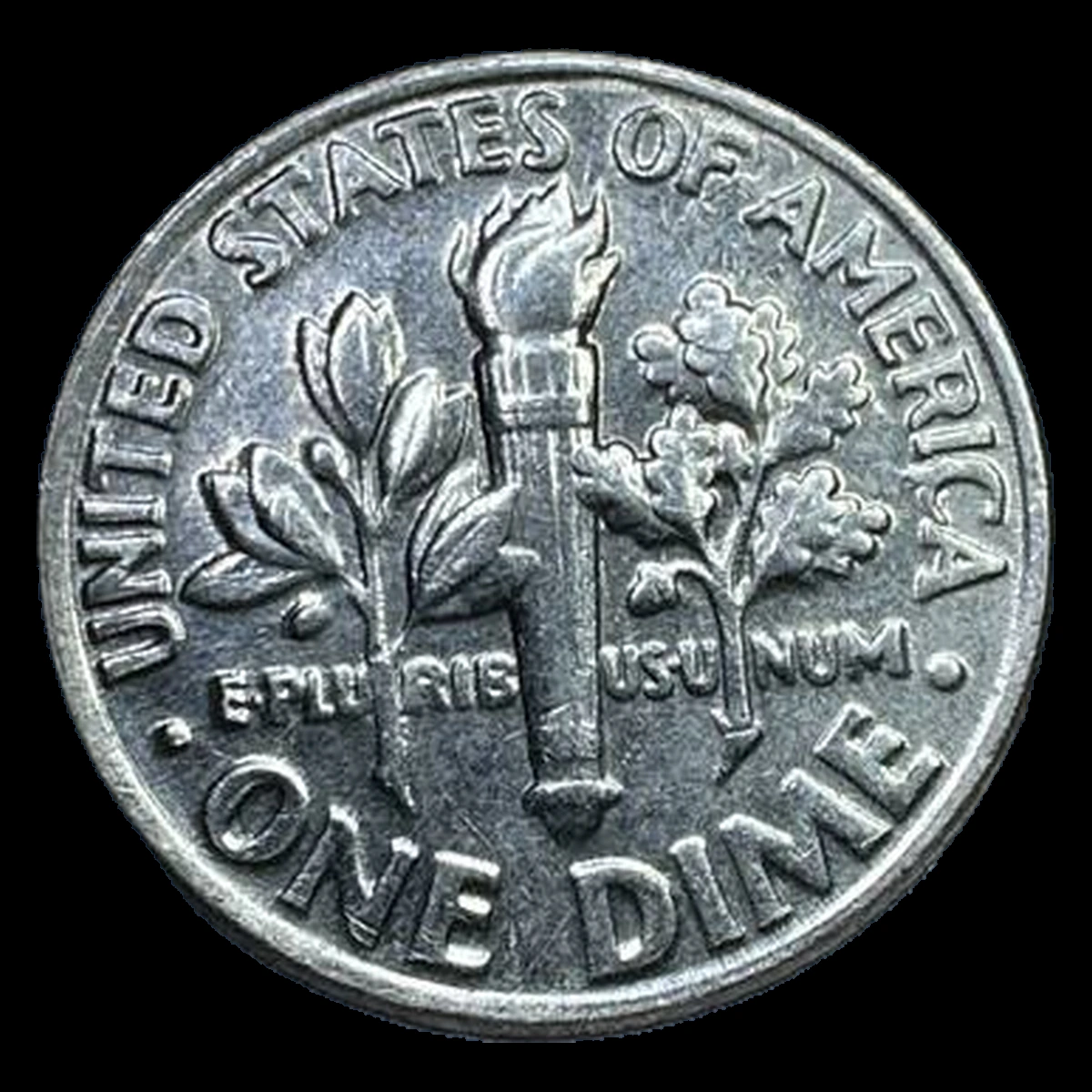
2. 1993 Dime A Local Patch or Final Digit Is Weak: Struck Through Material Error
One NGC AU55 auction specimen has an obverse strike-through and its year placed in parentheses, indicating that the full date should not be assumed readable. Another report concerns a weak final 3, tentatively attributed to grease.
How to Identify
Compare clear neighboring detail with the interrupted area and check for scraping or chemical attack. General wear across exposed high points differs from material blocking a local part of the strike.
The weak-3 report establishes neither the material nor its mint. Keep that pattern separate from the AU55 coin’s inferred date and broader obverse interruption.
What It’s Worth
$10–$350 is an estimate for genuine blocked-design errors, depending on visibility and preservation. The AU55 specimen’s April 2026 listing has no final price used in the supplied material, and its opening bid is not a completed sale.
3. 1993 Dime The Front Is Shifted and Both Faces Have Extra Traces: Misaligned Die with Clash Error
The recorded 1993-P NGC MS62 coin combines a displaced obverse with clash marks on both faces. Misalignment moves one die sideways; clashing marks the dies when they meet without a blank and can transfer opposing-design traces to later coins.
How to Identify
Photograph both complete rims to compare the shifted front with the more centered reverse. Then identify separate fragments of the opposite design rather than using an extra rim as proof of a clash.
The supplied record establishes no fixed shift angle or clash location. A separate doubled-rim report does not by itself show that the coin received two strikes.
What It’s Worth
$10–$250 is an estimate for comparable genuine examples, with the combination’s clarity and condition guiding the price. The MS62 shifted-and-clashed specimen sold for $63 in April 2021.
That is one whole-coin result for both features. A slight rim shift without recognizable clashes should not automatically receive the same comparison.
4. 1993 Dime A Curved Gap Removes Part of the Outline: Clipped Planchet Error
The documented Philadelphia ANACS AU58 clip weighs 2.18 grams. Its blank was incomplete before the dies formed the design and rim around the missing section.
How to Identify
Inspect both ends of the opening for natural rim formation and the remaining reeding for later filing. Opposite-rim weakness can support the diagnosis but may not be equally visible on every clip.
For loose ordinary clad dimes, use 2.268 grams and 17.91 millimeters as normal references throughout the remaining checks. The small loss in this specimen supports an incomplete blank but cannot establish the cause without edge evidence.
What It’s Worth
$20–$300 is an estimate for genuine curved clips. The 2.18-gram example appeared at auction in May 2026, but no final amount is supplied here.
A 1997-P nickel with a 20% clip sold for $124 in March 2025. That cross-denomination comparison does not establish a price or clip percentage for the dime.
5. 1993 Dime The Complete Design Fits within an Expanded Edge: Broadstrike Error
A broadstrike occurs when the collar fails to provide its normal restraint around the blank. A reported 1993-D example belongs to this category, with the design retained on outwardly spread metal.
How to Identify
Measure several spans and follow the outer lettering on both faces. The enlarged outline and complete design should agree with reduced collar control.
A smooth edge alone is insufficient because damage can flatten the reeds without broadstriking the coin. Crushed relief, battered rims, or later pressure marks need a different explanation.
What It’s Worth
$25–$400 is an estimate for a genuine 1993-D broadstrike. A separate 1997-P dime combining broadstriking with an indent sold for $58 in January 2003.
The extra indent belongs to that comparison coin, not the reported Denver specimen. A modest expansion should be compared with similarly modest errors.
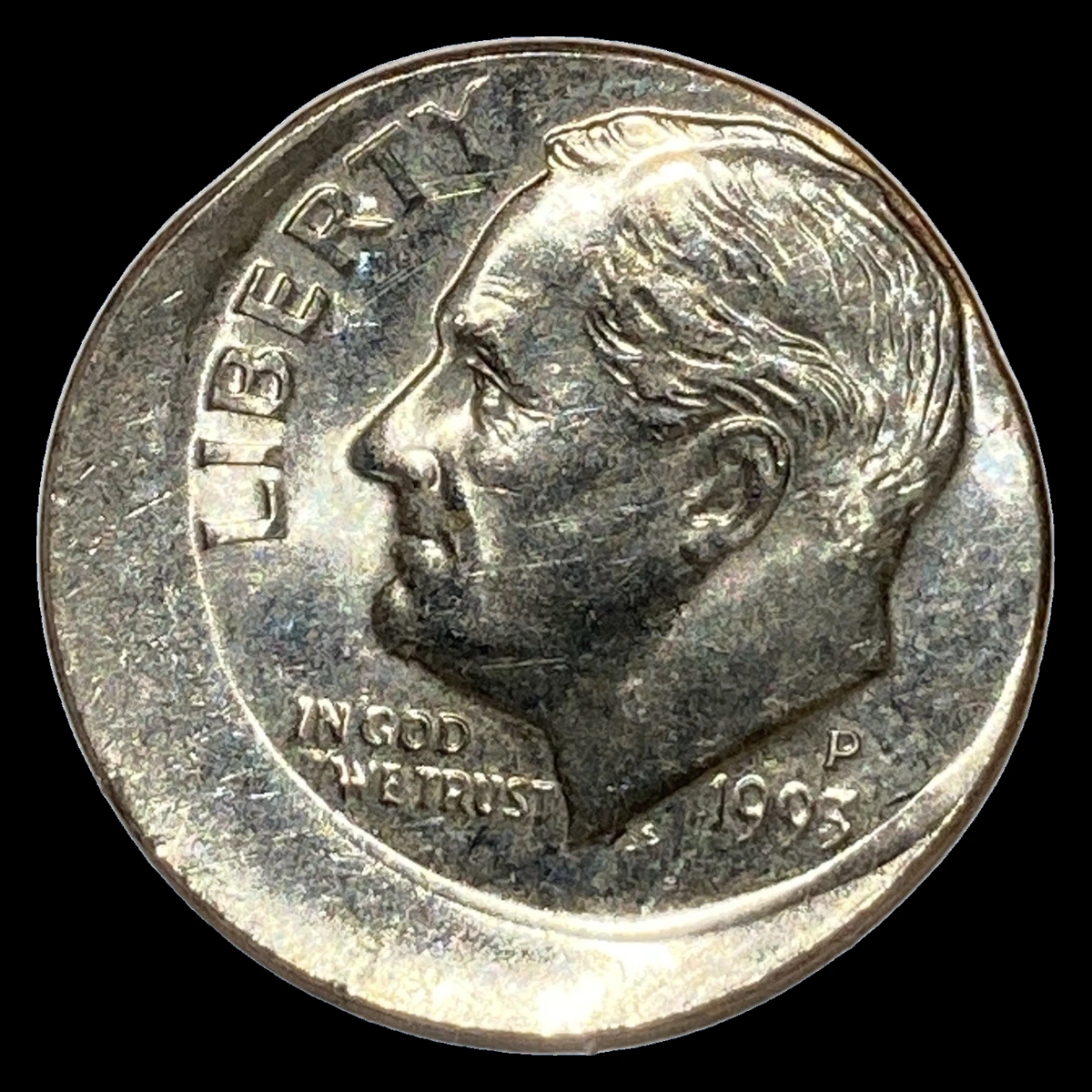
6. 1993 Dime The Design Is Shifted toward Twelve O’Clock: Off-Center Strike Error
The documented 1993-P ANACS MS64 coin was struck 30% off-center toward twelve o’clock. Part of the disk remained unstruck while intended design fell outside its outline.
How to Identify
Compare both faces for the same blank displacement and confirm that metal remains in the unstruck area. A clip removes metal, while a misaligned die can shift only one face.
Match the date, mint, and stated geometry with the actual specimen. Other dimes in its auction lot had different percentages and directions that do not describe this coin.
What It’s Worth
$30–$500 is an estimated range for individual genuine 1993 off-center dimes. The 30% specimen was part of a three-dime lot sold for $75 in January 2022.
The $75 is a group total and supplies no individual price for this dime. Readable date, preserved surfaces, and visible displacement remain the useful comparison factors.
7. 1993 Dime Copper Is Exposed by a Physically Absent Layer: Missing Clad Layer Error
Ordinary clad dimes have silver-colored outer layers bonded to a copper center. A reported 1993-P example is described as missing its reverse layer, with a stated PCGS MS63 Red Brown grade.
How to Identify
Look for the exposed metal and its boundary at the edge, supported by the weight loss expected when a layer is absent. A color label or a coating over intact design does not independently establish the structure.
A separate Denver seller report describes a black coin without identifying an affected face. Keep that uncertain description separate from the Philadelphia reverse-layer report.
What It’s Worth
$100–$750 is an estimate for genuine missing-layer 1993 dimes. A 2018-P example missing its obverse layer sold for $384 in PCGS MS64 in July 2021.
That later specimen’s face, grade, and sale cannot authenticate either 1993 report. Black color alone is not evidence that a layer is absent.
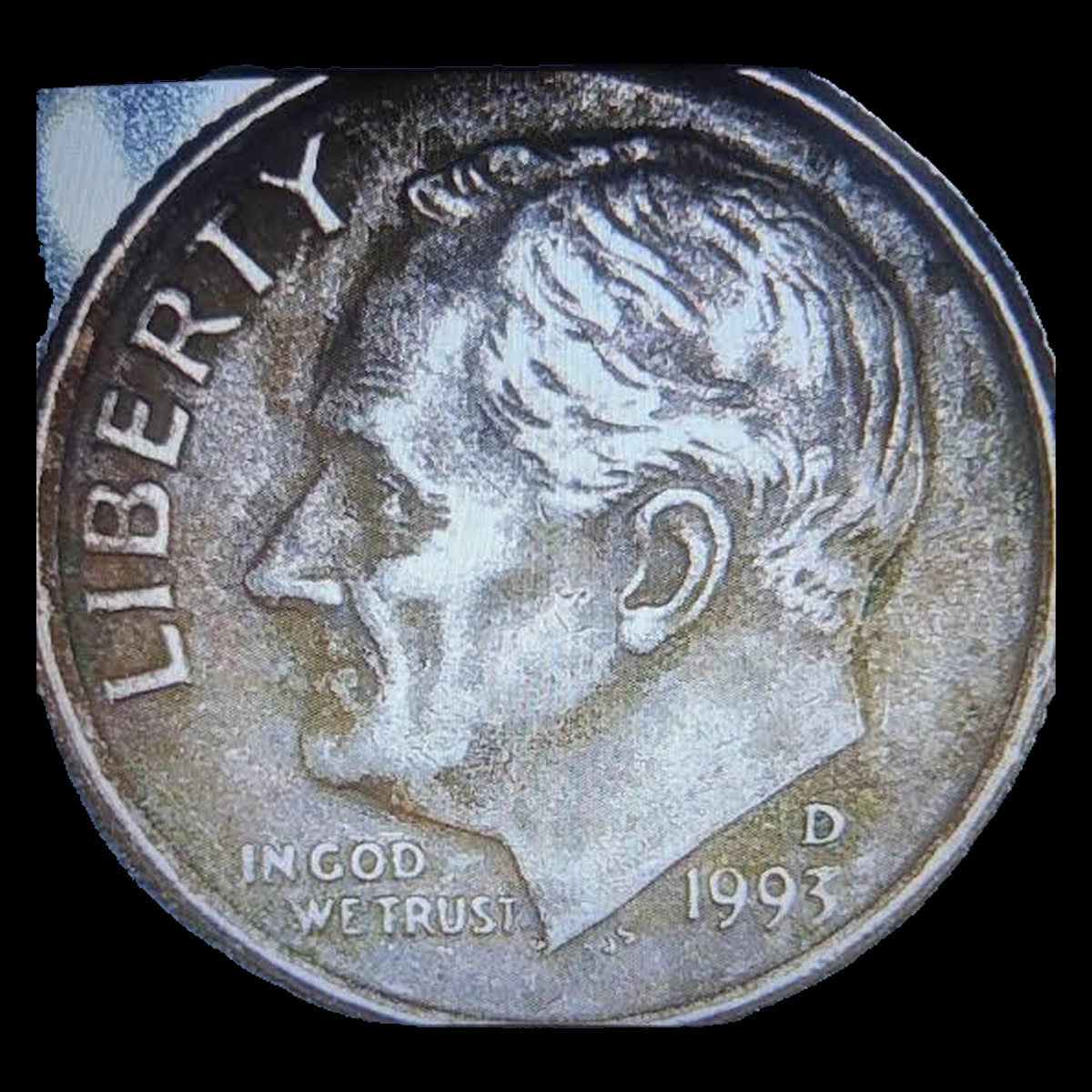
8. 1993 Dime Unusual Color Remains over Struck Detail: Reported Annealing Error
Annealing heats metal to prepare it for striking, and problems during that process can change its surface. The supplied 1993 report attributes unusual coloration to this stage without establishing the cause from color alone.
How to Identify
Inspect the reeded edge and protected design areas for dirt, crusts, corrosion, or flaking coatings. Photograph both faces under neutral lighting and keep the original surface uncleaned.
Soil, chemicals, or heating after minting can create similar shades. Specialist examination should evaluate the struck texture and the timing of the change, rather than treating a dark surface as proof.
What It’s Worth
$20–$200 is an estimate for an identified Mint heating error. A 2005-P dime attributed to improper annealing sold for $74 in NGC MS66 in April 2015, a different-year comparison for the mechanism.
9. 1993 Dime A 1994 Cent Design Covers a Struck 1993 Dime: Double Denomination Error
The recorded PCGS MS66 piece began as a finished 1993 dime before receiving the 1994 Lincoln cent design. Surviving Roosevelt-dime features beneath the later impression establish a sequence involving two denominations.
How to Identify
Trace recognizable older dime details and their intersections with the later cent design on both faces. Confirm the two dates without assigning a mint to the underlying dime, which the supplied record does not specify.
A cent struck on an unused dime blank lacks the earlier struck Roosevelt design and is a different error. The later blow can change the original dime’s outline, so shape or a color label cannot establish a cent blank.
What It’s Worth
$1,500–$4,500 is an estimated range for comparable authenticated examples. The MS66 coin brought $3,120 in Heritage’s June 2024 auction.
That is the price of one coin carrying both designs. Clarity of the underlying dime and later cent, along with preservation, determines the usefulness of the comparison.
Conclusion
Match the evidence to the claim on a 1993 dime: a narrow S needs more than a new variety name, a missing layer needs actual structural loss, and a second denomination needs recognizable underlying design. Both faces and the edge often resolve what color alone cannot.
Preserve set holders and original surfaces. Keep whole-set bids, multi-coin totals, and inferred dates clearly distinguished from individual sale records and fully readable dates.