Rare 1883 Liberty Head Nickel Errors (List & Pictures)
The absence of CENTS is a normal early design feature, so it is not enough to identify 1883 Liberty Head Nickel errors. Look instead for an incomplete blank, repeated design, or metal separation.
Estimated values here span $5–$2,500. A repunched-date MS65 example has a PCGS-recorded $500 eBay result from May 2021; compare the correct No CENTS or With CENTS design before applying it.
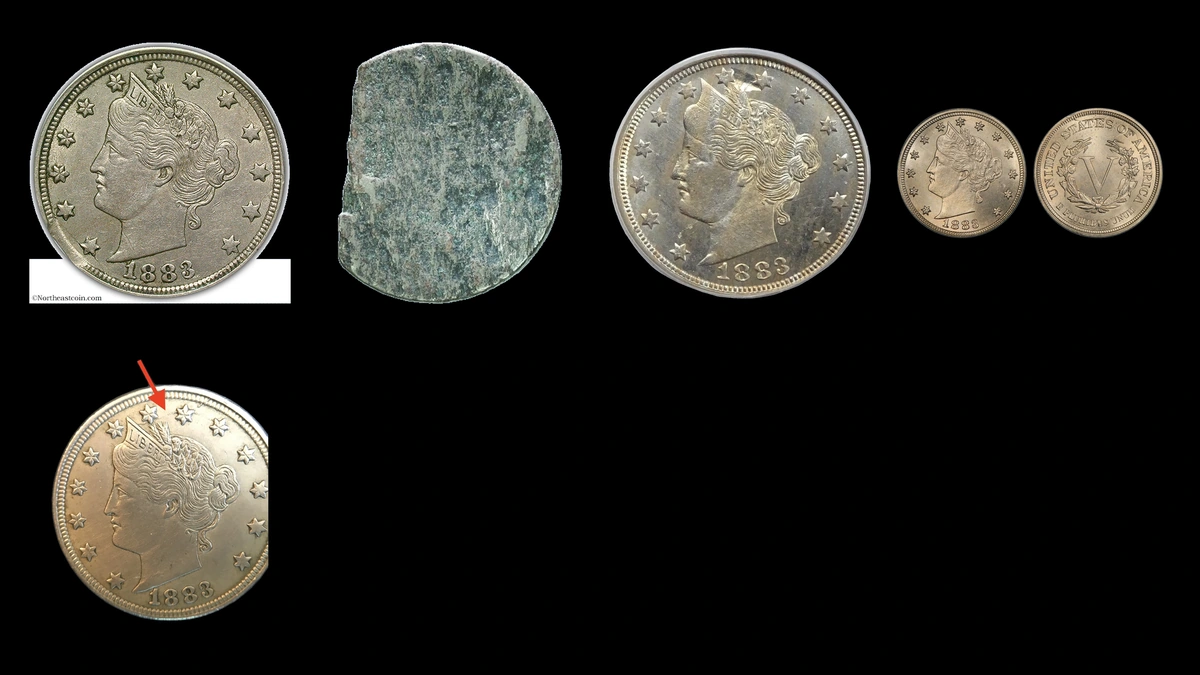
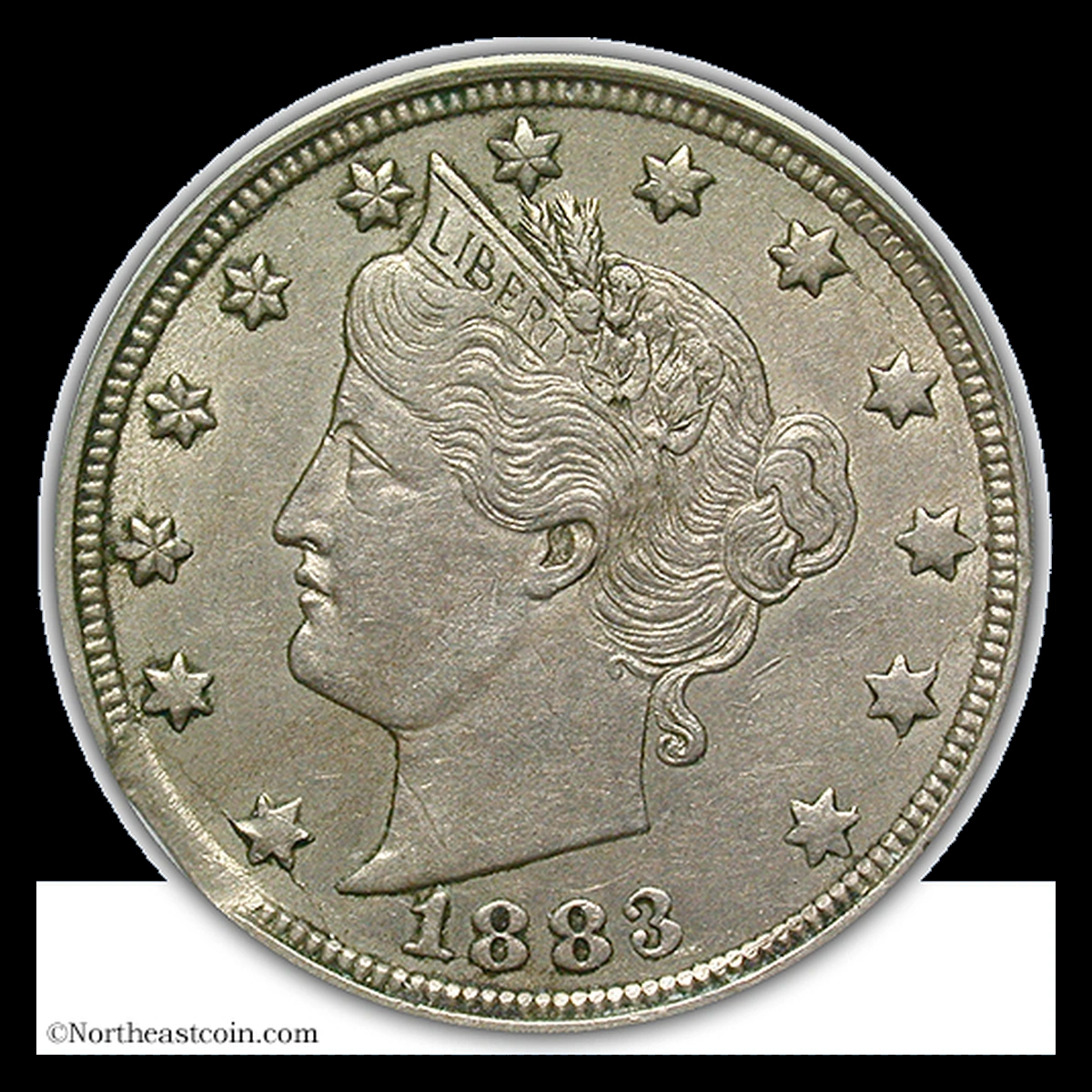
1. 1883 Nickel A Missing Edge Section May Accompany Displacement: Clipped Planchet Error
A With CENTS coin listed in an ANACS AU50 holder has a rim clip. The blank was incomplete before the design was applied, rather than cut after minting.
A separate historical example combines a clip near 10 o’clock with a strike 5% off center toward 6 o’clock. Its absent metal and shifted design are two features on one coin.
How to Identify
First inspect the gap for original struck transitions instead of sharp cuts or parallel file marks. Weakness in the opposite rim can support the clip, although the full boundary matters more than one clue.
Then check whether design also misses the edge away from the opening. A clip alone does not prove off-center striking, and the AU50 listing does not establish the historical combination.
A normal loose Liberty nickel weighs about 5 grams and measures 21.2 millimeters, with a plain edge. Measure surviving full-width spans rather than the gap itself.
What It’s Worth
Worn clips through clearer combined-error pieces are estimated at $100–$1,000. The extent of the shortage, natural edge, and preservation influence the whole-coin comparison.
The ANACS AU50 rim-clip example was offered at $250. A 1981 catalog asked $495 for the separate unworn clip with a 5% off-center strike; both figures are asking prices.
2. 1883 Nickel Two Thin Pieces Preserve One Coin’s Faces: Split Planchet Pair Error
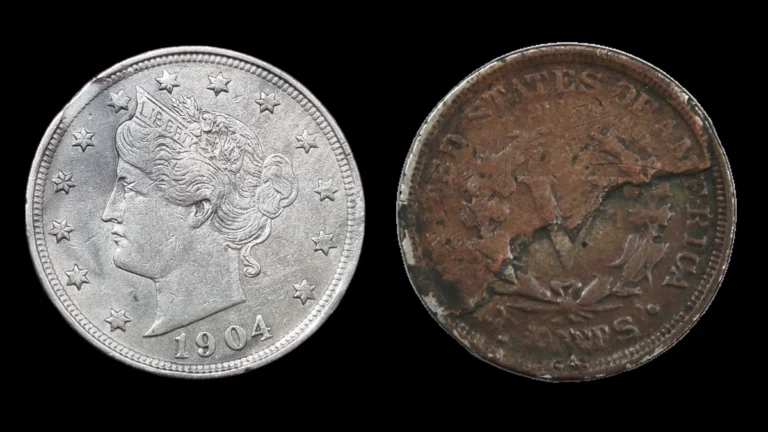
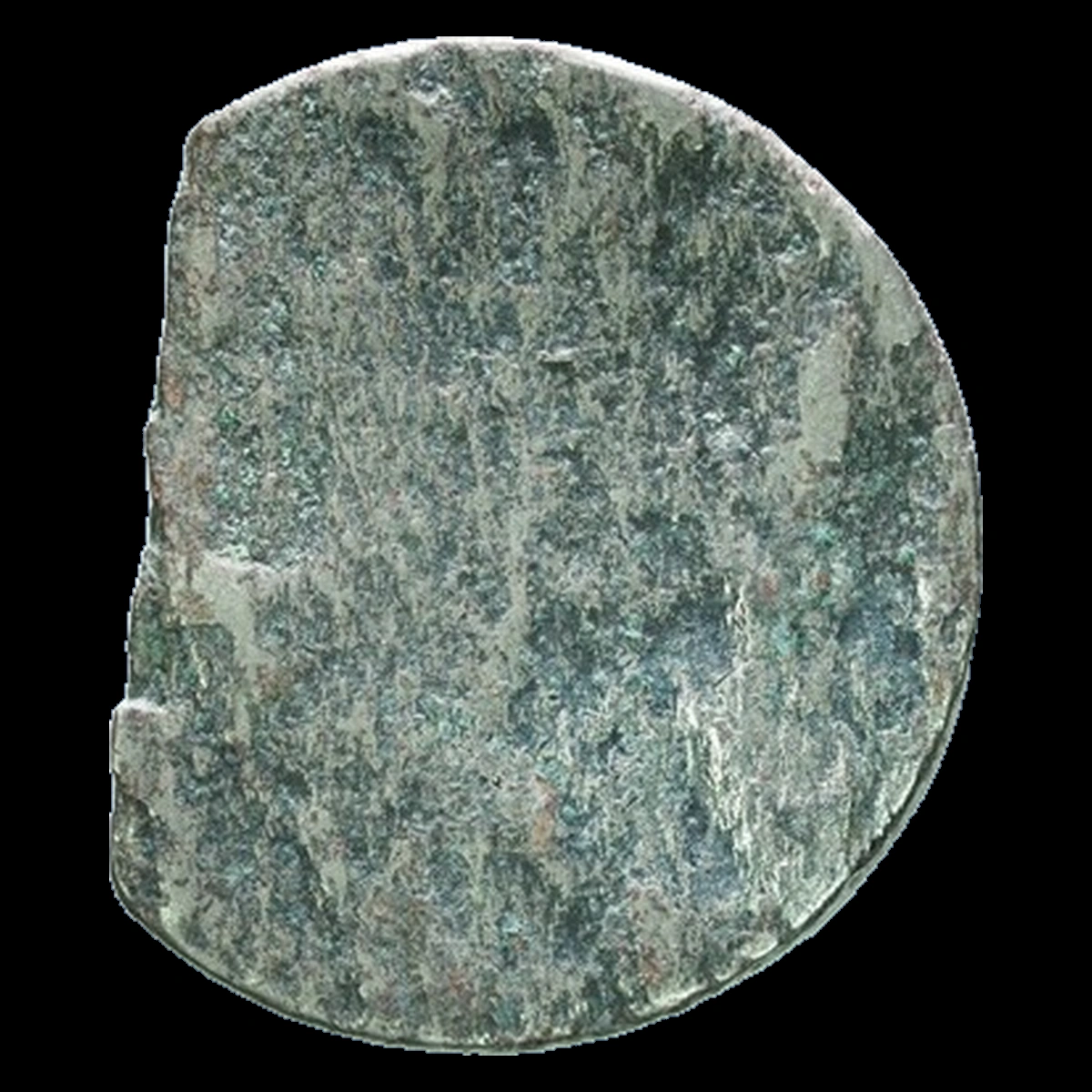
An internal metal weakness can allow a struck nickel to separate into two thin pieces. One outer face preserves Liberty, while the other preserves the reverse.
An owner displayed an 1883 No CENTS matching pair with rough inner surfaces and closely fitting outlines. Split after striking describes the sequence, not the exact date of separation or whether the pieces left the Mint apart.
How to Identify
Photograph the outlines and inner faces without pressing the halves together. A natural separation should produce corresponding rough surfaces, while machining may leave smooth circular cuts or obvious tool tracks.
For loose pieces, record each weight and add the readings. Their combined mass should be consistent with the original coin, allowing for wear and missing fragments.
Compare the outer designs and surviving plain edges as well. Two unrelated thin pieces are not a matched split pair simply because they have similar diameters.
What It’s Worth
A genuine matching pair is estimated at $250–$2,000 for both pieces together. Intact matching surfaces and recognizable outside designs help explain the error.
An 1899 Liberty nickel consisting of a single split front half sold for $109 in January 2023. That worn lone piece provides limited context and is not a sale of the 1883 pair.
3. 1883 Nickel Liberty Remains while the Back Is Largely Blank: Blocked Reverse Strike Error
A heavily blocked reverse can result when material prevents the back die from reaching the blank. The front can still receive Liberty’s design.
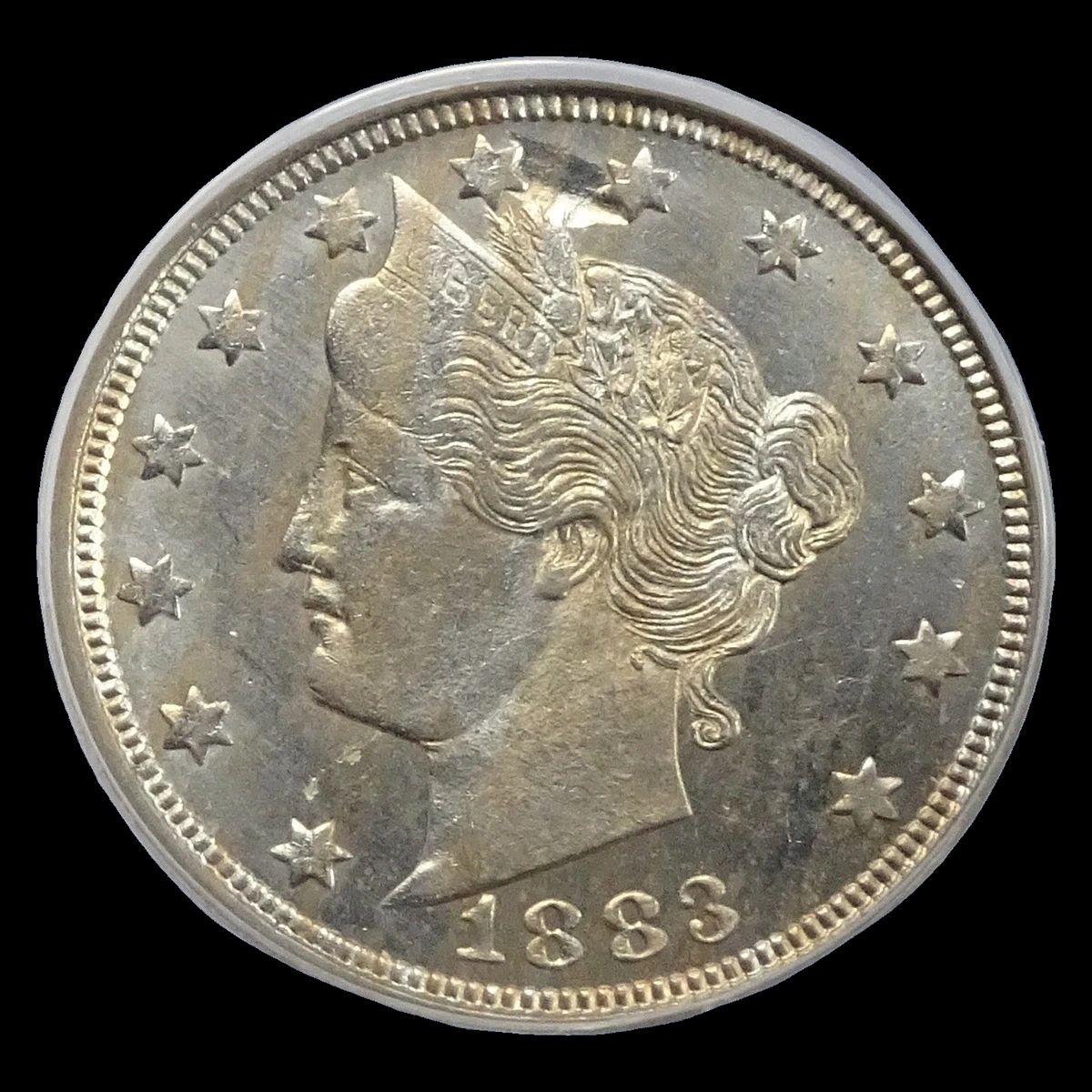
A 1979 error catalog pictured an 1883 Liberty nickel described as a blocked-back uniface coin. The term refers to one face lacking much of its expected impression.
The catalog identified neither the obstruction nor the CENTS version. A blank-looking reverse alone cannot tell whether another blank, grease, or some other material intervened.
How to Identify
Compare the blank-looking face with its rim height and the coin’s remaining thickness. Grinding may leave thinning, abrasive lines, or an unnaturally flat back.
Inspect the transition from any surviving design into the affected area, including the edge beside that face. A strong front does not automatically prove that a smooth reverse was blocked in the press.
If the relevant reverse lettering never formed, leave the normal design version unresolved. A blocked With CENTS reverse can lose that word, so absence alone cannot establish a No CENTS coin.
What It’s Worth
A genuine heavily blocked back is estimated at $100–$1,500. An original affected reverse beside a clearly struck front provides a stronger comparison than an unexplained smooth face.
The pictured coin carried a $25 asking price in 1979. That historical quote is neither a modern auction result nor a present value ceiling.
4. 1883 Nickel Stars and Date Repeat inside a Round Outline: Double Strike Error
A coin can move between blows while remaining within the collar, the ring that controls its edge. The extra strike can repeat the design without forcing a dramatically expanded shape.
A cataloged No CENTS example graded NGC G4 shows strong repeated date and star details despite heavy wear. Those features preserve evidence of the second blow more clearly than the worn portrait.
How to Identify
Compare the stars as well as the date and follow several shifted details in a consistent direction. A repunched date can duplicate numerals but cannot explain another displaced set of stars.
Inspect the plain edge for later squeezing or added impressions. A normal round outline is compatible with an in-collar double strike, but it is not proof of one.
What It’s Worth
Examples with recognizable repeated designs are estimated at $400–$2,500. Readability of the second strike matters alongside the coin’s grade.
A Jim’s Coins catalog listed the NGC G4 No CENTS coin with a $595 minimum bid. That figure is not a completed sale, and it should not be presented as an established market transaction.
5. 1883 Nickel An Earlier Numeral Remains beside the First 8: Repunched Date Error
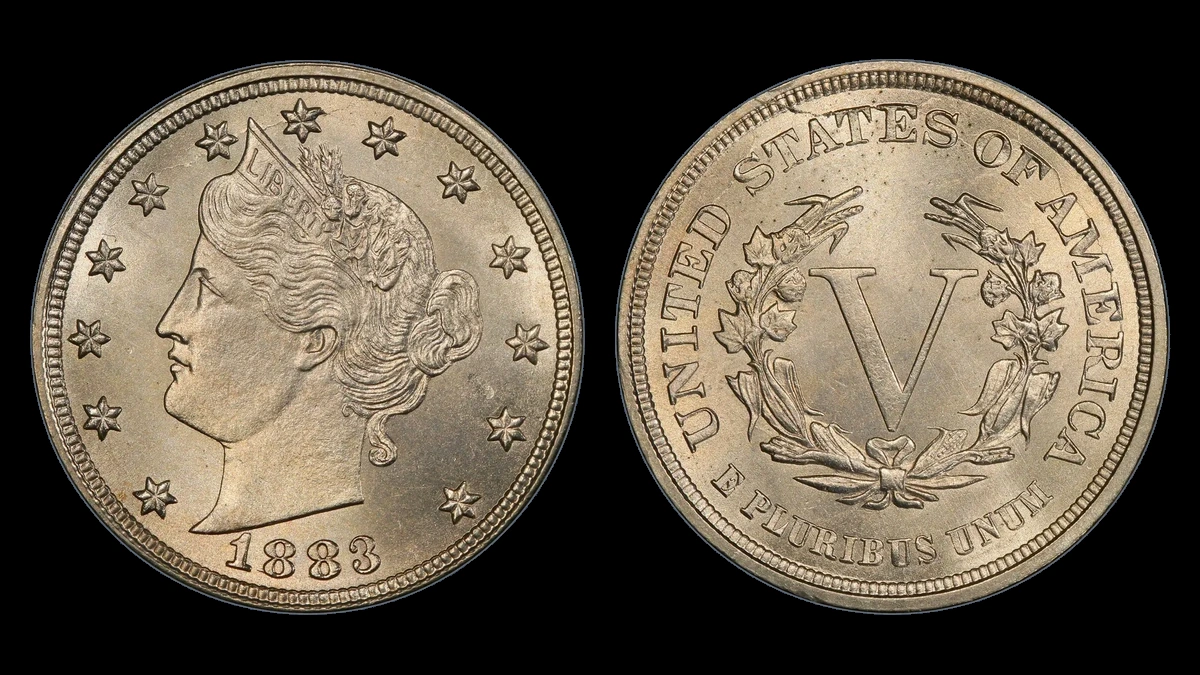
On one repunched-date pattern, a small base of a 1 appears to the left of the first 8’s lower loop. It survived an earlier date-punch position in the die.
NGC describes this feature on both No CENTS and With CENTS nickels. Other No CENTS repunched dates repeat parts of several digits.
These remnants originated during tool preparation, rather than from another strike on the coin. They also do not turn a Liberty Head nickel into the separate 1883/2 Shield nickel variety.
How to Identify
Record whether CENTS appears beneath the wreath, then choose a comparison for that design and date pattern. On the 8/1 form, inspect the left side of the first 8’s lower loop.
Follow rounded remains of the earlier numeral rather than accepting a flat shelf or a damaged digit. Other repunched dates require their own extra-stroke matches and need not show the same leftover 1.
What It’s Worth
Clearer worn through attractive unworn examples are estimated at $25–$650. Pattern, design version, and preservation all affect the result.
PCGS records a No CENTS MS65 example at $500 on eBay in May 2021. A separate NGC XF45 No CENTS example brought $55 in December 2013.
6. 1883 Nickel Raised Lines Enclose or Cross Design: Die Crack and Retained Break Error
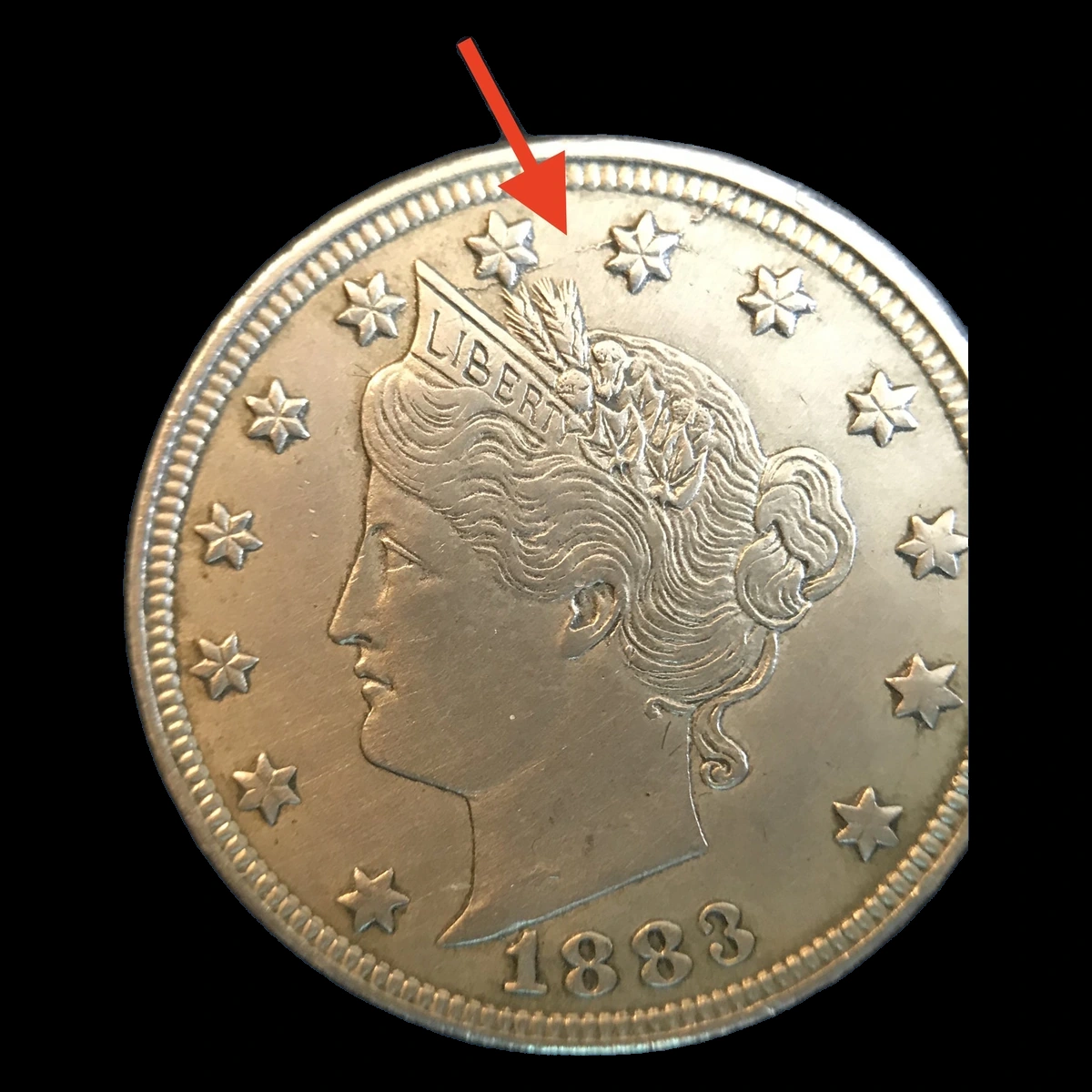
Cracks in a die can leave raised lines above Liberty’s head or around reverse lettering. Reported paths include areas above STATES OF and near upper-right borders on different examples.
A retained break occurs when a cracked portion of the die stays in place. A seller described a No CENTS coin with such a reverse break and a repunched date, without establishing its exact location here.
How to Identify
For a narrow line, inspect whether the center is raised or cut into the surface. A scratch can displace metal along its sides without being a die crack.
A retained break needs more than one fine ridge: examine the bounded area and whether its design sits at a different level. A vague lump on Liberty’s neck cannot establish the reported reverse feature.
What It’s Worth
Worn coins with modest cracks through clear retained breaks are estimated at $5–$200. A faint line may add little beyond ordinary condition value.
A clearly bounded displaced area can draw more interest, but a seller’s description alone is insufficient. The repunched date and retained break on the reported No CENTS piece belong to one coin and one overall value.
Conclusion
Both No CENTS and With CENTS are normal 1883 Liberty Head designs. Error identification instead depends on the metal boundary, repeated features, or evidence of an interrupted strike.
Keep split halves together, preserve their rough inner surfaces, and compare date varieties within the proper reverse design. Asking prices and minimum bids in historical catalogs provide context, while the MS65 marketplace result concerns a specific repunched-date coin rather than every unusual 1883 nickel.