Rare 1965 Dime Errors (List & Pictures)
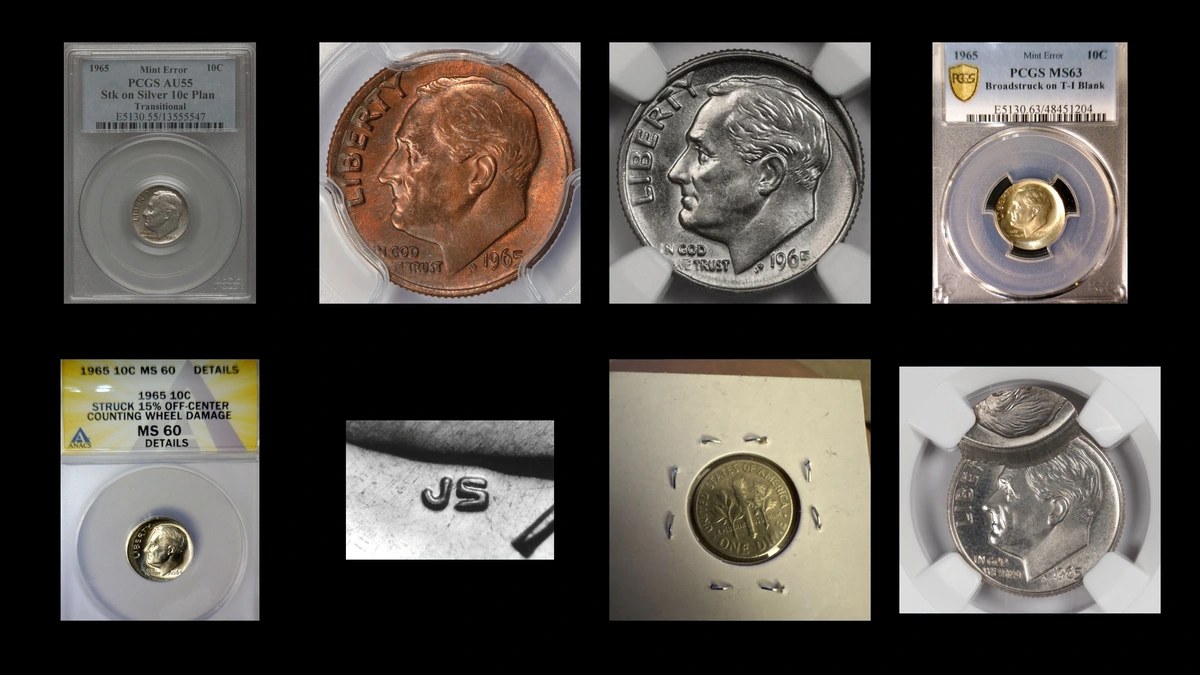
A 1965 dime can look silver-colored without containing silver, but a genuine older silver blank changes its value dramatically. One unworn example brought $14,400 in January 2023.
Estimated values for 1965 dime errors span $10–$20,000. Check the metal and outline, then follow the edge, design, and relationship between any extra impressions or joined pieces.
| Visible or measurable clue | What to investigate | Estimated value |
|---|---|---|
| About 2.50 grams and silver alloy | Transitional silver blank | $5,000–$20,000 after authentication |
| Curved cutting line or ragged gap | Incomplete or ragged clip | $20–$300 |
| Major raised front patch | Die break or cud | $200–$2,000 |
| Two joined coins | Bonded pair | $1,200–$3,500 for the combined object |
Ordinary 1965 dimes are clad, with a normal weight of 2.268 grams, diameter of 17.91 millimeters, and grooved edge. Both circulation coins and specially prepared Special Mint Set coins normally lack mint letters.
1. 1965 Dime The Old Silver Metal with the New Date: Silver Planchet Error
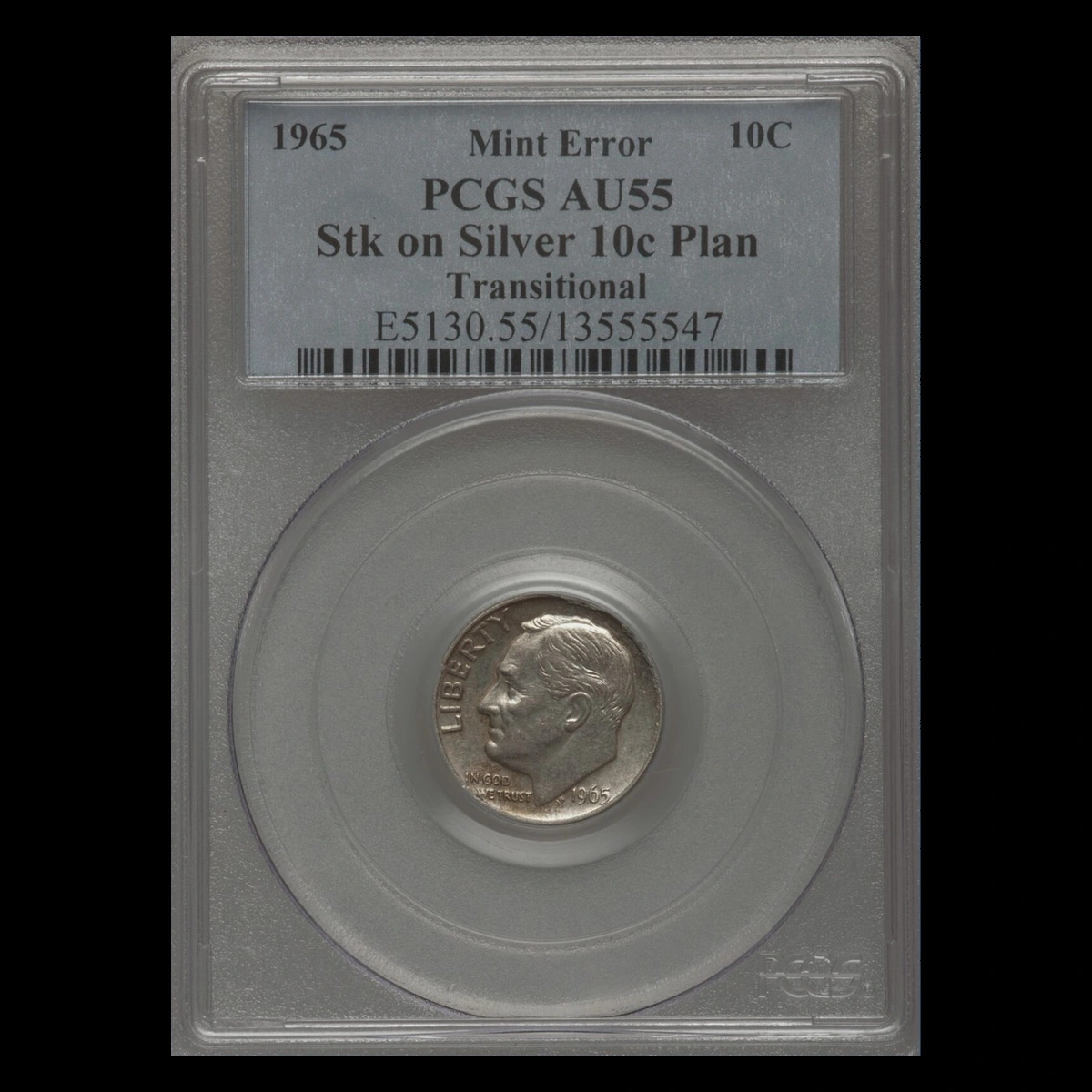
A small number of 1965 dimes were struck on older 90% silver blanks instead of the normal clad metal. The date and composition together make this a transitional error.
The silver blank’s normal weight is 2.50 grams. A silvery face alone is unhelpful because the intended copper-nickel outer layers also look silver-colored.
How to Identify
Document a precise weight, the full 1965 date, and the edge where a normal clad coin shows its copper core. Inspect the date carefully for alterations to an earlier silver coin.
Weight and edge color are screening clues rather than final authentication. Verify the alloy and original date without filing, scratching, or acid-testing the surface.
What It’s Worth
Authenticated silver-blank dimes suggest $5,000–$20,000, with damage and preservation affecting the comparison.
An NGC MS62 sold for $14,400 in January 2023. A separate circulated NGC AU53 brought $9,150 in January 2026, showing why each coin’s condition must accompany the metal attribution.
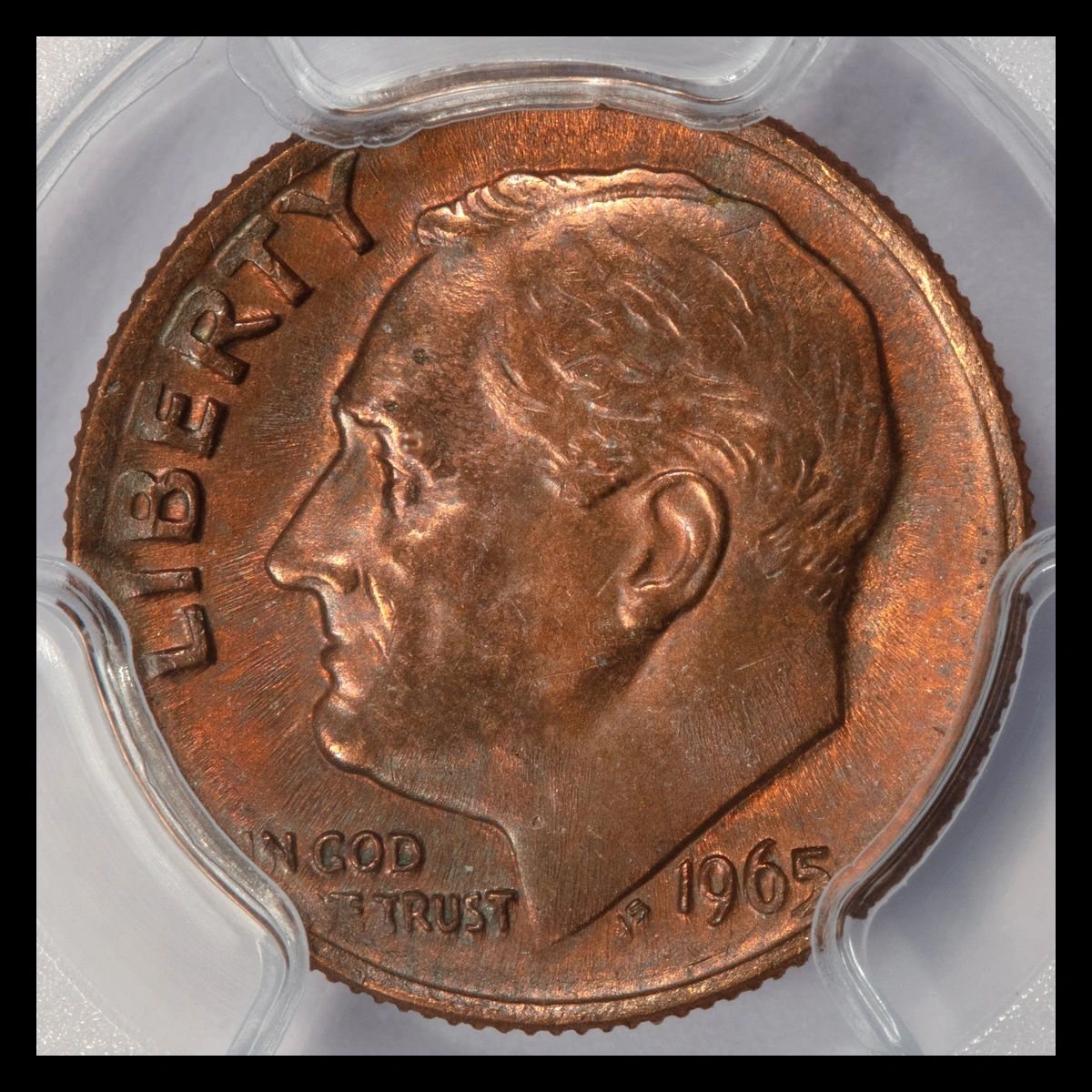
2. 1965 Dime Orange-Copper Portrait Side: Missing Front Clad Layer Error
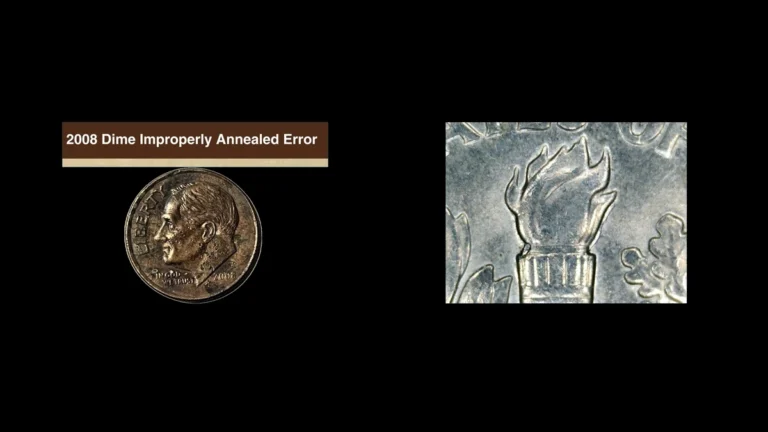
The recorded ANACS MS62 example has an exposed copper front and a normal pale reverse. Its front outer layer was absent from the strip used to make the blank, so the copper core received the portrait directly.
This differs from a surface merely stained brown. The MS62 grade describes an unworn coin with noticeable marks.
How to Identify
Compare both faces and the edge for actual absence of the front layer. A loose candidate should be lighter than normal, but no measured weight is supplied for this specimen.
Look for original design in the exposed copper rather than scratches, etched pits, or disturbed details. Plating and later stripping can imitate the color difference.
What It’s Worth
Genuine front-layer losses suggest an estimated $75–$600. Clean exposed metal and clear design offer stronger comparisons.
The ANACS MS62 example sold for $391 in August 2004. The result concerns that particular missing-layer coin, not any copper-colored 1965 dime.
3. 1965 Dime A Heavy, Thick Coin: Thick Planchet Error
A recorded 2.9-gram example contains more metal than the normal clad dime. NGC described it as Uncirculated Details with edge damage.
The thickness is the production feature; the damaged edge is a separate condition problem. The original metal strip is not identified.
How to Identify
Confirm the weight on a calibrated scale, then compare actual thickness and diameter. A rolled rim can look thick without adding any metal.
Inspect layers, grooves, and damaged areas to separate original thickness from later displaced metal. Do not identify quarter stock from the 2.9-gram figure alone.
What It’s Worth
Authenticated thick blanks of this general kind suggest $150–$750. Edge damage lowers the usefulness of an otherwise similar undamaged comparison.
A 1969-D quarter-stock dime sold for $253 in January 2006. That different-year specimen had an identified stock source, unlike the supplied 1965 coin.
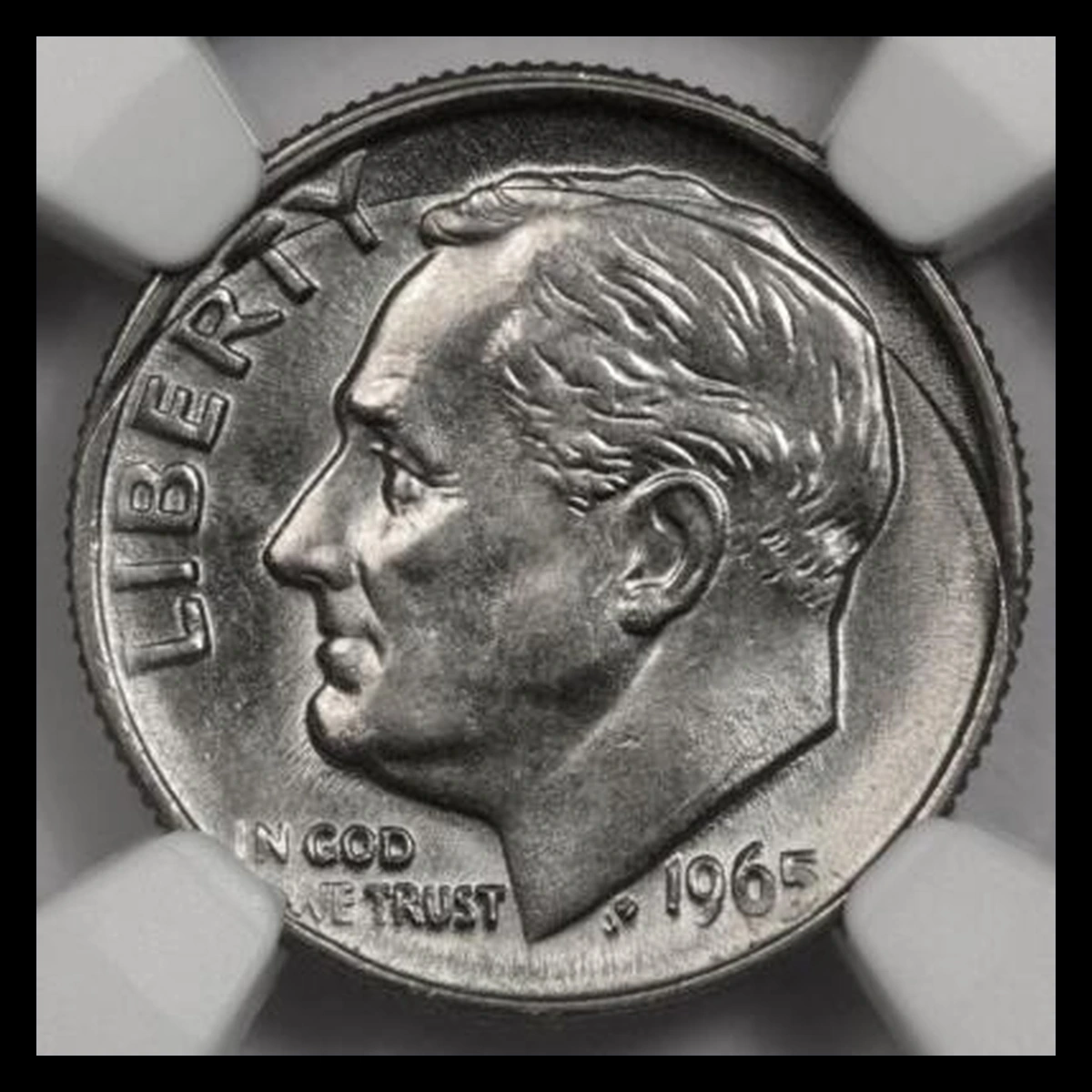
4. 1965 Dime A Curved Cut Still Attached or a Ragged Gap: Clipped Planchet Error
One NGC MS66 dime has an incomplete curved clip: the cutting line survives, but the curved portion did not break away. A separate ragged-clip coin has missing metal near one o’clock and weighs 2.0 grams.
Both concern blank preparation before striking. One retains its attached portion, while the other genuinely lacks material.
How to Identify
Follow an incomplete curved cut without flexing the coin or trying to detach it. Document how the line meets the struck surface.
At a ragged gap, inspect the boundary and nearby edge grooves for original formation rather than fresh burrs or cutting marks. The 2.0-gram measurement belongs only to the ragged example.
What It’s Worth
Comparable original incomplete and ragged clips suggest $20–$300. Their different physical forms create different collector comparisons.
The incomplete curved-clip MS66 sold for $139 in October 2022. The separate 2.0-gram ragged coin brought $35 in July 2021.
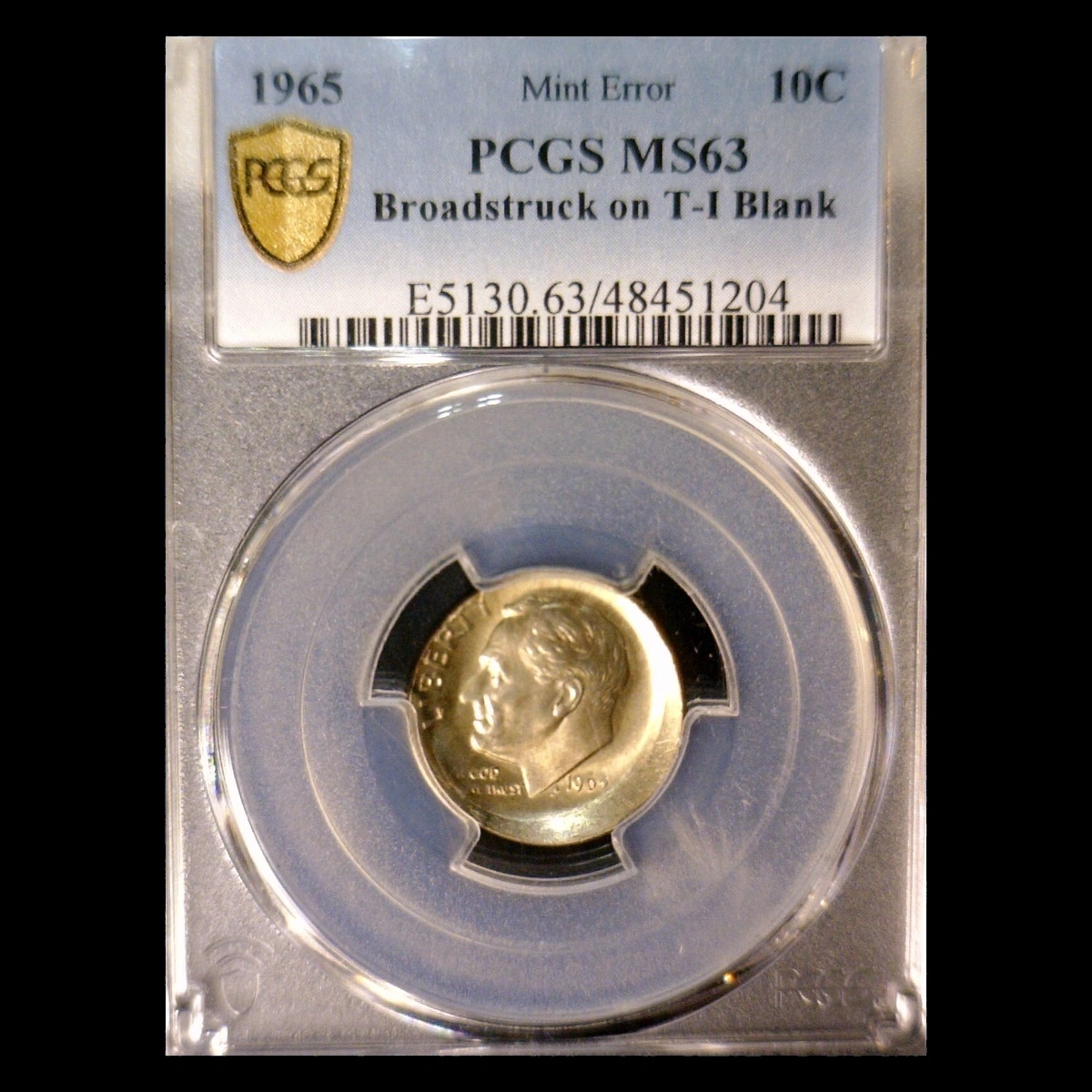
5. 1965 Dime Wide Border Around Complete Design: Broadstrike Error
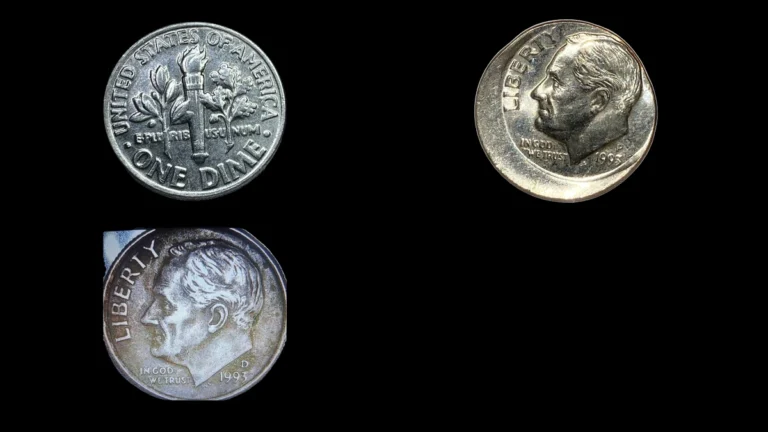
When the collar ring fails to contain a blank, the strike can push metal beyond the normal dime outline. The design remains complete inside that expanded border.
Recorded NGC MS65 examples provide ordinary unworn comparisons. Neither the widened shape nor a missing mintmark establishes a Special Mint Set origin.
How to Identify
Read the outer lettering on both faces and compare several widths, because expansion may be uneven. Genuine broadstriking retains design that later hammering may flatten.
Check the edge for natural outward flow rather than grinding that merely removes grooves. Expansion can change diameter without reducing weight.
What It’s Worth
A practical estimated range is $30–$250. More noticeable clean expansion generally presents a stronger example.
One MS65 broadstrike sold for $59 in July 2021. A separate MS65 brought $84 in April 2020.
6. 1965 Dime A Front Depression Meets a Stepped Edge: Indent and Partial Collar Error
An overlapping second blank left a front indent on an NGC MS66 Full Bands dime. The coin also sat partly inside the collar, producing an edge step between contained and expanded metal.
The paired features belong to one coin. Full Bands describes clear separation of the torch bands and is not another error.
How to Identify
Begin with side views of the edge transition, then follow the front depression into surrounding design. Both should fit an original strike involving overlap and partial collar support.
A later blow can flatten or scrape design and disturb the rim. Those damage patterns should not be confused with a struck indent and original edge step.
What It’s Worth
A comparable combination has an estimated range of $50–$400. Definition and surface condition matter more than the number of error names.
The MS66 Full Bands example sold for $65 in July 2021. That total covers both the indent and partial collar.
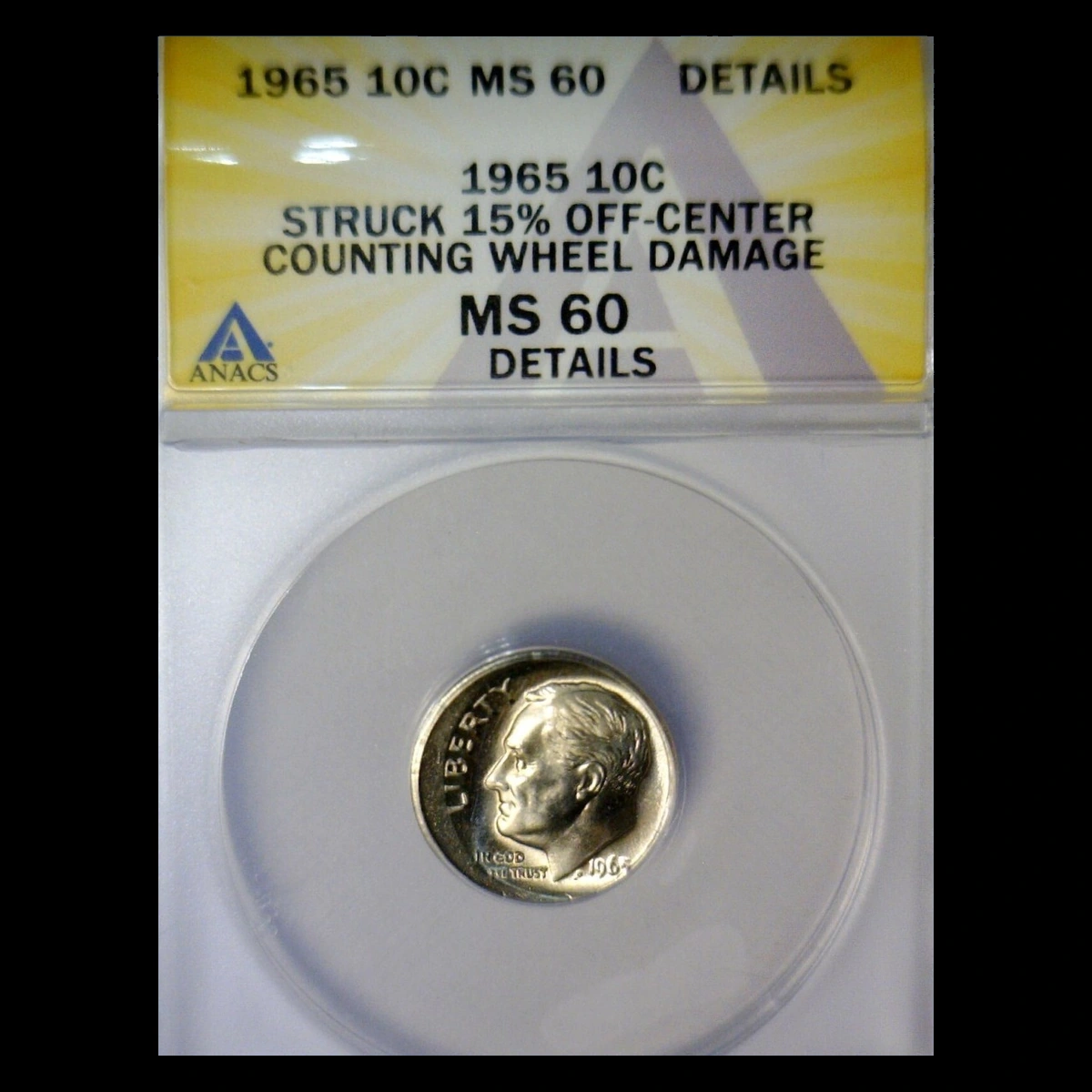
7. 1965 Dime Untouched Metal Beside Missing Design: Off-Center Strike Error
An out-of-position blank can receive only part of the intended impression. A crescent remains unstruck while design runs beyond the opposite side.
The supplied NGC MS65 Full Bands example is 15% off center. A separate MS65 Full Bands piece is 35% off center.
How to Identify
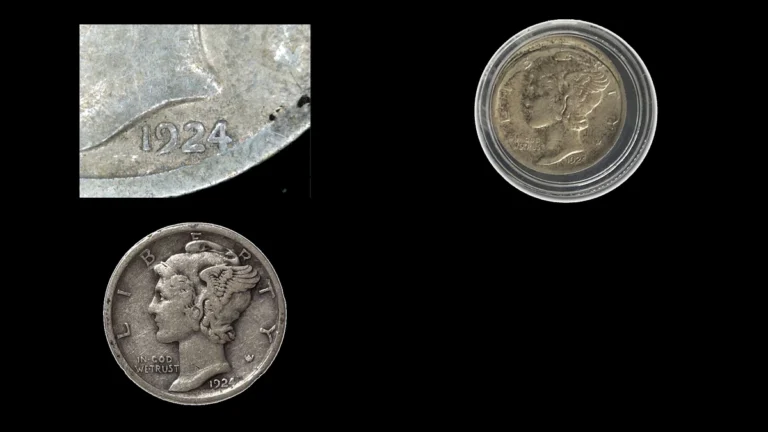
Compare both faces for a shared displacement instead of judging one narrow rim. Locate the date before using a dated 1965 comparison.
Inspect the transition between struck and untouched metal for grinding or later removal. A genuine blank crescent is still metal, unlike a clipped-away section.
What It’s Worth
Original off-center dimes suggest $40–$500, depending on displacement, identification, and preservation.
The 15% example sold for $114 in April 2020, while the separate 35% coin brought $138 in the same auction. The difference illustrates that percentage alone does not set price.
8. 1965 Dime A Line or Large Blank Lump Rises Above the Face: Die Break Error
Metal entering cracks or missing sections of a die leaves raised marks on a coin. A major front cud reaches the rim, where part of the die’s edge broke away.
A PCGS MS64 cud and a separate NGC MS64 front die break are recorded. The second coin’s exact shape should not be assumed to match the first.
How to Identify
Use side lighting to distinguish a raised line from an incuse scratch. For a larger patch, establish whether it connects to the rim before calling it a cud.
Inspect the opposite face and edge for dents or metal pushed around by impact. Added material can also make a raised patch without copying a broken die.
What It’s Worth
Small cracks and chips suggest $10–$100, while substantial original breaks may fall around $200–$2,000.
The PCGS MS64 major front cud sold for $552 in July 2021. The distinct NGC MS64 front break brought $1,440 in October 2021.
9. 1965 Dime A Small Inward Duplicate at JS: Doubled Die Error
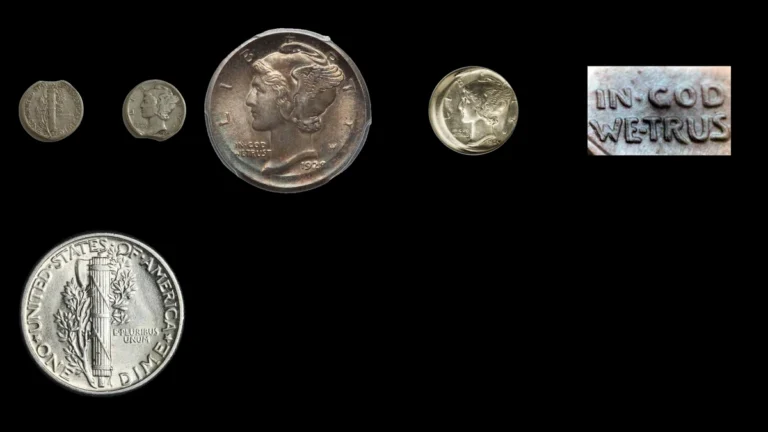
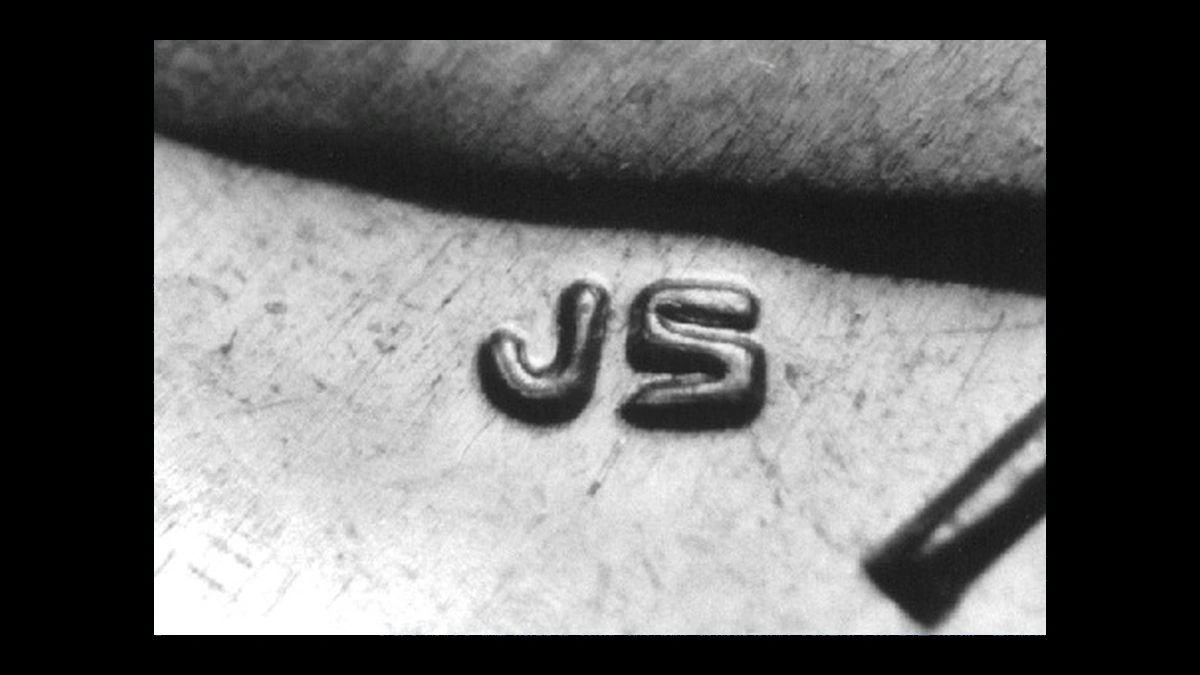
Wexler’s WDDO-001 shows its clearest doubling at the designer’s JS initials, with a slight extra image toward the center. IN GOD WE TRUST and LIBERTY also participate in the pattern.
The repeated design existed in the die before it struck the coin. Bright surfaces alone do not establish whether a candidate came from circulation production or a special set.
How to Identify
Start with the inward doubled JS, then compare the other lettering under changing light. Reflections can disappear with the light, while real contours remain in the metal.
Supporting raised marks above the 5 run northwest, and marks above IN’s I run northeast. These markers support the main doubled design rather than replacing it.
What It’s Worth
Well-matched examples of this minor pattern suggest $15–$150. Clear initials and preserved lettering make the best comparisons.
A flat mechanical shelf or general blurred edge is a different effect. No specific realized price is supplied for WDDO-001 here.
10. 1965 Dime A Quarter-Turn Reverse on a Special Set Coin: Rotated Dies Error
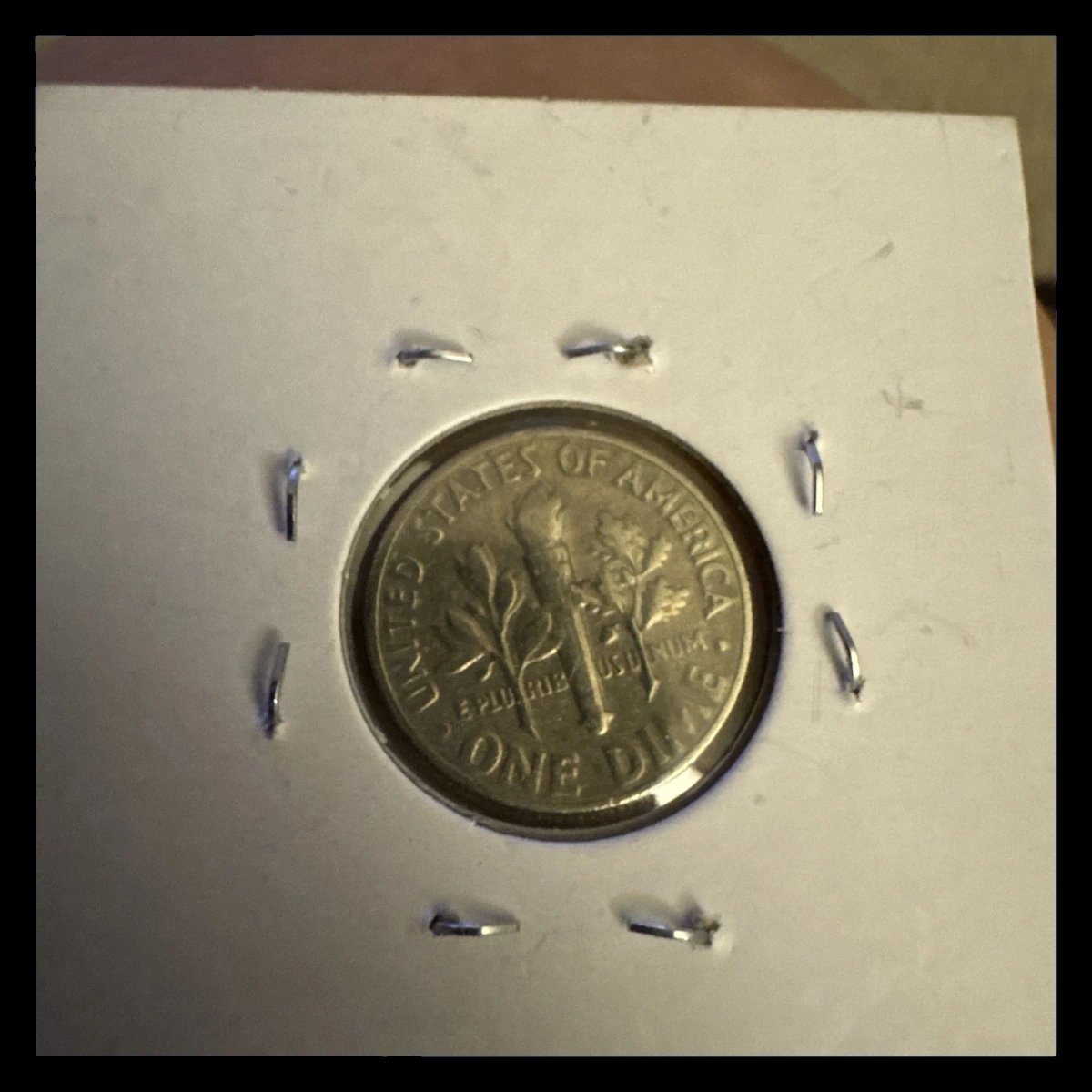
The PCGS SP64 Special Mint Set example has a reverse rotated 90 degrees counterclockwise. These specially prepared collector coins were issued in 1965 instead of Proof sets.
The error concerns alignment between the faces. Shine and no mintmark cannot establish either that rotation or the SMS identity.
How to Identify
Hold Roosevelt upright and flip the coin from top to bottom without twisting sideways. The documented example’s torch finishes a quarter-turn counterclockwise from normal upright alignment.
Record a continuous repeatable movement and preserve its certification or original set history. Two independently rotated images cannot prove the alignment.
What It’s Worth
A genuine SMS coin with a comparable 90-degree rotation suggests $200–$1,000.
No auction total is supplied for the SP64 specimen. A slight tilt on an ordinary circulation dime is a separate and usually more modest comparison.
11. 1965 Dime Separate Impressions Cross Each Other: Double Strike Error
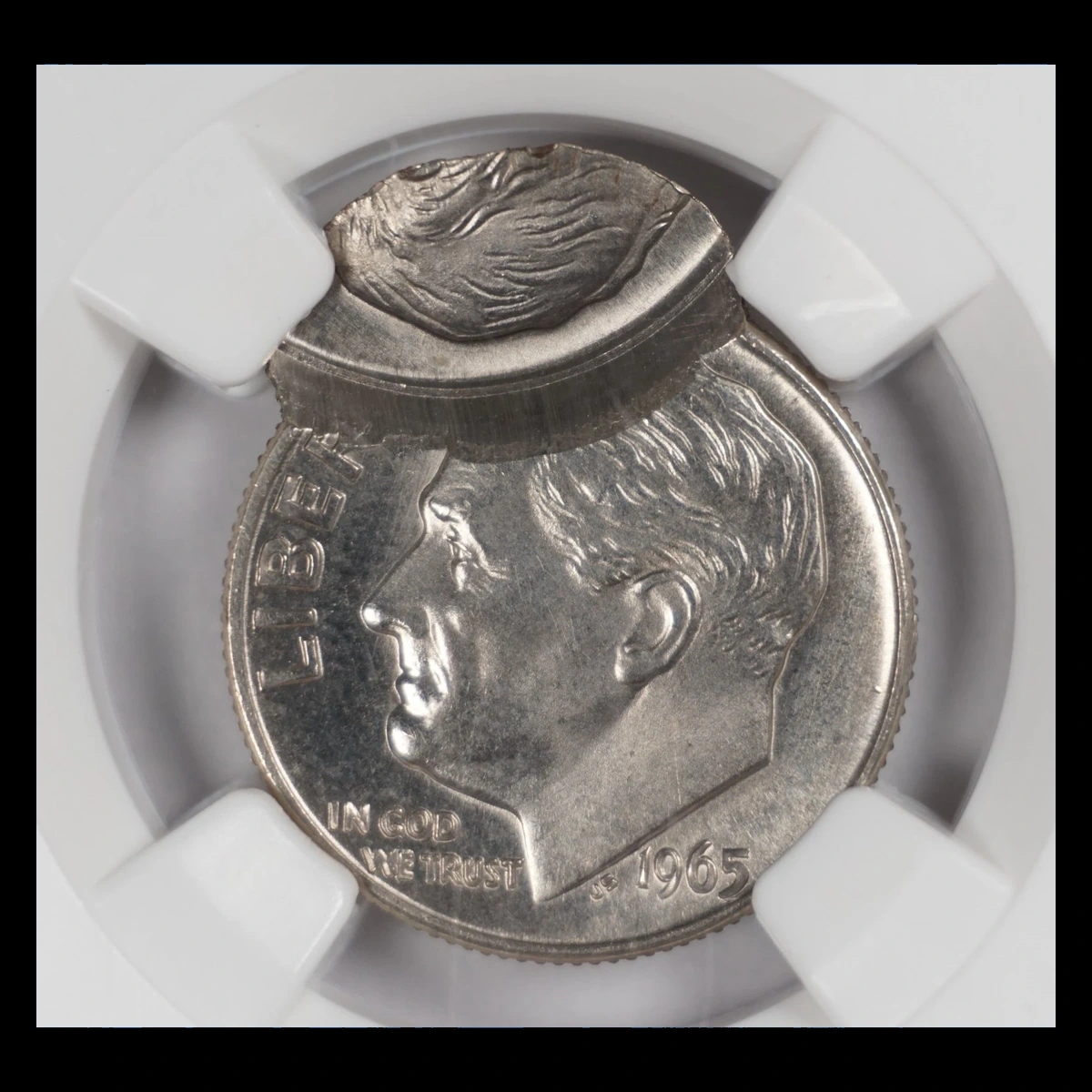
On the NGC MS65 example, both strikes landed off center. A different PCGS MS64 coin has a second strike 85% off center.
These repeated blows move whole design sections across one coin. They differ from small contours repeated in a doubled die.
How to Identify
Trace the outline of each strike on photographs of both faces. Find recognizable portrait or letter groups rather than counting isolated doubled edges.
On the 85% example, the later struck area is small. Do not borrow the two-off-center coin’s direction or shape to reconstruct it.
What It’s Worth
Comparable ordinary double strikes suggest an estimated $200–$1,200. Clear separation and readable identity help a collector follow the sequence.
The NGC MS65 with both blows off center sold for $456 in July 2021. That result is not a stated sale for the distinct 85% second-strike coin.
12. 1965 Dime A Cup or Distorted Receiving Coin: Reported Cap-Related Error
A coin stuck to a die may grow into a cap, while later blanks receive weak or recessed reversed impressions from it. These are different objects occupying different roles in the press.
The 1965 guide lists this general group without establishing a clearly dated specimen of a specific cap-related mechanism. Its identity therefore remains conditional.
How to Identify
Establish 1965 from the object or a reliable match before choosing a dated comparison. A broad date range on a holder is insufficient.
Inspect the profile and design to distinguish a cap wall from a receiving coin’s blocked or mirrored impression. Bending, scraping, and wear can imitate individual parts of those appearances.
What It’s Worth
A confirmed modest covered-die strike or brockage suggests $30–$500; a clear genuine cap may fall around $400–$1,500.
An undated Roosevelt broadstrike with brockage sold for $34.50 in June 2000. It supplies a general comparison, not a confirmed 1965 result.
13. 1965 Dime Two Coins Remain Joined: Bonded Pair Error
A PCGS MS65 pair preserves two coins joined during a repeat strike. The first is deformed and has part of its earlier design flattened.
The second retains a complete reverse and has an indent behind Roosevelt’s head on the front. Together these marks help explain their contact under striking pressure.
How to Identify
Leave the pieces joined and photograph the connection from the side. Follow the deformed design, indent, and surviving edge features rather than relying only on the join.
Look for glue or solder that could attach two finished coins later. No exact weight is supplied for this pair, and a plausible combined weight does not establish a mint bond.
What It’s Worth
Comparable genuine bonded pairs suggest $1,200–$3,500 for the entire combined object.
The PCGS MS65 pair sold for $2,040 in July 2021. Its indent and repeat strike are already included in that total and should not be priced again separately.
Conclusion
The strongest 1965 dime identifications connect the unusual feature with the way the coin was made. Silver composition must agree with an original 1965 date, a broadstrike must preserve the design, and a bonded pair must show related struck surfaces.
Keep unfinished clips attached and joined coins together. Use each auction result with its own specimen, and remember that no mintmark is normal on both circulation and Special Mint Set issues.