Rare 1959 Dime Errors (List & Pictures)
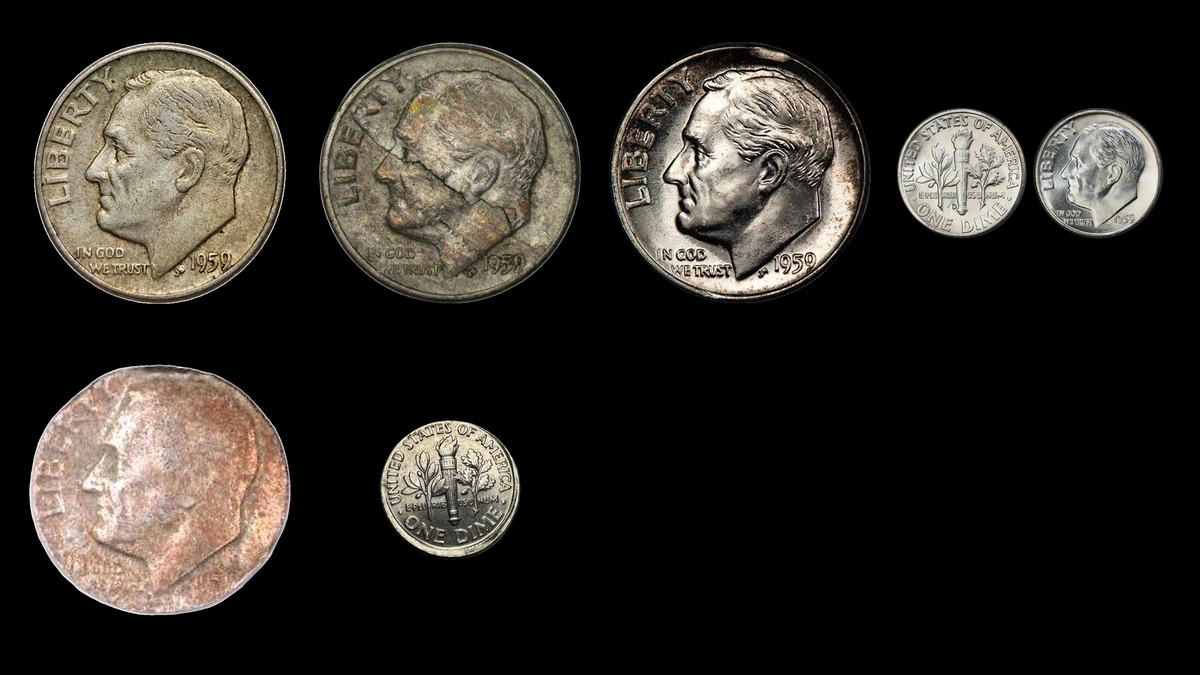
A small letter beside the torch can make a 1959 dime worth a closer look: an inverted mintmark example sold for $264 in 2017. The 1959 dime errors below cover peeling silver, doubled details, unusual edges, and reported striking mistakes, with values from roughly $15–$3,000.
Start with the surfaces, then check the date, mintmark, and shape of the coin.
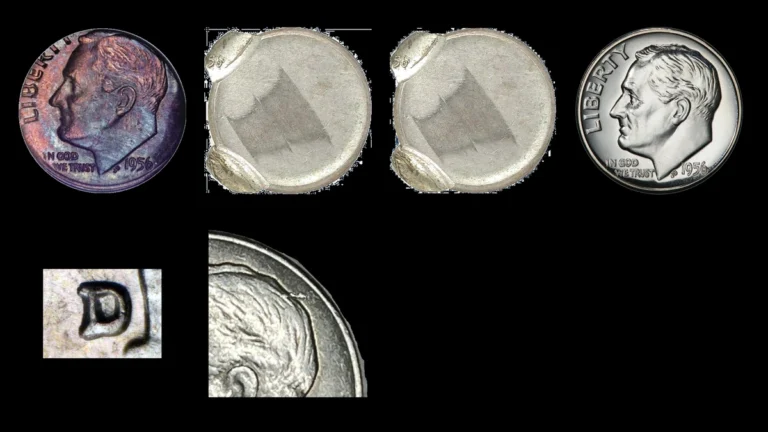
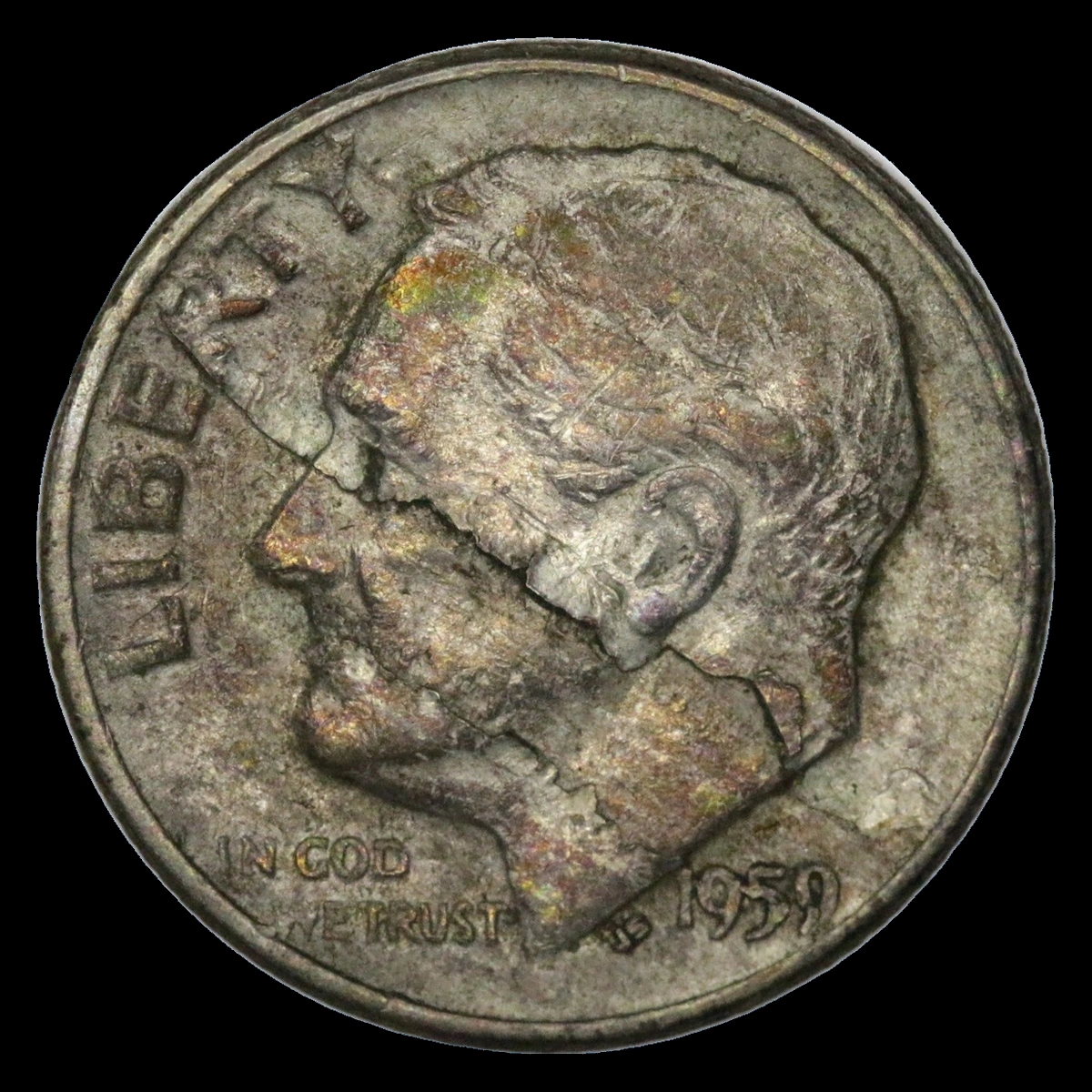
1. 1959 Dime Silver Peeling from the Surface — Lamination Error
A loose flap or missing patch of metal can look like damage at first. With a lamination error, a weak layer in the coin’s metal separates before or after striking.
A cataloged 1959 example has a large peel at the lower left of the front, with some metal missing and some still attached. Other reported pieces have flaws around Roosevelt’s hair or below his nose.
How to Identify
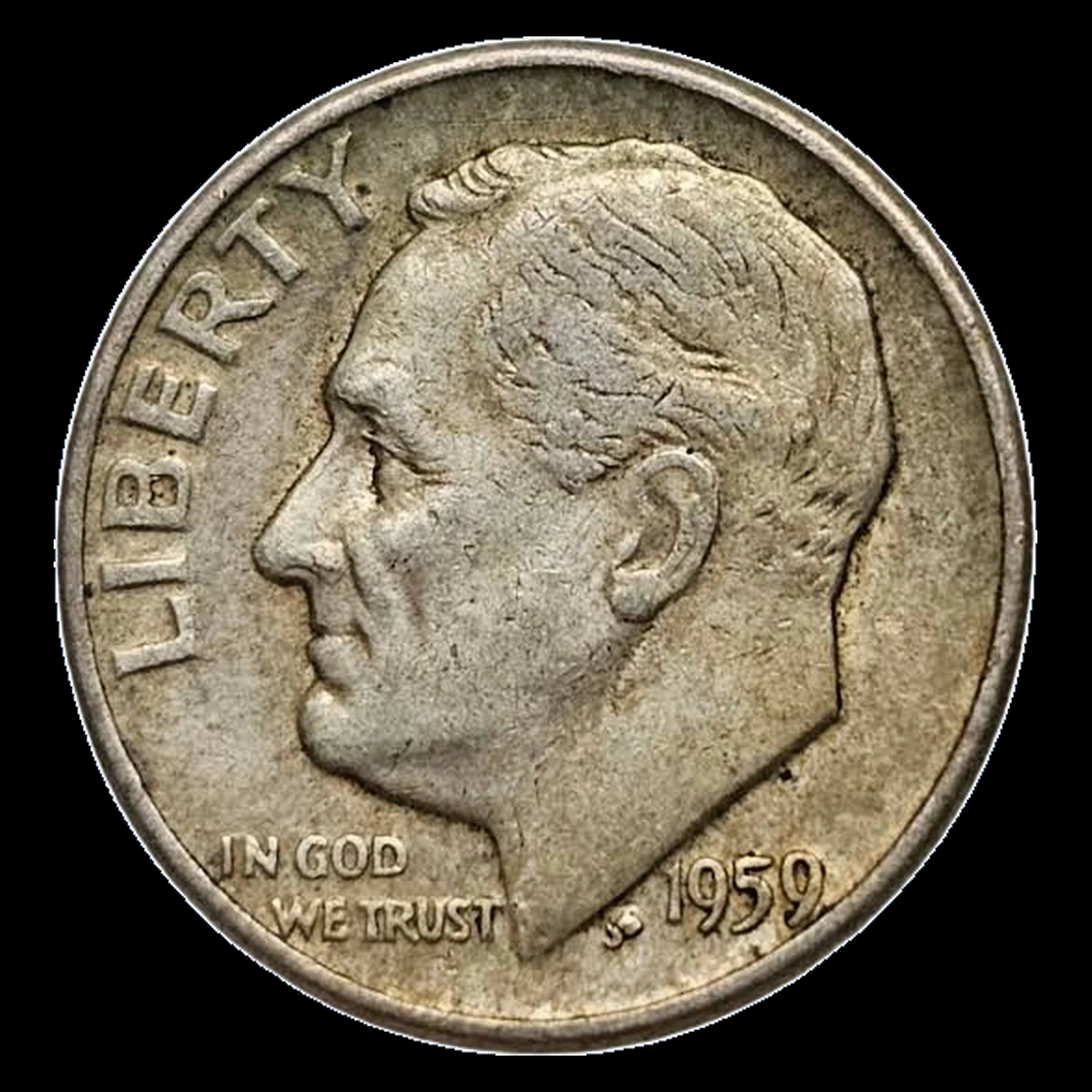
Look for a thin layer lifting from the surface, or an uneven shallow area where that layer has fallen away. A deep scrape with metal pushed up along its sides suggests later damage instead.
These dimes contain 90% silver and 10% copper throughout. A peeling area is not a missing copper-nickel outer layer, as it might be on a modern dime.
What It’s Worth
$15–$200 covers small flakes through larger, clearly visible peels. As a comparison from another silver dime series, a 1942 Mercury dime with a major front lamination sold for $89 in March 2023.
Size, location, and an attached flap can make the error more interesting to buyers.
2. 1959 Dime An Extra Raised Patch — Die Break Error
A broken striking tool can leave extra metal standing above the coin’s design. The tool, called a die, normally presses the design into the blank; a missing piece leaves a space for metal to fill.
A 1959-D dime graded MS66 Full Bands was recorded with a break on the front. The available description does not place it at a specific part of the rim.
How to Identify
Turn the coin under a light and check whether the patch rises above the surface. A dent goes inward, while a die break usually produces a raised lump.
A large break joined to the edge is called a cud. Use that name only when the coin actually shows the connection.
What It’s Worth
$20–$300 is a practical range for this group. The MS66 Full Bands example sold for $95 in July 2021.
MS66 describes an unworn coin with few marks, and Full Bands refers to sharp bands across the torch on the back. Those details affect value separately from the break.
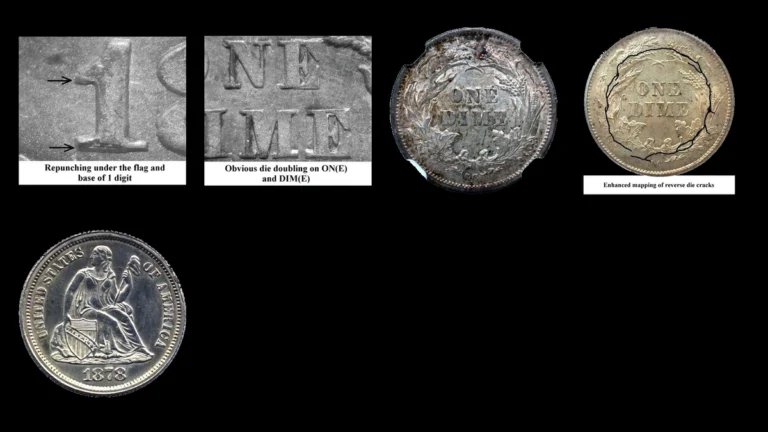
3. 1959 Dime Letters That Appear Doubled — Doubled Die Error
Some 1959 dimes show extra thickness or separation in the lettering because the die itself carried a doubled design. An ordinary Philadelphia listing describes doubling around E PLU on the back.
Front-side reports and a separate Proof reverse report also appear in the records. They should not all be identified using the same letters.
How to Identify
Choose the correct side first, then examine the letter edges with a magnifier. Rounded, raised separation or clear notches can support a doubled die.
A low, flat shelf alongside a letter often comes from movement during the strike instead. On a Proof coin, reflections can also make an edge appear doubled when the lighting changes.
What It’s Worth
$20–$300 spans the supplied doubled-die groups. Minor ordinary-strike examples generally fit $20–$150, while confirmed minor Proof varieties can fall around $50–$300.
Proofs were specially made for collectors, but a shiny surface alone does not establish a valuable doubled die.
4. 1959 Dime A Flaw Built into the Metal — Defective Planchet Error
A planchet is the metal blank used to make a coin. If that blank already has a flaw, the finished dime can carry an unusual surface even after receiving a normal design.
The records include a no-mintmark 1959 dime graded MS64 Full Bands and identified as a defective planchet. They do not specify a particular hole, split, or unusual weight.
How to Identify
Check how the struck design meets the flawed area. Design details continuing into or across a defect can help show that it existed before the coin left the press.
A cut that slices through completed letters is more likely to have happened later. Do not assume every rough silver surface came from a defective blank.
What It’s Worth
$30–$350 is an estimated collecting range based on comparable silver Roosevelt dime blank defects. A large, clearly explained flaw on an unworn coin usually attracts more attention than a small rough patch.
5. 1959 Dime A Curved Piece Missing from the Edge — Clipped Planchet Error
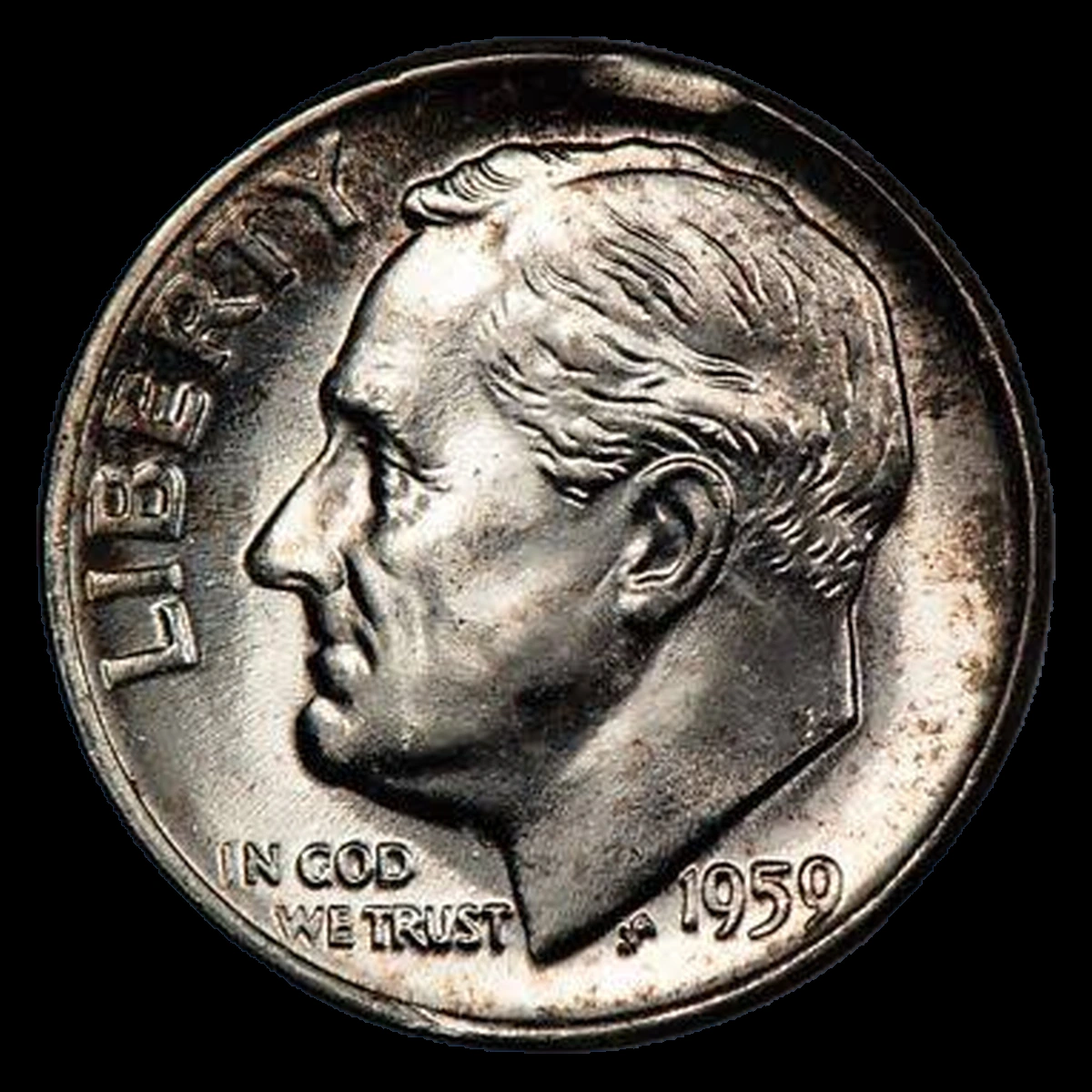
A curved clip forms when a blank is punched partly across a hole already left in the metal strip. The resulting coin has an inward curve where its edge should be.
Reported 1959 pieces include a no-mintmark dime with about 10% missing near one o’clock and a Denver dime with a smaller 5% clip near two o’clock. A separate seller listing describes a double clip.
How to Identify
Follow the missing curve and inspect the nearby design for metal flowing toward it. The rim opposite a genuine clip may also be weak.
A sharp saw cut, fresh exposed metal, or a heavily filed edge points toward alteration. The clock positions above describe individual examples, not a required location for every 1959 clip.
What It’s Worth
$20–$400 covers modest clips through larger or multiple clips in better condition. A clipped 1942 Mercury dime graded MS63 sold for $73 in March 2023, providing a comparison from a different silver dime series.
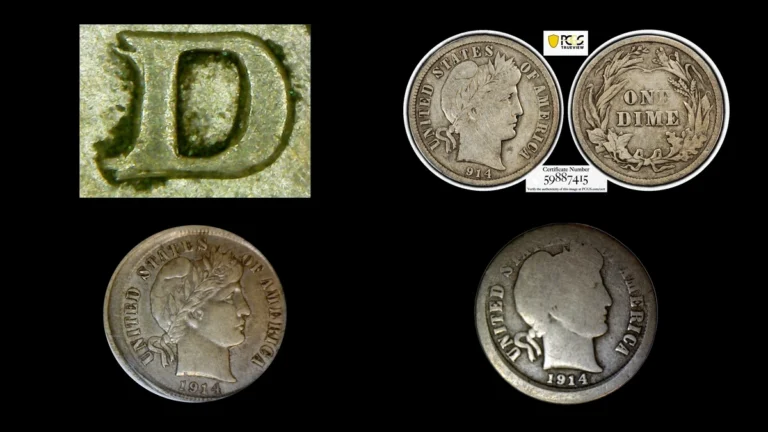
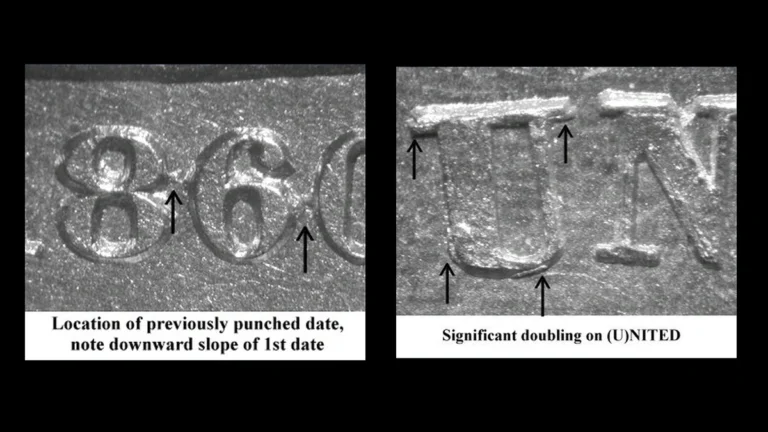
6. 1959 Dime An Odd Shape Inside the D — Inverted Mintmark Error
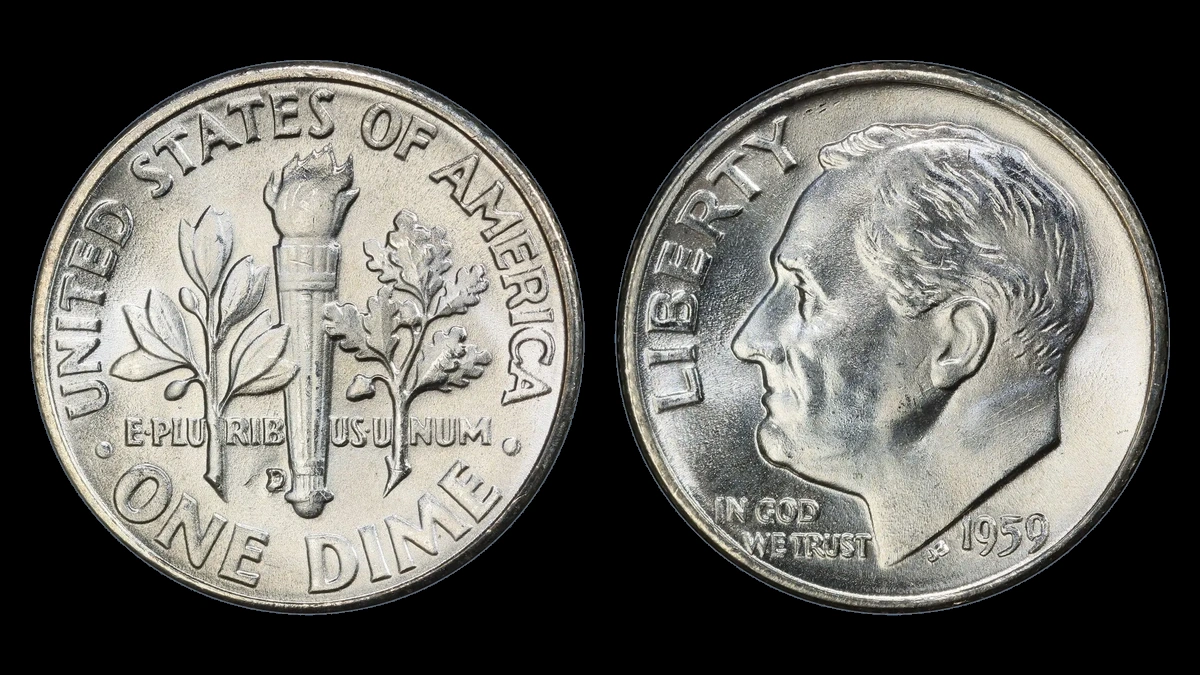
On the back of a Denver dime, find the small D to the left of the torch base. The FS-501 variety has traces of an earlier D that was punched upside down before the mintmark was corrected.
This is a repeated feature of that die, rather than a letter damaged on one coin. Philadelphia dimes and Philadelphia Proofs have no mintmark here.
How to Identify
Use a clear, enlarged view of the D and compare the remaining shapes with the PCGS FS-501 reference. Extra metal by itself is not enough to make a match.
Check the whole letter rather than one bright spot. Dirt, wear, and small hits can hide or imitate parts of the earlier punch.
What It’s Worth
$20–$400 is a useful range for the inverted-D variety. A PCGS MS67 example sold for $264 in December 2017.
Strong mintmark detail and a clean, unworn surface help distinguish the better pieces.
7. 1959 Dime A Dime That Seems Too Thin — Thin Planchet Error
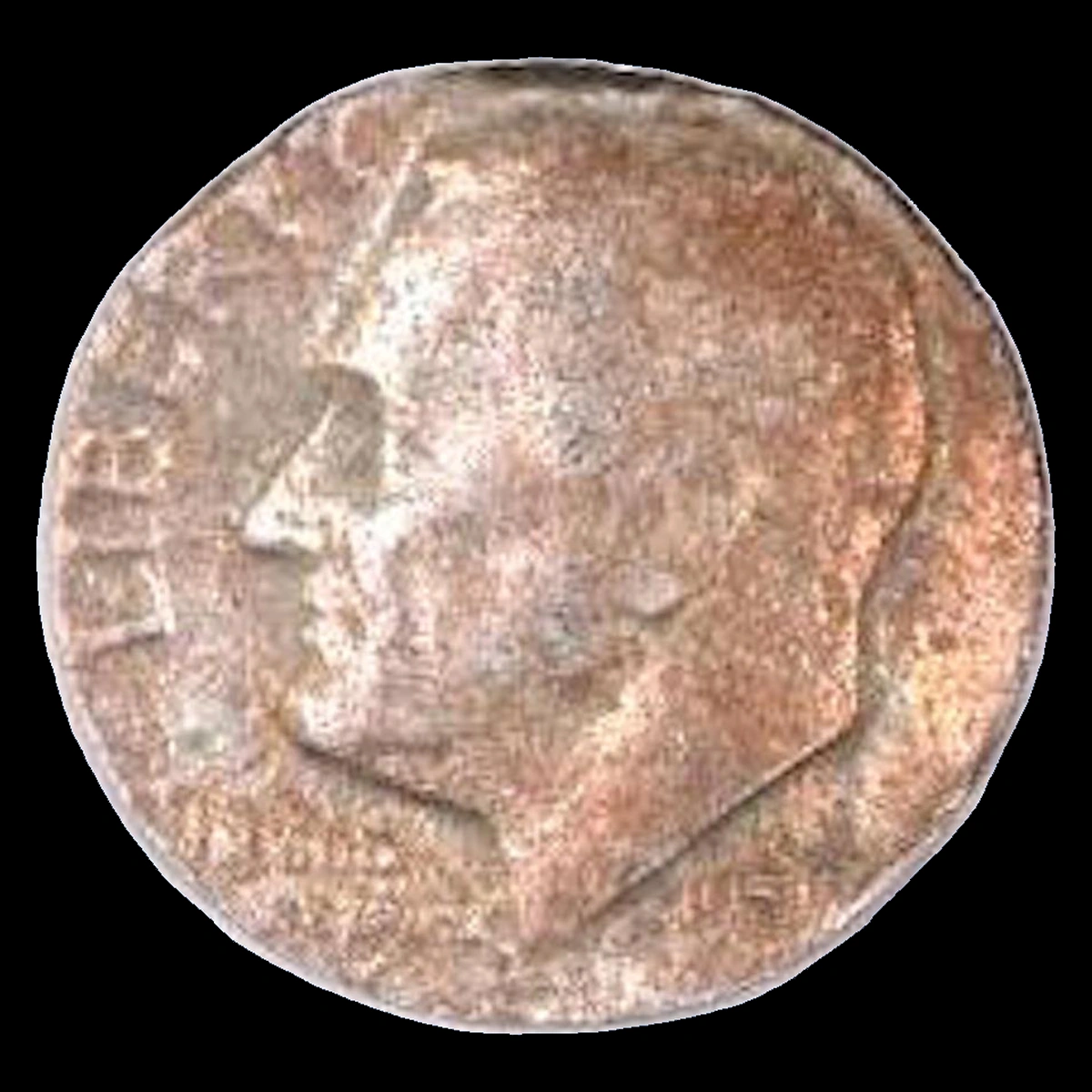
A seller-described 1959-D dime was reported as unworn but struck on a thin blank. The supplied listing does not provide its measured thickness or weight.
Thin metal can affect how fully the design forms. However, a coin that was ground down or exposed to chemicals can also become lighter and thinner.
How to Identify
A normal 1959 dime weighs 2.50 grams and measures about 17.9 mm across. Compare weight, thickness, and diameter with a normal example rather than judging from a photograph alone.
Inspect both faces and the grooved edge for the original struck surfaces. Grinding marks or widespread metal loss need to be separated from an originally thin blank.
What It’s Worth
$50–$500 is an estimated range for an authenticated thin-planchet example. Clear measurements and intact mint surfaces make the reason for the premium easier to demonstrate.
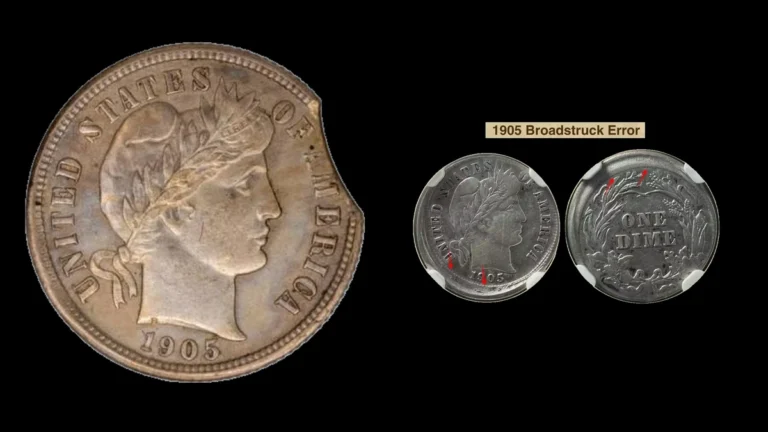
8. 1959 Dime A Wide Coin with a Complete Design — Broadstrike Error
The collar is the ring that holds a blank in place during striking. Without proper support from that ring, the metal can spread outward and produce a broadstrike.
This category appears in a general 1959 error guide, rather than a supplied listing of one graded specimen.
How to Identify
Check whether the complete design remains on the coin despite the expanded edge. If part of the design is missing because the strike landed to one side, examine it as a possible off-center strike instead.
A broadstrike should show metal spread by the press. Flattening a finished coin can also widen it, but usually damages the design and surfaces.
What It’s Worth
$40–$350 is a working range for a genuine silver Roosevelt broadstrike of this date. A 1956 silver dime combining a broadstrike and a clip sold for $126 in July 2021.
That sale involved another year and two errors, so it serves as a comparison rather than a 1959 result.
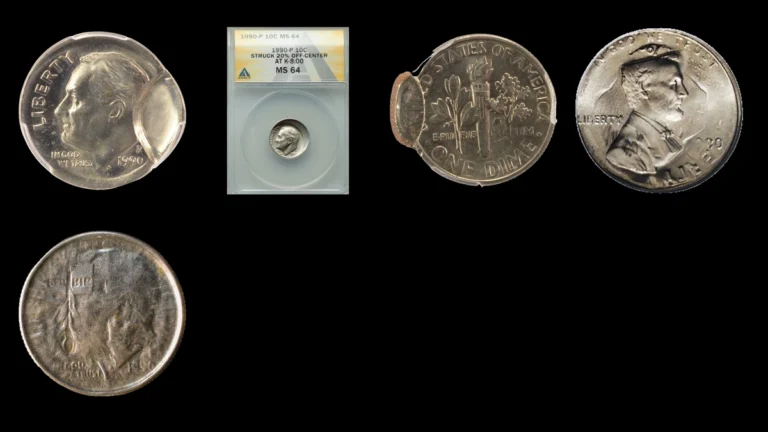
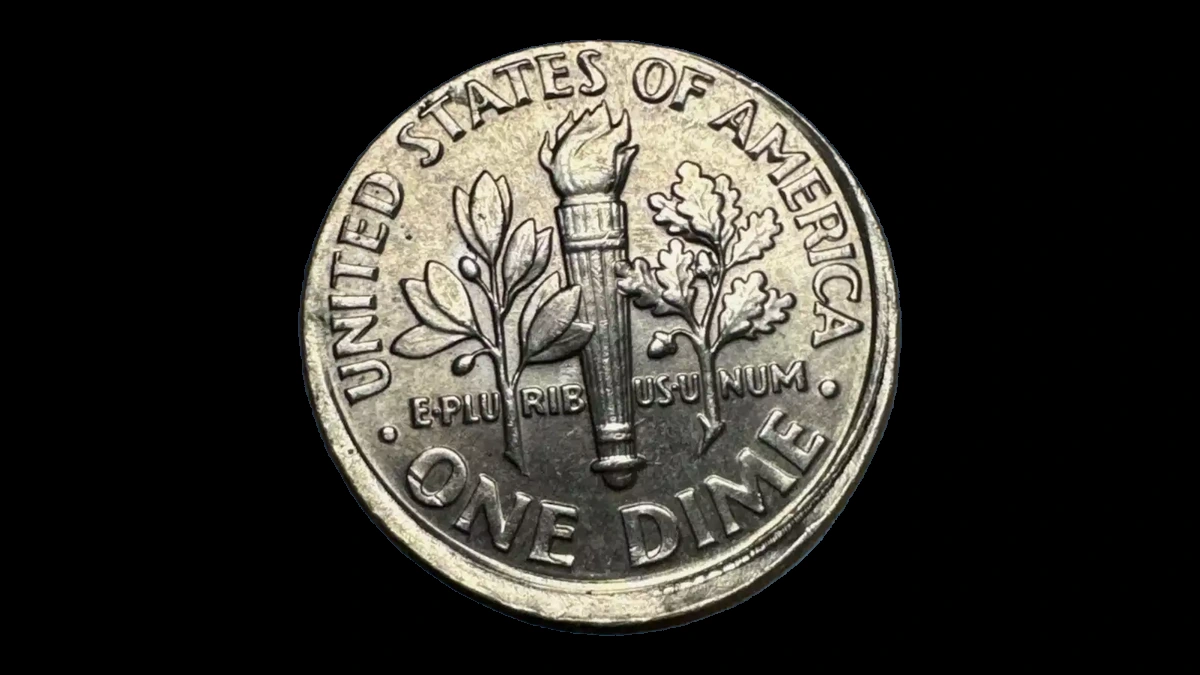
9. 1959 Dime The Design Runs off One Side — Off-Center Strike Error
An off-center strike happens when the blank sits partly outside the intended striking position. One side keeps a blank area while part of the design falls beyond the opposite edge.
The supplied 1959 report is a broad category entry. It does not identify a fixed mintmark or percentage off center.
How to Identify
Look at both faces for the displaced strike and make sure the full 1959 date is readable. A centered reverse with only the front shifted may indicate a different die-alignment problem.
A clip removes metal from the blank; an off-center strike leaves part of the blank unstruck. That difference is often visible without a magnifier.
What It’s Worth
$100–$1,000 is an estimated range for genuine examples, depending on the amount of displacement, date visibility, and condition. A 1964 silver dime struck 60% off center and graded MS65 sold for $134 in December 2025.
This later-date sale shows why a dramatic percentage alone does not set the price.
10. 1959 Dime The Dime Design on the Wrong Metal Blank — Wrong Planchet Error
A wrong-planchet error occurs when a blank intended for another coin enters the dime press. The finished piece can have an unusual weight, metal, size, or incomplete design.
The general 1959 listing does not identify a specific domestic or foreign blank. A normal silver 1959 dime belongs to the regular issue.
How to Identify
Use the normal measurements above as a starting point, then have the metal and struck design examined together. Color alone can be changed by toning, plating, or surface damage.
The proposed blank needs to explain the coin’s physical features. A low weight by itself does not establish that it was made for another denomination.
What It’s Worth
$500–$3,000 is an estimated range for an authenticated wrong-planchet piece. A 1973-S Proof dime struck on a Liberia cent blank sold for $1,560 in November 2020.
That comparison has a different date, finish, and blank type; it is not a documented 1959 sale.
Conclusion
The most useful first checks are simple: look for peeling metal, inspect the small D, and compare the edge with a normal dime. Keep a curved clip, an expanded broadstrike, and an off-center design separate when naming the error.
For thin or wrong blanks, measurements matter more than appearance. Clear photographs of both faces and the edge will also make the next identification step much easier.