Rare 1953 Quarter Errors (List & Pictures)
A nickel blank and a finished Jefferson nickel can both receive a quarter design, but only the finished coin leaves an earlier design underneath. One such example among 1953 quarter errors sold for $2,760 in April 2006.
Estimated prices span $15–$5,000. Compare surviving designs and blank size first, then inspect missing metal, repeated strikes, mint letters, and Proof details.
1. 1953 Quarter Monticello beneath Washington: Quarter Struck over a Finished Nickel Error
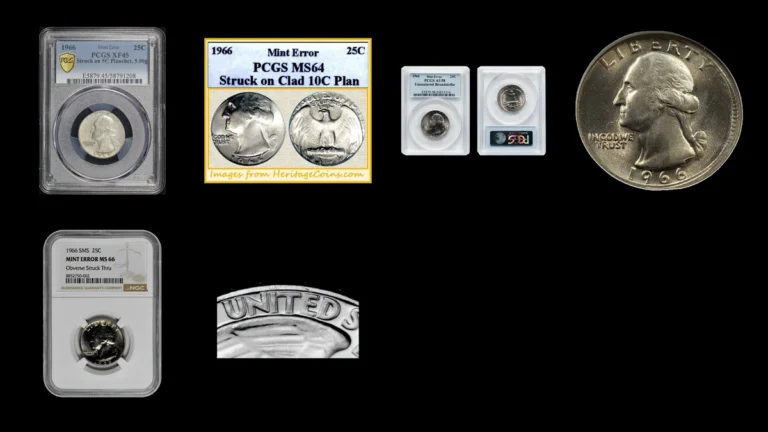
The 1953-S quarter design was struck over a completed Jefferson nickel. Faint Monticello detail survives beneath Washington, and the nickel’s S remains in the area to the right on the quarter’s front.
How to Identify
Follow enough of the earlier building to establish a Jefferson nickel design. A few unrelated lines on nickel-colored metal do not prove this two-denomination sequence.
The ANACS AU58 example shows slight wear, but both designs remain on one continuous metal object. Examine the edge for joins, filing, or coatings rather than treating two attached coins as an overstrike.
A normal nickel begins near 5.0 grams and 21.2 mm. Those are starting references, not a supplied measurement of this particular overstruck coin.
What It’s Worth
Comparable authenticated examples are estimated at $1,500–$5,000. The 1953-S quarter over a 1953-S Jefferson nickel sold for $2,760 in April 2006.
The older design is central to that identification and value. A quarter image on an unused nickel blank belongs to the separate category below.
2. 1953 Quarter A Quarter Design on a Smaller Disk: Wrong Denomination Blank Error
A blank made for a nickel or silver dime gives the quarter tools less room. The resulting design can lose peripheral detail without carrying an earlier coin impression underneath.
The records include a Philadelphia PCGS MS63 nickel-blank example and a separate NGC MS62 nickel-blank coin weighing 5.0 grams. Specialist material also includes a silver-dime-blank example.
How to Identify
A normal silver quarter starts near 6.25 grams and about 24.3 mm. Silver-dime blanks are about 2.5 grams and 17.9 mm, while nickel blanks use the larger five-cent standard noted above.
Measure the actual coin, allowing for spread during the quarter strike. A smaller outline with naturally cropped design should agree with its metal and weight.
Inspect for filing or plating and look for recognizable older design details. Their presence may identify an already struck host rather than an unused blank.
What It’s Worth
Confirmed nickel- and silver-dime-blank quarters are estimated at $300–$2,500. The PCGS MS63 nickel-blank coin sold for $720 in September 2024.
A different-year 1957 quarter on a silver dime blank, graded NGC MS64, brought $1,920 in December 2023. The separate NGC MS62 1953 nickel-blank measurement should not be assigned to the MS63 sale coin.
3. 1953 Quarter Full Quarter Width with Thin Metal: Thin-Stock Blank Error
The recorded San Francisco NGC MS66 coin was made on a quarter-sized blank cut from dime-thickness stock. Its actual weight is 5.0 grams.
How to Identify
Begin with diameter before interpreting low weight. This type retains approximately quarter width, unlike a small silver-dime disk receiving an oversized design.
Compare thickness around sound parts of the edge and examine both faces for grinding lines or flattened details. One damaged thin spot does not establish a blank cut from uniformly thinner stock.
The 5.0-gram reading is below the silver-quarter standard but well above a silver-dime blank’s starting weight. It belongs to this identified thin-stock coin, not every light quarter.
What It’s Worth
Confirmed thin-stock examples are estimated at $150–$700. A 1969-D quarter on dime-thickness stock in AU58 was reported sold for $91 in December 2012.
That later clad coin differs in metal and wear. The 1953-S MS66 needs a comparison that accounts for its own high preservation.
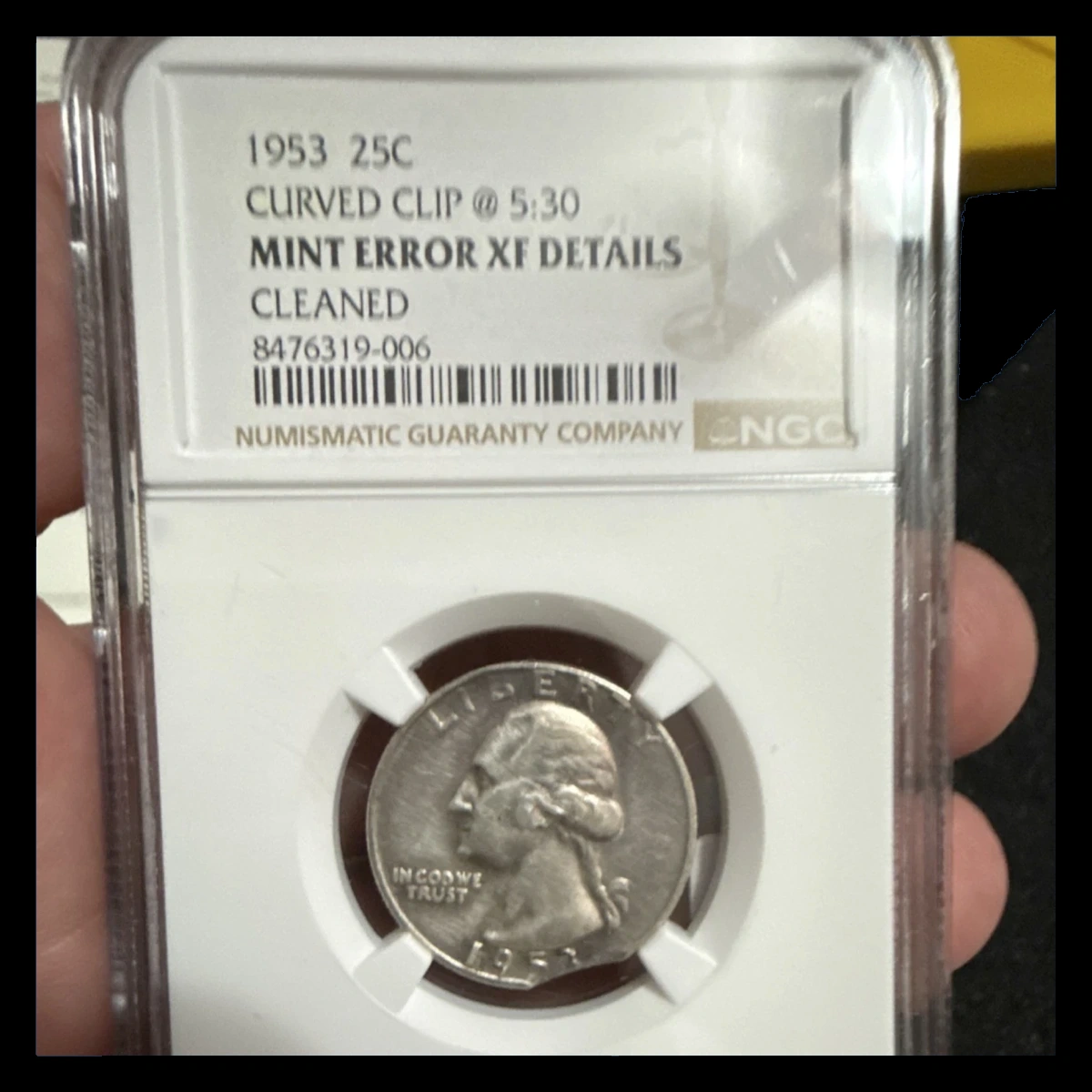
4. 1953 Quarter A Curved Opening through the Rim: Clipped Blank Error
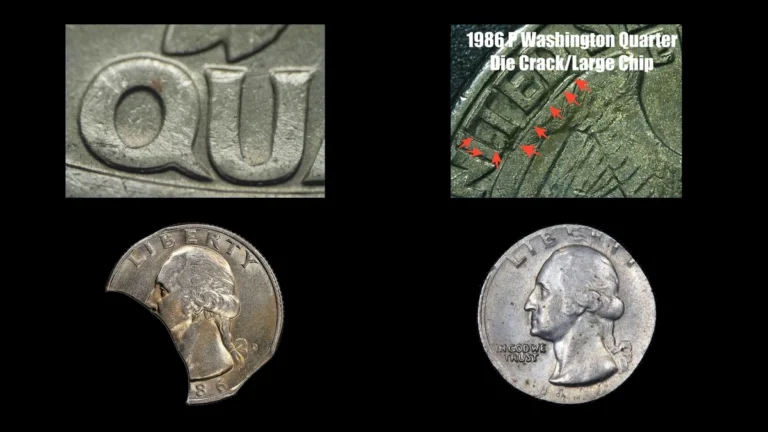
The documented ANACS MS64 quarter has a curved gap and weighs 5.89 grams. Its blank was cut across an earlier hole in the metal strip before receiving Washington and the eagle.
How to Identify
Examine both endpoints where the gap meets the struck design. Natural rounding or softened detail differs from a saw cut through completed letters.
The surviving grooved edge and any weakness opposite the clip provide additional context. Opposite-rim weakness is helpful when present, but not a requirement for every authentic example.
Use the actual candidate’s weight rather than expecting all clips to read 5.89 grams. A later cut also removes silver, so the boundary must establish when the loss occurred.
What It’s Worth
Comparable clips are estimated at $30–$250. The ANACS MS64 example sold for $79 in June 2026.
That is one coin’s result, not a price per gram of missing silver. Natural endpoints, clean surfaces, and the surviving date matter alongside gap size.
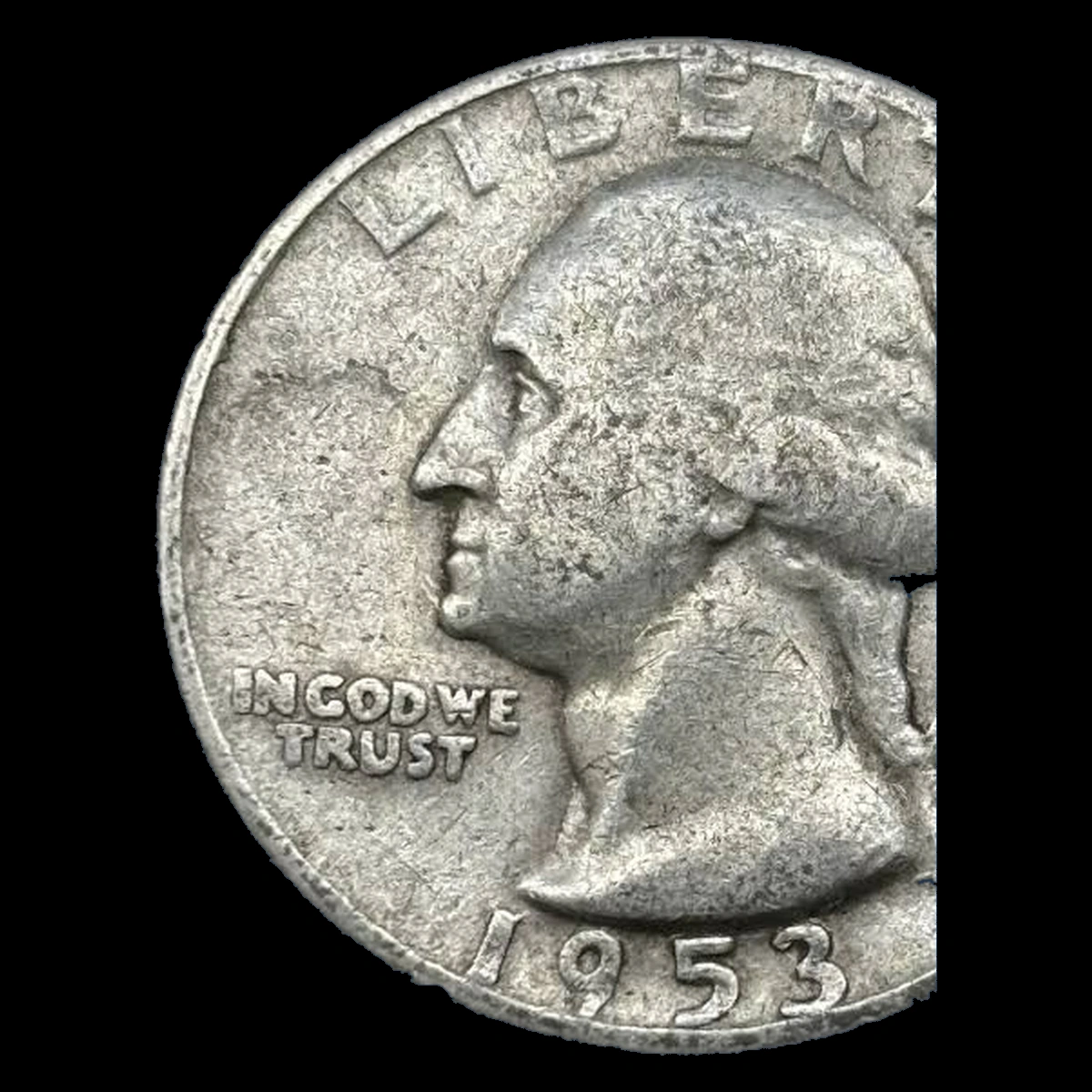
5. 1953 Quarter A Thin Surface Flap: Lamination Error
A seller reported peeling on a 1953-D quarter without independent grading of that example. Lamination occurs when a weakness within the metal allows a thin portion to separate.
How to Identify
Normal 1953 quarters are silver alloy throughout, not modern coins with bonded outer clad sheets. Look for a coherent layer boundary returning into sound metal.
Leave any flap attached and inspect whether original design continues onto it. Pitting from corrosion or a sharp gouge with pushed-up metal can provide different explanations for a rough patch.
An attached flap may retain most of the original weight. Neither a low reading nor the seller’s description alone confirms the reported separation.
What It’s Worth
Genuine modest lamination is estimated at $15–$150, including the underlying silver coin’s value. Larger intact flaps can be easier to display than a barely visible flaw.
A 1911 Liberty nickel with front peeling sold for $51 in January 2023. That different-metal, different-design comparison does not authenticate the reported Denver quarter.
6. 1953 Quarter Complete Lettering on an Expanded Coin: Broadstrike Error
Metal can spread beyond normal width when the collar fails to restrain the blank. The complete design may remain inside that wider outline, even if it is unevenly positioned.
How to Identify
Trace the outer lettering on both faces to check whether all intended detail remains on the metal. A lost section beyond one edge points toward an off-center strike.
Inspect the enlarged border and edge for original striking and incomplete collar control. Hammering can widen a coin too, but often crushes Washington, the eagle, or the lettering.
No single amount of spread is established for the 1953 reports. Width alone cannot demonstrate the minting sequence.
What It’s Worth
Confirmed examples are estimated at $50–$400. A 1965 Type One blank broadstrike in PCGS MS61 sold for $192 in June 2024.
That later clad example provides a mechanism comparison. It does not establish that a 1953 broadstrike also began on an unprepared Type One blank.
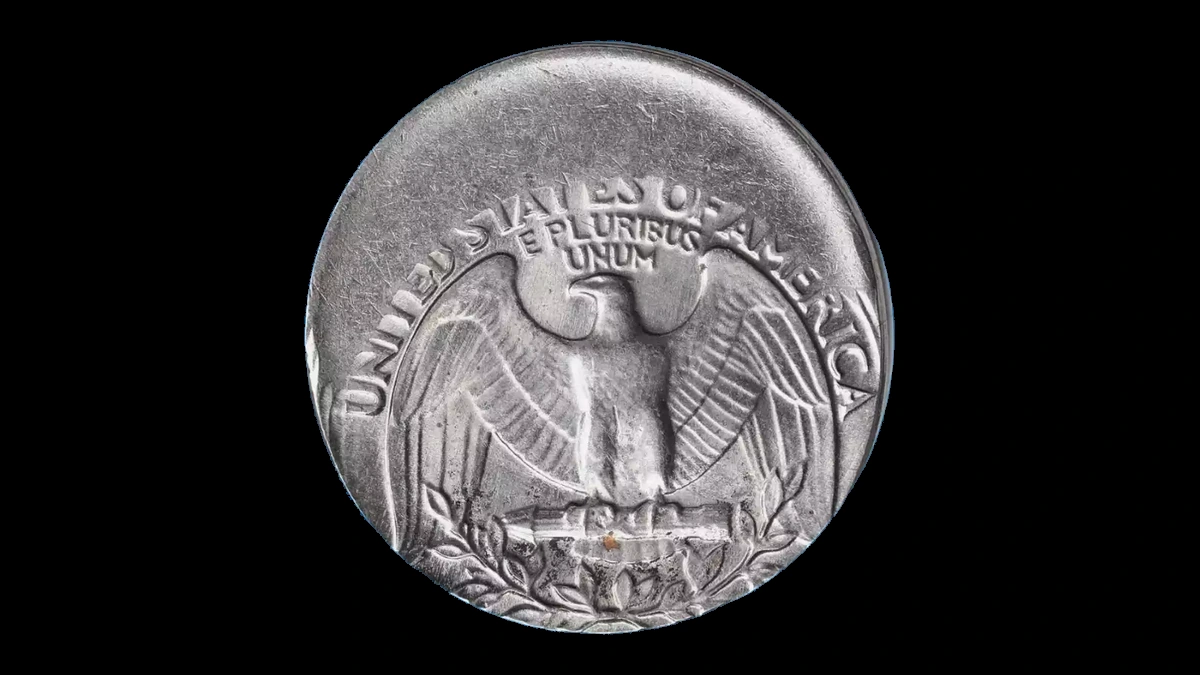
7. 1953 Quarter One Design Position beside a Blank Crescent: Off-Center Strike Error
A misplaced blank leaves unstruck metal opposite the design that misses its edge. A single off-center blow can make a dramatic outline without any second impression beneath it.
How to Identify
Check that both faces contain one displaced design rather than two overlapping positions. The untouched crescent and missing detail should account for the same blank placement.
Read the surviving date and reverse mintmark area. If the relevant metal never received that detail, do not assign a missing mint from another example.
The report supplies no fixed percentage or clock direction. Inspect the strike boundary for natural surfaces rather than cutting or later flattening.
What It’s Worth
Genuine 1953 off-center quarters are estimated at $100–$1,500. A later 1965 quarter struck 25% off center sold for $180 in December 2025.
That different-metal comparison concerns one displaced strike. It should not be confused with the separate 1953-S double-strike sale.
8. 1953 Quarter Two Overlapping Design Positions: Double Strike Error
The recorded 1953-S quarter received a second blow about 75% off center. Its PCGS MS63 grade describes an unworn coin with some marks.
How to Identify
Locate the strongest first impression, then follow a group of later letters or portrait fragments that fits another position. At the overlap, the later blow can flatten earlier detail.
Examine the other face for the same sequence. Scratches or a flattened rim do not make a connected second design.
The 75% figure describes the second blow, not metal missing from the quarter. Keep the entire outline and surviving 1953-S identity visible in photographs.
What It’s Worth
Comparable authenticated doubles are estimated at $400–$3,000. The PCGS MS63 example sold for $1,057.50 in January 2013.
An easily followed second impression and clear first design strengthen the comparison. Heavy wear or scratches can make another example less appealing.
9. 1953 Quarter An Unstruck Back with a Stepped Edge: Uniface and Partial Collar Error
The PCGS AU58 specimen combines a blank reverse with incomplete collar contact. Another blank blocked the reverse tool, while partial restraint allowed part of the edge to spread.
How to Identify
Inspect the reverse for an original blocked surface rather than a completed design ground away. Parallel scratches, shaved remnants, or an unnaturally polished depression can indicate later removal.
Next follow the partial-collar step from the side. That structure has a separate cause from the absent reverse image.
The front design, blocked back, and expanded edge must fit one struck object. A blank face alone does not prove a collar fault, and an uneven rim does not prove another blank was present.
What It’s Worth
Comparable authenticated combinations are estimated at $1,000–$3,500. The PCGS AU58 coin sold for $2,040 in May 2024.
This is one whole-coin price. Preservation of the blocked surface and edge explains the combination more clearly than a damaged or polished example would.
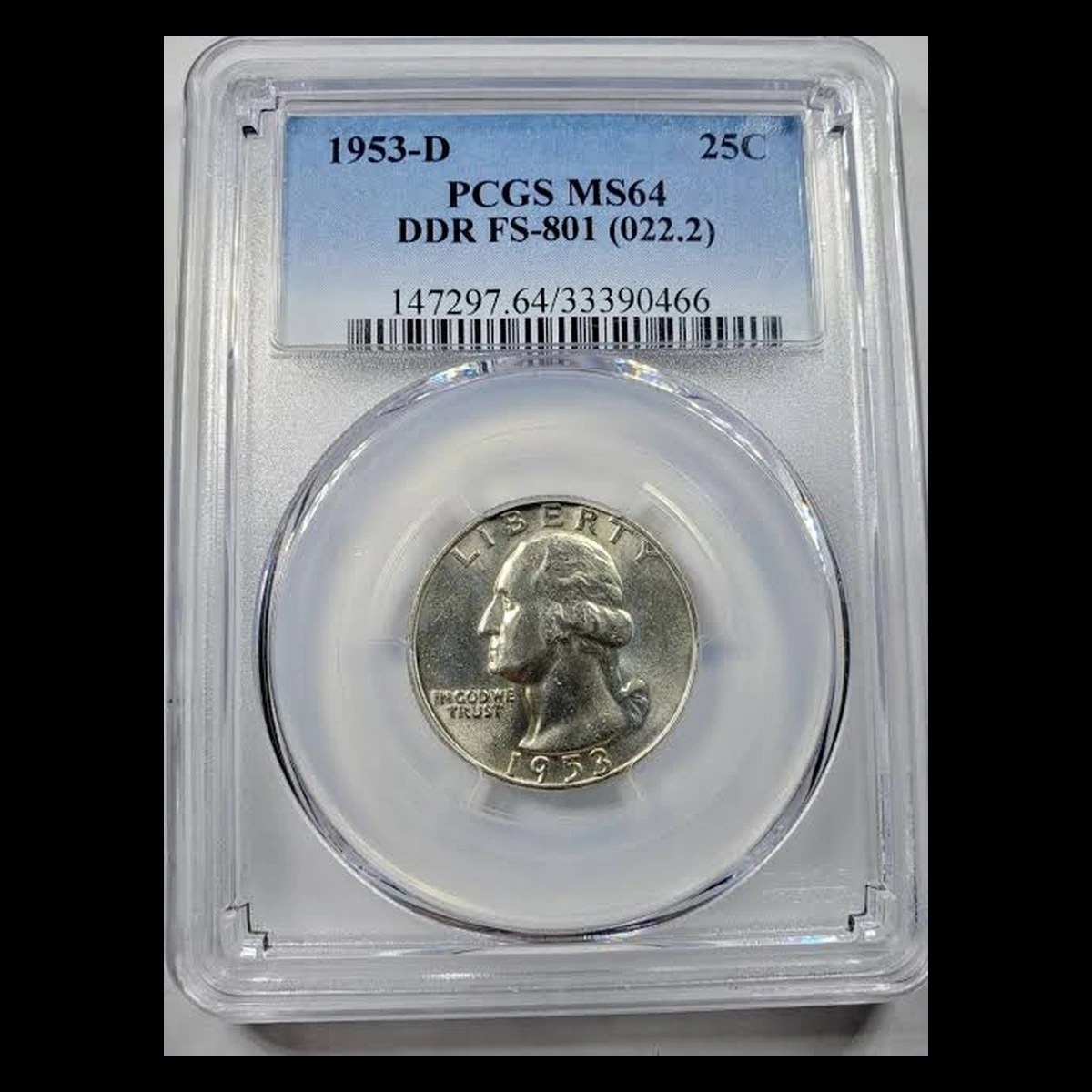
10. 1953 Quarter Rounded Extra Details on a Proof Front or Denver Back: Doubled Dies Error
The 1953 front-doubling report concerns Proof collector coins. A separate Denver reverse doubled die is recognized in the grading-service catalog.
How to Identify
Choose the finish and face before looking for a match. The Denver coin has D below the eagle; the Proof’s front pattern cannot identify its reverse variety.
Compare several neighboring outlines under changing light. Rounded separation and repeated split corners are more useful than a single thick letter or a moving reflection.
A flat shelf may arise during striking rather than in the tool. The two reported varieties do not have to coexist on one coin.
What It’s Worth
Confirmed doubled dies are estimated at $40–$800. A different-year 1969-S FS-101 Proof in PR67 was reported sold for $312 in March 2018.
That comparison reflects interest in matched doubled detail, not a transaction for either 1953 pattern.
11. 1953 Quarter An Earlier Letter beneath the D: D over S or Inverted D Error
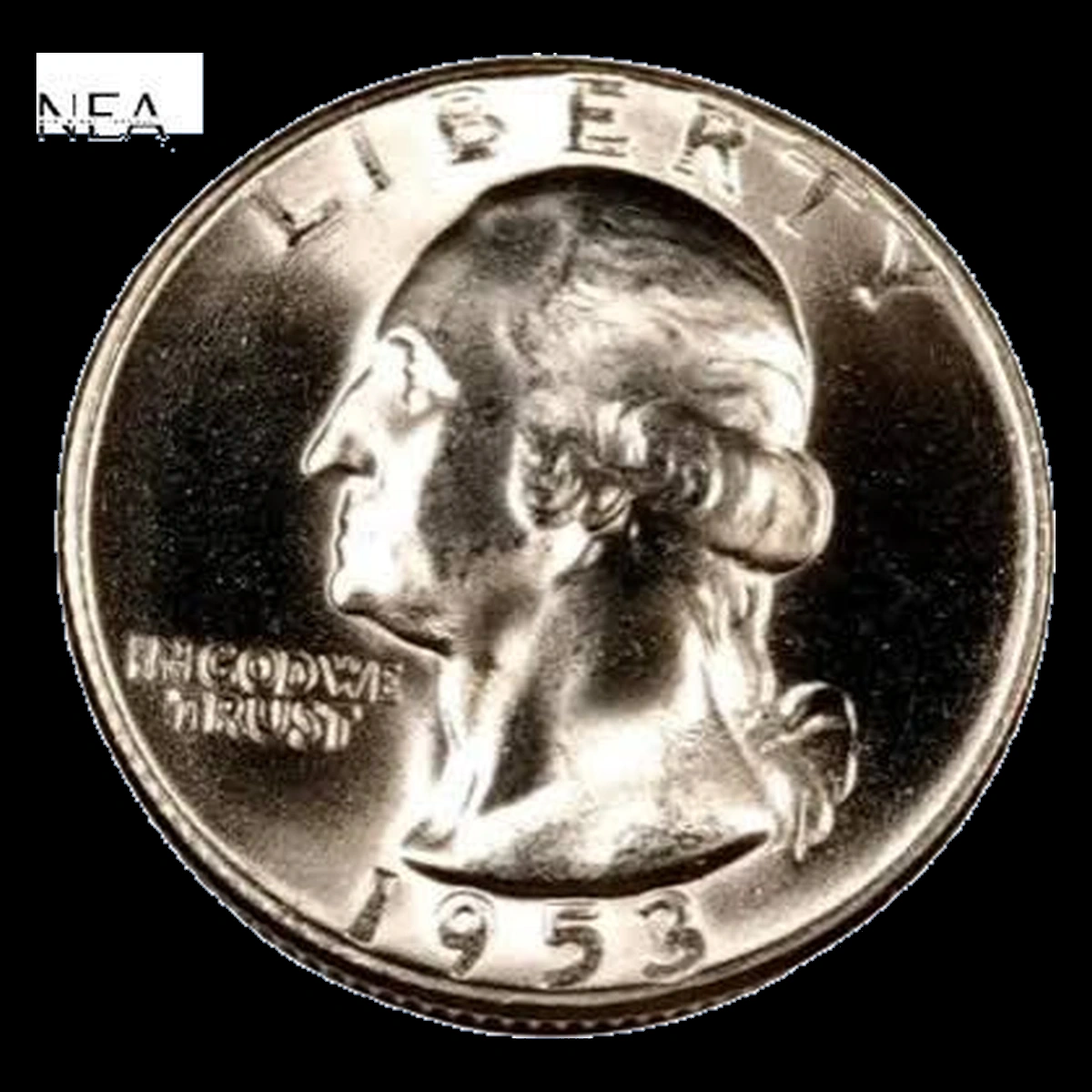
PCGS recognizes two different 1953 mint-letter varieties: D over S and D over an inverted D. An earlier punch impression survives where the final upright D did not fully cover it.
How to Identify
Hold the reverse upright and examine the D below the eagle. Decide which underlying letter is claimed before comparing the partial curved strokes.
An inverted D is upside down relative to the coin’s normal orientation. Rotating the entire photograph does not establish that earlier punch position.
Follow the surviving fragments around the final letter rather than reading one bump as a complete S. Cuts or displaced metal from later damage need to be excluded.
What It’s Worth
Recognized mint-letter varieties are estimated at $40–$1,000. PCGS records an MS64 inverted-D example sold on eBay for $650 in October 2022.
The result belongs to that variety. It is not an automatic value for D/S or an unexplained extra mark beside an ordinary D.
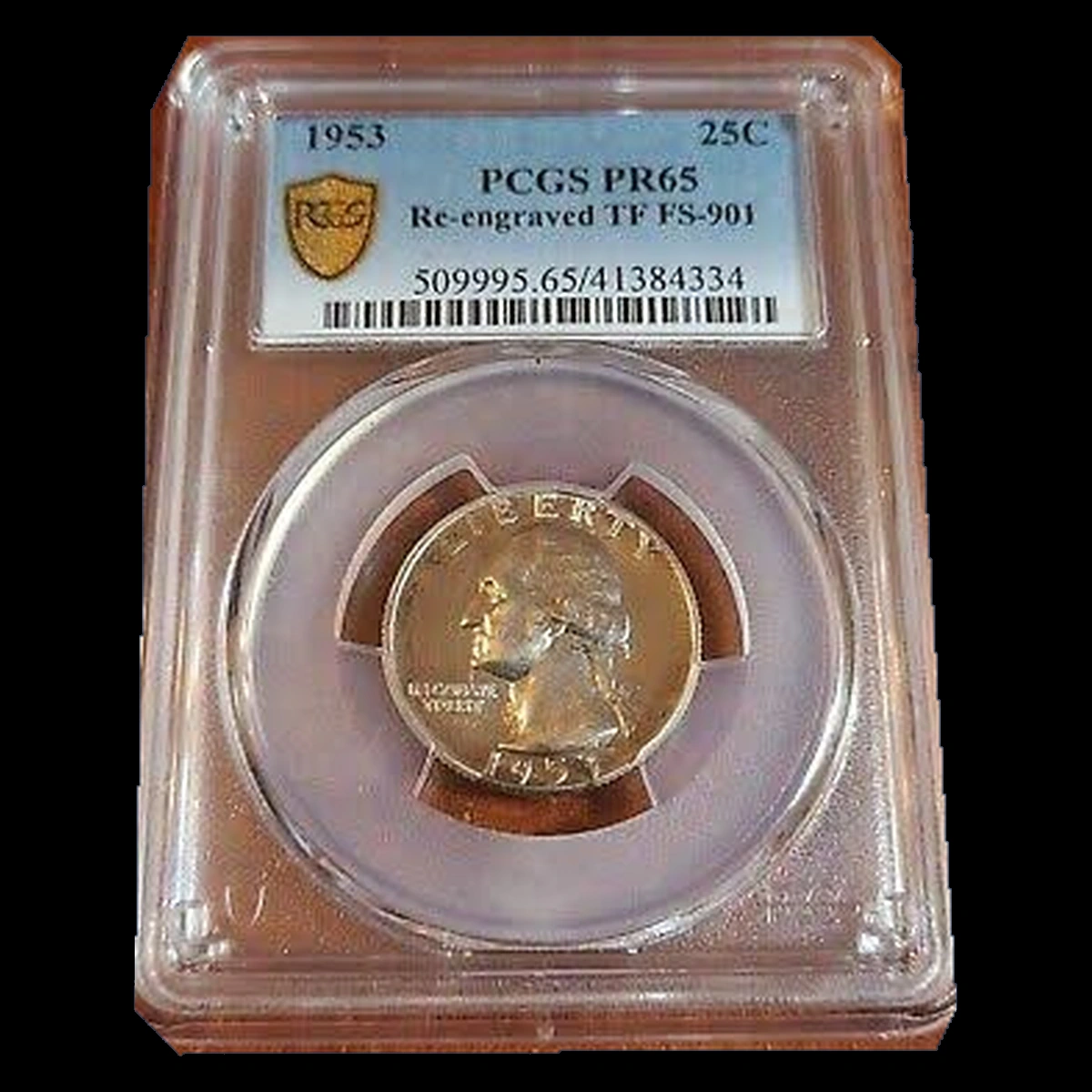
12. 1953 Quarter Altered Lines in the Eagle’s Tail: Re-Engraved Proof Tail Feathers Error
The recorded PCGS PR65 Proof carries a tail-feather pattern created by recutting details on the tool. Coins struck afterward could reproduce those changed lines.
How to Identify
Compare the complete tail with both a normal 1953 Proof and the identified variety. Keep adjacent artwork in view instead of isolating one line that might resemble several patterns.
Original recutting differs from someone scratching feathers into a completed coin. Inspect the reflective field for fresh scraping, polishing, or cuts crossing unrelated details.
A particularly sharp eagle alone does not establish the variety. The same changed feather arrangement must appear in the correct year’s reference.
What It’s Worth
Confirmed 1953 Proof examples are estimated at $50–$1,200. PCGS records a 1957-D re-engraved-tail MS64 sold on eBay for $2,200 in October 2021.
That ordinary Denver coin is a separate year and variety, not a sale of the 1953 Proof. Haze, scratches, and clarity of the actual tail pattern affect the Proof’s comparison.
Conclusion
Keep the starting object clear when identifying a 1953 quarter error: a thin quarter-sized blank, a smaller unused blank, and a finished nickel leave different evidence. Monticello remnants are especially useful for the last of those.
At smaller details, match the correct face, mint letter, or Proof feather pattern. Original surfaces and each coin’s own measurements support a better value comparison than a borrowed grade or a similar-looking mark.