Rare 1903 Quarter Errors (List & Pictures)
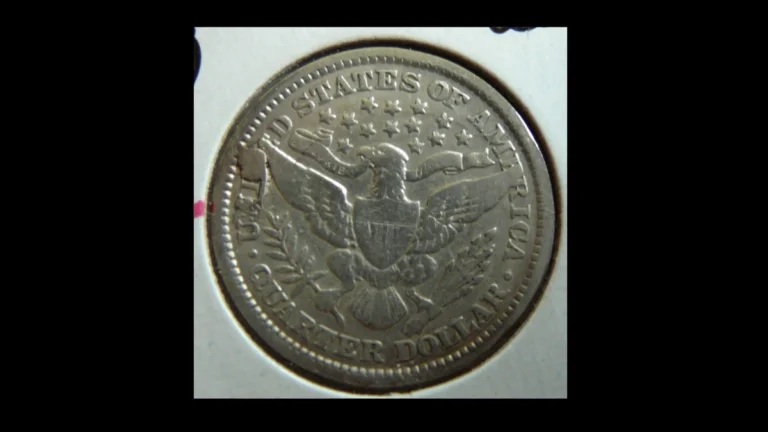
The tiny border teeth below the date can matter as much as the date itself on a Barber quarter. Supplied whole-coin estimates for 1903 quarter errors and date-punch varieties range from $50 to $5,000.
The supplied completed-sale comparison is a different-year 1965 broadstrike that brought $192 in June 2024. Begin with extra numeral traces, then decide whether an unusual outline retains the full design or leaves some of it off the metal.
| Where to look | Possible identification | Estimated value |
|---|---|---|
| Beside the date or among the lower border teeth | Repunched or misplaced date | $50–$1,000 |
| Expanded metal around complete letters and stars | Broadstrike | $300–$3,000 |
| Unstruck crescent opposite missing artwork | Off-center strike | $500–$5,000 |
1. 1903 Quarter Numeral Fragments Appear Outside the Date: Repunched or Misplaced Date Error
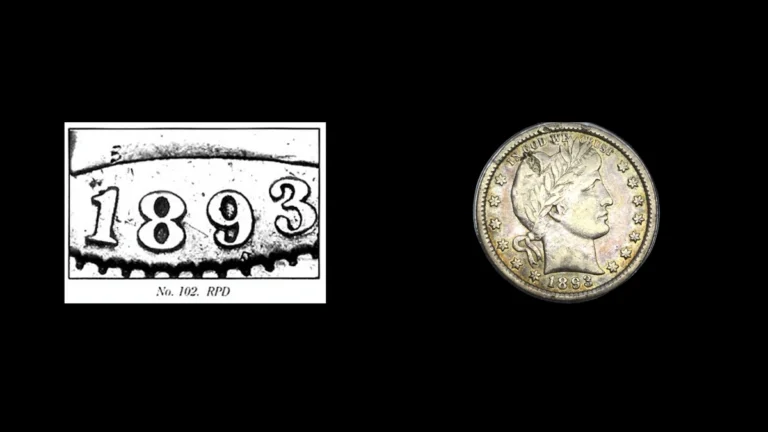
The date was applied to the die with a punch. If another impression overlapped an earlier one, parts of the first digits could remain beside the final date and appear on struck quarters.
A more widely misplaced impression can leave numeral traces down in the border teeth. The supplied lower-border report concerns a 1903-O, while the separate repunched-date report establishes no single mint or digit pattern.
How to Identify
Follow the outline of each normal digit and ask whether the additional shape forms a recognizable piece of another numeral. Thickness alone can come from wear or a strong ordinary impression.
For the misplaced-date report, include the border beneath the date and confirm the O below the eagle on the reverse. Compare with an ordinary 1903-O so normal tooth shapes are not mistaken for numbers.
A photograph containing both the date and lower border preserves their spacing. Close-ups that omit the normal digits can obscure the difference between an overlapping impression and one placed farther away.
Check for raised original detail rather than fresh cuts or scratches. A normal date positioned low on the coin is not sufficient without an additional numeral trace.
What It’s Worth
$50–$1,000 is the supplied estimate for confirmed date-punch varieties. Mint, wear, and the clarity of the surviving earlier impression affect the whole-coin comparison.
Recognizable digit fragments provide better evidence than an ambiguous thick border. The range assumes a genuine punch-made feature rather than damage to an ordinary date.
2. 1903 Quarter The Design Fits inside an Expanded Outline: Broadstrike Error
A broadstrike occurs when the collar ring does not contain the blank’s metal normally during the blow. The quarter spreads outward while retaining the intended design.
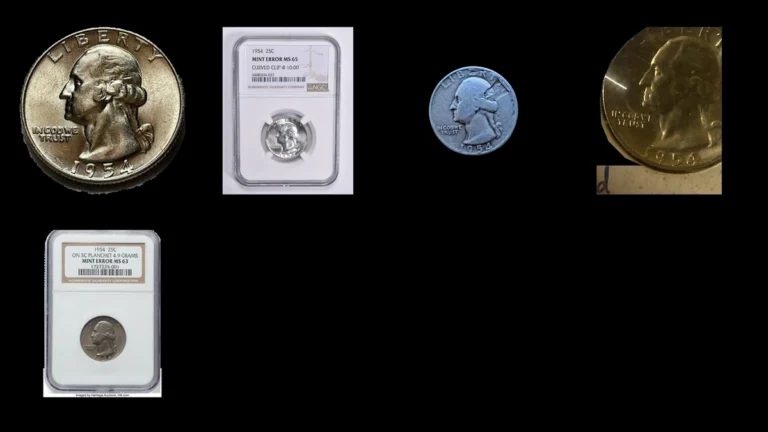
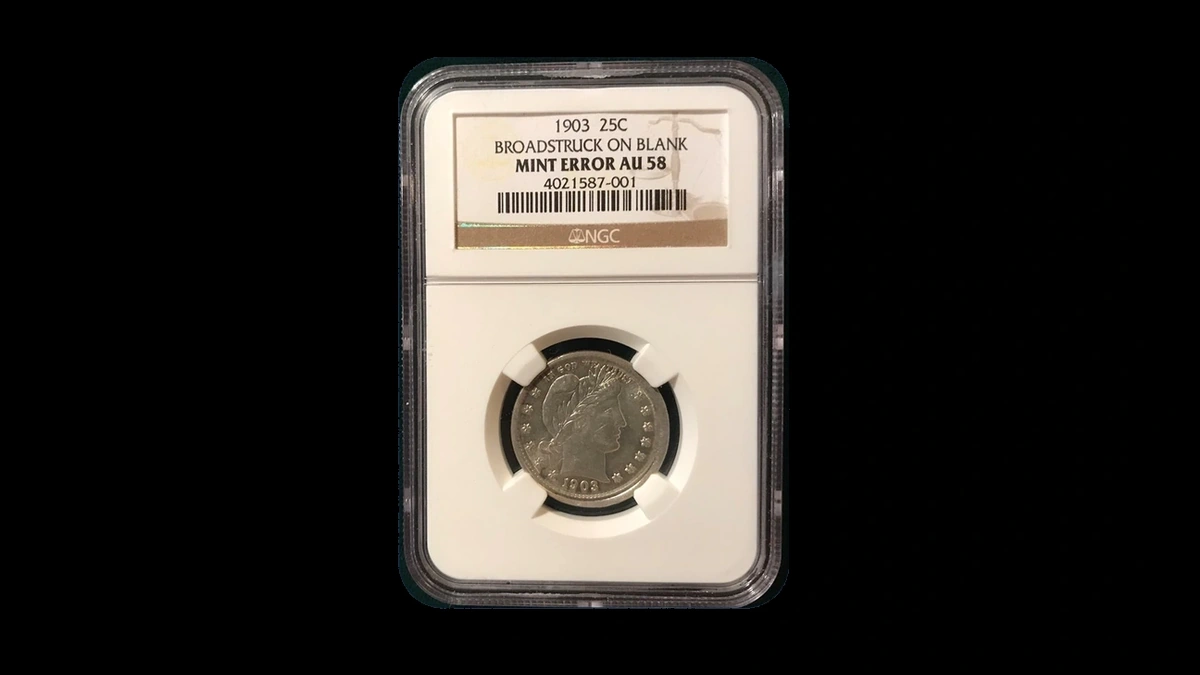
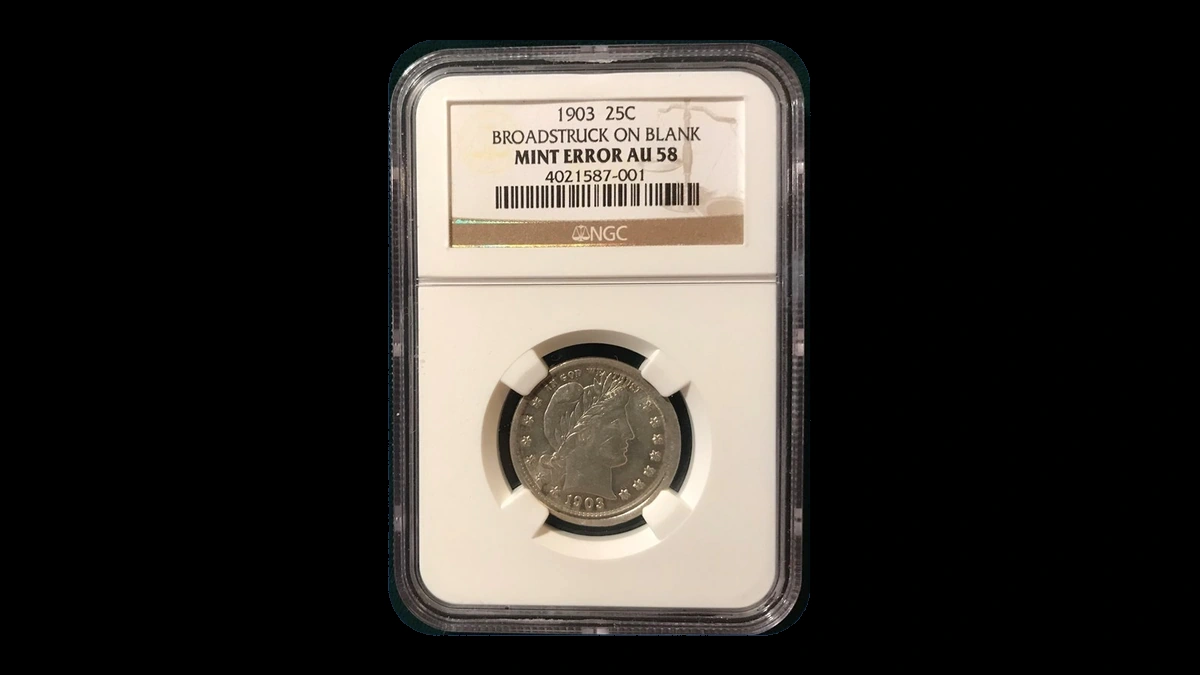
The VSI collector display includes a 1903 quarter labeled broadstruck on a blank and graded NGC AU58. That grade indicates slight wear, but the label supplies neither an actual diameter nor a complete blank-preparation description.
How to Identify
Trace the outer stars and lettering on both faces to see whether they remain within the metal. A full design can be unevenly placed inside a broadstrike’s enlarged border.
Inspect the edge for absent or altered grooves and compare a loose coin’s dimensions with the normal 24.3-millimeter diameter. Measure more than one direction because spread need not be uniform.
Examine Liberty and the eagle for crushing or impact scars. Hammering a finished coin can enlarge it while damaging details that were already present.
If a holder hides the edge, leave the coin inside and keep that part of the assessment unresolved. A face-only image cannot supply an unseen edge structure.
What It’s Worth
$300–$3,000 is the estimated range for a comparable genuine 1903 broadstrike. Obvious expansion with readable original design generally provides a clearer comparison than a subtle border change.
A 1965 Type 1 broadstrike graded PCGS MS61 sold for $192 in June 2024. Its later date and specific blank subtype do not establish either a price or a preparation method for the NGC AU58 1903 coin.
3. 1903 Quarter An Unstruck Crescent Accompanies Lost Design: Off-Center Strike Error
An off-center blank receives only part of the intended design, with some artwork falling beyond one edge. The opposite portion remains unstruck because it lay outside the dies’ reach.
An older dealer catalog reproduced in Mint Error News lists a Philadelphia 1903 Barber quarter with this error. The report does not supply its percentage or direction.
How to Identify
Compare both faces to see whether their incomplete designs fit the same misplaced blank. A centered reverse behind a shifted-looking front may indicate a misaligned die instead.
Inspect the plain crescent for original surface texture. Ground-away or flattened remains of finished design point toward later alteration.
Keep the full year and entire outline visible in photographs. A date inferred from incomplete digits is weaker evidence than a readable 1903.
The unstruck area remains metal, unlike a clip where part of the blank is absent. A missing mint-mark area also cannot independently prove Philadelphia origin.
What It’s Worth
$500–$5,000 is the supplied estimate for genuine 1903 off-center quarters. Readable identity, degree of displacement, and original surfaces guide the comparison.
A separate 1907-S Barber quarter graded PCGS AU53 with a 3% shift is listed at a $2,250 dealer asking price. That figure is not a completed sale, and its percentage does not describe the reported 1903 coin.
Conclusion
For a 1903 quarter, preserve the relationship between the date, lower border, and complete outline in your photographs. Extra numeral fragments can reveal a date-punch variety, while expanded or unused metal calls for a different physical explanation.
A broadstrike retains its design within spread metal; an off-center strike loses part of the intended image. Keep the documented 1903 descriptions separate from later-year prices and dealer asking figures when judging value.