Rare 1942 Dime Errors (List & Pictures)
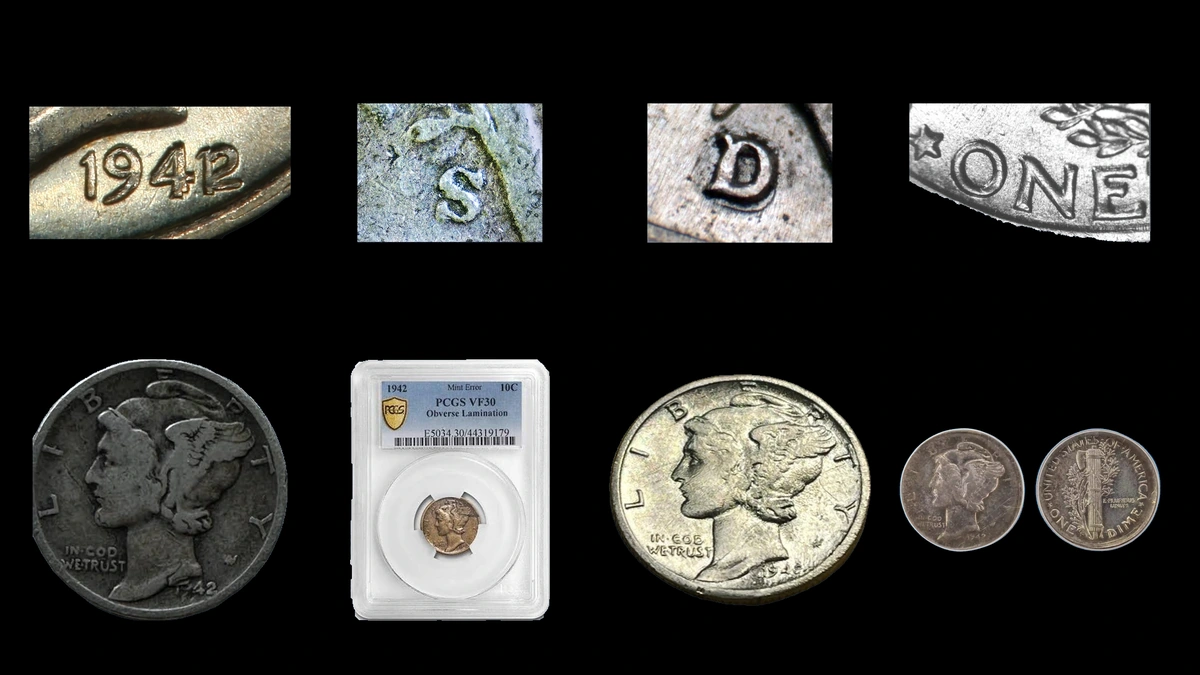
The famous 1942/1 date belongs alongside much smaller cracks and blank defects in a guide to 1942 dime errors. Estimated whole-coin values span $10–$120,000.
A Philadelphia overdate graded MS66 Full Bands brought $120,000 in January 2018. That exceptional result includes its unworn condition and sharply separated bands across the rods on the back; start by checking the date and mint before comparing smaller features.
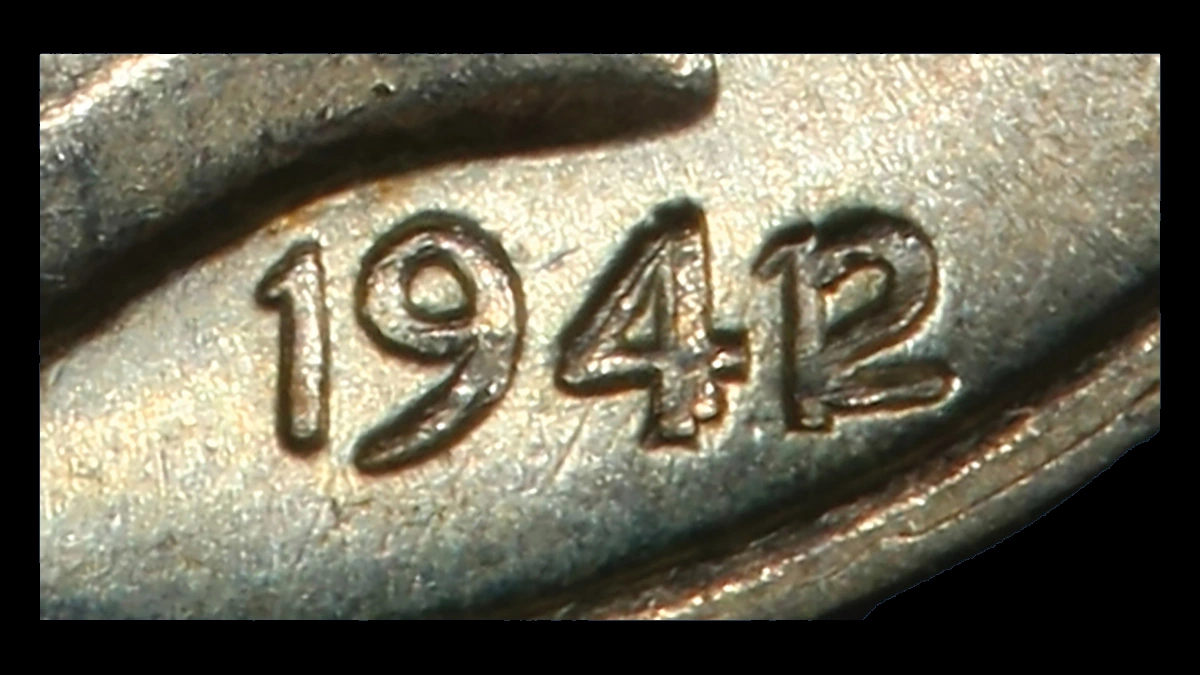
1. 1942 Dime An Earlier 1 beside the 2: 1942/1 Overdate Error
A tool received designs from both 1941 and 1942 during its preparation. Traces of the earlier year survived beneath the final date.
The Philadelphia version shows the earlier 1 more clearly than Denver’s version. Denver examples also have a repunched D.
This was not a finished 1941 dime struck again in 1942. The overlapping years were already on the tool.
How to Identify
Read the mintmark area before choosing a reference. A Denver candidate needs the subtler Denver pattern rather than the more obvious Philadelphia 1.
On Philadelphia coins, compare the earlier 1 beside 2 and the doubled notches of 4. Look for raised original design, not a damaged digit or added metal.
Some overdates also have a clip or lamination. Match the date first, then inspect that physical defect separately.
The reported clipped VF25 and EF45 coins are separate specimens, as are the AU58 lamination examples. Their grades and damaged areas must stay with their own photographs.
What It’s Worth
$300–$120,000 is the estimated range from worn overdates to exceptional examples. Most circulated coins sit far below the top.
PCGS records the Philadelphia MS66 Full Bands coin at $120,000 in January 2018. The separated back bands and outstanding surfaces are part of that whole-coin result.
A clip or peeling area does not justify adding its maximum estimate to the highest overdate price.
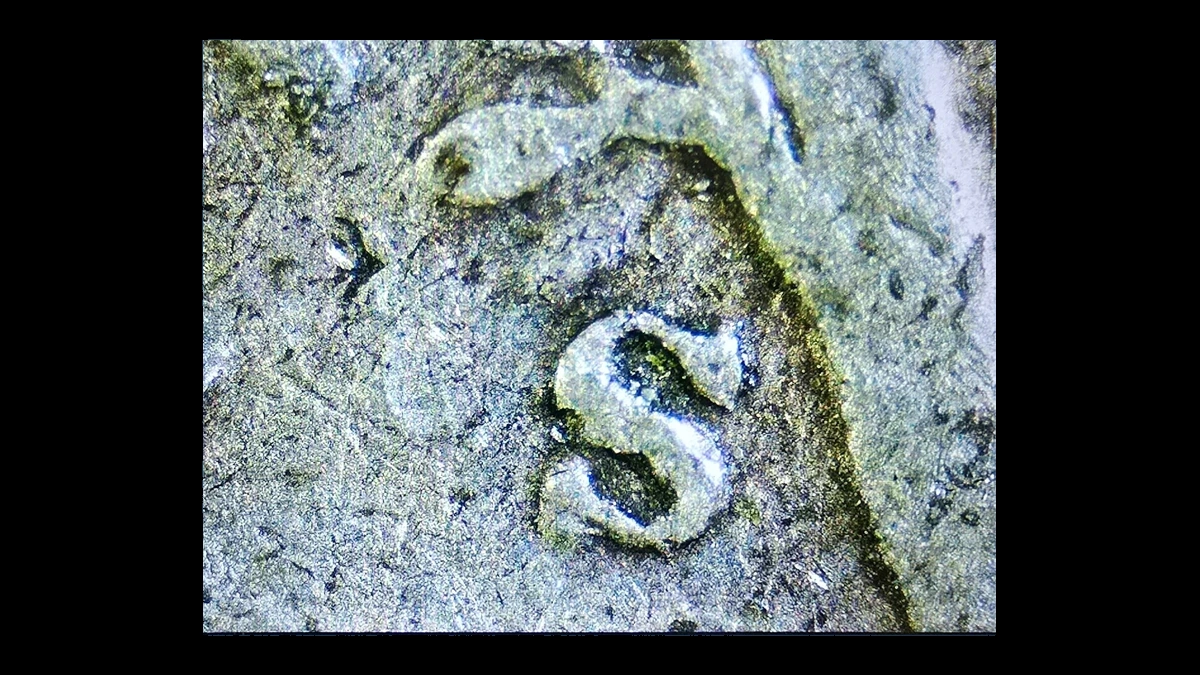
2. 1942 Dime The S Has Reversed End Shapes: Inverted Mintmark Error
An S punch is not perfectly symmetrical. Turning it upside down changes the positions of its tips and inner curves.
The recognized 1942-S inverted mintmark is FS-501. It differs from an extra S outline created by a shifted repeat punch.
How to Identify
Compare a normal S, an identified FS-501 image, and the candidate at the same scale. Keep all the coin backs upright.
References show a flatter upper inner curve, longer upper tip, and a notch inside the lower curve. Judge those features together rather than relying on one unusual end.
Wear can flatten the tips, so a partial resemblance needs a careful full-letter match.
What It’s Worth
$50–$1,500 is the estimated range for identifiable examples. An MS63 FS-501 was recorded at $960 in July 2021.
A tilted photograph or a damaged S does not establish the inverted-punch variety.
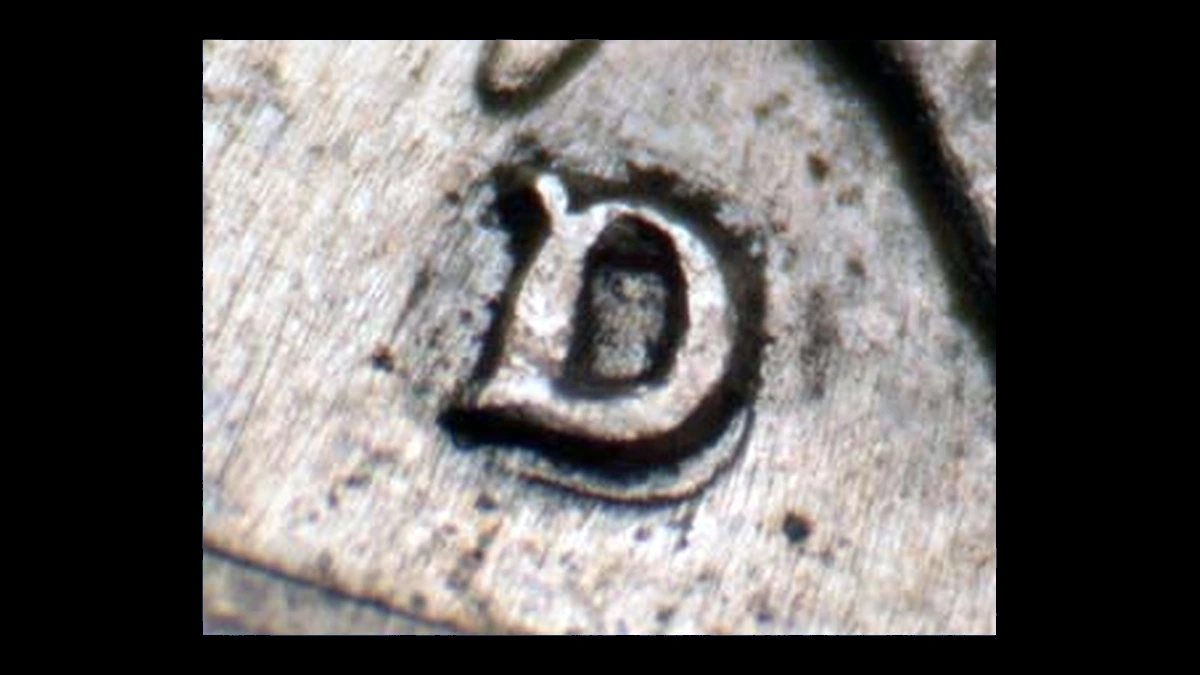
3. 1942 Dime A Second D or S Outline: Repunched Mintmark Error
Mint letters were applied to the tool separately from the main design. A shifted repeat punch could leave parts of the earlier letter beside the final one.
Denver FS-501 and San Francisco FS-502 are different varieties with different letters. The similar catalog numbering does not make them the same pattern.
How to Identify
Find the mintmark at the lower left of the rods. Denver FS-501 has extra detail toward the lower right; San Francisco FS-502 has extra S detail below.
Trace rounded fragments that fit a second letter and compare the surrounding small marks with a matching reference. Direction alone may not distinguish similar varieties.
A low flat shelf needs a different explanation from a raised earlier punch.
What It’s Worth
$15–$400 is the estimated range for identifiable ordinary-date repunched letters. Clear curves and good preservation make small features easier to appreciate.
A Denver 1942/1 with a repunched D belongs in the overdate comparison, not this ordinary-date price group.
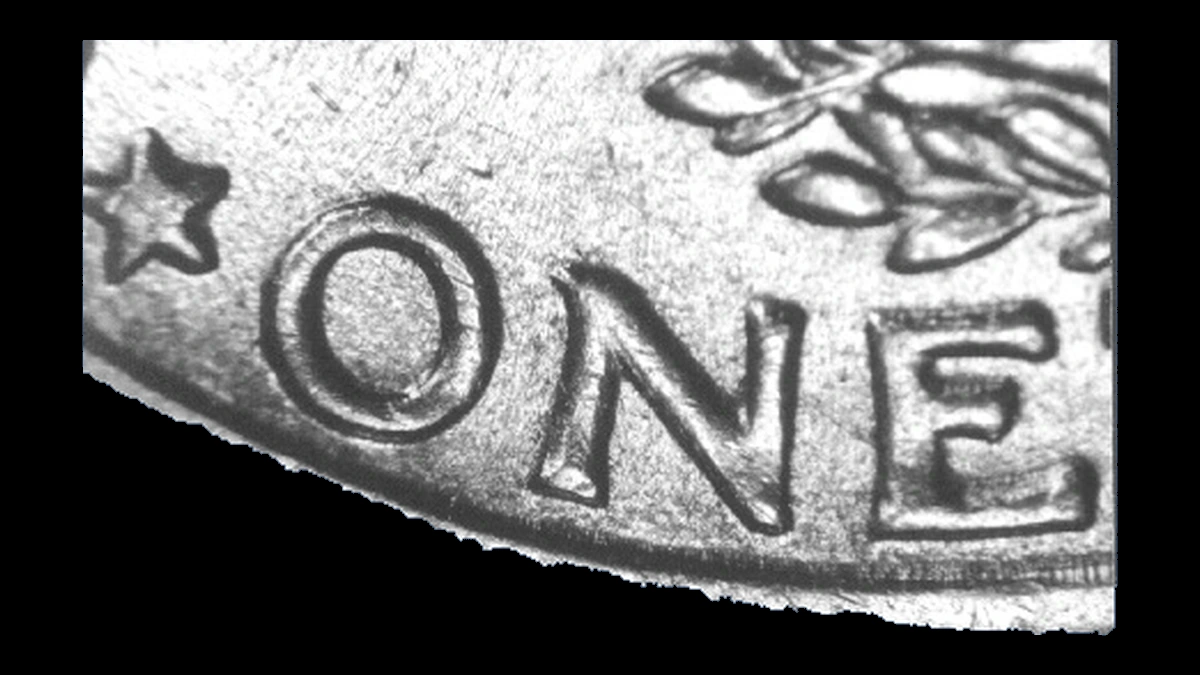
4. 1942 Dime Repeated Letter and Leaf Details: Other Doubled Dies Error
Some doubled designs do not include the earlier 1941 date. Philadelphia reverse doubling includes ONE, a nearby leaf, and the left star.
Denver reports concern front details, while San Francisco has separate back patterns. One San Francisco pattern also occurs with a repunched S.
How to Identify
On Philadelphia examples, compare ONE, the leaf, and star together. Several related doubled shapes provide better evidence than one thick letter.
For Denver, choose the correct date, LIBERTY’s Y, or designer-initials reference. Those front patterns cannot be identified from Philadelphia reverse photographs.
San Francisco WDDR-001 combines branch, star, and lettering clues with extra S detail toward the lower left. Another back pattern affects lower-left leaves and twigs differently.
What It’s Worth
$25–$1,000 is the estimated range for these identified minor doubled designs and the ordinary-date San Francisco combination. Strong separation and original surfaces can increase appeal.
The combined back doubling and repunched S are features of one coin, not two full values to add.
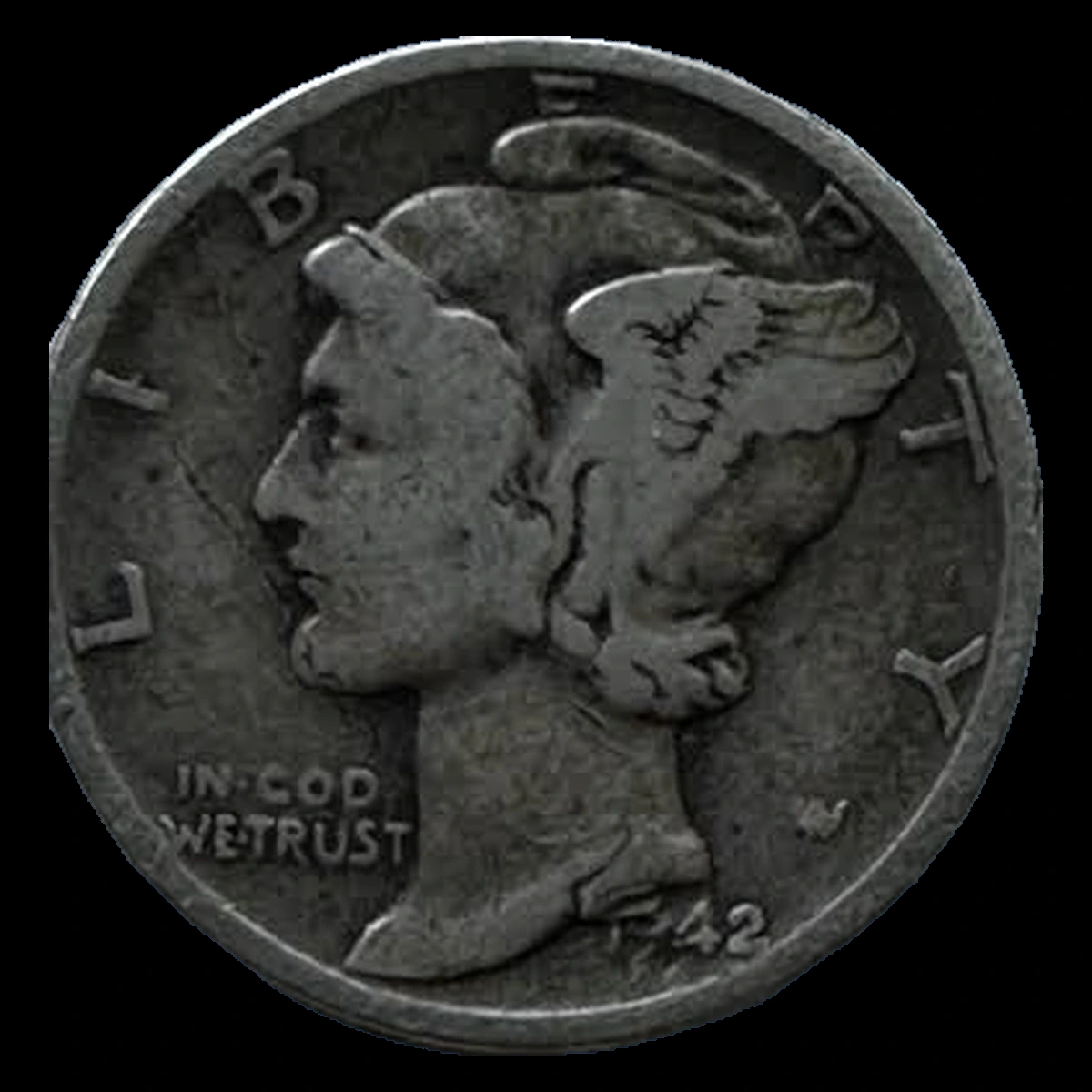
5. 1942 Dime A Raised Head Line or Edge Patch: Cracks and Cuds Error
A crack in the stamping tool leaves a narrow raised line. A missing piece at the tool’s edge can leave a larger rim-connected patch called a cud.
The Philadelphia head crack points toward the top of the coin. Recorded Philadelphia and San Francisco back cuds occupy different positions.
How to Identify
Check the head crack near 12 o’clock. The Philadelphia back cud lies around 3:30–5 o’clock, while the San Francisco example is near STATES around 11–12 o’clock.
Confirm the mint on the complete coin instead of assigning it from a close-up. A genuine cud should join the rim and replace normal design.
Side lighting helps distinguish a raised crack from a groove or a deposit sitting over finished detail.
What It’s Worth
$10–$100 is the estimated range for small head cracks. Clear rim cuds may fall around $75–$1,200.
The shape, visibility, and preservation of the whole coin affect the comparison.
6. 1942 Dime A Flap Peels or Folds over the Surface: Lamination Error
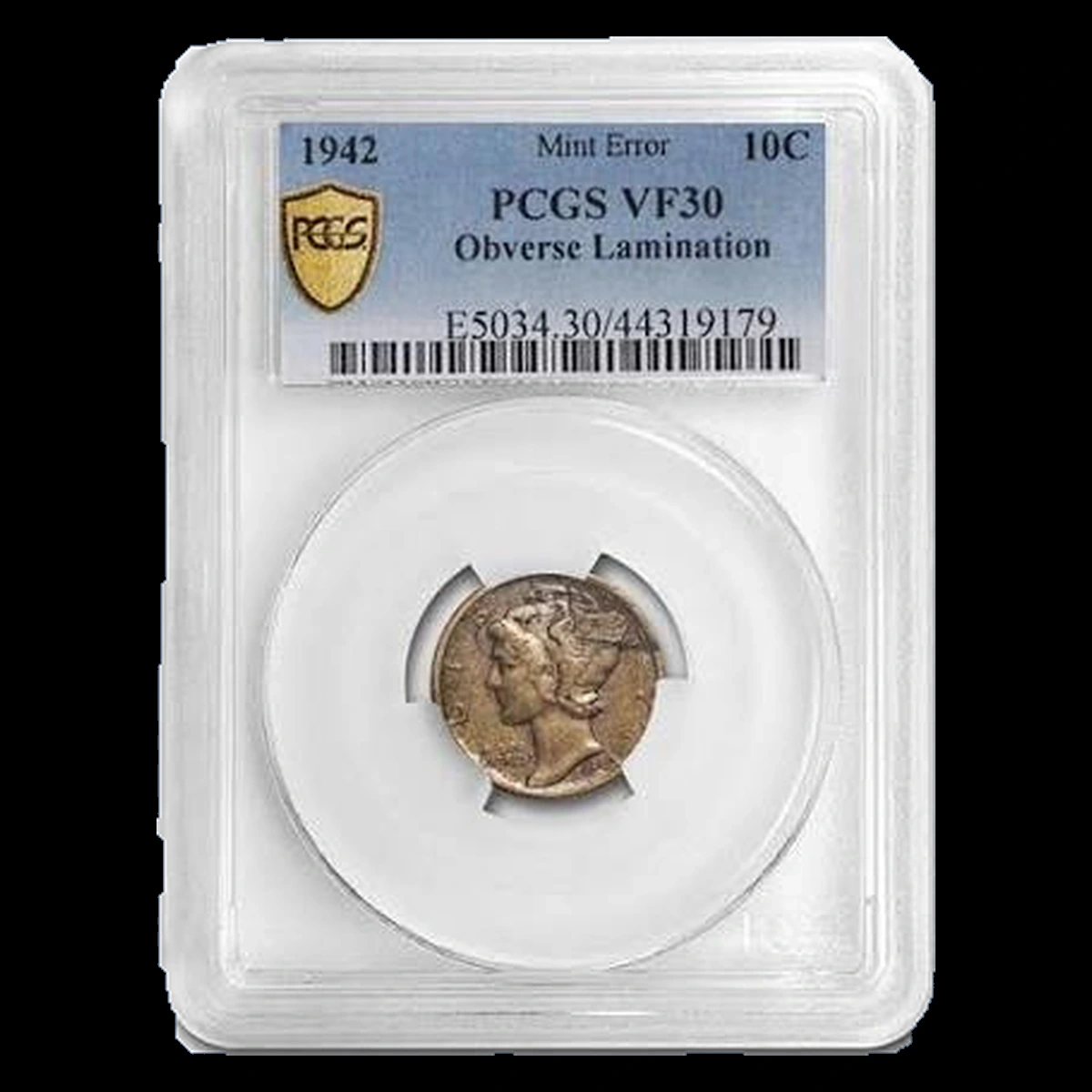
A weak layer inside the silver can separate into a thin flap. Recorded Philadelphia front examples include worn PCGS VF30 and NGC VF20 coins.
Another report describes an attached layer folded over the lower rods on the back. Only the thin layer folded, not the whole dime.
How to Identify
Follow the edge where the sheet separates without lifting it. Original design on the flap can help explain its position.
For the folded layer, locate the lower rods and trace the sheet to its attachment. Scraping makes cuts in finished metal, while corrosion can leave pits without a lifting sheet.
What It’s Worth
$15–$300 is the estimated range for ordinary-date peeling or retained folded layers. Large clear separations on attractive coins tend to display better than tiny rough patches.
Overdate laminations need the valuable date assessed as part of the same coin.
7. 1942 Dime A Large Front Area Was Blocked: Strike-Through Error
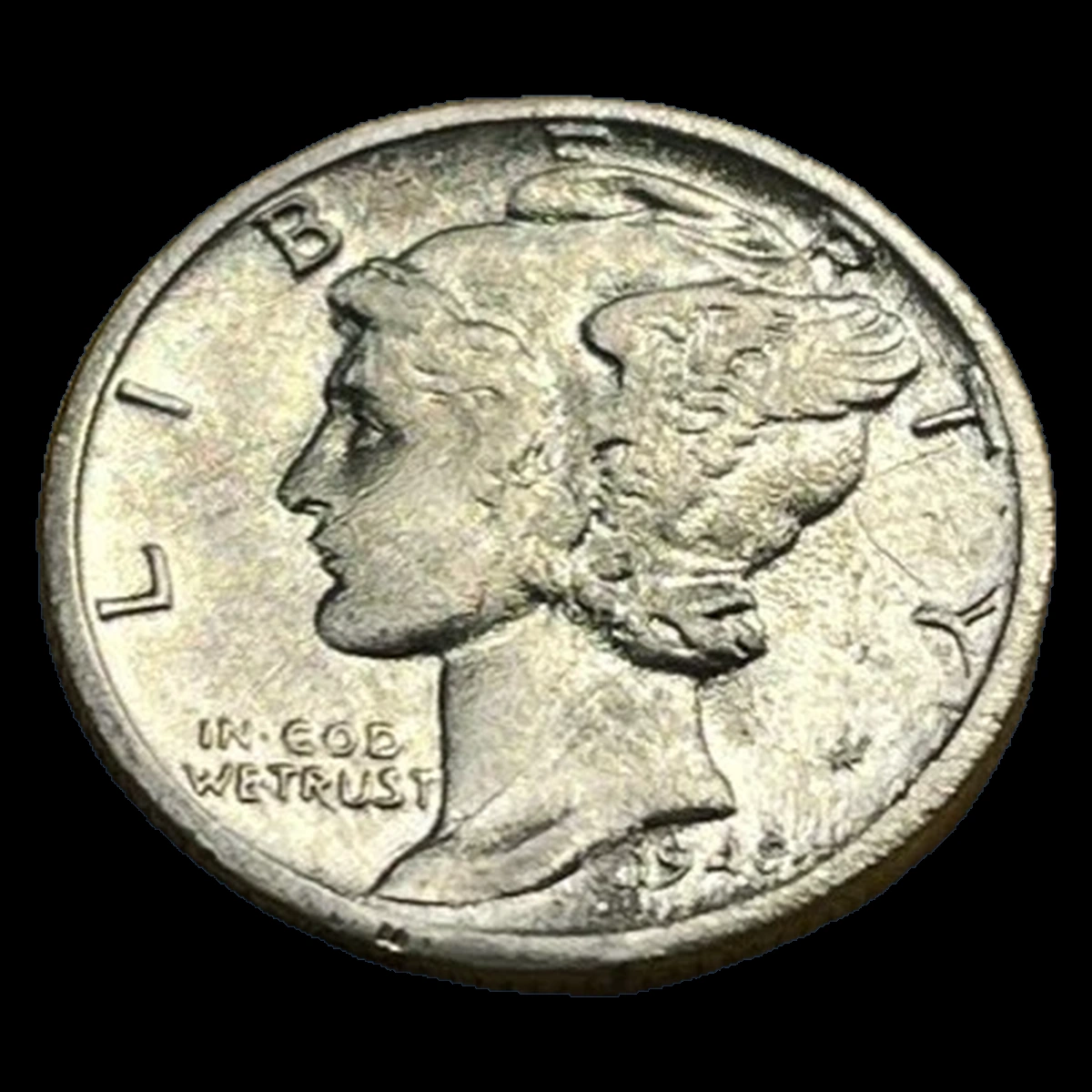
Something between the blank and tool prevented part of the front from forming on the cataloged PCGS MS63 coin. The grade describes an unworn dime with visible marks.
The catalog calls the strike-through major but does not name the material. That word does not supply an exact size or texture.
How to Identify
Follow the transition from normal portrait detail into the affected surface. Look for original texture rather than polishing lines or scraping through completed design.
A cloth claim needs a convincing woven pattern, and faint letters alone do not prove grease. Photograph the whole front and opposite face before naming the obstruction.
What It’s Worth
$50–$1,500 is the estimated range for genuine major front strike-throughs. Clear identity and a well-preserved interruption improve appeal.
The upper estimate cannot be assigned from the word “major” alone.
8. 1942 Dime A Changing Step around the Edge: Tilted Partial Collar Error
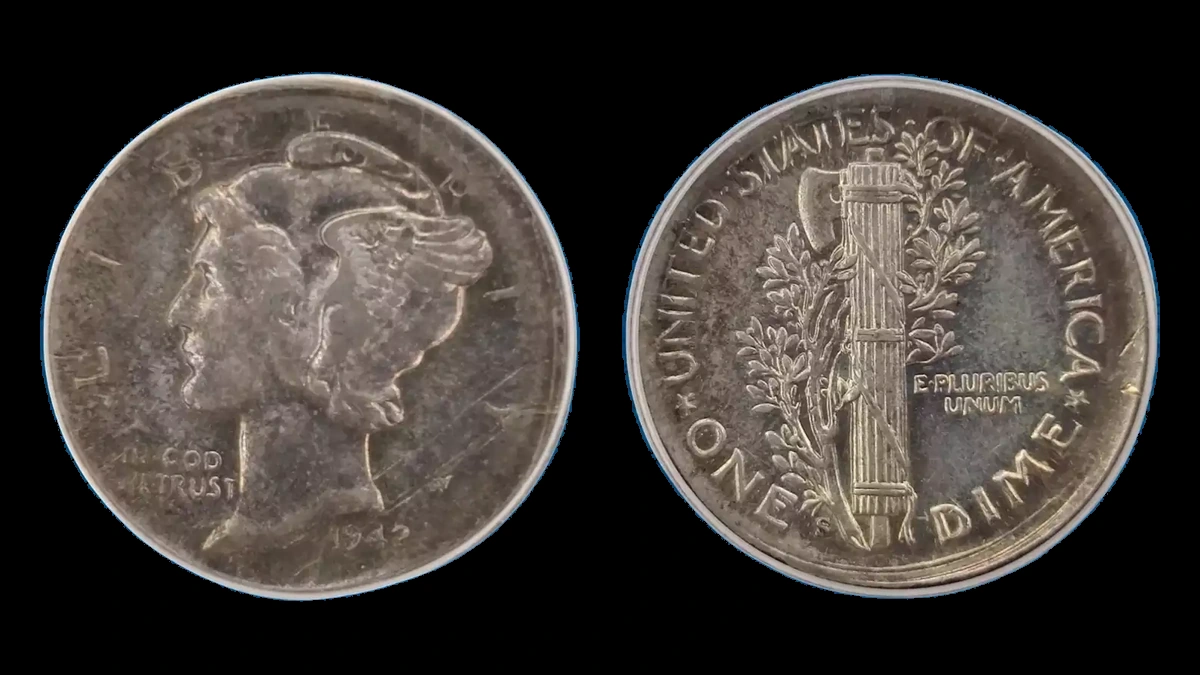
The collar is the ring that controls width and makes edge grooves during striking. A tilted blank can sit partly within it while another portion spreads outside.
The step between those areas may change height around the coin. This tilted partial-collar category is reported for 1942.
How to Identify
Photograph overlapping edge sections while keeping track of which face is upward. Follow a real boundary between the collar-held and expanded portions.
Check both faces for a bend or crushed detail from later damage. A dime rocking on a flat surface does not establish a collar error.
What It’s Worth
$40–$500 is the conditional estimate for a confirmed tilted partial collar. A clear continuous edge pattern is easier to understand than a vague uneven rim.
A later 1953-S silver dime was cataloged as a partial collar in MS64 Full Bands. That grade is a comparison for another coin, not a description or sale price for this report.
9. 1942 Dime A Complete Picture within Extra Metal: Broadstrike Error
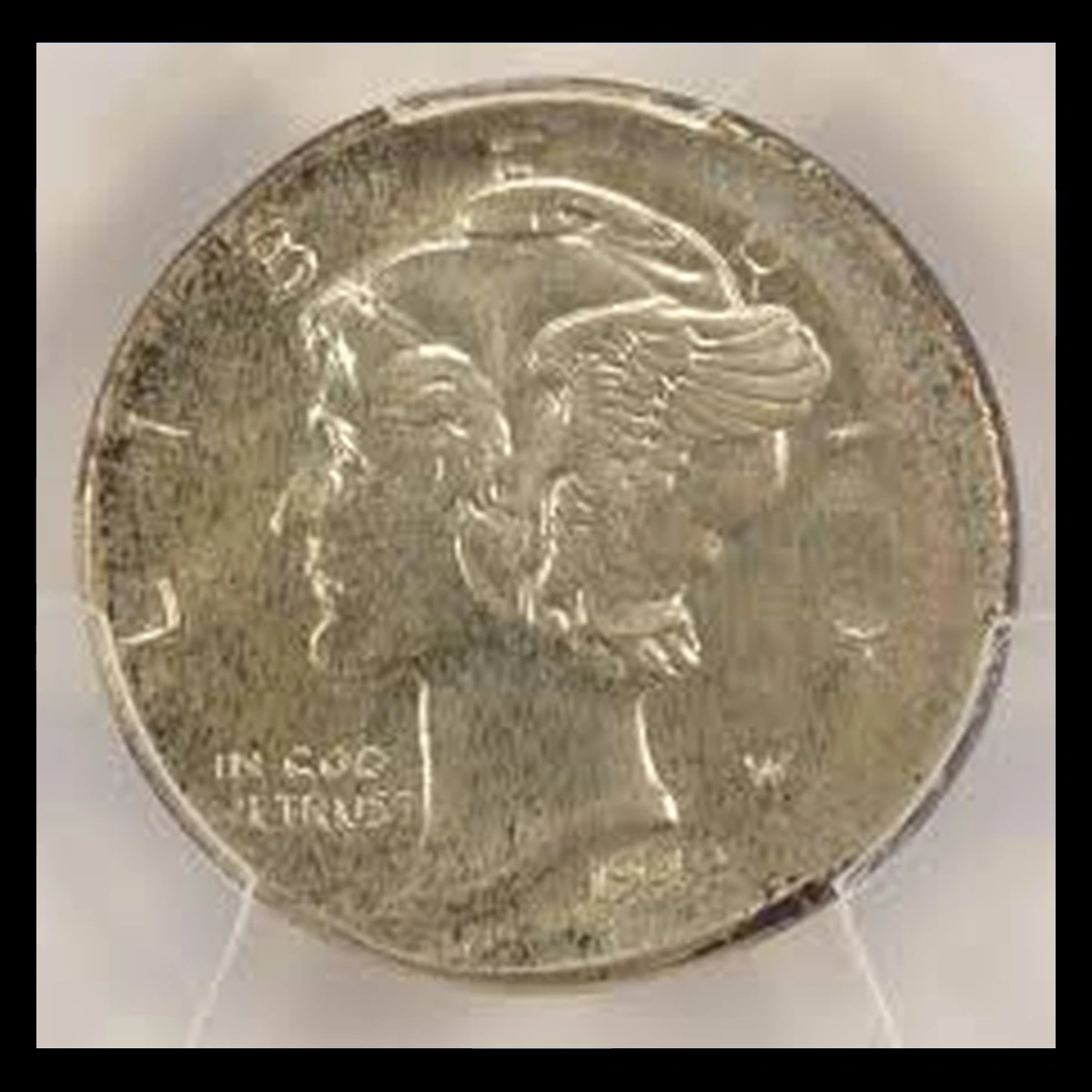
When the collar does not contain the blank, the silver can spread around a complete design. This makes a broadstrike different from a strike that loses design beyond the edge.
The reported 1942 category does not supply one measured diameter or require a clipped blank as well.
How to Identify
Read the outer lettering on both faces before measuring the width. The intended design should remain on the expanded metal.
A normal dime is about 17.9 millimeters across. Check for natural spread beside preserved detail rather than hammer marks or crushed high points.
What It’s Worth
$30–$600 is the estimated range for confirmed ordinary-date broadstrikes. The amount of spread and condition help explain differences.
A 1946 Roosevelt broadstrike graded MS66 Full Bands sold for $99 in July 2021. That later silver dime has a different design and is not a 1942 Mercury sale.
10. 1942 Dime A Gap in the Silver: Clipped Blank Error
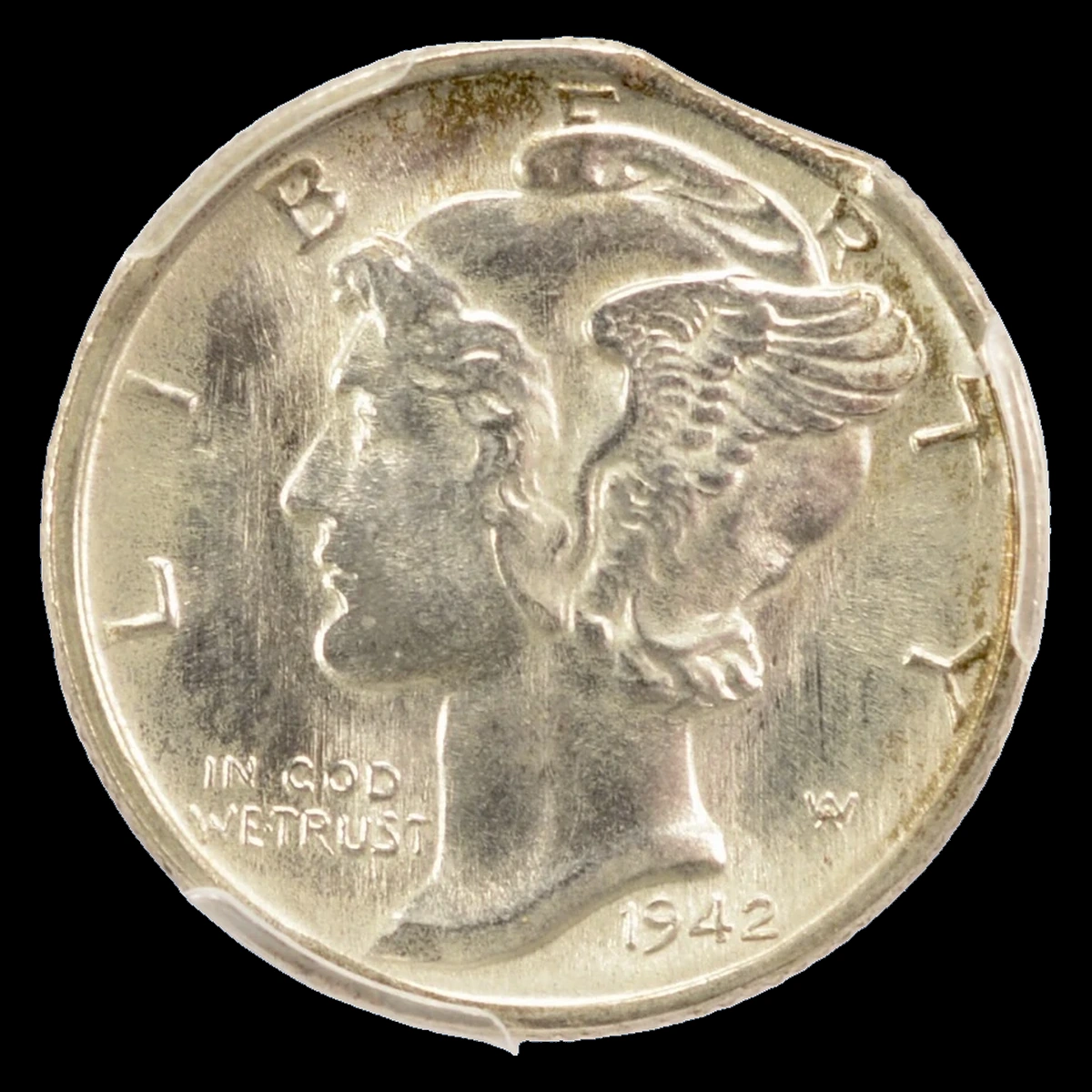
A blank cut from an incomplete part of the strip can have a gap before the strike. Recorded pieces include a 2.3-gram straight clip and a separate 2.44-gram curved clip.
A San Francisco straight clip also weighs 2.3 grams but is another coin. A further example combines a 24% clip with broadstriking.
How to Identify
Inspect the gap’s exposed wall and both places where the rim meets it. Filing or sawing can cut through a finished design and leave tool marks.
Original missing metal may change the nearby flow of letters and rim. Keep each weight with its actual specimen.
On the 24% combination, check the expanded border separately. Do not borrow a curved shape from another clipped coin.
What It’s Worth
$30–$800 is the estimated range for ordinary-date clips and more dramatic clipped-broadstrike combinations. The combination is valued as one complete coin.
The 2.44-gram curved clip appeared in a three-coin lot with other years. Any group total would not establish its individual sale price.
11. 1942 Dime The Image Misses Part of the Blank: Off-Center Strike Error
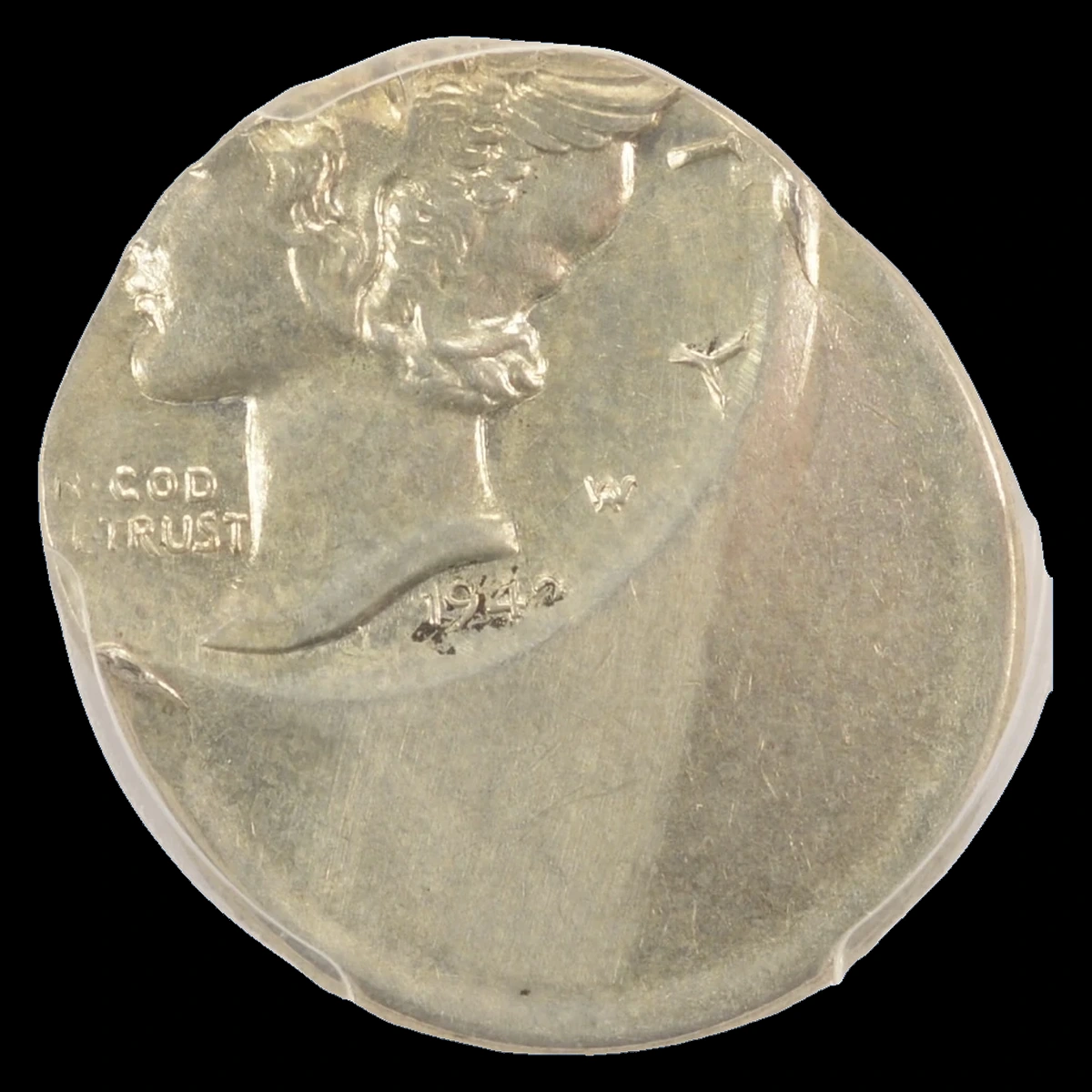
Recorded coins include a 10% off-center NGC MS63 example and a separate 50% PCGS MS62 example. Both are unworn but show different amounts of missing design.
Another coin is labeled (1942), 30% off center, in NGC MS62 Full Bands. The parentheses mark an attributed year rather than a fully readable date.
How to Identify
Record the digits that are actually visible before judging the plain crescent. Then compare the struck boundaries on both faces.
Original unstruck metal differs from an area where someone ground away lettering. Also keep the 50% coin separate from the 30% attributed-date specimen.
What It’s Worth
$100–$2,000 is the estimated range for comparable Mercury off-center strikes. The 50% PCGS MS62 sold for $1,320 in November 2022.
A fully readable year and clean surfaces help buyers understand the identity and original error.
12. 1942 Dime Two Pictures at Different Angles: Rotated Double Strike Error
The cataloged PCGS MS63 dime received another strike after turning. More than one design position survives on the same face.
The description gives no angle of rotation. This differs from a coin with one front image and one normally single but rotated back.
How to Identify
Choose a recognizable date digit or portrait feature and locate its other impression. Nearby repeated details should fit the same turning movement.
Check the other face for the sequence without expecting every earlier detail to survive. Later blows can flatten parts of the first image.
What It’s Worth
$300–$3,000 is the estimated range for authenticated rotated double strikes. Clear connected images can make the sequence more appealing than an obscure overlap.
No invented rotation angle is needed to describe the documented coin.
13. 1942 Dime Brass Instead of Silver: Ecuador Five-Centavos Blank Error
Philadelphia also made coins for other countries. A brass blank intended for an Ecuador five-centavos coin received the Mercury dime design instead.
The NGC MS65 Full Bands example weighs 2.06 grams. A separate MS62 Full Bands specimen is also recorded.
How to Identify
Compare the weight with the normal silver dime standard of 2.50 grams, then inspect the edge and design. Gold-colored plating can change appearance without changing a silver core.
A specialist should test the alloy without damaging the coin and compare the dimensions. Weight alone does not establish the foreign blank.
The 2.06 grams belongs to the MS65 example. These coins were struck on unused blanks, so an earlier Ecuador design is not required.
What It’s Worth
$10,000–$25,000 is the estimated range for comparable authenticated foreign-blank examples. The MS65 Full Bands coin sold for $14,375 in January 2008.
NGC reports $11,400 in July 2023 for the separate MS62 Full Bands coin. Metal identification, surface quality, and surviving design all matter.
Conclusion
Check the complete date and mint before applying any catalog name. An inverted S, an extra S impression, and an overdate are different features even when their close-ups look complicated.
Then use both faces and the edge to judge the physical error. A second feature on a valuable overdate still belongs to one coin, while a borrowed weight or sale from another specimen can give a misleading comparison.