Rare 1822 Dime Errors (List & Pictures)
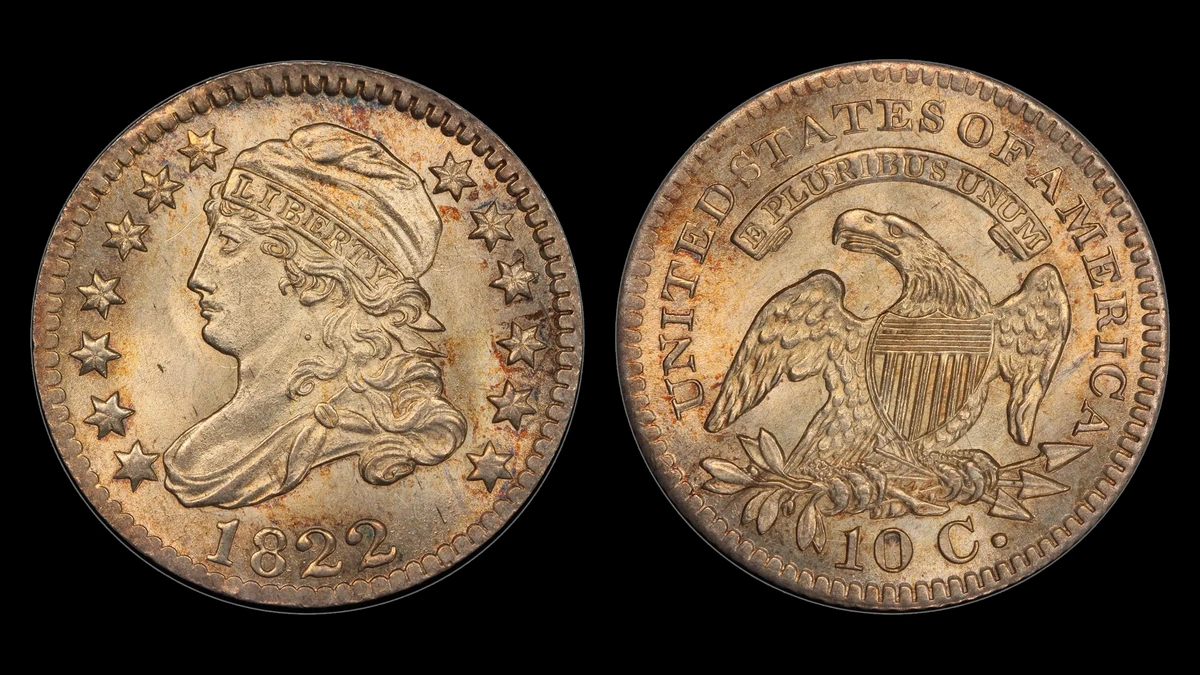
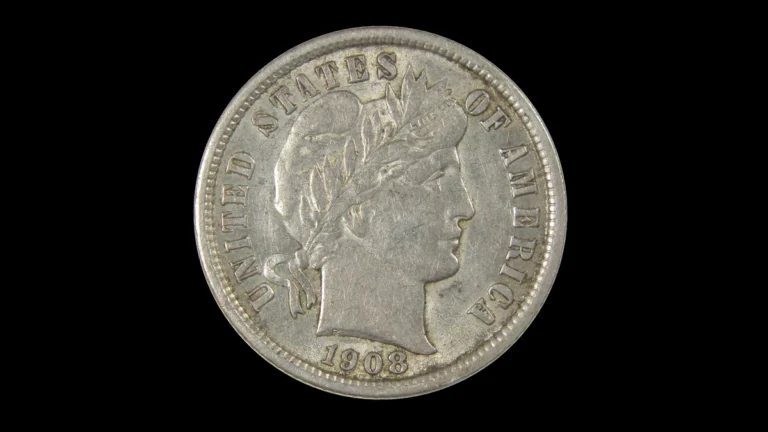
The lightly worn Eliasberg 1822 dime sold for $15,600 in November 2017. That result reflects a rare date and the complete coin’s condition, without establishing a separate die-crack premium.
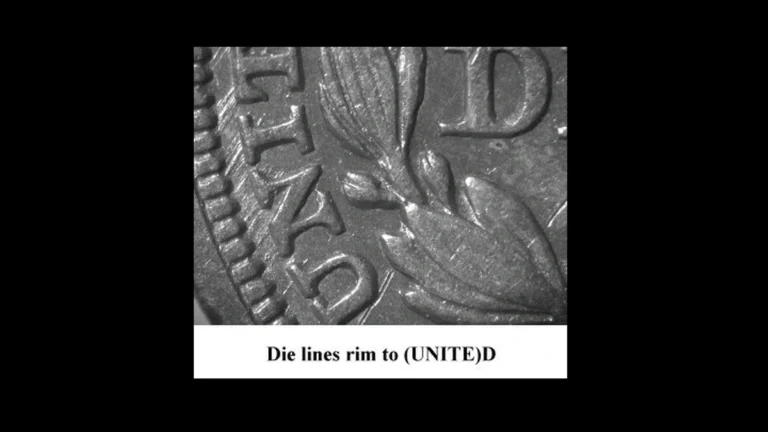
This guide to 1822 dime errors examines a reported line between the rim and the date’s 1. The estimated whole-coin range is $1,500–$25,000; begin with the full date, then inspect whether the line is raised or cut into the metal.
1822 Dime A Raised Line Joins the Rim and Date: Reported Die Crack Error
For this rare issue, confirming the date comes before naming an error. The reported rim-to-1 line is associated with one stage of the JR-1 die pairing, the particular front and back tools used together to strike coins.
A crack in the steel die can receive silver during striking and leave a raised ridge. That process damages the tool; it does not require the finished dime to split.
The supplied account does not establish a matched original photograph of this exact line. Its reported location is a place to inspect, not sufficient evidence to authenticate a candidate from description alone.
How to Identify
Read all four digits and inspect their surrounding surfaces first. An 1823/2 or 1824/2 overdate is a different issue, with a later numeral entered over an earlier 2.
Bring the 1 and adjacent rim into the same magnified view, then move the light across the suspected line. An original ridge should stand above the surface; a scratch cuts a groove, sometimes with a raised lip beside it.
Check for reshaped numerals, tool scratches, and displaced metal that could explain the feature another way. A raised line cannot resolve an altered-date question by itself.
Inspect the reeded edge for filing or mounting damage and record the coin’s dimensions if it is loose and accessible. An intact 1822 dime starts at approximately 2.70 grams and 19 millimeters, with circulation wear potentially reducing weight.
Absence of the crack does not automatically exclude JR-1 because an earlier die stage need not show a later fracture. A positive match requires the actual ridge’s route and original surfaces, ideally compared with reliably attributed evidence.
What It’s Worth
The estimated $1,500–$25,000 range applies to the entire 1822 dime from worn through lightly worn condition. No established separate surcharge for the reported crack is included.
A scratched PCGS VG Details coin sold for $1,680 in October 2025. That description identifies substantial wear plus a surface problem, both relevant to its price.
The AU58 Eliasberg coin brought $15,600 in November 2017. Its light wear, preservation, and rare-date identity make it a different comparison from the scratched example.
Neither result is presented as a sale specifically priced for the rim-to-1 crack. A candidate should be assessed as an authentic 1822 dime in its actual condition before any additional interest in a die stage is considered.
Conclusion
The reported 1822 feature is specific enough to guide an inspection: look for a raised connection between the rim and the date’s 1. Confirm the entire date and rule out a cut or altered numeral before treating that line as original die evidence.
The $1,500–$25,000 estimate remains a whole-coin range driven chiefly by rarity and preservation. Leave the surfaces untouched, since a crack claim does not remove the effect of scratches or other damage.