Rare 2021 Crossing the Delaware Quarter Errors (List & Pictures)
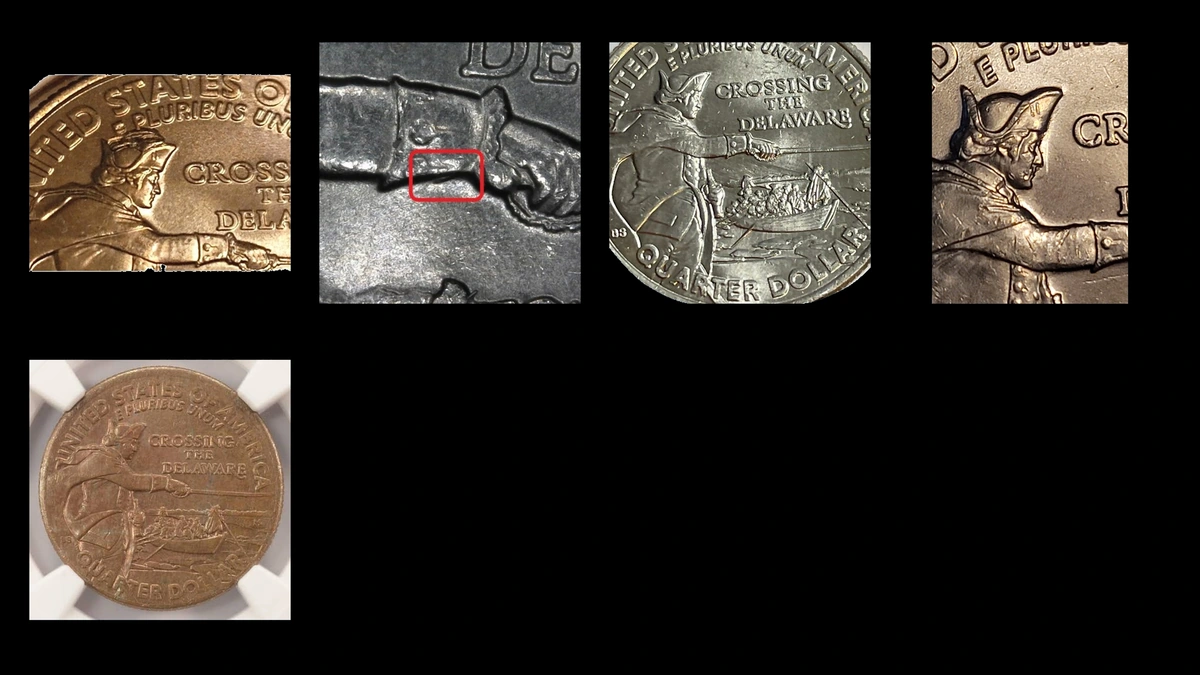
Washington appears twice on this quarter: in the familiar front portrait and standing in the boat on the back. For 2021 Crossing the Delaware quarter errors, that distinction helps locate a hat chip, a doubled wrist, or interrupted lettering.
The supplied estimates cover $3–$1,000. The largest supplied auction comparison is $881.25 for a cloth-struck 1776–1976 quarter in January 2017, not a 2021 sale; work from the visible feature to its explanation before applying a price.
1. 2021 Quarter A Crown on the Hat: Die Chips, Cracks, and Rim Breaks Error
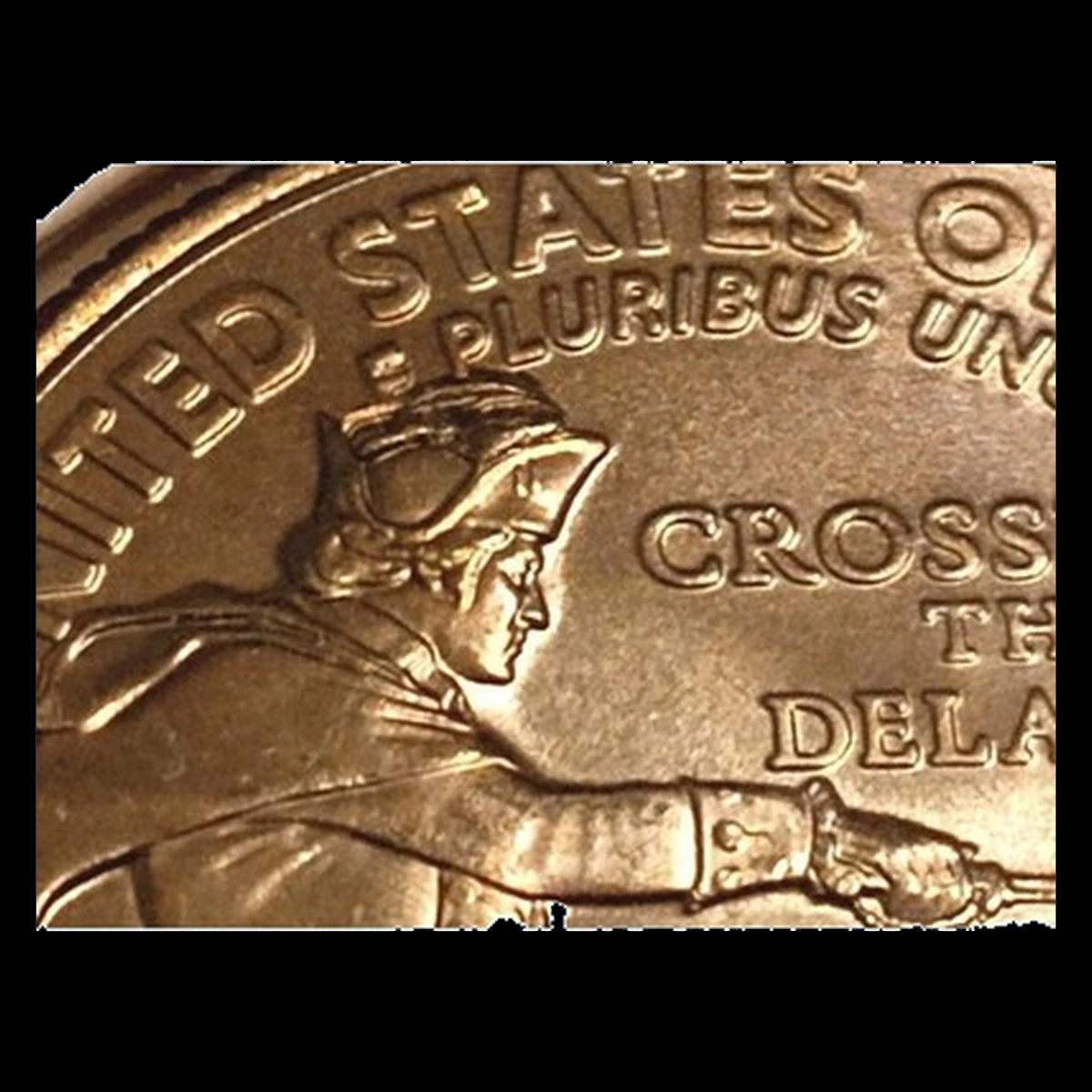
In the boat scene, extra metal on Washington’s hat can change its normal outline into the nicknamed “crown.” A small cavity left by a broken piece of die fills with coin metal during striking.
This family also includes reported chips near the front portrait’s lips or eye and raised cracks across the hat, portrait base, or tied hair. These are separate locations and do not all belong on one specimen.
How to Identify
Begin by comparing the hat with an ordinary example of the river design. Follow the outline into the added lump, checking that it is raised metal rather than a stain or material stuck to the coin.
A narrow die crack produces a raised line, whereas a scratch usually has a cut center even if its edges rise slightly. A larger break joined to the rim is called a cud; a hat chip surrounded by intact design is not one.
What It’s Worth
$3–$250 is the combined estimate for these features. Within it, small cracks and chips are estimated at $3–$30, recognizable hat crowns at $5–$125, and substantial authenticated rim breaks at $50–$250.
No completed 2021 sale is supplied for those ranges. Compare the actual size and shape rather than using a seller’s nickname or unusually high asking price.
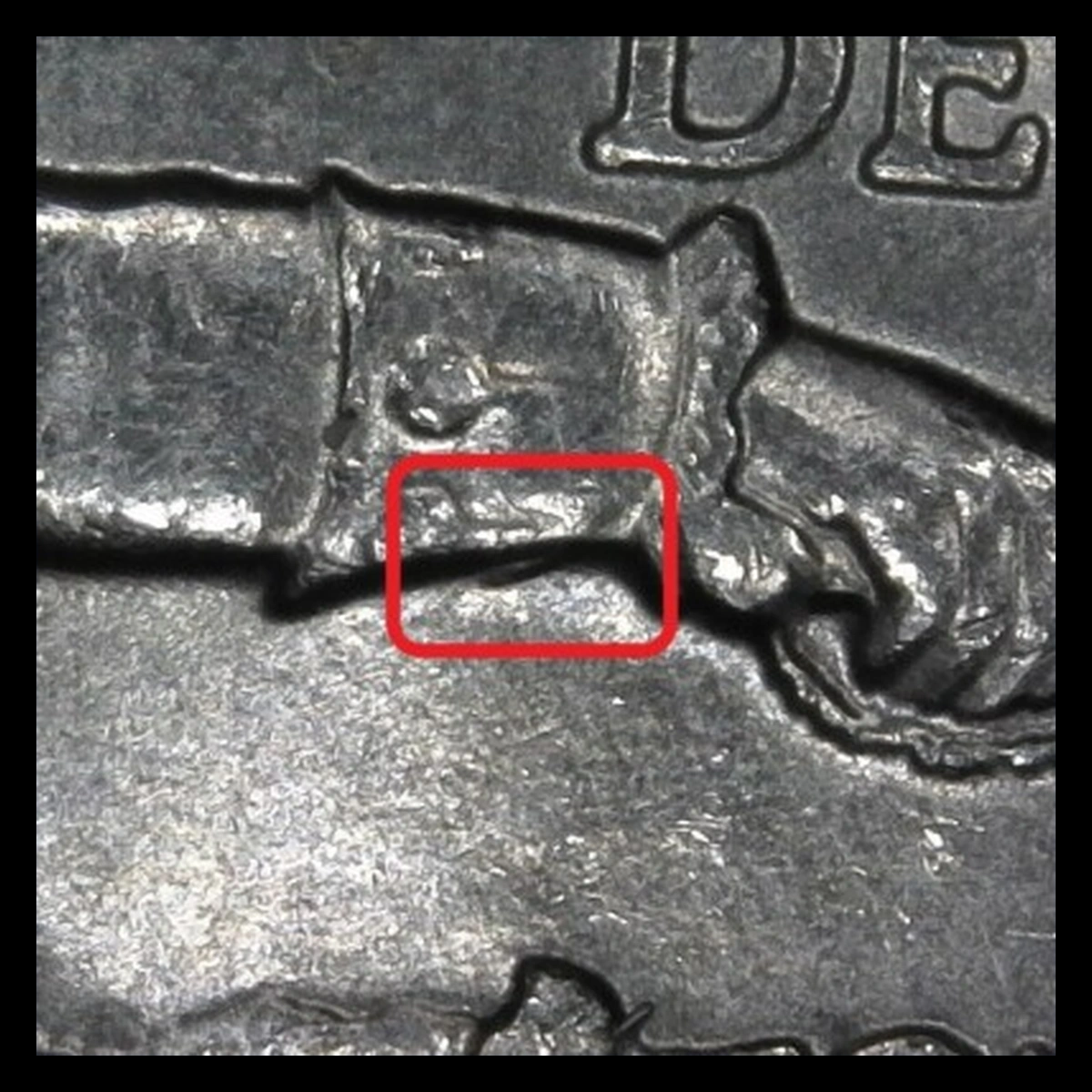
2. 2021 Quarter An Extra Outline under the Wrist: Doubled Dies Error
The space immediately below Washington’s outstretched wrist is a useful place to inspect a Philadelphia quarter. Listed reverse varieties carry a small additional outline there because the die itself contained duplicated detail.
Separate reports concern Denver reverse lettering or front-side LIBERTY, motto, and date details. They require their own matches; the wrist feature does not verify those other claims.
How to Identify
Locate the P or D beside the front portrait before selecting a reference. On a P coin, enlarge the underside of the extended wrist and compare the shape with Wexler’s photographed Crossing the Delaware varieties.
For lettering, look for the correct repeated contours across the affected area. A thin flat ledge produced by movement during striking is mechanical doubling, which is different from duplication built into the die.
One coin can show more than one sort of unusual edge. Attribute the wrist or lettering pattern specifically instead of treating every thick detail as part of the same variety.
What It’s Worth
$10–$300 is estimated for identified doubled dies on this issue. Clear separation, an exact variety match, and well-preserved surfaces give a stronger basis for comparison than indistinct thickening.
The material does not supply a completed sale for a particular 2021 wrist variety. A Denver lettering candidate should not inherit the upper estimate simply because a Philadelphia example has recognizable doubling.
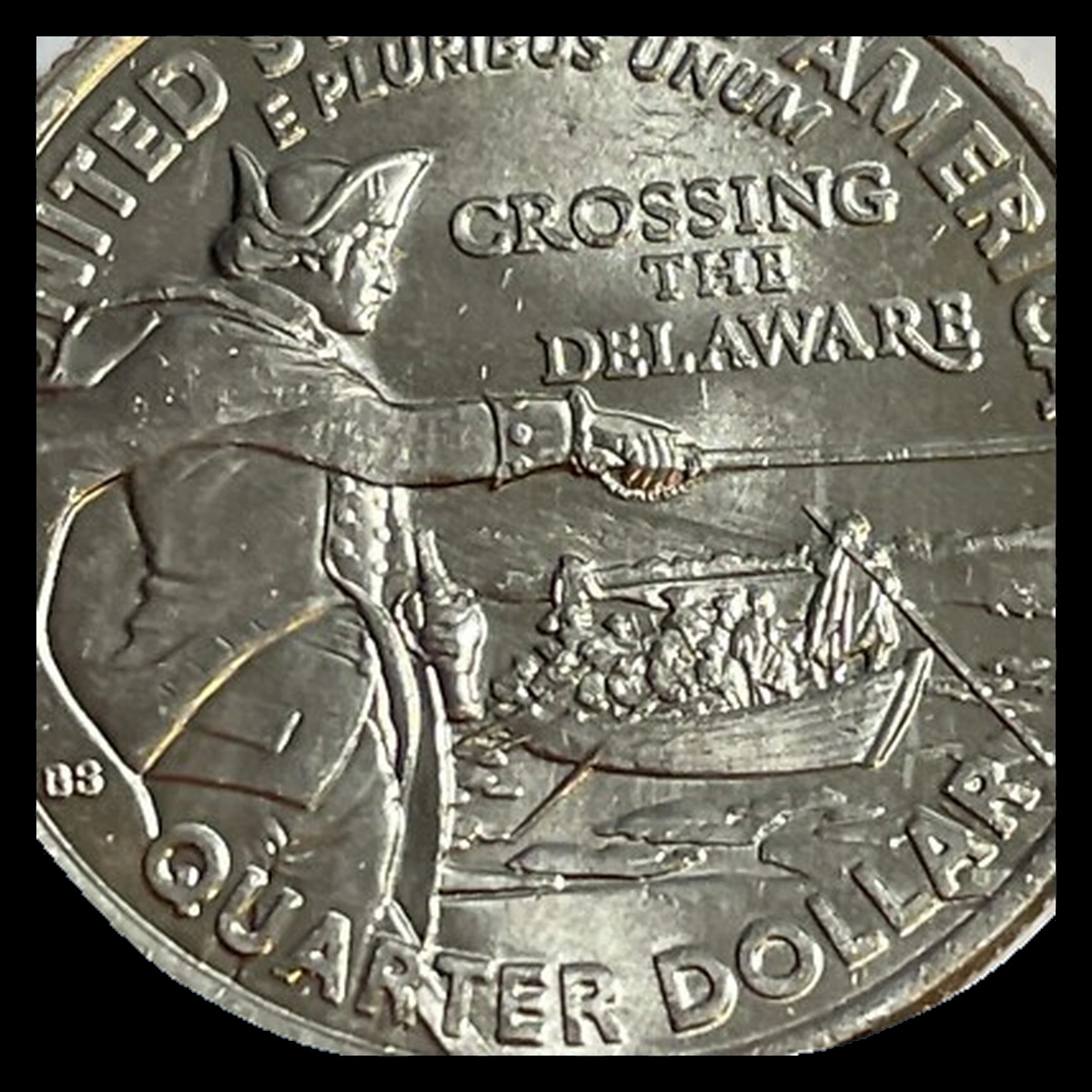
3. 2021 Quarter Parallel Ridges in the Background: Feeder-Finger Marks Error
Groups of fine raised lines are reported in open areas beside Washington on the river side. These can be traced to a feeder finger, the part that moves blanks into position, scraping the die.
Grooves cut into that tool become raised ridges on later coins. The important distinction is therefore between damage copied from the die and scratches cut directly into a finished quarter.
How to Identify
Turn the coin slowly under a small light and examine several parallel lines together. Look for continuous raised ridges without a groove down their centers.
A second coin with lines in the same positions can support a die origin. Compare where each ridge starts, ends, and approaches normal details rather than relying on a general impression of parallel scratches.
Raised lips on either side of an actual cut are different. Check those intersections closely before calling a bright line a feeder-finger mark.
What It’s Worth
$3–$30 is the supplied estimate for clear examples. Faint lines visible only at one difficult angle may contribute little, while a readily photographed group is easier for another collector to evaluate.
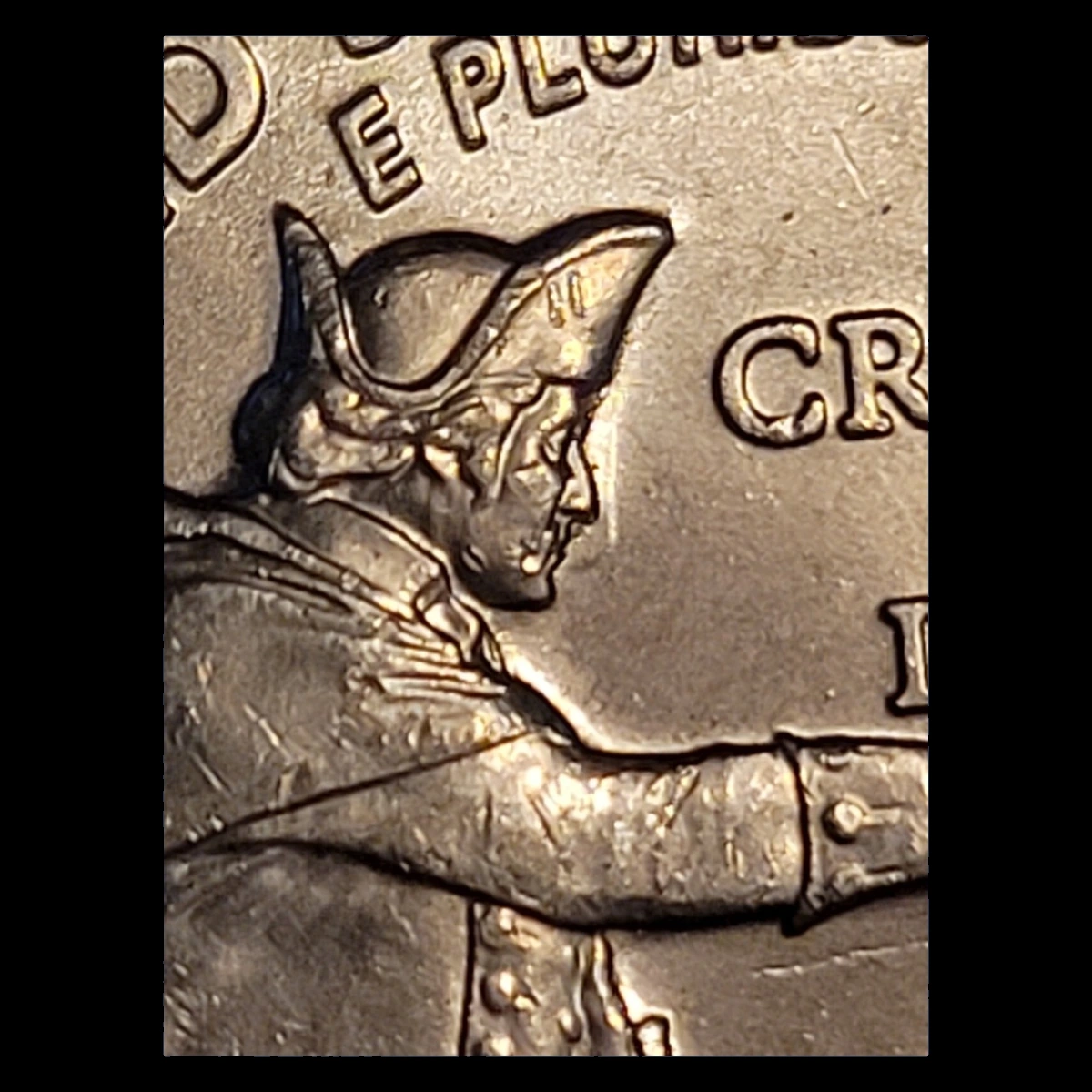
4. 2021 Quarter A Foreign-Looking Design Trace: Die Clash Error
A reported clash should explain why part of the opposite design appears in an unexpected place. When the dies contact each other without a blank between them, that collision can mark a die and leave traces on subsequent quarters.
The river scene already contains numerous fine details. Its normal lines must be separated from any proposed transferred shape.
How to Identify
Photograph both faces at the same scale and compare the entire suspect contour with its proposed source. Connected curves and corners provide more useful evidence than one short, unexplained stroke.
Check an ordinary Crossing the Delaware reverse beside the candidate. The added outline should remain identifiable when the light changes and should correspond to actual opposite-face detail.
What It’s Worth
$10–$100 is estimated for a confirmed, recognizable clash. Strong connected traces on original surfaces are more useful for identification than isolated marks blurred by wear or cleaning.
The supplied report does not establish a particular certified specimen or completed transaction. A rough background alone does not justify using the range.
5. 2021 Quarter Letters That Disappear Locally: Strike-Through Error
On reported examples, front lettering, mintmark detail, or a patch of design is weak while nearby features remain clear. Grease packed into the die or other material between the die and blank can prevent full detail from forming.
A blocked letter may look shallow, while a more substantial object can leave a distinct depression. The appearance must support the claimed obstruction rather than merely show an unattractive surface.
How to Identify
Compare the affected area with adjacent letters and the portrait’s high points. Local interruption differs from the broader softening that circulation produces across exposed details.
Examine the boundary for scraping, grinding, or metal pushed aside after striking. Preserve any attached material because its relationship to the surrounding impression may help explain the error.
A weak or absent-looking mintmark may be hidden by the same obstruction. Do not assign a mint solely from a letter that cannot be read.
What It’s Worth
$5–$400 covers the supplied strike-through estimates: $5–$100 for clear grease-filled lettering and $25–$400 for stronger identified impressions. The source supplies no comparable completed 2021 sale.
A 1776–1976 quarter struck through cloth realized $881.25 in January 2017. That coin’s recognizable fabric impression makes it a different-year comparison, not evidence that an unexplained 2021 patch was caused by cloth.
6. 2021 Quarter An Edge without Normal Grooves: Reported Collar Error
A smooth-edge type is reported for 2021-D quarters. Ordinarily the collar surrounding the blank forms the edge grooves and limits how far the metal spreads.
The whole edge and both rims need to support a mint-made explanation. Smoothness by itself does not prove that the collar was completely absent.
How to Identify
For loose clad examples, useful normal reference figures are a 24.26-millimeter diameter and 5.67-gram weight. Record measurements without removing a coin from a grading holder.
Inspect the edge through a full rotation, noting any surviving grooves and changes in the neighboring rims. Filing can reduce the diameter, and rolling can push metal over a rim or flatten nearby letters.
Distinguish a small smooth section from an entirely smooth edge. The outline and rim changes should fit the proposed collar problem rather than a later attempt to remove the grooves.
What It’s Worth
$25–$500 is estimated for an authenticated mint-made smooth edge. The report supplies no realized sale, and a filed or rolled quarter does not qualify merely because its grooves are gone.
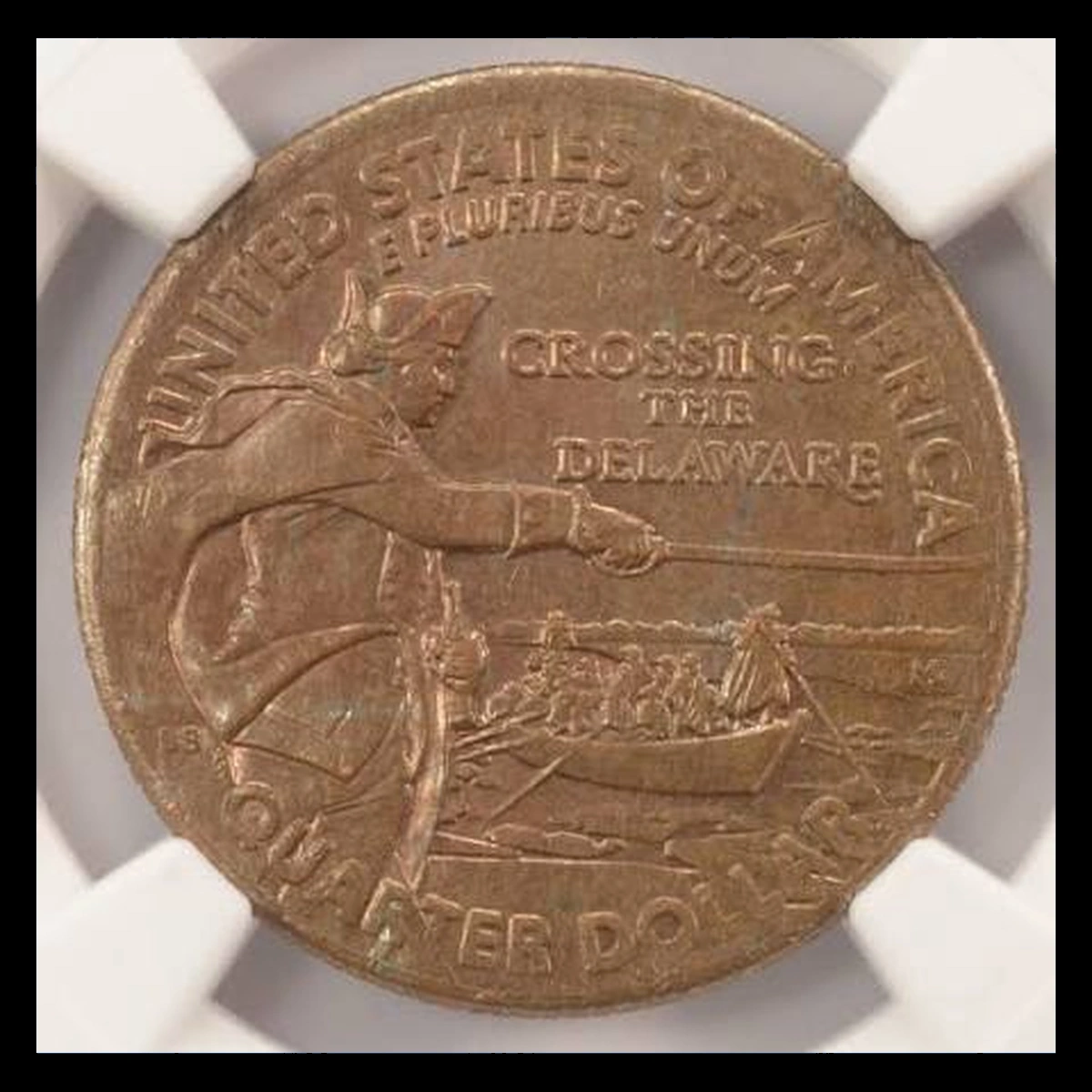
7. 2021 Quarter Copper Showing across a Face: Missing Clad Layer Error
The reported 2021-D example weighs 4.7 grams and is described as missing an outer layer. A regular clad quarter has pale outer metal on either side of a copper center, so losing one sheet changes both appearance and weight.
San Francisco also made silver Proofs of this design. Their different composition is normal and must be established before interpreting an unusual-looking edge as missing cladding.
How to Identify
Examine the copper-colored face and its adjoining edge together. Look for surviving struck detail on the exposed center and evidence that one pale outer sheet is absent while the other remains.
A stain or coating can change color without removing a layer, while corrosion or scraping can reduce weight for a different reason. The reported 4.7 grams is useful only alongside surface and edge evidence of the missing sheet.
What It’s Worth
$50–$700 is the estimate for a correctly identified example. The reported Denver weight comes without an individual sale amount.
For comparison, a 1988-D missing-front-layer quarter in NGC MS62 sold for $156 in November 2020 and weighed 4.8 grams. Its year, condition, and missing face belong to that specimen and should not be transferred to the reported 2021-D coin.
8. 2021 Quarter Bare Metal beyond the Picture: Off-Center Strike Error
Reported off-center examples have an unstruck crescent beside an incomplete image. The blank was displaced far enough that the dies could not place their entire designs on it.
A full design with an uneven rim is a different starting point. Both faces must be considered when deciding whether the blank itself was out of position.
How to Identify
Find a readable 2021 date and enough of the boat scene to identify the issue. The Tuskegee Airmen design also appeared on 2021 quarters, so the year alone is insufficient.
Check that missing design on both faces fits the same misplaced blank. A shifted front die with a centered reverse does not demonstrate the same error.
The crescent should retain original blank metal. Grinding lines, flattened lettering, or traces of a removed picture would call that interpretation into question.
What It’s Worth
$30–$1,000 is estimated for genuine, identifiable 2021 off-center examples. Greater displacement may attract attention, but loss of the date can make attribution and comparison harder.
A 1988-P quarter struck 30% off center in ANACS MS63 realized $109 in January 2022. That older transaction gives context without establishing a sale or displacement percentage for the reported 2021 issue.
Conclusion
The hat and wrist offer small landmarks, while the edge and exposed metal require a view of the whole coin. Establish the mint, river design, and affected face before choosing a comparison.
Keep measured facts attached to their own specimens, especially the reported 4.7-gram Denver quarter. Most values here are estimates, and the older auction examples explain other error coins rather than completed sales of the 2021 pieces.