Rare 2020 Presidential Dollar Errors (List & Pictures)
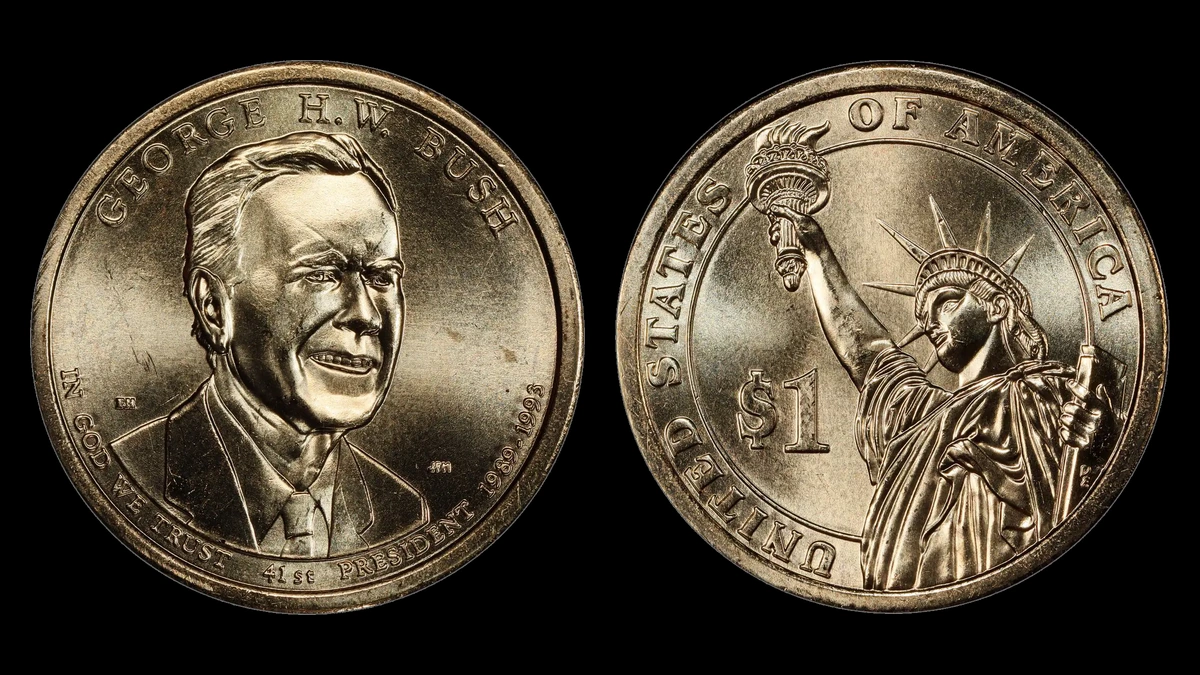
The dates 1989–1993 on Bush’s portrait describe his presidential term. The dollar’s 2020 issue date is on its edge, making that narrow surface especially useful when checking a suspected error.
The conditional estimates for 2020 Presidential dollar errors span $50–$25,000. A different issue, a 2008 Monroe dollar on a dime blank, brought $20,400 in August 2024.
Inspect the edge, any flattened detail, and the coin’s shape before deciding which category fits.
1. 2020 Dollar No Inscriptions around the Edge: Missing Edge Lettering Error
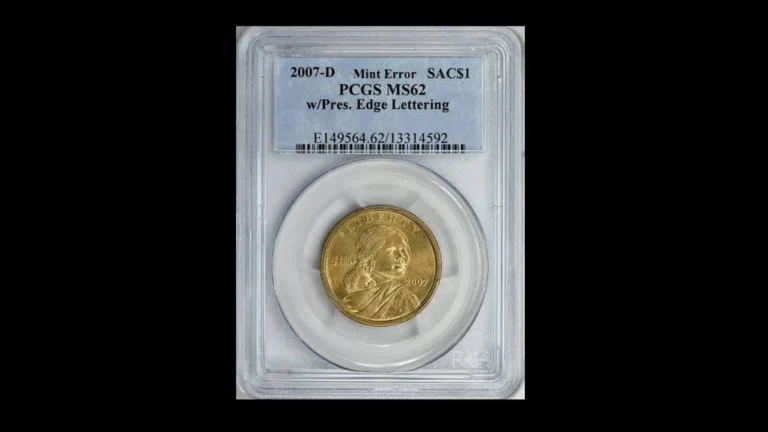
The edge should carry 2020, the mint letter, and E PLURIBUS UNUM. On ordinary dollars, those markings are applied in a separate operation after the faces are struck.
A confirmed Bush dollar with completely missing edge lettering is still needed for this category. Normal Philadelphia and Denver inscriptions may face either direction without creating an error.
How to Identify
Choose a starting point and inspect the full edge with overlapping views. Low side lighting can reveal faint recessed letters that a straight-on photograph misses.
Even a surviving star or part of a digit rules out total absence. One blank section is not enough to establish a completely missing edge design.
Confirm the Bush portrait and 41st PRESIDENT wording on the front. If the edge mint letter is absent, leave the mint unassigned rather than assuming Philadelphia.
Look for scraping, excessive rounding, or metal removal along the edge. An untouched blank edge is different from one that has been smoothed after minting.
What It’s Worth
$50–$650 is the provisional estimate for an authenticated Bush discovery with completely missing edge lettering. Partial letters or normal reading direction do not qualify for that estimate.
GreatCollections records $91.12 for a 2007 Jefferson missing-edge dollar. Its MS66 grade describes an unworn coin, and the sale is an older-series comparison.
2. 2020 Dollar A Flattened Patch on One Face: Reported Denver Error
A 2020-D dollar reportedly found in a Mint roll had an unusually flattened area. The proposed explanation involved a covered die, but the actual cause remains unresolved.
A die is the tool that stamps the design. A coin stuck to it can act like a cap and weaken the image on the next blank.
Later crushing can also flatten a coin. The roll origin alone does not establish the cause, and the report does not specify the affected face.
How to Identify
Follow the strongest remaining detail into the flattened area. Note whether it fades gradually or stops at a sharp boundary.
Check the opposite face and the edge near the patch. Scratches, pressure marks, or smeared metal crossing finished letters may point to later damage.
Include surviving 2020 and D edge inscriptions in the photographs. A covered-die explanation needs supporting features beyond a flat-looking spot.
What It’s Worth
$100–$1,500 is a provisional range for a confirmed mint-made weak or flattened design of this kind. A broad, well-explained obstruction can have more appeal than a small patch.
The price guide depends on establishing the manufacturing cause. If the coin was crushed later, this mint-error estimate does not apply.
3. 2020 Dollar A Bare Crescent beside the Portrait: Off-Center Strike Error
An off-center blank sits partly outside the dies when they come together. Some design misses the metal, while an area on the opposite side stays unstruck.
The Bush issue still needs a specific authenticated example for this category. A wide border alone does not prove that the blank was off-center.
How to Identify
Compare the Bush portrait and Statue of Liberty against the same bare crescent. Both faces should show corresponding displacement and missing intended design.
A centered complete face opposite a shifted one may indicate a misaligned die. Two full designs on expanded metal point instead toward a broadstrike.
Check the bare surface for tool cuts or later flattening. Preserve any surviving edge inscriptions, because the presidential term on the front is not the separate issue date.
What It’s Worth
$300–$3,500 is the estimated range for a genuine 2020 off-center dollar if established. A clear major shift with recognizable identity generally attracts more attention than a slight displacement.
NGC reports a $3,120 sale for a 2000-P Sacagawea dollar struck 50% off-center in April 2021. Its design, year, and percentage belong to that comparison, not to a verified Bush specimen.
4. 2020 Dollar The Dollar Design on Unusual Metal: Wrong Planchet Error
A planchet is the blank that receives the coin’s design. A blank intended for another denomination can leave a size or metal mismatch if it enters the dollar press.
No particular wrong blank is confirmed for this 2020 category. Normal Presidential and Sacagawea dollars use the same basic blank, so calling ordinary dollar metal a Sacagawea blank does not establish an error.
How to Identify
A standard Bush dollar weighs 8.10 grams and measures about 26.49 millimeters. Record a loose candidate’s weight and width before choosing a possible blank type.
Inspect the edge layers and the way the outer design fits the metal. A small blank may spread during striking, so its finished diameter can exceed its original width.
Color needs a separate check for coatings or chemical change. The S Reverse Proof also has a normal special finish, with shiny design details against a frosted background.
Composition testing should preserve the surface rather than scratch or file it. The metal result, measurements, and surviving picture should all support the same identification.
What It’s Worth
$1,000–$25,000 is the conditional estimate for an authenticated Bush dollar on a genuinely different blank. The exact metal and rarity of the combination can make a large difference.
A 2008 Monroe dollar struck on a clad dime blank sold for $20,400 in August 2024. PCGS graded it MS65, an unworn grade.
That strong sale does not establish a Bush dollar on a dime blank. It supplies context for the broader category only.
Conclusion
A useful Bush-dollar photo set includes both faces and the entire edge. Together they show the presidential identity, actual issue date, mint information, and any missing or disturbed design.
The categories above include claims awaiting authenticated examples, so estimates should follow the evidence on the actual coin. Preserve a suspicious edge or flattened patch instead of cleaning it into a shape that seems easier to explain.