Rare 1977 Dollar Errors (List & Pictures)
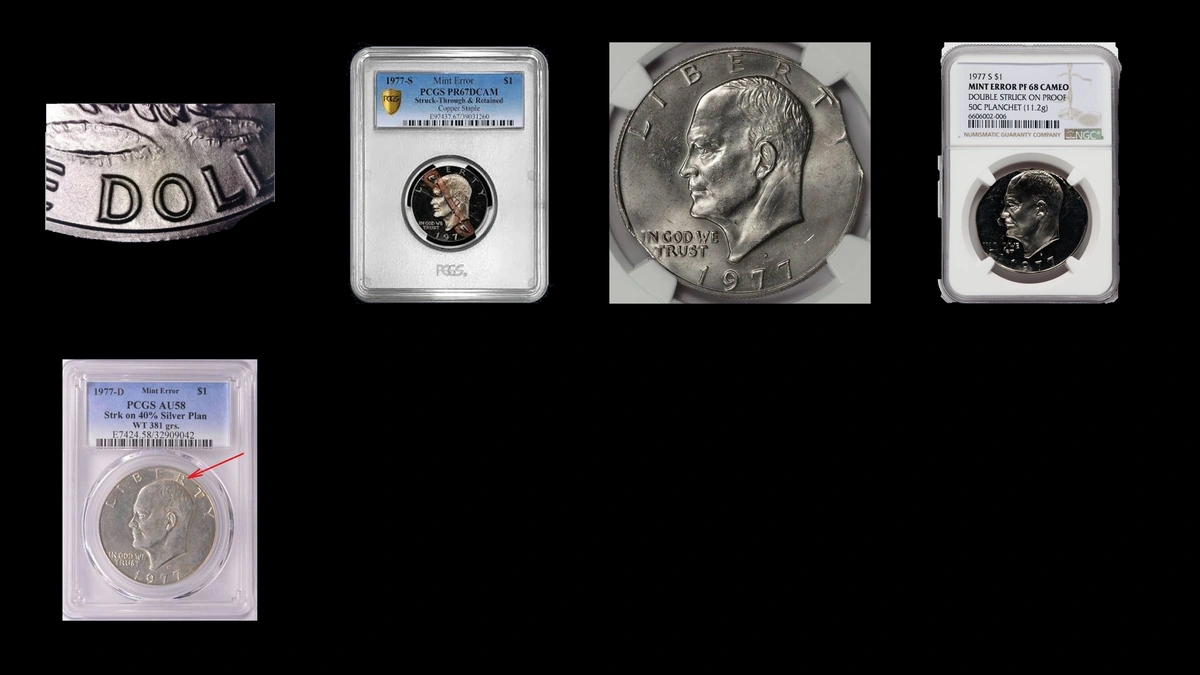
Two documented 1977 Eisenhower dollar errors reached $26,400: one was made on silver-clad metal, the other was a severely off-center Proof. The wider estimated range is $20–$35,000.
Start with lettering and surface details, compare how the two faces line up, then inspect the outline and blank metal. A Proof is a specially prepared collector coin, and its error prices can differ greatly from those of ordinary strikes.
1. 1977 Dollar Extra Edges on Letters and Dates: Doubled Dies Error
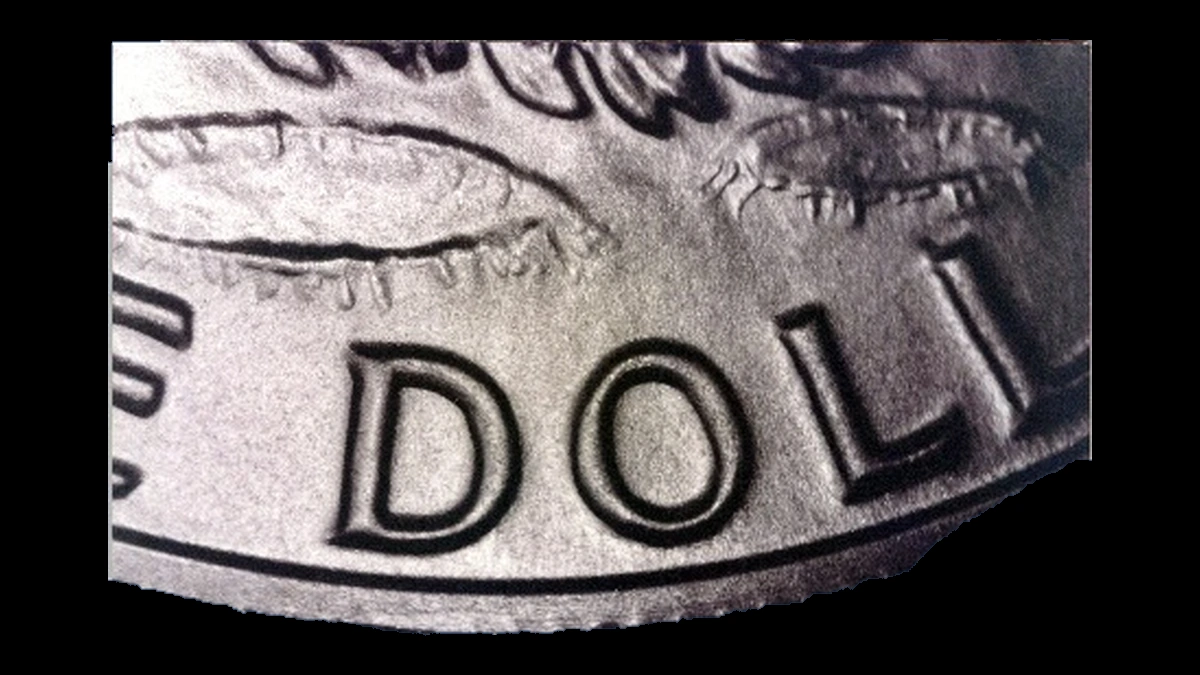
The motto, date, and LIBERTY offer useful magnifier checks on 1977-S Proofs. Several dies carried repeated details, allowing a single strike to reproduce more than one outline.
Denver has a separate doubled LIBERTY pattern. Slight reverse doubling shared through a master tool across several years is a normal comparison and does not automatically add a rare-error premium.
How to Identify
Match the mint and finish before opening a variety reference. Wexler’s 1977-S catalog separates the close Proof patterns.
WDDO-009 includes separation around the 9 and tops of both 7s. WDDO-010 pairs front motto doubling with WDDR-001, which affects DOLLAR on the back.
Compare several raised outlines from one attribution rather than combining clues from different dies. Flat shelves can arise during striking, while slight doubling in ONE DOLLAR and the moon may be the common master-tool feature.
What It’s Worth
$25–$750 is an estimated range for securely matched doubled dies. No individual auction price is supplied for each listed pattern, and ordinary master-tool doubling should remain within normal-coin comparisons.
2. 1977 Dollar Faint Opposite-Side Shapes: Clashed Proof Dies Error
A certified 1977-S Proof carries clash traces on both faces. These originated when the dies struck each other without a blank, then passed the resulting marks onto a later coin.
The transferred fragments belong to the tools rather than to a second full strike on the dollar. Their shape should connect to the opposite design.
How to Identify
Move light across the mirrored backgrounds and compare any extra outline with a confirmed clash photograph. A straight polishing line without a matching design shape does not establish a clash.
View both faces while keeping fingerprints and cloth away from the mirrors. A high Proof grade describes preservation, not the location or strength of the clash.
What It’s Worth
$400–$2,500 is the estimated range for comparable authenticated Proof clashes. A PCGS PR68 Deep Cameo example sold for $1,020 in May 2022.
Deep Cameo refers to strong contrast between frosted design and reflective fields. A separate $2,250 dealer listing for a PR68 example was an asking price, not another confirmed sale.
3. 1977 Dollar Unusual Overall Color: Improperly Annealed Blank Error
Blank metal is heated before striking in a process called annealing. An abnormal furnace environment can alter its surface, producing an improperly annealed or “sintered” appearance.
A Philadelphia dollar with this error was certified PCGS MS66. Color alone cannot establish the same origin on another coin, since chemicals and heat applied later can also change its appearance.
How to Identify
Use neutral light to examine color and original shine over both faces. Patches, added coatings, pitting, or scratches may offer evidence of later treatment.
The ordinary copper-colored edge band comes from the copper core beneath copper-nickel outer layers. Leave unusual surfaces untouched for a specialist, since photographs cannot establish the furnace history and cleaning can erase evidence.
What It’s Worth
$150–$900 is an estimated range for authenticated examples. The PCGS MS66 Philadelphia coin brought $431.25 in January 2009, and a separate MS65 example sold for $287.50 in the same auction.
Both grades describe unworn coins, with the higher number indicating better preservation. An unexplained dark surface is not sufficient to use these prices.
4. 1977 Dollar A Staple Embedded Across the Portrait: Retained Strike-Through Error
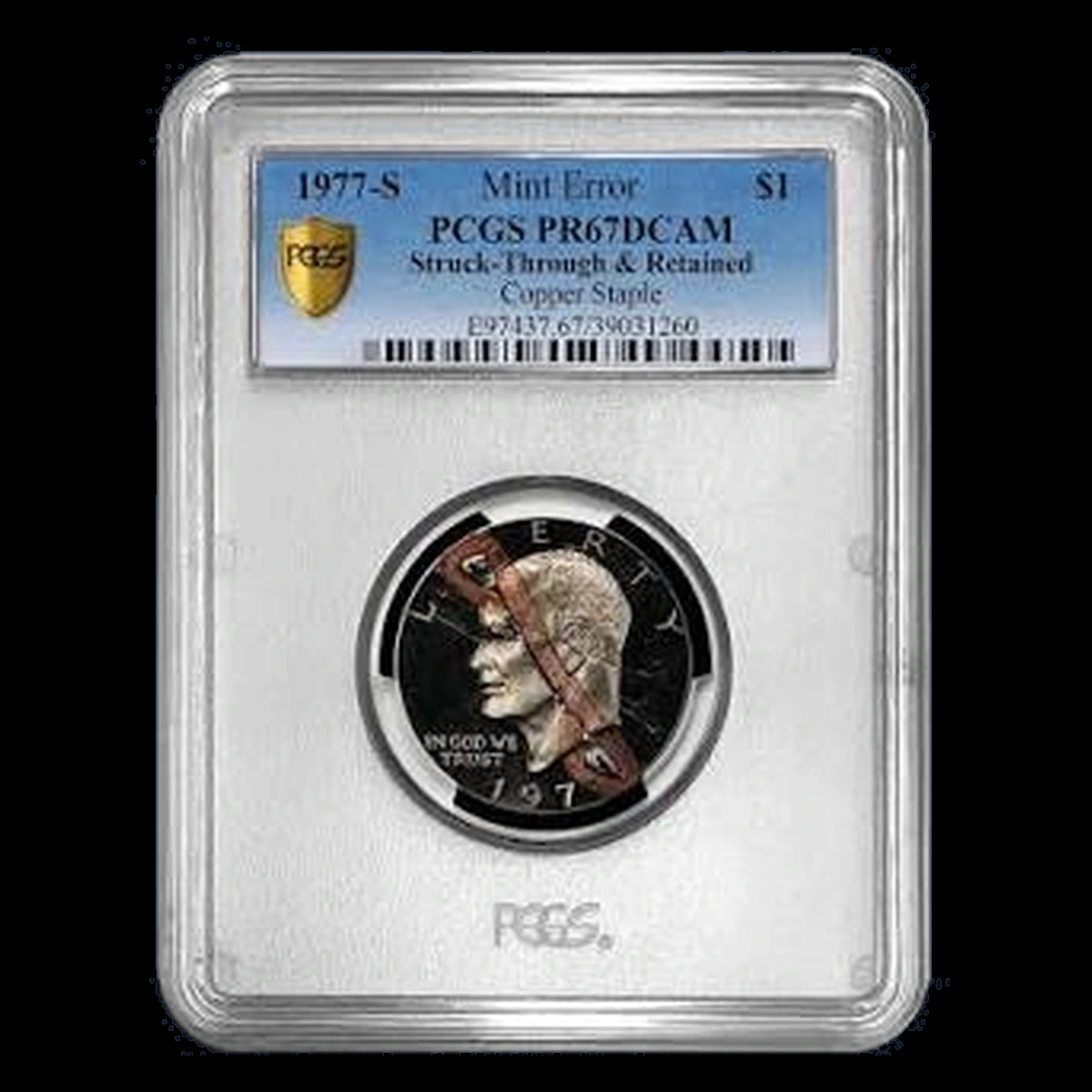
A copper staple remains embedded in a 1977-S Proof graded PCGS PR67 Deep Cameo. It crosses from IB in LIBERTY toward the final 7, while Eisenhower’s profile stays visible.
Another coin, graded NGC PR66 Ultra Cameo, has a different staple path from LI toward the rim near 4 o’clock. Its recorded weight is 23.3 g, including the retained material.
How to Identify
Inspect where the staple meets the struck design and where surrounding metal was compressed. Glue, fresh grooves, or scratches may instead suggest an object attached later.
Do not pull or lift the object. The two published paths and the NGC coin’s weight identify separate specimens and must not be combined into one description.
What It’s Worth
$5,000–$12,000 is the estimated span for comparable retained-staple Proofs. The PCGS PR67 coin sold for $8,400 in April 2021, while the different NGC PR66 example brought $9,000 in March 2023.
Both sales concern complete coins with the staple still present. Preservation of the object, design, and reflective surfaces matters together.
5. 1977 Dollar A Shifted Front with a Centered Back: Misaligned Die Error
A 1977-D graded PCGS MS63 shows a front displacement described as 1%. Its back remains centered, pointing to the position of one die rather than a blank that missed both tools.
The visible clue is unequal spacing around the front design. A tiny shift may affect the border more than the central portrait.
How to Identify
Take straight-on photographs of both faces and compare the spaces outside LIBERTY, the date, and the reverse lettering. A slanted camera angle can falsely exaggerate an uneven border.
Examine the narrow rim for dents or pushed metal. Later edge damage can change its appearance without moving the design as a die misalignment does.
What It’s Worth
$20–$200 is the estimated range for comparable small front misalignments. The PCGS MS63 Denver example sold for $54 in December 2024.
MS63 means unworn with noticeable marks. The modest result reflects a small shift, not the market for a dramatically displaced Proof.
6. 1977 Dollar Two Curved Gaps in the Edge: Clipped Blank Error
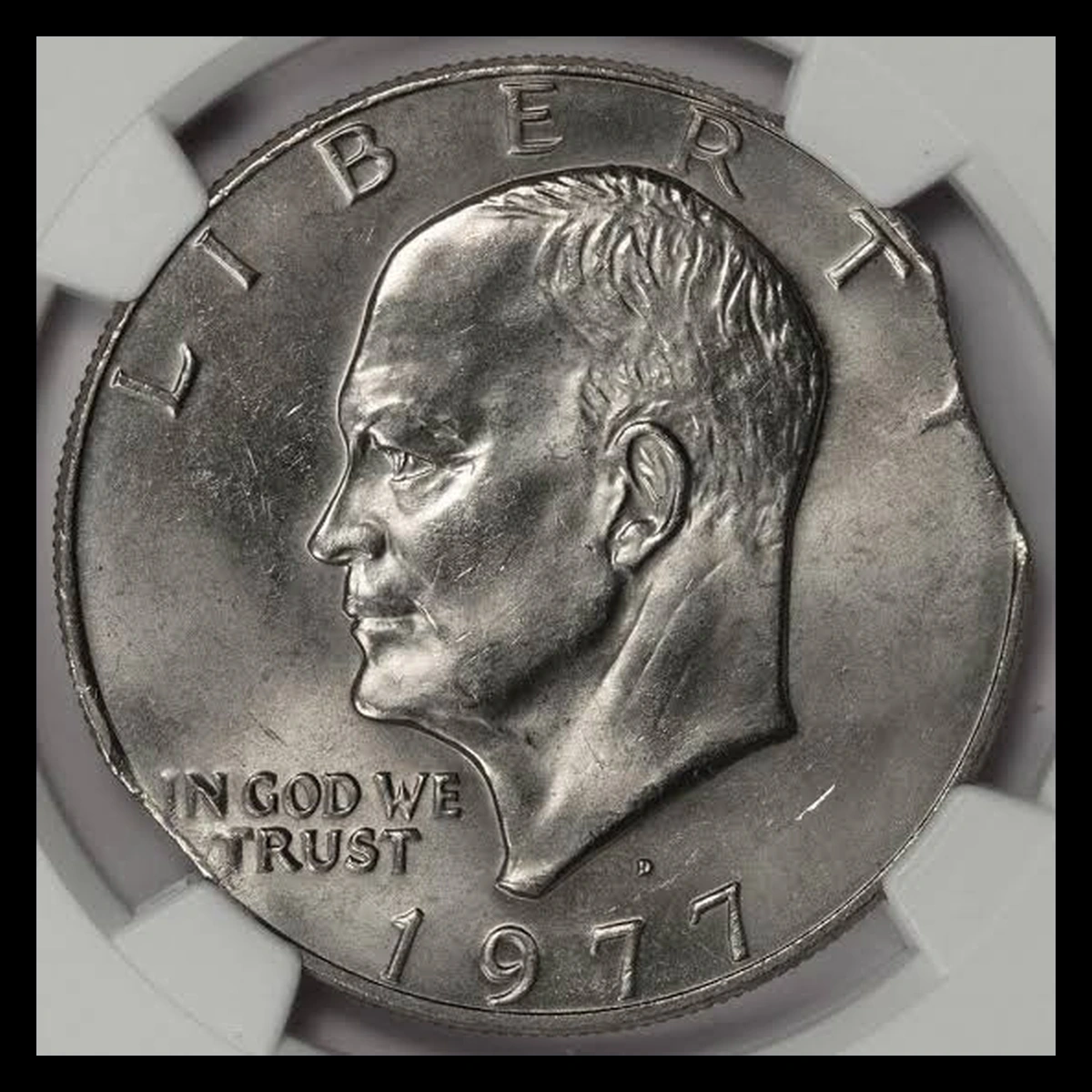
A Denver dollar graded NGC MS63 has two curved clips. Overlaps during blank cutting removed two portions of its outline before the design was struck.
Because the gaps already existed, the rim and nearby design formed around them. Cutting a finished coin can remove similar amounts of metal but leaves different boundaries.
How to Identify
Follow the design toward each opening and inspect the gap for fresh cutting or filing marks. Rim weakness opposite a clip can help, though two gaps may affect the rim differently.
A normal copper-nickel-clad dollar weighs 22.68 g. Lower weight supports missing metal but cannot, by itself, distinguish an original clip from a later cut.
What It’s Worth
$50–$500 is the estimated range for authentic clips. The NGC MS63 double-curved-clip dollar sold for $99 in April 2021.
Two small gaps are not automatically worth twice a single larger one. The amount missing, surviving design, and overall appearance determine the comparison.
7. 1977 Dollar Another Design Touching the Edge: Double Strike Error
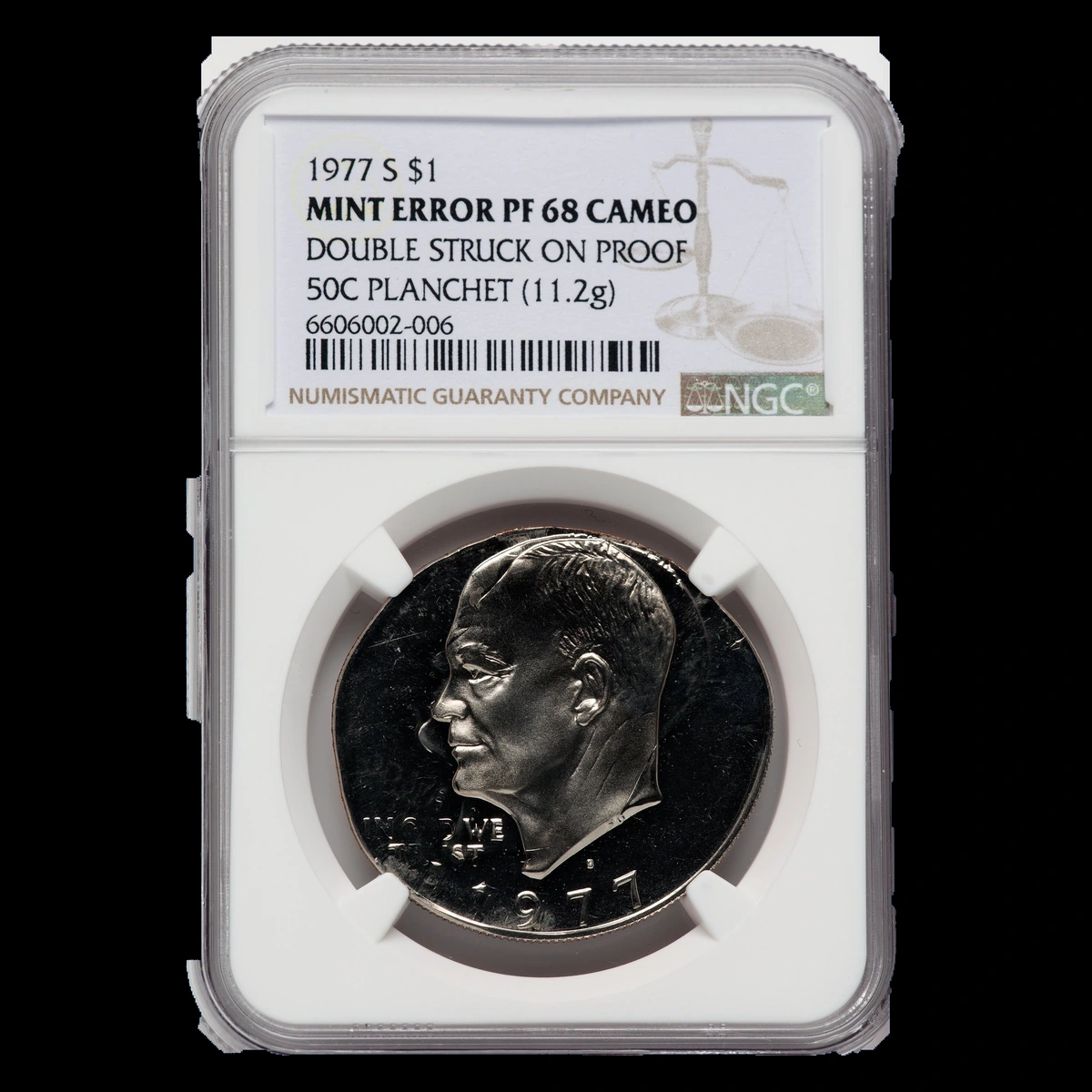
A documented Philadelphia dollar received its second strike after moving almost entirely beyond the dies. That second impression was described as 95% off center.
The percentage refers to the new strike, not to the amount missing from the original design. Most of the familiar dollar image comes from the first blow.
How to Identify
Find the small edge impression and look for recognizable design fragments within it. Where the two strikes meet, overlapping detail can show which came later.
A dent with pushed-up metal does not create another coherent struck image. This large movement between blows also differs from a doubled die’s close repetition within one design.
What It’s Worth
$200–$1,500 is an estimate for comparable authenticated double strikes. The documented coin sold for $264 in June 2023.
PCGS labeled it Genuine with Uncirculated Details, meaning unworn detail without a normal numerical grade. That classification must remain part of the price comparison.
8. 1977 Dollar A Broad Blank Crescent: Off-Center Strike Error
A 1977-S Proof struck 30% off center toward 2:30 preserves the date, S, portrait, and eagle while losing some right-hand outer lettering. A small split near 12 o’clock formed during striking and is not an original clip.
This PCGS PR68 Deep Cameo coin is distinct from a 1977-D ordinary strike graded NGC MS63 and struck 20% off center. Finish and rarity explain much more than the percentage alone.
How to Identify
Check that the unstruck crescent corresponds with missing design on both faces. A shifted front with a centered reverse instead calls for the misaligned-die checks above.
Orient the actual Proof with the date at the bottom before assessing its 2:30 displacement. Verify the mirrored finish and S rather than assigning Proof prices from the size of the gap.
What It’s Worth
$300–$1,500 is the estimated ordinary-strike range, compared with $10,000–$30,000 for major authenticated Proof errors. The 20% Denver MS63 coin brought $727.20 in December 2024.
The 30% off-center Proof sold for $26,400 in April 2021. Its retained date, high preservation, and unusual Proof error provide the relevant context.
9. 1977 Dollar A Normal-Looking Dollar with Extra Weight: Silver-Clad Planchet Error
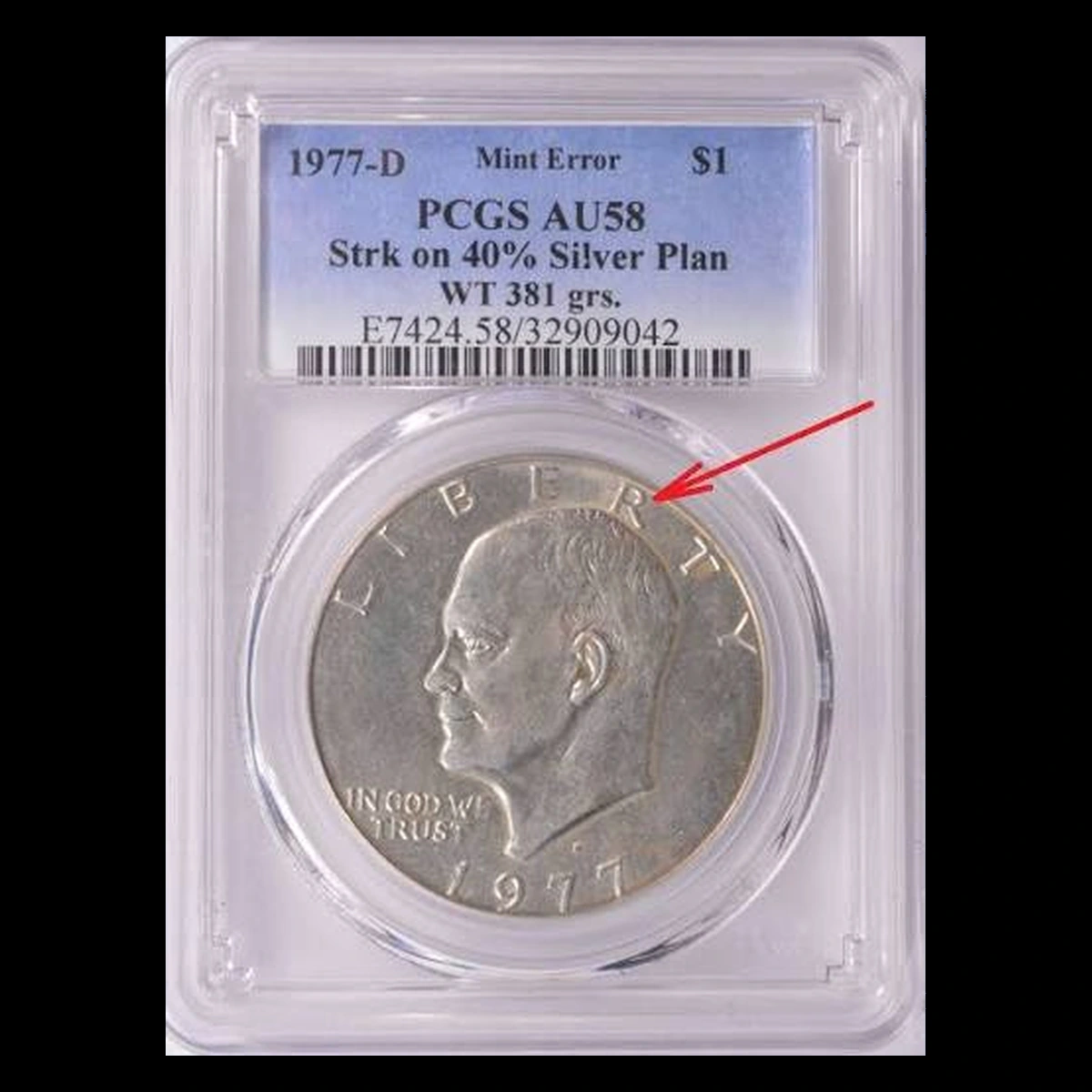
All normal 1977 Eisenhower dollars, including Proofs, used copper-nickel-clad blanks. A documented 1977-D instead received a leftover 40% silver-clad blank from an earlier production period.
The NGC MS62 specimen weighs 24.5 g, close to the silver-clad standard of 24.59 g. It also has small struck-through depressions on the right of the front, with no identified obstruction material.
How to Identify
Compare a precise weight with the normal 22.68 g standard, then seek nondestructive alloy testing. Both blank types have a normal diameter near 38.1 mm, so diameter or bright color cannot establish silver content.
Confirm the 1977 date and D while the metal and any alteration are examined. The small front depressions are features of the same documented coin, not evidence for another silver specimen.
What It’s Worth
$15,000–$35,000 is the estimated range for comparable authenticated silver-clad errors. The 24.5 g NGC MS62 dollar sold for $26,400 in January 2023.
That is the value of the whole coin, including its small depressions. The confirmed wrong alloy is the essential distinction from an ordinary dollar with altered color.
Conclusion
The evidence for a 1977 dollar error depends on the feature: paired face views for alignment, intact boundaries for clips, matching outlines for doubled dies, and alloy testing for silver blanks. Preserve unusual surfaces and embedded objects while making those checks.
Use the $20–$35,000 overall range only as a starting point. A minor Denver misalignment, an ordinary off-center strike, and a major Proof error need separate price comparisons.