Rare 2019 American Innovation Dollar Errors (List & Pictures)
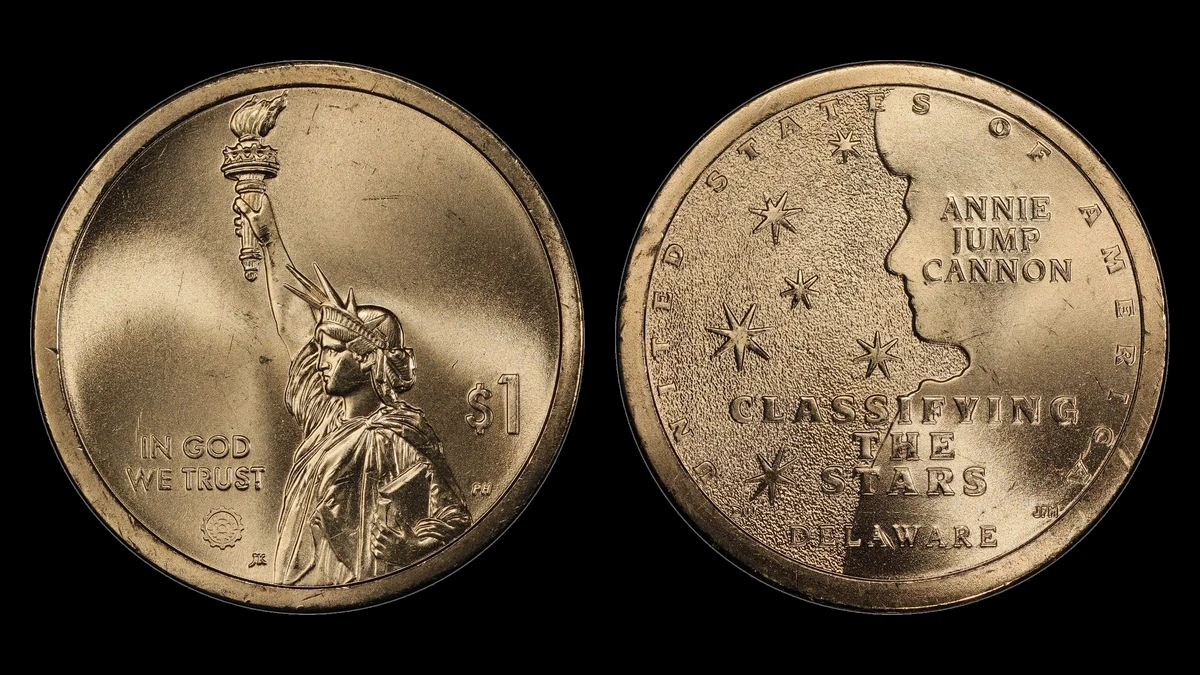
Four state designs need to be kept distinct when examining 2019 American Innovation dollar errors. Estimates for the reported categories span $25–$6,000, but the highest supplied completed comparison is a different-series 2004-P Sacagawea dollar on a quarter blank that sold for $4,440 in August 2024.
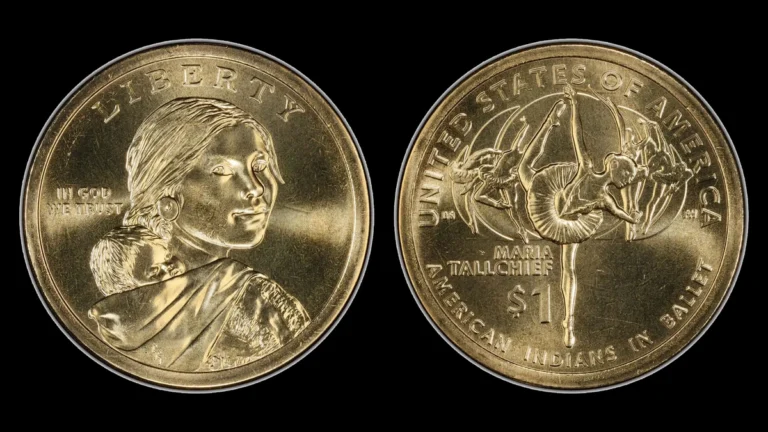
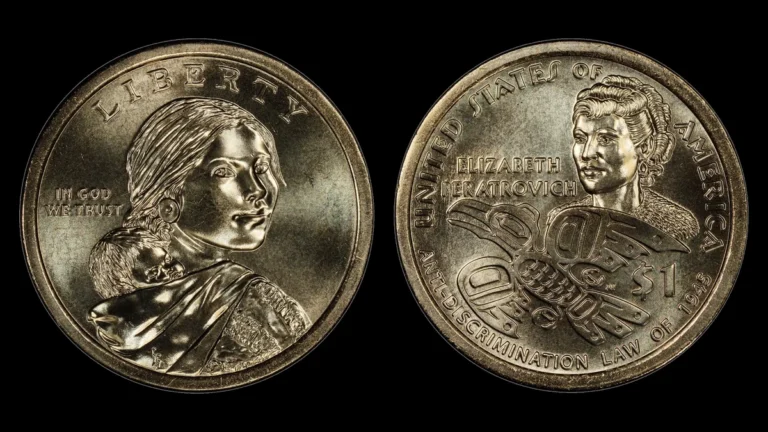
Identify the state artwork, then inspect the full edge, repeated details, and any change in design position or blank size. The small gear beside Liberty is normal.
| Clue | Category | Estimated value |
|---|---|---|
| Entire edge inscription absent | Missing edge lettering | $30–$500 |
| Raised duplicate front details | Doubled die | $25–$600 |
| Unstruck crescent and lost design | Off-center strike | $300–$3,500 |
| Unexpected metal and dimensions | Possible wrong blank | $1,000–$6,000 after authentication |
1. 2019 Dollar The date and words are absent from the edge: missing edge lettering Error
Ordinary Innovation dollars receive edge inscriptions after their faces are struck. A coin missing that later operation can retain both face designs while lacking its edge date, mint letter, and motto.
The supplied reports mention a Delaware example and a separate Denver example whose state is unspecified. They cannot be combined into a documented Delaware-D discovery.
How to Identify
Rotate the coin through a complete edge examination, looking for even faint numbers, letters, or stars. A short plain stretch does not prove the whole inscription is missing.
Compare edge texture and shape with a normal coin for signs of grinding, rounded borders, or removed metal. Either inscription direction is normal on ordinary P and D coins, so upside-down text is not this error.
Record the state artwork before assigning an identity. If the mint letter is absent, Denver or Philadelphia origin requires independent support.
What It’s Worth
$30–$500 is the estimate for a confirmed missing-edge example. Clear state identity and attractive surfaces help narrow a comparison.
A 2007 Madison Presidential dollar graded NGC MS67 sold for $119 in July 2025 with missing edge lettering. That different-series sale illustrates the same omitted operation rather than establishing a 2019 Innovation price.
2. 2019 Dollar Liberty or the motto has repeated raised detail: doubled die Error
A doubled die carries repeated design shapes that can appear on every coin it strikes. The repetition therefore need not mean the dollar itself received a second blow.
The supplied 2019 reports suggest IN GOD WE TRUST and Liberty’s features as inspection areas. They do not establish one exact letter pattern, state, and mint combination.
How to Identify
Compare the suspected area with a normal Innovation front and change the lighting to separate reflections from metal. Rounded duplicate outlines or small split corners are more useful than general thickness.
A flat ledge cutting into the normal shape can result from movement during striking. The intentional gear beside Liberty is unrelated to doubling.
Photograph the reverse state design and any readable edge mint letter alongside the close detail. A named variety requires a precise match rather than an assumption from the common front design.
What It’s Worth
$25–$600 is the supplied estimate for authenticated front doubling, depending on strength and preservation. A subtle feature requiring magnification differs from clear, attractive separation.
A 2023 Sacagawea guide gives $100–$500 for confirmed doubled designs as a related modern-dollar comparison. That is another guide estimate, not an auction record or evidence of a particular 2019 discovery.
3. 2019 Dollar Both pictures run off the metal: off-center strike Error
A blank out of position between the dies can receive incomplete designs with an unstruck crescent remaining beside them. The supplied year list reports off-center striking without a fixed state, mint, or percentage.
A coin sitting crookedly in packaging may have perfectly centered designs within its own outline. The metal edge, rather than the holder opening, supplies the reference.
How to Identify
Locate genuinely unstruck metal and compare the missing design on the opposite side of the blank. Both faces should fit the same misplaced position.
A shift confined to one face can point to a misaligned die. A complete picture inside a widened border raises a different question from a design that actually misses the blank.
Use surviving state artwork and edge inscriptions to establish identity. Inspect the supposed plain crescent for grinding that could have removed an originally normal design.
What It’s Worth
$300–$3,500 is the estimate for a confirmed 2019 off-center dollar with recognizable state design. Size of displacement, original surfaces, and retained identity would shape the comparison.
NGC describes a 2000-P Sacagawea dollar struck 50% off center that sold for $3,120 in April 2021. Its percentage and price belong to that older eagle-reverse coin, not to an unspecified Innovation example.
4. 2019 Dollar The body has unexpected metal or dimensions: possible wrong blank Error
A blank intended for another denomination could change the dollar’s weight, color, size, and available space for the design. The supplied entry does not establish a particular 2019 Innovation wrong-blank specimen.
Presidential and Native American dollars use matching normal blanks. Their shared specifications do not themselves produce a wrong-planchet error.
How to Identify
Record the surviving state design and edge information before guessing the blank’s identity. A normal loose Innovation dollar is approximately 8.1 grams and 26.49 millimeters across.
Compare measured dimensions with the amount of artwork that fits, then inspect the edge for plating or grinding. A professional metal examination should agree with the weight and structure.
Changed color alone can come from an altered surface. The proposed blank identity needs several consistent observations, not just one unusual reading.
What It’s Worth
$1,000–$6,000 is a conditional estimate after an abnormal blank is authenticated and the dollar design identified. The actual blank and condition would control a closer assessment.
A 2004-P Sacagawea dollar on a quarter blank, graded MS64, sold for $4,440 in August 2024. That sale does not establish a quarter-blank error for any 2019 Innovation state.
Conclusion
Use the reverse artwork to distinguish Delaware’s stars, Pennsylvania’s vaccine theme, New Jersey’s light bulb, and Georgia’s garden. The shared Liberty front does not identify the state by itself.
Then connect the edge and any unusual feature to that same coin. Normal gear detail and either lettering direction need no error explanation, while an abnormal blank requires evidence beyond color and the reported categories require specimen-specific confirmation.