Rare 1844 Dollar Errors (List & Pictures)
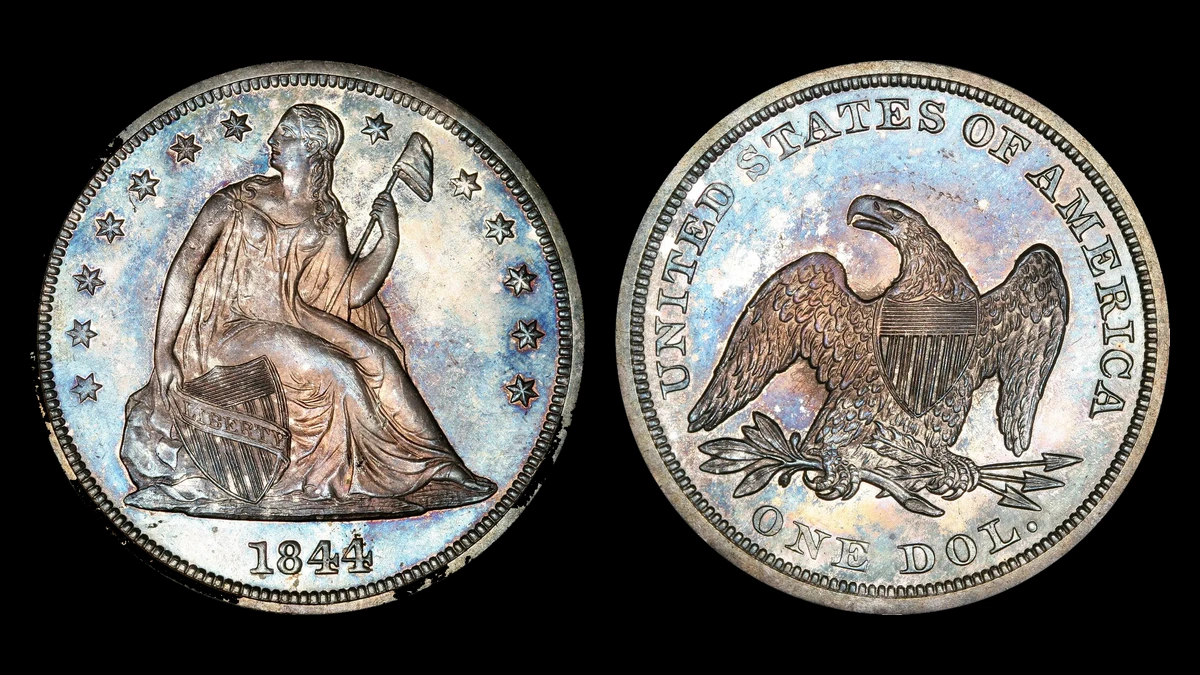
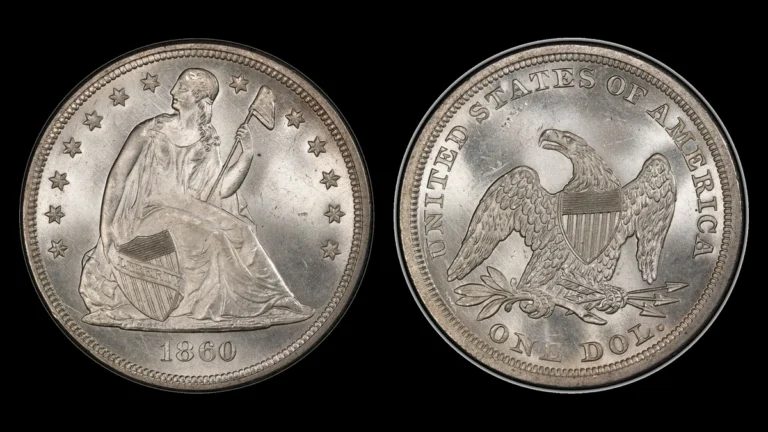
On an ordinary 1844 silver dollar, count the narrow lines in Liberty’s shield and then look in the clothing above the date. Two different die features can appear on the same coin.
Estimated whole-coin values for 1844 Liberty Seated dollar errors span $400–$50,000. An MS64 dollar brought $47,000 in July 2022, a result driven heavily by the complete coin’s preservation.
The third check looks for a faint eagle outline where no eagle normally belongs.
1. 1844 Dollar Four Narrow Lines in Each Shield Stripe: Doubled Die Error
Liberty’s shield has four narrow lines in each broad vertical stripe instead of the usual three. The extra line lies to the right and can look weaker or less regular.
The feature is known as Quad Stripes. Repeated detail in the die, the steel stamping tool, passed onto coins made with it.
It belongs to the known ordinary-strike die pair rather than identifying a one-of-a-kind error. Collector Proofs require a separate comparison.
How to Identify
Find the shield beside Liberty on the front, not the eagle’s chest shield. Choose a clear vertical group and count the three stronger lines before looking for the weaker fourth to their right.
Repeat the check in another group under changed lighting. Wear can hide a faint line, while shadows can make two lines seem joined.
The shield’s right border offers another check: three lines appear instead of two. Agreement across the stripe groups and border supports the match.
What It’s Worth
$400–$50,000 is the estimated whole-coin range from worn pieces to outstanding unworn dollars. The fourth stripe alone does not account for the upper values.
The PCGS record shows $47,000 for an MS64 dollar in July 2022. A different MS61 example brought $3,360 in August 2018.
Both prices concern complete coins with the same general feature but different preservation. They are not fixed extra charges for shield doubling.
2. 1844 Dollar An Extra 8 Loop in the Clothing: Misplaced Date Error
Parts of an earlier 1 and 8 remain in Liberty’s clothing above the normal date. The upper loop of an extra 8 lies in the fold above the gap between the main 8 and 4.
The date punch touched the die too high before the correct date was added below. These fragments are misplaced digits, not another year beneath 1844.
The same ordinary-strike variety also has the four-line shield groups. Those two descriptions can therefore identify one physical dollar.
How to Identify
Frame the full date and the clothing directly above it in one picture. Start above the gap between 8 and 4, comparing the small loop with an identified 1844 example.
Then check nearby folds for the remaining 1 and 8 traces. The fragments should match their actual positions rather than forming an imagined complete second date.
Use soft side lighting to distinguish raised digit shapes from ordinary folds and glare. Keep the shield in a wider view to connect both features on the same coin.
What It’s Worth
$400–$50,000 is the estimate for the complete dollar across worn through exceptional unworn condition. A visible extra digit helps identification but does not improve the grade.
The NGC MS61 misplaced-date example sold for $3,360 in August 2018. Because it also carried the doubled shield, that sale must not be counted again as a separate value for each feature.
Cleaning, marks, and wear still affect how closely another coin compares.
3. 1844 Dollar An Eagle Trace beside Liberty’s Arm: Die Clash Error
A faint eagle outline can appear in the open area beside Liberty’s arm on the right. The eagle normally belongs on the reverse.
The two dies touched without a blank between them and picked up traces of the opposite designs. Later strikes copied those contact marks onto coins, producing a die clash.
Only a fragment may show. A random line beside the arm does not establish the same feature.
How to Identify
Keep Liberty upright and compare the front with a documented 1844 clash example. Use the normal reverse eagle to understand which part of its outline could match.
Move low light across the field beside the right arm. Compare the trace’s position and curve rather than naming a single short scratch an eagle.
A transferred design should fit a specific shape where the dies could meet. Scratches can follow unrelated paths and may cut across surrounding details.
What It’s Worth
$400–$50,000 is the whole-coin estimate for an ordinary 1844 dollar with a matching clash. The large span mainly reflects the dollar’s underlying condition value.
The $47,000 MS64 result is a high-condition comparison, not an identified sale of this particular clash. A faint outline alone does not justify that amount.
Visibility may attract a specialist, while scratches or cleaning can still reduce the overall appeal.
Conclusion
Count the shield lines, match the digit fragments above the date, and trace the possible eagle shape as separate identification checks. More than one can occur on a single ordinary 1844 dollar.
That coin receives one overall value based heavily on preservation. Clear close-ups help establish its features, but three named marks do not create three separate auction prices to add together.