Rare 1797 Penny Errors (List & Pictures)
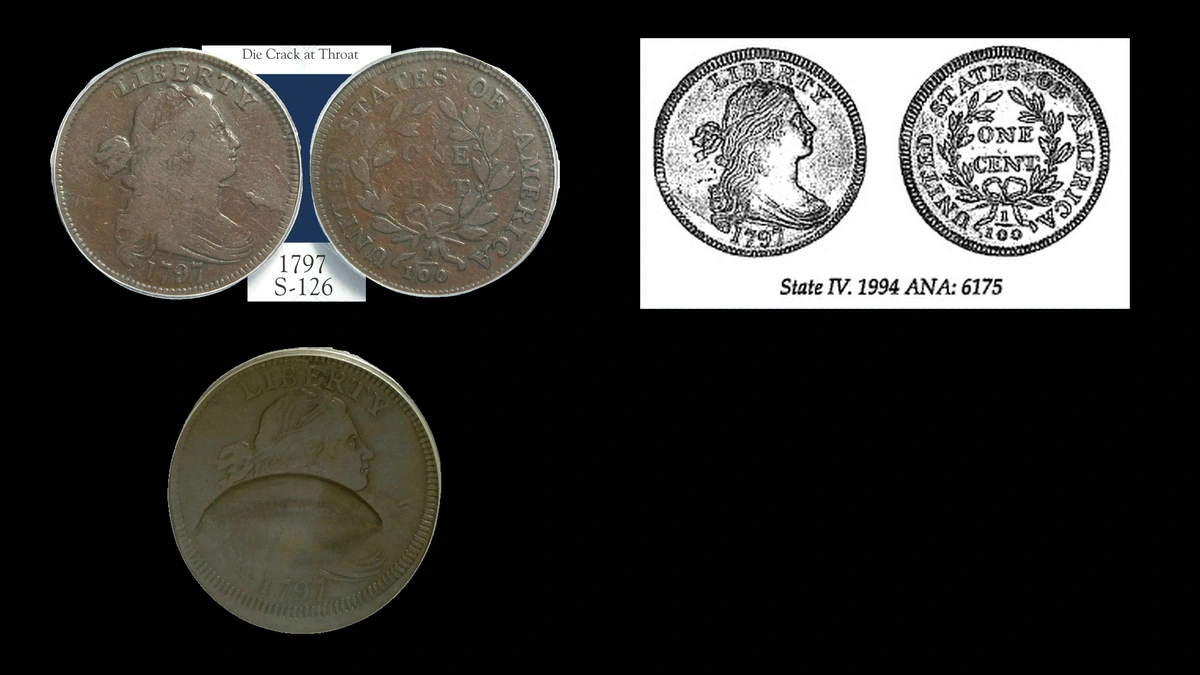
Confirm ONE CENT on the reverse before using this guide to 1797 penny errors, since the smaller half cent has different examples. Estimated whole-coin values here range from $100 to $30,000.
An exceptionally preserved double-struck cent sold for $25,300 in August 2006. Begin with raised or uneven surface features, then examine incomplete metal, displaced strikes and repeated designs to find a relevant comparison.
| Feature | Explanation | Estimated whole-coin value |
|---|---|---|
| Raised lines or rim mound | Die crack or cud | $100–$1,500 |
| Broad uneven surface | Die buckling | $200–$6,000 |
| Fragments from the opposite face | Die clash | $200–$5,000 |
| Irregular patch through the upper neck | Original planchet flaw | $200–$4,000 |
| Missing edge section | Clipped planchet | $150–$3,000 |
| Partly missing outer design | Off-center strike | $300–$8,000 |
| A recessed mirror image | Brockage | $800–$15,000 |
| Several normal impressions overlap | Double or triple strike | $400–$30,000 |
1. 1797 Penny Lines Cross Letters or Hair: Die Crack and Cud Error
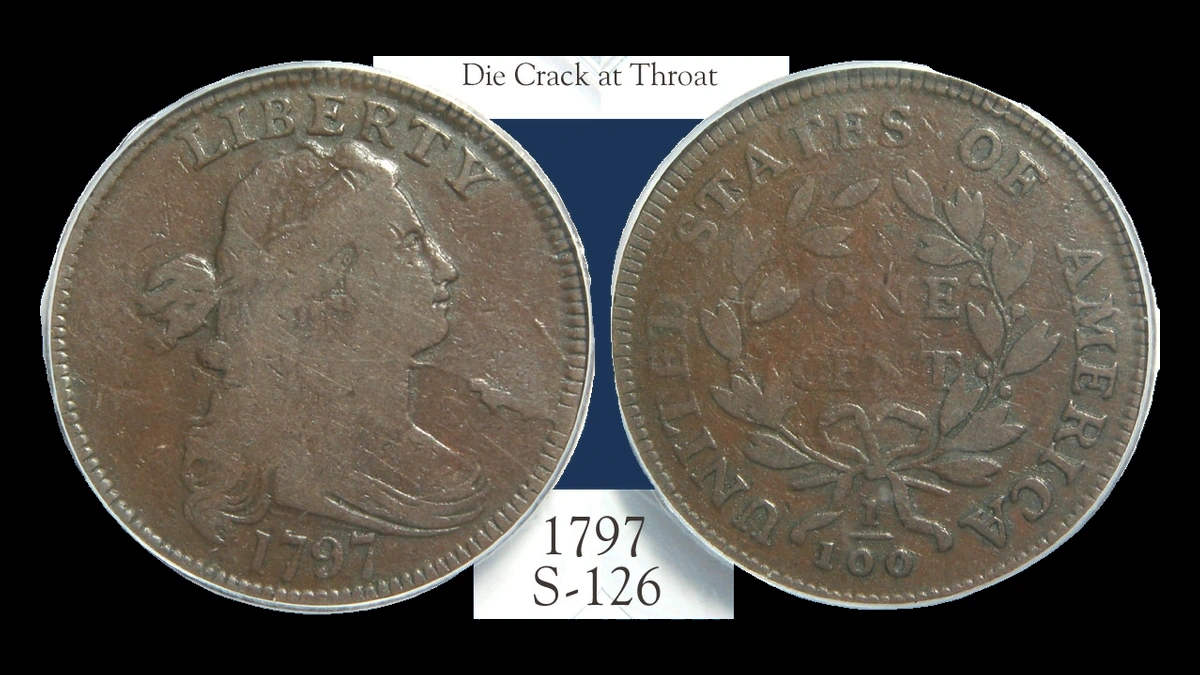
Documented 1797 die cracks cross the tops of LIBERTY or run inward from the rim toward the lower hair. Copper entering cracks in the steel die formed raised lines on the struck coins.
A separate year-guide report describes a front rim cud without a precise location. This broader rim-connected mound comes from a missing edge section of the die and need not accompany every lettering crack.
How to Identify
Follow the entire line under angled light to establish a raised center rather than the cut floor of a scratch. Do not connect unrelated fragments into a crack route that the coin does not actually show.
For a cud, examine its connection to the rim and the adjacent edge for a dent or added solder. Some 1797 varieties have intentional gripped-edge marks, so unusual edge texture alone is not proof of damage.
What It’s Worth
$100–$500 is estimated for worn cents with clear original cracks, with $500–$1,500 for more attractive coins or obvious authenticated cuds. Exceptional rarity or preservation may require a different comparison.
Small cracks can contribute little beyond the value of the early cent itself. A broad visible break is easier to demonstrate, but it still shares the coin’s wear and surface problems.
2. 1797 Penny Broad Areas Rise Unevenly: Die Buckling Error
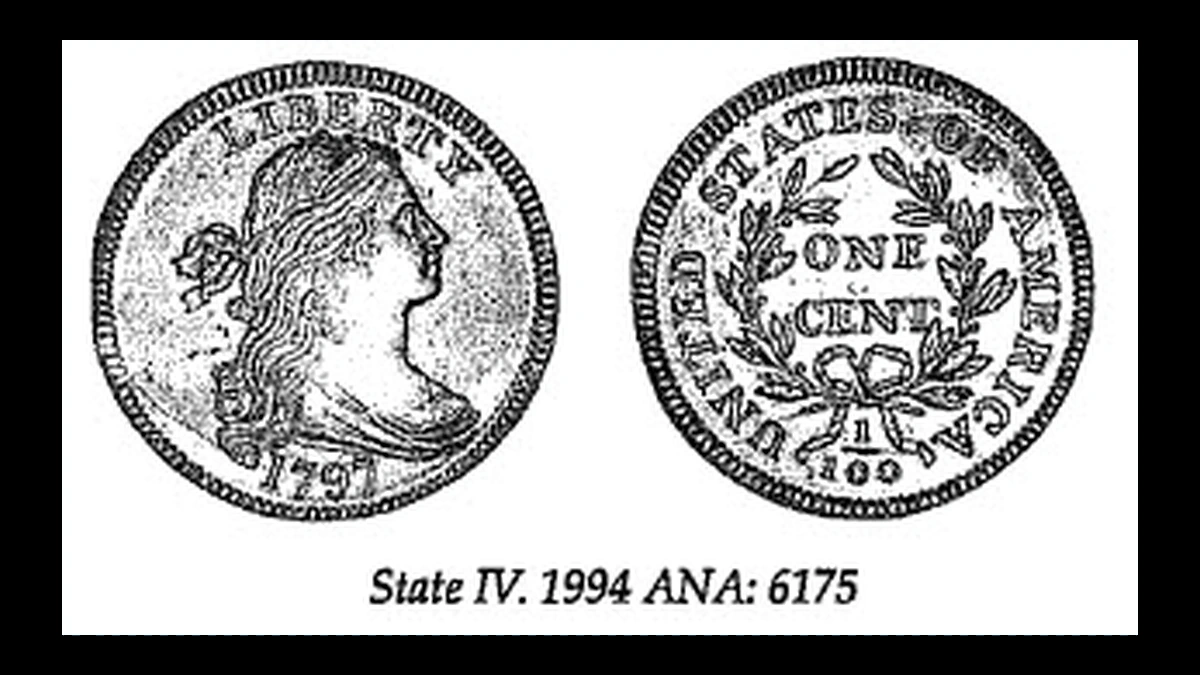
A failing die can sink or deform without leaving only a sharp fracture. The corresponding coin surface can rise into a broad uneven area, an effect known as die buckling.
Breen records this to Liberty’s left and through OF on the reverse of a particular variety. Later stages added unevenness near the drapery’s end and between existing cracks.
How to Identify
Watch low-angle light move over the broad shape, using the drapery and nearby cracks to locate it. Compare with the same die variety rather than any generally uneven early copper.
Inspect the opposite face and edge for a crease or impact from later bending. Do not press the coin flat to test whether the distortion can be removed.
What It’s Worth
$200–$1,200 is a working estimate for worn examples, with $1,200–$6,000 for attractive cents with clearly matched buckling. These are values for complete coins, not a charge for a bulge.
Buckling can occur alongside cracks and fading clash traces within one die variety. It may add little independently, while a coin bent or heated later belongs outside this mint-made category.
3. 1797 Penny Unwanted Border and Drapery Fragments: Die Clash Error
On the documented variety, clash traces follow the front border from below the date toward the area opposite Liberty’s mouth. Reverse traces include transferred drapery near S and OF, plus border marks above F AME.
These fragments arose when the dies met without a blank and marked one another. Coins struck afterward copied the extra detail from the tools.
How to Identify
The Breen variety description connects the unusual traces with features from the opposing designs. Compare several surviving fragments in position instead of relying on a single bright line.
Use full-face views to relate the front border to the reverse letters and drapery traces. Ordinary gripped-edge marks do not explain these extra shapes beside the designs.
What It’s Worth
$200–$1,000 is estimated for identifiable clashes on worn cents, with $1,000–$5,000 for attractive examples. Ordinary design strength and original surfaces account for much of that range.
The same dies also cracked and later buckled. When these features coexist, the cent receives one complete valuation rather than separate full prices for each stage of tool wear.
4. 1797 Penny An Irregular Patch Crosses the Upper Neck: Original Planchet Flaw Error
The Ralph Rucker collection description places an original blank flaw from the hair below Liberty’s ear across the upper neck. The cent otherwise approaches unworn preservation.
The catalog uses the broad term blank flaw. It does not establish that the patch is a peeling lamination or a hole, so those more specific descriptions need additional visible evidence.
How to Identify
Locate the area described in the Rucker collection record and inspect how the portrait was formed around it. A fresh gouge can displace completed design, while an original blank defect was present when the image formed.
A loose large cent normally began near 10.89 grams and roughly 28–29 millimeters across. Record measurements only where handling is safe, and compare its correct plain or gripped-edge variety without disturbing the flawed area.
What It’s Worth
$200–$800 is estimated for worn cents with a recognizable original blank flaw, with $800–$4,000 for attractive examples. Rare or exceptionally preserved pieces can exceed that working range.
No completed sale is claimed for the Rucker specimen here. A portrait-area flaw can reduce visual appeal even when it is unquestionably original.
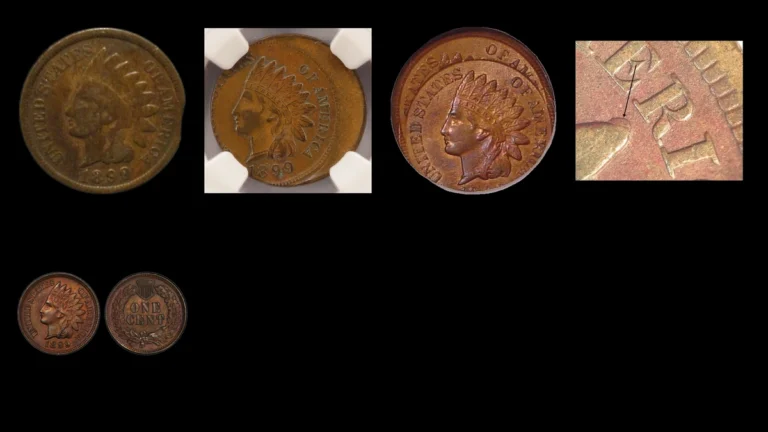
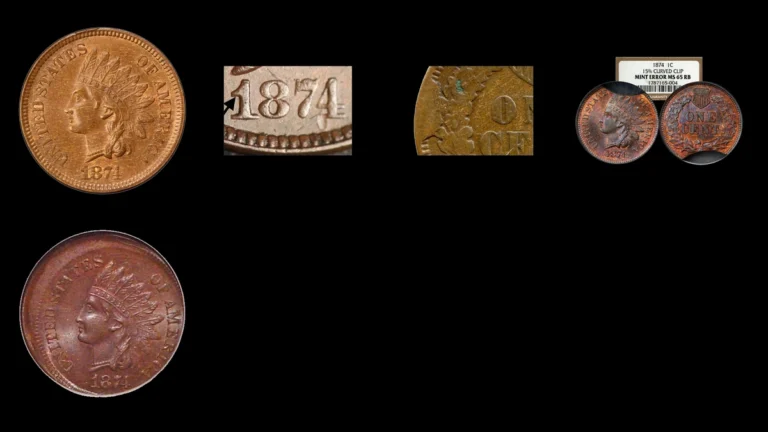
5. 1797 Penny Copper Is Missing from the Blank: Clipped Planchet Error
A year guide reports a 20% clip, while Breen records a separate lightly worn cent with a small clip. Both involve incomplete metal before striking, but the smaller example must retain its own description.
Neither report establishes a universal clock position. The opening itself must show how the remaining metal received its design.
How to Identify
Photograph the gap and nearby struck letters together, then inspect both endpoints and the wall. Saw marks or filing across completed design point toward removal after minting.
A weak opposite rim can support an original clip, although heavy wear may obscure it. Compare the intact edge with the appropriate variety rather than treating intentional gripped-edge marks as cutting damage.
What It’s Worth
$150–$700 is estimated for worn clipped cents, with $700–$3,000 for attractive substantial examples. The guide reports asking prices of about $2,550–$2,695 for the 20% piece.
Those offers are not completed sales. A small clip can accompany a valuable well-preserved cent, so percentage alone is not a pricing formula.
6. 1797 Penny Outer Design Is Slightly Displaced: Off-Center Strike Error
The recorded NGC Good 4 gripped-edge cent was struck about 5% off center toward nine o’clock. Its heavy wear and reduced protection from the rim both contributed to weak reverse lettering.
How to Identify
Orient Liberty upright and compare the missing outer detail and narrow borders on both sides. One displaced die can create a different arrangement from an entire blank positioned off center.
Separate smooth wear from the boundary of the original strike, and inspect for later trimming. The gripped edge is an intentional variety feature, not evidence that the off-center blow damaged the perimeter.
What It’s Worth
$300–$1,500 is estimated for worn examples retaining a readable date, with $1,500–$8,000 for more attractive or dramatic pieces. No completed amount is supplied for the Good 4 specimen.
A dateless early cent attributed to 1808 sold for $6,462.50 in February 2018 with a 30% offset and better preservation. That stronger different-year example is not a direct price for a heavily worn 5% shift.
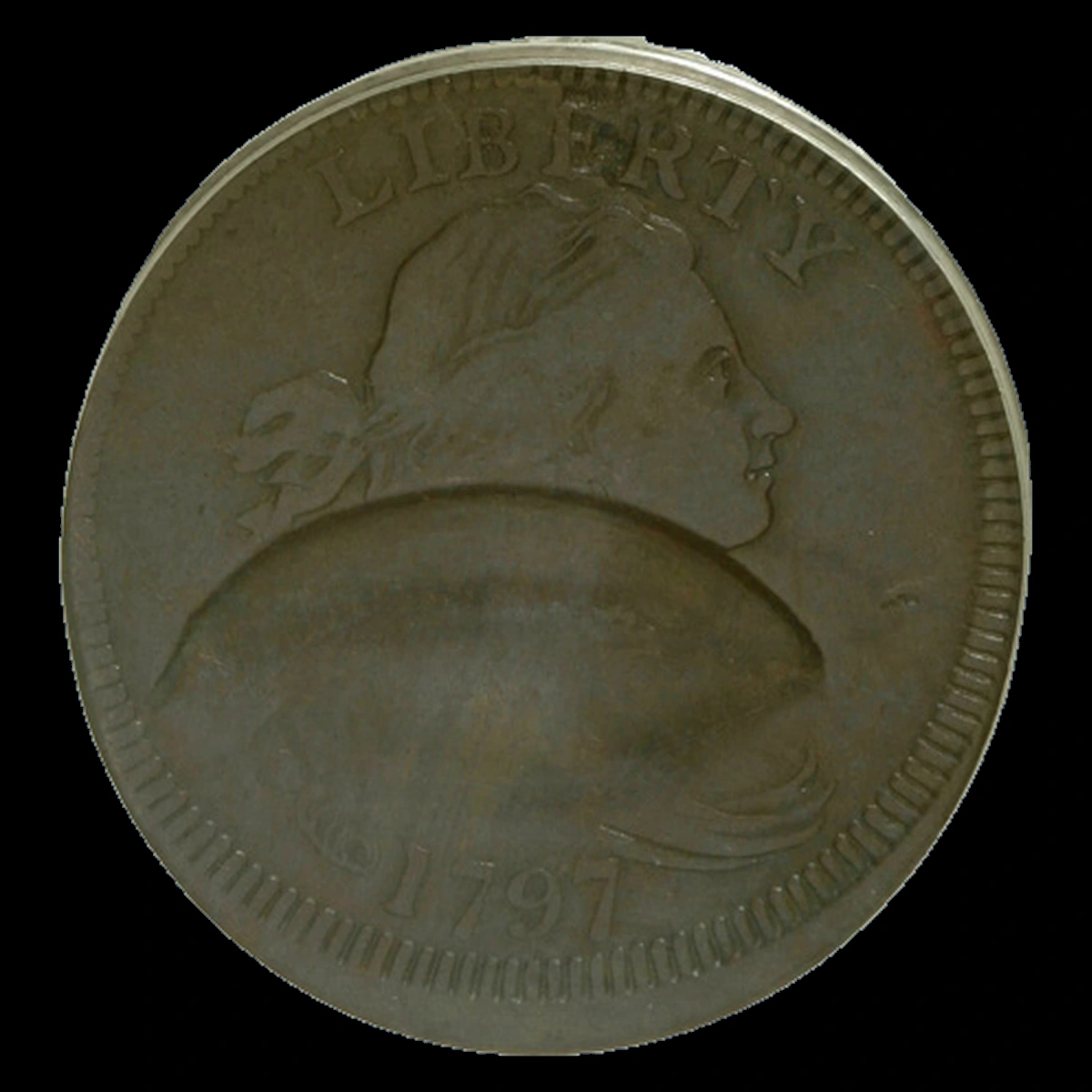
7. 1797 Penny A Design Reads Backward below the Surface: Brockage Error
Breen records a 1797 brockage made from the obverse design. A separate Mint Error News entry describes a PCGS Fine 12 cent with two strikes and a partial front brockage.
A trapped struck coin pressed its raised design into another blank, leaving a recessed mirror image. This is different from the faint fragments transferred through clashed dies.
How to Identify
Check both the reversed reading and the sunken relief of connected design elements. A depression that only vaguely resembles a portrait is insufficient.
On the partial combination, map the mirror-image area’s boundary and trace the additional normal impression separately. Examine the edge and opposing surface for evidence of later squeezing between finished coins.
What It’s Worth
$800–$4,000 is estimated for worn or partial brockages, with $4,000–$15,000 for clearer attractive examples. These are whole-coin estimates rather than separate allowances for brockage and double striking.
An 1817 brockage reached a $7,500 winning bid before fees in January 2015. That different-year hammer result does not establish a sale price for either reported 1797 specimen.
8. 1797 Penny Nearly Complete Designs Repeat or Cross: Double and Triple Strike Error
The exceptional close double repeats the date, portrait, wreath, lettering and borders about one millimeter apart on both faces. Another cent received two off-center blows and later suffered environmental damage.
Breen also records a separate triple strike with about 30 degrees of rotation in its second impression. Its final blow was 95% off center near ten-thirty, a different movement from the preceding rotation.
How to Identify
Choose one repeated letter and follow the same displacement into nearby portrait or wreath detail. A true additional impression connects several features rather than creating only a thin shelf beside one stroke.
For a triple strike, locate each surviving design independently and keep the final small edge impression separate from the second rotated one. Inspect both faces and the edge without forcing an altered outline back into shape.
What It’s Worth
$400–$4,000 is estimated for worn readable multiple strikes, with $4,000–$30,000 for stronger combinations or exceptional unworn coins. The NGC MS65 Brown close double strike realized $25,300 in August 2006.
The environmentally damaged twice-off-center cent sold for $504 in September 2019. Their contrasting preservation and layouts show why the same broad error name can cover very different values.
Conclusion
The best comparison follows a specific feature on the correct variety: a crack route, transferred drapery fragment, original copper flaw or coherent second impression. Wear and surface quality remain major parts of an early cent’s value.
Check whether the edge is normally plain or gripped before interpreting its marks. Keep several errors on one coin within a single valuation, and preserve both faces so the full production sequence remains visible.