Rare 1794 Penny Errors (List & Pictures)
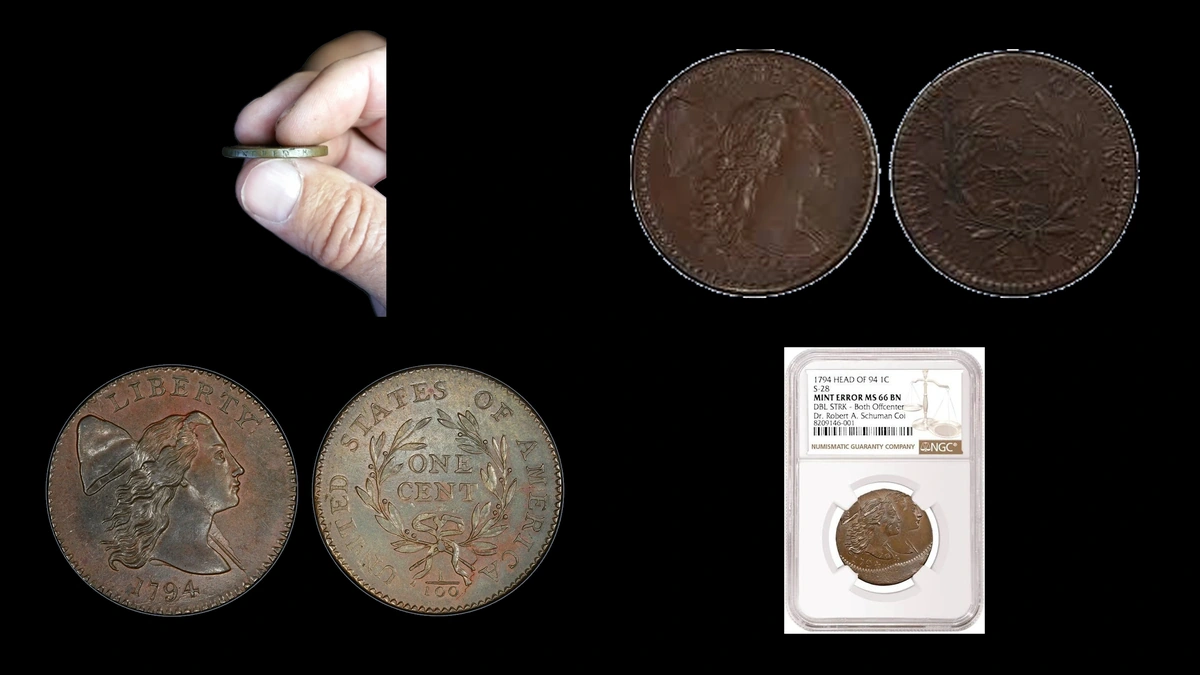
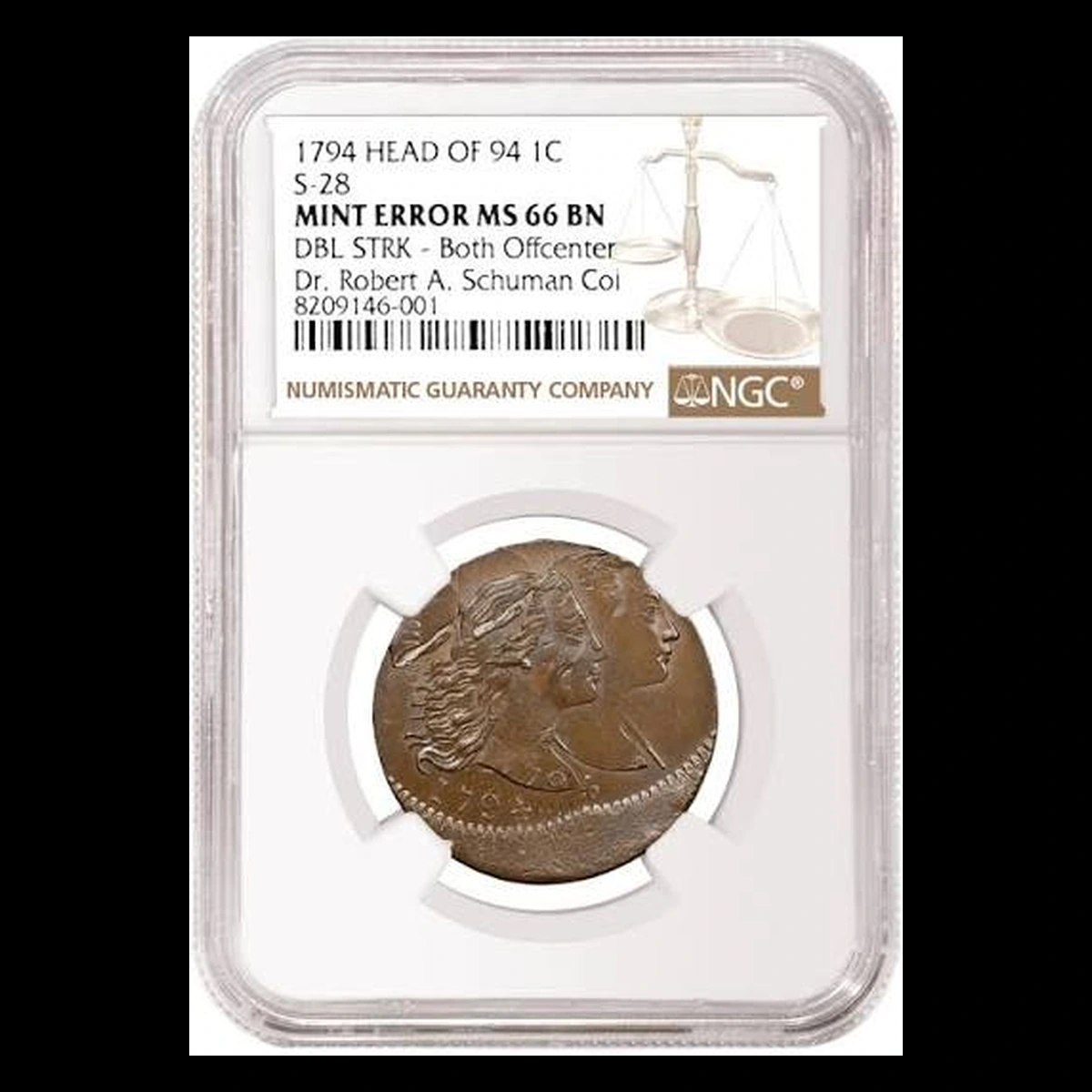
A double-struck Liberty Cap cent realized $588,000, including buyer’s premium, in August 2024. That remarkable result reflects exceptional unworn preservation as well as two displaced impressions.
The broader group of 1794 penny errors has supplied whole-coin estimates of $250–$600,000. Begin with the lettered edge and metal, then compare the date, alignment, and repeated or transferred designs; ordinary worn examples sit far below the record coin.
1. 1794 Penny A Straight Section Is Missing: Clipped Planchet Error
The recorded straight clip runs from about 7 to 9 o’clock with Liberty upright, corresponding to the reverse area near D-STAT. A blank punched at the end of the copper strip lacked that section before receiving its designs.
PCGS graded the example VG8, indicating heavy wear with remaining detail. Its incomplete outline also affected the edge-lettering operation, discussed next.
How to Identify
Compare both ends of the straight gap with nearby struck detail. Sawing or filing through an already finished design can imitate the shape while leaving evidence of later metal removal.
A normal 1794 Liberty Cap cent began near 13.48 grams and roughly 29 millimeters, with a lettered edge. Record intact spans and the surviving edge safely; lower weight alone does not authenticate a clip.
The auction catalog connects this clip with interrupted edge words. Leave a certified example in its holder even if some lettering cannot be photographed through it.
What It’s Worth
$500–$3,000 for worn clips and $3,000–$20,000 for attractive or substantial examples are whole-coin estimates. No completed-sale amount is supplied for the VG8 straight clip.
A separate lightly worn coin with a shallow clip and edge lamination was offered for $10,500. Its different condition and combination, and the fact that this was an asking price, limit the comparison.
2. 1794 Penny Edge Words Have Gaps or Repeated Letters: Lettering Error
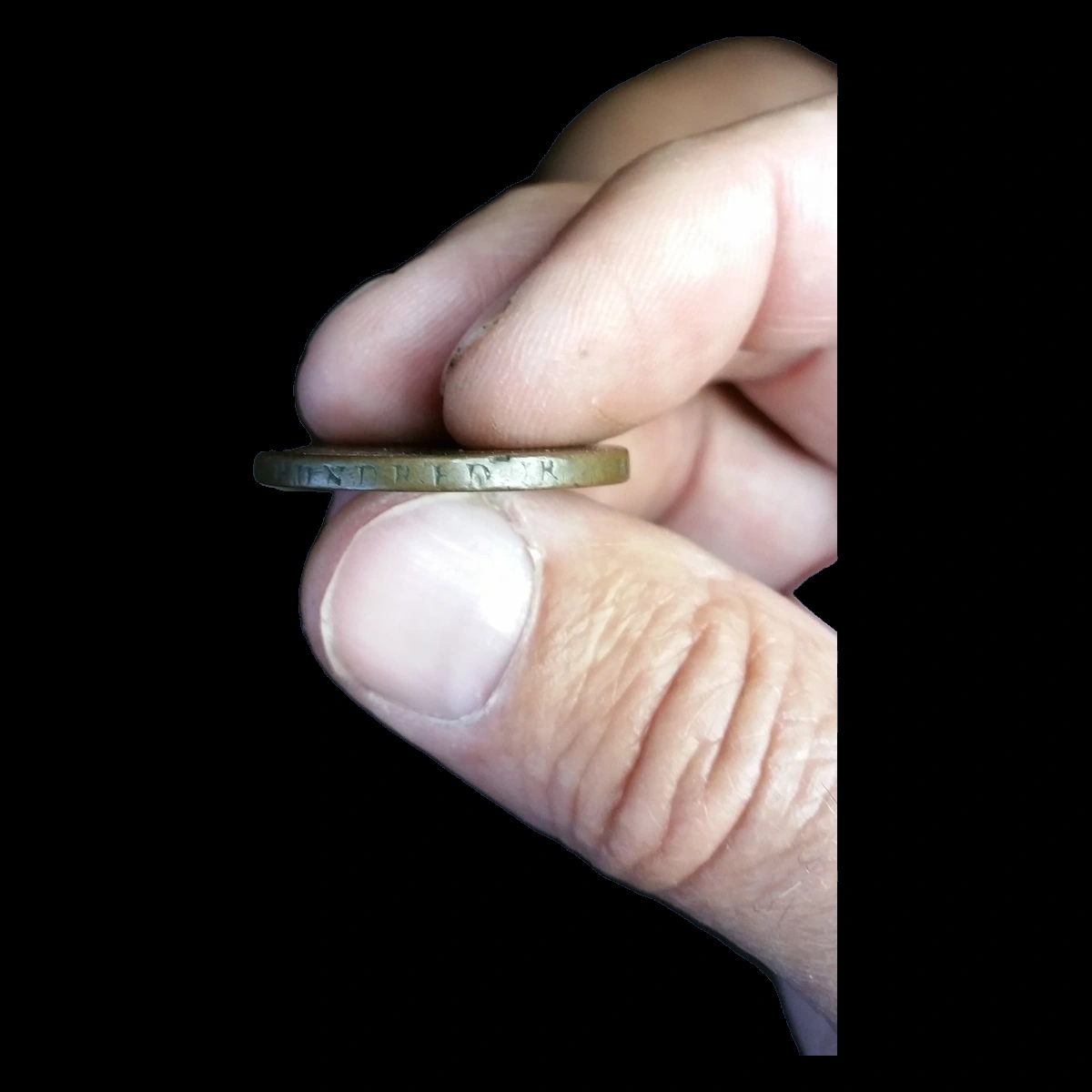
The normal edge reads ONE HUNDRED FOR A DOLLAR. These words were applied before the portrait and reverse were struck, so a lettering problem can record an earlier manufacturing step.
The straight-clipped coin has an unusually large space between HUNDRED and FOR, with LAR O absent on the opposite edge. Its incomplete blank apparently slipped in the lettering machine; a separately cataloged 1794 cent has doubled edge letters.
How to Identify
Read the edge in overlapping segments and record the word sequence around the full circumference. One worn or hidden section cannot establish that letters were omitted.
A doubled-edge candidate needs repeated letter shapes rather than random dents. Keep its pattern separate from the clipped coin’s spacing and missing letters, and use existing catalog images when a holder obscures the edge.
What It’s Worth
$500–$4,000 for worn convincing examples and $4,000–$25,000 for clearer or especially attractive coins are the estimates. The separate doubled-edge example was cataloged as Good 4, with no sale figure supplied here.
For the straight-clipped cent, the edge defect and clip belong to one object. Their full estimated ranges must not be added together.
3. 1794 Penny A Thin Layer Separates Within the Copper: Lamination Error
A weak area in the original copper can leave a lifting sheet or a shallow opening after a layer detaches. Breen’s early-cent reference records a 1794 lamination without supplying one required location for all examples.
A different dealer-listed cent combines a thin edge separation with a shallow clip. Those are two features of the same coin, not separate discoveries with independent full values.
How to Identify
Support any attached flap and follow its boundary into the copper under low light. Original design continuing onto a layer can help establish its relationship with the struck surface.
A modern coating lies on top of the coin, while a gouge cuts into already finished detail. Rough corrosion alone does not establish lamination, and an attached layer may leave weight almost unchanged.
What It’s Worth
$300–$2,000 for worn examples and $2,000–$8,000 for attractive cents with obvious original separation are the working estimates. Surface quality can outweigh the flaw’s size.
The lightly worn clip-and-lamination coin carried a $10,500 dealer asking price, above that range. It was an offer for the whole collectible cent, not a completed sale or a lamination-only premium.
4. 1794 Penny The Coin Is Heavier Than the Original Standard: Reported Thick Planchet Error
Breen records a 1794 cent at 222 grains, equivalent to 14.39 grams. That is about 6.7% above the original 13.48-gram standard and could reflect a blank cut from overly thick copper.
The author had not personally examined the reported piece. Its historical weight therefore remains a report rather than authentication of any heavy candidate found today.
How to Identify
Check a scale against a known reference and record the coin’s actual weight rather than adopting the reported figure. Compare diameter and thickness at several safe points without pressing the rim or lettering.
Inspect the lettered edge for a seam, solder, casting, or joined parts. The early-cent reference supplies a historical lead, while the metal and original surfaces still require assessment.
What It’s Worth
$1,000–$8,000 for worn examples and $8,000–$30,000 for stronger preservation are conditional estimates for an authenticated overweight blank. No completed sale is supplied for the 14.39-gram report.
A heavy copy or added copper does not qualify. The coin’s grade and variety remain relevant rather than value increasing by a fixed amount per extra gram.
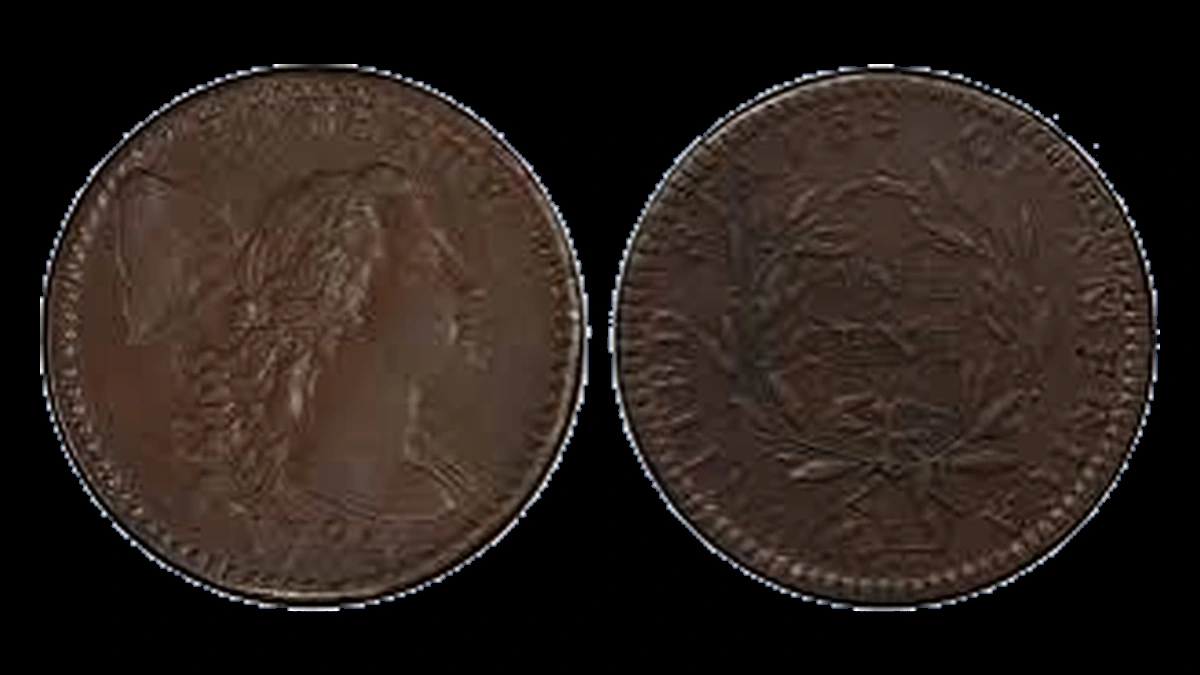
5. 1794 Penny Date Digits Lean, Sit Low, or Repeat: Misplaced and Repunched Date Error
Hand placement of date punches could leave digits at unusual heights or angles, or preserve an earlier impression after correction. Breen records the Fallen 4, other misplaced digits, a repeated first 1, and a separately repeated whole date.
These patterns belong to different dies. They existed before striking and do not establish that the finished cent received two blows.
How to Identify
Photograph all four numerals together and compare their spacing before enlarging an individual stroke. The Fallen 4 and repeated first 1 require their own specific matches.
Look for a remnant that fits an earlier digit shape, then inspect nearby copper for engraving or smoothing. A changed date, scratch, or bright reflection cannot replace a match to the original die pattern.
What It’s Worth
$300–$2,000 for worn matched varieties and $2,000–$12,000 for more attractive examples are the estimates. Particularly rare die combinations and unworn coins can require higher comparisons.
The figures value the whole coin rather than each extra date stroke. Wear that hides the earlier impression affects how clearly the variety can be displayed.
6. 1794 Penny One Design Is Shifted or Corresponding Areas Are Weak: Die Alignment Error
A sideways die shift can place one design near the rim without moving the entire blank off center. A specialist listing describes a 1794 cent whose front is shifted toward 3 o’clock.
Die tilt is a different alignment problem: the die faces are not parallel, potentially leaving corresponding weak areas despite normal edge thickness. One uneven border does not prove both effects.
How to Identify
Compare border spacing on both faces to separate one shifted die from a misplaced blank affecting both designs. Establish a direction only from the actual orientation of the coin.
For suspected tilt, compare the weak areas on both faces and the thickness around the edge. A thin part of the blank can also cause weakness, but that area contains less metal rather than simply receiving uneven die pressure.
What It’s Worth
$500–$3,000 for worn examples with clear alignment problems and $3,000–$15,000 for attractive coins with more detail are working estimates. The 3 o’clock example was offered for $5,800.
That asking price includes cracks, clash marks, and a condition assessment about which the catalog discusses differing opinions. It is not an isolated premium for the shifted front.
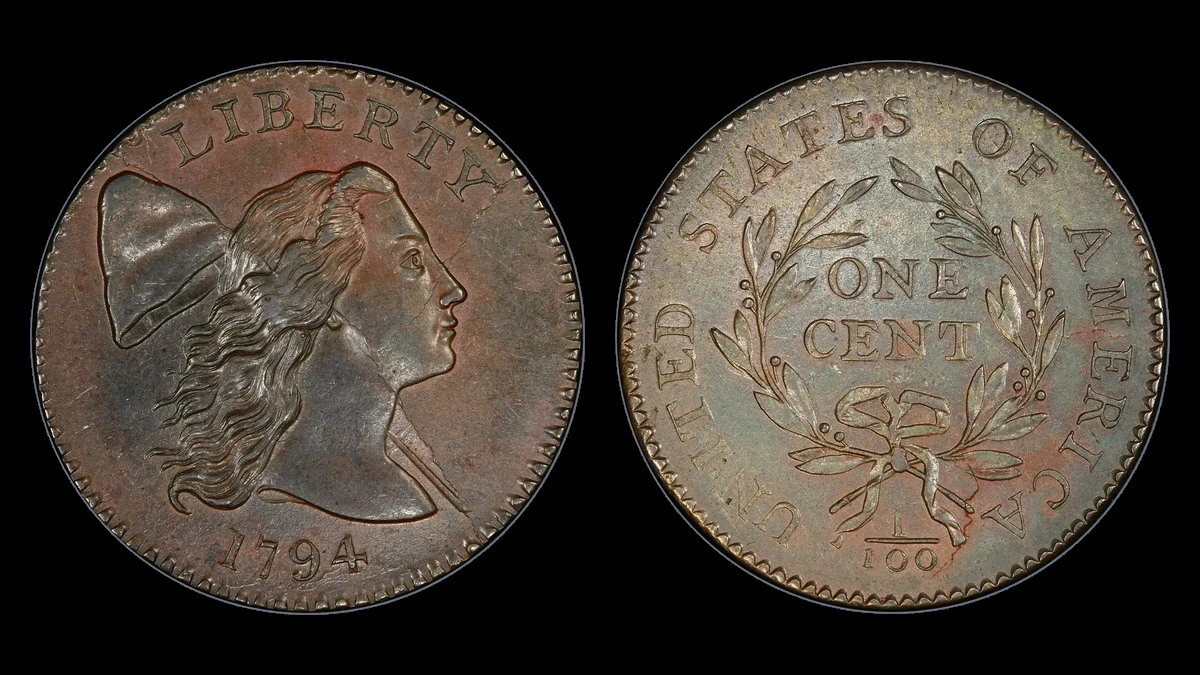
7. 1794 Penny Raised Lines Follow a Broken Die: Die Cracks Error
A recorded 1794 variety has a raised line through the first S in STATES. Copper filled a crack in the die during striking, copying its path onto the coin.
Other dies developed different cracks. On the exceptional double strike, a front crack appears twice because both impressions reproduced it.
How to Identify
Examine the center of the line under angled light, since a scratch can push raised metal along its sides. A genuine die crack is itself a ridge rather than a cut bordered by displaced copper.
Trace the STATES example into surrounding details and compare the complete path with the same variety. Its route should not be imposed on every 1794 cent.
What It’s Worth
$250–$1,500 for worn examples and $1,500–$6,000 for attractive cents with more detail are the estimates. Rare die combinations or exceptional preservation can bring more.
A price list offered a worn STATES-crack example for $1,850. That was an asking price for the complete cent, with corrosion, cleaning, or rim damage still relevant to comparisons.
8. 1794 Penny Ghost Fragments Match the Opposite Face: Die Clash Error
Dies that meet without a blank can acquire impressions of each other and transfer fragments to later coins. A specialist catalog describes an S-25 cent with one set of clash traces on both faces and no cracks.
The famous double-struck cent is separate, with a faint front clash above the hair and right of the cap. Those locations do not fill gaps in the S-25 description.
How to Identify
Compare unexpected front fragments with the reverse wreath and lettering, then search reverse traces for a relationship to Liberty. Matching portions of the opposing design are more informative than isolated bright lines.
A clash may leave only small ghost details, not a complete second portrait or date. Inspect the surrounding surfaces and edge for squeezing or joining before accepting an unusual transferred-looking mark.
What It’s Worth
$500–$3,000 for worn identifiable clashes and $3,000–$15,000 for attractive examples are the estimates. The specialist price list offered the circulated S-25 for $6,750.
That is an asking price rather than a completed transaction. Date, variety, and preservation account for much of the value beyond the faint clash lines.
9. 1794 Penny A Mirror Design Is Sunk Into the Copper: Brockage Error
A previously struck coin trapped against a fresh blank can press its raised design into the next piece. The resulting brockage is recessed and reversed where a normal die design should appear.
Breen records a 1794 example identified through reverse-die details. Its attribution depends on that documented match rather than an imagined readable date.
How to Identify
Photograph the surviving normal face clearly enough for a die comparison. An old-looking copper coin with an unclear date cannot be assigned to 1794 from style alone.
Check that the unusual letters and major features are both backward and sunken. Later squeezing of coins can produce recessed impressions too, so original surfaces, the lettered edge, and signs of pressure or casting need examination.
What It’s Worth
$2,000–$10,000 for worn authenticated examples and $10,000–$40,000 for stronger, clearer pieces are the estimates. No realized price is supplied for the reference’s 1794 specimen.
An 1817 large-cent brockage received a $7,500 winning bid before fees in January 2015. Its different date and condition provide context without establishing a 1794 sale.
10. 1794 Penny Two Displaced Impressions Overlap: Double Strike Error
The exceptional NGC MS66 Brown cent has two off-center strikes, overlapping portraits and inscriptions, and unstruck areas on both faces. Its dramatic outline coexists with unusually strong unworn preservation.
The repeated crack and faint clash mentioned earlier belong to this same coin. They accompany the striking accident rather than representing separately priced objects.
How to Identify
Trace one portrait and its associated lettering, then follow the other position across it. Areas where the later blow flattened earlier details help explain the sequence.
Examine the unused copper on both faces for original surface rather than grinding, and include the full outline and lettered edge in photographs. A doubled stroke within one otherwise single design does not equal two displaced impressions.
What It’s Worth
$1,000–$25,000 for worn readable repeated strikes and $25,000–$600,000 for exceptional pieces are broad whole-coin estimates. Most candidates are far below the record specimen in preservation and appeal.
The MS66 Brown double strike sold for $588,000 on August 14, 2024, including buyer’s premium. The amount prices its extraordinary quality and combined features together.
Conclusion
The edge can be as informative as the portrait on a 1794 Liberty Cap cent. Its lettering records a manufacturing stage that may explain spacing errors on an incomplete blank, while the faces reveal what happened during striking.
Keep historical reports, dealer offers, and completed sales distinct. Preserve fragile copper and value each complete coin according to its variety, condition, and combined features rather than multiplying prices for every visible mark.