Rare 1801 Dollar Errors (List & Pictures)
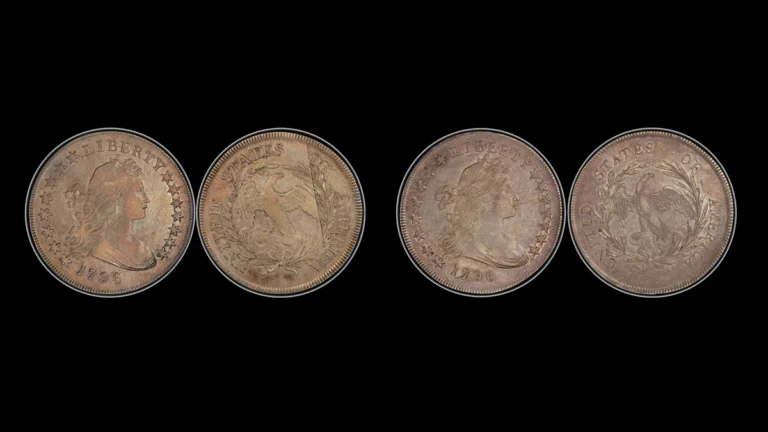
A BB-212 dollar with double-collar clash marks brought $4,935 in June 2016. Estimated whole-coin values for the 1801 Draped Bust dollar errors and die features below range from $1,000–$25,000.
Compare small letter endings, raised reverse lines, and transferred design shapes using the correct die variety rather than combining nearby-looking marks.
| Landmark | Feature | Estimated range |
|---|---|---|
| Lower-right feet of T in UNITED and STATES | Missing serifs | $1,000–$18,000 |
| Eagle feathers, lettering, or cloud area | Die cracks and chip | $1,000–$25,000 |
| Liberty’s neck, date area, and reverse OF | Die clash | $1,200–$25,000 |
1. 1801 Dollar The lower-right feet of T are incomplete: broken serifs Error
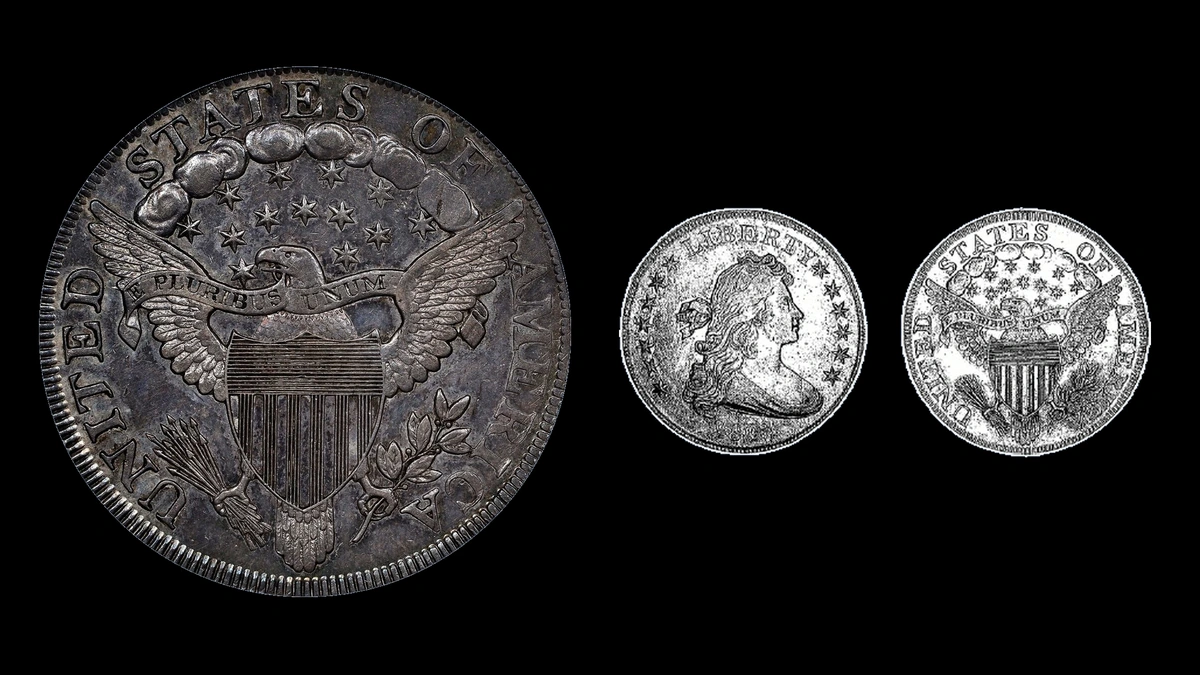
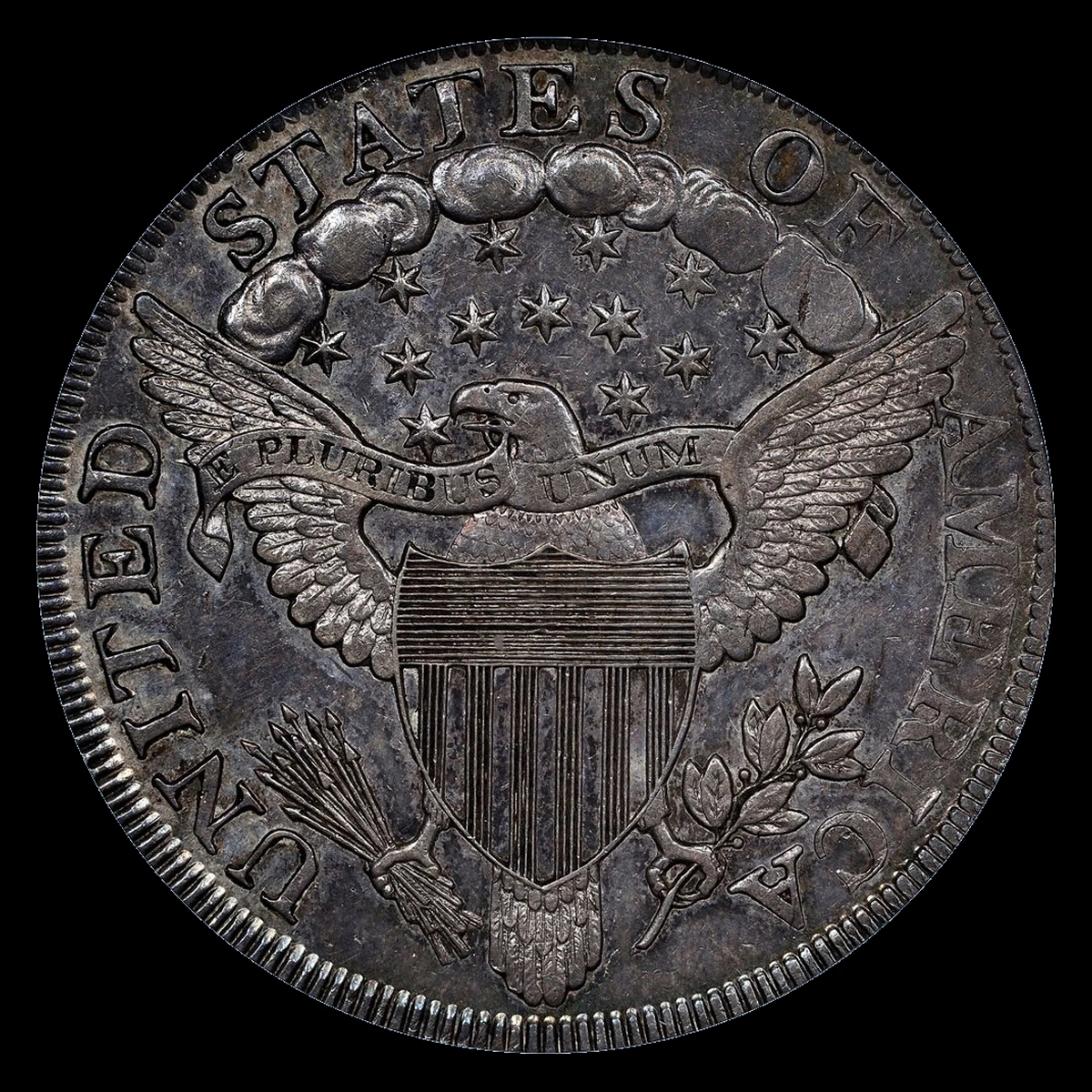
The small extensions at the bottoms of letters are called serifs. On the reported varieties, the lower-right serif of T in UNITED and STATES is partly or entirely absent.
Catalogs describe partial loss on BB-214 and complete loss on the related BB-213 reverse. BB numbers identify die pairs, not coin grades.
The feature belongs to the lettering in those tools. It should not be described as a fresh piece chipped out of each finished dollar.
How to Identify
Include UNITED and STATES in one close view to compare their Ts. Examine the lower-right feet under magnification and changing light.
Check whether neighboring letter endings remain clear. If they are also worn flat, wear may explain why a small serif cannot be seen.
Match the complete coin against BB-213 or BB-214 references before choosing between partial and complete loss. One weak T does not reliably distinguish the die pairs.
What It’s Worth
Identifiable worn through lightly worn examples have an estimated whole-coin range of $1,000–$18,000.
Heritage’s October 2025 archive lists a cleaned BB-213 with Very Fine detail at $2,760. An environmentally damaged BB-214 with similar detail brought $1,320 in the same sale.
Those condition problems matter more to the complete price than a small missing letter foot alone. The two results do not establish a fixed premium for either serif pattern.
2. 1801 Dollar Thin ridges or a small letter-side bump: die cracks and chip Error
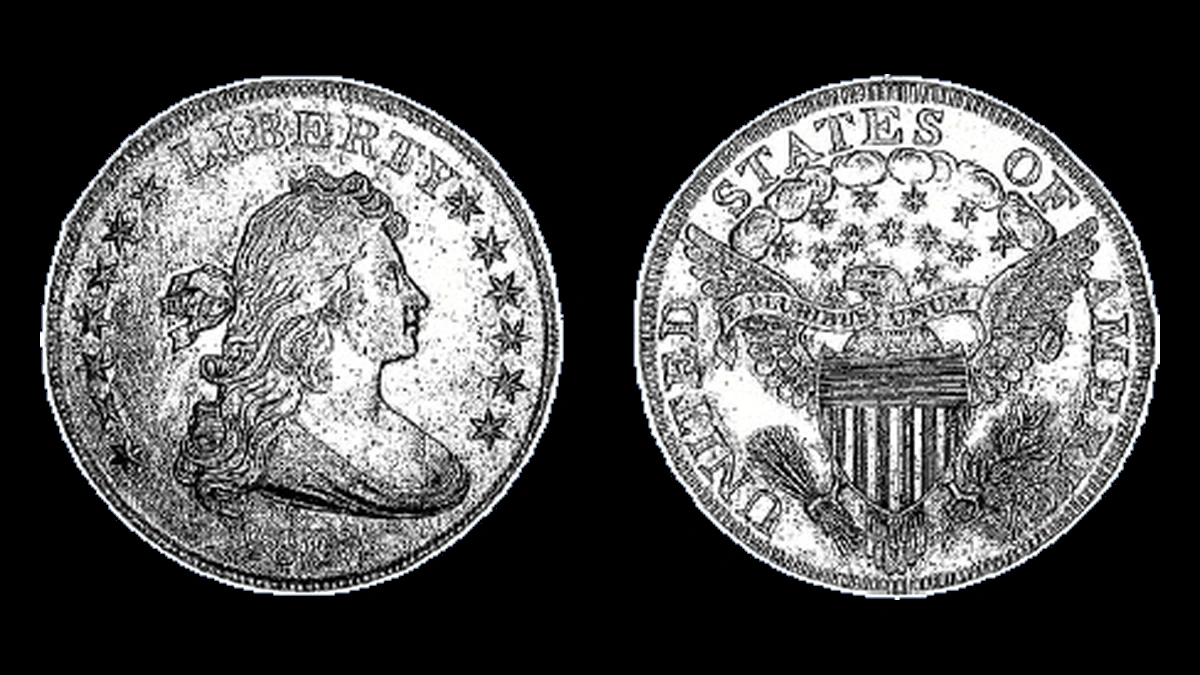
BB-212 has reported reverse routes from a feather toward A in AMERICA and from another feather toward the left rim. A small chip was described just right of the foot of I in AMERICA on one specimen.
BB-214 instead has a line between the arrows and leg feathers. A later stage adds a route from the border toward cloud six.
Silver entering cracks or a small missing area in a die creates raised features. The two varieties’ paths should not be merged into one pattern.
How to Identify
Select the correct reverse reference before tracing any line. On BB-212, inspect the feather connections toward AMERICA and the left border.
For BB-214, compare the arrows-to-leg area and the route toward cloud six. Follow each path across open spaces and design under side lighting.
A die crack normally leaves a ridge, while a later scratch cuts into the silver. The small chip belongs beside AMERICA’s I and should be checked independently of random bumps elsewhere.
What It’s Worth
Circulated examples with the identified cracks or chip are estimated at $1,000–$25,000.
The $4,935 XF45 BB-212 clash-marked dollar described below is a same-variety market comparison. It is not established as the earlier collection specimen with the small chip.
Clear die evidence may interest specialists, but cleaning, repairs, or holes still alter the whole coin’s value. A matching route cannot cancel those problems.
3. 1801 Dollar Liberty gains an extra collar: clashed dies Error
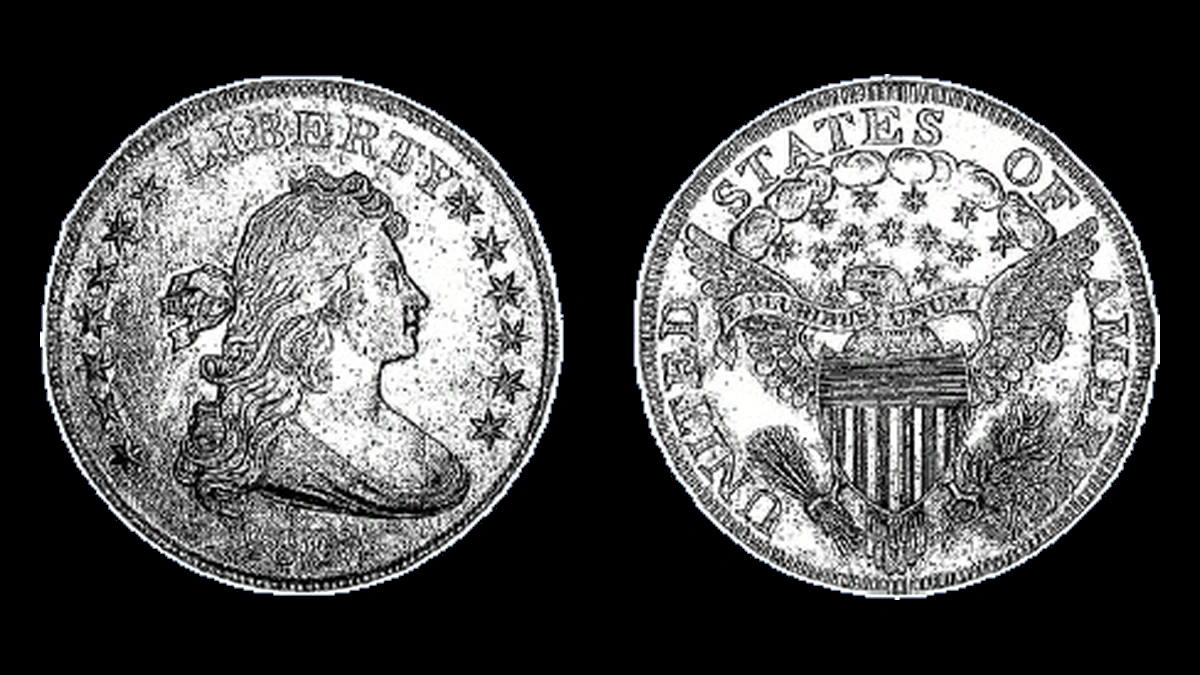
One BB-212 stage has two collar-like lines near the top of Liberty’s bust. Cloud traces appear near the date and extend toward star three.
The dies met without a blank and transferred parts of their designs to one another. Later coins copied those unintended marks alongside the normal pictures.
After polishing, one collar line and much of the lower marking disappeared. A reverse line through OF is also described as clash transfer, rather than a crack.
How to Identify
Inspect where Liberty’s neck meets the bust and compare the extra contours with the opposing eagle-wing design. Then examine the date and star-three area for matching transferred shapes.
Allow for weaker traces after die polishing instead of expecting every stage to have two equally clear collars. Use the complete pattern to compare the tool’s condition.
At OF on the reverse, compare the line with Liberty’s drapery. The specialist description identifies it as a clash, so its location alone is not grounds to rename it a crack.
What It’s Worth
Circulated BB-212 dollars with identifiable clash traces are estimated at $1,200–$25,000.
Heritage’s PCGS XF45 sold for $4,935 on June 9, 2016. The catalog explicitly notes double-collar clash marks.
XF45 indicates wear with much fine detail remaining. A polished-die example with one surviving collar does not automatically become an entirely different error to price separately.
Conclusion
The most useful landmarks are precise: two T feet, the correct feather-to-letter crack routes, and collar or cloud shapes transferred from the opposite design. Keep each BB die pair and stage separate during comparison.
Recorded condition problems and wear remain part of the value even when small features match. The $4,935 clash-marked dollar supplies one complete-coin transaction, not a price for every line on an 1801 dollar.