Rare 2007 Presidential Dollar Errors (List & Pictures)
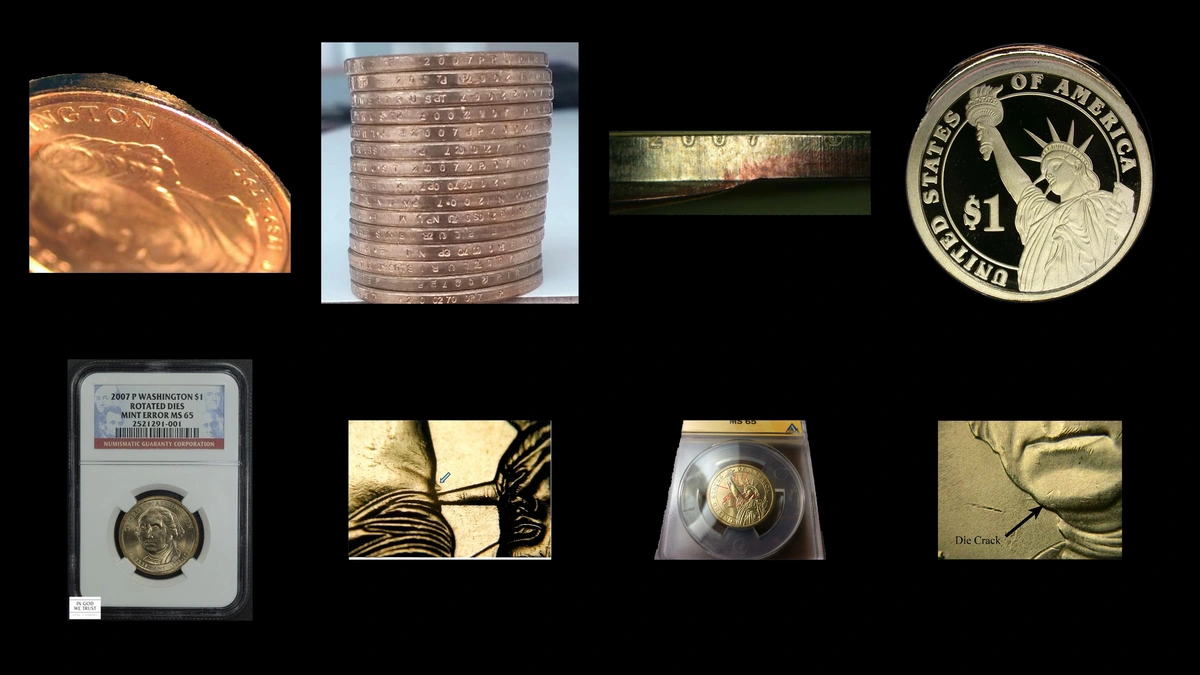
The edge is especially informative when sorting 2007 Presidential dollar errors. Ordinary dollars received their inscriptions in a separate operation, while specially prepared Proof coins used lettered collar segments during the face strike.
Supplied estimates range from $5–$25,000, and a Washington dollar struck over a finished nickel realized $17,625 in January 2016. Identify Washington, Adams, Jefferson, or Madison and the finish first, then examine the edge, face details, and metal in that order.
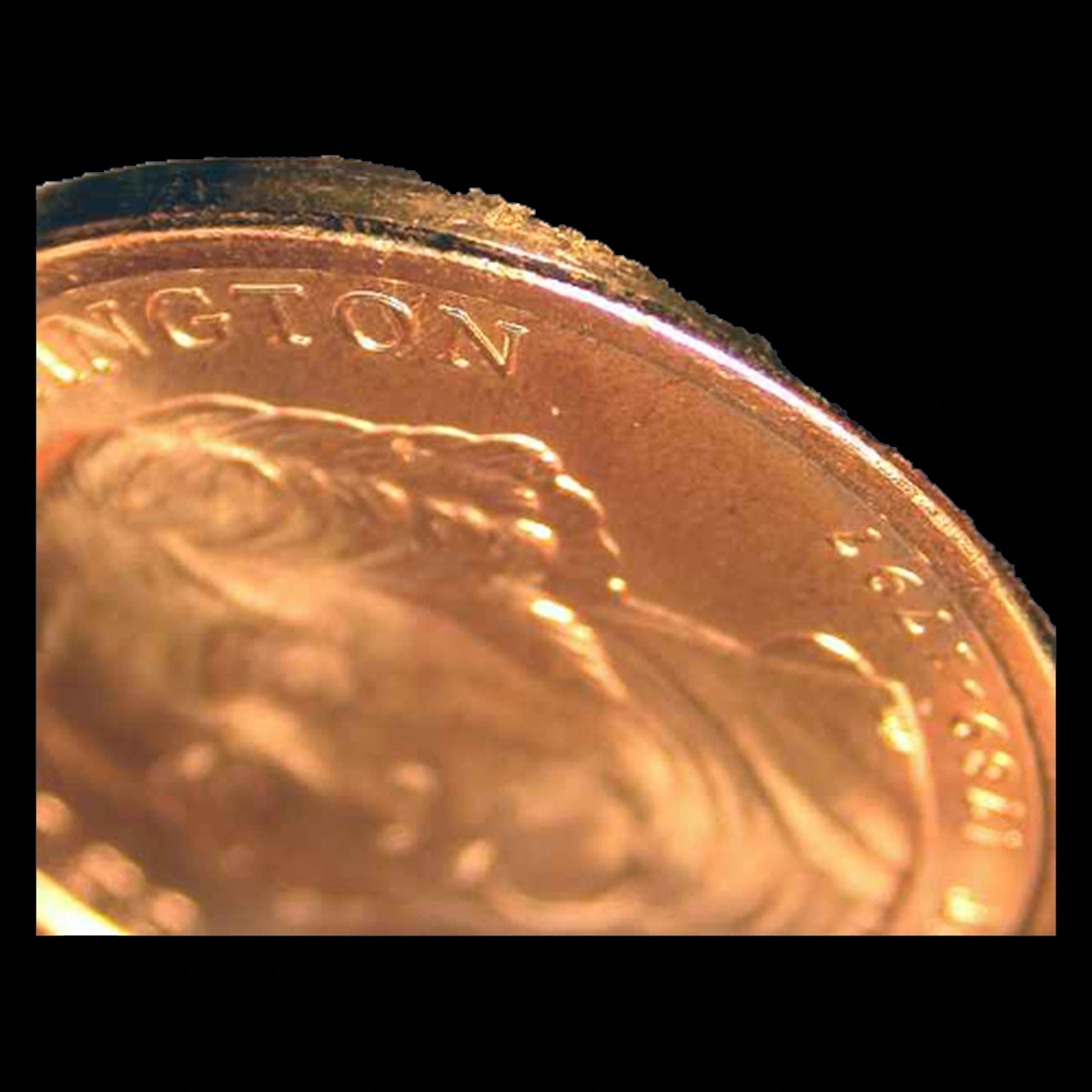
1. 2007 Dollar Shallow, Incomplete, or Absent Words: Missing Edge Lettering Error
The full 2007 inscription includes the year, mint letter, IN GOD WE TRUST, and E PLURIBUS UNUM. Skipping the separate lettering operation, or failing to impress it properly, can leave ordinary dollars with none, some, or only faint portions of that text.
Missing-edge examples are cataloged for all four presidents. Collector satin-finish pieces, with their softer-looking original surfaces, need separate identification from ordinary circulation issues.
How to Identify
Inspect the entire edge under several light angles before calling it completely unlettered. Even one surviving original character makes it partial or weak rather than wholly missing.
Examine both rims for filing and polishing that may have removed lettering. Normal loose-dollar references are 8.10 grams and about 26.5 millimeters across; measurements support surface inspection but do not replace it.
If the mint letter is absent, do not infer Philadelphia or Denver from a blank space. Preserve the president and verified finish in the identification.
What It’s Worth
$10–$1,500 covers the combined supplied estimates. Ordinary weak or partial inscriptions are estimated at $10–$150, ordinary missing lettering at $20–$500, and scarcer authenticated satin-finish examples at $150–$1,500.
A Madison missing-edge dollar in NGC MS67 sold for $119 in July 2025. Its ordinary finish does not supply a price for every collector-finish piece.
2. 2007 Dollar A Wide Gap beside Crowded Characters: Slipped Edge Lettering Error
NGC described Washington dollars with excess space between TRUST and the date, balanced by a mint letter crowded toward E PLURIBUS UNUM. The dollar slipped during lettering, changing the spacing within one inscription.
How to Identify
Follow the characters continuously, comparing the TRUST-to-date gap and the mint-letter area with a normally lettered Washington dollar. Keep edge photographs in their actual sequence.
The inscription can normally begin anywhere relative to the portrait. Its starting position is therefore different from abnormal spacing within the text, and two full strings would indicate repeated lettering instead.
What It’s Worth
$10–$150 is estimated for substantial original spacing errors. A 2010 sales survey reported $16.59 for a 2009-D Taylor slipped-edge coin, providing an older, different-president comparison.
3. 2007 Dollar Two Dates or Mottoes on One Edge: Repeated Lettering Error
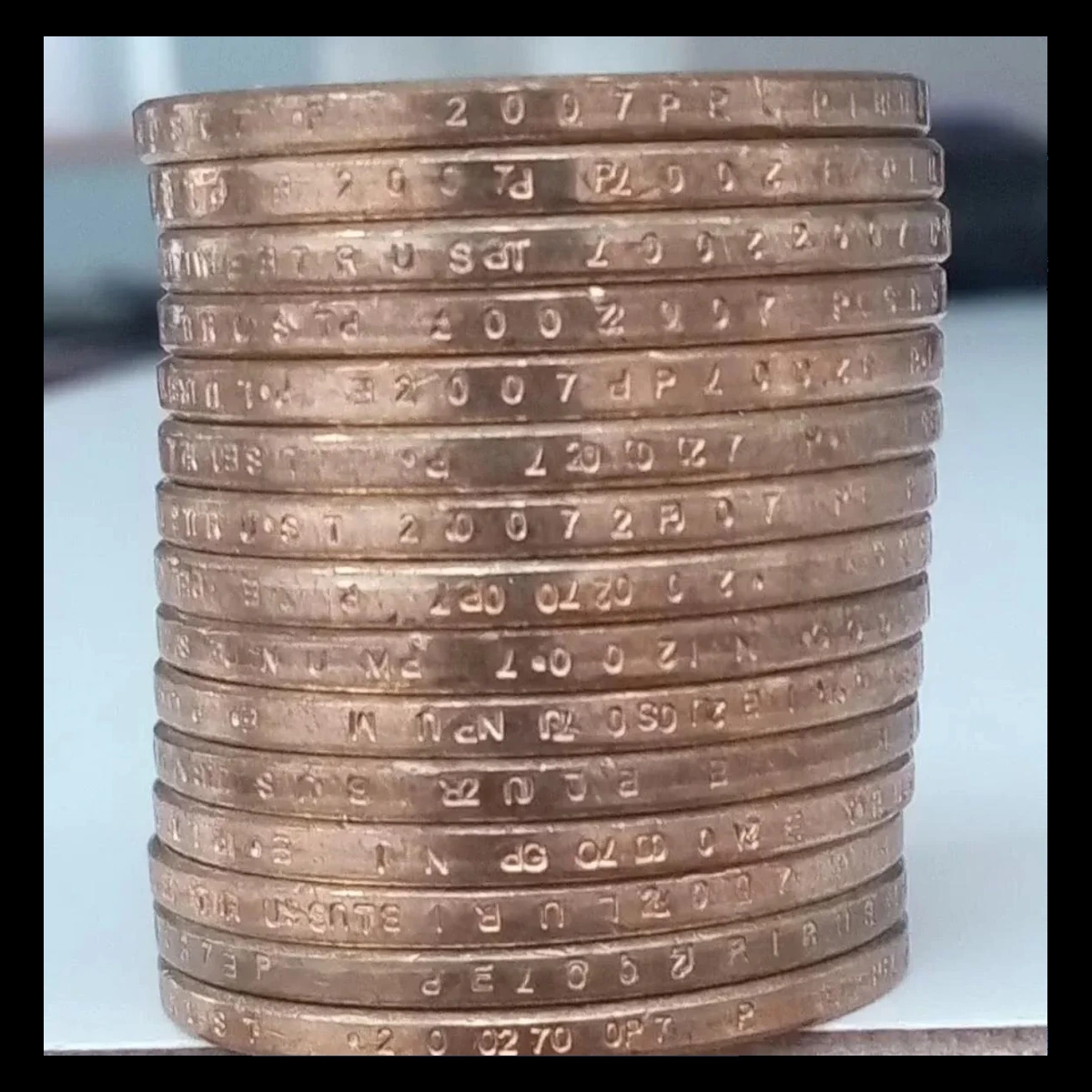
A second trip through the lettering equipment can put another inscription over the first. The two strings may face the same direction or opposite directions.
Reports include Philadelphia Washington, Philadelphia and Denver Adams, and Jefferson combinations. Normal Position A and Position B each describe one inscription’s orientation and are not errors by themselves.
How to Identify
Choose a repeated word and trace each sequence around the same edge. Demonstrate both sets together where they overlap rather than photographing one inscription twice in reversed positions.
Look for genuine recessed characters with coherent letter shapes. Isolated contact marks do not constitute a second date or complete motto.
What It’s Worth
$30–$500 is estimated for genuine repeated edge inscriptions. An unworn 2007-P Adams dollar with overlapping lettering brought $59 in March 2010.
Readability, president, mint combination, and condition guide comparisons. A single upside-down inscription does not qualify for this range.
4. 2007 Dollar Complete Mottoes in the Wrong Order: Proof Collar Assembly Error
On the reported Jefferson S Proof, 2007 S is followed by IN GOD WE TRUST and then E PLURIBUS UNUM. A normal Proof places E PLURIBUS UNUM first after the date and mint letter.
Three lettered collar segments make the Proof edge during striking. Assembling them in the wrong sequence can rearrange complete mottoes without removing any words.
How to Identify
Start at 2007 S and follow the upright characters continuously around the edge. Record which complete motto comes next without rearranging separate photographs.
Confirm Jefferson and the original S Proof finish on that same coin. Normal edge direction on an ordinary dollar is unrelated to this segmented-collar sequence.
What It’s Worth
$1,000–$20,000 is a conditional estimate for a verified example. Reported discovery-set requests for tens of thousands were asking prices for sets, not completed sales of individual coins.
5. 2007 Dollar High Edge Text beside a Projecting Lip: Partial Collar Error
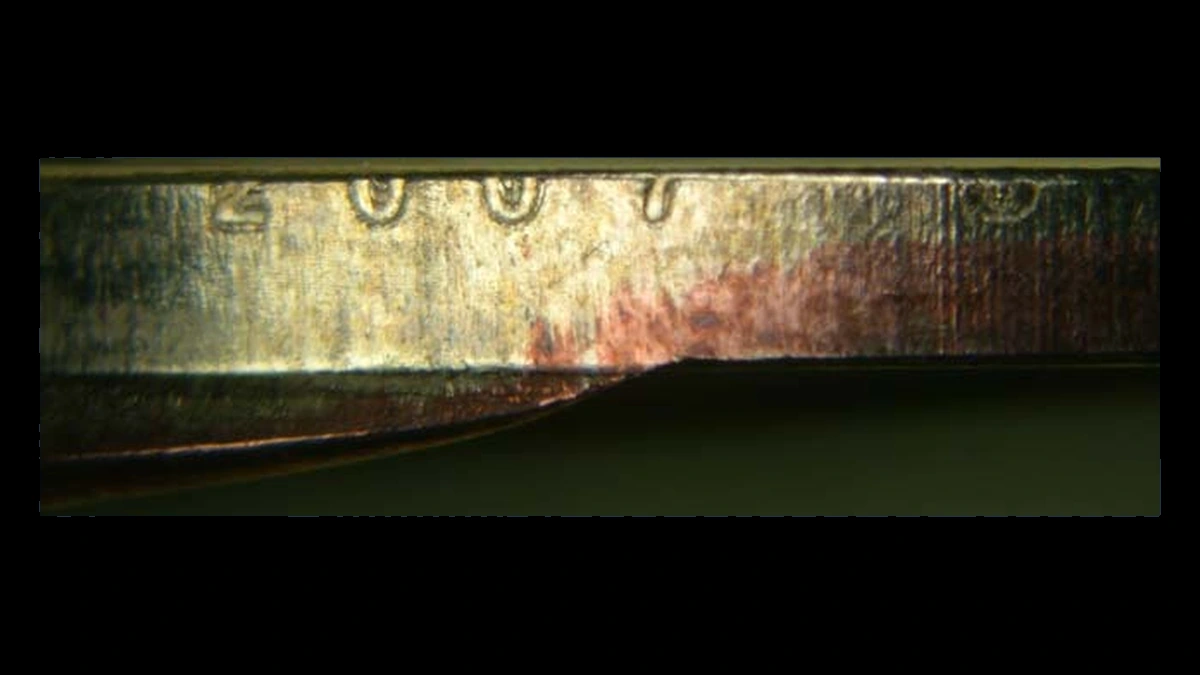
NGC illustrated a 2007-S Madison Proof with its edge inscription unusually high beside a projecting metal lip. Part of the edge was not constrained in its intended position during the strike.
The collar is the ring that controls the blank’s spread. On this Proof it also formed the edge letters, tying their position to the distorted metal.
How to Identify
Locate the date’s height between the two rims, then follow that section to the projecting lip. The displaced letters and lip should belong to the same original edge.
Compare with a normal Madison S Proof and inspect for rolled or bent rims caused later. One tall rim alone does not establish this collar error.
What It’s Worth
$250–$2,000 is estimated for authenticated Madison Proof partial-collar examples. Visible distortion and preserved collector surfaces matter, and an ordinary dollar with high lettering requires a different process-based comparison.
6. 2007 Dollar A Thick Side and a Thin Side: Tilted-Die Proof Error
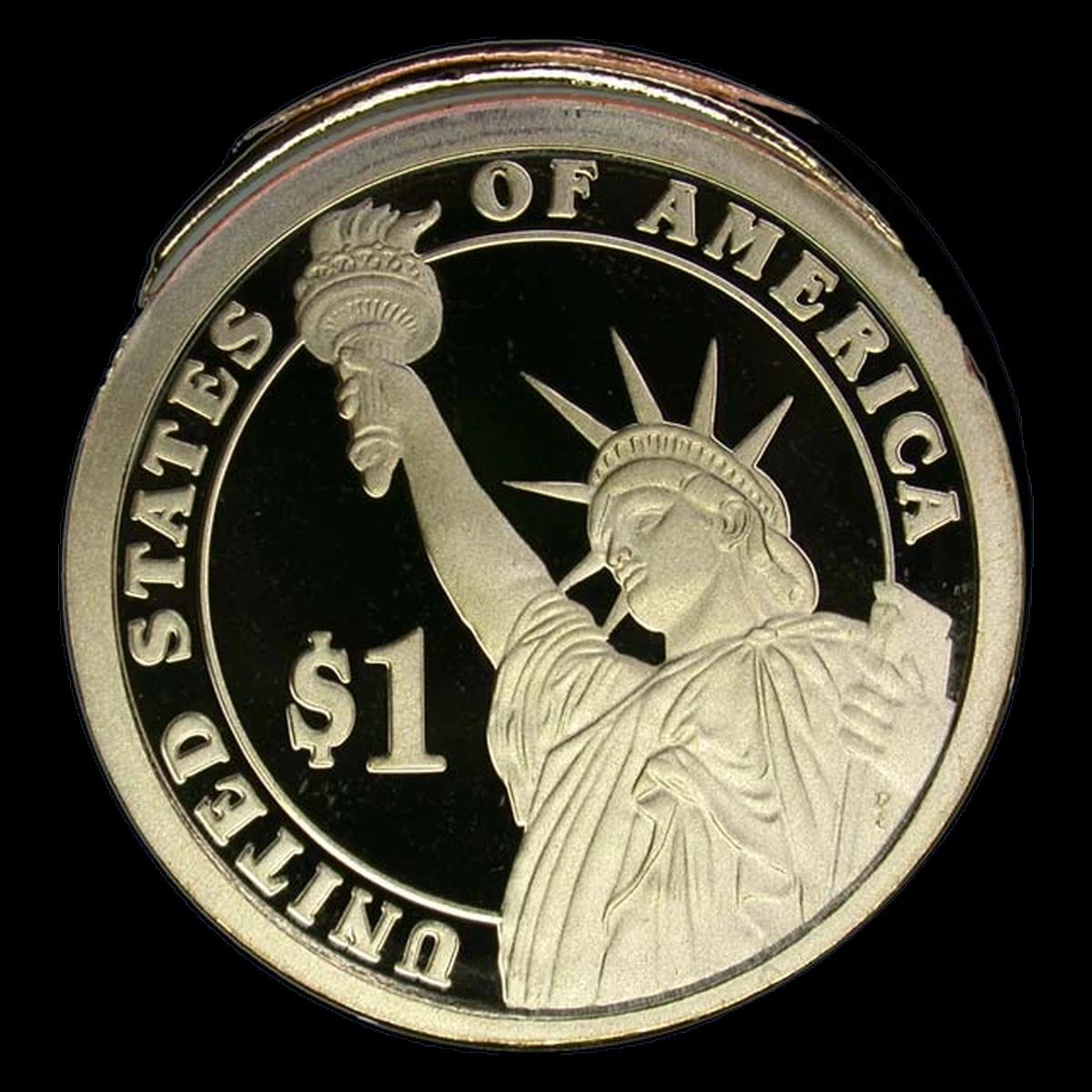
NGC documented wedge-shaped 2007-S Washington and Adams Proofs. Dies that were not level with one another produced uneven thickness, sometimes allowing metal to escape into a gap and form a high distorted rim.
How to Identify
View the edge from opposite directions to confirm that the same side remains thicker. A single angled photograph can make an ordinary rim appear unusually tall.
Check both faces for the relationship between the design, wedge, and projecting metal. A later bend may leave contact scars or distort the whole plane in a different way.
Keep holders sealed and avoid squeezing a projecting rim. Any safe thickness measurement on a loose coin should record opposite positions consistently.
What It’s Worth
$300–$3,000 is estimated for an authenticated wedge-shaped presidential Proof. The estimate assumes the shape formed during striking, with condition and the extent of distortion affecting the result.
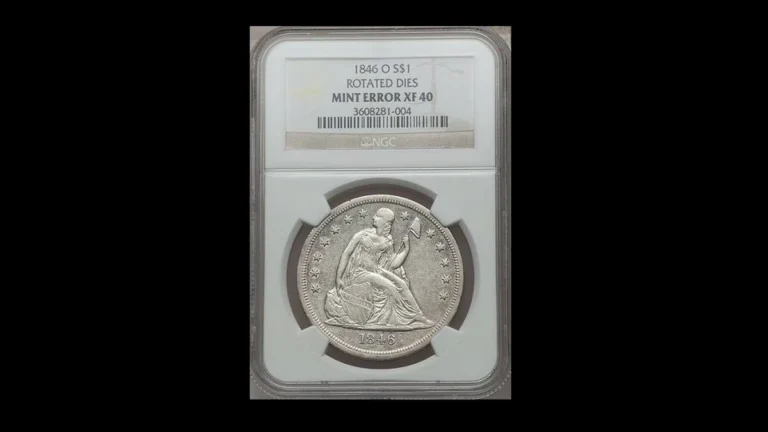
7. 2007 Dollar The Statue Turns after a Vertical Flip: Rotated Dies Error
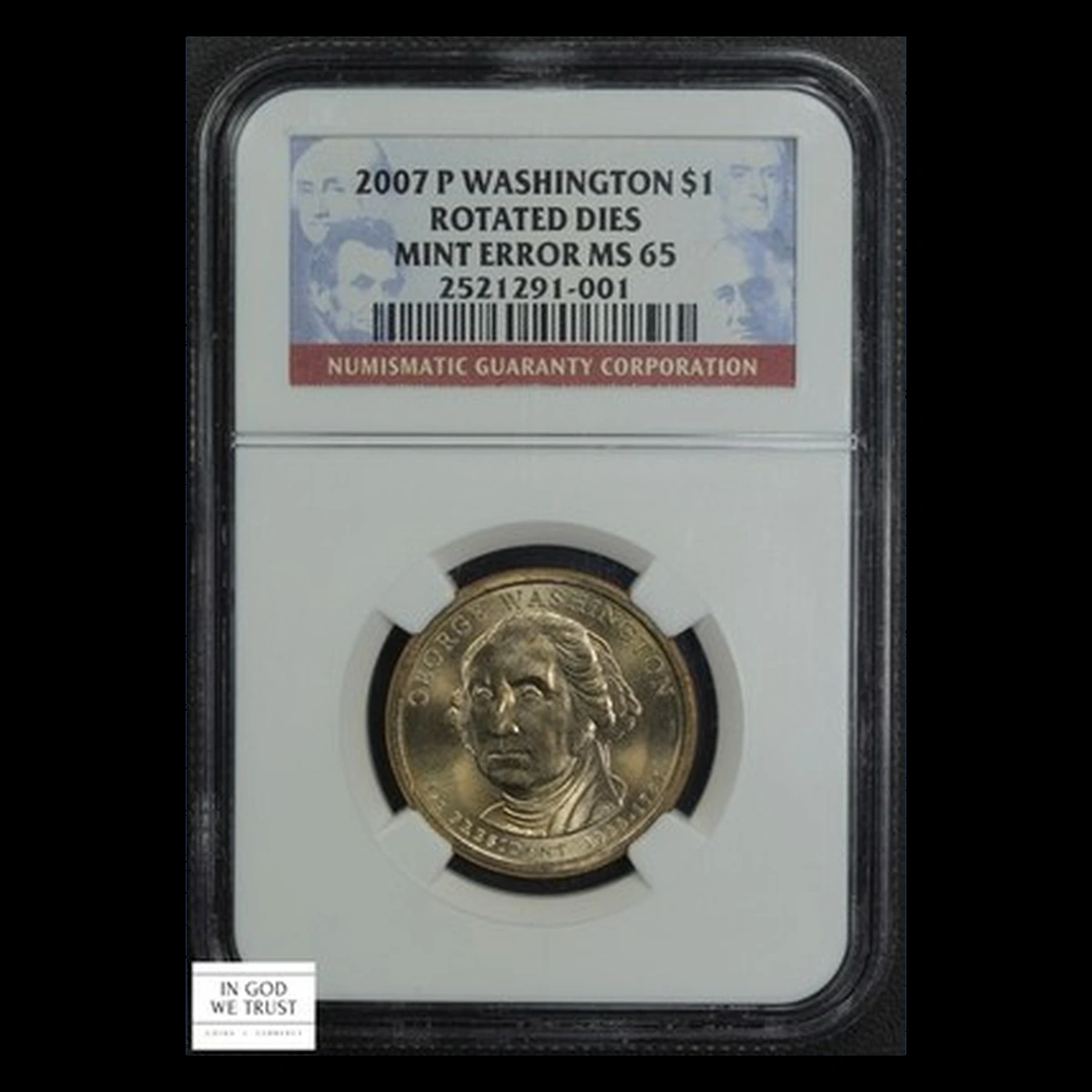
A Washington dollar documented by NGC has an abnormal relationship between the orientations of its two faces. The report does not supply one rotation angle that applies to every candidate.
How to Identify
With Washington upright, flip the coin top to bottom without twisting sideways. Liberty should finish upright under normal coin alignment.
Repeat the motion to confirm the same tilt, then record the actual angle. Independently straightened photographs hide this relationship, and the direction of the edge inscription does not measure it.
What It’s Worth
$50–$1,500 is estimated for a substantial confirmed rotation. A pronounced tilt is a different comparison from a slight deviation, and the test cannot reveal which individual die moved.
8. 2007 Dollar A Crown Point Reaches the Arm: Elongated Ray Error
On the recognized 2007-P Washington variety, Liberty’s third crown ray extends to her raised arm, bridging the usual gap. PCGS recognizes it with either ordinary edge-letter orientation.
Its exact origin has been debated. The extended existing ray is the useful observable feature, rather than an assumed cause.
How to Identify
Compare the third ray with an ordinary Washington reverse at the same angle. Follow the continuation into the arm to establish that it belongs to the raised design.
A scratch across the gap or an additional clash line is different from lengthening the ray itself. Confirm the P on the edge as part of the variety match.
What It’s Worth
$25–$500 is estimated for the elongated-ray variety. PCGS records an ICG MS67 example at $77 in an August 2011 GreatCollections auction.
9. 2007 Dollar A Second Edge at the Crown-Arm Junction: Doubled Die Error
The second crown ray’s junction with Liberty’s raised right arm can carry a small repeated outline. This detail was duplicated in the die before the coin received its strike.
Catalogs list examples for all four presidents, including ordinary Philadelphia and Denver Washington coins and a Philadelphia satin-finish type. Sharing a reverse design does not make them one interchangeable variety.
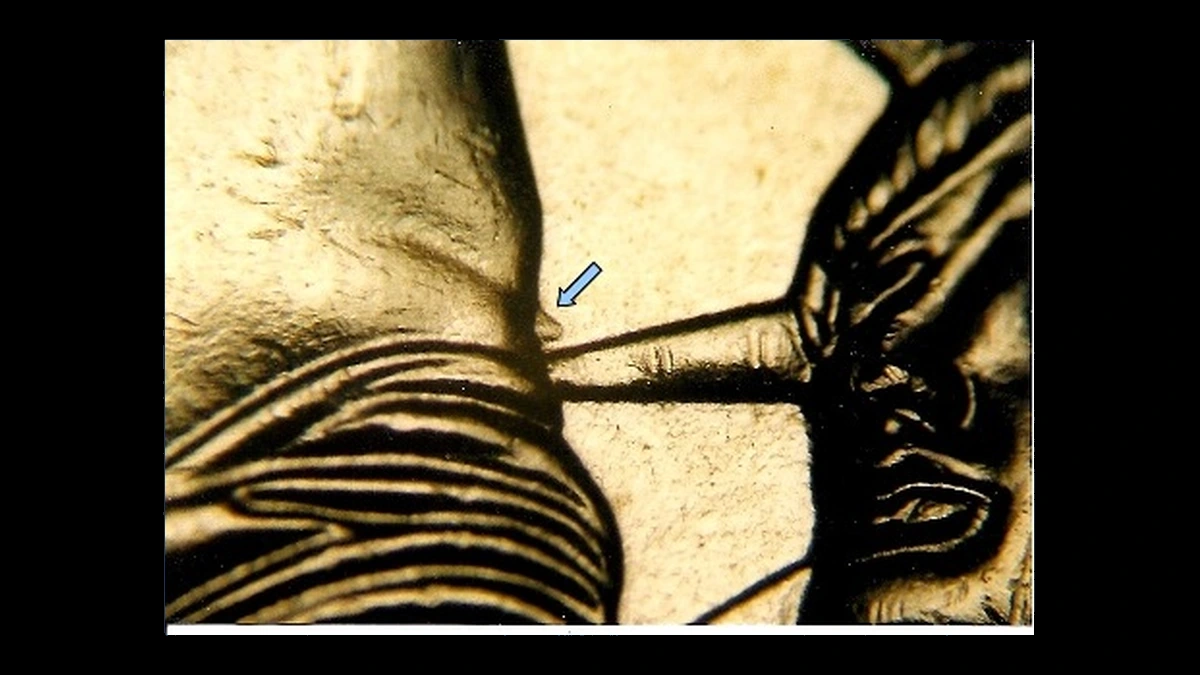
How to Identify
Read the president and edge mint letter, then select the corresponding catalog view and finish. Count clockwise from the head to the second ray and examine that exact junction.
Match the extra contour under several light directions. A flat mechanical shelf or transferred clash outline requires a different explanation from the listed doubled detail.
What It’s Worth
$20–$400 is estimated for correctly matched doubled-design examples. The higher end requires a clear pattern and desirable preservation, rather than thick-looking detail or a high grade alone.
10. 2007 Dollar Opposite-Face Traces near the Eye or Crown: Die Clash Error
Documented Washington clashes show linked marks near the eye and reverse locations between the dollar sign and numeral, beside the crown, and below the jaw. Contact between the dies without a blank transferred design traces into the tools.
Later coins reproduced those unwanted outlines. Subsequent die polishing can weaken parts of the pattern.
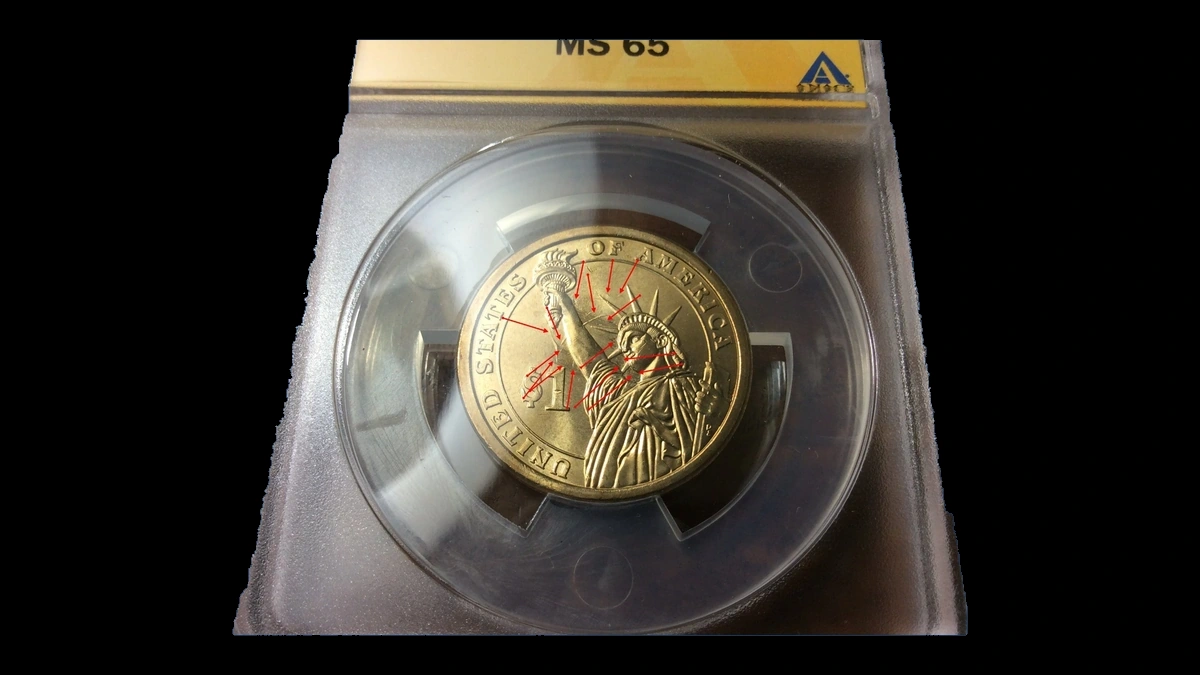
How to Identify
Compare same-sized photographs of the two faces and identify the opposite design that explains a suspect contour. Connected curves or multiple related marks are more informative than an isolated line.
Use an ordinary reverse as a reference for the crown itself. An apparent extra point does not establish a clash or the elongated third-ray variety without the appropriate pattern.
What It’s Worth
$20–$250 is estimated for recognizable Washington clashes. Clear connected traces offer a stronger comparison than fragments softened by wear or tool polishing.
11. 2007 Dollar A Ridge or Lump Interrupts the Design: Die Cracks and Chips Error
Reported features include a reverse crack near 2 o’clock on a 2007-S Jefferson Proof, a chip inside an S of STATES on Washington, and a Madison rim break above I in AMERICA. These belong to separate coins.
Metal filled openings in the damaged dies, producing raised lines or masses. Their locations and extent depend on the particular tool.
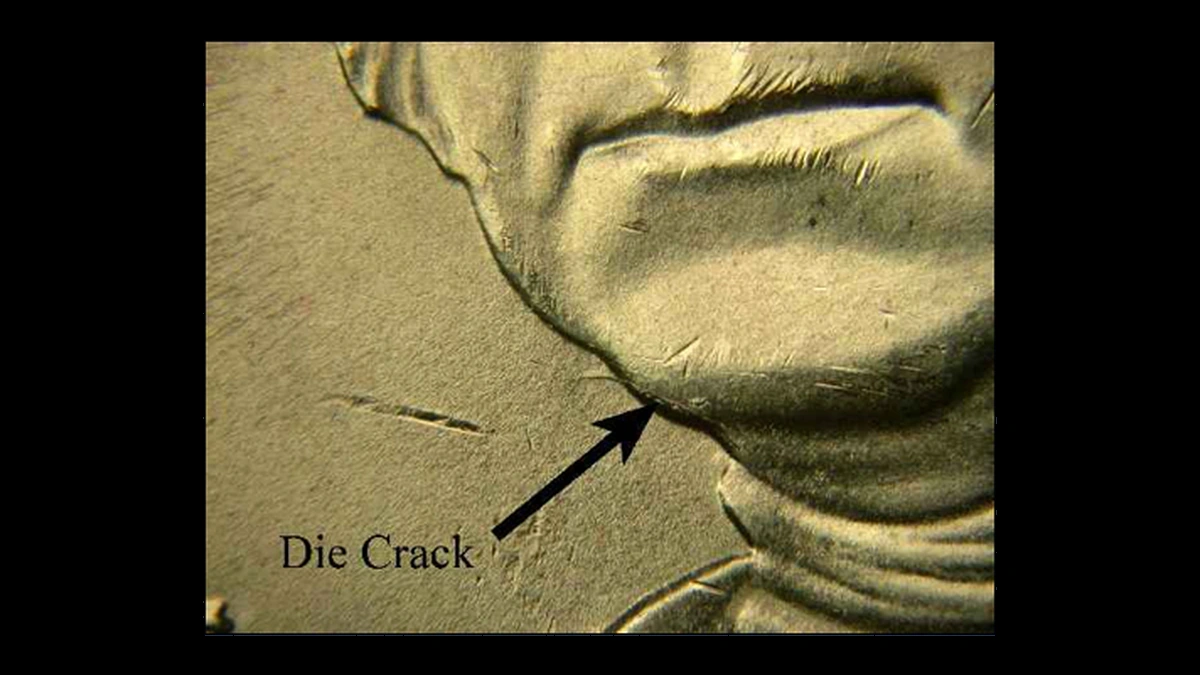
How to Identify
Establish the president and finish before choosing one of those landmarks. Use side lighting to distinguish a raised ridge from a scratch with an incised center.
On Madison, verify that the mass above I actually reaches the rim. An interior chip enclosed in a Washington letter is a different kind of break, even though both came from tool damage.
What It’s Worth
$5–$300 spans the supplied estimates: $5–$50 for small ordinary cracks or chips and $50–$300 for stronger rim breaks or identified Proof cracks. Dirt and later displaced metal are not comparable mint-made features.
12. 2007 Dollar Missing Detail or an Impressed Texture: Strike-Through Error
Washington reports include blocked detail and wrinkled grease impressions near the dollar value and Liberty’s right sleeve. One such coin also carries separate clash marks.
A Jefferson satin-finish example instead has a long front impression from 12 o’clock toward his left eyebrow. Material between the die and blank interrupted the normal strike in those affected areas.
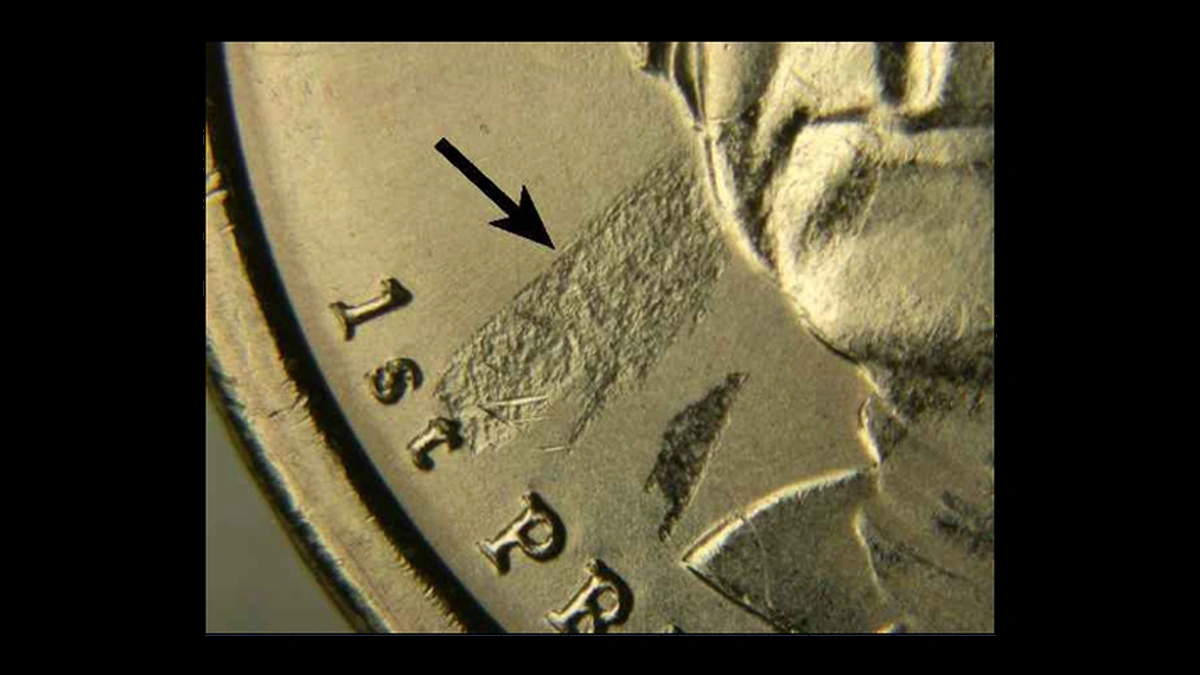
How to Identify
Trace the boundary between the impression and normally formed design. Check for original struck texture rather than the sharp cut or disturbed metal of a later scratch.
Match the location to the correct president and specimen. Retained material should remain untouched, and an unknown obstruction need not be named to document its physical effect.
What It’s Worth
$15–$800 is estimated across the supplied strike-through appearances. A historical dealer asked $85 for the Jefferson satin-finish example, which is an offer rather than a confirmed sale.
13. 2007 Dollar Unusual Dark Color on Struck Surfaces: Improper Annealing Error
Heating the metal before striking is called annealing, and problems with that treatment can alter its surface color. Reports cover Philadelphia and Denver Washington, Philadelphia Adams, Denver Jefferson, and Denver Madison dollars.
An ICG MS66 Madison was listed with a sintered-planchet description, a term used for this reported surface problem. Color alone cannot distinguish it from chemicals, burial, later heating, or coatings.
How to Identify
Compare both faces and the edge with a normal dollar in neutral light. Inspect for residue, corrosion pits, flaking coatings, or rubbing through an added surface.
The original design and surface texture should remain beneath the color. Have the cause assessed professionally before assigning an annealing error to a dark coin.
What It’s Worth
$30–$400 is estimated for professionally identified treatment errors. A different-year 2009-P Native American dollar with improper annealing, graded NGC MS64, sold for $61 in November 2011.
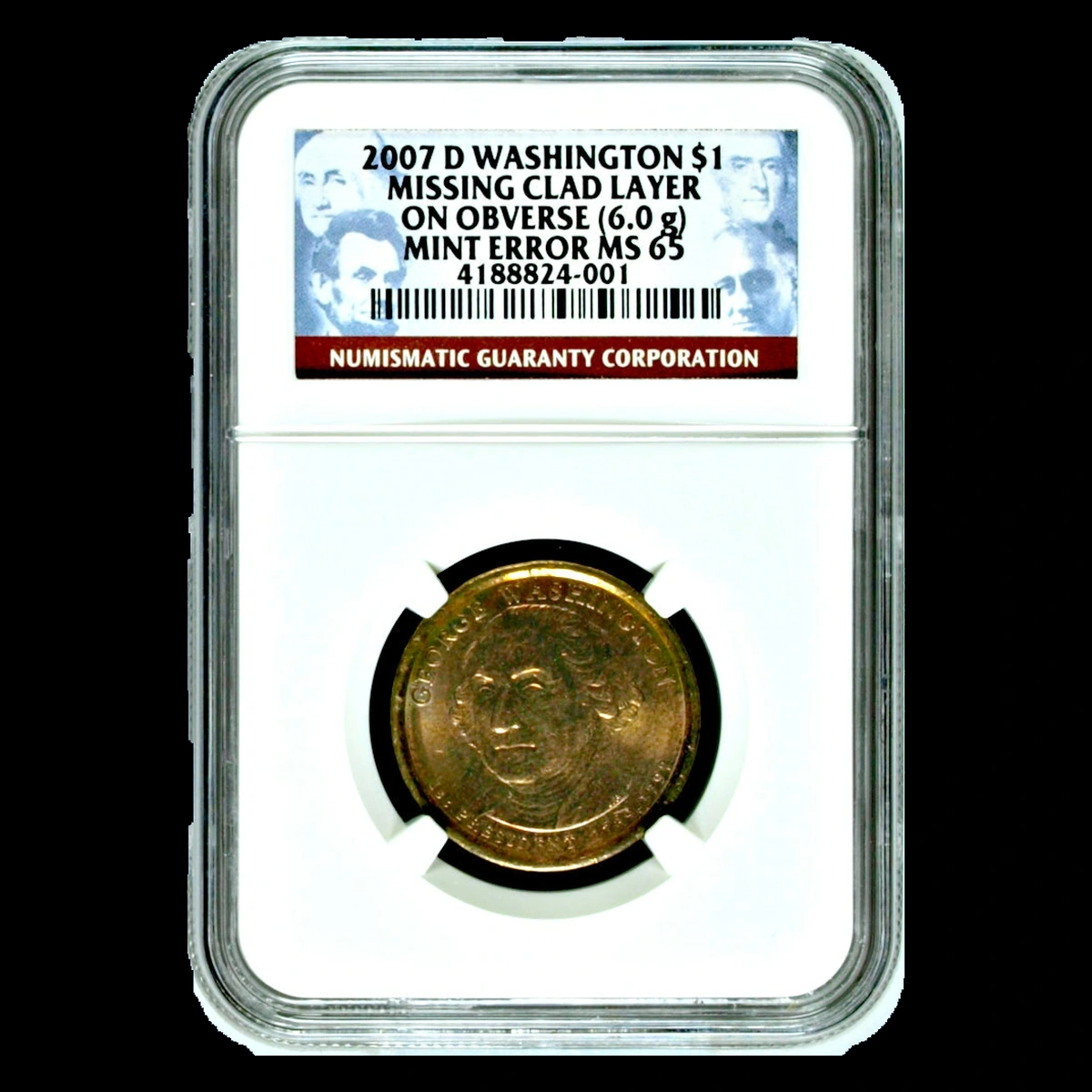
14. 2007 Dollar A Copper Face and Lost Outer Metal: Missing Clad Layer Error
These dollars have a copper center bonded to golden-colored alloy layers, not gold plating. Losing an outer sheet can expose a reddish face and reduce the coin’s weight.
Reports cover all four presidents, with separate front and reverse losses and some combinations with missing edge letters. Washington examples include Philadelphia front-layer loss and Denver reverse-layer loss.
How to Identify
Compare the exposed face with its adjoining edge to find an absent layer boundary. Check the remaining struck design for scraping, corrosion, or a colored coating.
A complete missing sheet should reduce the standard dollar weight, but artificial removal can do so too. A holder’s printed standard specification is not a measured weight for the coin inside.
What It’s Worth
$300–$4,000 is estimated for authenticated layer losses. A historical dealer asked $1,150 for a Philadelphia Washington front-layer error in PCGS MS63.
That amount was an asking price. Where edge lettering is also missing, value the combined coin once rather than adding separate estimates.
15. 2007 Dollar A Curved Section Missing from the Outline: Clipped Planchet Error
Reports of curved clips span all four presidents. PCGS confirmed two Denver Jefferson examples with about 3.5% missing, while Adams reports include larger gaps and a Philadelphia Madison example weighs 7.0 grams.
The blanking punch overlapped an earlier hole in the metal sheet, leaving an incomplete disk. Missing edge letters alongside the gap can accompany that same incomplete shape.
How to Identify
Inspect the notch for original blank surfaces and naturally affected rim or design. Fresh cutting scars, file lines, or lettering sliced through afterward point toward alteration.
Opposite-rim weakness can support a clip but varies among genuine coins. Reduced weight documents missing metal without, by itself, showing when that metal disappeared.
What It’s Worth
$75–$1,500 is estimated for authenticated clips. Compare the actual missing portion and preservation, since a small Jefferson gap does not inherit a range position appropriate to a much larger Adams clip.
16. 2007 Dollar Blank Faces with a Readable Date on the Edge: Lettered Planchet Error
A prepared disk can miss the face strike yet reach the edge-lettering equipment. PCGS reported a 2007-D example with an already raised rim and both mottoes on its otherwise unstruck form.
NGC also illustrated weak lettering on an unstruck blank. Being discovered in a Washington roll does not supply a Washington design to either blank face.
How to Identify
Read the date and mint letter first, then inspect both faces for original blank texture. Ground-down portraits, residual letters, and polishing tracks are inconsistent with simply missing the face strike.
The prepared rim, normal dimensions, and genuine edge text should agree. A wholly unlettered dollar blank needs separate evidence before it can be assigned to 2007.
What It’s Worth
$500–$4,000 is estimated for genuine dated, lettered blanks. Readable edge text and original face surfaces matter; no presidential portrait premium can be derived from a design that is absent.
17. 2007 Dollar Overlapping Images on Expanded Metal: Multiple Strikes Error
Washington examples include broad expanded pieces, some flipped before another blow. Without restraint from the collar, successive strikes can spread the metal as well as repeat the picture.
A separate Adams combines a second strike 20% off center, a 5% clip, and absent edge letters. An S Jefferson Proof instead shows rotated repeated detail around the front words, back of the head, and Liberty’s arm.
How to Identify
Map two substantial versions of design elements across the coin. A coherent displaced picture is different from a tiny doubled edge or the normal aligned repeated blows used to make Proofs.
A flip between blows can place front and reverse details on the same face. For expanded Washington pieces, confirm natural spread rather than treating “half-dollar size” as an exact measurement.
What It’s Worth
$300–$5,000 is estimated for these compound strikes. Historical dealer asks were $1,650 for a Washington multiple strike, $2,300 for a flipped expanded Washington, and $3,250 for the clipped Adams.
Those offers were for separate whole coins, not verified auction results. Their component errors should not be added together as separate purchases.
18. 2007 Dollar Adams Lettering on a Tiny Irregular Fragment: Struck Feeder Finger Error
A documented aluminum machine fragment received two strikes from Adams dollar dies. The surviving second-president wording identifies Adams, while repeated STATES demonstrates the additional blow.
The PCGS MS64 fragment weighs nine grains, about 0.58 gram. It came from a feeder finger that moves blanks through the machinery, rather than being an ordinary dollar with aluminum attached.
How to Identify
Read the recognizable wording and overlapping STATES before interpreting the irregular shape. Examine the sides and metal to distinguish a struck machine fragment from a cut-down coin or an engraved scrap.
The nine-grain measurement belongs to the documented object. Its absent edge inscription does not establish a mint, and appearance alone does not verify aluminum.
What It’s Worth
$1,500–$7,500 is the supplied estimate for this rare type. The identified Adams MS64 fragment sold for $2,300 at Heritage in September 2009.
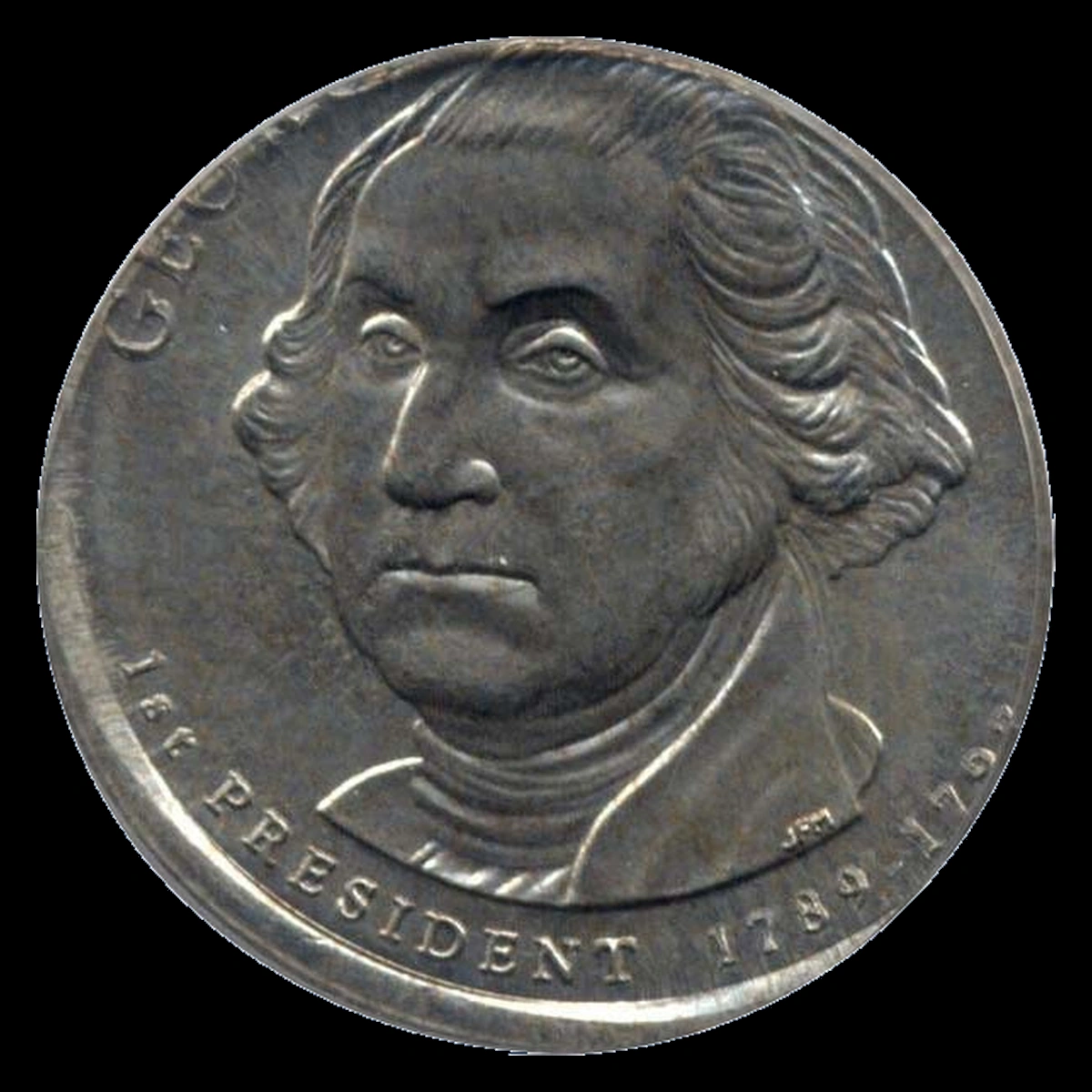
19. 2007 Dollar Dollar Designs on an Unused Five-Cent Blank: Wrong Planchet Error
A specialist survey identifies a Washington dollar on a nickel blank in PCGS MS66. Its smaller disk cannot hold the entire dollar image, so outer design ends beyond the available metal.
This blank had not already received a nickel design. That separates it from the finished-nickel overstrike discussed next.
How to Identify
Normal nickel-blank references are about 5.00 grams and 21.2 millimeters, rather than the dollar’s larger standard. These are reference specifications, not supplied measurements of the recorded MS66 coin.
Assess the actual metal, dimensions, and the way dollar details run beyond the edge. Later trimming can reduce size but does not reproduce the original strike on a smaller blank.
Look for older nickel detail as part of that examination. Without readable edge mint lettering, neither the portrait nor silvery color supplies a mint attribution.
What It’s Worth
$5,000–$15,000 is estimated for an authenticated Washington dollar on a nickel blank. The $17,625 finished-nickel overstrike is a related comparison with an additional earlier design, not a sale of this blank error.
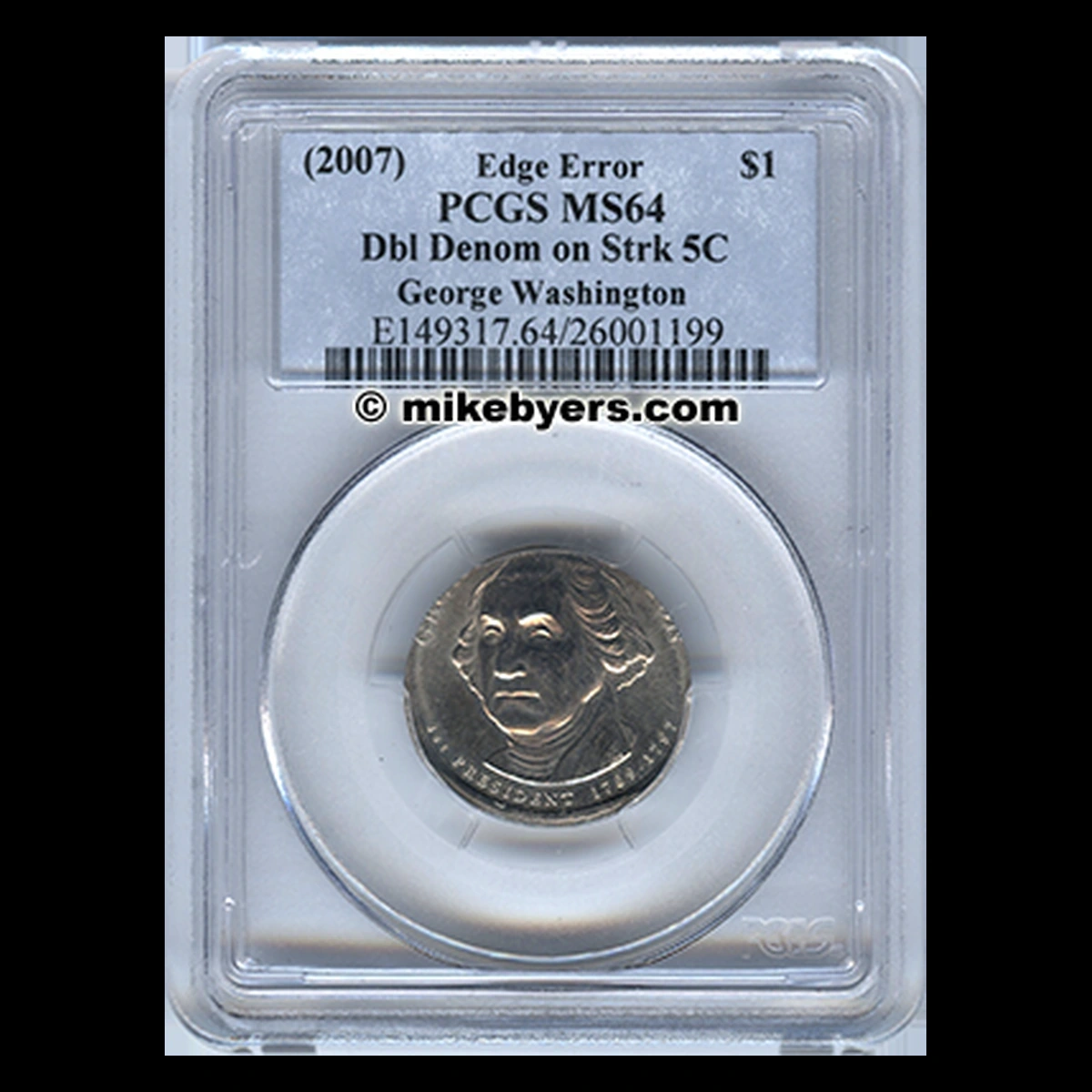
20. 2007 Dollar Nickel Details beneath Washington: Double-Denomination Overstrike Error
The documented example retains an earlier nickel design below PRESIDENT 1789 and above the torch and OF AM. A finished Jefferson nickel entered the dollar press and received Washington’s design over its original images.
The dollar strike shifted slightly toward 12:30, preserving Washington’s complete portrait while losing parts of his name and UNITED at the edge. Both the small disk and the overlapping pictures help explain the object.
How to Identify
Identify coherent earlier nickel detail on both faces instead of accepting random marks as an underdesign. Follow where the dollar image flattened or displaced it to establish which strike came later.
The metal and dimensions can support a nickel origin, but normal specifications cannot substitute for actual measurements. Surviving nickel images distinguish this from the unused-blank error.
What It’s Worth
$10,000–$25,000 is estimated for comparable authenticated pieces. The Washington-over-nickel dollar in PCGS MS64 brought $17,625 on January 6, 2016.
That historical benchmark concerns an unworn coin with some marks and recognizable earlier design. It is not a guaranteed result for a different overstrike.
Conclusion
A complete edge record resolves many of the easiest mix-ups: missing words, shifted spacing, repeated text, and the Proof-only order problem describe different evidence. Front and reverse orientation needs its own controlled flip.
For major metal and striking errors, keep measurements and surviving designs attached to the exact specimen. A dealer offer, an auction result, and a broad estimate each provide different information about what a complete coin may be worth.