Rare 1806 Quarter Errors (List & Pictures)
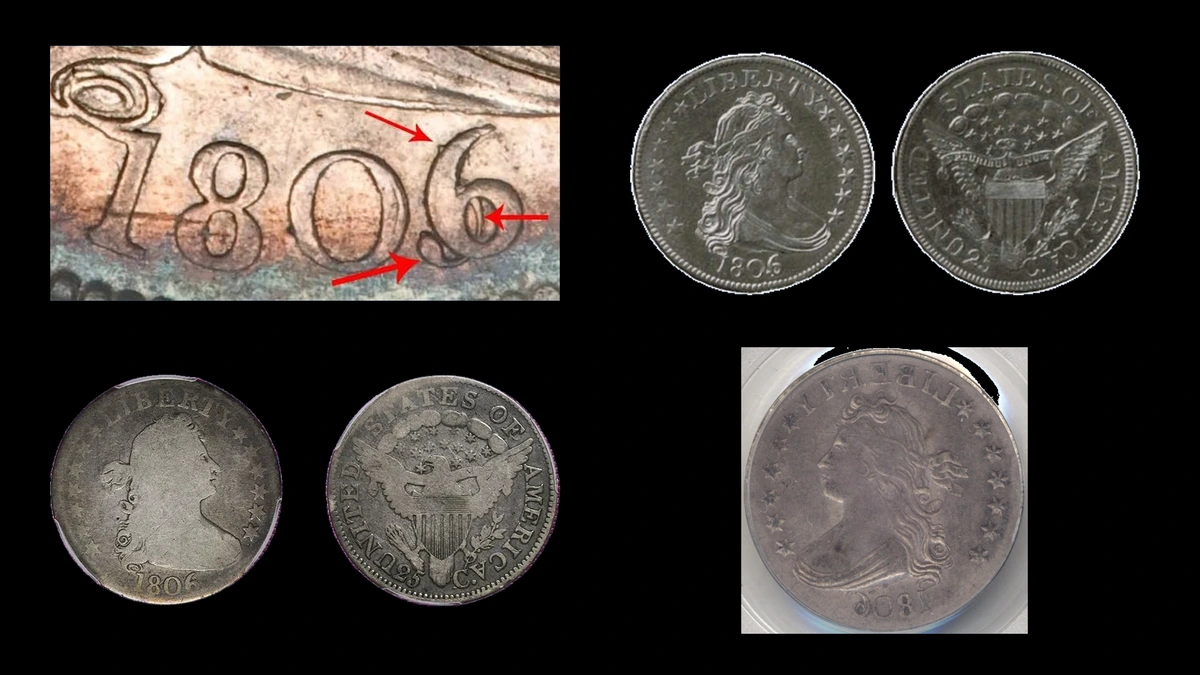
The final date digit is a practical starting point for 1806 quarter errors: a surviving 5 beneath the 6 identifies an overdate, including the exceptional MS66 coin that sold for $188,000 in May 2015. Whole-coin estimates across this guide run from $200 to $200,000.
Inspect the date, relationship between the faces, raised marks, and outline in that order. Several proposed blank and striking errors remain unconfirmed for this year, so their values are conditional estimates.
| Inspection area | What it may reveal | Evidence status |
|---|---|---|
| Final date digit | 1806/5 overdate | Documented |
| Face alignment and extra designs | Rotation, misalignment, double strike, or brockage | Documented examples or historical descriptions |
| Branch, letters, and rim | Clash marks or die breaks | Several identified die varieties |
| Expanded or incomplete outline; wrong metal | Possible broadstrike, clip, off-center strike, or wrong blank | No confirmed 1806 example supplied |
1. 1806 Quarter A 5 remains beneath the 6: overdate Error
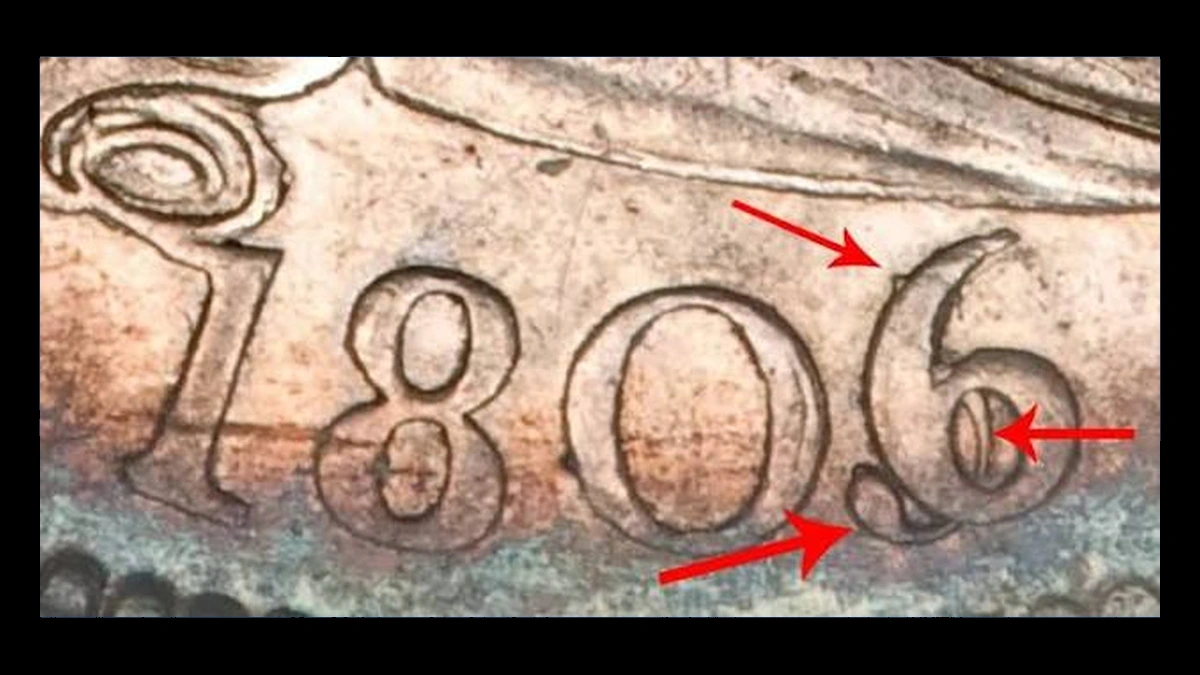
The 1806/5 Browning-1 quarter carries traces of the earlier digit, including its lower loop. Browning numbers identify particular pairings of the dies used to strike early quarters.
The Mint changed a die previously used for 1805 so it could strike coins dated 1806. This altered tool produced the overlapping digits; the coin itself was not necessarily struck twice.
How to Identify
Keep the entire date visible while examining the interior and lower part of the 6. Compare the surviving 5 with a clear authenticated example rather than identifying the variety from one isolated curve.
Check that wear continues naturally across the date and that no scratched channels or disturbed metal surround the digit. Confirm the reverse denomination 25 C, since other denominations also have an 1806/5 date.
What It’s Worth
$250–$200,000 is the supplied range from worn, identifiable overdates through exceptional unworn coins. PCGS records $188,000 in May 2015 for the MS66 Pogue example.
That record reflects outstanding preservation as well as the variety. A readable old 5 on a heavily worn or cleaned quarter does not place it near the record coin.
2. 1806 Quarter The eagle tilts after a straight flip: rotated dies Error
A coin’s two pictures can be correctly centered yet have the wrong angular relationship. Heritage described an ANACS Good 4 Browning-4 quarter with about 30 degrees of counterclockwise rotation.
The heavily worn grade does not prevent that relationship from being measured. A separate Browning-5 described as slightly rotated has no supplied numerical angle.
How to Identify
Set Liberty upright and flip the coin or holder from top to bottom without twisting sideways. On a normally aligned United States coin, the reverse finishes upright.
Repeat the movement and record the eagle’s direction and angle. A continuous recording of a sealed holder is more reliable than two photographs that may have been rotated independently.
Use the approximately 30-degree counterclockwise description only for the documented Browning-4 relationship. Every other candidate needs its own observation.
What It’s Worth
$200–$3,000 is the estimated whole-coin range for circulated quarters with clear rotation. Condition, die variety, and the size of the angle all affect the comparison.
The supplied Browning-4 description establishes an alignment rather than an auction price. A slight apparent tilt in an independently positioned photograph offers little evidence of extra value.
3. 1806 Quarter Only the portrait is shifted: misaligned die Error
The front of a documented Browning-5 sits about 2%–3% off its normal position while the eagle side remains centered. One die was displaced relative to the other.
This relationship is different from a blank lying off center between both dies. The PCGS VG8 example also has a reverse crack reaching the second feather of the left wing.
How to Identify
Compare opposite rim spaces on the portrait side, then make the same comparison around the eagle. Keep the complete physical rim visible so cropping cannot imitate a shift.
The known Browning-5 also has the E in LIBERTY unusually high above B. That letter relationship and the left-wing crack help identify the variety without explaining away the centered reverse.
What It’s Worth
$500–$5,000 is the supplied estimate for circulated examples with demonstrable misalignment. The PCGS VG8 Browning-5 sold for $1,610 at Heritage in January 2005.
The price includes the worn quarter, its variety, and its additional crack. It cannot be counted again as a separate sale of a die-crack error.
4. 1806 Quarter Unfamiliar shapes surround the branch: clashed dies Error
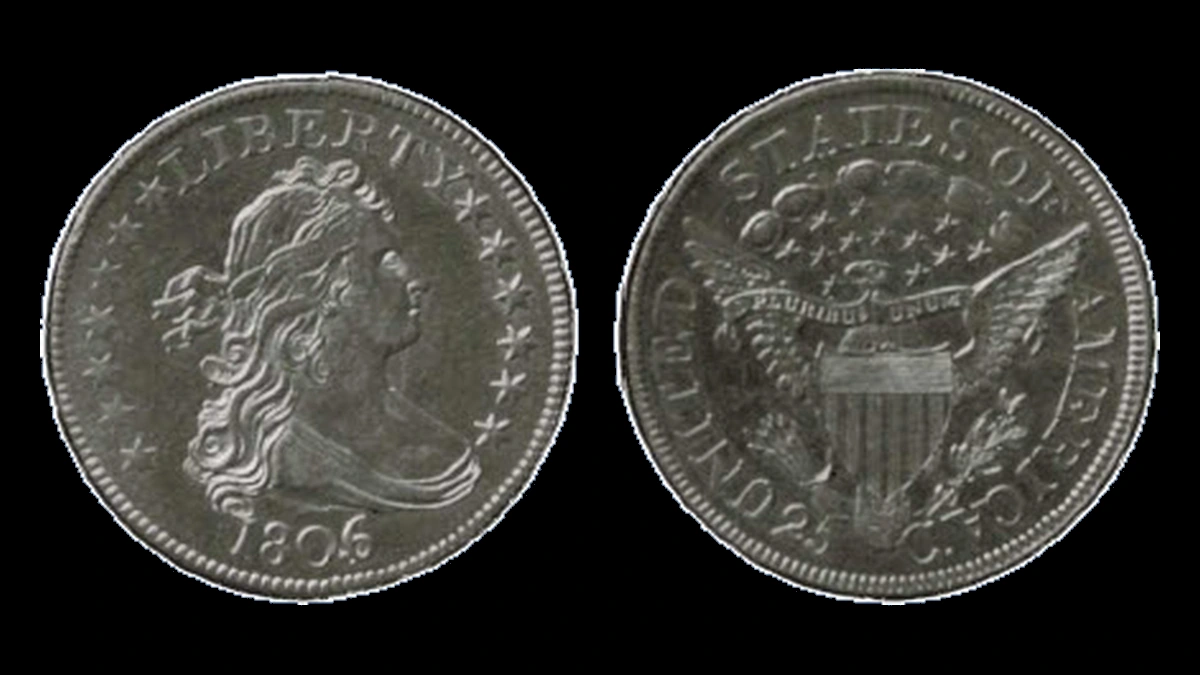
Later states of the 1806/5 Browning-1 reverse can show strong extra traces near the olive branch, berry, and upper leaves. These traces come from the opposite die’s design.
When the dies meet without a blank, their contact can mark one another. Coins struck afterward copy the transferred marks along with their normal design.
How to Identify
First establish the ordinary branch, leaf, and berry outlines from a normal comparison. Then inspect the spaces around them for additional shapes that can be related to the portrait-side design.
A direction alone is not a match: look for the actual transferred shape. A long raised crack or an incuse scratch crossing the same area needs a different explanation.
What It’s Worth
$250–$6,000 is the estimated whole-coin range for worn through attractive lightly worn overdates with recognizable clash marks. The overdate and condition are already included.
The $188,000 MS66 result is not supplied as a sale of this particular clashed stage. Clear transferred shapes make a better comparison than vague marks obscured by wear.
5. 1806 Quarter Raised lines or lumps meet the rim: die cracks and breaks Error
Damage to a die can leave a fine ridge or a larger raised area on the coin. A missing rim-connected piece produces a cud, while a broken piece that remains in place can preserve some design at a changed level.
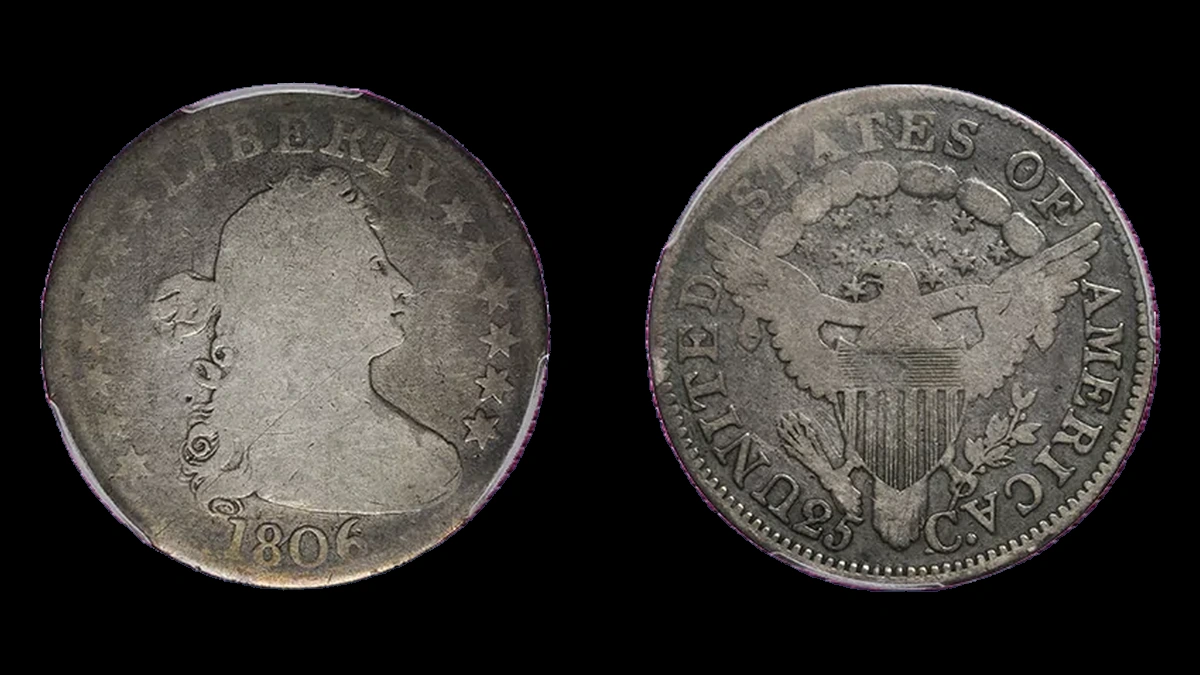
Recorded locations include Browning-2 above T and ATES, Browning-5 above Y, and Browning-6 above ST. These are different die varieties, not a checklist of marks expected on one quarter.
How to Identify
Choose the comparison by the adjacent letters and consult the John Reich Collectors Society’s illustrated late die states. Follow the raised boundary to the rim and examine whether any design survives on the affected portion.
The narrower Browning-5 reverse crack runs from about 10 o’clock toward the second left-wing feather. A separate report of Browning-8 breaks near 25 and UN lacks the same illustrated confirmation in the supplied material.
A rim dent can push metal sideways but does not reproduce the same die-break boundary. Light from different directions helps separate a ridge from a cut or impact.
What It’s Worth
$250–$20,000 is the estimated range for circulated quarters, from modest cracks to desirable larger breaks. A scarce die variety can account for a substantial part of the total.
The $1,610 misaligned Browning-5 also carries its left-wing crack. That single transaction does not supply independent prices to add together.
6. 1806 Quarter LIBERTY and the stars repeat: double strike Error
A historical Browning description records an almost-unworn 1806/5 quarter with a second impression most apparent in LIBERTY and some stars. Two blows, with movement between them, can leave such overlapping raised designs.
The account gives neither a displacement percentage nor evidence that the coin turned over. Those details should remain unspecified.
How to Identify
Compare repeated letters with the nearby star points to see whether they share one coherent second position. The later blow may flatten portions of the earlier design.
Examine the reverse for supporting overlap, but require opposite-face pictures before proposing a flipover. The old 5 under the 6 has a separate die-making cause and does not alone prove two strikes.
What It’s Worth
$3,000–$30,000 is the supplied estimate for genuine double-struck examples from circulated through lightly worn condition with a readable overdate. Separation and clarity of the repeated designs are important.
The historical description supplies no completed sale for that particular quarter. A strong second design and faint repetitions around a few letters need different comparisons.
7. 1806 Quarter One picture is backward and sunken: brockage Error
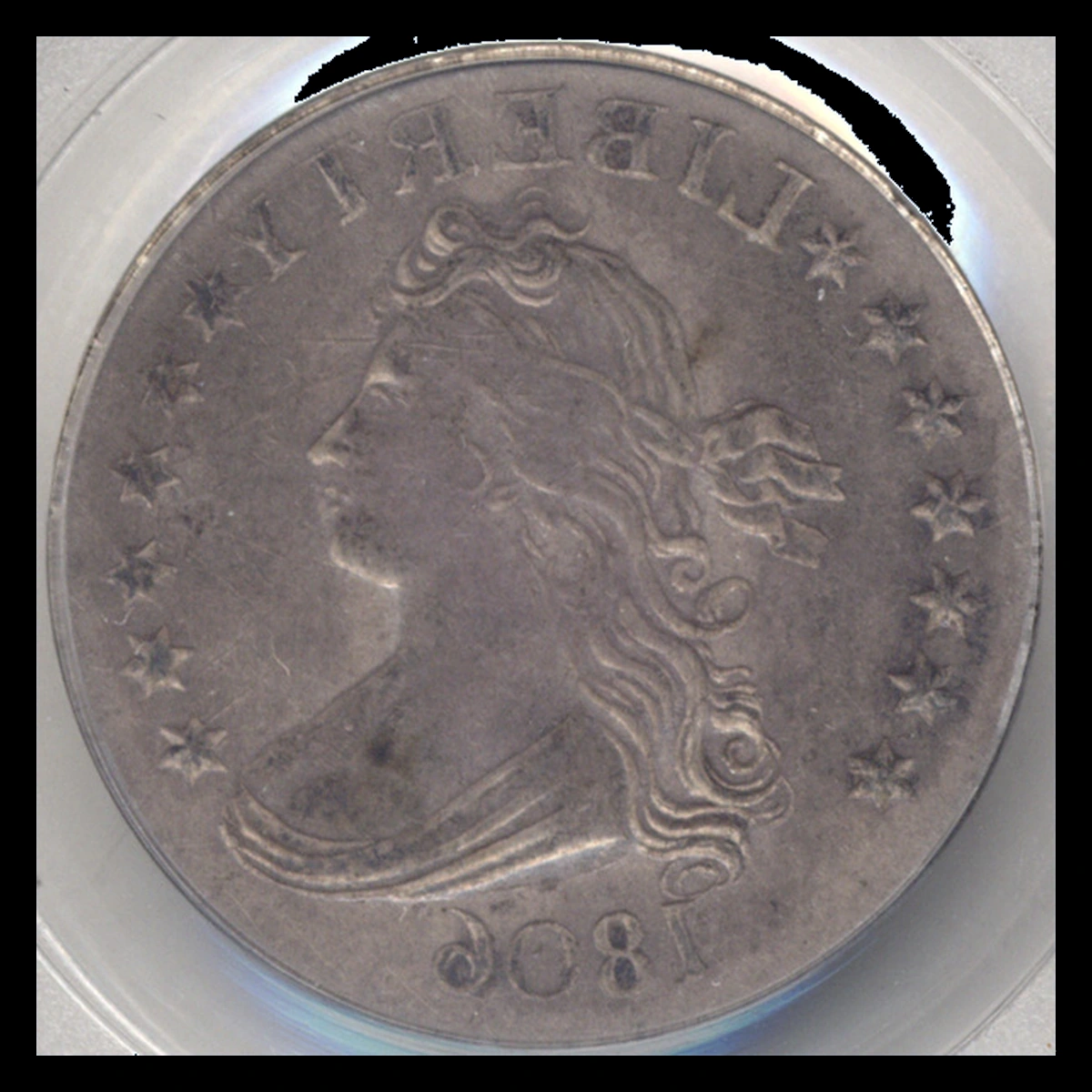
A brockage can replace one face with a recessed mirror copy of the other design. A previously struck coin trapped in the press acts as the surface that impresses the next blank.
Two PCGS VF30 quarters handled by Mike Byers demonstrate opposite brockage faces. One is attributed through the 1806 Browning-2 reverse die; the other retains the 1806/5 Browning-1 front.
How to Identify
Check that the backward letters sink into the surface and correspond to the normally raised design. A mirror photograph can help read them, while angled lighting establishes their depth.
The Browning-2 example lacks a normal dated portrait, so its reverse die match establishes the year. The other coin offers the overdate as a different route to identification.
These two pieces are not described as a matching pair that struck one another. Their full surfaces and edges must also rule out a later squeeze between coins.
What It’s Worth
$25,000–$100,000 per coin is the supplied editorial estimate for comparable authenticated early-quarter brockages. The dealer’s record marks the quarters sold without disclosing their transaction amounts.
It also cites a $20,700 Capped Bust dime brockage as a historical comparison. That is a different denomination, not the sale price of either quarter.
8. 1806 Quarter An unusually wide outline: possible broadstrike Error
Normal early-quarter borders vary because the original striking method did not constrain metal like a modern tightly collared press. A wide-looking 1806 quarter therefore needs more evidence than a broad border.
The supplied year discussion identifies no confirmed broadstrike. The proposed category requires abnormal spreading while the entire design remains on the blank.
How to Identify
Compare authenticated Draped Bust quarters before treating extra width as abnormal. A complete design and spreading beyond normal production variation must occur together.
For a loose coin, record several diameters and its weight; roughly 27.5 millimeters and 6.74 grams are normal starting figures. Wear and early manufacturing variation affect the comparison, and a sealed coin should remain sealed.
Examine the edge for later hammering or rolling. Those alterations can spread metal without creating a mint error.
What It’s Worth
$1,000–$8,000 is a conditional estimate for a circulated quarter confirmed as abnormally spread during striking. It assumes a readable date, complete design, and an unaltered edge.
No 1806 broadstrike transaction is supplied. A normal wide-border quarter should be valued through its ordinary date, variety, and condition.
9. 1806 Quarter Part of the original blank is missing: possible clip Error
A genuine clipped planchet lacks metal before striking, which can change how the adjacent rim forms. A notch removed afterward may look superficially similar.
No definite 1806 example is established in the supplied discussion. A published examination rejected a supposed 1806/5 clip as an artificial cut.
How to Identify
Inspect the interior of the gap and the approaching rim for evidence of original formation. Parallel saw lines or pushed-up metal favor later cutting.
A genuine clip may weaken the opposite rim, but early-quarter unevenness makes that sign insufficient by itself. Reduced weight also occurs through wear and deliberate metal removal.
What It’s Worth
$1,000–$10,000 is the conditional whole-coin estimate for an authenticated circulated 1806 quarter on a clipped blank. The extent of the clip and remaining preservation would determine a closer comparison.
An artificial cut receives no mint-error premium from this range. It may reduce the value of an otherwise genuine overdate.
10. 1806 Quarter Both designs miss part of the blank: possible off-center strike Error
A true off-center strike places the blank partly outside both dies, leaving missing design and an unstruck region. The supplied 1806 discussion does not establish a confirmed example.
The known Browning-5 with a shifted front and centered eagle is a misaligned-die case. Its two different face positions cannot demonstrate this proposed two-sided error.
How to Identify
Locate genuinely unstruck metal beside the point where the design ends. Check the reverse for corresponding displacement rather than relying on unequal front rim spacing.
Keep both faces at the same image scale and inspect for trimming or clipping. A readable 1806 date must be supported by the surviving digits, not merely a seller’s attribution.
What It’s Worth
$3,000–$15,000 is the conditional estimate for a confirmed circulated example with a readable date. The amount of displacement and the surviving surface would influence its value.
No particular 1806 specimen or displacement percentage is assigned to this range. Losing the date would make the year attribution more difficult.
11. 1806 Quarter The metal or blank dimensions do not fit: possible wrong planchet Error
A wrong-planchet strike would put the quarter design onto a blank intended for another coin. No confirmed 1806 quarter of this type is identified in the supplied material.
An 1827 quarter struck over an older 1806/5 is a different event. The newer coin’s use of an old host does not prove that an 1806 quarter was originally made on the wrong blank.
How to Identify
Consider composition and design fit alongside the dimensions already discussed. A normal quarter of this period contains roughly 89.24% silver.
Unexpected measurements need an explanation that also fits the available design area. Plating, corrosion, filing, and wear can change appearance or weight without identifying another denomination’s blank.
Professional nondestructive testing can clarify metal composition without scratching or applying acid. An attribution needs a consistent blank identity, not just an unusual color.
What It’s Worth
$10,000–$75,000 is a provisional estimate for an authenticated 1806 quarter on a wrong blank. Identifying that blank and confirming the remaining quarter design would be essential before narrowing the figure.
The range is not evidence that such a coin is already documented. It does not apply to an altered normal quarter.
Conclusion
The date and the relationship between both faces provide the strongest starting points for this issue. Follow them with exact letter locations, raised boundaries, and the full edge rather than relying on a dramatic error name.
Several categories here remain conditional for 1806. Keep those possibilities separate from documented overdates, die states, and striking errors, and compare prices only after the coin’s actual identity and preservation are established.