Rare 1862 Quarter Errors (List & Pictures)
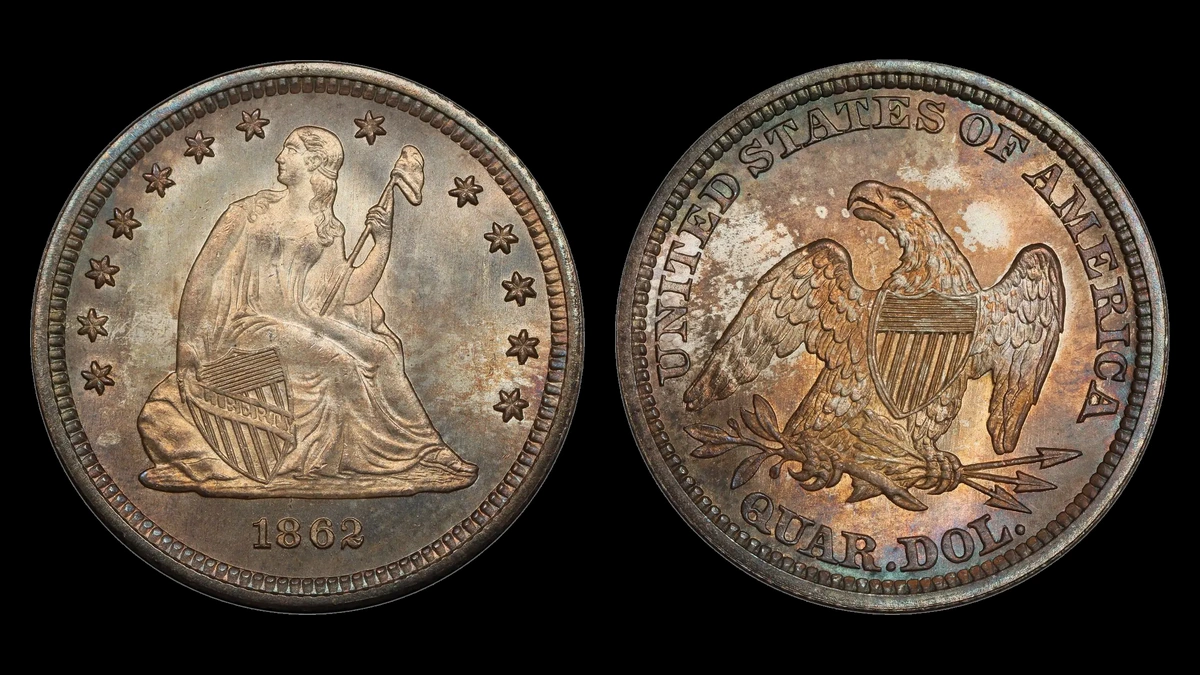
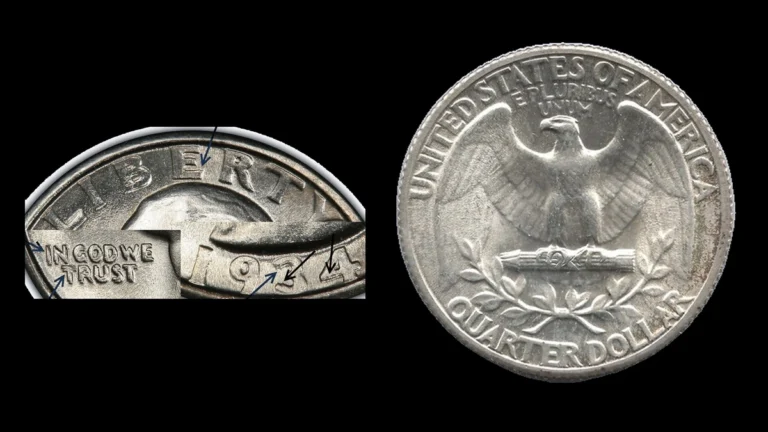
A clipped 1926-S Standing Liberty quarter sold for $1,092.50 in May 2000. That different-year comparison provides context for this 1862 Liberty Seated quarter errors guide, whose clip candidate has a conditional whole-coin estimate of $150–$2,500.
Inspect the exposed edge and the way the struck design meets the gap before deciding when the metal disappeared.
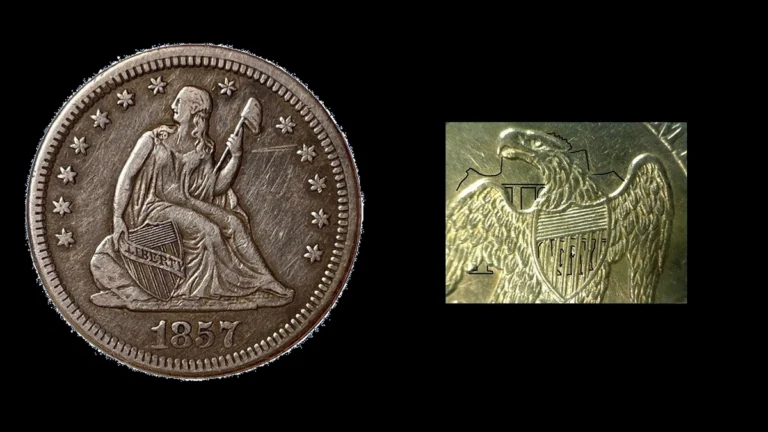
1862 Quarter A gap in the outline: possible clipped blank Error
The reported 1862 lead comes from a collector’s pictured coin and a discussion of clips on Seated quarters. The written account does not establish its mint or the exact missing area.
Those details should remain open until the actual specimen is examined. A general discussion of clipping cannot provide a clock position or shape that the source did not describe.
A genuine clip begins with an incomplete blank, the metal disc prepared before striking. Its missing section already existed when the dies applied the quarter’s design.
The boundary can be curved or straight depending on the blank-cutting problem. The shape alone cannot establish an error because someone can cut or grind a finished coin afterward.
The important distinction is the sequence of events. An original incomplete blank received its design around a gap, while later damage removed metal from an already struck quarter.
How to Identify
Begin with an edge view of the missing section. Parallel file marks, a sharp cut surface, or scraped design may show that the gap was made after striking.
Then inspect the rim at both ends of the opening under magnification. Follow how the design approaches the boundary rather than judging only whether the missing section resembles a familiar clip.
An original incomplete blank may show metal flow toward the gap. A weak area on the opposite rim can provide supporting evidence, though it is not a complete authentication test.
Confirm the readable date and mint separately. The source’s lack of a stated mint cannot be used to assign the collector’s coin to Philadelphia.
A normal intact 1862 quarter weighs about 6.22 grams. A loose candidate may weigh less because of missing metal, but wear and later removal can lower weight too.
Use full-face photographs alongside close views of the gap and its edge. The collector discussion is a lead for comparison rather than a replacement for examining the coin’s boundary.
A specialist should assess whether the rim and design formed around an already incomplete disc. Do not file, scrape, or otherwise alter the edge to make it easier to see.
What It’s Worth
A confirmed 1862 clip has a conditional estimated whole-coin range of $150–$2,500.
A 1926-S Standing Liberty quarter with a small clip, graded PCGS AU50, brought $1,092.50 in May 2000. Its different date and design make it a related-mechanism comparison rather than a direct 1862 price.
No confirmed transaction was supplied for the collector’s 1862 candidate. The estimate applies only after an original incomplete blank is established.
Mint, wear, remaining design, and the missing area’s size affect the whole-coin comparison. A dramatic-looking gap caused by later cutting does not receive the same error valuation.
Conclusion
The 1862 clip remains a candidate without a fixed mint or notch position established here. Compare the exposed edge, rim endpoints, and surrounding design to determine whether the metal was missing before striking.
The $1,092.50 record belongs to a 1926-S comparison coin. Apply the conditional 1862 range only to an authenticated example, with its actual preservation and original boundary guiding the valuation.