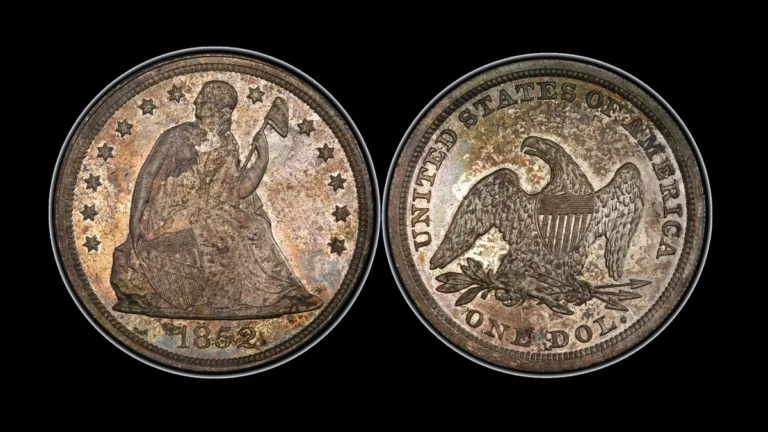
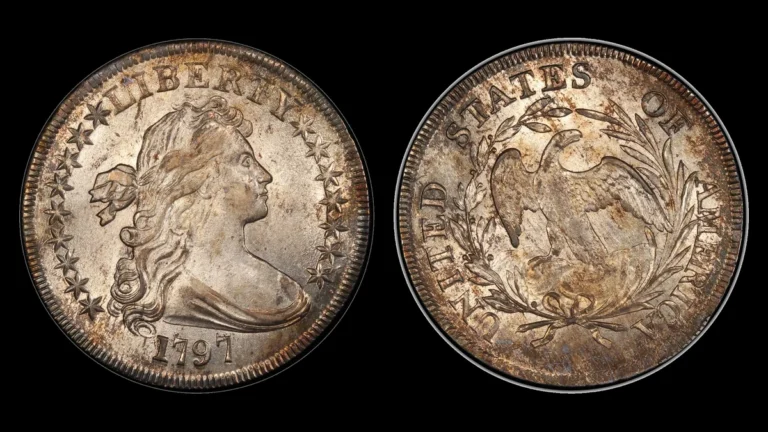
Rare 1842 Dollar Errors (List & Pictures)
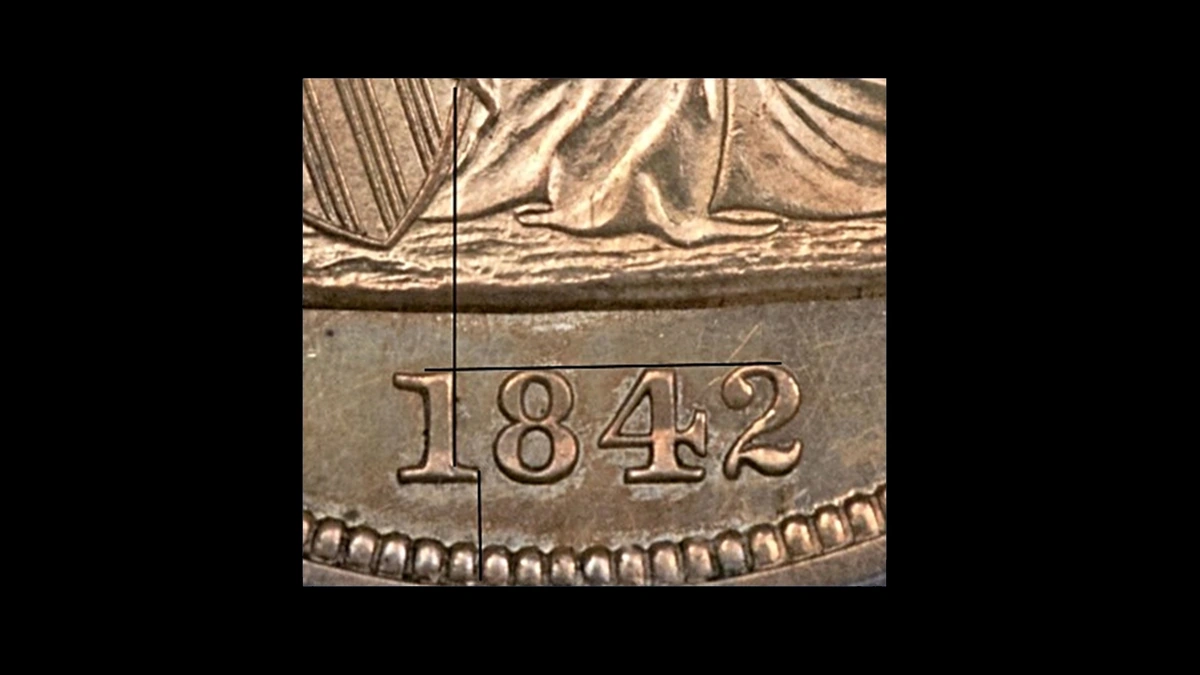
A general 1842 dollar comparison graded MS64+ sold for $19,975 in September 2016. This 1842 Liberty Seated dollar errors guide covers estimated whole-coin values of $350–$25,000.
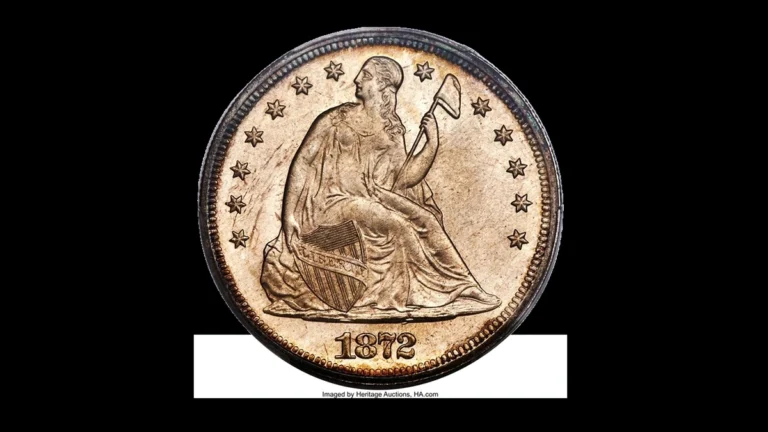
Inspect the normal date, the rock above it, and any raised rim break separately; those three areas preserve different evidence.
| Location | Feature | Estimated range |
|---|---|---|
| Bottom of 2 and upper opening of 8 | Repunched date | $350–$20,000 |
| Rock above 4 and 2 | Misplaced date fragment | $500–$25,000 |
| Front rim, position unspecified | Cud | $350–$10,000 |
1. 1842 Dollar Extra strokes within the date: repunching Error
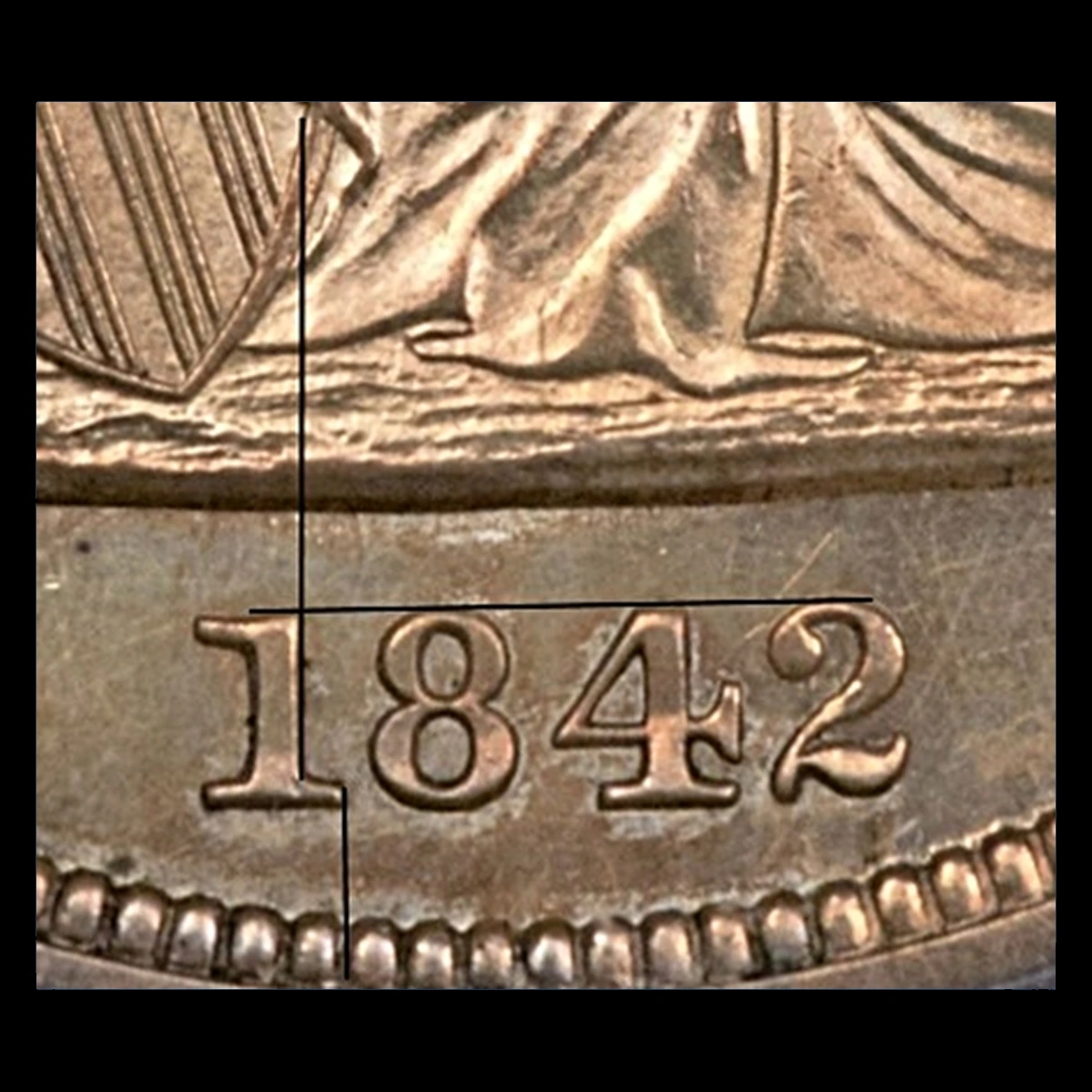
An 1842 dollar described by Heritage shows repetition along the bottom of 2 and inside the upper opening of 8. These remnants record more than one placement of the date punch in the die.
The dollar itself did not need a second strike to acquire them. The steel die copied the repeated outlines when it stamped the coin.
The cataloged MS60 example also had a probable misplaced 2 in the rock. That separate feature sits outside the intended date.
How to Identify
Keep all four digits visible while inspecting the lower 2 and upper interior of 8. Compare the pair of features with the described 1842 specimen.
Each extra stroke should follow part of its numeral rather than cross it randomly. Change the light to distinguish raised curved detail from scratches or flat striking shelves.
What It’s Worth
Identified ordinary-strike examples have an estimated range of $350–$20,000.
The Heritage MS60 offering in May 2007 was listed as not sold. Its catalog supplies useful observations but no completed price.
An 1843 OC-1 repunched-date dollar graded MS64 sold for $13,200 in August 2025. That is a different-year and higher-grade comparison, not a result for the 1842 MS60.
2. 1842 Dollar A numeral fragment sits in the rock: misplaced date Error
Above the date’s 4 and 2, a stray numeral fragment appears in the rock’s base. A date punch landed outside its intended position in the die.
OC-7 is cataloged as Misplaced 2, and the auction description calls the rock remnant a probable 2. Ordinary rock lines still need to be separated from that extra shape.
How to Identify
Frame the rock together with 4 and 2 below it. Those landmarks preserve the position of the fragment when comparing an identified OC-7 photograph.
Look for the same numeral portion in the same place, not a number assembled from several unrelated lines. Side light helps distinguish raised silver from dark toning or a cut.
Examine any repeated strokes within the normal date separately. Their proximity does not make repunching and a misplaced fragment the same observation.
What It’s Worth
Identified misplaced-date dollars are estimated at $500–$25,000 across worn through highly preserved unworn examples.
PCGS’s general 1842 history records an MS64+ at $19,975 in September 2016. It is not specified as an OC-7 or rim-break sale.
The fragment’s clarity helps attribution, while condition drives much of the full price. Companion date repetition does not justify adding another whole-coin range.
3. 1842 Dollar Raised metal joins the front rim: cud Error
A reported misplaced-date dollar also had front-rim breaks. The historical account gives no clock position and does not say that every example of the variety shares them.
When a piece of die breaks away at its edge, silver can fill the opening and form a rim-connected mass called a cud. The normal raised rim alone is not this error.
How to Identify
Follow the raised mass inward from the rim and examine where it replaces normal design. Then inspect the nearby edge for dents, seams, or signs of added metal.
A rim impact can push silver over the face, while a repair may introduce metal that was never part of the strike. Compare the edge connection and affected design together.
Check the rock and date features on the same coin if they are claimed. A matching date fragment cannot authenticate a damaged or repaired rim by itself.
What It’s Worth
Genuine examples in worn through moderately preserved unworn condition are estimated at $350–$10,000.
No exact sale accompanies the rim-break report. If a misplaced date also appears, both features remain part of one complete dollar’s valuation.
Conclusion
The bottom of 2, the upper opening of 8, and the rock above the date provide separate places to inspect. A front-rim break requires another comparison only when that particular coin actually has one.
Keep the unsold MS60 description, different-year repunched-date sale, and general MS64+ result distinct. They help explain the issue without supplying an exact transaction for every reported feature.