Rare 1846 Dollar Errors (List & Pictures)
A general 1846 Proof example brought $149,500 in 2008, while a Proof specifically described with a repunched date sold for $32,200 in April 2002. Those are distinct comparisons.
Estimated whole-coin values for 1846 Liberty Seated dollar errors span $350–$150,000. Inspect the rim’s retained break, test the relationship between the two faces, then examine low date remnants on the appropriate collector Proof.
1. 1846 Dollar Design Surviving inside a Rim Break: Retained Cud Error
A cracked-off portion of a die can remain partly in position. The coin may reproduce a raised boundary while retaining some design within the affected area, a feature called a retained cud.
The break reaches the tool’s edge, placing its effect against the coin’s rim. Heritage cataloged a Philadelphia example graded ANACS Good 6, showing that the feature can remain identifiable despite heavy circulation wear.
How to Identify
Start with the entire rim and locate a boundary that joins it. Examine the original design still visible within the affected area instead of treating any edge lump as a retained break.
Move the light to see the area’s height and inspect for pushed-over metal or added material. A dent or repair can alter the edge without recording a partly retained die piece.
Compare both faces and a side view with the documented Good 6 coin. The supplied account gives no clock position to borrow from an unrelated example.
What It’s Worth
$350–$3,000 is the estimated range for comparable worn dollars with a recognizable original retained break. The size of the affected area and remaining surface quality influence the comparison.
The ANACS Good 6 example sold for $440.63 at Heritage on August 5, 2012. Its price includes the complete heavily worn dollar, not just the rim feature.
2. 1846 Dollar A Leaning Eagle after Flipping: New Orleans Die Rotation Error
A documented 1846-O graded PCGS AU58 has a reverse rotated 45 degrees clockwise. Its eagle, lettering, and surrounding design turn together relative to the upright portrait.
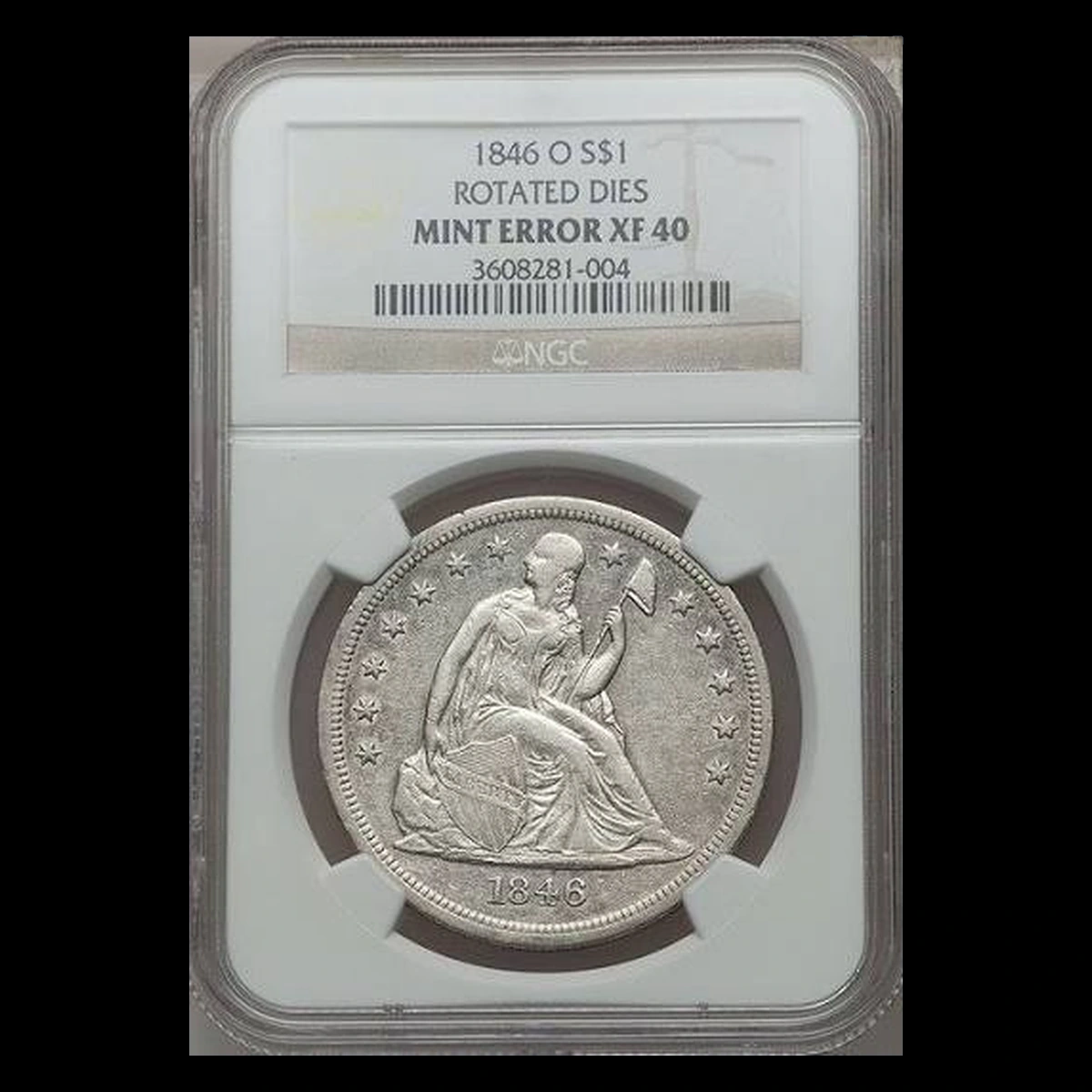
A separate NGC XF40 New Orleans dollar also carries a rotated-dies description. Its listing does not establish the same angle, so the 45-degree measurement must remain with the AU58 coin.
How to Identify
Position Liberty upright against a fixed vertical guide and flip the coin or holder top to bottom. Avoid a sideways twist that could create an apparent turn.
Repeat the motion from the same starting position, then measure the reverse’s departure from upright. Keep O and the complete reverse in view so the mint and whole-design relationship remain clear.
If using an orientation marker, place it on the holder or background rather than the silver. Independently rotated photographs cannot establish the relationship between faces.
What It’s Worth
$500–$10,000 is the estimated whole-coin range for genuine 1846-O rotations across worn through modest unworn conditions. Both preservation and the demonstrated turn affect appeal.
The NGC XF40 rotated-dies example sold for $780 in October 2024. That result concerns the more worn coin, not the separate 45-degree AU58 with only slight wear.
3. 1846 Dollar Earlier Numerals below the Date: Proof Repunched Date Error
On the Proof variety cataloged as OC-P1, an initial date-punch impression was placed too low and then corrected. The final die retained portions of the earlier numerals beneath the intended date.
The published description reports traces below all four digits, with 4 and 6 especially clear. These are remnants of the same year rather than proof of a different year underneath.
A Proof was specially prepared for collectors and often has sharp details against reflective fields. Its manufacturing identity must be established independently of a shiny surface or an isolated line near the date.
How to Identify
Keep the complete date visible and compare the low strokes with a clear OC-P1 Proof image. Their positions and shapes should relate to the main numerals, especially the final two.
Do not combine rock detail or disconnected scratches into a proposed earlier date. Change lighting while keeping the coin fixed to distinguish raised remnants from moving reflections.
Leave a certified Proof in its holder. Wiping its reflective areas can introduce fine scratches without making the original punch marks easier to interpret.
What It’s Worth
$15,000–$150,000 is an estimated whole-coin range for properly identified examples across differing preservation. A PCGS PR64 with the low repunched date sold for $32,200 in April 2002.
For context, PCGS records a general 1846 Proof PR65 sale at $149,500 in 2008. That higher price is not an established OC-P1 premium and should not be presented as one.
PR64 and PR65 describe differing levels of Proof preservation. Cleaning, hairlines, and the overall appearance remain relevant after the date variety is confirmed.
Conclusion
The 1846 dollar features here record different events: a broken die piece remaining in place, a reverse tool turned from normal alignment, and a Proof date punched low before correction. Each needs its own physical comparison.
Within the $350–$150,000 whole-coin estimates, retain the exact grade and specimen details. The $780 rotation sale has no supplied angle, and the $149,500 general Proof result does not measure a repunched-date premium.