Rare 1844 Half Dollar Errors (List & Pictures)
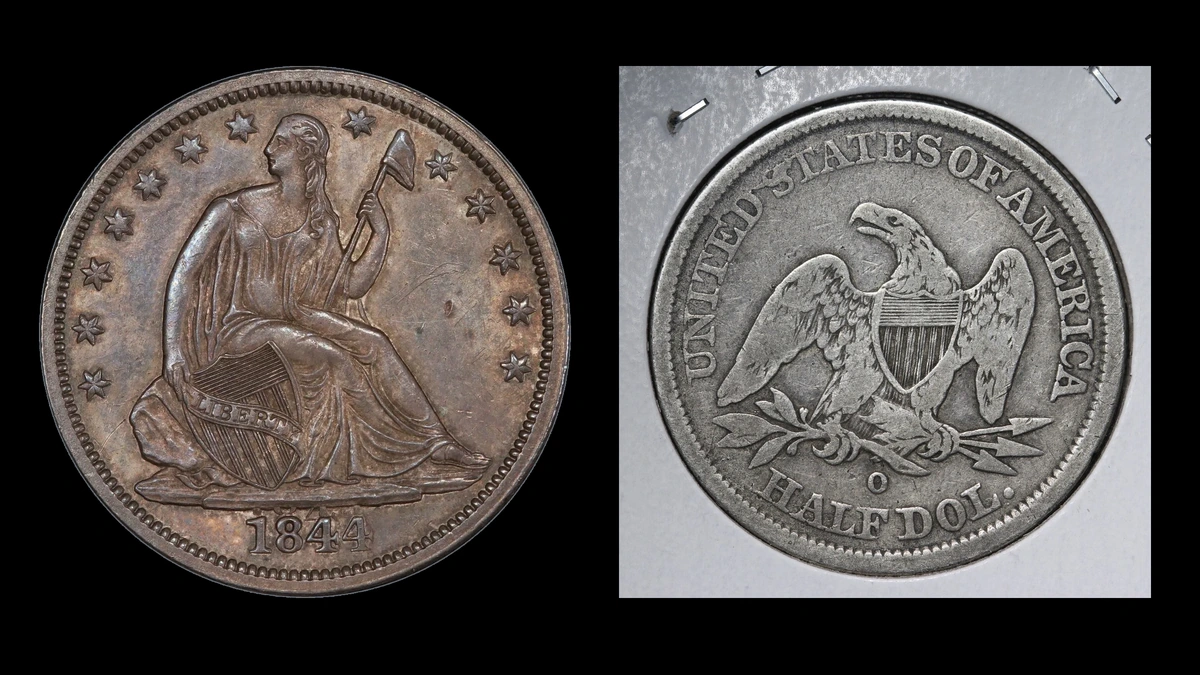
The celebrated 1844-O Doubled Date has an earlier impression reaching into Liberty’s rocky seat. An unworn example brought $35,250 in May 2015, far above most circulated comparisons.
These 1844 half dollar errors span estimates and records of $75–$35,250. Start with the date and front metal, inspect the reverse arrows, letters, and mintmark, then test the two faces’ alignment.
| Clue | Inspection area | Feature | Estimated value |
|---|---|---|---|
| Extra numbers in rock, border, or beside 4 | Date and surrounding area | Misplaced and repunched date | $200–$8,000 circulated/lesser forms; exceptional sale $35,250 |
| A separating layer | Front of reported O coin | Lamination | $75–$250 |
| A raised route through arrowheads | Reverse near five o’clock | Die gouge | $125–$600 |
| A second curved O | Mintmark | Repunched mintmark | $125–$650 |
| Fine raised letter-area paths | Reverse border and inscription | Die cracks | $90–$500 |
| A broad rim-connected patch | Separate reported reverse positions | Rim cud | $200–$1,000 |
| The eagle leans after a straight flip | Relative face orientation | Rotated dies | $150–$750 |
O below the eagle identifies New Orleans, while Philadelphia has no mintmark. Normal unworn halves are about 13.36 grams and 30.6 mm, with edge grooves; wear and missing metal can change the weight.
1. 1844 Half Dollar Earlier Numbers Appear Outside or Beside the Date: Misplaced and Repunched Date Error
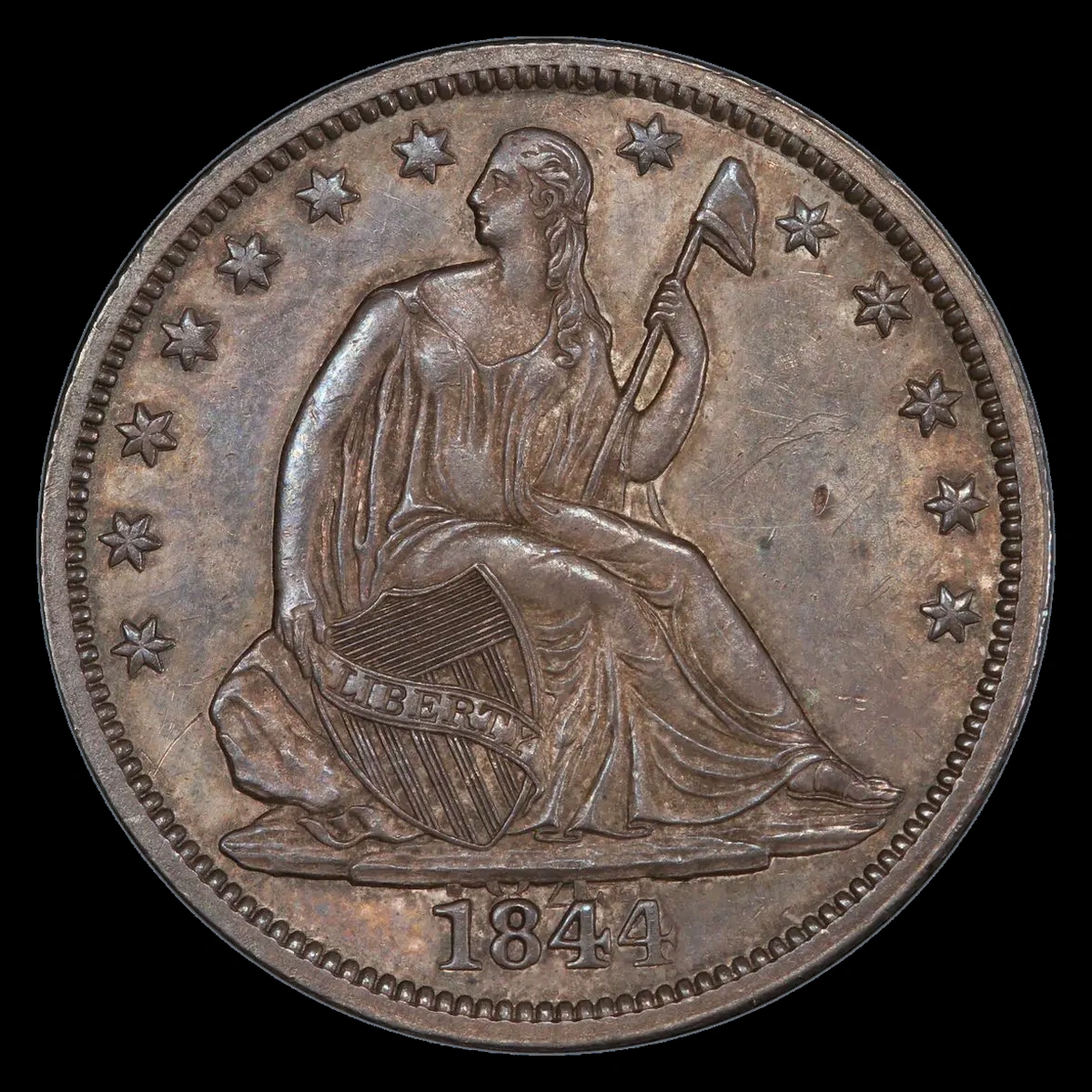
The dramatic New Orleans FS-301 retains tops of an earlier date in the rock above the corrected numbers. It is commonly called the Doubled Date.
Philadelphia has a different reported remnant: the top of an 8 among the small border teeth. Another O-mint feature leaves an extra curve beside the final 4 rather than the high date in the rock.
How to Identify
Read the mintmark before selecting the search area. Match the O-mint high date, Philadelphia border fragment, or separate final-4 curve to its own attributed image.
Keep all four normal digits and the adjoining rock or border visible. An identifiable piece of an earlier number is stronger evidence than an unusual engraving line.
Inspect for cuts or added metal that could change the date. The features arose from punching the date into a die, the steel stamping tool, in different positions.
The common cause does not make their appearances or values interchangeable. Philadelphia’s small border remnant does not acquire FS-301’s identity.
What It’s Worth
Estimated circulated range: $850–$8,000 for the dramatic Doubled Date; lesser date-punching features are estimated at $200–$1,500 through lower unworn grades. Recent worn Doubled Date examples brought $2,280 and $3,120.
The recorded MS64 result is $35,250 in May 2015. That exceptional unworn preservation belongs well above ordinary circulated comparisons.
A Philadelphia MS62 catalog quoted a $1,200 guide value, not a realized price. None of these figures makes every extra 1844 date stroke equivalent to the record coin.
2. 1844 Half Dollar A Thin Layer Separates on the Front: Obverse Lamination Error
Heritage described front lamination and graffiti on the same 1844-O in an NGC Details holder. The two marks have different origins.
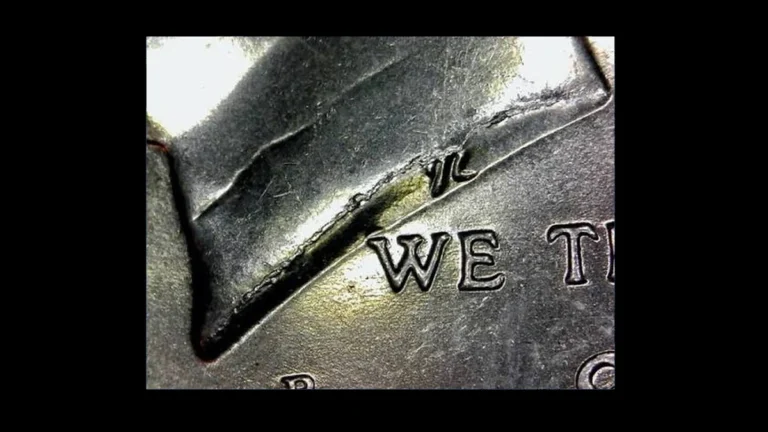
Lamination is separation within the original metal, potentially leaving a flap or shallow missing patch. Graffiti consists of deliberate cuts into the finished coin.
How to Identify
Trace the peeling boundary independently from the carved lines. Use angled light to see whether a thin layer connects with the surrounding original metal.
Leave any flap untouched and inspect the wider front to distinguish the separate defects. Carved grooves alone do not demonstrate metal separation.
Confirm O and compare the actual missing area before interpreting weight loss. Wear, carving, and lamination can affect the appearance together without sharing one explanation.
What It’s Worth
Estimated range: $75–$250 for a circulated coin with genuine lamination. The Details designation flags a condition problem that prevents a normal numeric grade.
An ordinary VF30 1844-O sold for $207 in February 2026. That moderately worn coin provides context, not a lamination sale or a price for the graffiti-marked reference.
3. 1844 Half Dollar A Raised Line Runs Through the Arrowheads: Reverse Die Gouge Error
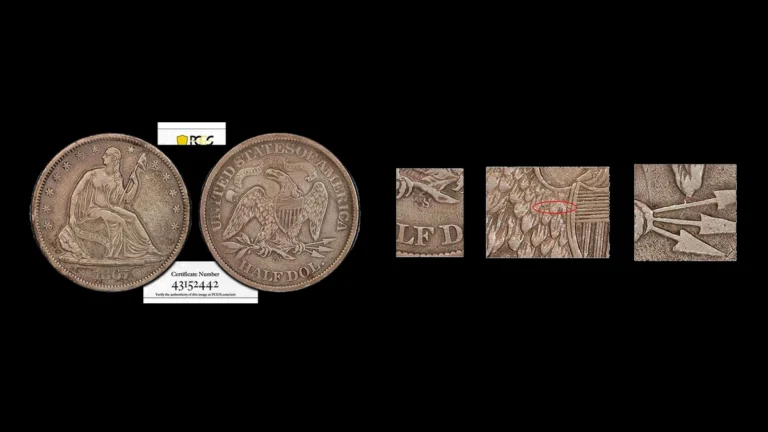
On early examples from one O-mint die, a line begins near the reverse edge at five o’clock. It reaches the middle arrowhead and continues through the upper one.
The groove was cut into the die, allowing silver to enter it and become a raised line on the coin. That is the opposite structure from a scratch cut into the finished surface.
How to Identify
Orient the eagle upright and follow the whole edge-to-arrowhead route. The mark crosses existing raised details, making a wider contextual view especially useful.
Change the light to establish its height. An ordinary arrowhead boundary or random later scratch may share a small segment without matching the full path.
The marker may be less visible on later coins from the tool. Check the actual early-reference pattern rather than demanding equal strength on every example.
What It’s Worth
Estimated range: $125–$600 for circulated examples with an identifiable route. The estimate uses ordinary 1844-O condition comparisons rather than a recorded sale isolating this marker.
Clear arrowheads and original surfaces make the line easier to attribute. A damaged coin with the marker is not equivalent to a much better-preserved one.
4. 1844 Half Dollar Another Curved O Remains at the Mintmark: Repunched Mintmark Error
More than one 1844-O die has reported mintmark repunching. One description places an earlier curve below and left of the final O; another supplies no equivalent direction.
The mintmark was punched separately into the reverse die. Shifted repeated applications could leave parts of two O positions.
How to Identify
Look for a recognizable second curve rather than any extra metal near O. A narrow straight crack through the mintmark is a different feature.
Use the lower-left diagnostic only with the reference that records it. Do not extend that direction to every 1844-O or confuse a large normal letter with repunching.
Inspect nearby metal for dents, corrosion, or attached material. The extra contour should make sense as part of the earlier letter.
What It’s Worth
Estimated range: $125–$650 for clearly identified circulated examples. The range uses the date’s worn-coin values with an allowance for visible collector interest.
There is no supplied realized price for a specific repunched O here. The high Doubled Date record concerns another feature and cannot establish this mintmark’s premium.
5. 1844 Half Dollar Thin Ridges Cross the Reverse Letters: Die Cracks Error
One reported route arches through STATES; another approaches border teeth above OF and AMERICA. They come from different dies and need not occur together.
Metal entered narrow fractures in those tools during striking. The resulting ridges can vary in strength as a die continues in use.
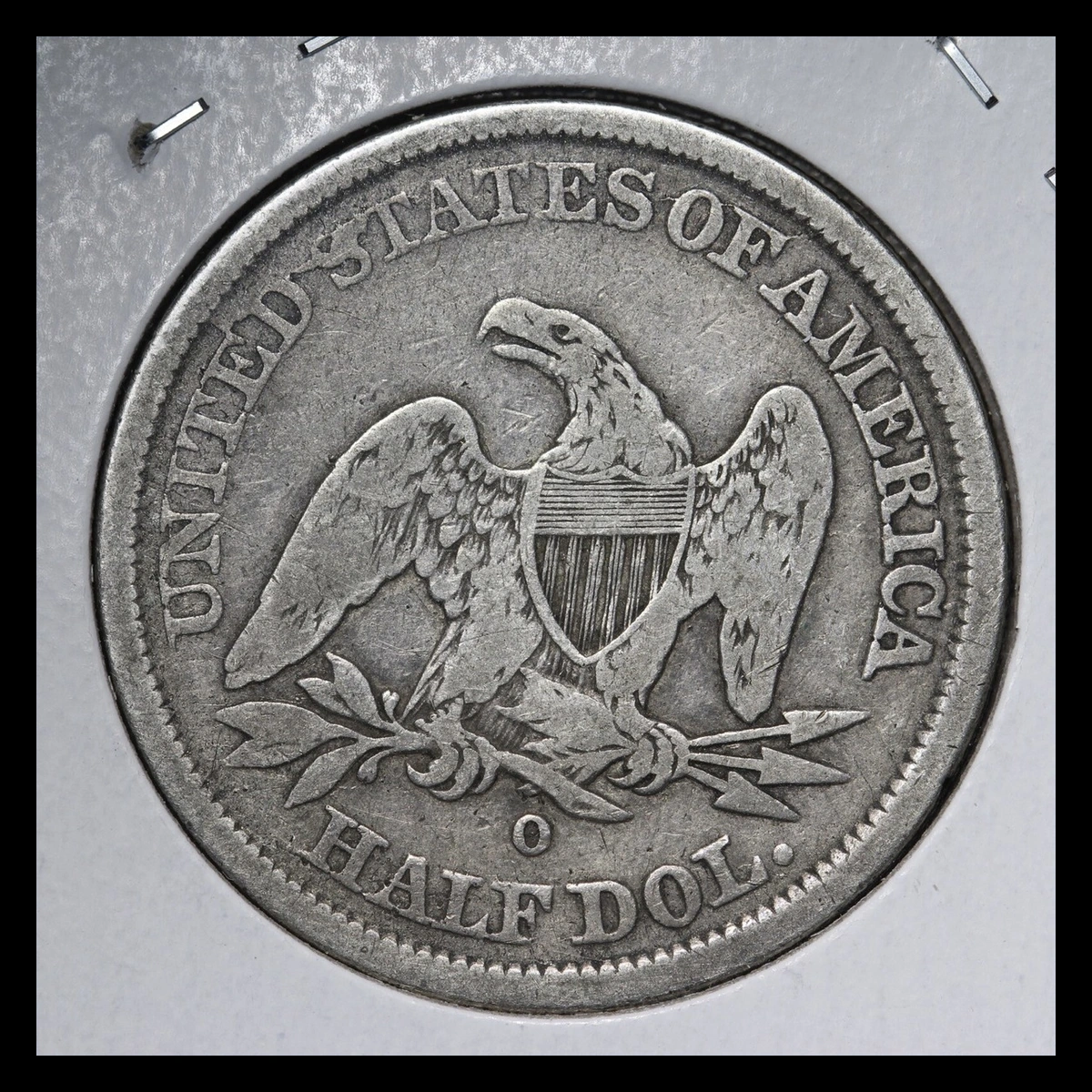
How to Identify
Identify the exact letters touched by the line and select the matching reference. Follow it into the open surface or border without connecting unrelated marks.
A magnifier and light from either side help distinguish a continuous ridge from a groove with displaced edges. Dark or bright color is less informative than the line’s height and route.
What It’s Worth
Estimated range: $90–$500 for identifiable cracks on worn examples. Ordinary guide comparisons are around $150–$175 at VF20 and $300–$346 at EF40.
Those are normal-coin condition values, not separate prices for the STATES or OF AMERICA routes. Preserved detail and sound surfaces may matter more than a faint crack.
6. 1844 Half Dollar A Raised Patch Replaces Design at the Rim: Rim Cud Error
A cud forms when a piece breaks from the edge of a die, leaving a rim-connected space that fills with metal. The struck coin has a broader raised patch rather than only a fine ridge.
One report follows a break developing beneath the denomination. A supplementary record illustrates a separate example near seven o’clock.
How to Identify
Select the correct example from the supplementary record or main reference before tracing the boundary. Do not merge the seven-o’clock patch with the denomination-side report.
Check that raised original metal reaches the rim and replaces intended detail. Solder, debris, or an impact can create a lump without the same structure.
Inspect the adjoining edge and both faces for evidence of later damage. The full patch and its rim connection are more useful than a cropped bright spot.
What It’s Worth
Estimated range: $200–$1,000 for circulated coins with an identifiable rim break. Size, visibility, and preserved neighboring design influence appeal.
A 2023 catalog discussed an 1846 rim-break coin at NGC AU58 CAC and quoted a $936 guide value. That different-year normal-coin guide figure is not a completed cud sale.
7. 1844 Half Dollar The Eagle Leans After a Straight Flip: Rotated Dies Error
The two designs can look complete and normal separately while their relative direction is wrong. The 1844-O reference reports rotation without a measured angle or identified certified example.
Other 1844 denominations have rotation reports too, but their measurements cannot identify a half-dollar specimen. The actual coin must supply the angle.
How to Identify
Confirm HALF DOL. and O before performing the test. Hold Liberty upright and turn top over bottom without twisting sideways or allowing the coin to move in its holder.
Repeat the flip and measure the eagle’s lean from upright. A continuous record preserves that relationship better than two independently straightened photographs.
Examine the edge for seams or other alteration. Rotation changes alignment between the faces without requiring missing metal or an off-center design.
What It’s Worth
Estimated range: $150–$750 for a circulated 1844-O with clearly demonstrated rotation. The amount of turn and overall condition affect the comparison.
The year reference reports the category but gives no sale for an identified rotated half. The added allowance is an estimate over ordinary condition context, not a borrowed angle or price from another denomination.
Conclusion
Keep each small feature attached to its mint and exact reference: high date, border numeral, peeling layer, arrowhead line, extra O, crack, or rim patch. A controlled flip adds a separate alignment check.
The $75–$35,250 span includes modest circulated features and an exceptional Doubled Date sale. That record belongs to the specific variety in strong preservation, not every 1844 half with an extra line or number fragment.