Rare 1917 Half Dollar Errors (List & Pictures)
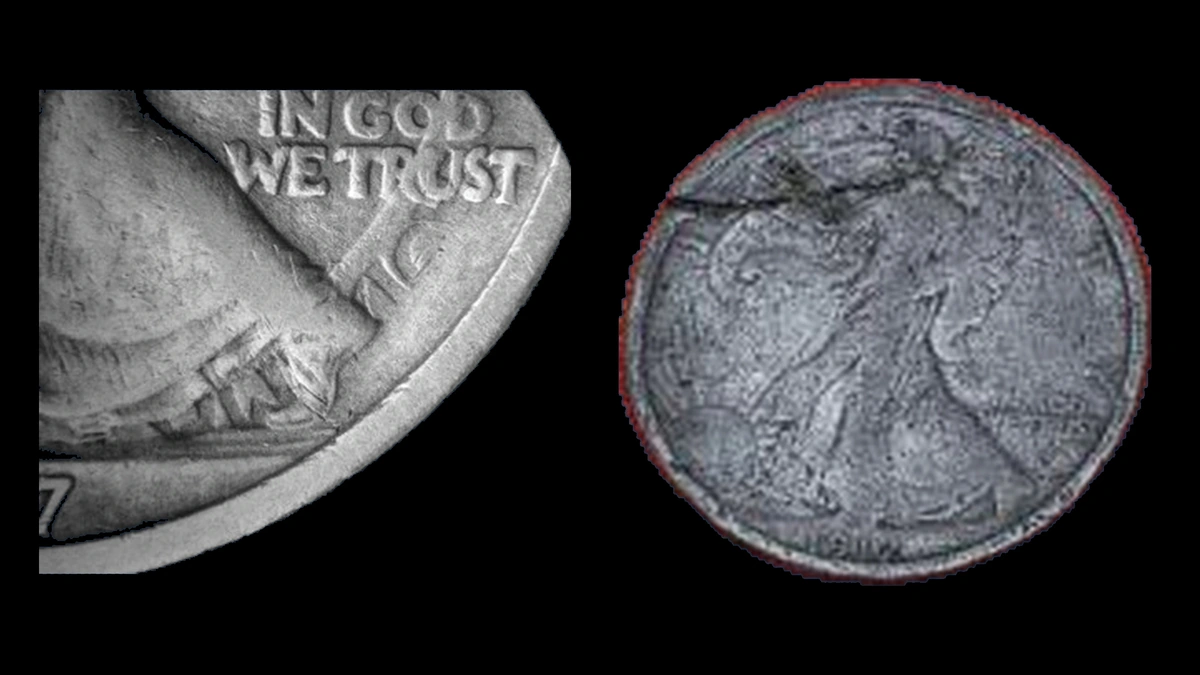
For 1917, look on both sides before deciding where the mint letter is. Denver and San Francisco halves can carry D or S on either the front or back.
That detail matters when checking 1917 Walking Liberty half dollar errors, whose estimated ranges here span $50–$25,000. A 1942 half on a quarter blank sold for $18,000 in January 2022; the historical smaller-blank candidate discussed below has an incomplete date read as 1917 or 1947.
Locate the letter first, then follow the visible feature.
| Feature to inspect | Error category | Estimated range |
|---|---|---|
| A second part of D or S | Repunched mintmark | $100–$2,000 |
| Extra motto outlines | Front doubled die | $75–$2,500 |
| Mirrored back-design traces on the front | Tilted die clash | $150–$1,000 |
| A thin raised track | Die crack | $50–$250 |
| A separating front layer | Lamination | $75–$500 |
| A missing edge segment | Rim clip | $75–$400 |
| An edge step plus a clip | Partial collar with clip | $250–$750 |
| Displaced pictures beside bare metal | Off-center strike | $100–$12,000 |
| A half-dollar picture on a smaller blank | Silver quarter blank | $10,000–$25,000 |
A normal half started at 12.50 grams and about 30.6 mm across, with a grooved edge. Use a scale and calipers only when the coin is safely accessible, and keep full views of both faces with any close-up.
1. 1917 Half Dollar An Earlier D or S beside the Final Letter: Repunched Mintmark Error
The mint letter was punched into the steel die, the tool used to stamp the coin. A change in punch position could leave a piece of the first D or S beside the final impression.
The year reports do not identify one mint, face, or direction for this category. They do not establish an identical repunched variety on all four branch-mint versions.
How to Identify
For front-letter coins, inspect the lower-right area below the motto. For back-letter coins, check the lower-left area beneath the branch.
Trace a suspected extra curve or end stroke through a magnifier. It should fit the same letter rather than merely thicken its outer edge.
Match a verified example with the same mint and letter position, checking for signs that the mintmark was added later. Another year’s repunching direction cannot identify your coin.
What It’s Worth
$100–$2,000 is the estimate across worn examples of different mint-letter versions. The underlying coin value and the visibility of the earlier impression both matter.
A recognized 1939-D/D in MS64+ sold for $1,292.50 in September 2017. That is a different-year unworn comparison, not a named 1917 sale.
2. 1917 Half Dollar Extra Edges in the Motto: Doubled Die Obverse Error
The reported front doubling directs attention to IN GOD WE TRUST. A doubled die carries repeated design detail before striking and can copy it onto a coin in one blow.
No exact letter, direction, or specialist number is established in the supplied reports. The motto tells you where to begin inspecting, not that every thick letter is an error.
How to Identify
Compare the motto with a normal coin of the same 1917 version. Look for rounded extra outlines or split corners under a 10× magnifier.
A low shelf that makes the original stroke look narrower can result from movement during striking. Change the light to separate a real extra shape from glare.
Keep the date and mint-letter location in the photographs. A close-up without those details cannot establish which 1917 issue carries the proposed doubling.
What It’s Worth
$75–$2,500 is the estimated range, from minor worn examples to strong doubling on an unworn coin. A firm match and condition must support the upper comparison.
A recognized 1939-D FS-101 in MS67+ sold for $2,160 in April 2025. Its exceptional preservation does not supply a variety number or grade for a 1917 candidate.
3. 1917 Half Dollar Mirrored AMERICA Appears near Liberty: Tilted Die Clash Error
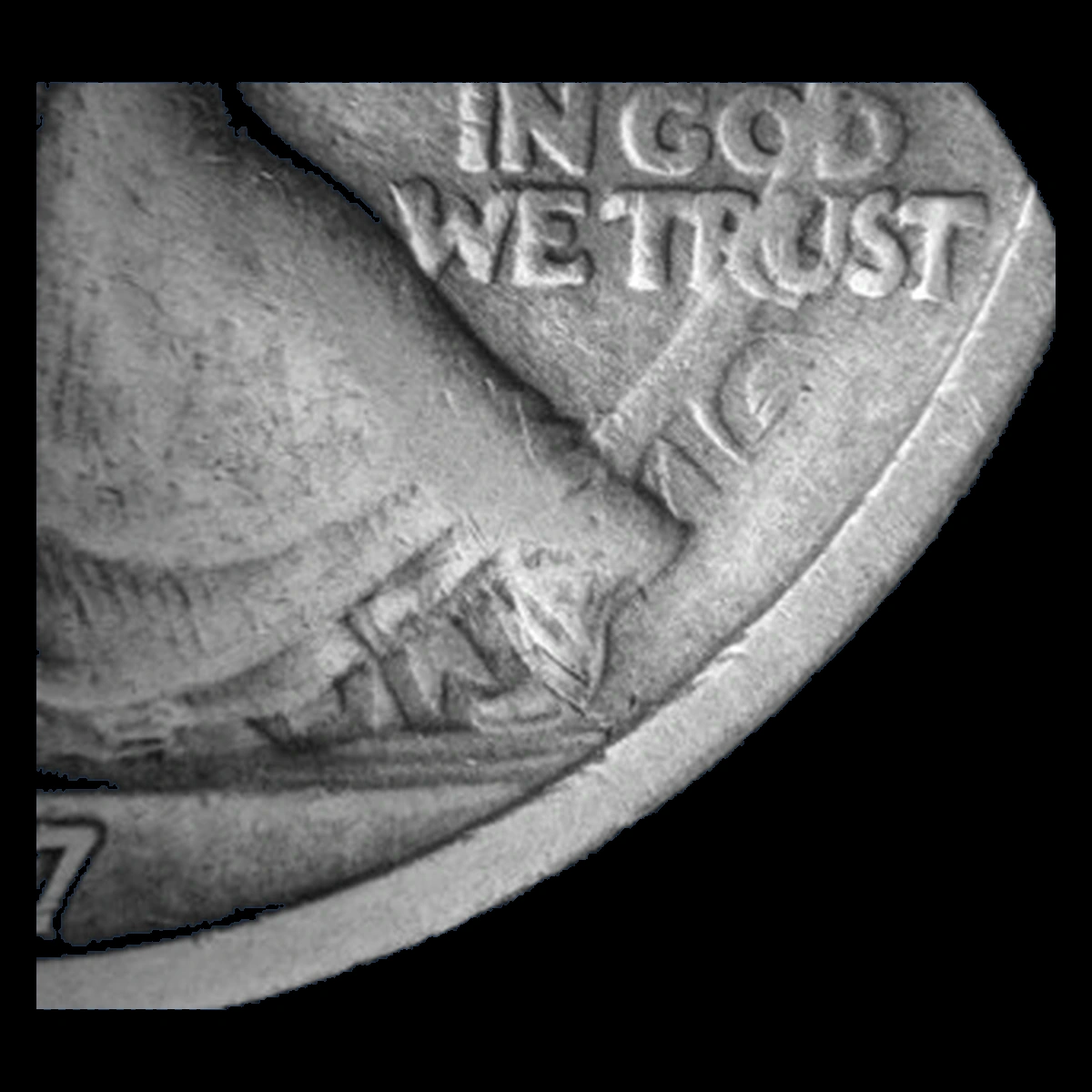
The unusual marks here copy pieces of the back design onto the front. The strongest traces lie at the lower-right front and upper-right back, including mirrored AMERICA and part of the eagle’s wing.
The dies struck each other while tilted, with no blank between them. The resulting marks then appeared on later coins.
Fainter traces left of Liberty have a different alignment and indicate another, weaker clash. The examination does not establish which contact happened first.
How to Identify
Hold Liberty upright and begin at the lower right. Search for sunken, mirror-image letter fragments that correspond to AMERICA on the back.
Compare the eagle-wing outline and the other marks with the published examination. The weaker left-side traces need not align with the stronger group.
Random scratches cannot reproduce matching sections of the opposing design. Keep the two clash patterns separate rather than forcing every mark into one contact.
What It’s Worth
$150–$1,000 is the estimate for worn examples with recognizable transferred lettering and original surfaces. No transaction amount is provided for the examined coin.
A 1973-S Kennedy with strong clashes on both faces sold for $720 in October 2022 in PR68 condition. That specially made, very well-preserved Proof illustrates collector interest but is not a direct 1917 price record.
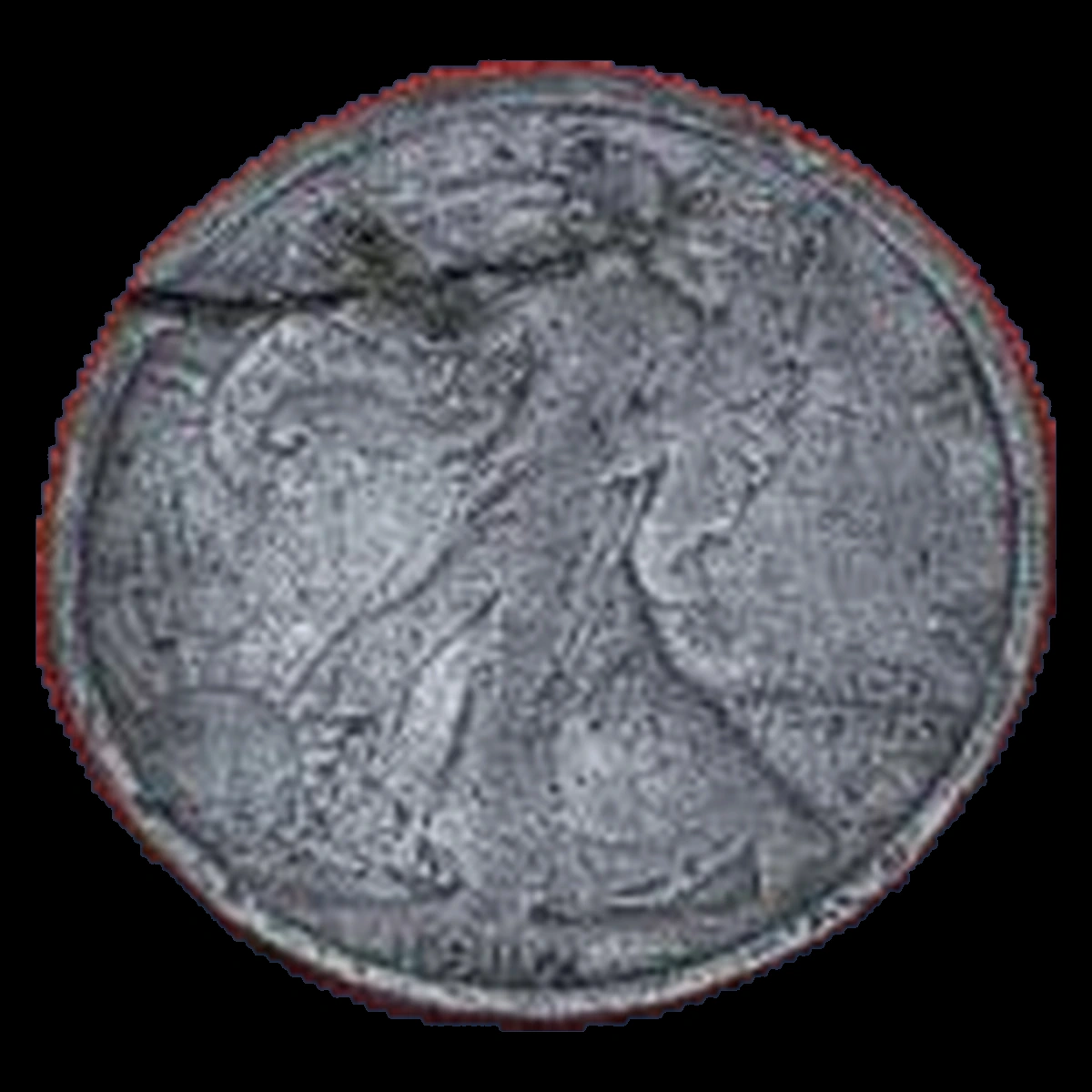
4. 1917 Half Dollar A Narrow Line Stands above the Surface: Die Crack Error
A crack in a die can leave a raised line on a coin because silver enters the narrow opening during striking. The damaged tool creates the mark, rather than something scratching the finished coin.
Schackmann’s auction list describes a 1917 example with a die crack. Its text gives no mint or specific path for the line.
How to Identify
Follow the line from end to end under light from two directions. Its center should rise above the surrounding surface.
A scratch can push metal upward along its sides while leaving a sunken channel in the middle. Matching color alone does not distinguish the two.
Record the actual mint-letter position and visible route. A crack on another date cannot establish the location omitted from this report.
What It’s Worth
$50–$250 is the estimate for small recognizable cracks on worn through modest unworn examples. The listed 1917 coin has no supplied sale result or separate error certification.
A 1976-D Kennedy with a larger reverse die break brought $256 in June 2026 in MS65 condition. That more obvious different-series feature provides context, rather than an exact price for a thin Walker crack.
5. 1917 Half Dollar A Front Surface Layer Separates: Lamination Error
A lamination comes from a weakness inside the metal. A thin flap may lift, or a flake may detach and reveal a shallow area beneath it.
The supplied material places the reported feature on the front without naming a mint, mint-letter version, or exact outline. It does not describe the entire coin splitting into two discs.
How to Identify
Light the boundary from the side and look for a layer continuing under original struck surface. A hollow scraped from above may instead show a gouged channel and displaced metal.
Photograph any attached flap without moving it. Pulling the layer can destroy the evidence of how it separated.
Check the edge for a continuation of the split. An attached flap may leave the weight close to normal, while lost metal reduces it.
What It’s Worth
$75–$500 is the estimate for visible front laminations on worn through modest unworn coins. The 1917 mint-letter version and overall condition may matter more than a small peel.
A dealer’s $275 offer for a 1947 front lamination in MS65 provides a same-series comparison. It is an asking price for another year, not a completed 1917 sale.
6. 1917 Half Dollar Metal Is Missing at the Rim: 1917-S Clip Error
The Rippere Collection included a 1917-S rim clip with the S on the back. Its VG10 grade indicates heavy wear with some clear details remaining.
A genuine clip means the blank was incomplete before striking. The remaining metal then formed its rim and design around the existing gap.
How to Identify
Locate S below the branch near the lower-left back edge to match the Rippere coin’s version. A front S identifies a different 1917 issue.
Inspect how the struck detail and grooves approach the missing segment. Burrs, tool marks, and a cut through a finished rim point toward later removal.
The listing gives no gap percentage or clock position. Keep the full outline visible and let the actual image supply those details.
What It’s Worth
$75–$400 is the estimated range for worn examples. The Rippere listing records a completed March 2025 sale, but its public text does not show the amount realized.
A 1942-S rim clip graded MS62 brought $81.90 including fees in May 2025. That small unworn different-year error is a comparison, not the missing sale price of the VG10 1917-S.
7. 1917 Half Dollar A Stepped Edge beside a Clip: Partial Collar Error
A cataloged 1917 half combines a clip at five o’clock with an expanded edge. Only part of the blank remained inside the retaining ring, creating a step between restrained and spreading metal.
This is a partial-collar strike, rather than a complete broadstrike. The missing clipped segment formed earlier, during blank production.
The catalog also notes scratches around three o’clock. Those are separate damage, not another part of the minting error.
How to Identify
Look edge-on for a real transition between the part held by the ring and the expanded portion. Changes in the grooves across that step can help explain the strike.
Inspect the five-o’clock gap separately from the expansion. A battered rim can flatten or push metal without producing the same combination.
Record both faces to establish the mint-letter version. The historical description does not establish a branch mint for this coin.
What It’s Worth
$250–$750 is the estimate for a similar worn compound error. Price the complete coin instead of adding separate clip and partial-collar amounts.
Jim’s Coins listed a $359 minimum bid and described the piece as EF, with field scratches. The minimum bid is not a completed sale result.
8. 1917 Half Dollar Pictures Shift beside Unstruck Metal: Off-Center Strike Error
A misplaced blank can lose the very area that would show its mint letter. This is especially important in 1917, when D or S may be on either face.
The guide reports off-center strikes without assigning a particular mint-letter version, percentage, or direction. The surviving coin must provide that information.
How to Identify
Map the remaining design on both faces before naming a mint. Bare metal in a mint-letter area does not prove that the coin was made at Philadelphia.
Look for matching design loss beside original unstruck metal. If one face alone is shifted, the problem may be die alignment rather than the blank’s position.
Inspect the boundary for grinding or cutting, and keep the readable date in view. Do not complete a missing digit from another coin’s photograph.
What It’s Worth
$100–$12,000 is the estimated span from small worn shifts to rare attractive unworn pieces. Missing identity details can limit how well a high-grade sale fits.
A 1918 half struck 10% off center sold for $10,575 in April 2013 in MS65 condition. That following-year result is not a documented 1917 transaction.
9. 1917 Half Dollar A Half-Dollar Picture on a Quarter Blank: Incomplete-Date Candidate Error
Only the tops of the date remain on the historical smaller-blank example. An earlier listing called it 1917, while a later census recorded it as 1917 or 1947.
The basic error is a half-dollar design on a smaller silver blank, leaving too little room for the complete picture. That mechanism and the uncertain full date are separate questions.
How to Identify
Photograph the surviving digit tops under several light angles and compare both possible years. A clearly dated 1942 comparison cannot settle the date of this separate specimen.
A silver quarter blank starts at 6.25 grams and 24.3 mm before the half-dollar strike spreads it. Weight, metal, and naturally cut-off design should fit that smaller starting blank together.
Check the edge for trimming that could make an ordinary half smaller. Even when the blank type is established, the incomplete date still needs its own attribution.
What It’s Worth
$10,000–$25,000 is the estimated comparison range for authenticated Walkers on silver quarter blanks. Preservation and surviving identity affect the result.
An undated MS64 example sold for $15,000 in May 2022, and a dated 1942 MS64 brought $18,000 that January. Both were unworn with some marks.
No sale price is supplied for the historical 1917-or-1947 entry. These results do not give that coin a firm year or an invented grade.
Conclusion
Make the mint letter’s face part of your identification from the start. It distinguishes the documented reverse-S clip and prevents a missing mintmark area on an off-center strike from being mistaken for Philadelphia.
Then match the feature itself: a raised crack, a separating layer, an edge step, or a copied design fragment. Keep the incomplete-date quarter-blank candidate distinct from firmly dated auction coins when using the value ranges.