Rare 1847 Quarter Errors (List & Pictures)
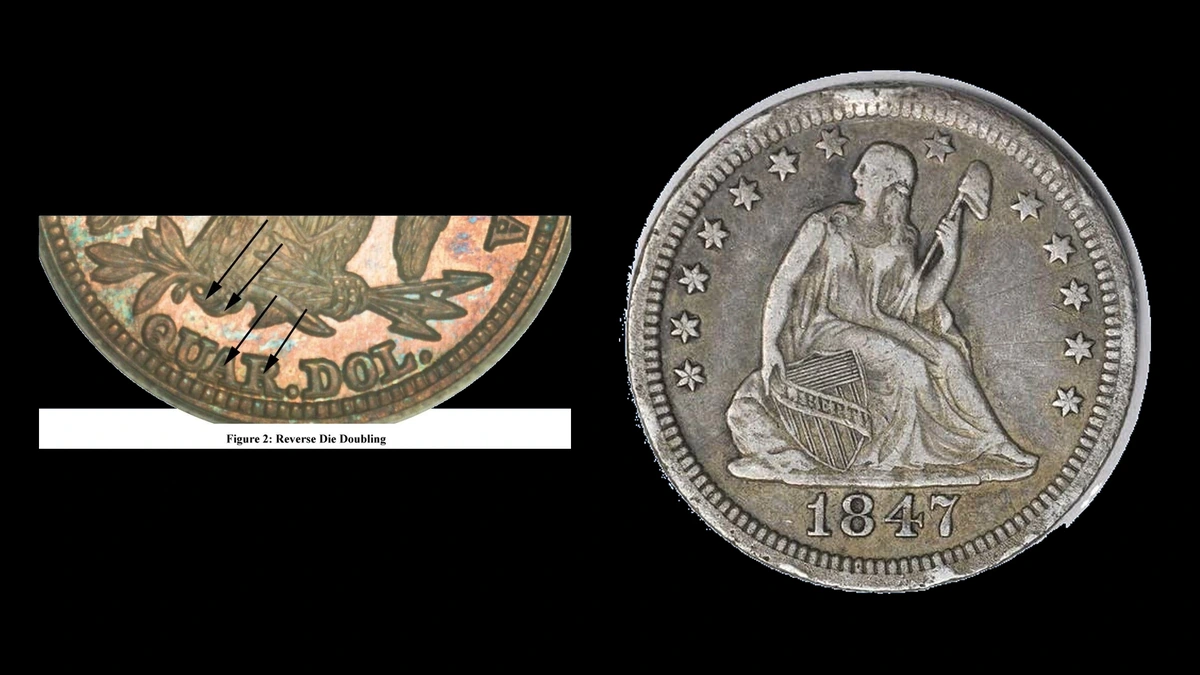
The back may give you a clearer answer than the worn date on an 1847 quarter. A doubled-back coin paired with a repunched date sold for $5,750 in August 2007.
Estimated values for these 1847 quarter errors range from $40–$25,000 for whole coins. Inspect the lower back lettering, then the rock above the date, and finally any raised lines or lumps.
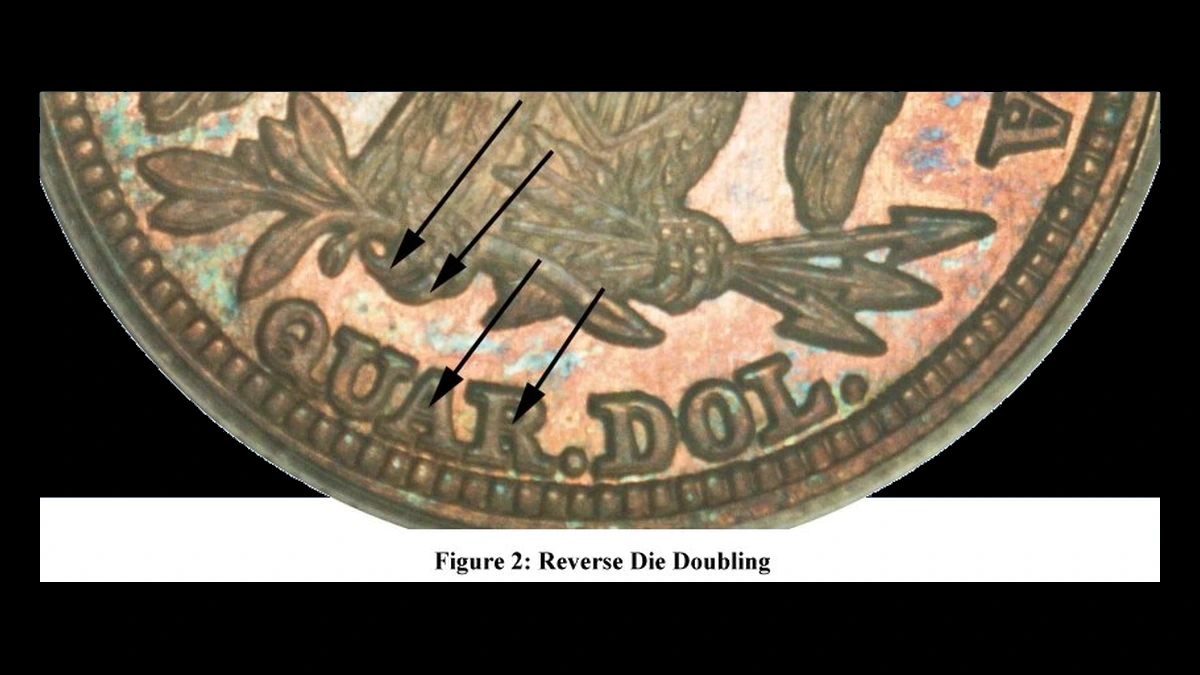
1. 1847 Quarter Split Letter Strokes and Claws: Doubled Reverse Error
The horizontal strokes inside A and R in the lower denomination show separation on the doubled back. Extra outlines also appear on the eagle’s claws at the viewer’s left.
The repeated image was already on the stamping tool. It could be transferred in one normal strike, rather than requiring the coin to be struck twice.
This back tool was used with two different fronts. One has a repunched 47, while the other has a normal date.
How to Identify
Begin with A and R in the abbreviated denomination on the back. Compare their horizontal strokes and the left-side claws with a clear reference.
Once the back matches, turn to the date. The repunched front has earlier traces below 4 and left of 7.
Those small traces can wear away. A normal-looking date may therefore reflect either the normal-date pairing or wear on the repunched-date pairing.
When wear makes the choice difficult, compare the complete date position with a specialist’s reference. Do not reject a genuine doubled back just because its small date traces are absent.
What It’s Worth
$100–$7,000 is the estimated whole-coin range for identified examples. Readable doubling can survive wear, but original high-grade surfaces account for much of the upper range.
PCGS records MS64 FS-801 at $5,750 on August 8, 2007. FS-801, formerly FS-002, identifies the combined repunched-date and doubled-back variety.
Match the front pairing and condition before using that result. It is not an automatic price for any worn doubled-back quarter.
2. 1847 Quarter An Extra Loop below Liberty’s Rock: Misplaced 8 Error
A small curved loop projects beneath the rock, above and slightly left of the regular 8. It is the lower part of an earlier 8 punched too high on the tool.
The correctly positioned date sits below that stray impression. This is cataloged as FS-301, also identified as Briggs 3-C.
A recorded NGC MS65+ example has fine cracks on the back as well. Those cracks do not replace the extra loop as the date-variety clue.
How to Identify
Find the regular 8, then move above and slightly left toward the rock’s bottom edge. Look for the loop extending below that edge.
Keep the normal date in the close-up so the position stays clear. The rock outline can make an unrelated bump look like part of a number when cropped too tightly.
Change the light to confirm raised metal rather than a scratch. Compare the loop itself with an FS-301 photograph.
This high extra 8 differs from the traces below 4 and beside 7 on the repunched-date pairing. They are not one combined diagnostic pattern.
What It’s Worth
$100–$25,000 is the estimated range from worn identified examples to exceptionally preserved coins. Clarity of the loop and the whole coin’s condition both matter.
The MS65+ Newman example illustrates the high-preservation end. That grade describes an unworn coin with especially attractive surfaces within its grade level.
A cleaned coin with a faint loop needs a lower comparison. Its accompanying cracks are not a second full value to add.
3. 1847 Quarter Extra Ridges or Patches: Die Cracks, Chips, and Cuds Error
A narrow crack in a tool leaves a ridge as coin metal enters it. A missing piece of the tool can leave a larger raised patch.
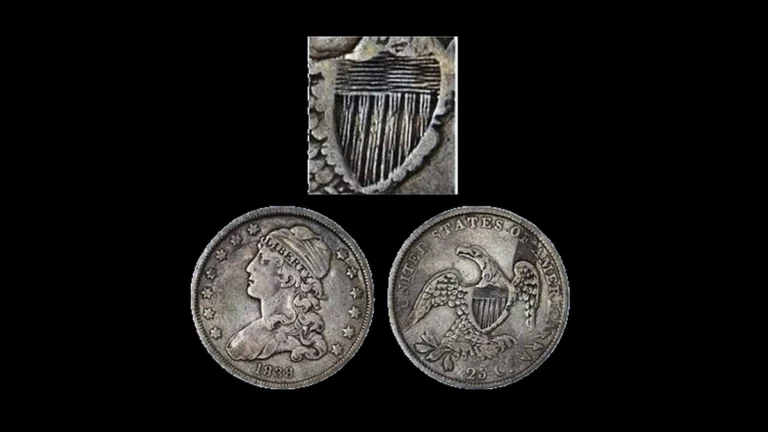
Reported back cracks occur near UNITED, the olive leaves, and STATES. A separate front feature is a large chip just below Liberty’s shield.
A larger rim-connected break, called a cud, is also reported. These features need not all occur on the same coin.
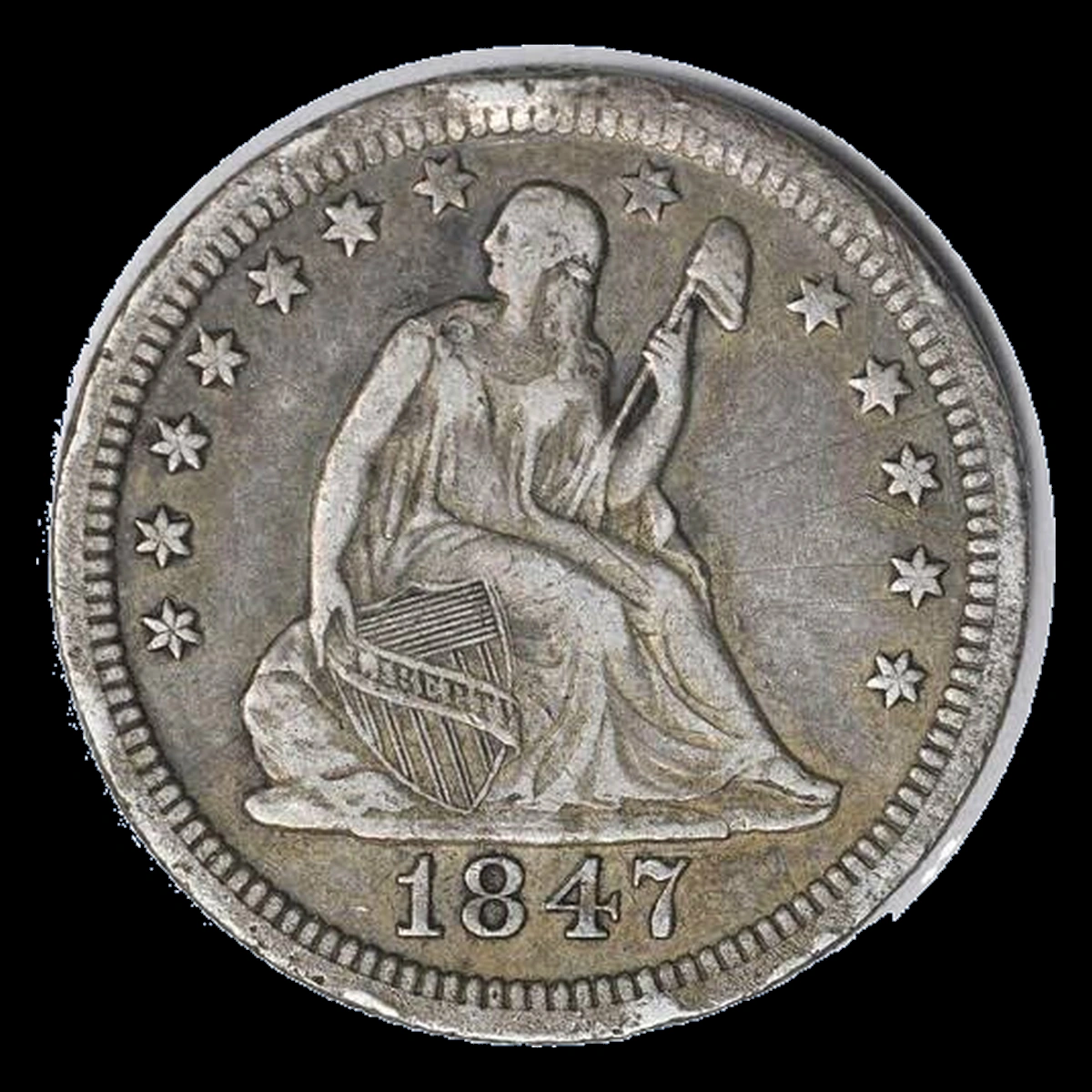
How to Identify
For the back cracks, inspect from N in UNITED toward the olive leaves and near TES in STATES. Trace only the actual visible lines.
For the inside chip, look immediately below the shield. For a cud, follow the raised patch to its connection with the original rim.
Use light from both sides to separate raised struck metal from a groove or deposit. A dent can push up a lip without any damaged tool being involved.
What It’s Worth
$40–$2,500 is the estimated whole-coin range for circulated examples with identifiable tool damage. A prominent rim break can draw more interest than a tiny crack.
The cracks on the exceptional MS65+ misplaced-date coin also accompany its high grade and date variety. Its value cannot be used as a crack-only premium.
Conclusion
The doubled back, the low traces of a repunched 47, and the high loop of a misplaced 8 occupy different places. Work through those positions before assigning a catalog number.
Raised cracks and chips need their own shape checks too. Several genuine features on one quarter still belong to a single coin with one overall condition and value.