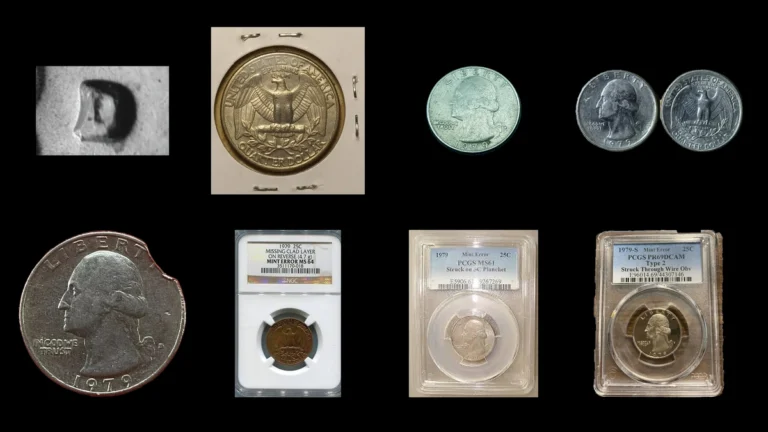
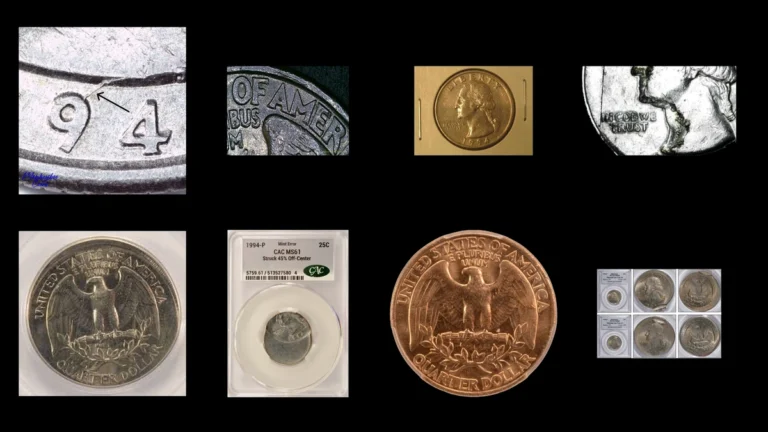
Rare 1955 Quarter Errors (List & Pictures)
A doubled-looking letter can have more than one cause, even on the same coin. The 1955 quarter errors below include a Proof with genuine die doubling and separate mechanical doubling, plus Denver mintmark and metal defects.
Estimated whole-coin values span $20–$750. A supplied comparison reached about $541 for a 1959-D repunched-mintmark quarter in January 2017; it is not a 1955 sale, so match the actual feature and finish before using it.
1. 1955 Quarter Inward Thickening in the Front Words: Proof Doubled Die Error
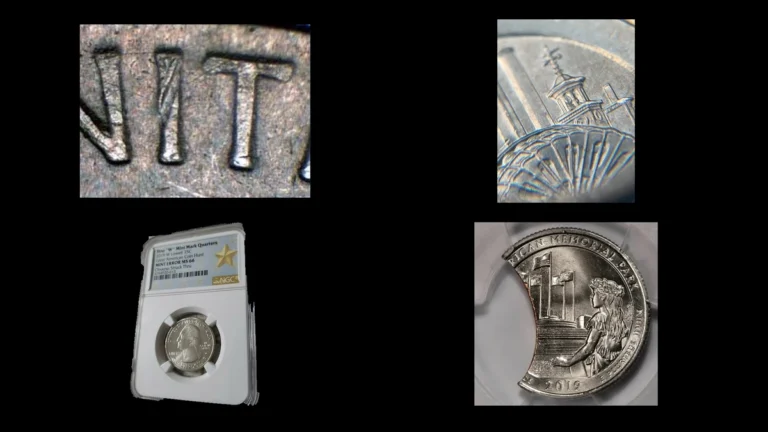
The listed 1955 Proof variety has thickening toward the center in LIBERTY and IN GOD WE TRUST, with small separations on some letters. Proofs are specially prepared collector coins.
The Wexler-team entry identifies Pr WDDO-001. Its examined specimen also shows mechanical doubling on both sides, so two different effects occur on that coin.
How to Identify
Compare several inward letter edges with an attributed Pr WDDO-001 and a normal 1955 Proof. The small raised separations should occur in the listed pattern rather than appearing randomly along one letter.
Use lower-angle light to identify flat shelves caused by movement during striking. Those mechanical ledges are separate from duplication already present in the die.
Confirm the original finish as well. Polishing can make an ordinary quarter reflective, so shine alone does not establish a Proof or the variety.
What It’s Worth
$50–$400 is estimated for an identified 1955 Proof doubled front, with preservation and visible separation important. A different 1959 Proof FS-101 in PR67 brought $288 in September 2011, which is a comparison for another year and pattern.
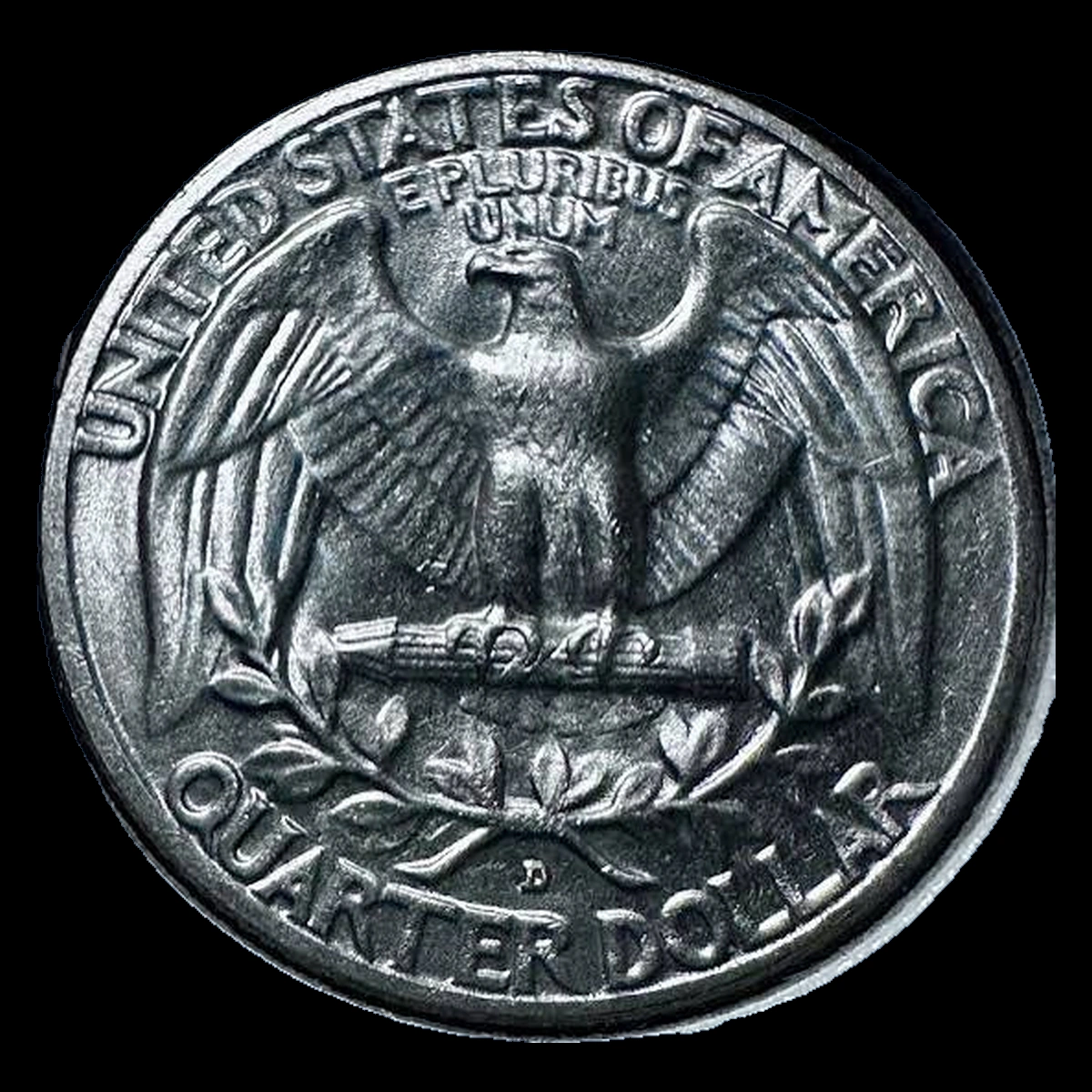
2. 1955 Quarter A Tilted Extra D Outline: Repunched Mintmark Error
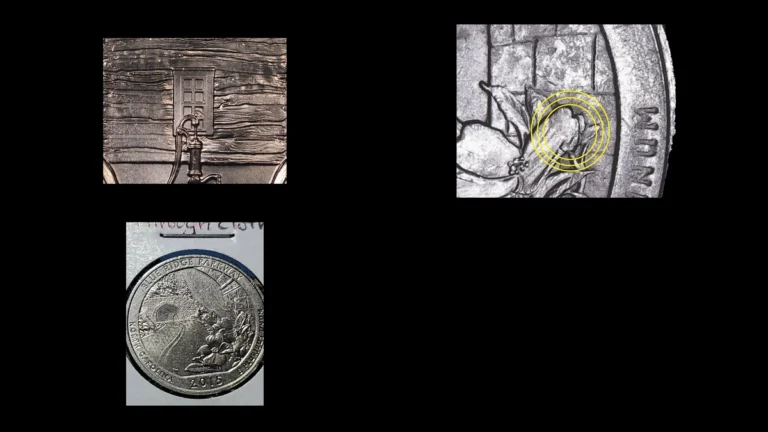
The reported Denver variety has remnants of a second D below the eagle on the reverse. Repeated hand-punching of the mint letter into the die could leave both positions visible on coins from that tool.
The coin itself did not need to be struck twice. The earlier letter outline was already part of the tool that made the design.
How to Identify
Keep the main D upright and compare the additional raised strokes with portions of another D. A thick mintmark, nearby lump, or damage that shoved the letter sideways is not enough.
Photograph the letter under two light directions and use an identified 1955-D reference. No San Francisco quarters were issued in 1955, while Philadelphia’s lack of a mintmark is normal.
What It’s Worth
$25–$300 is the supplied estimate for the reported 1955-D repunched mintmark. PCGS records about $541 in January 2017 for a 1959-D FS-501 in MS65.
That separate-date result should not be used as a fixed value for the 1955 letter pattern. A worn trace also requires a different comparison from sharply separated detail on an unworn surface.
3. 1955 Quarter A Thin Split on Washington’s Side: Lamination Error
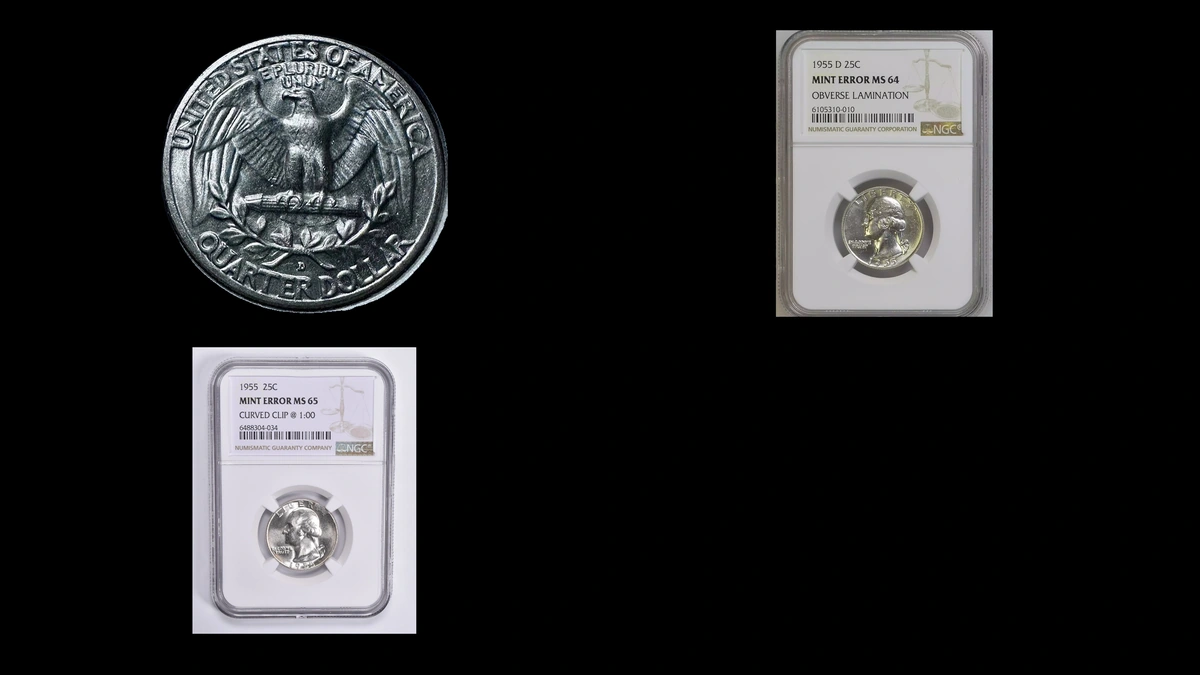
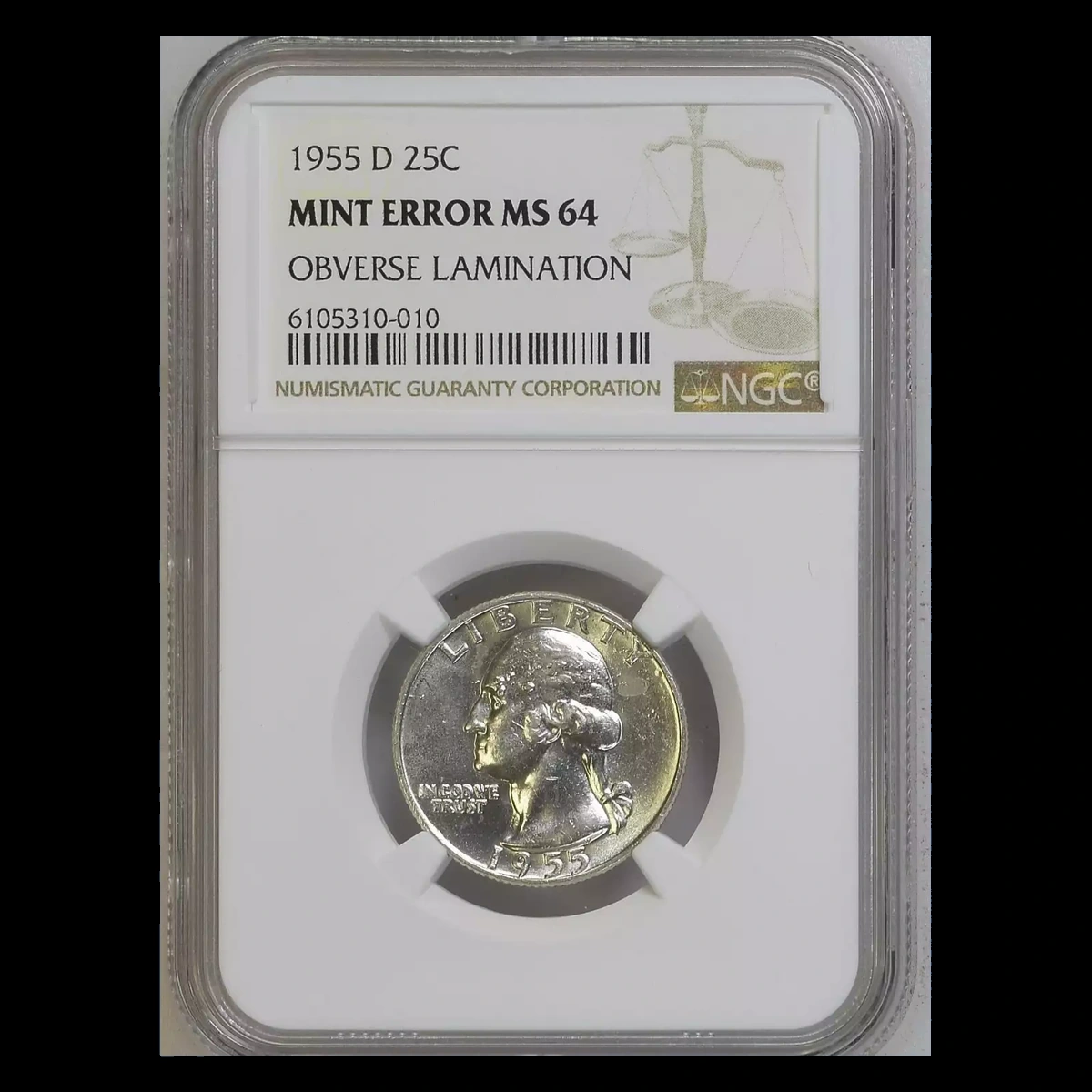
Harbor Coin listed a 1955-D front-lamination error graded NGC MS64. A weak region within the alloy can separate as a flap or leave a shallow peeled patch.
The normal quarter is 90% silver alloy throughout rather than a modern clad sandwich around a copper center. This kind of peeling should therefore not be described as loss of a copper-nickel outer sheet.
How to Identify
Follow the split under side lighting without lifting any loose metal. Examine how a thin separation runs into the surface and meets the remaining portrait or lettering.
A scrape may form an open groove with metal piled along its sides, while a natural lamination can lift from within the alloy. Keep both the 1955 date and reverse D visible in the identification photographs.
What It’s Worth
$20–$175 is a whole-coin estimate for genuine 1955-D lamination. The listed MS64 establishes an unworn example with some marks but supplies no completed-sale amount.
A clear attachment or peeling boundary can be more informative than a tiny unexplained rough spot. Cleaning or later damage can conceal the evidence that distinguishes the original defect.
4. 1955 Quarter Straight or Curved Missing Metal: Clipped Planchet Error
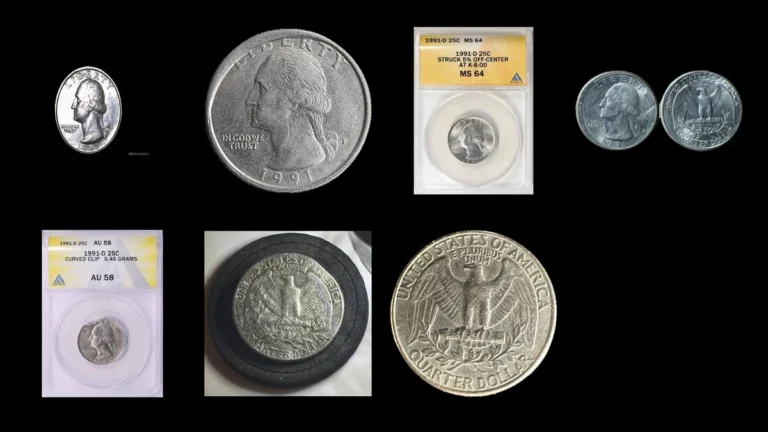
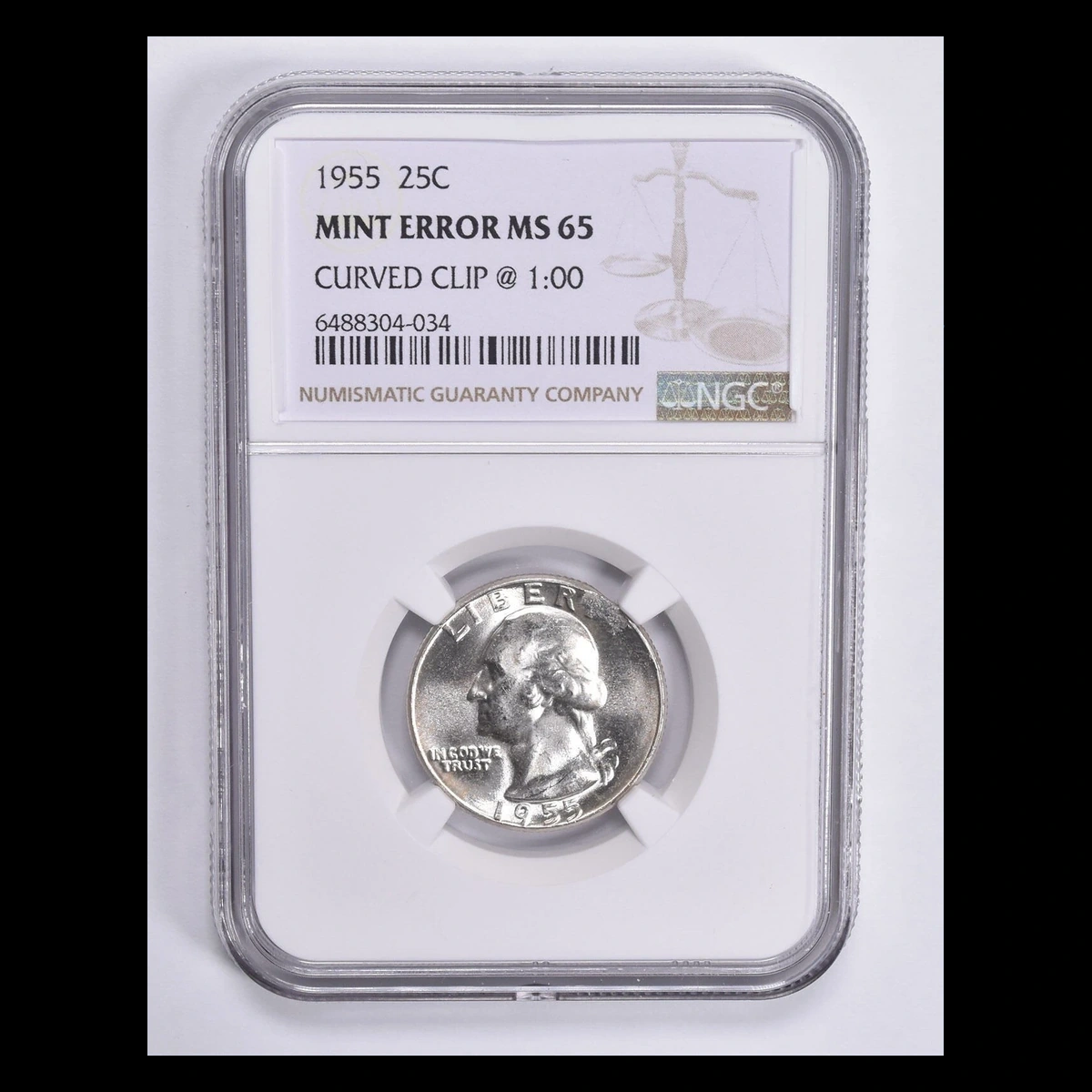
A blank cut across the edge of the metal strip can have a straight clip, while an overlap with a previously punched hole can create a curved one. Both leave the blank incomplete before the coin is struck.
Recorded 1955 examples include an ANACS MS63 straight clip weighing 6.07 grams and a separate NGC MS66 curved clip. They are different coins rather than two views of one piece.
How to Identify
Inspect where each end of the opening meets the rim and struck detail. Tapering or weakness near the gap can support an original clip, while a cutting burr, saw tracks, or pushed-up metal may reveal later alteration.
A normal silver quarter weighs 6.25 grams and measures about 24.3 millimeters across. The straight clip’s measured 6.07 grams shows that an original gap need not remove much weight, but weighing alone cannot establish its cause.
Opposite-rim weakness may be present without being required on every clip. Leave a certified coin in its holder and retain its recorded measurements.
What It’s Worth
$25–$200 is estimated for genuine 1955 clips. Both supplied examples appeared in grouped auction lots, so no group total should be presented as either coin’s individual realized price.
The higher MS66 grade describes better preservation than MS63, but the size, shape, and clarity of the opening also affect appeal. Grade alone does not explain every difference between the two.
5. 1955 Quarter A Blank Crescent beside an Incomplete Image: Off-Center Strike Error
The year guide reports off-center 1955 quarters without establishing a particular mint or certified specimen. Its illustrated 1983 comparison is a different year and cannot identify an actual 1955 example.
An off-center blank sits partly beyond the dies, leaving untouched metal and some intended design outside the disk. A slightly uneven border does not demonstrate that displacement by itself.
How to Identify
Read the surviving date before judging the size of the crescent. Missing digits may prevent a secure 1955 attribution, however dramatic the outline looks.
Compare both faces for design that runs beyond the same blank, and inspect the bare area for grinding or removed lettering. An expanded outline that keeps the entire design needs a broadstrike comparison instead.
What It’s Worth
$100–$750 is an estimate for a genuine, clearly dated 1955 off-center quarter. A later clad 1988-P struck 30% off center in ANACS MS63 sold for $109 in January 2022, providing context rather than a silver 1955 record.
Conclusion
Match a 1955 quarter’s mint and finish before comparing a small extra outline. The Proof variety can carry mechanical doubling as well, so a flat ledge should not be mistaken for every part of the doubled die.
For missing or peeling metal, preserve the boundary and keep measurements with the correct specimen. Other-year prices and grouped-lot records offer context, but they do not supply individual 1955 sale results where none are disclosed.