Rare 1893 Quarter Errors (List & Pictures)
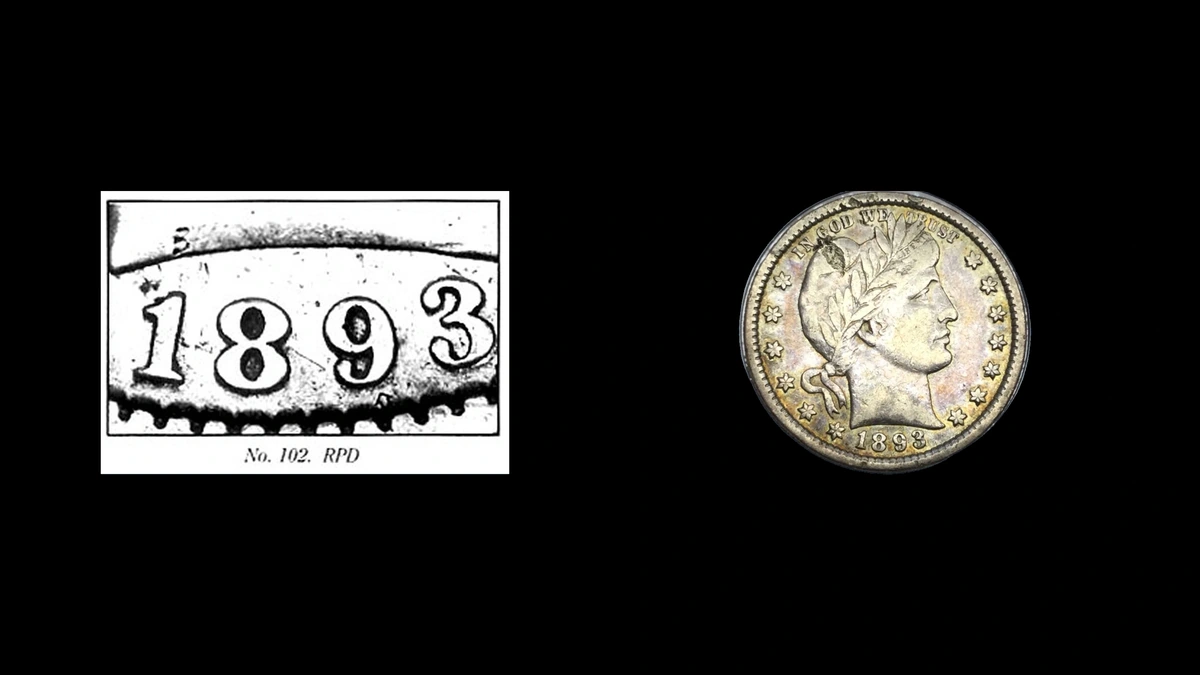
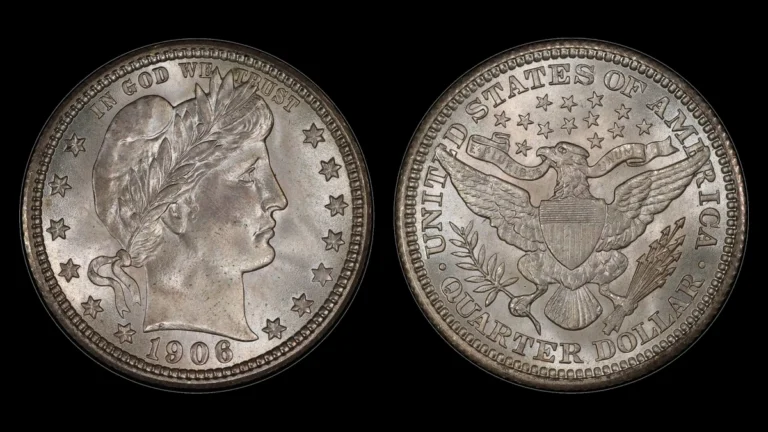
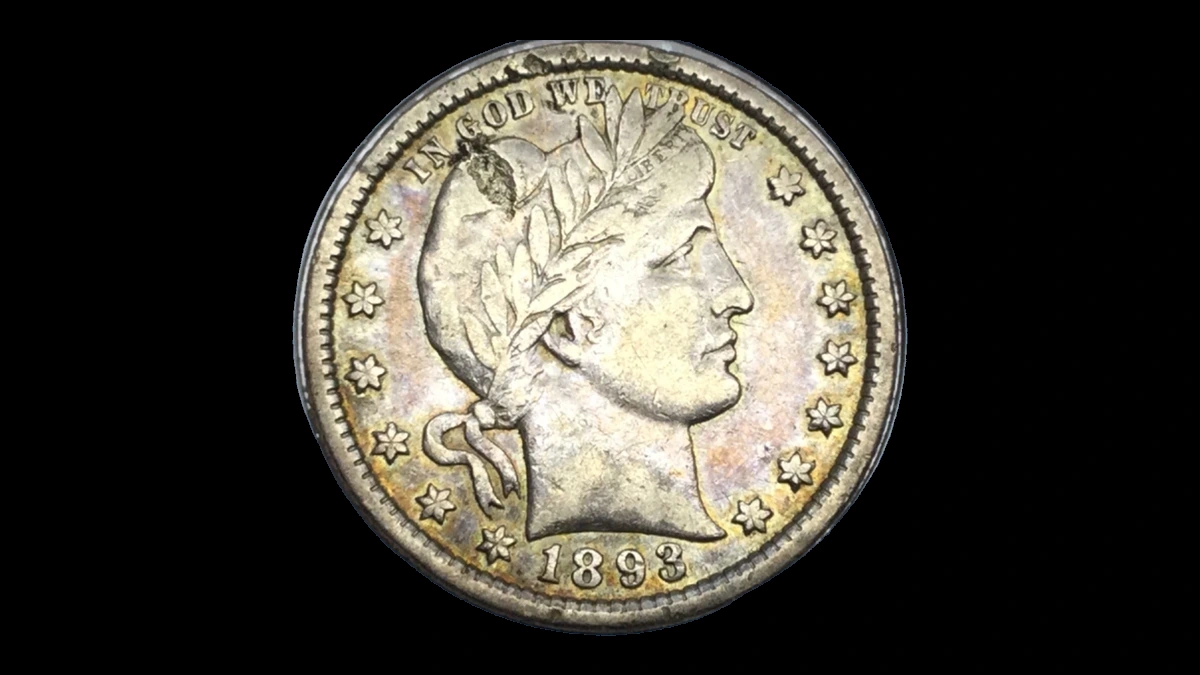
Two different quarters carry the 1893 date: the regular Barber design and the Isabella commemorative. This guide covers the Barber coin, with Liberty’s head on the front and an eagle on the back.
Estimated values for 1893 quarter errors range from $35–$5,000. A same-series comparison, a 1901 off-center quarter, sold for $862.50 in January 2001.
Begin with repeated date or mintmark details, then check raised lines, peeling metal, and the outline.
1. 1893 Quarter Extra Curves around the Numbers: Repunched Date Error
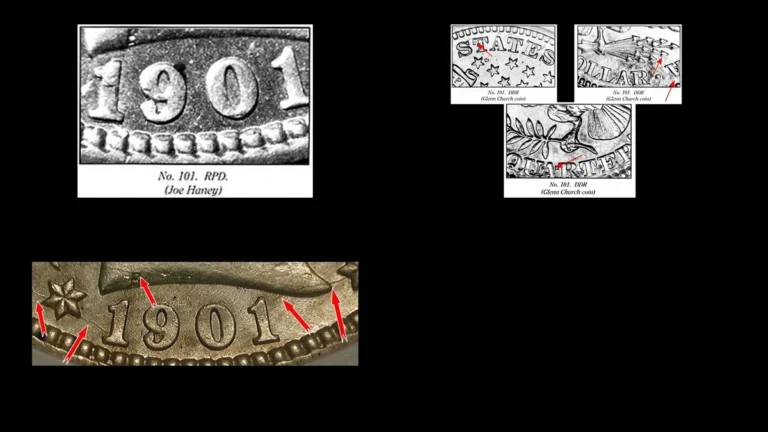
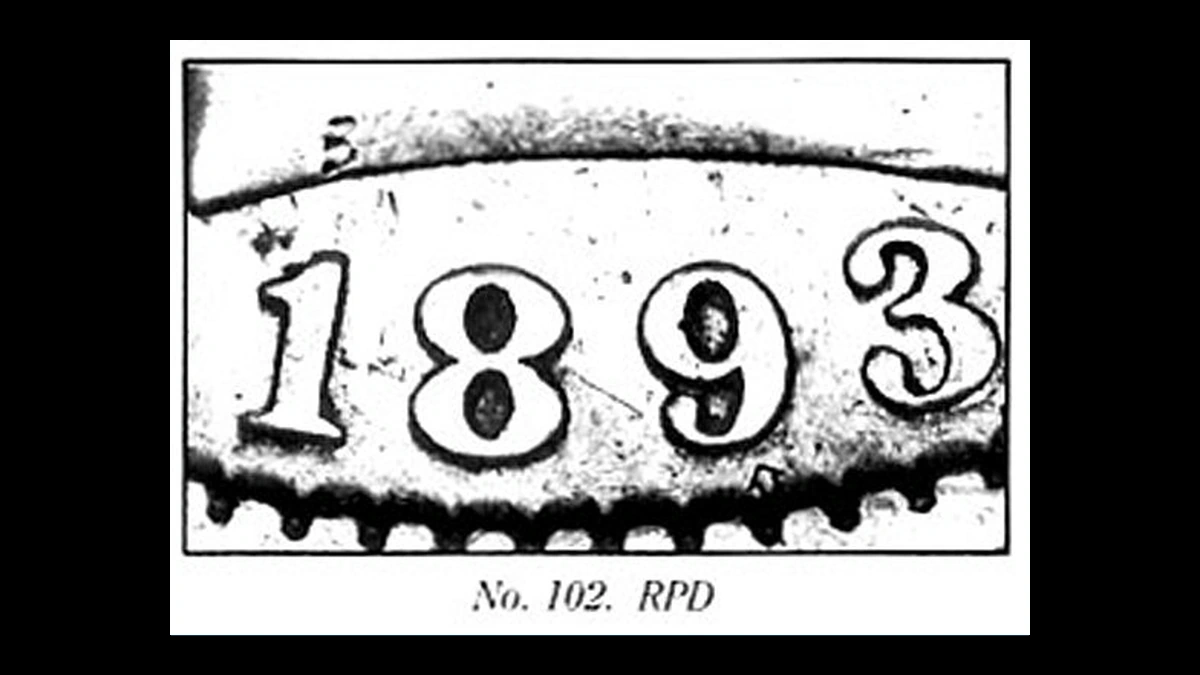
A second curve inside the 3 or small remnants beneath the date can come from repunching. An earlier date impression remained in the die after workers punched the numbers again.
The Barber Coin Collectors’ Society records Philadelphia and San Francisco patterns. Their remnants occupy different positions, so they should not be combined into one universal test.
How to Identify
Photograph all four digits before enlarging the most obvious extra stroke. Note which remnants sit above or below the normal numbers, then compare a known example from the same mint.
Use the small tooth-like marks near the rim as fixed reference points. A date placed slightly higher or lower is not repunched unless an earlier impression remains.
Raised numeral-shaped curves are more useful than a vague shadow or flat shelf. Also read the reverse denomination: an overdate reported on an 1893 dime is not evidence for this quarter.
What It’s Worth
$50–$2,000 is the estimated whole-coin range for authenticated worn through modest unworn pieces. Philadelphia and San Francisco coins need separate comparisons because their ordinary values differ.
A clear date pattern on an original surface has more to show than faint marks obscured by cleaning. The range does not cover every exceptional high-grade rarity.
2. 1893 Quarter Another Letter beside O or S: Repunched Mintmark Error
On the reported New Orleans variety, an earlier O sits to the right of the final O. The San Francisco pattern has an earlier S farther to the right.
The society’s variety survey calls these eastward repunchings. The small mint letters were added to the die by hand, and repeated placement could leave part of the first letter visible.
How to Identify
Hold the eagle upright and find the mintmark above QUARTER DOLLAR. Search immediately to its right for the rounded remnant of O or the curved remnant of S.
Include both outlines in one close-up. A single letter placed far right is ordinary mintmark placement, not proof that the punch was applied twice.
Check the extra shape under angled light for original raised metal. Dirt or added material beside the letter can imitate a second stroke.
What It’s Worth
$60–$3,000 is an estimated whole-coin range for authenticated O/O and S/S examples from worn through modest unworn condition. The correct mint and strength of the earlier letter matter.
A 1916-D repunched-mintmark quarter graded ANACS AU50 brought $149 in December 2021. That lightly worn, different-year coin is a market comparison, not a recorded price for either 1893 pattern.
3. 1893 Quarter Raised Lines or an Edge Blob: Die Cracks and Cuds Error
Year reports place raised cracks near the date, between stars, and around the eagle’s wing tips. Silver entered splits in the die and copied them onto the coin.
A larger broken area at the die’s edge can leave a raised mass joined to the rim. This is a cud; a thin line reaching the rim is not automatically one.
How to Identify
Move the light across the suspected line and confirm that it rises above the field. A scratch cuts into the surface, although pushed metal along its sides can be misleading.
For a cud, trace the blob’s connection to the rim and inspect the surrounding design. An interior lump, attached residue, or a battered edge needs a different explanation.
The reports do not give every crack a fixed mint assignment. Match the actual path rather than assuming all described lines belong on one coin.
What It’s Worth
$35–$1,500 is the estimated range for authenticated worn examples. A small crack usually adds less interest than a clear rim break that interrupts the design.
The coin’s mint and preservation remain part of its price. A long line by itself does not justify the top estimate.
4. 1893 Quarter A Flap or Shallow Broken Patch: Lamination Error
A weak area within the silver alloy can let a thin piece lift or fall away. This separating-metal defect is called lamination.
A published listing summary describes a minor example on an 1893-O quarter. It does not establish the exact face or position of the defect.
How to Identify
Study the edge of the broken patch for a lifted lip or layered boundary. Color alone cannot show that metal has separated.
Leave any attached flake untouched and photograph it from opposite light directions. Look for deep tool cuts, pushed metal, or corrosion that could explain the patch as later damage.
Confirm the O beneath the eagle, but let the actual photograph establish the defect’s location. Do not borrow a location from another year’s coin.
What It’s Worth
$35–$600 is the estimate for a genuine minor lamination on a worn 1893-O. Original surfaces and a clear broken boundary help make the feature understandable.
A 1913 Barber quarter with reverse lamination sold for $504 in June 2019 at PCGS MS63. That unworn coin is a better-preserved, different-year comparison.
5. 1893 Quarter A Ragged or Curved Gap: Incomplete Blank Error
A reported Philadelphia piece has a ragged clip, while broader year reports also mention curved clips. The metal was already missing when the remaining blank received its design.
A curved gap can result when a blank cutter overlaps an earlier hole in the strip. A rough strip edge can leave a more irregular missing section.
How to Identify
Start at the two points where the gap meets the rim. Naturally softened transitions and nearby strike weakness can support an incomplete blank.
Saw marks, fresh burrs, or letters cut through after striking suggest damage. A ragged outline is not enough to decide the cause.
The opposite rim may also be weak, although this clue varies. Keep both faces and the gap in the same photo set so the date and mint remain tied to the feature.
What It’s Worth
$40–$700 is the estimated range for genuine worn examples. A noticeable gap with a readable date usually displays better than a tiny notch on a heavily worn coin.
The Philadelphia account describes a sale listing, not a verified completed auction. Multiple missing areas on one coin do not create separate prices to add together.
6. 1893 Quarter Incomplete Designs beside a Blank Crescent: Off-Center Strike Error
An off-center blank receives only part of the intended design. One area stays unstruck while the opposite portion of the portrait and eagle falls beyond the metal.
The 1893 category appears in year guides without one established mint, direction, or percentage. Those details must be read from an actual example.
How to Identify
Trace the outer stars and lettering until they meet the original edge. Missing intended design distinguishes an off-center strike from a broadstrike that retains the complete design on expanded metal.
Compare the back with the same blank area. If the portrait is displaced but the eagle is centered, a shifted die may explain the appearance.
Inspect the empty space for grinding lines or flattened letter remnants. Removing finished detail after striking does not create a genuine unstruck crescent.
What It’s Worth
$300–$5,000 is the estimate for an authenticated, dated 1893 off-center quarter. The amount of displacement, surviving date, mint, and condition all affect its place in that span.
A 1901 quarter struck 5% off-center brought $862.50 on January 4, 2001. PCGS graded that earlier sale example AU55, meaning lightly worn.
Its 5% displacement does not establish the size of any 1893 error. Compare the actual missing design before using that sale as a guide.
Conclusion
Small repeated letters need a close match, while missing or peeling metal needs a clear view of its boundary. An unusual shape is only the start of identifying the cause.
Keep mint identity attached to every comparison, especially when moving between Philadelphia, New Orleans, and San Francisco. Photograph the full Barber design as well as the feature so it cannot be confused with the separate Isabella quarter.