Rare 1848 Dime Errors (List & Pictures)
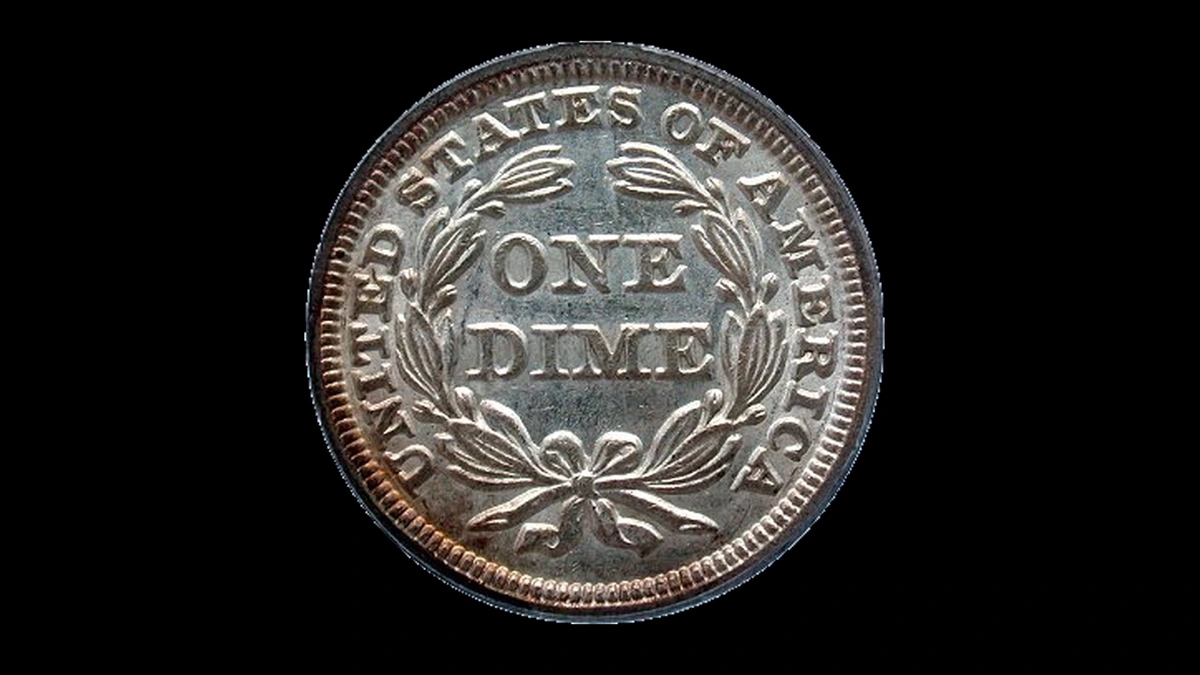
The date position can be as useful as the raised line when checking 1848 Liberty Seated Dime errors. One reverse die had already been used in 1847, so its crack alone cannot identify the year.
A documented F-101a sold for $182.25 at GreatCollections. Estimated whole-coin values for circulated examples run about $50–$500; compare the actual date before choosing between the two reverse crack patterns below.
1848 Dime A Fine Ridge Crosses STATES or the Ribbon: Reverse Die Crack Error
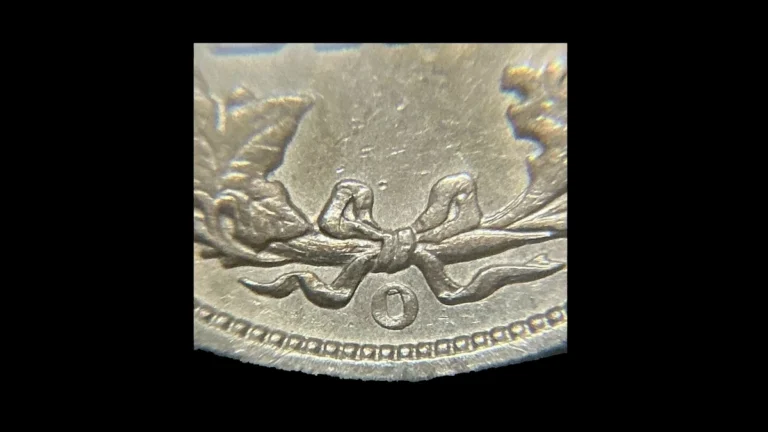
On F-101 and F-101a examples, the area to inspect is TES in STATES. On the separate F-102 variety, a later-stage crack runs horizontally through the ribbon and right stem.
These F numbers identify particular die pairs, meaning the two steel tools that made the coin. They help keep different crack patterns attached to the correct combination.
As a die cracked, silver entered the opening during striking and emerged as a raised line. The coin copied damage in the tool rather than necessarily splitting itself.
An earlier F-102 can lack the ribbon crack because the tool had not yet developed it. Nor should one line be expected to connect both reported locations on the same coin.
How to Identify
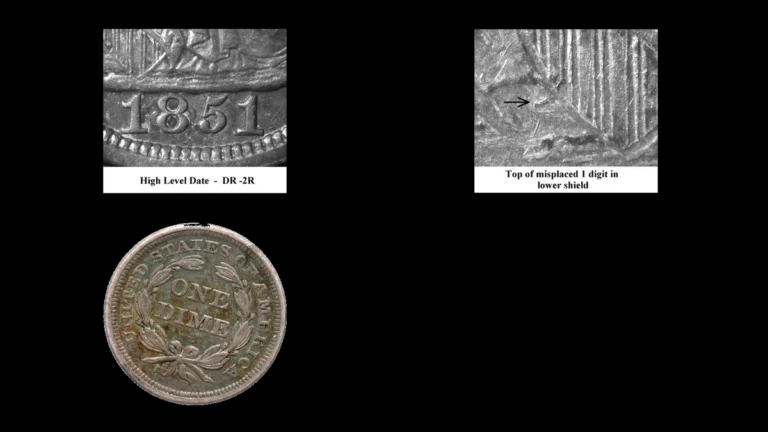
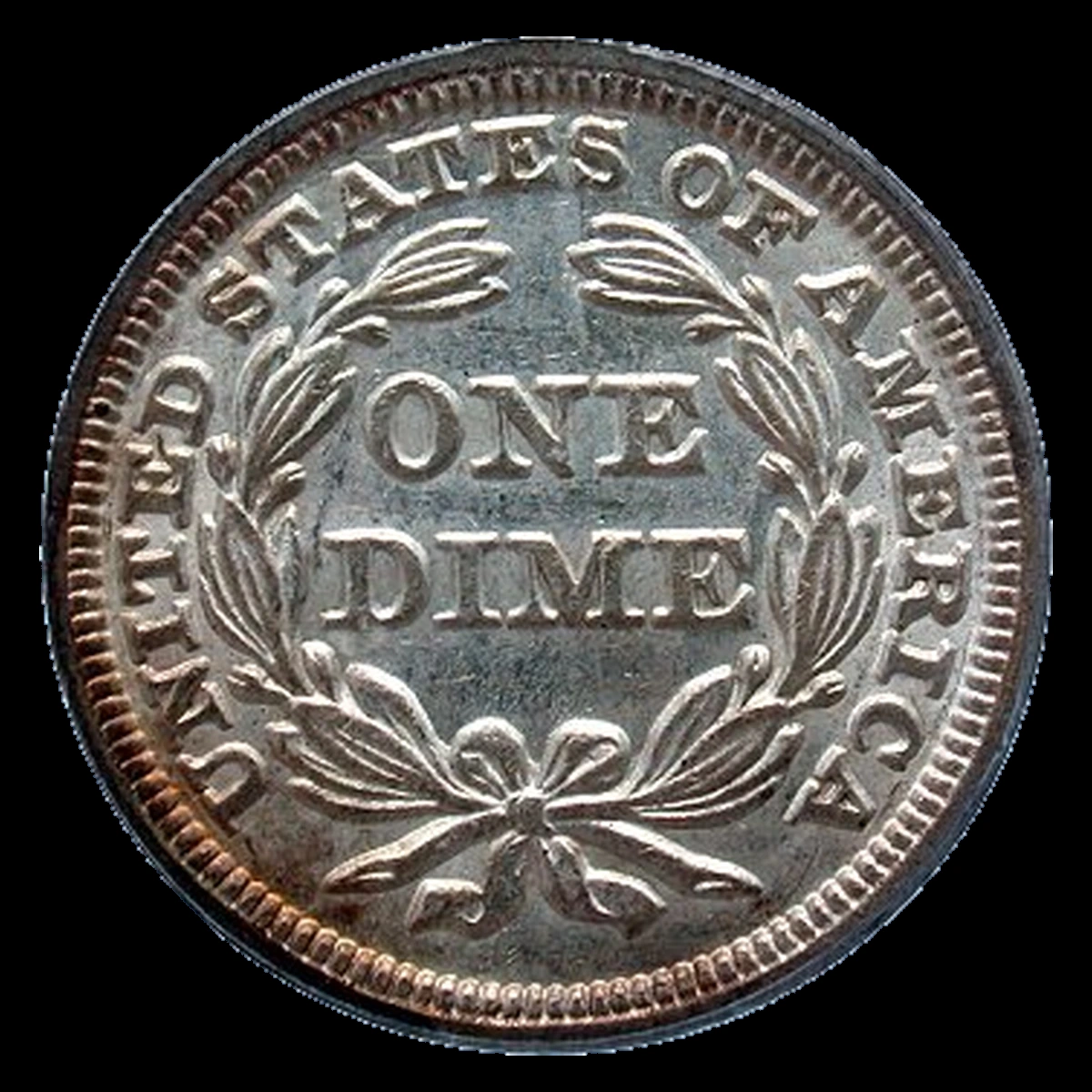
Read all four date digits and compare their position with Fortin’s illustrated 1848 reference. F-101 has a high date sloping downward, while F-102 has a very high, level date.
Now turn to the corresponding reverse area and follow the suspected ridge with a magnifier. Use low side lighting to check whether it rises above the surrounding silver.
A later scratch cuts into the coin and can disturb the finished letters. A matching die crack follows the reference’s raised route rather than merely occupying the same general area.
Photograph the full date and reverse along with the enlarged line. That preserves the evidence linking the correct year and die pair.
A normal dime of this issue began at 2.67 grams and about 17.9 mm, with a grooved edge and 90% silver alloy. Wear can reduce weight, so measurements support the examination without replacing the visual match.
What It’s Worth
$50–$500 is an estimated whole-coin range for circulated examples with identifiable cracks. Clear detail and original surfaces generally make a more appealing comparison than a scratched or cleaned coin.
The F-101a at $182.25 was labeled PCGS Genuine AU Details. That indicates light wear along with a condition problem rather than an ordinary straight numerical grade.
The sale values the complete dime, including its condition. It does not establish a separate amount to add simply because a raised line is visible.
Conclusion
Use the date to choose the die pair, then inspect TES or the ribbon and right stem. A full photograph keeps the crack from being separated from the evidence that identifies it.
Remember that cracks develop over time, so an earlier F-102 can lack the later ridge. The price range applies to the whole circulated dime, with wear and surface problems still part of the assessment.