Rare 1881 Dime Errors (List & Pictures)
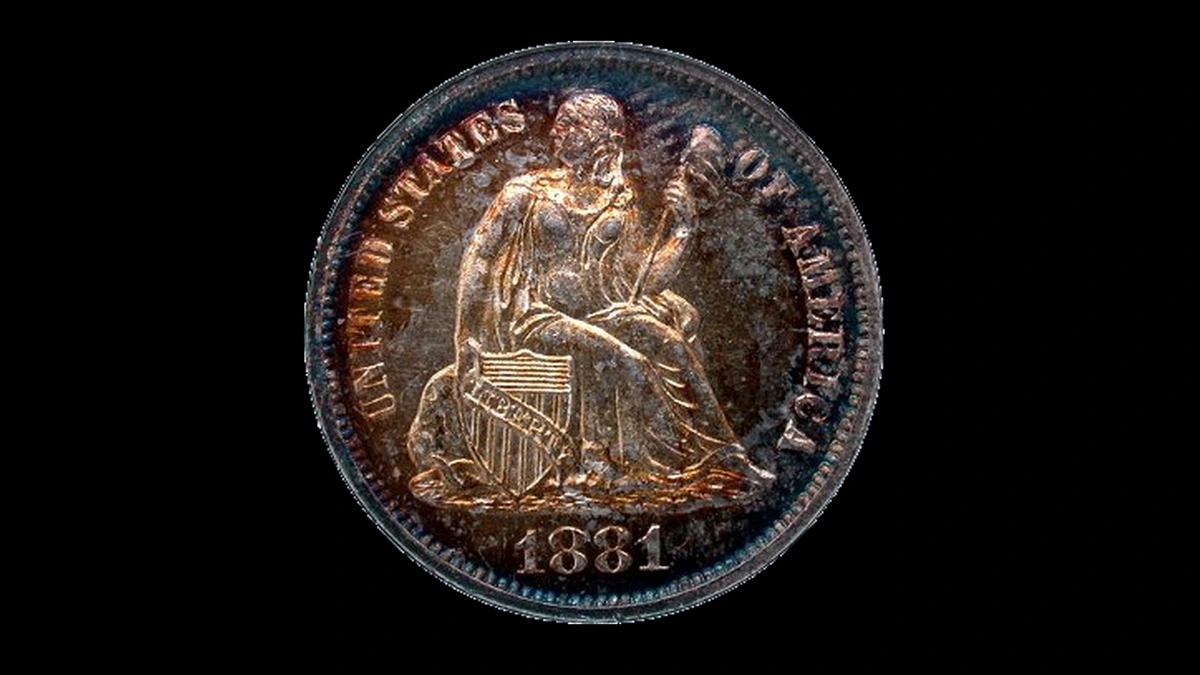
A partly formed S offers a starting point for identifying the 1881 dime errors discussed here. An attributed F-101 Proof with a surface problem sold for $715.50, while the estimated whole-coin range for related Proof and regular-strike examples is $250–$2,000.
Use the letter’s actual outline and the date placement together, then determine the coin’s finish before making a price comparison.
1881 Dime An Incomplete S in STATES: Broken and Partial Letters Error
Inspect the first S in STATES for a missing portion of its normal shape. The reference also records a partial O, providing another letter to compare rather than relying on one weak stroke.
The Proof form is designated F-101, and the related regular strike is F-101a. Their shared letter feature connects the die references, but it does not make every example a Proof.
A missing-looking stroke describes what appears on the coin. By itself, it does not prove whether grease, a broken die, or some other cause produced the feature.
How to Identify
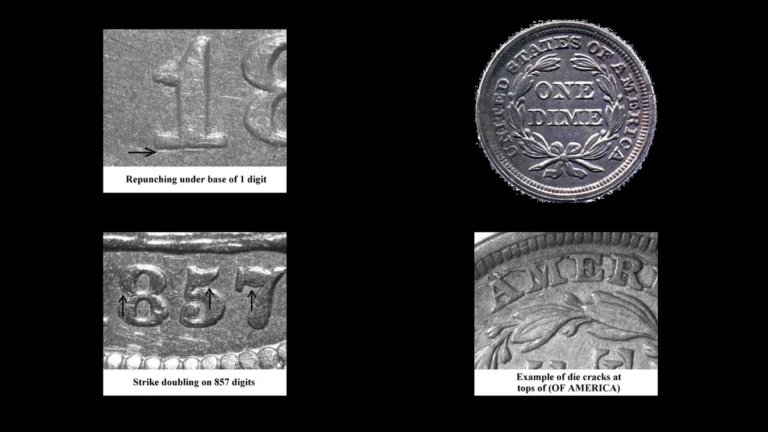
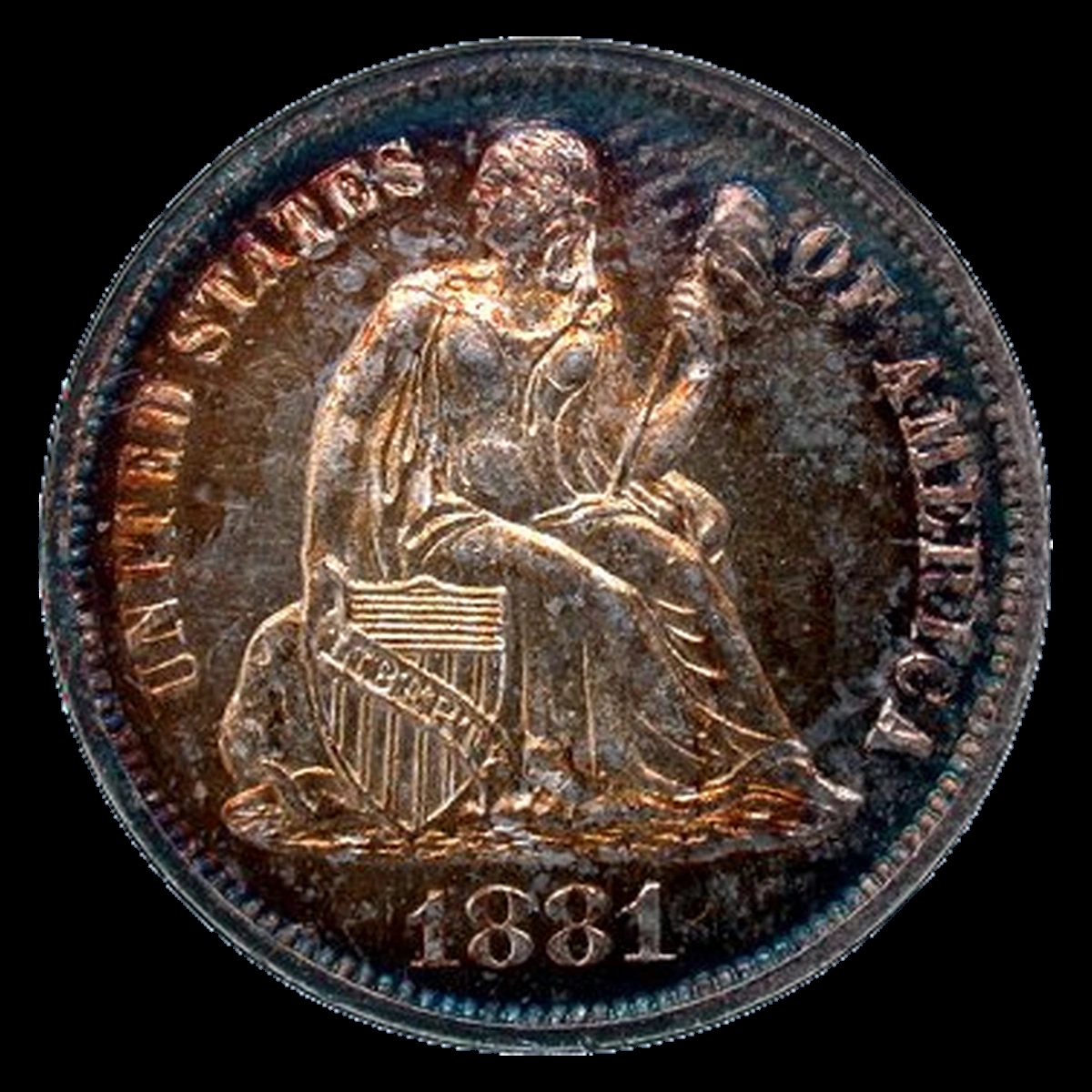
Compare the S at the same scale and lighting angle as the Fortin reference photographs. Follow its remaining outline, then check whether the partial O agrees as well.
Next inspect the date below Liberty, keeping the rim teeth and pendant visible. The first 1 has a particular alignment with those rim teeth, and the second 8 occupies a specific position beneath the pendant.
These location checks help determine whether the coin shares the recorded die pairing. An S worn thin on a different pairing is a different finding, even if a small image makes both letters look incomplete.
Assess the finish using the entire coin rather than the S alone. Proofs were specially made for collectors, while F-101a identifies the related regular-strike form.
A normal 1881 dime contains 90% silver, measures about 17.9 millimeters, and originally weighs 2.50 grams. Those specifications provide a basic check, but they cannot resolve the letter pattern or determine Proof status.
What It’s Worth
Estimated values are $250–$2,000 for collectible examples of the two attributed forms. The F-101 Proof auction result was $715.50.
PCGS described that coin as Genuine Uncirculated Details, meaning it had no circulation wear but a surface problem prevented an ordinary numerical grade. It therefore should not be used as an exact price for a problem-free high-grade Proof.
The auction total includes the underlying dime, its finish, preservation, and attribution. It does not establish a separate dollar premium for the incomplete S, or the value of every faint-lettered 1881 dime.
Conclusion
Three visual relationships make this attribution useful: the incomplete S, the accompanying letter detail, and the date’s alignment with the rim teeth and pendant. Check them as a group before choosing F-101 or F-101a.
After that, separate Proof from regular strike and compare surface condition carefully, especially when a quoted sale carries a Details designation instead of a normal numerical grade.