Rare 2024 Dime Errors (List & Pictures)
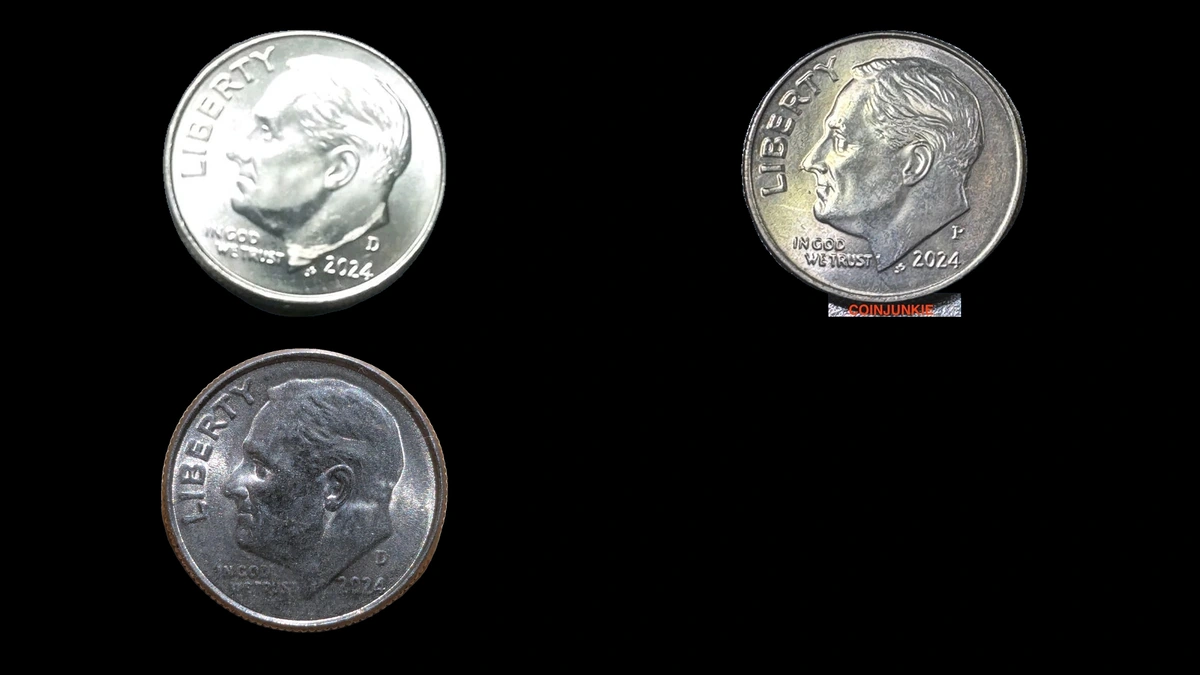
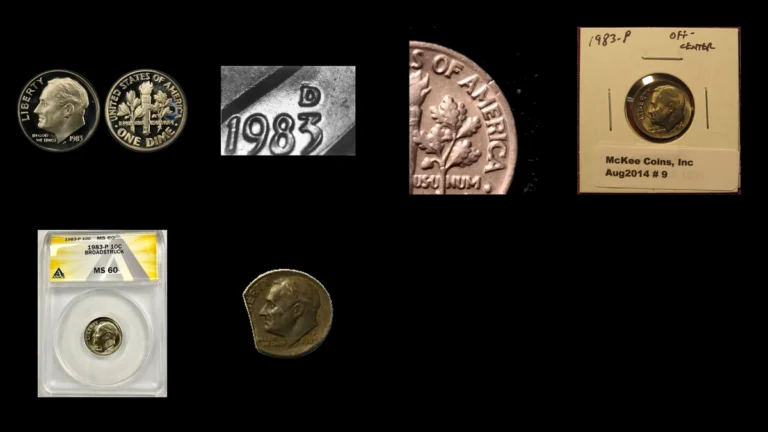
Reports of 2024 dime errors cover estimated whole-coin values of $5–$500, but the supplied examples mostly provide comparisons from other years. The highest completed comparison is $159 in September 2025 for a 2000-P combining broadstriking with multiple strikes.
Identify the coin’s metal and inspect its outline before deciding whether a raised spot, weak patch, or extra edge fits a reported category.
| What to examine | Reported category | Estimated value |
|---|---|---|
| A missing section and nearby rim | Clipped planchet | $25–$200 |
| An enlarged outline with full design | Broadstrike | $50–$300 |
| Bare metal opposite missing design | Off-center strike | $25–$500 |
| A lifting or missing surface layer | Lamination and layer separation | $15–$300 |
| A raised obverse mound | Die chip | $5–$100 |
| Extra contours on letters or numerals | Doubled die obverse report | $50–$100 |
| A local interruption among sharp details | Strike-through | $20–$150 |
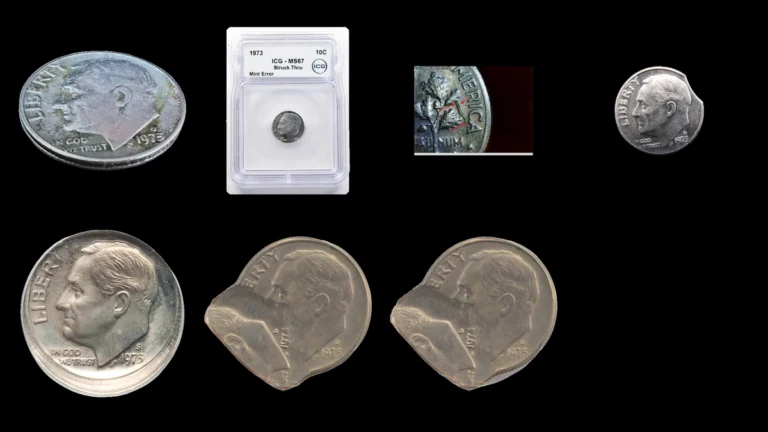
1. 2024 Dime Part of the outline is missing: Clipped Planchet Error
The 2024 guide includes clips without identifying a particular mint, percentage, or gap shape. A genuine clip begins before striking, when the blanking punch overlaps an earlier hole or the edge of the metal strip.
The incomplete blank can still receive a design. Its missing section therefore affects the way the surrounding rim and detail form.
How to Identify
Examine fading design and metal flow at the two endpoints, then inspect the opposite rim for possible weakness. A curved bite or straight gap alone cannot distinguish an original clip from later removal.
Look for burrs, file marks, or cutting scratches under a 10× magnifier. Copper visible inside the gap is normal for a circulation dime’s layered construction and proves neither authenticity nor damage.
Ordinary P and D dimes start at 2.268 grams and 17.91 millimeters, with grooved edges. Measure intact portions and consider weight loss from missing metal without treating either measurement as a complete diagnosis.
What It’s Worth
The estimate is $25–$200 for genuine clips, depending on size, preservation, and readable identity. No particular 2024 clip sale establishes the range.
A 2002-D with a 10% straight clip sold for $61 in September 2024. Its MS67 Full Bands grade indicates excellent unworn preservation and separated torch bands, but its facts do not describe an unspecified 2024 example.
2. 2024 Dime Metal spreads beyond the full design: Broadstrike Error
A collar normally controls a dime’s width and forms its edge grooves. If it fails to restrain the blank during the strike, metal can spread outward while both designs remain complete.
The 2024 guide discusses broadstriking without naming a certified specimen. An uneven border must still be distinguished from other alignment problems or later flattening.
How to Identify
Check the full outer design on both faces before comparing the expanded width with 17.91 millimeters. Missing design calls for an off-center assessment instead.
Inspect the edge for absent or incomplete grooves consistent with failed collar contact. Original metal can spread without a large weight change.
Repeated dents, crushed design, or scraped surfaces can indicate later hammering. A smooth edge or large diameter by itself does not establish a broadstrike.
What It’s Worth
The supplied estimate is $50–$300 for worn through attractive unworn whole coins. Clear spreading and preserved surfaces support stronger comparisons.
A 2000-P graded MS65 sold for $159 in September 2025, but it combined a broadstrike with multiple strikes. That different-year result prices both features on one coin and does not establish a 2024 broadstrike sale.
3. 2024 Dime Unstruck metal borders an incomplete picture: Off-Center Strike Error
Reported Philadelphia and Denver offsets involve a blank outside its intended striking position. Some design misses the available metal while another part of the blank remains unused.
The frequently mentioned 45% example is an estimated scenario, not a documented auction specimen. Any actual coin must supply its own displacement and surviving date evidence.
How to Identify
Find all four date digits and the P or D before assigning the coin to 2024. A missing date does not independently establish that year.
Compare the bare area on both faces, keeping the entire outline visible. A shift affecting only one picture suggests a different alignment problem.
Inspect the transition for grinding or polishing that removed finished detail later. The strongest evidence combines genuine blank metal with corresponding missing design.
What It’s Worth
Readable-date examples have an estimated $25–$500 range, from minor shifts through stronger attractive errors. Amount of displacement, preservation, and remaining identity all matter.
A 1977 dime struck 10% off center sold for $109 in June 2026 at MS64 Full Bands. Its different year and specific grade make it a comparison rather than a 2024 record.
4. 2024 Dime A flap lifts or exposes an underlying layer: Lamination and Layer Separation Error
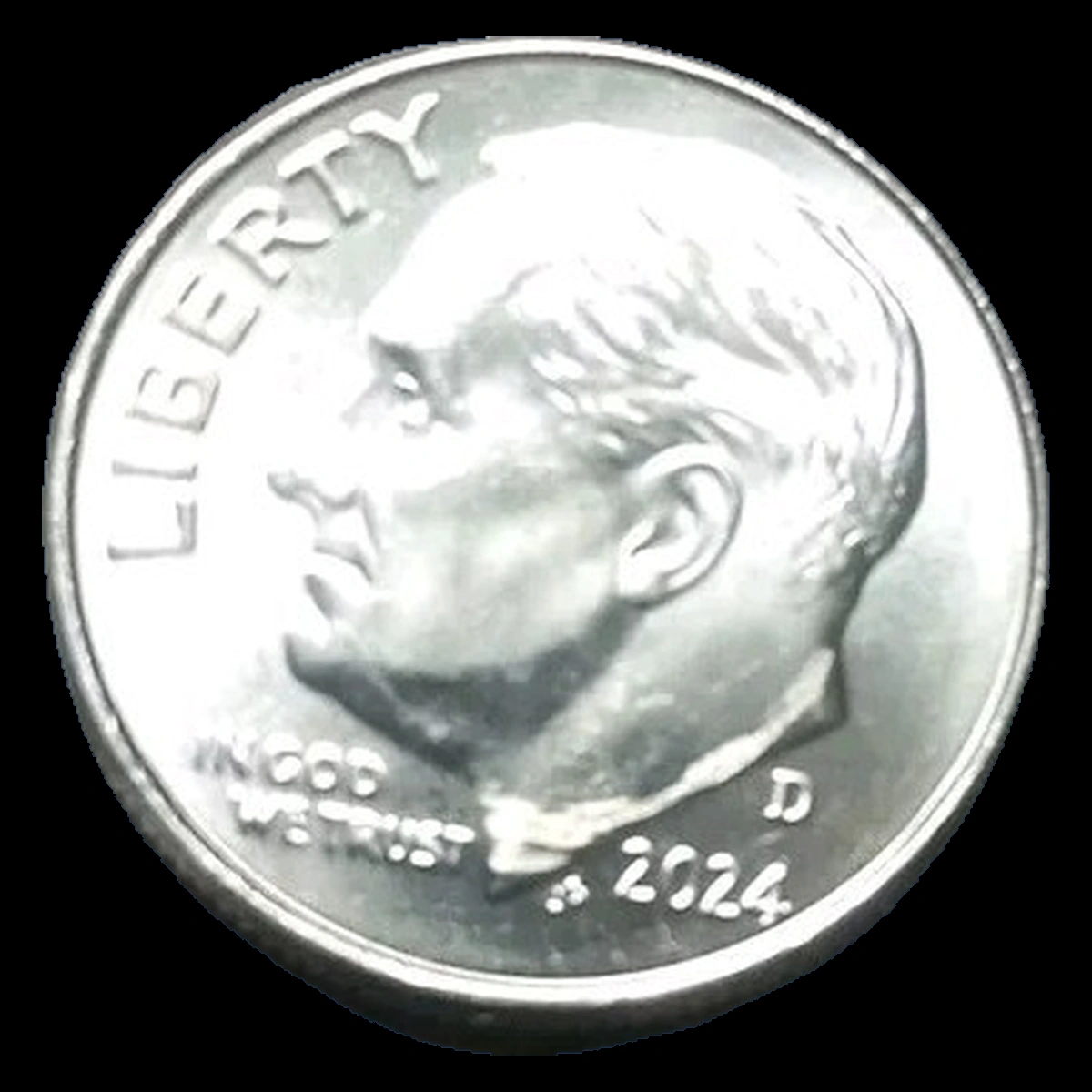
An ordinary circulation dime has a copper center between copper-nickel outer layers. A weak bond can allow an outer layer to separate, while smaller flakes can also develop within the metal itself.
The general 2024 discussion identifies no particular example. A copper-colored patch needs physical evidence of separation before it receives an error diagnosis.
How to Identify
Establish the metal first: ordinary P and D dimes weigh 2.268 grams, whereas the 2024-S silver Proof is 99.9% silver and weighs 2.537 grams. Both are 17.91 millimeters across.
The silver Proof cannot lose a copper-nickel outer layer in the manner of the clad circulation coin. It requires a different material assessment.
Follow the opening beneath intact metal without pulling a flap. Heat, chemicals, or grinding can expose copper, and the ordinary copper stripe at the edge is normal.
What It’s Worth
The estimated range is $15–$300 for genuine layer defects on everyday dimes. Small flakes generally belong below more extensive, clearly original separations.
A 2019-P missing 80% of its obverse outer layer sold for $139 in September 2024 at MS61 Full Bands. That major different-year layer loss does not price every small 2024 flake.
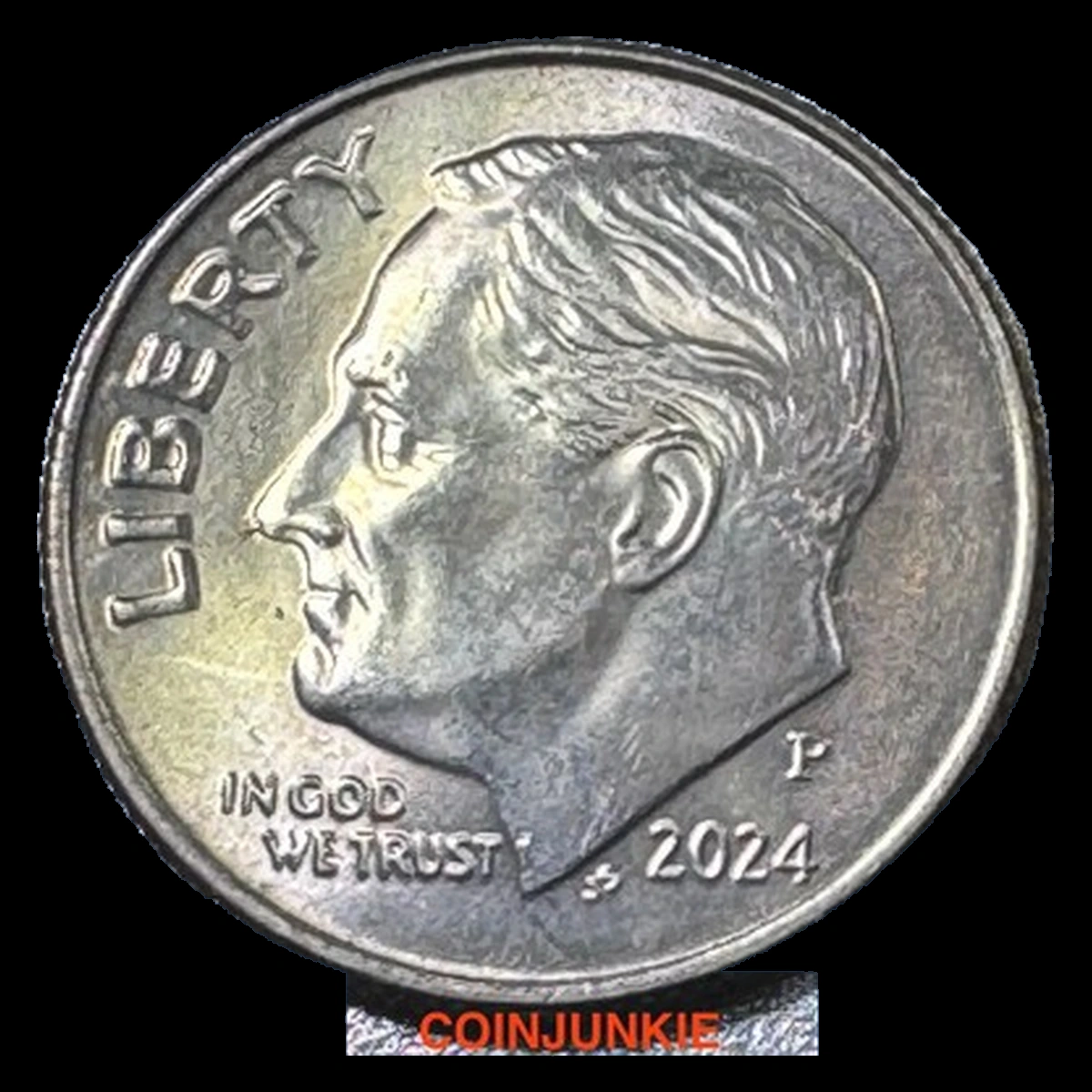
5. 2024 Dime A small mound rises from the obverse: Die Chip Error
Philadelphia reports describe several obverse chips without one fixed shared location. A small piece breaking from a die leaves a cavity that fills with metal during striking, producing a raised bump.
A die is the steel tool that stamps the design. Its missing fragment adds relief to the coin rather than leaving the same hole in the coin’s surface.
How to Identify
Retain a full obverse view with the date and P before enlarging a mound. Inspect its connection to the surrounding struck surface under side lighting.
A nearby dent may have pushed metal upward, and attached material can create a superficial lump. Look for an impact crater, attachment seam, or disturbed surface before calling it a chip.
What It’s Worth
The estimate is $5–$100 for noticeable chips, from smaller features through prominent groups on attractive coins. Tiny common bumps may add little.
PCGS records $51 for an ordinary 2024-P in December 2024. Its MS67 Full Bands condition and sharply separated torch bands do not establish a chip’s value.
6. 2024 Dime Letters or date digits show a second contour: Doubled Die Obverse Report Error
Reports direct attention to LIBERTY, IN GOD WE TRUST, and the date on Philadelphia and Denver coins. They do not establish one common direction or require every listed area to be doubled on a single example.
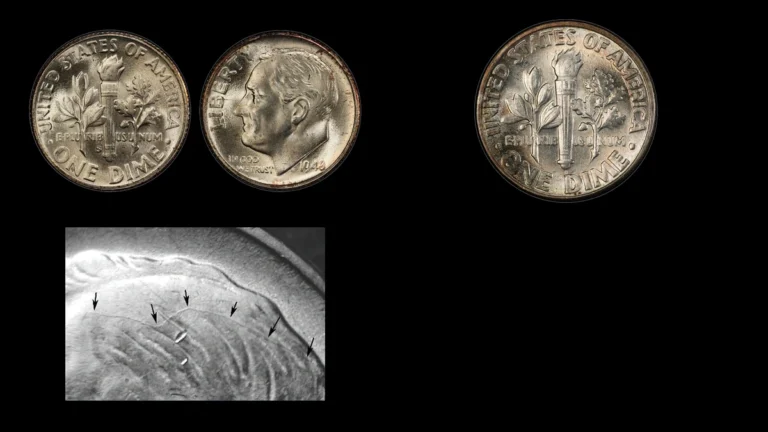
A true doubled die contains a repeated design before striking coins. A flat shelf caused by movement during striking is a separate effect.
Modern P and D mintmarks are part of the design-transfer process. An extra mintmark edge does not establish an old-style hand-punched mintmark mistake.
How to Identify
Select one suspicious letter or numeral and examine it under changing light. Compare a rounded raised secondary contour with a low flat shelf that appears to narrow the main stroke.
Check neighboring details and keep P and D references separate. A blurred edge or reflection cannot establish an attributed doubled die.
What It’s Worth
The guide estimates $50–$100 for clearly recognizable doubled-obverse examples. This is not a recorded sale of a particular 2024 variety.
A seller’s wording cannot replace matching raised detail. Mechanical shelves should not automatically receive the same estimate as a confirmed doubled die.
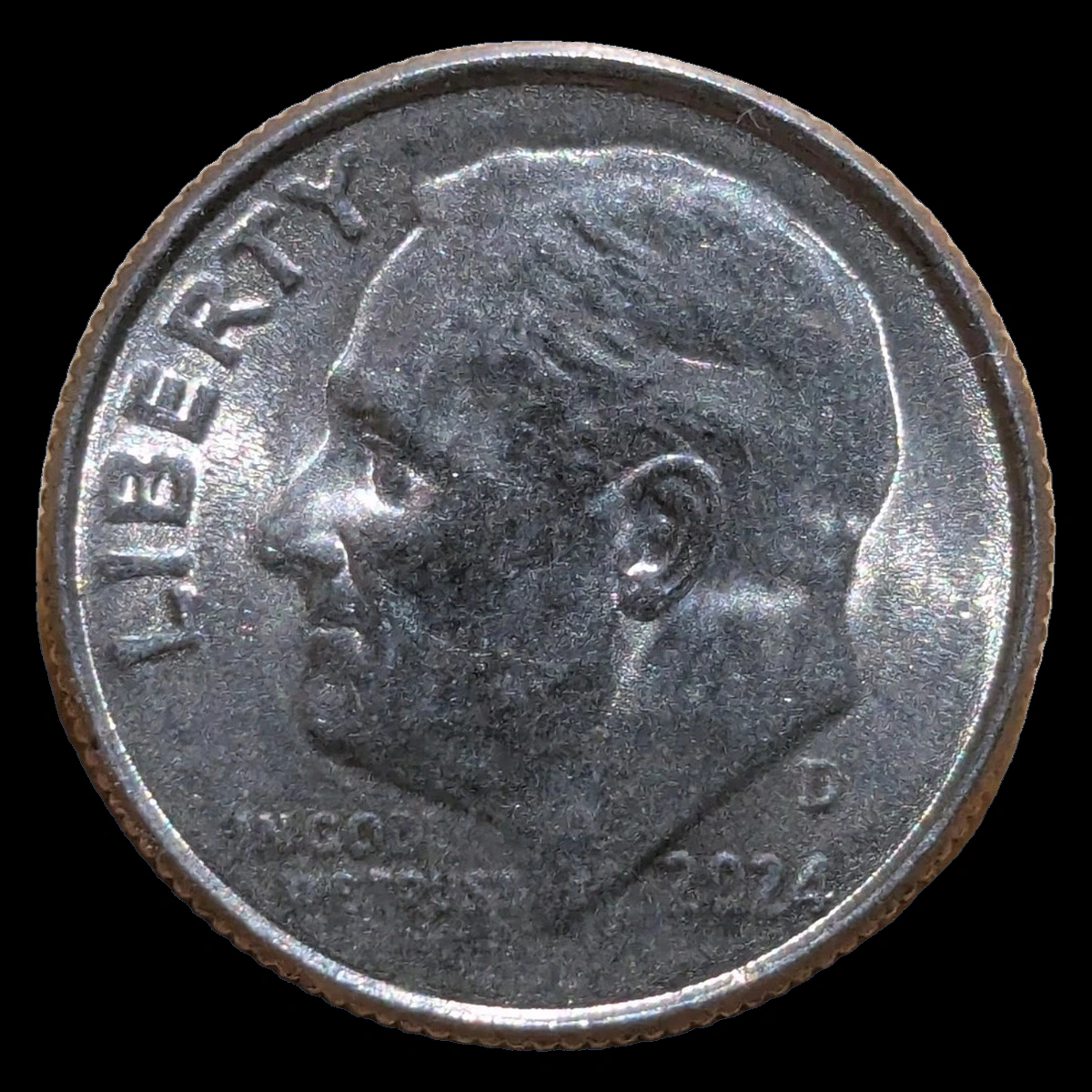
7. 2024 Dime A weak patch interrupts otherwise sharp detail: Strike-Through Error
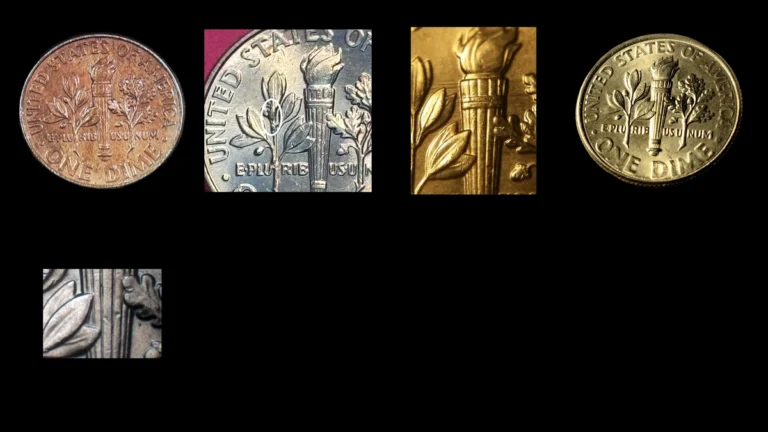
Material between die and blank can prevent part of the design from forming. Grease can affect small recesses, while a solid obstruction may leave a more defined hollow.
The reports cover P and D coins and suggest examining lettering, dates, and torch bands. They do not establish one trapped object or a shared obstruction pattern.
How to Identify
Inspect nearby letters and vertical torch detail when a band looks weak. General weakness across high points can have a different explanation from a sharply bounded local interruption.
Follow the transition between crisp and affected design under magnification. Scraping, chemical roughness, or metal pushed around a dent suggests later damage.
Describe only the visible shape unless evidence supports a particular material. Weak torch bands alone do not establish a strike-through.
What It’s Worth
The estimated range is $20–$150 for recognizable local interruptions on ordinary 2024 dimes. These are guidance figures rather than documented sales.
A clear hollow on otherwise sharp surfaces can be more collectible than a barely visible weak band. Size, clarity, and preservation determine the useful comparison.
Conclusion
Begin with the physical evidence and the correct metal: a gap, expanded outline, raised mound, and lifted layer record different possibilities. A normal copper edge stripe or Full Bands designation is not an error by itself.
The $5–$500 estimates rely on broad reports and comparisons, so preserve those limits. Keep the complete date, mintmark, both faces, and relevant boundary visible when documenting an actual candidate.