Rare 1848 Half Dollar Errors (List & Pictures)
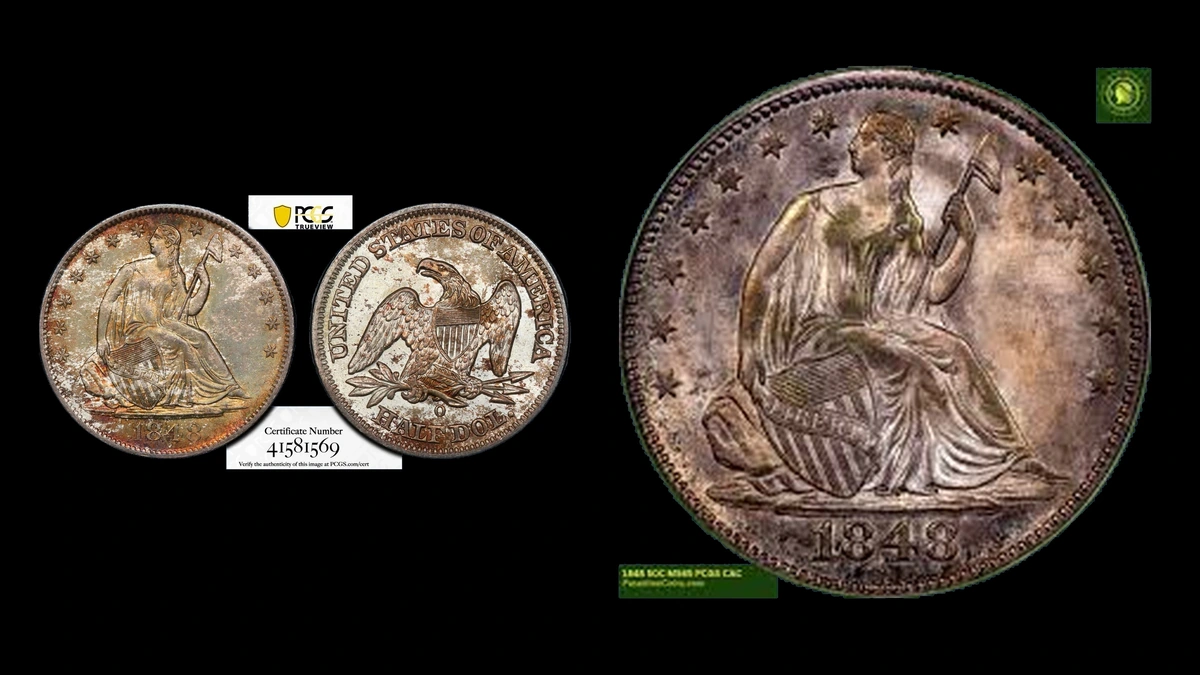
Some 1848 descriptions refer to several features on one coin. Its extra date strokes and doubled reverse letters still receive one whole-coin price.
The 1848 half dollar errors below have estimated comparisons of $125–$4,000. NumisBids reports $2,800 for a PCGS MS63 WB-7 in Heritage’s January 2025 auction.
Begin with the metal and raised breaks, then compare the date and lettering while keeping the conflicting front-doubling label separate.
| Clue | Feature | Estimated range |
|---|---|---|
| An original flaw in the blank | Planchet defect | $125–$500 when circulated |
| Raised route by foot and star 13 | Die cracks | $200–$1,500 for worn examples |
| Rough raised patches or rim lump | Crumbling die and cud | $300–$2,500 |
| Extra pieces above 18 | Repunched date | $300–$4,000 for the complete WB-7 |
| Repeated tops of OF AMERICA | Doubled reverse | $300–$4,000 for the same variety |
| A cataloged front-doubling label | Reported doubled die obverse | $300–$4,000 for the same variety |
The normal unworn weight is 13.36 grams, with a diameter near 30.6 millimeters and a grooved edge. Read the O for New Orleans when present; Philadelphia examples have no mint letter.
1. 1848 Half Dollar A Flaw in the Original Metal: Planchet Defect Error
An 1848-O listed with an ANACS F12 Details label weighs 13.1 grams and is identified as having a planchet defect. A planchet is the blank prepared to become a coin.
The title does not specify the flaw’s exact shape. Its appearance in a collection of incomplete blanks does not establish that this particular piece has a curved clip.
How to Identify
Compare both faces and the flaw with pictures of the certified 13.1-gram example. Keep the 1848 date and O visible.
Examine how the struck design meets the defect. Fresh cutting, filing, or corrosion pits can produce missing metal for a different reason.
Low weight is only supporting evidence because wear also removes silver. Use the recorded measurement for a sealed coin rather than opening its holder.
What It’s Worth
Estimated range: $125–$500 for a circulated 1848-O with a modest confirmed metal defect. The January 2025 F12 Details listing does not publicly show its sale price.
An 1832 Capped Bust half with a minor rim defect totaled $263.25 in July 2025. That ANACS XF45 had less wear and supplies a different-year comparison rather than the 1848-O’s result.
2. 1848 Half Dollar A Raised Connection by the Foot: Die Cracks Error
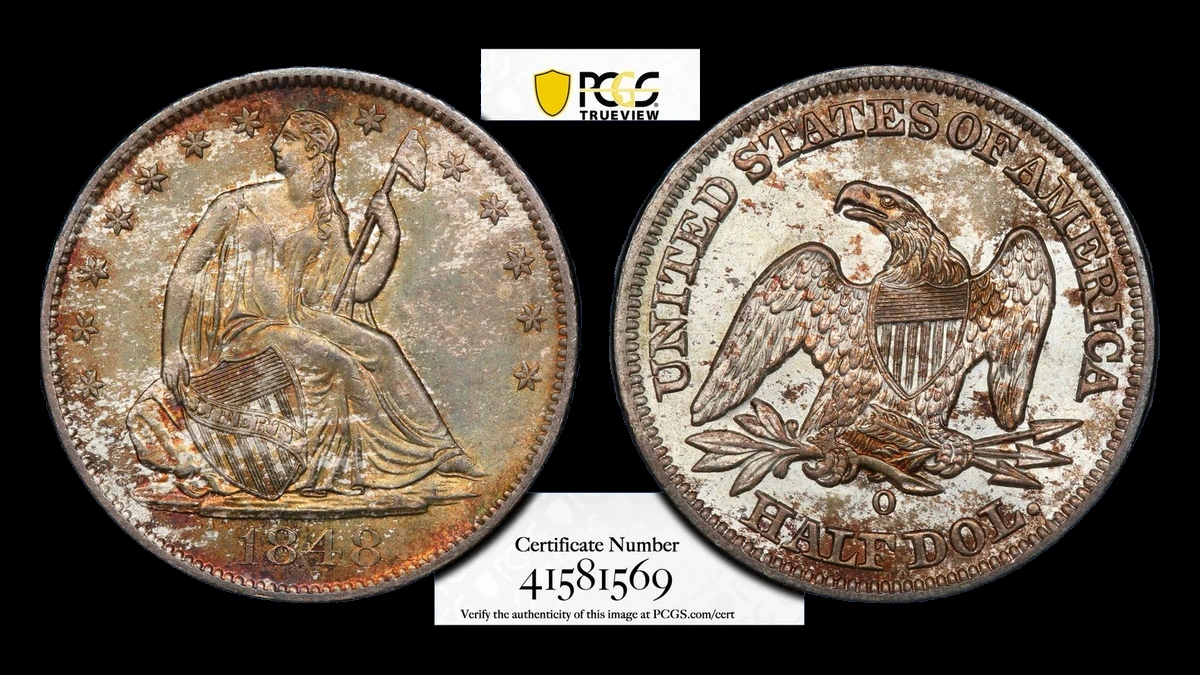
An owner reports a line from the top of Liberty’s foot toward star 13, the final star at the lower right, on an 1848-O. The same account describes numerous reverse cracks.
The coin is graded PCGS MS65, but the owner’s observations are not a claim that every 1848-O shares those paths. Raised lines form when silver enters fractures in the stamping dies.
How to Identify
Locate star 13 and follow the connection toward the foot with a magnifier. Tilt the coin to judge whether the line rises above the surface.
Inspect reverse lines separately and follow only the routes actually visible. A weak patch beneath the foot is not another raised crack.
Compare the full front and back with the correct example. Cracks can differ in strength as the tools continue to wear.
What It’s Worth
Estimated range: $200–$1,500 for moderately to lightly worn examples with recognizable cracks. This range does not price the owner’s much finer MS65.
Auction records list $552 for a regular PCGS AU50 1848-O in April 2024. That offers date-and-condition context rather than a separate crack value.
3. 1848 Half Dollar Raised Star Patches or a Rim Lump: Crumbling Die and Cud Error
Some Philadelphia examples show rough raised areas near the stars where small pieces of die broke away. Another has a rim-connected lump below and left of the date’s first digit.
The rim lump is a cud, while a small raised chip inside the reverse C of AMERICA sits within the design. The star patches belong to separate examples and need not accompany that same cud.
How to Identify
For the cud example, inspect below and left of the 1 and check the C in AMERICA for the supporting chip. For a star-patch example, use its own pattern instead.
Look for original raised metal joining the rim without an added-metal seam. A hit can flatten edge grooves, while solder or other added material may have a different boundary.
Keep the full date and reverse lettering beside the close-ups. A broad category name should not merge marks from different coins.
What It’s Worth
Estimated range: $300–$2,500 from circulated examples through attractive lower unworn grades. NumisBids reports $1,700 for a PCGS MS61 with the rim lump in January 2025.
An earlier Heritage description of an AU55 identifies the same lump location. The range includes the complete coin’s condition and surfaces.
4. 1848 Half Dollar Raised Remnants above 18: Repunched Date Error
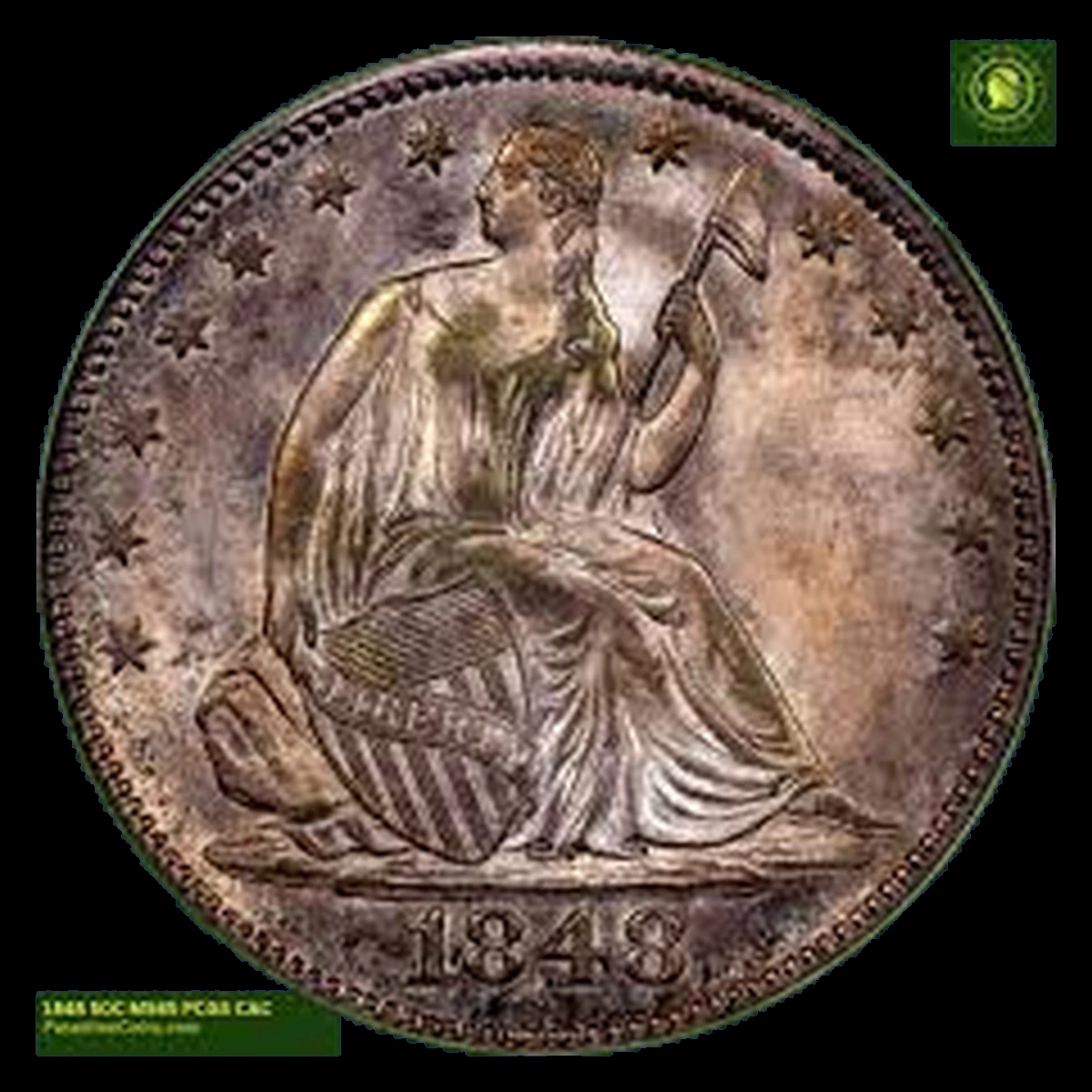
On WB-7, parts of an earlier 1 and first 8 remain above the main date. A later date-punch impression did not completely cover the earlier, higher position.
The mark was already in the die when it began striking coins. The coin did not need another blow to receive those extra date lines.
How to Identify
Enlarge the first two digits and inspect just above their main edges. Compare the remnants and spacing with a confirmed WB-7 photograph.
Change the light to separate raised detail from dark toning or reflections. A flat shelf beside a digit does not replace a recognizable earlier number outline.
No hidden 7 or different year is needed for this identification. The useful match is the higher earlier 18 alongside the final date.
What It’s Worth
Estimated range: $300–$4,000 from circulated WB-7 examples through attractive MS63 coins. MS63 describes unworn condition with noticeable marks still possible.
NumisBids reports $2,800 for the January 2025 PCGS MS63 at Heritage. Its doubled reverse and overall preservation are already included in that whole-coin figure.
5. 1848 Half Dollar Repeated Tops of OF AMERICA: Doubled Reverse Lettering Error
Heritage locates repeated letter edges along the top of OF AMERICA on WB-7. These are on the reverse, distinct from the front-side date punch marks.
Both sets of details can appear on one coin. The date remnants provide a useful supporting comparison for its back lettering.
How to Identify
Follow several letters across OF AMERICA with a magnifier. Match the repeated top edges rather than choosing one bright outline.
Move the light to distinguish a physical extra edge from a reflection, then compare with an identified WB-7. A low flat shelf may have a different striking cause.
Check the raised earlier 18 on the front as supporting evidence. Keep both sides tied to the same specimen.
What It’s Worth
Estimated range: $300–$4,000 for the complete WB-7 from circulated grades through MS63. The reported January 2025 MS63 result is $2,800.
This is the same transaction used for the repunched date. It does not provide a separate amount to add for OF AMERICA.
6. 1848 Half Dollar A Front-Doubling Catalog Label: Reported Doubled Die Obverse Error
PCGS lists WB-7 as RPD & DDO, meaning repunched date and doubled front design. The auction description instead identifies the doubled letters on the reverse and extra date strokes on the front.
Those descriptions do not establish a precise additional front-design feature. The catalog label should not be used to move the reverse lettering to the other face.
How to Identify
Ask which front-side design element actually shows repeated detail beyond the date. The PCGS variety list supplies the name, while a matching photograph must supply that physical evidence.
Keep the known categories separate: lines beside the date are repunching, and OF AMERICA is reverse lettering. Neither automatically establishes another doubled feature on the front.
Only use an identified front-design comparison if its extra outline is visible. A label alone does not give a beginner a reliable place to look.
What It’s Worth
Estimated range: $300–$4,000 for a complete WB-7 from circulated condition through MS63. The reported $2,800 sale covers that variety as a whole.
It is not an independent front-doubling transaction. Do not add another copy of the price range to the repunched-date and reverse-lettering values.
Conclusion
Use the actual metal, raised route, or repeated outline to guide identification. A low weight, a collection title, or a conflicting variety label cannot establish a feature that the coin does not visibly show.
The $125–$4,000 estimates include several conditions and overlapping WB-7 descriptions. Its date and reverse features share one complete-coin value.