Rare 1848 Penny Errors (List & Pictures)
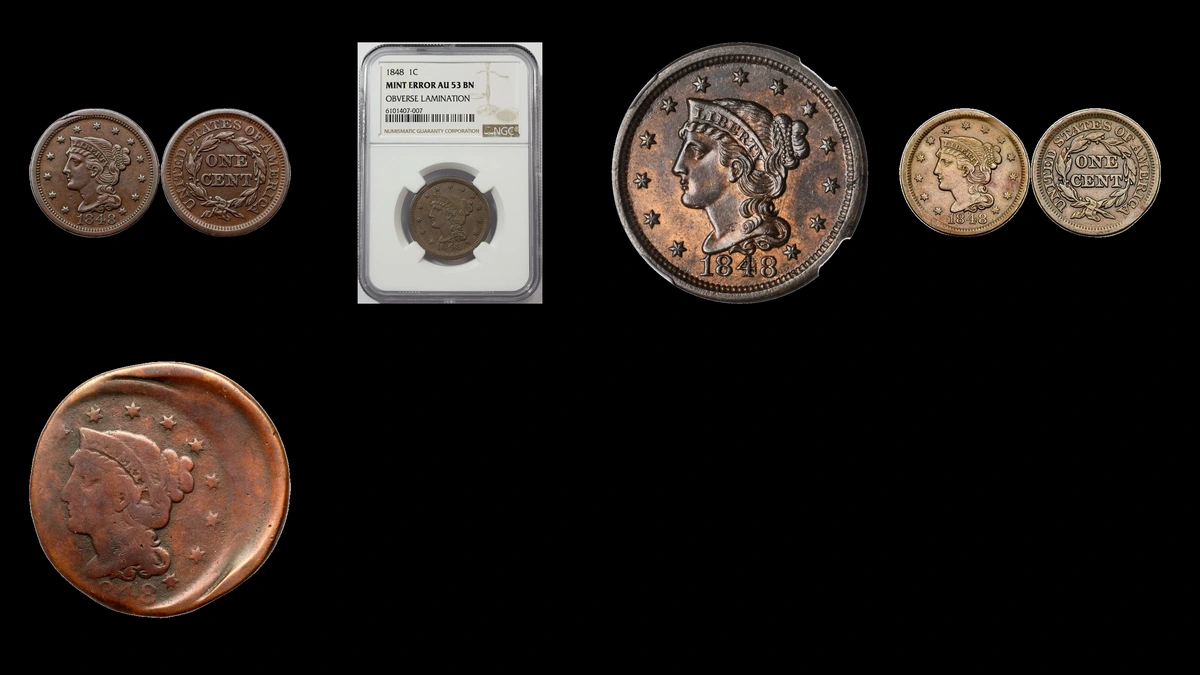
An $8,500 penny with two rim flaws sounds like a valuable error, but the reason for that price matters. The 1848 N-46 sold for $8,500 plus buyer’s premium in January 2024 because collectors wanted its rare variety despite the flaws.
This guide to 1848 penny errors covers nine groups with estimated whole-coin values of $20–$10,000. The checks below help separate a feature’s appearance from the reasons one particular coin sold well.
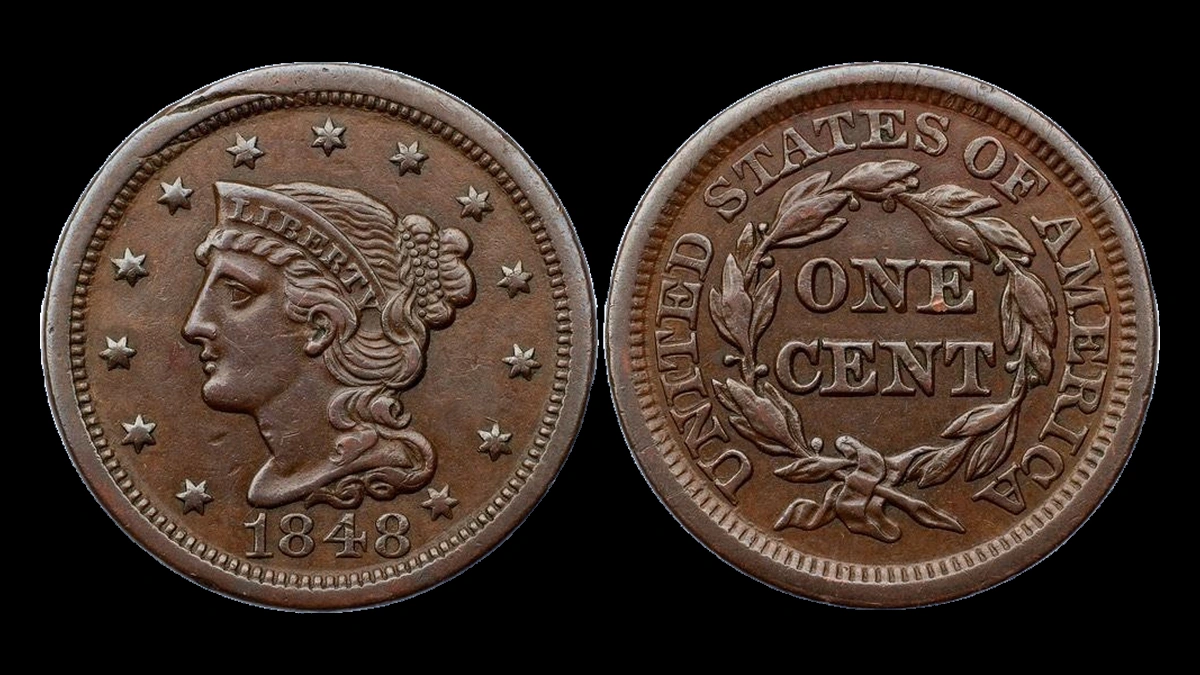
1. 1848 Penny Original Blank Flaws above Two Stars Error
Two uneven areas affect the rim and tiny border teeth above stars 5 and 6 on the rare N-46 cent. The auction described them as original flaws in the copper blank without identifying them as clips or peeling layers.
The remaining design suggested at least VF30 detail, but the cataloger assessed the coin as VF20+ because of the flaws. Its rare pairing of front and back stamping tools is a separate reason for collector interest.
How to Identify
Count upward from the lowest star on Liberty’s left to locate stars 5 and 6. Examine the rim above them and how the struck border teeth meet the uneven copper.
Then compare the entire date, portrait, and back design with the identified N-46. Two similar rim marks alone cannot establish the rare variety.
What It’s Worth
$20–$10,000 covers two very different comparisons: ordinary circulated cents with small blank flaws at about $20–$300, and suitably preserved rare N-46 examples around $5,000–$10,000. Rarity drives the upper range.
The January 2024 N-46 auction recorded $8,500 before the buyer’s premium. The flaws lowered its assessment rather than explaining that high price by themselves.
2. 1848 Penny Peeling Copper Layer Error
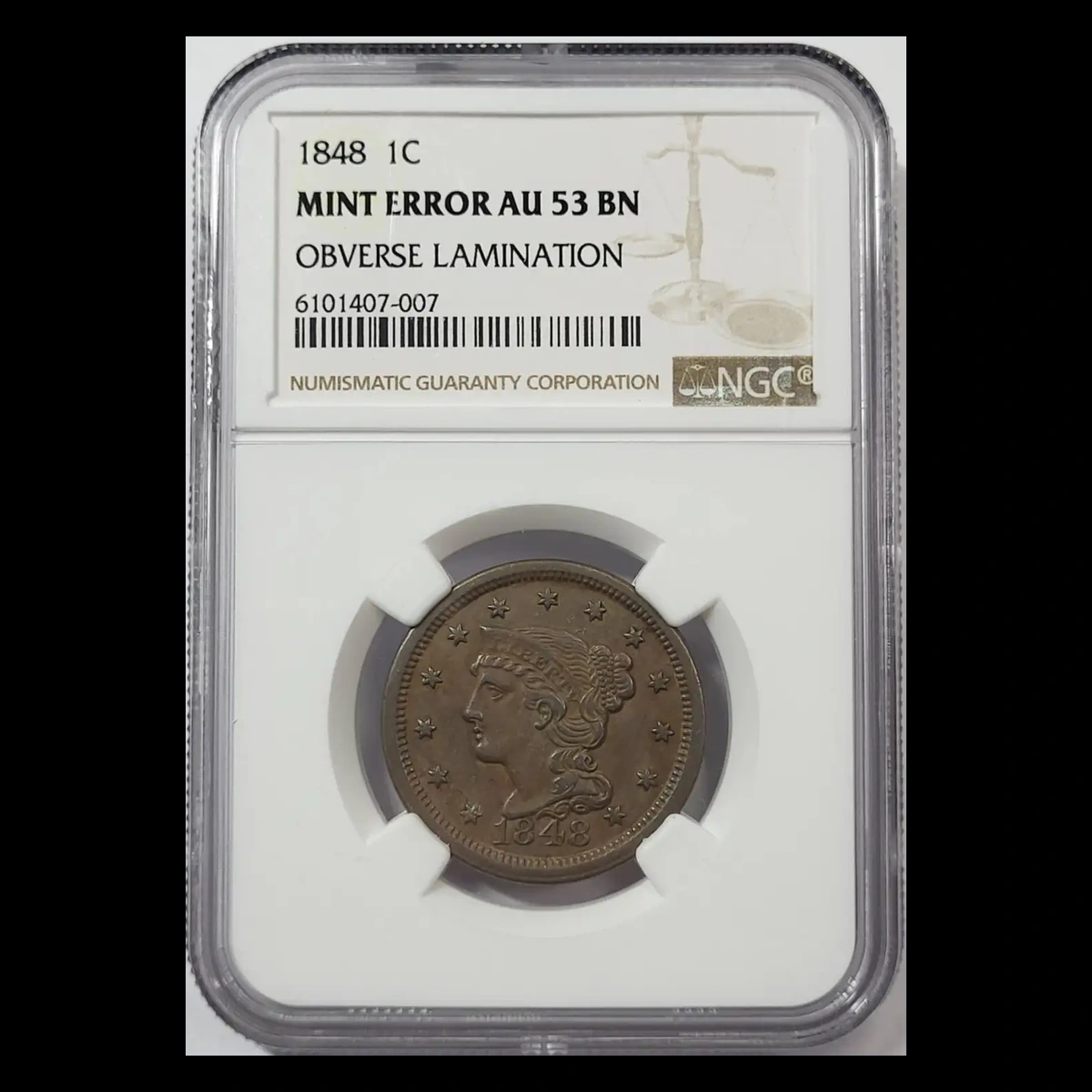
A thin layer lifting from the surface points to lamination. The copper separated along a weak internal layer, leaving a flap or a shallow opening.
An N-32 example appeared in a three-coin lot with Fine-level remaining detail, but its layer flaw reduced the seller’s overall assessment. The description did not specify which face carried the separation.
How to Identify
Move light across the patch and follow the edge of the thin sheet. Do not lift a flap, since it may break away with the evidence of how it formed.
Compare the boundary with nearby copper. Scattered corrosion pits and scraped grooves do not by themselves show a separating layer.
What It’s Worth
$20–$400 is the estimated whole-coin range. Worn examples with small laminations may fit around $20–$100, with clearer flaws on better-preserved cents around $100–$400.
The Austin auction’s three-coin lot containing the N-32 sold for $42 including the buyer’s premium. That total belongs to the whole group and cannot be assigned to the laminated coin alone.
3. 1848 Penny Repunched 4 Error
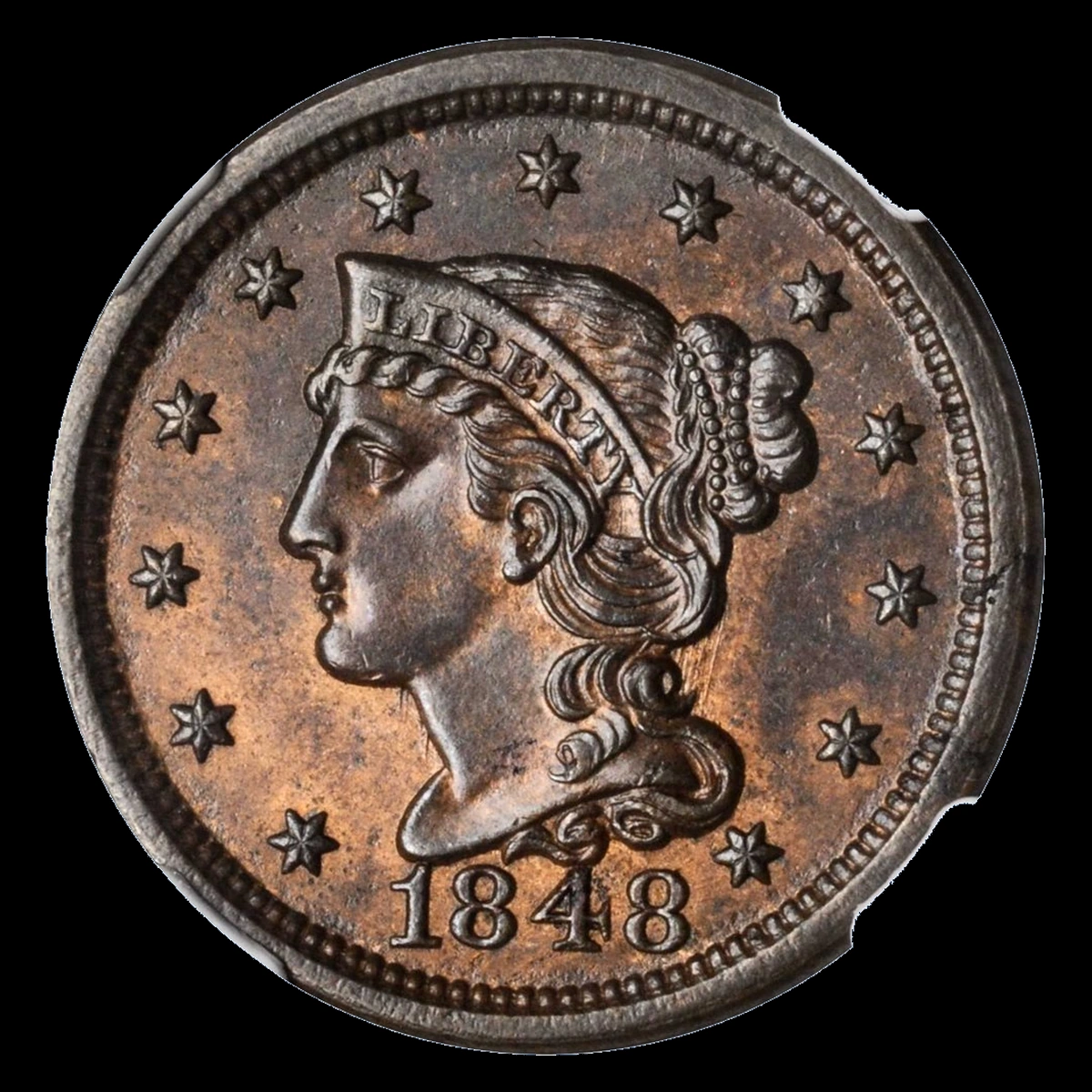
A faint second outline beside the 4 can be part of an earlier date-punch impression. The repeated strokes were in the die, the tool that stamps the coin, before any cent received its design.
Heritage described this feature on an N-16 example. It involves the 4 rather than a second complete date or a second strike of the whole coin.
How to Identify
Magnify the 4 with both neighboring 8s still visible. Move the light across the date to bring out faint raised strokes.
Compare their shape and position with the correct variety. Sharp cuts into the copper suggest later engraving instead of an earlier punch impression.
What It’s Worth
$30–$1,000 is the estimated range for identifiable repunching. Circulated examples may fall around $30–$250, with better-preserved coins around $250–$1,000.
An NGC MS63 Brown N-16 sold for $276 at Heritage in January 2006. That unworn grade allows surface marks, and the result is the price of the complete cent rather than an extra charge for the 4.
4. 1848 Penny Die Clash beneath STATES Error
Part of the first date 8 appears below T and E in STATES on the back of a recorded N-36 cent. The two dies had contacted each other without a blank between them, leaving marks that later appeared on coins.
The catalog also described strong front-side marks that did not seem to match the expected back design. Their exact source was unresolved, which does not establish a clash between different denominations.
How to Identify
Compare the curve below TE with the first 8 using photos at the same enlargement. A recognizable portion of the opposing design is more useful than an unexplained line.
The Twin Leaf catalog treats the identifiable back trace separately from the puzzling front marks. Keep that distinction when checking another coin.
What It’s Worth
$50–$1,500 is the estimated range, with visible circulated clashes around $50–$300 and clearer marks on better-preserved or scarcer examples around $300–$1,500. The variety and surfaces remain part of the value.
The described N-36 was graded PCGS EF45, indicating some circulation wear. No individual auction result is assigned to it here, and unusual front marks do not justify assuming a different-denomination premium.
5. 1848 Penny Cracks across Liberty and Rim Cuds Error
One dramatic crack crosses the portrait between the edges near stars 3 and 11. The surface above the raised line sits higher, showing that part of the broken die moved.
Other 1848 cents show back cracks or rim-connected raised patches called cuds. The cuds beside D-STATE and above TES belong to separate examples and need not accompany the portrait crack.
How to Identify
Count the front stars from the lower left, then trace the ridge from near star 3 toward star 11. Side lighting helps reveal the change in surface level that a normal scratch does not create.
For a back cud, follow its connection to the rim and examine the edge from the side. Folded rim damage can push copper over letters without a broken die.
What It’s Worth
$30–$3,000 is the estimated range for this group. Modest circulated cracks may fit around $30–$200, with strong cuds or advanced breaks around $200–$3,000 depending on rarity and condition.
The portrait-crossing example also had corrosion and scratches. A separate three-cent group containing a coin with rim breaks and a minor clip showed a $160 total, which is not a sale price for the portrait crack.
6. 1848 Penny Small Blank Clip Error
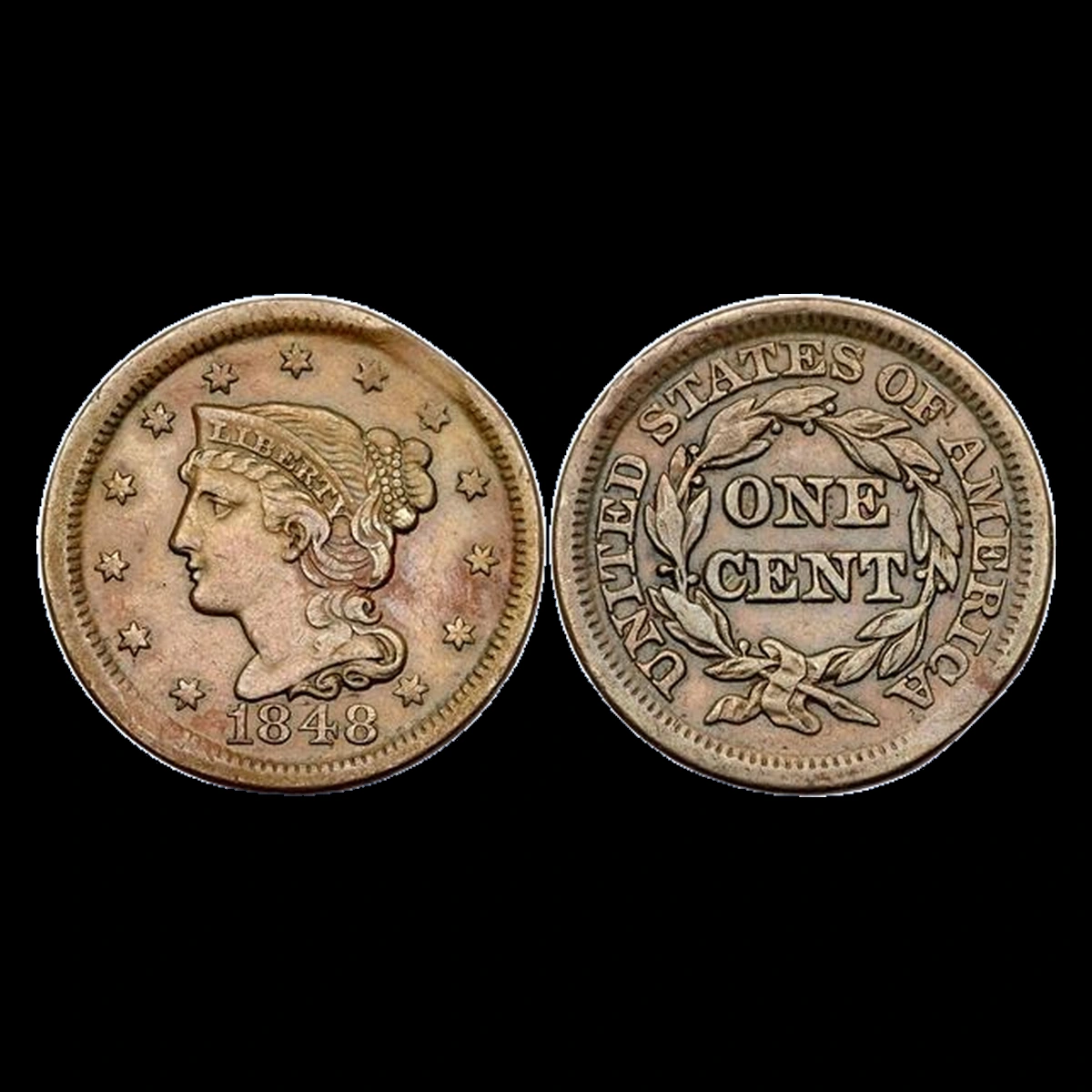
A small gap in the outline can be part of an incomplete blank struck into a cent. The nearby design formed against an edge that was already missing copper.
An N-9 described by the cataloger as VF25 has a minor clip plus raised rim breaks. The missing metal and the raised patches are different features on the same coin.
How to Identify
Follow the opening and the border details beside it. Later cutting can leave grooves across finished lettering, whereas an original clip may show naturally weakened design near the gap.
A normal 1848 cent weighs about 10.89 grams and measures 27.5 mm across. A tiny clip may barely change the weight, so inspect the edge rather than relying on a small scale difference.
What It’s Worth
$50–$2,000 is the estimated range for genuine clips. Comparable worn cents may fall around $50–$400, with stronger examples in better condition around $400–$2,000.
The three-coin group containing the clipped N-9 showed $160 in total. Neither assigning that whole amount to the clip nor dividing it equally establishes the individual coin’s price.
7. 1848 Penny Broadstrike Error
A broadstrike spreads beyond the normal outline while keeping the design on the available copper. The blank was not properly contained during the blow.
A worn 1848 example was reported for sale without a measured diameter or detailed edge description. A wide appearance alone needs further examination because later pressure can also spread a finished coin.
How to Identify
Check the portrait, stars, date, and back lettering for a complete design. Then measure the widest and narrowest spans against the normal 27.5 mm diameter.
Look for crushed detail or stretched marks from later squeezing. If parts of the design run beyond the copper beside a bare crescent, compare an off-center strike instead.
What It’s Worth
$30–$2,000 is the estimated range for original 1848 broadstrikes. Worn examples may fit around $30–$300, with clearer expansion and better preservation around $300–$2,000.
The year guide records a $30 asking price for a low-grade example. It shows what a seller requested rather than a completed transaction.
8. 1848 Penny Off-Center Strike Error
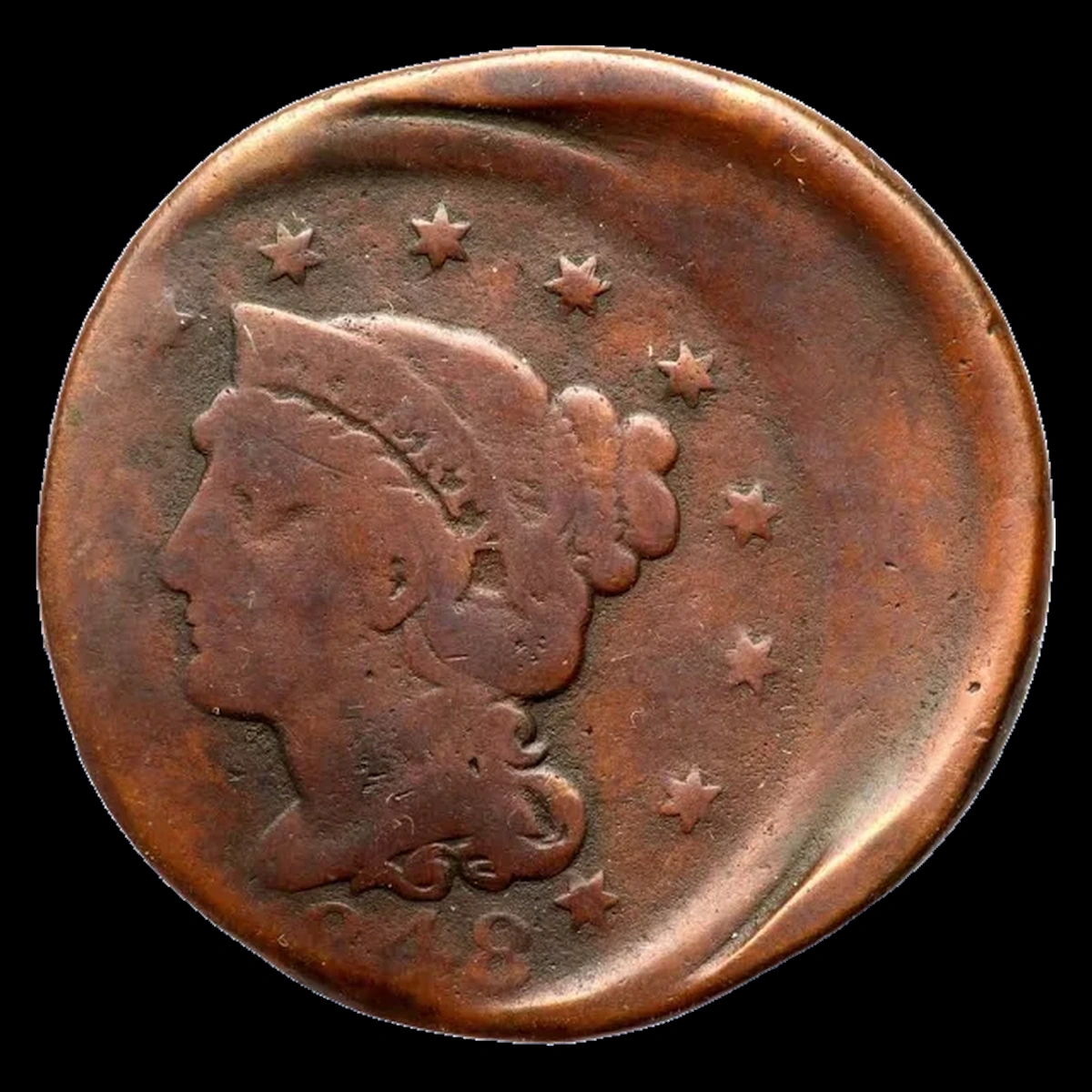
A displaced strike can leave a broad bare crescent beside an incomplete design. The blank was too far from its intended position when the dies came together.
Recorded 1848 examples include a 30% off-center PCGS XF40 coin and a separate 70% off-center NGC MS63 Brown coin. They have different amounts of displacement and different levels of preservation.
How to Identify
Photograph both complete faces and check all four date digits. The empty area and missing design should support the same misplaced blank on both sides.
Inspect the bare copper for grinding or later flattening. If only one face shifts while the opposite remains centered, a misaligned die is a different possibility.
What It’s Worth
$500–$10,000 is the estimated range, with circulated dated examples around $500–$3,000 and dramatic unworn coins around $3,000–$10,000. A larger displacement does not guarantee a higher value if the date or surfaces suffer.
The 30% PCGS XF40 example sold for $1,980 in December 2023. The separate 70% NGC MS63 Brown cent brought $6,600 in February 2010.
9. 1848 Penny Double Strike after a Quarter Turn Error
A second strike after the coin turned roughly 90 degrees can leave two crossing sets of design details. A 1979 error catalog, later reprinted by Mint Error News, describes an 1848 example in Very Fine condition.
That short historical listing gives neither a modern certification nor an exact overlap measurement. Privately made small-date 1848 pieces also exist and need to be kept apart from United States Mint errors.
How to Identify
Check the date and portrait against a genuine large-date Mint cent before studying the second impression. A privately made small-date piece does not prove the reported Mint error.
Trace two sets of raised details on the same face and compare their approximate quarter-turn separation. A tilted back alone is a different alignment issue, since it does not place overlapping impressions on one surface.
What It’s Worth
$500–$7,000 is the estimated range for genuine Mint-made 1848 double strikes. Circulated examples may fit around $500–$3,000, with clearer overlapping designs and stronger preservation around $3,000–$7,000.
The Very Fine coin was offered at $175 in the 1979 catalog. That historical asking price is neither a recent auction result nor a documented resale price for the specimen.
Conclusion
Compare the mark before comparing the money: a peeling layer, a raised die break, and a missing piece of blank have different clues. A rare variety can add a separate reason for collectors to want the same coin.
The estimated $20–$10,000 span includes that wide variation in condition and rarity. For the costly N-46, the key lesson is that its flaws did not turn an ordinary cent into an $8,500 coin.