Rare 1976 Penny Errors (List & Pictures)
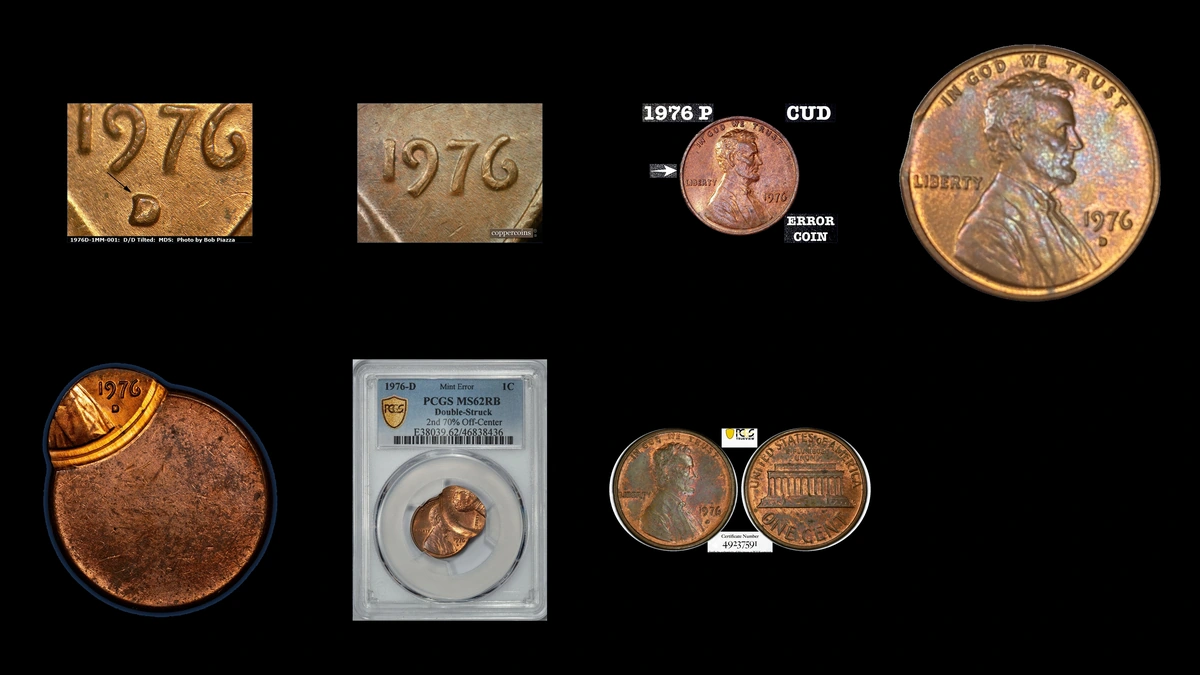
Weight becomes useful only when it agrees with the metal and struck design. The fourteen groups of 1976 penny errors below carry estimated values of $2–$3,000, including a conditional range for the reported nickel-blank type.
A 1976-D unusual-alloy cent sold for $1,265 in 2009; a different-year cent over a dime brought $1,920 in September 2025. Inspect lettering and surface clues first, then use shape and measurements to separate the larger errors.
| Observation | Possible category | Estimated value |
|---|---|---|
| Extra D strokes | Repunched mintmark | $5–$200 |
| Matching thick strokes or notches | Doubled design | $5–$300 |
| Raised line, bar, or rim patch | Cracks, BIE, or cuds | $2–$500 |
| Local weakness on both faces | Filled-die strike | $2–$150 |
| Impression from a struck fragment | Fragment strike-through | $100–$1,000 |
| Gap, sometimes with shifted design | Clip or clip combination | $10–$400 |
| Original plain crescent | Off-center strike | $15–$500 |
| Wide disc with raised border | Cupped broadstrike | $50–$750 |
| Two strike positions | Double strike | $50–$1,000 |
| Unusual copper-alloy thickness | Thick or thin blank | $75–$600 |
| Heavy unusual copper-nickel alloy | Unidentified wrong blank | $800–$2,500 |
| Standard larger nickel blank | Reported nickel-planchet error | $800–$3,000 if confirmed |
| Cent design on smaller clad metal | Dime blank | $250–$1,500 |
| Dime design under the cent | Double denomination | $700–$3,000 |
The normal 1976 cent is copper-rich alloy throughout, with a 3.11 g weight, 19.05 mm diameter, and smooth edge. Take measurements only where safely accessible and preserve certified coins in their holders.
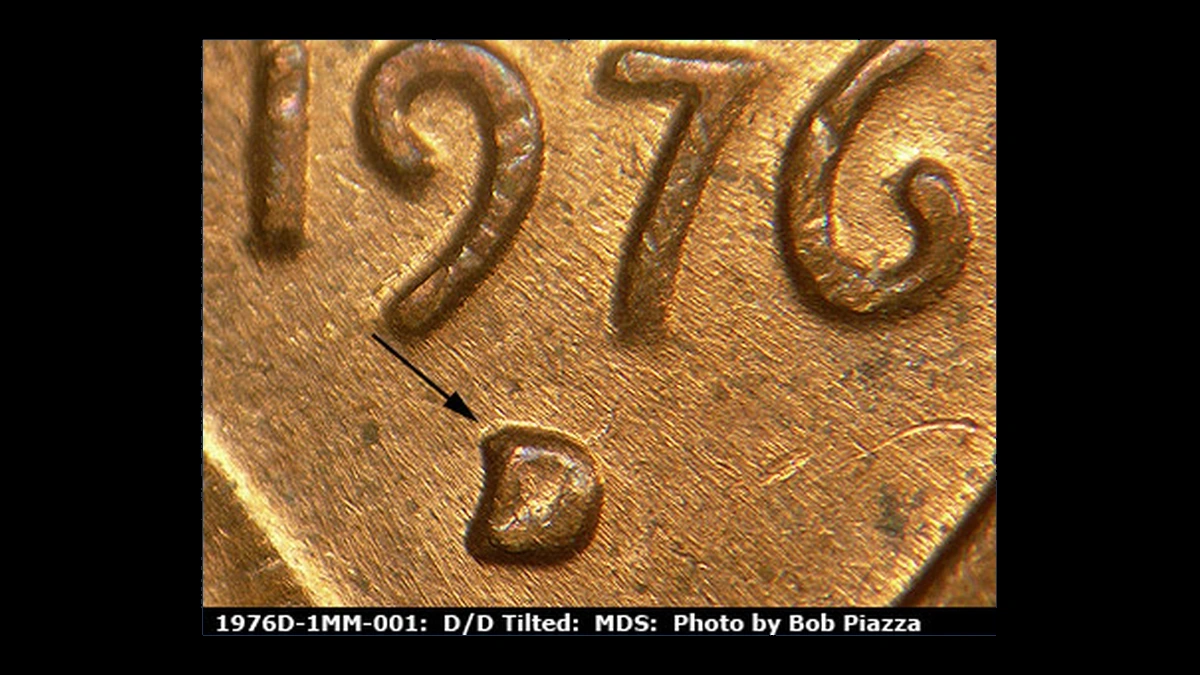
1. 1976 Penny Another D outline below the date: Repunched Mintmark Error
Denver’s mint letter was punched into the die separately, allowing traces of an earlier placement to survive beside the final D. One recorded 1976-D pattern repeats the letter at a tilt, while others add strokes near its small ends.
A damaged letter punch can also leave a split-looking end without a second placement. The whole D must support a repunch diagnosis.
How to Identify
Trace the upright, curved side, and short ends under magnification, looking for a coherent earlier letter. An isolated projection or fork is insufficient.
Compare any supporting lines near LIBERTY and TRUST with the same variety’s photographs. Marks from different specimens cannot be combined to manufacture a match.
What It’s Worth
$5–$200 is estimated for an identified repunched D. Better-separated strokes and unworn surfaces generally provide clearer examples.
No realized sale is assigned to the individual catalog numbers here. A split end alone does not justify the upper range.
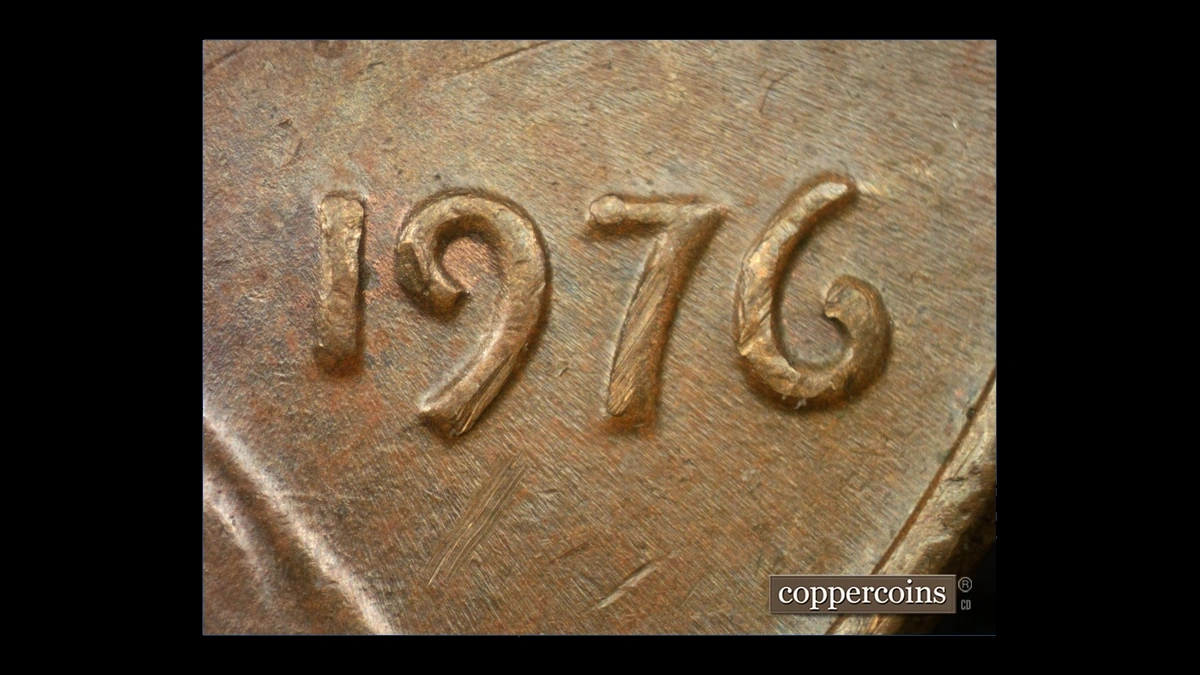
2. 1976 Penny Unusual thickness and small letter notches: Doubled Designs Error
The reported varieties mainly show thicker design rather than dramatically separated outlines. The repeated shape existed in the die before a normal strike transferred it to the coin.
Philadelphia obverses affect the date, LIBERTY, or motto, while a Denver obverse affects motto detail including part of TRUST. Separate reverses involve ONE CENT, country lettering, and the small FG initials.
How to Identify
Compare an ordinary cent under the same lighting, then match the specific thickness and corner shape of the proposed variety. Small notches can help distinguish repeated design from generic swollen lettering.
Use the correct mint and face without demanding a large second outline from a variety expressed mainly as thickness. Wear can soften the subtle features needed for identification.
What It’s Worth
$5–$300 is estimated for correctly matched doubled designs. Clean unworn examples with repeatable detail support stronger comparisons than thick-looking letters alone.
The range concerns minor Memorial-cent varieties. It is not a claimed 1976 auction record or a universal price for every reported face.
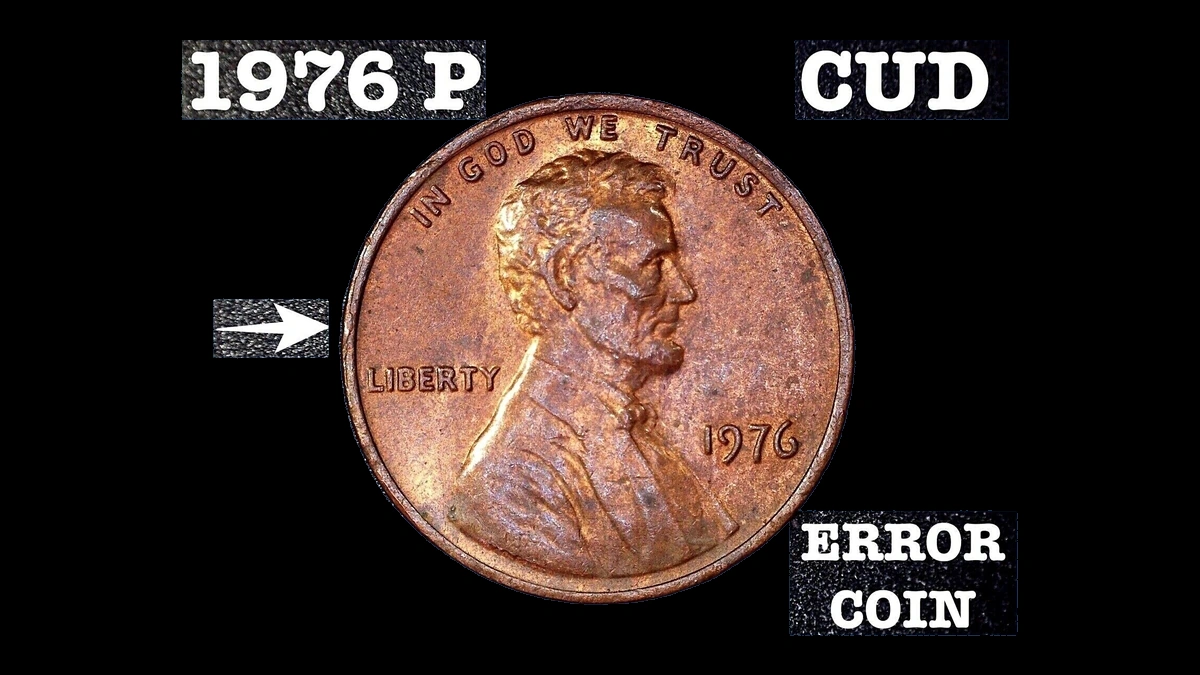
3. 1976 Penny Raised ridges, a BIE bar, or a rim blob: Cuds and Die Cracks Error
Metal fills openings in a damaged die and leaves raised features on the coin. Narrow cracks produce ridges, while a missing edge section produces a rim-connected patch called a cud.
Philadelphia and Denver reports include rim breaks and portrait-to-edge lines, with LC-76-1 identifying one documented cud. A BIE bar is the smaller feature between B and E in LIBERTY.
How to Identify
Use low light to determine whether the line rises naturally from the surface or cuts into it as a scratch. Inspect the edge for solder, pushed metal, or other later additions.
Follow a large patch to its rim connection and compare its actual shape with the correct example. LC-76-1 is not a name for every differently shaped 1976 cud.
What It’s Worth
$2–$30 is estimated for small cracks and BIE chips, while larger clear cuds can fit approximately $30–$500. Size and preservation influence demand.
A 2021-D retained cud sold for $186 in September 2025. Its die fragment remained in place, and its plated-zinc metal differs from the 1976 alloy, making it a related comparison rather than an exact match.
4. 1976 Penny Missing detail beside sharper areas on both faces: Filled-Die Weakness Error
A recorded Philadelphia cent has local filled-die effects on both front and back. Material inside die recesses prevented those portions from producing their usual detail.
The actual filling substance is not identified. Grease and dirt are possible obstructions, but the weak patches do not name their contents.
How to Identify
Compare the affected areas with Lincoln’s high points and the Memorial. Local weakness alongside intact original detail differs from a coin worn broadly flat.
Inspect for scraping, polished surfaces, and rough corrosion that could explain detail lost later. Two weak faces do not require general wear if their surrounding design remains sharp.
What It’s Worth
$2–$150 is estimated from minor blocked details to larger, clearly original areas. Contrast with sharper surroundings helps show the feature.
A 2021-D grease-struck cent brought $84 in September 2025, with different Shield design and zinc-centered metal. Two affected sides still contribute to one whole-coin value rather than doubling the estimate.
5. 1976 Penny Local reverse impressions from another piece: Struck Through a Flipped Fragment Error
The recorded 1976-D is described as struck through a flipped, double-struck fragment on the back. Its NGC MS66 Red grade describes an unworn coin with relatively few marks and copper-red color.
The complicated movement belongs to the fragment. It does not mean the entire receiving penny flipped and received two complete strikes.
How to Identify
Trace the local boundary and separate transferred impressions from the Memorial’s normal design. Both faces should be documented before deciding which object moved.
Compare original surface relationships with later dents or scratches and leave any attachment untouched. Do not assume a loose fragment survives or is included with the coin.
What It’s Worth
$100–$1,000 is estimated for a confirmed impression from an identifiable struck fragment. Clear transferred detail and good preservation help explain the event.
A 2017-D obverse struck-through cent sold for $228 in March 2025. Its plated-zinc construction and less specific obstruction history make it a general comparison, not a price for this precise fragment sequence.
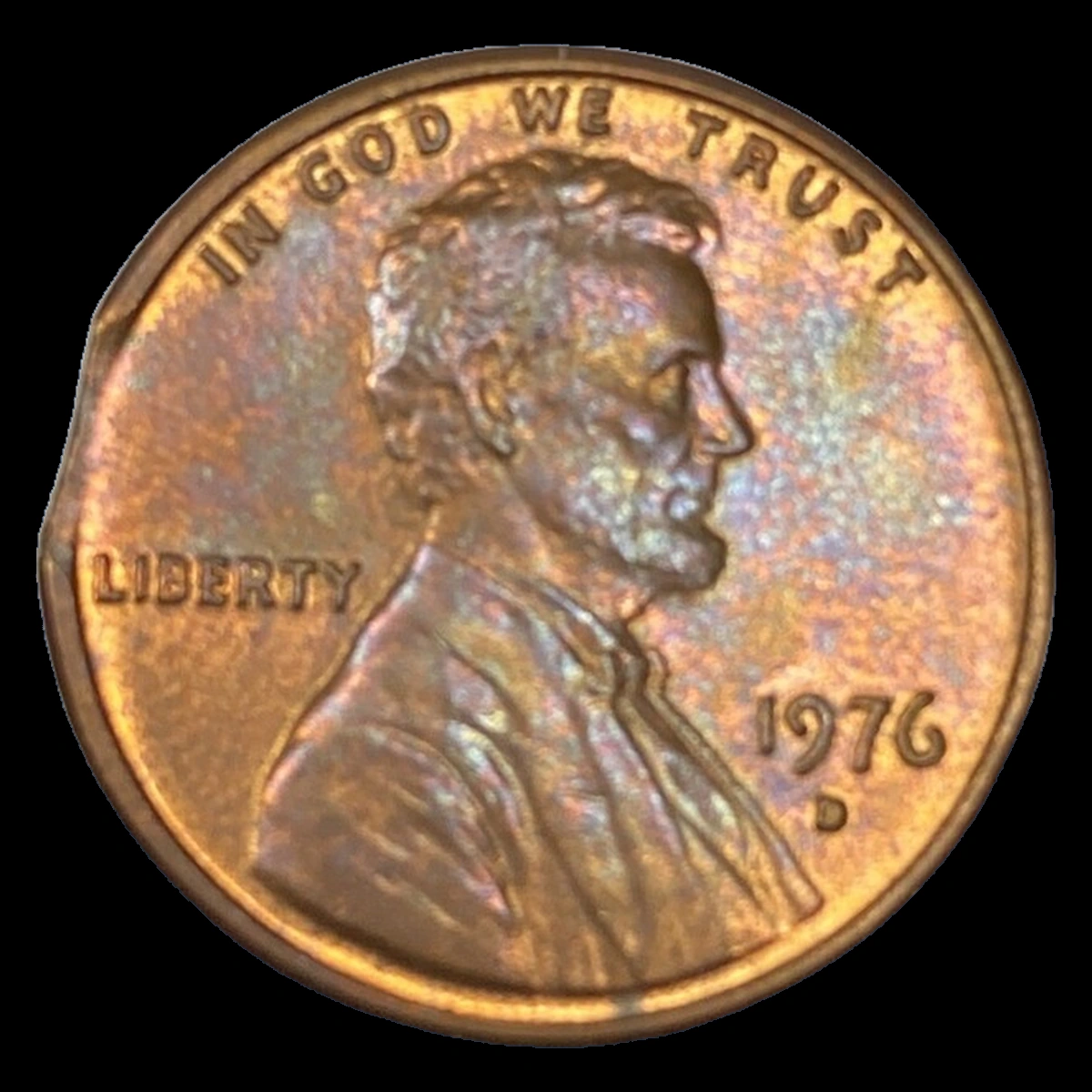
6. 1976 Penny Missing metal, sometimes alongside a plain crescent: Clip with Possible Off-Center Strike Error
A clip existed in the blank before it received the design. One Denver coin combines a fifteen-percent clip with an approximately twenty-percent off-center strike.
The clip removes metal; the off-center area remains metal that the dies did not reach. The combination example was graded unworn but cleaned, a condition issue separate from both production errors.
How to Identify
Keep the entire outline in view to separate the actual gap from the intact plain portion. Inspect how the rim and design meet the opening for natural striking rather than saw or file marks.
Opposite-rim weakness can support a clip but need not be conspicuous. Assess any displacement on both faces independently from the missing section.
What It’s Worth
$10–$150 is estimated for ordinary original clips, while a clear clip/off-center combination can fit roughly $40–$400. Cleaning requires a condition adjustment for the described Denver piece.
A 1980-D with a five-percent clip and eight-percent shifted strike sold for $84 in December 2024. That smaller copper-alloy combination provides context without justifying two full values added together.
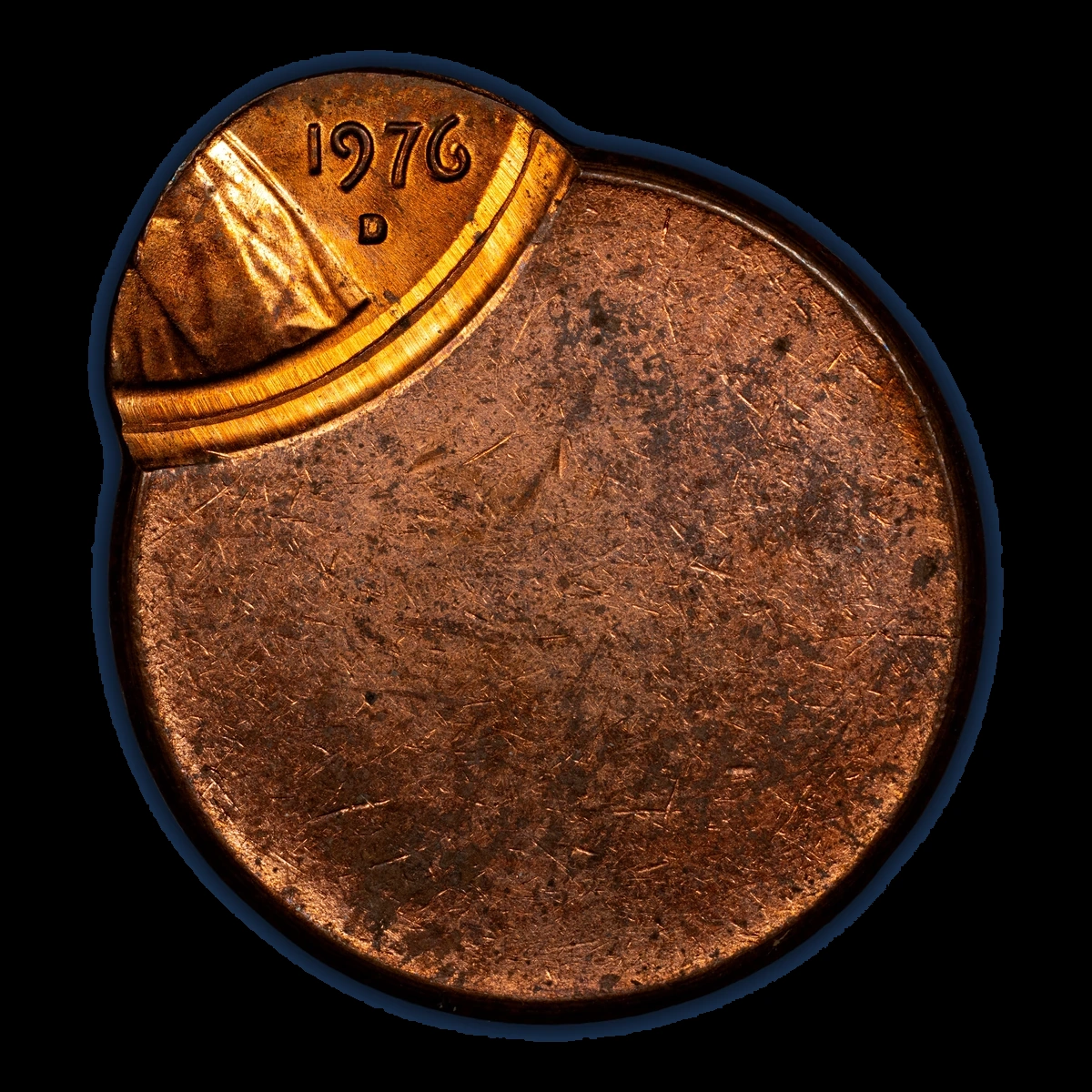
7. 1976 Penny Most of the blank left untouched: Off-Center Strike Error
The documented Denver example is about eighty percent off center and graded PCGS MS63 Brown. Its blank entered the dies in the wrong position, leaving only part of the intended design on the metal.
Eighty-percent displacement does not mean eighty percent of the metal disappeared. The coin can retain approximately the original blank’s metal amount.
How to Identify
Compare both faces and the complete outline so that one misplaced blank explains the missing design and plain area. A shifted rim on only one face suggests another alignment issue.
Inspect for grinding or cuts, then read the surviving date before assigning 1976. Other reports must retain their own mint and displacement evidence.
What It’s Worth
$15–$500 is estimated for dated off-center examples. Identification, original surfaces, and visual presentation matter alongside the blank area’s size.
A fifty-five-percent off-center 1984-D sold for $41 in September 2024. That plated-zinc coin differs in metal and date, illustrating why a large percentage alone does not fix a price.
8. 1976 Penny A wide disc with an upturned border: Cupped Broadstrike Error
The recorded Denver example expanded outward and developed a raised border. It is described as a cupped broadstrike, reflecting metal not contained normally by the collar ring.
Its PCGS MS63 Red and Brown grade indicates an unworn coin with marks and mixed copper-red and brown color. Cupping alone does not establish that it became a die cap stuck to a tool.
How to Identify
View the border from the side and follow its relationship to the expanded design area. Both intended designs should remain within the spread metal.
Inspect for crushed detail or squeezed edges from later bending. Preserve the shape while recording width and cup height rather than forcing the coin flat.
What It’s Worth
$50–$750 is estimated for a genuine cupped broadstrike. Original outward spread and border height make it distinct from a modest flat example.
A flatter 1980-D broadstrike sold for $57 in March 2021. It is a copper-alloy comparison, not the realized price of this cupped 1976-D.
9. 1976 Penny Two connected design positions: Double Strike Error
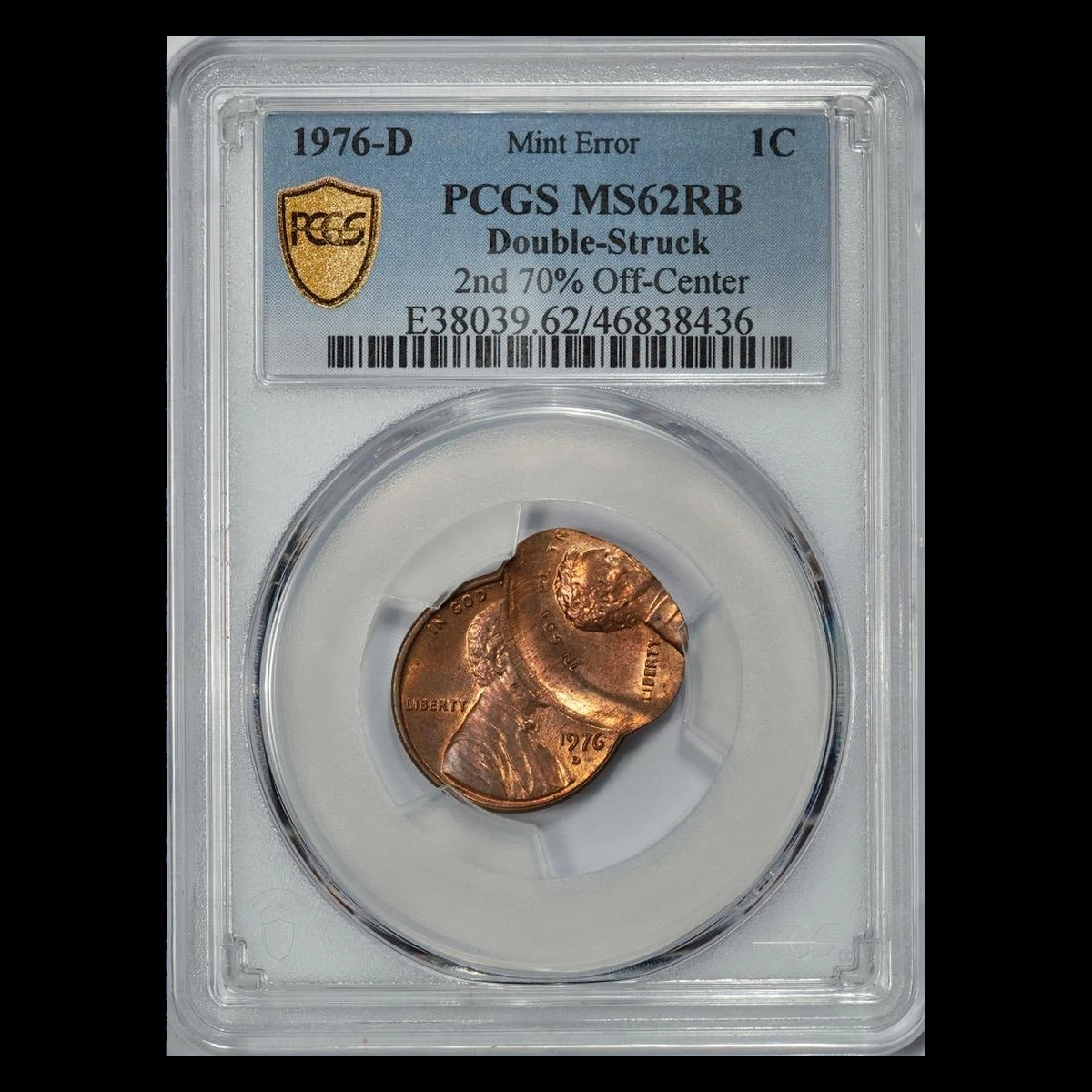
One documented Denver coin has a second strike about seventy percent off center, while a separate report describes ninety-five percent. Both require evidence that the coin moved before another blow.
Counterfeit repeated strikes are also known for this date. Suspiciously clear repeated dates and odd lines near LIBERTY mean extra numerals alone are not enough.
How to Identify
Trace each group of repeated detail as a connected strike position. Compare LIBERTY and the surrounding open surface with a genuine example for unnatural lettering or tool lines.
Inspect the opposite face and edge for later pressing. The seventy- and ninety-five-percent descriptions belong to separate coins, not successive stages on one piece.
What It’s Worth
$50–$1,000 is estimated for genuine shifted double strikes, with clear overlap often more informative than an almost empty later strike. The documented seventy-percent 1976-D is graded PCGS MS64 Red and Brown.
A 1979 cent with an off-center second strike brought $204 in September 2023. Its copper-alloy construction makes it useful nearby-year context, while the 1976 coin’s own surfaces and impressions determine the closer comparison.
10. 1976 Penny Copper-alloy metal thicker or thinner than normal: Blank Thickness Error
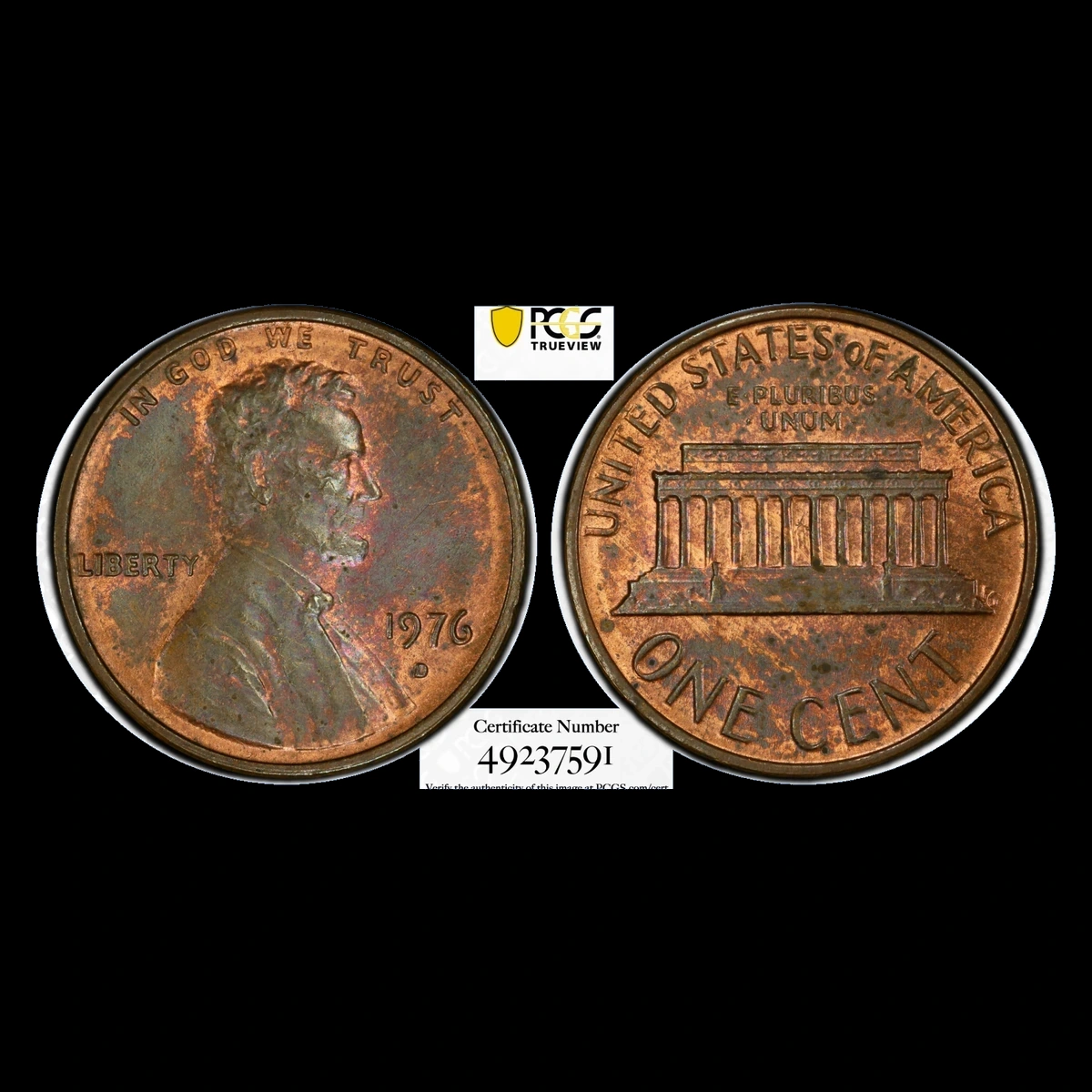
A strip rolled to the wrong thickness can produce blanks with too much or too little metal. The documented 3.78 g Denver thick-blank cent is graded PCGS MS63 Brown.
A separate published Denver thin-blank report gives 1.69 g. These differ from a split layer, later metal removal, or an unusual alloy that happens to weigh a similar amount.
How to Identify
Check the scale against a known weight and document accessible thickness and diameter. Original struck surfaces should agree with metal that began unusually thick or thin.
For light coins, look for corrosion, filing, or natural separation that could explain loss after preparation. For heavy candidates, inspect seams and added coatings before assuming extra original copper alloy.
What It’s Worth
$75–$600 is estimated for genuine thickness errors. The 3.78 g thick-blank specimen sold for $129 on December 23, 2024.
That same-year sale does not price the separate 1.69 g report. A low reading caused by acid or filing does not enter the range without evidence of an originally thin blank.
11. 1976 Penny A heavy coin with unusual copper-nickel metal: Unidentified Wrong Blank Error
The recorded Denver wrong-metal coin weighs about 3.75 g and has a reported composition of 71% copper and 29% nickel. Its blank’s intended country and denomination remain unestablished.
Another account gives 3.76 g for the same piece, not a second specimen. The coin was certified unworn with edge damage, and preexisting blank scrapes survived, especially on the front.
How to Identify
Compare weight and metal analysis rather than selecting a name from silver color. Similar weight to the 3.78 g thick copper-alloy cent does not make their composition the same.
Inspect added plating, seams, and the recorded edge condition. Professional metal testing is needed to distinguish the alloy without guessing a foreign country from appearance.
What It’s Worth
$800–$2,500 is a comparison estimate for a similarly identified unusual wrong-metal cent. The documented piece sold for $1,265 on August 1, 2009, with its edge damage included.
The $480 dime-blank sale below concerns a different, lighter layered disc. Neither color nor approximate weight alone selects the appropriate price range.
12. 1976 Penny A larger five-gram blank: Reported Nickel-Planchet Error
A standard U.S. nickel blank would be larger and heavier than a normal cent blank. Year guides report this possibility for 1976, particularly Denver, without supplying a verified sale here.
The documented 3.75 g copper-nickel specimen is not a standard five-gram nickel blank. The reported type requires a separate coin with the correct physical identity.
How to Identify
Compare the candidate with a nickel blank’s approximately 5.00 g weight, 21.21 mm diameter, and normal 75% copper/25% nickel alloy. Measurements and professional metal testing should agree with an original cent strike.
Inspect the date, mintmark, and smooth edge for alteration, seams, and added metal. A reading near 3.75 g does not establish this type merely because the surface is pale.
What It’s Worth
$800–$3,000 is a conditional estimate after professional confirmation of a genuine nickel blank. It is not a claimed transaction involving an authenticated 1976 specimen.
The 1976-D dime-blank cent sold for $480 supplies broader wrong-blank context only. Its smaller layered metal cannot establish the larger blank’s identity or price directly.
13. 1976 Penny Cent lettering crowded onto smaller layered metal: Clad Dime Blank Error
The Denver group includes a PCGS MS61 coin, while a separate Philadelphia specimen combines a dime blank with an approximately twenty-five-percent off-center strike. The Philadelphia coin is graded NGC MS65 and recorded at 2.3 g.
Both use unused clad dime metal with copper-nickel outer layers around copper. They do not begin with an existing Roosevelt or torch design.
How to Identify
Compare weight and layered structure with the dime blank’s roughly 2.268 g and 17.91 mm starting dimensions. The cent strike can spread that smaller disc.
Inspect truncated lettering and search both faces for older dime detail. Finished dime grooves are not required on an unused blank, and the Philadelphia offset must not be assigned to every Denver example.
What It’s Worth
$250–$1,500 is estimated across genuine dime-blank cents, including clearer combined errors. The Denver PCGS MS61 coin sold for $480 on December 23, 2024.
MS61 allows substantial marks on an unworn coin, making preservation relevant to comparisons. The Philadelphia combination is one complete piece rather than a wrong-blank price plus an independent off-center price.
14. 1976 Penny Older Roosevelt-dime detail beneath the cent: Double Denomination Error
The recorded 1976 PCGS MS63 specimen was struck over a finished dime, with especially visible remnants on the back. Its earlier design distinguishes it from an unused dime blank.
The host dime’s year is not established by the supplied description. A readable 1976 cent date should not be assigned automatically to the older design.
How to Identify
Start on the reverse and identify a recognizable torch or dime-lettering fragment, then examine the front for Roosevelt beneath Lincoln. Keep each surviving numeral with the design that produced it.
Check dime-type layered metal and weight, allowing for expansion and distorted edge grooves during the second strike. A later joined or altered object needs a different explanation.
What It’s Worth
$700–$3,000 is estimated for an authenticated cent over a finished dime. Clear overlapping designs and identifiable dates improve the comparison.
A 1980 cent over a 1980-P dime brought $1,920 in September 2025. That nearby copper-era cent-design result supplies context, not a transaction or host date for the 1976 piece.
Conclusion
A heavy reading can represent thick copper alloy, an unusual copper-nickel mixture, or a different denomination’s blank. The same discipline applies to a cup-shaped border, repeated date, or missing section: establish the physical relationship before naming the error.
The $2–$3,000 estimates become meaningful only with that identification. Keep condition problems, uncertain reports, and each specimen’s measurements visible when comparing a 1976 find with documented examples.