Rare 1844 Penny Errors (List & Pictures)
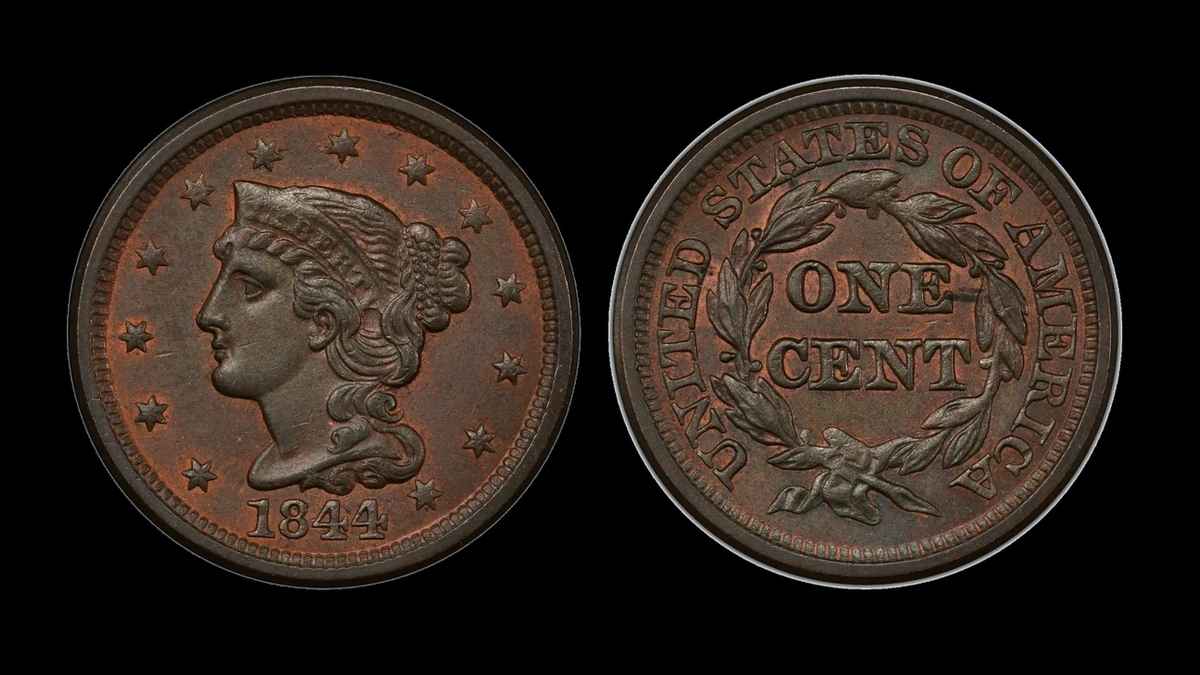
The name 1844/81 describes a corrected upside-down date punch, not a coin dated 1881 somehow reused earlier. A well-preserved example retaining red copper color sold for $33,350 in September 2009.
Estimated whole-coin values for 1844 penny errors range from $20 to $35,000. Examine the date remnants first, then compare raised die marks and any displacement affecting the designs on both faces.
| Visible feature | What it may mean | Estimated range |
|---|---|---|
| Extra numeral strokes | Ordinary repunching or corrected inverted date | $50–$35,000, depending on variety and condition |
| Raised MER line or star-one rim patch | Die crack or cud | $20–$2,500 |
| Unused copper beside incomplete designs | Off-center strike | $500–$8,000 |
1. 1844 Penny Inverted Shapes Remain Beneath the 4s: Repunched Date Error
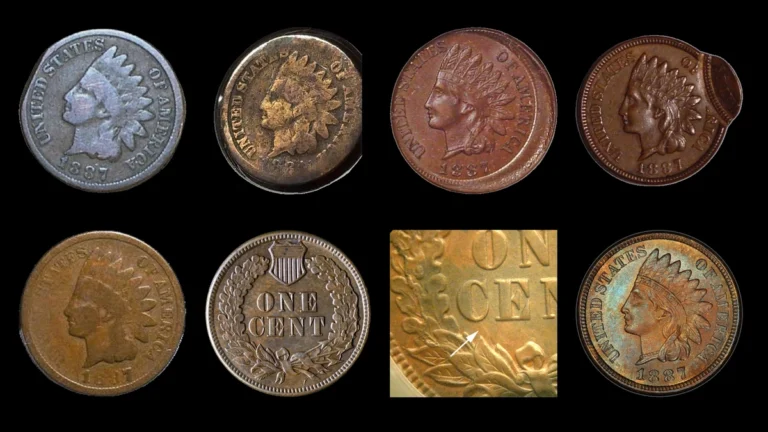
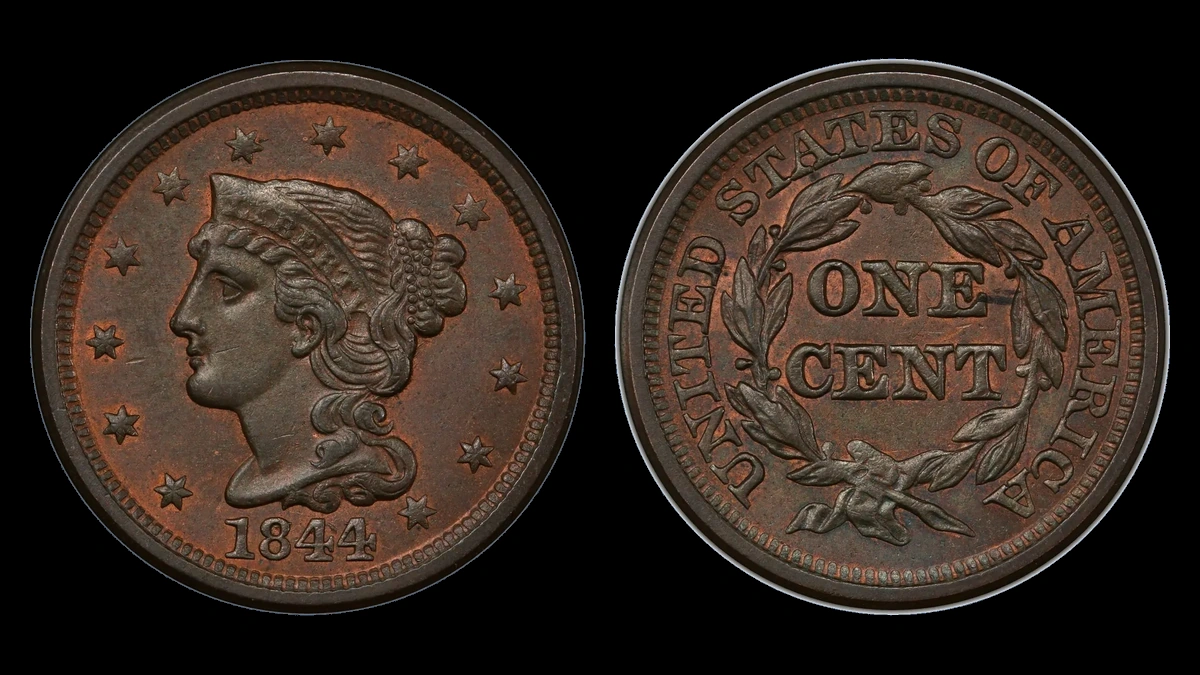
On the familiar 1844/81, small remnants beneath both 4s preserve part of an upside-down date impression. Correcting the punch’s orientation did not remove all of the first impression from the die.
Other 1844 cents have ordinary same-direction repunching on the opening digits or first 4. Their extra strokes belong to separate patterns rather than automatically identifying the better-known inverted-date variety.
How to Identify
Photograph 1844 upright and compare the shapes beneath both 4s with an authenticated 1844/81. The specific inverted outlines matter more than general thickness or one extra mark elsewhere in the date.
For ordinary repunching, follow the earlier stroke belonging to the affected digit without forcing it into the inverted pattern. Sharp engraved grooves, disturbed copper, or changed spacing can indicate an altered numeral instead.
Normal loose large-cent references are 10.89 g and 27.5 mm, useful for checking the basic coin rather than naming the variety. Inspect the plain edge, take measurements away from raised defects, and keep certified coins sealed.
What It’s Worth
$50–$800 is the estimate for many circulated repunched dates, with better-preserved brown examples roughly $800–$6,000. Exceptional Red-Brown 1844/81 pieces occupy a separate estimated tier of $6,000–$35,000.
PCGS records $33,350 for an MS64 Red-Brown 1844/81 at Goldberg in September 2009. Its unworn preservation and remaining copper color are integral to that result, which should not be assigned to a faint ordinary repunched 4.
2. 1844 Penny A Raised MER Line or Star-One Patch Appears: Die Cracks and Cuds Error
A narrow reverse ridge through MER in AMERICA records copper entering a die crack. A larger missing die-edge section can instead create a broad raised patch connected to the rim, called a cud.
One 1844 front example has a strong cud beside star one, the lowest star on the left. Another recorded break extends from that region toward the date, while the reverse crack is a separate specimen pattern.
How to Identify
Change the light angle over MER to distinguish a raised ridge from the incuse center of a scratch. The front cud needs a natural connection to the original rim rather than an isolated interior blob.
Inspect the edge beside star one for folded copper, added material, or an impact dent. Match the particular face and outline instead of expecting all reported breaks and cracks together.
What It’s Worth
$20–$200 is the estimate for circulated cents with modest cracks. More prominent rim breaks can fit approximately $100–$2,500, depending on condition and the strength of the feature.
An 1852 cent with a strong reverse cud, graded PCGS MS64 Brown, sold for $1,920 in 2021. That unworn other-year coin is not a direct price for a worn 1844 star-one cud, especially if corrosion or scratches reduce its appeal.
3. 1844 Penny Bare Copper Remains Beside a Shifted Design: Off-Center Strike Error
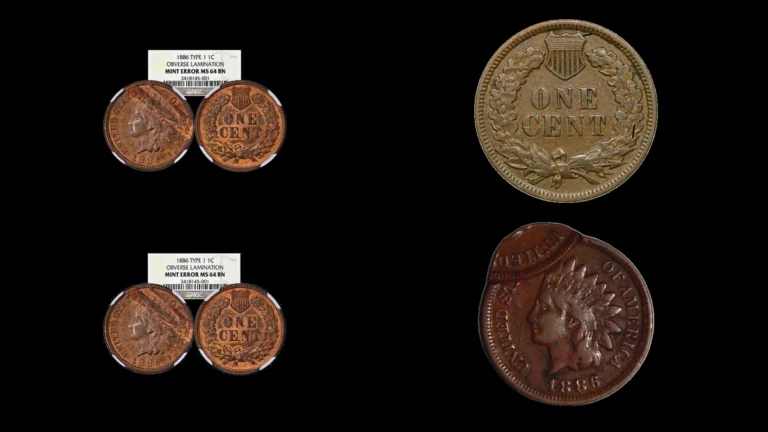
Northeast Numismatics listed a PCGS F12 1844 cent struck 15% off-center. A year guide separately reports a 15% NGC MS62 Brown example, and a dealer also reported an off-center 1844/81.
Those descriptions concern separate coins with different information available. The inverted-date attribution does not establish the last coin’s displacement percentage or direction.
How to Identify
Use full photographs showing the date, untouched crescent, and missing portions of the intended designs. Both sides should fit one misplaced blank, rather than only the front die being shifted over a centered reverse.
Check the bare area and edge for grinding, trimming, or another worked surface. An original off-center strike need not remove copper, although the resulting outline can be distorted.
What It’s Worth
$500–$2,500 is the estimate for circulated readable-date 1844 off-center cents, with better-preserved pieces around $2,500–$8,000. The PCGS F12 15% coin was offered for $1,695, an asking price rather than a completed auction result.
An 1848 large cent struck 30% off-center and graded PCGS XF40 sold for $1,980 in December 2023. That different-year comparison does not price the reported 1844/81 or justify adding a second full amount for its date feature.
Conclusion
For an 1844 cent, start by identifying the actual extra date strokes rather than interpreting the variety’s nickname literally. Then distinguish narrow raised cracks, rim-connected cuds, and displacement of the whole strike.
The $20–$35,000 estimates include sharply different varieties and conditions. A red-brown unworn inverted date, a damaged rim-break coin, and a dealer-listed off-center cent each require their own comparison and one complete-coin valuation.