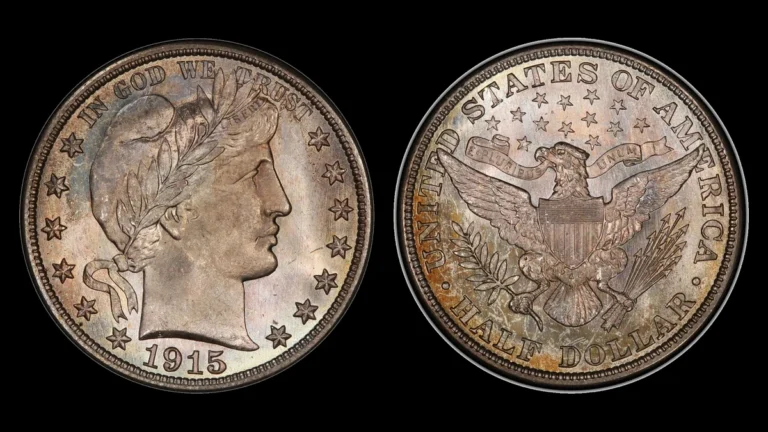
Rare 1851 Half Dollar Errors (List & Pictures)
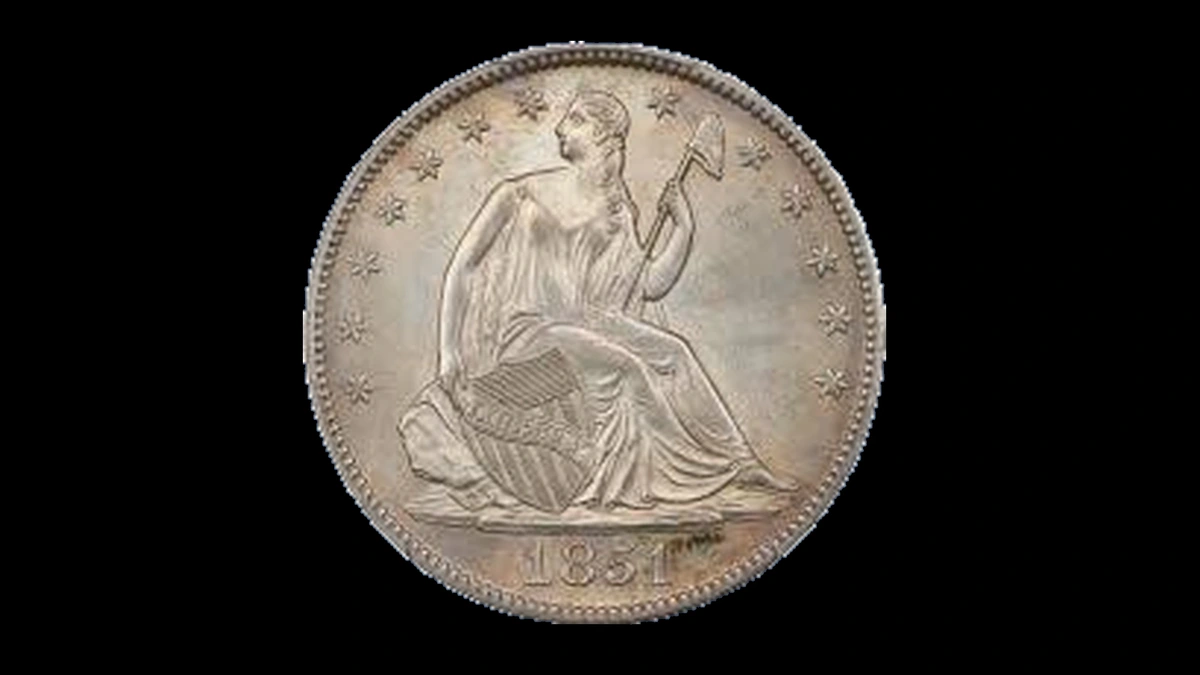
The date area of an 1851 half dollar can contain three different clues: a stray numeral, an earlier date stroke, or a raised crack. One well-preserved coin with repunching and cracks sold for $4,800 in January 2025.
These 1851 half dollar errors have estimated values of $1,200–$5,500 in the grades described. Begin at the lower border, examine the last digit, then follow the surface toward Liberty’s head and cap.
| What appears unusual | Location | Error | Estimated value |
|---|---|---|---|
| An extra 8 fragment | Rim teeth below the date | Misplaced date | $1,200–$2,000 around XF40 |
| An earlier stroke of 1 | Upper left of final date digit | Repunched date | $4,000–$5,500 for comparable unworn coins |
| Raised paths by the date and head | Front surface | Die cracks | $4,000–$5,500 for the same condition group |
| A small irregular metal area | Beside the cap, right of star eight | Planchet flaw | $2,500–$4,000 for comparable Details coins |
The repunched date and crack estimates can refer to the same whole coin. Do not combine them into a doubled price.
1. 1851 Half Dollar An Extra 8 Interrupts the Border: Misplaced Date Error
Below the normal date, the rim has a row of small teeth called denticles. On the variety now named WB-8, a piece of another 8 disrupts that row.
A date punch was applied too low on the die, the steel stamping tool, leaving part of a number outside the intended date position. The same variety was formerly called WB-104.
How to Identify
Include the normal 1851 date and the border in one view before magnifying the extra mark. Its position below the date is what separates this feature from overlapping strokes beside a normal digit.
Compare the curved remnant with a confirmed WB-8 image. A bent denticle or rim dent can disrupt the border without preserving the shape of an 8.
A small raised chip can also look like an out-of-place fragment. The curve and its exact position must match the documented number rather than merely appearing unusual.
Confirm the dated Seated front and the absence of a mintmark on the reverse. Normal unworn measurements are about 13.36 grams and 30.6 mm across, with a grooved edge; these support a basic coin check but not the variety attribution.
What It’s Worth
Estimated range: $1,200–$2,000 for similarly worn examples around XF40. A collectors’ auction report records $1,560 for a PCGS XF40 WB-8 sold in August 2019.
XF40 indicates circulation wear with useful detail remaining. Damage around the date or cleaning can reduce appeal even when the extra 8 remains identifiable.
2. 1851 Half Dollar The Final 1 Has an Earlier Stroke: Repunched Date Error
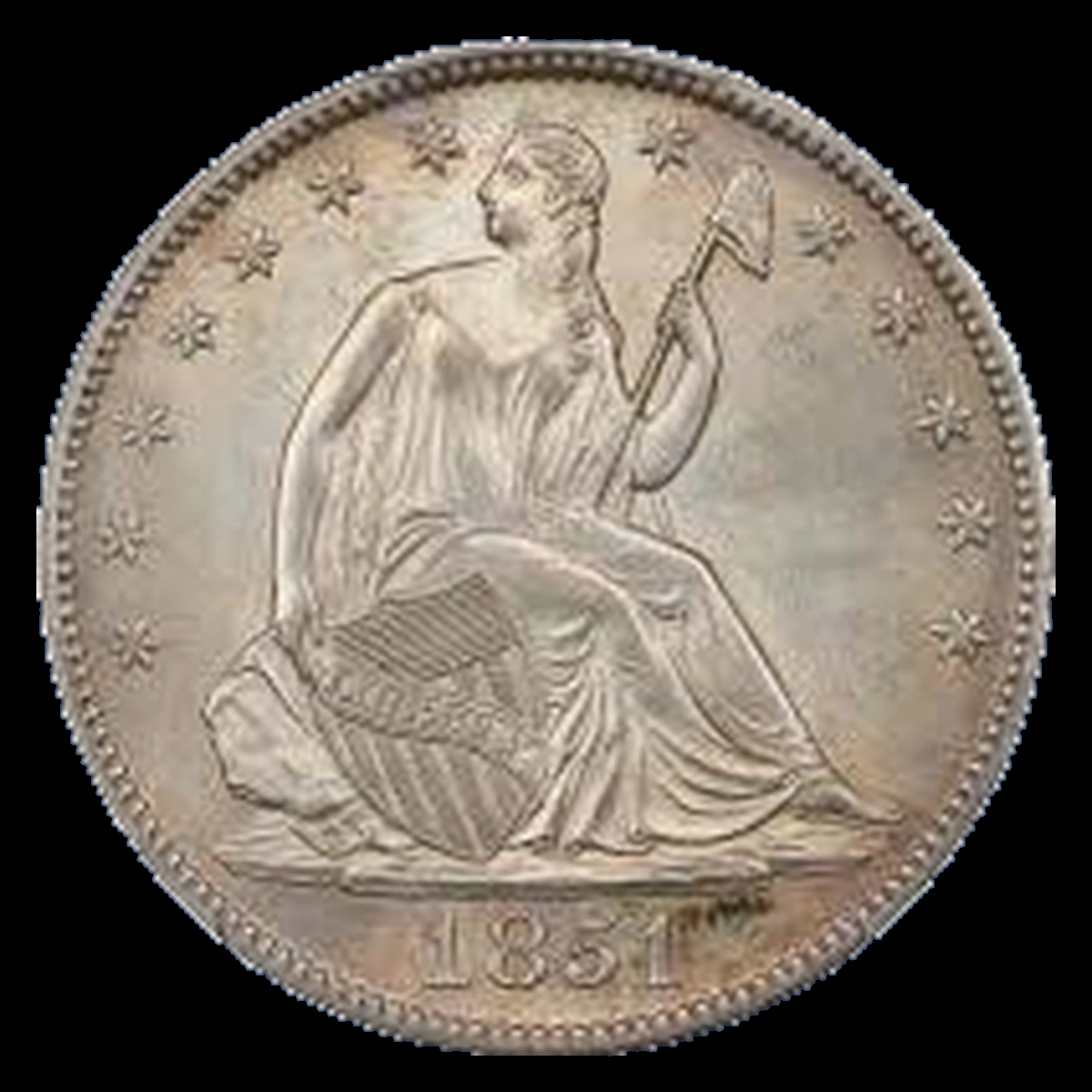
Move from the rim teeth up to the final digit of 1851. On WB-2, a small raised stroke sits at the upper left of that 1.
This mark is close to the intended date, unlike the misplaced 8 in the border. Repeated punch applications in slightly different positions left part of an earlier 1 in the die.
How to Identify
Keep the neighboring 5 visible as a landmark while inspecting the final 1. Under magnification, determine whether the extra piece follows the form of the earlier numeral.
The March 2020 Stack’s Bowers catalog describes this feature on an EF45 example. Other repunched-date die combinations require their own comparisons.
Rotate the light to separate raised detail from a shadow against the main digit. A uniformly thick edge is less informative than a clearly placed numeral fragment.
A documented coin also has a pressed-in lint impression near the date. That sunken mark should not be joined to the raised earlier number simply because they are close together.
What It’s Worth
Estimated range: $4,000–$5,500 for unworn coins comparable to the recorded MS62 example. The PCGS MS62 coin with CAC approval sold for $4,800 at Heritage in January 2025.
MS62 means no circulation wear but noticeable surface marks. An EF45 attribution reference is worn and should not receive that unworn estimate automatically.
The sold coin also had the raised crack paths described next. Its price already includes those features along with the date, preservation, and overall appearance.
3. 1851 Half Dollar Lines Cross the Date Base and Head: Die Cracks Error
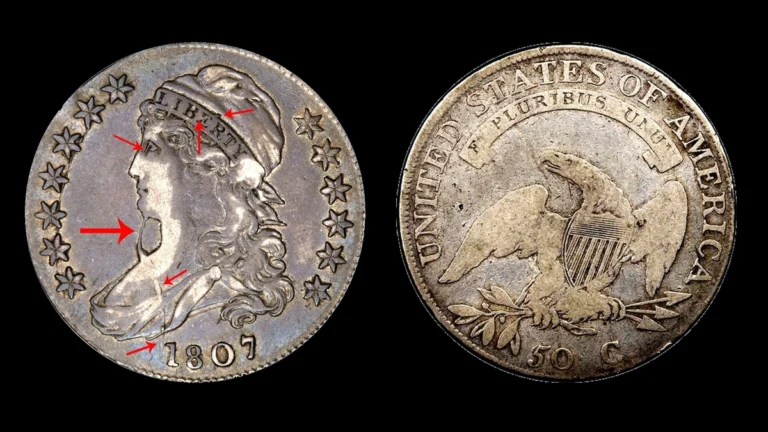
There are two separate paths to inspect on the auctioned MS62 coin: one along the bottom of the date and another across Liberty’s head. The upper path runs between stars seven and eight toward the top of the cap.
Unlike the lint impression near the date, these lines rise above the surface. They formed where silver entered narrow fractures in the stamping tool.
How to Identify
Trace the lower line while the complete date remains in view. Then move to the head without assuming every intervening surface line connects the two features.
The auction description identifies both crack areas. Compare the route between stars seven and eight and its continuation toward the cap with the full front image.
Light from opposite sides helps establish whether the lines are raised. Cleaning scratches and the separate lint impression have different structures even when they occupy nearby areas.
These are marks of damage in the die, not proof that the silver coin itself fractured. Match the complete paths and their landmarks rather than one isolated bright line.
What It’s Worth
Estimated range: $4,000–$5,500 for complete examples with preservation comparable to the MS62 coin. The January 2025 $4,800 result is the same sale used in the repunched-date section.
It does not establish a separate payment for the two crack paths. A heavily worn example needs a comparison in its own grade, even if the ridges remain unusually clear.
4. 1851 Half Dollar An Irregular Patch Beside the Cap: Planchet Flaw Error
A separate cataloged 1851 half has a small flaw immediately right of star eight, beside Liberty’s cap. Stack’s Bowers described it as a defect in the original blank, also called a planchet.
That description is broad. It does not establish that this particular defect is a clip, a peeling layer, or another more specific error type.
How to Identify
Locate star eight and the edge of the cap before examining the irregular area closely. Photograph the surrounding struck detail as well as the flaw’s boundary.
A gouge made later may have sharp cut edges or pushed-up metal. Corrosion can spread across nearby details, so a damaged-looking area does not necessarily prove a defect in the original blank.
The reference coin also had staining, but color and metal structure are separate observations. A stain by itself does not demonstrate a planchet flaw.
Use the cataloged example for a direct visual comparison and keep the error label as broad as the evidence. Measurements from an existing holder record are sufficient for a sealed coin; opening it is unnecessary for these checks.
What It’s Worth
Estimated range: $2,500–$4,000 for similarly unworn examples with a small original flaw and comparable surface problems. The cataloged coin was graded NGC Uncirculated Details for staining.
“Uncirculated” indicates no circulation wear, while “Details” identifies a condition problem that prevents an ordinary numeric grade. No completed-sale price is supplied for that specific coin.
The $4,800 repunched-date example provides a same-date comparison in better surface condition, not a sale of this cap-area flaw. The estimate must account for the staining and the overall appearance of the individual coin.
Conclusion
Follow the front from the lower border to the date, then upward toward the head and cap. That route helps distinguish an out-of-position number, an overlapping date stroke, raised ridges, and an original metal defect.
The estimated $1,200–$5,500 span covers different wear and surface conditions. The repunched date and cracks share one $4,800 auction comparison; recognizing both features does not create two separate values.