Rare 1815 Half Dollar Errors (List & Pictures)
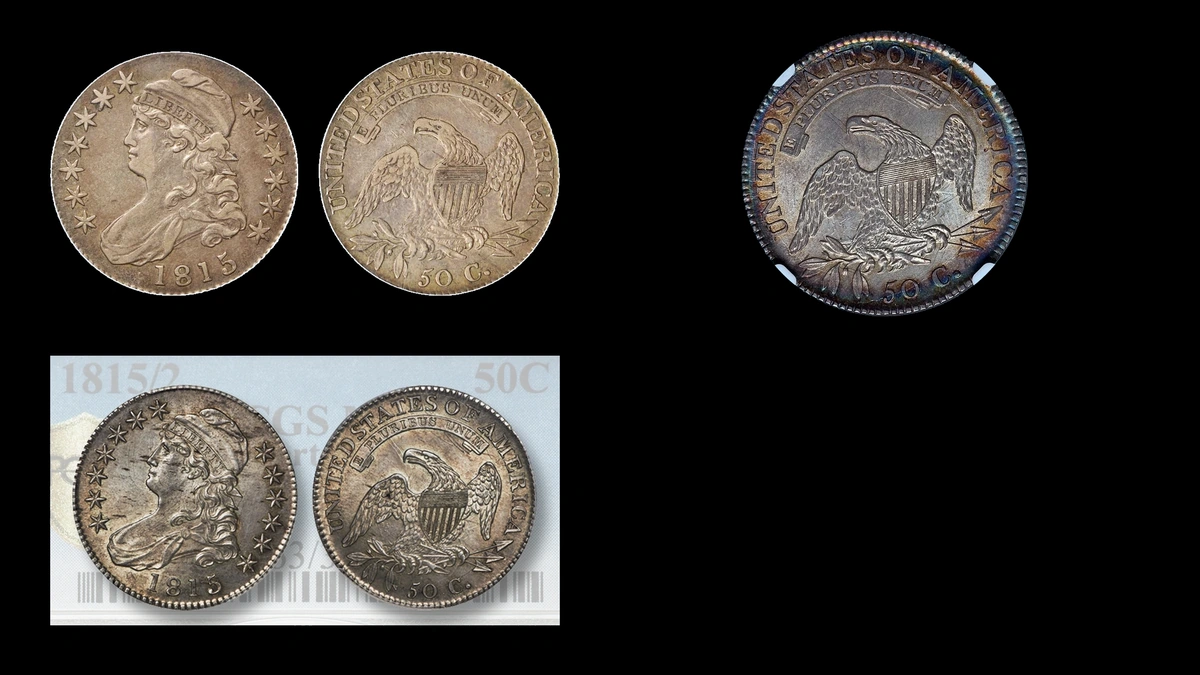
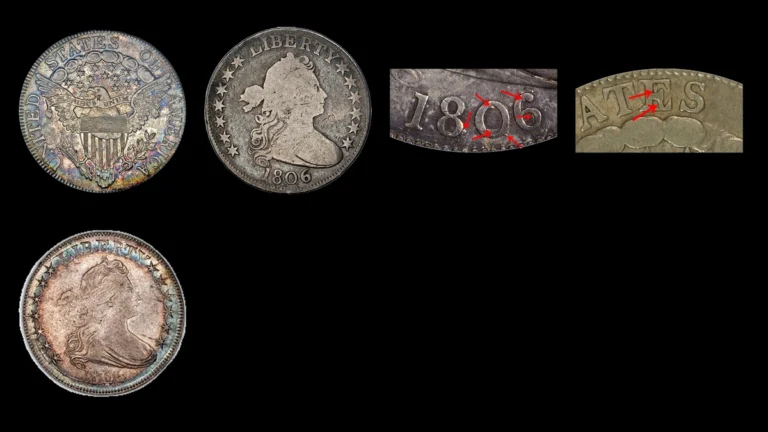
Every genuine half dollar dated 1815 carries a 2 beneath the final 5. That overdate belongs to the entire issue, including the exceptional MS66+ coin sold for $182,125 in August 2012.
These 1815 half dollar errors also include die marks and a reported reverse rotation. Whole-coin comparisons extend from roughly $3,000 to $182,125; confirm the date first, trace the surface features, and finish with a controlled flip.
| Clue | Where to check | Feature | Estimated comparison |
|---|---|---|---|
| Part of 2 beneath 5 | Final date digit | Overdate | $3,000–$12,000 for worn coins; exceptional sale $182,125 |
| Raised lines or a small raised defect | Reverse and separately reported neck area | Die cracks | $3,000–$4,500 for problem examples discussed |
| Faint transferred design shapes | Shield and surrounding open areas | Clashed dies | $3,500–$12,000 |
| A repeatable leftward lean | Orientation of both faces | Rotated reverse | $4,000–$6,500 |
Several features may coexist on one coin, so their ranges are not additive. A normal unworn example is about 13.48 grams and 32.5 mm across, with lettering on its edge.
1. 1815 Half Dollar A 2 Remains Beneath the Final 5: Overdate Error
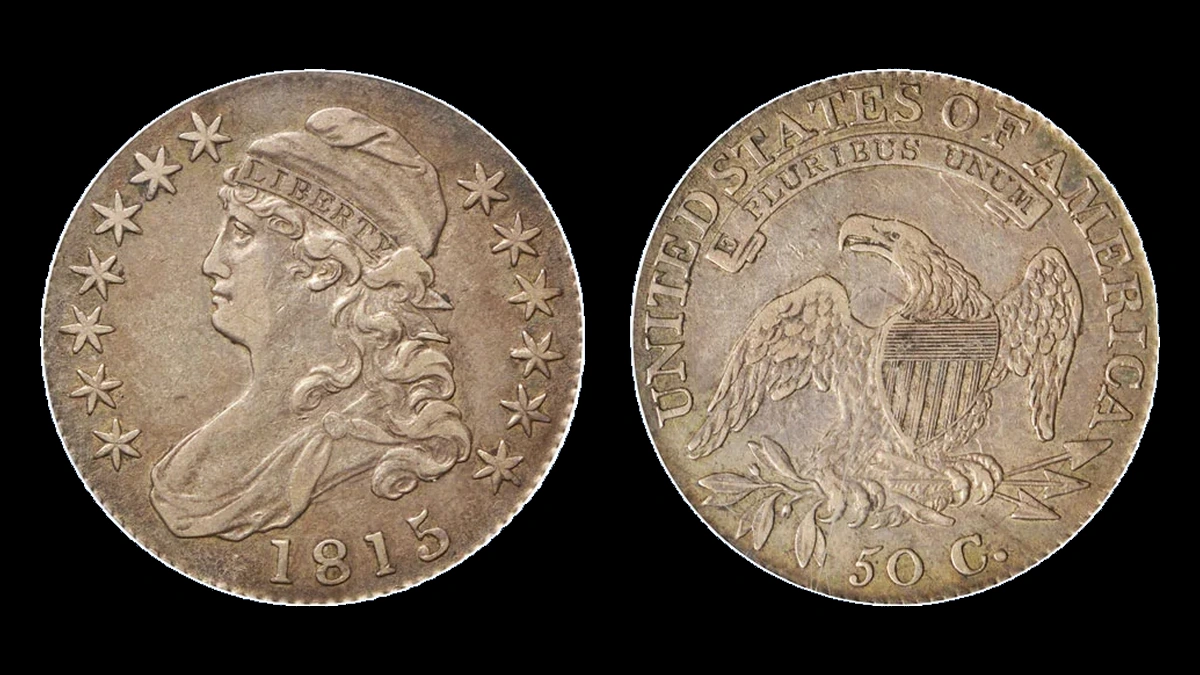
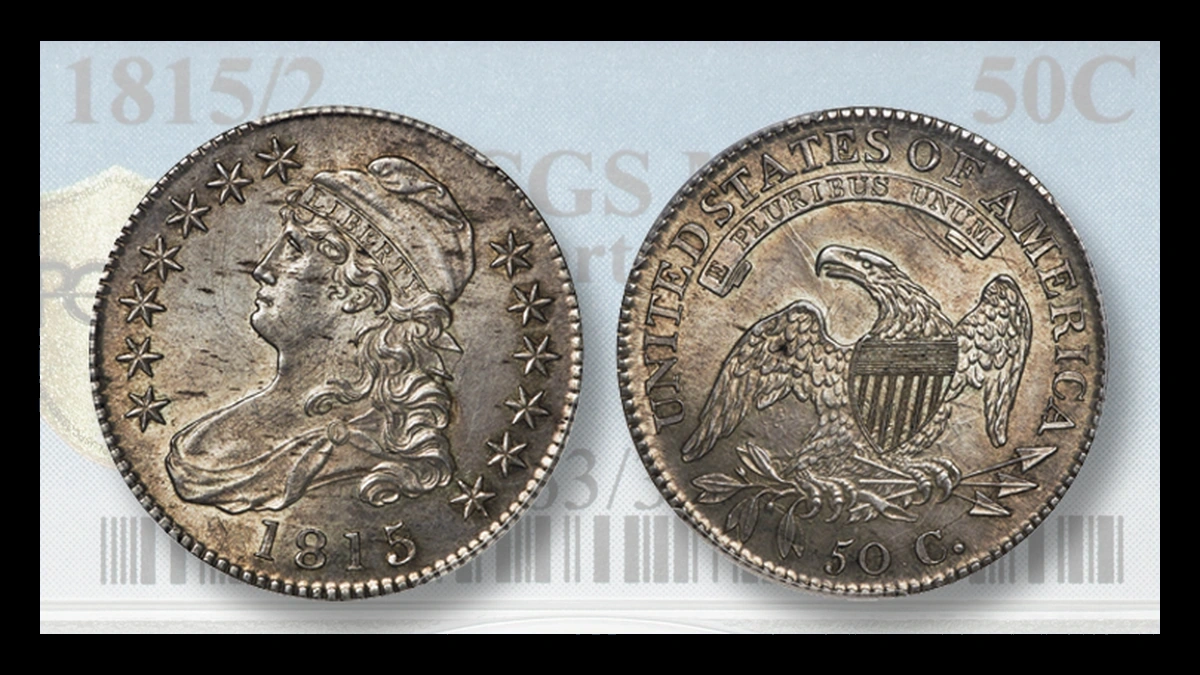
The notation 1815/2 describes the date itself: a 5 was punched over an earlier 2 in the die. The die is the steel tool that stamps the design onto the silver.
Surviving curves from 2 remain around the final digit. Wear can obscure them, but it does not create a separate normal-date version of the 1815 half dollar.
How to Identify
Inspect all four numbers before isolating the last one. A genuine comparison must agree in the overall date as well as the surviving pieces under 5.
NGC illustrates an 1825 altered to resemble 1815. Its changed second digit has the wrong shape and disturbed surrounding metal.
Use a magnifier and photographs of genuine coins with comparable wear. The overdate remnants may be faint on a circulated piece, while untouched surrounding surfaces help distinguish them from later tooling.
Inspect the lettered edge and check accessible measurements as supporting evidence. Correct size alone does not rule out a changed date on another Capped Bust half.
What It’s Worth
Estimated range: $3,000–$12,000 for the worn examples discussed here. Exceptionally preserved coins belong to a very different market level.
PCGS records $182,125 in August 2012 for an MS66+, a remarkably high grade without circulation wear. That is the price of the complete scarce-date coin.
Because every genuine 1815 half is an overdate, the feature is already included in its normal issue value. It is not a surcharge to add after pricing the date.
2. 1815 Half Dollar Thin Ridges Mark a Damaged Tool: Die Cracks Error
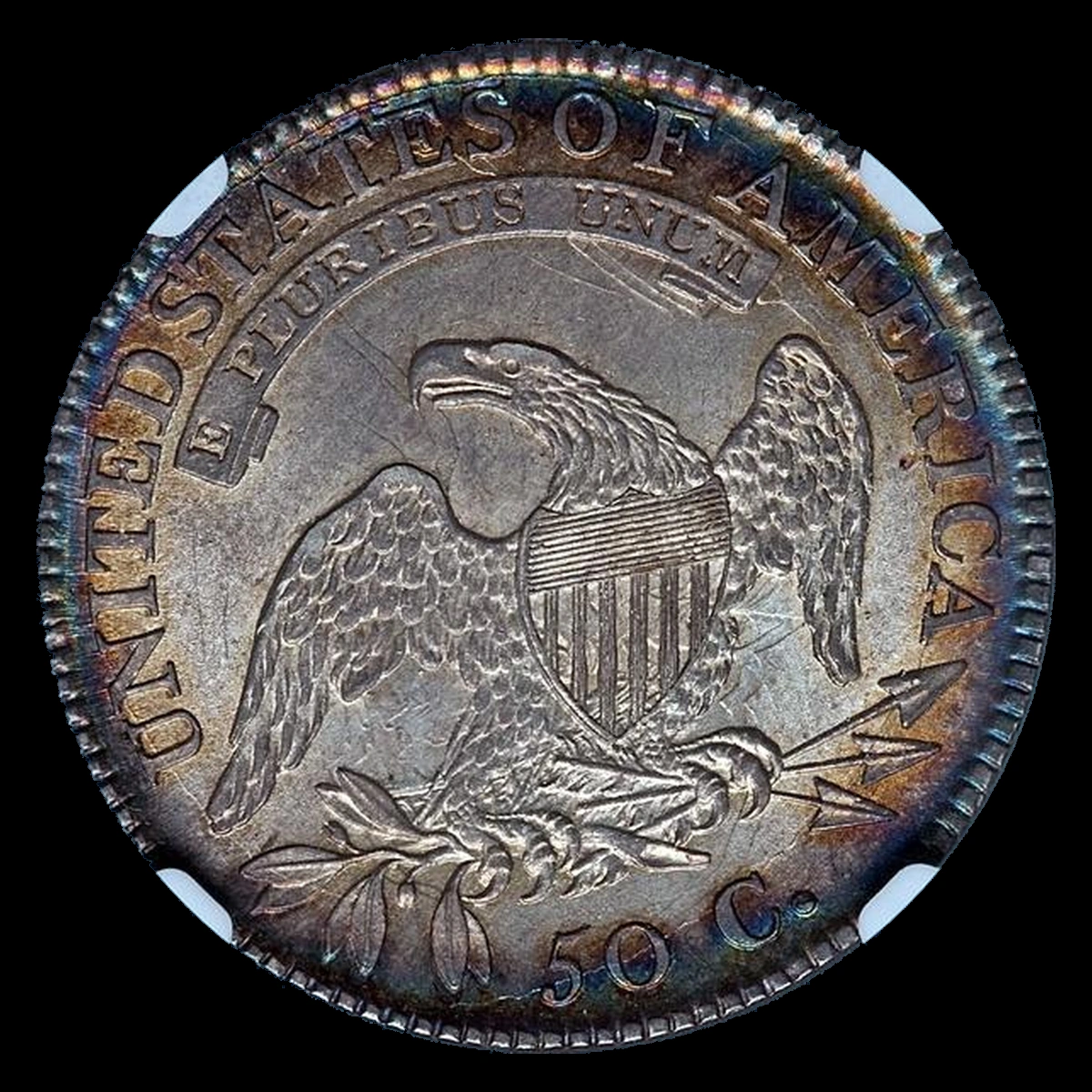
The reported details include reverse cracks and a small defect at a corner of N in UNITED. A separate collector’s coin has a line running from the curl below Liberty’s ear toward her neck.
These observations belong to different examples. A die crack leaves a raised line because silver enters a narrow opening in the stamping tool.
How to Identify
Examine the N corner under low light, then compare the surrounding reverse with the documented example. A raised defect and a cut into the silver have different shapes.
For the separately reported front crack, follow the whole route from the curl toward the neck. Do not expect that line merely because the reverse has a small flaw.
Check the height of a suspected ridge as the lamp moves. Scratches can push up metal at their edges, so route and surrounding surface matter as well as a bright highlight.
The finished half dollar need not be split. These lines record damage to its dies rather than a fracture through the coin itself.
What It’s Worth
Estimated range: $3,000–$4,500 for worn examples with comparable condition problems. A cleaned XF Details coin with the small N defect sold for $3,840 in October 2025.
XF describes considerable remaining detail despite wear, while Details flags a problem preventing an ordinary numeric grade. Better surfaces can change the whole-coin value substantially.
3. 1815 Half Dollar Unfamiliar Shapes Appear in the Shield: Clashed Dies Error
A faint piece of the opposite design can appear inside the eagle’s shield or in open areas around the normal design. Such transferred shapes are clash marks.
The dies collided without a blank between them and picked up marks from each other. Subsequent coins could then receive those traces along with the intended design.
How to Identify
Begin inside the shield and follow any connected shapes into neighboring open areas. Compare them with the opposite face instead of identifying a clash from one isolated line.
A PCGS AU58 described in 1999 had numerous clash traces on both sides. The separate Logan collection coin has lighter marks, so the prominence of the evidence can vary.
Change the light direction to reveal shallow traces without mistaking reflections or scratches for repeated design. Keep wider photographs to preserve each mark’s relationship to the normal picture.
Clashes and cracks need separate matches even when both occur on one coin. A transferred shape is not explained merely by being close to a known die crack.
What It’s Worth
Estimated range: $3,500–$12,000 from problem circulated coins to attractive lightly worn examples. Much of this value comes from the scarce 1815/2 issue.
The cleaned clash-marked coin sold for $3,840 in 2025, and ordinary XF comparisons approach $5,900. The $12,000 upper estimate is for better preservation, not a supplied sale result for the AU58 described in 1999.
4. 1815 Half Dollar The Eagle Leans Left After a Straight Flip: Rotated Reverse Error
The Russell Logan collection example is reported with a reverse turned about 30 degrees counterclockwise. Its designs remain recognizable even though their normal alignment is changed.
That coin also carries light clash traces and lacks the later reverse cracks reported on other examples. The separate features should not be combined into one universal checklist.
How to Identify
Secure the coin in a protective holder with Liberty upright against a vertical reference. Turn top over bottom without twisting the holder sideways.
The eagle should normally finish upright after that movement. A repeatable lean about 30 degrees to the left matches the reported direction.
Repeat the flip and use a protractor if measuring the angle. Movement inside a loose holder can create an apparent change, while separately straightened photographs can hide a real one.
Keep date and edge evidence with the orientation record. A slanted single photograph cannot establish the relationship between the two faces.
What It’s Worth
Estimated range: $4,000–$6,500 for a genuine moderately worn example. This estimate does not assign a grade to the Logan coin.
Ordinary 1815/2 comparison sales include $5,000 for PCGS VF30 in March 2026 and $5,855 for PCGS VF35 in January. Both concern worn coins with clear major detail, not an isolated premium for 30-degree rotation.
Conclusion
Confirm the overdate before investigating the other marks: all genuine 1815 half dollars belong to the 1815/2 issue. Then distinguish ridges from transferred shapes and use a controlled flip for the orientation.
Most worn comparisons discussed fall around $3,000–$12,000, while exceptional preservation explains the $182,125 record. Each figure values a complete scarce-date coin, even when several die features are visible together.