Rare 1865 Penny Errors (List & Pictures)
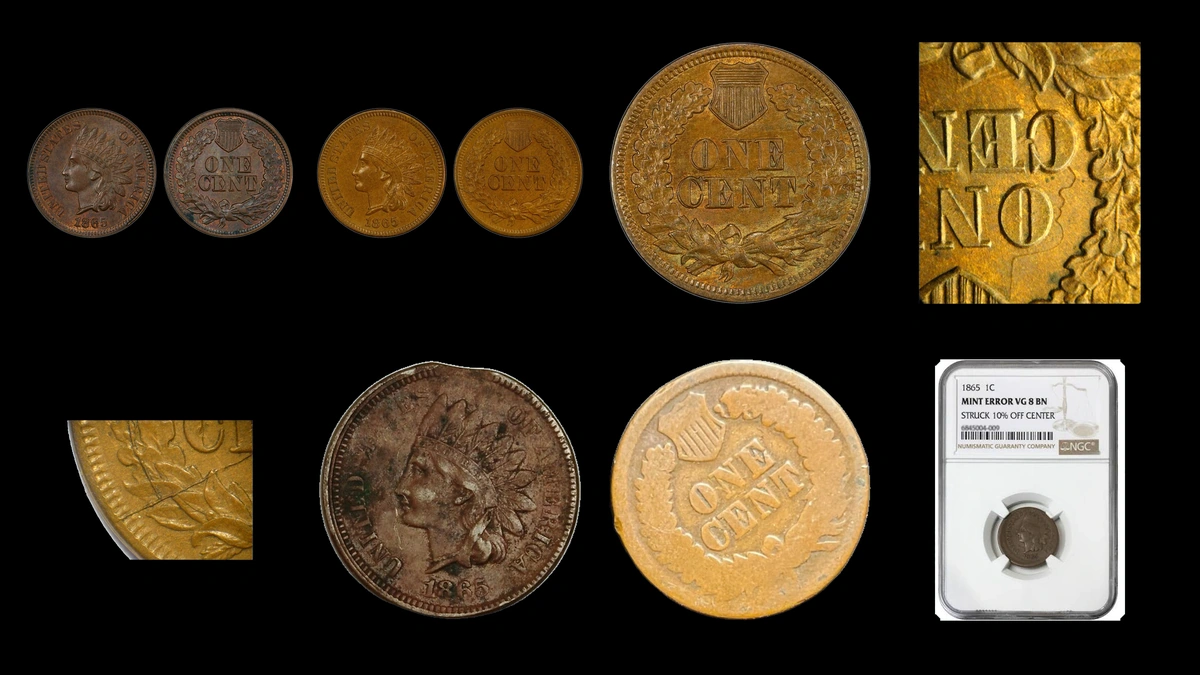
The Plain 5 and Fancy 5 are normal date styles, not errors. They help sort the actual repeated digits, doubled designs, and shifted strikes found on 1865 cents.
These 1865 penny errors span estimated whole-coin values of $10–$6,000. A worn Fancy 5 double strike sold for $1,080 in January 2023; the supplied doubled-die comparison at $1,380 belongs to a different-year 1887 cent.
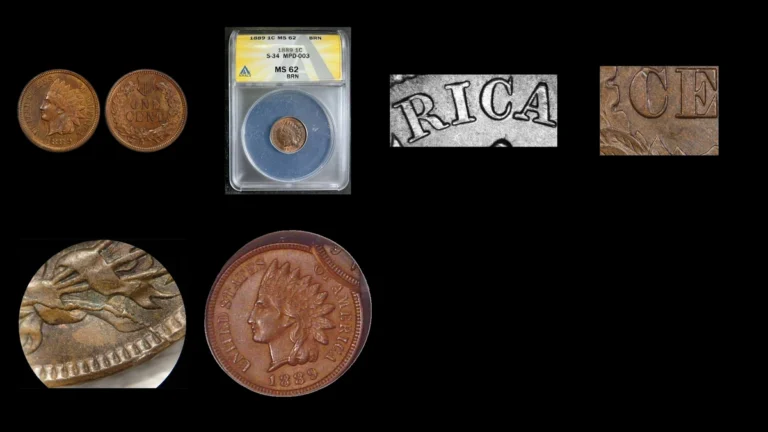
1. 1865 Penny Extra Strokes Hug the Date Digits: Repunched Date Error
Repeating the date punch after a slight shift could leave pieces of its earlier position in the die. Later coins copied those extra strokes without being struck twice themselves.
How to Identify
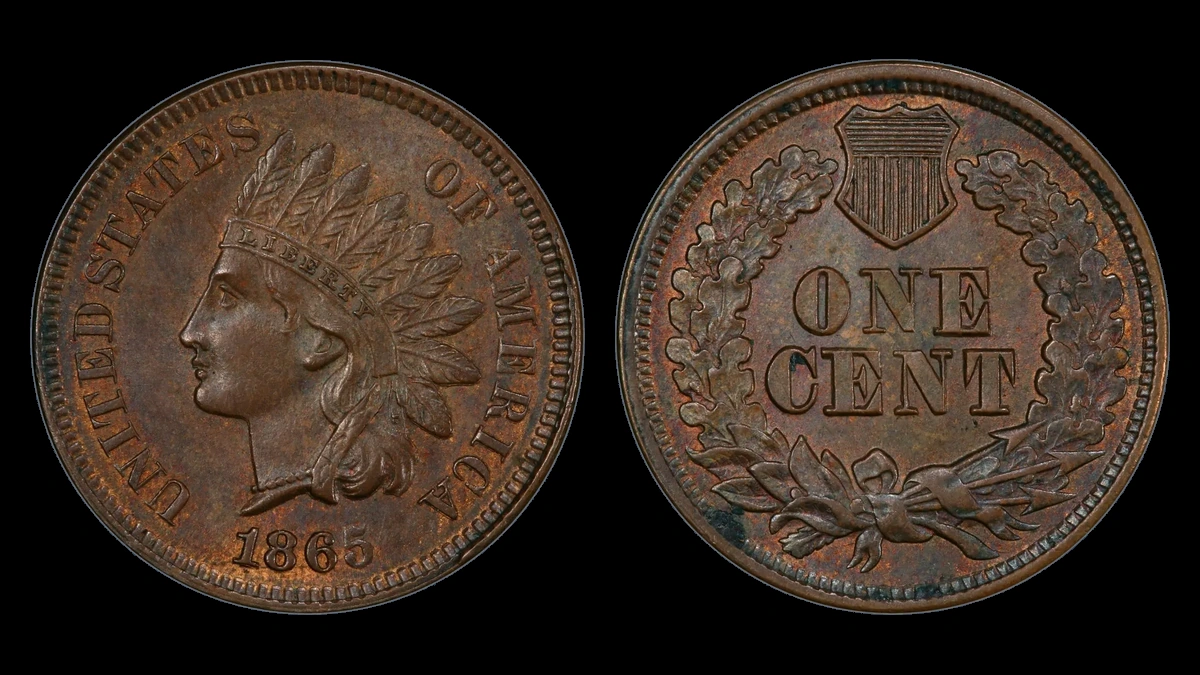
The documented Plain 5 example has lower remnants beside 18 and upper remnants beside 65. Check both directions together against the matching variety.
Fancy 5 varieties have their own patterns. The normal shape of either 5 is not evidence of repunching, and an isolated lump needs more than a suggestive location.
What It’s Worth
$20–$2,500 is an estimate across identified patterns with different visibility and condition. The strongest comparisons need a clear desirable variety on well-preserved metal.
An 1889 repunched date graded MS64 recorded $405 on eBay in May 2015. It offers another-date context for the process, not a sale assigned to the Plain 5 pattern.
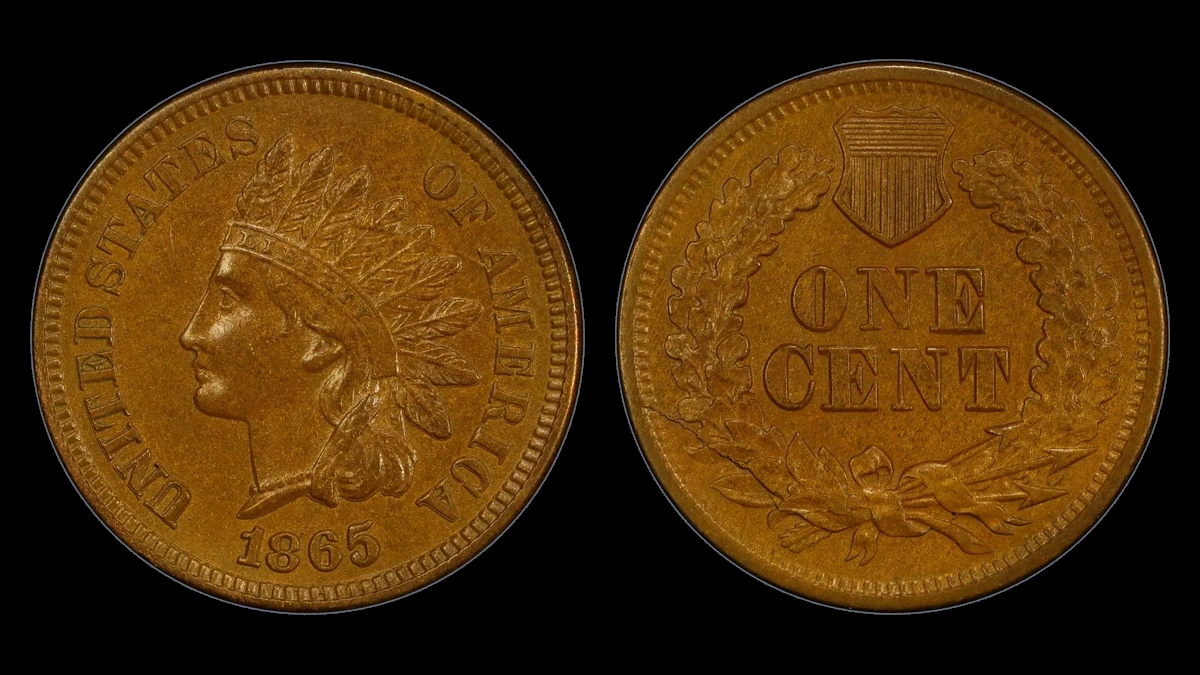
2. 1865 Penny Number Fragments Lie away from the Date: Misplaced Date Error
An earlier punch placed too high or low could leave numeral fragments outside the intended date area. These traces differ from a second stroke closely following a normal digit.
How to Identify
Plain 5 examples include fragments among the lower border teeth or between 8 and 6. Fancy 5 reports describe lower parts of 6 or 5 near the ribbon below the portrait.
Use the correct style and location in the comparison. An uneven border tooth should not be called a number unless its actual curve matches the recorded fragment.
What It’s Worth
$40–$2,500 is an estimated range for recognizable misplaced digits in different conditions. Clarity and the specific pattern matter more than a count of extra marks.
A 1908 example graded MS65 Red and Brown recorded $1,187 on eBay in 2021. That later unworn coin is a broader comparison, not a matching 1865 sale.
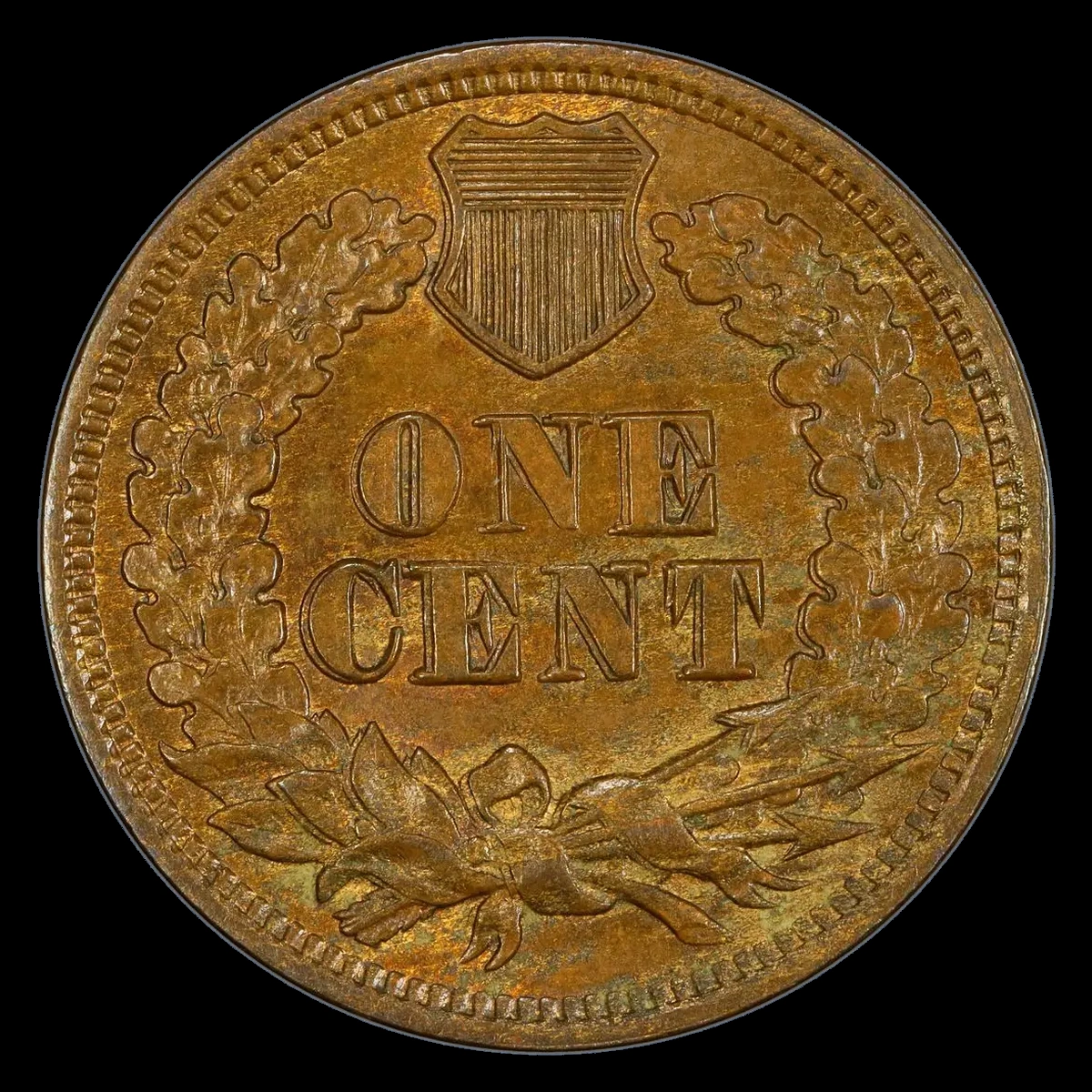
3. 1865 Penny The Back Has Rightward Repeated Outlines: Doubled Die Error
The recorded back-doubling variety belongs to the Fancy 5 style. Its die carried extra outlines shifted toward the right before it struck the coin.
How to Identify
Confirm Fancy 5 first, then follow the repeated back shapes across several details. The same year on a Plain 5 coin does not establish this variety.
Use changing light to inspect the height of the outlines. A low flat shelf from movement during striking can point rightward too, but it does not reproduce the matching doubled-die pattern.
What It’s Worth
$30–$1,500 is an estimate for correctly matched examples. Remaining detail, original surfaces, and clear doubling support stronger comparisons.
An 1887 Indian cent with front doubling sold for $1,380 in June 2025. Its different year and opposite-face pattern prevent that result from becoming a claimed sale for the 1865 doubled back.
4. 1865 Penny Opposite-Design Traces Appear near the Face: Clashed Dies Error
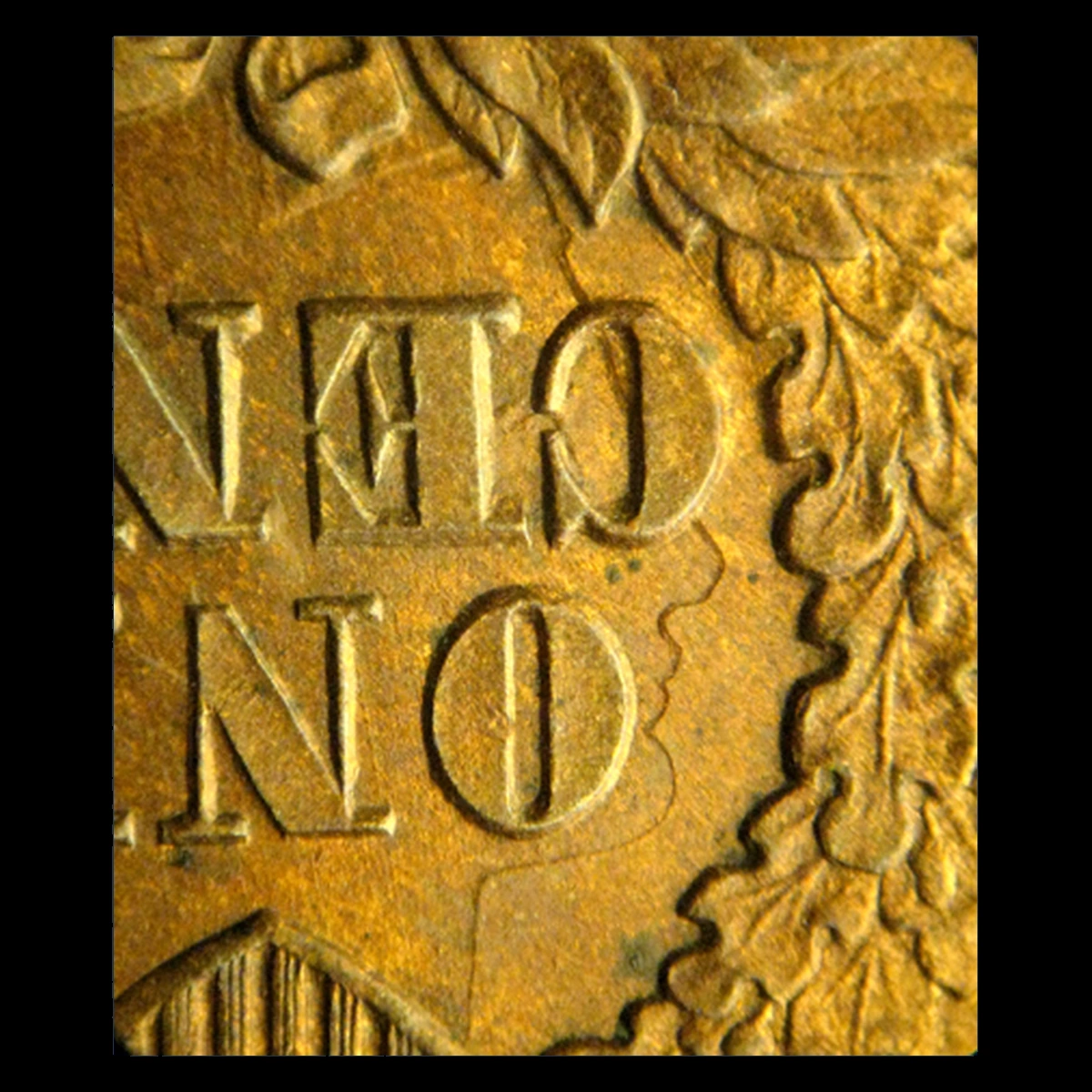
The recorded Plain 5 example shows traces near the face and below the chin, with other marks near O in ONE and beside the value. The dies had struck each other without a blank between them.
How to Identify
Compare the actual outlines with the Plain 5 reference and the opposing design. A scratch near the chin does not become a clash simply by being in the same area.
Fancy 5 clashes are also recorded and require their own specimens. The coin itself need not have flipped or received another strike to carry marks copied from clashed dies.
What It’s Worth
$15–$600 is an estimated whole-coin range for recognizable examples. Faint traces on a worn cent usually offer a weaker comparison than clear outlines on original surfaces.
The documented Plain 5 coin combines several die features. No adopted auction result is supplied for that exact pairing, and its features should be assessed together once.
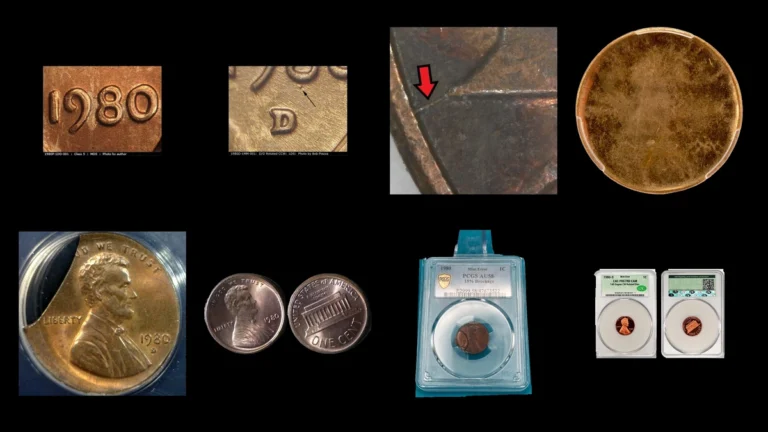
5. 1865 Penny Raised Lines and Lumps Interrupt the Design: Die Cracks and Breaks Error
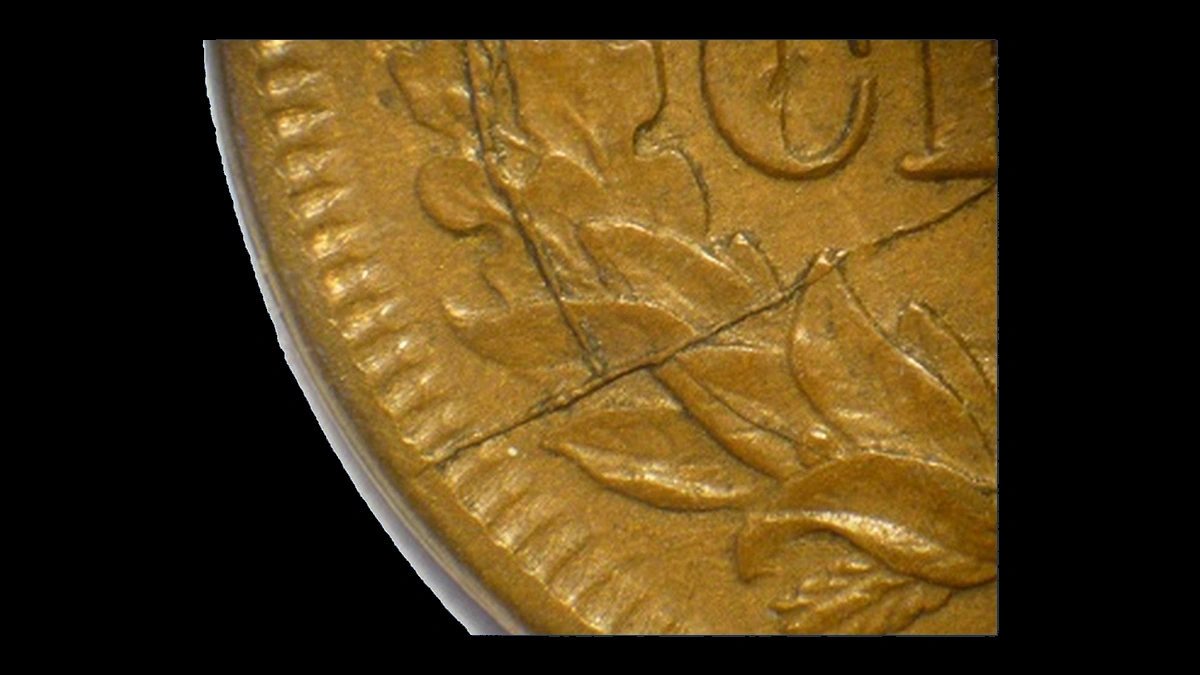
Cracks in a die leave raised lines, while missing pieces can leave chips or larger rim cuds. A retained break may still show design where the fractured die piece remained in place.
How to Identify
Plain 5 records include a chip in N of ONE and a retained back break around eleven-fifteen to twelve-forty-five. Fancy 5 examples include separate cheek or letter chips and a lower-right back break around three-forty-five to five.
Choose the correct style and boundary rather than combining those locations. For a retained section, surviving design is expected and differs from a fully missing die piece.
Side lighting distinguishes a raised crack from a cut groove. Inspect the edge for folded or added metal before accepting a larger lump.
What It’s Worth
$10–$300 is an estimate for small cracks and chips, with clearer rim breaks around $75–$1,500. A sharp small feature can appear on a more valuable coin than a large break with heavy damage.
A 1946-S Lincoln cud sold for $288 in March 2021. That is general broken-die context, not a direct value for a particular 1865 position.
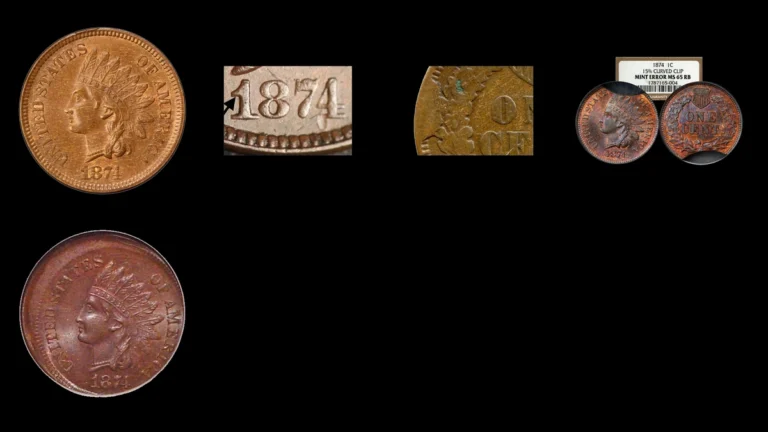
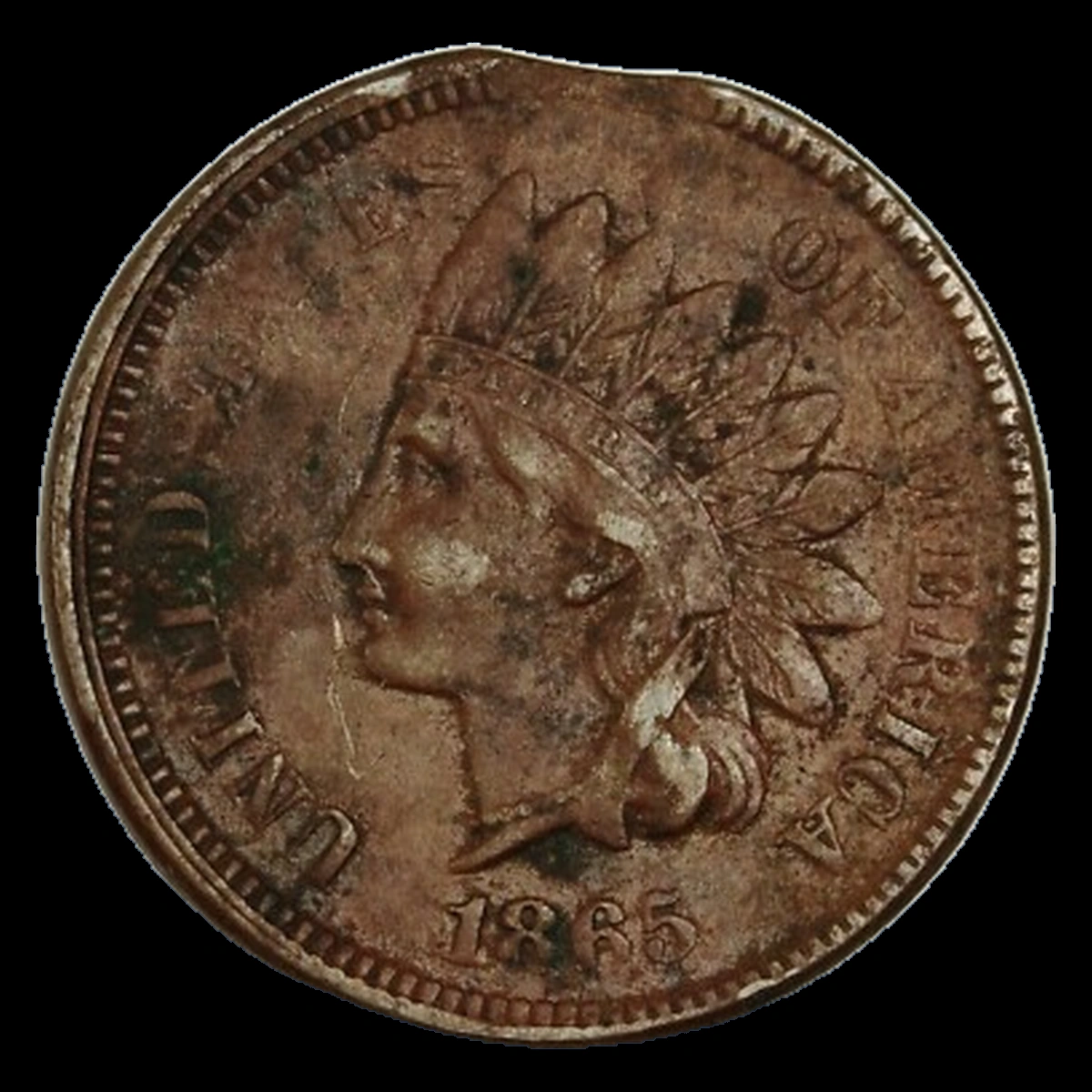
6. 1865 Penny Part of the Original Outline Is Missing: Clipped Blank Error
The blank can enter the press with a section already absent from the cutting process. The resulting design and rim then form beside that incomplete boundary.
How to Identify
The Capitol Coin Auctions listing supplies no certified grade, fixed gap shape, or clock position. Read those details from the actual coin rather than from another year’s clip.
Look for rim formed beside the opening and inspect for saw or file marks through completed detail. For a curved gap, opposite-rim weakness can help, but it is not required on every genuine clip.
A normal bronze cent is about 3.11 grams and 19.05 millimeters across. Both an original clip and later cutting can lower the weight, so a deficit alone cannot establish the timing.
What It’s Worth
$40–$750 is an estimate after the missing section is identified as an original blank defect. Remaining condition and boundary quality matter along with size.
A separate ungraded 1865 coin was advertised at $199.99 or best offer. That is an asking price, not a confirmed transaction or a certified comparison.
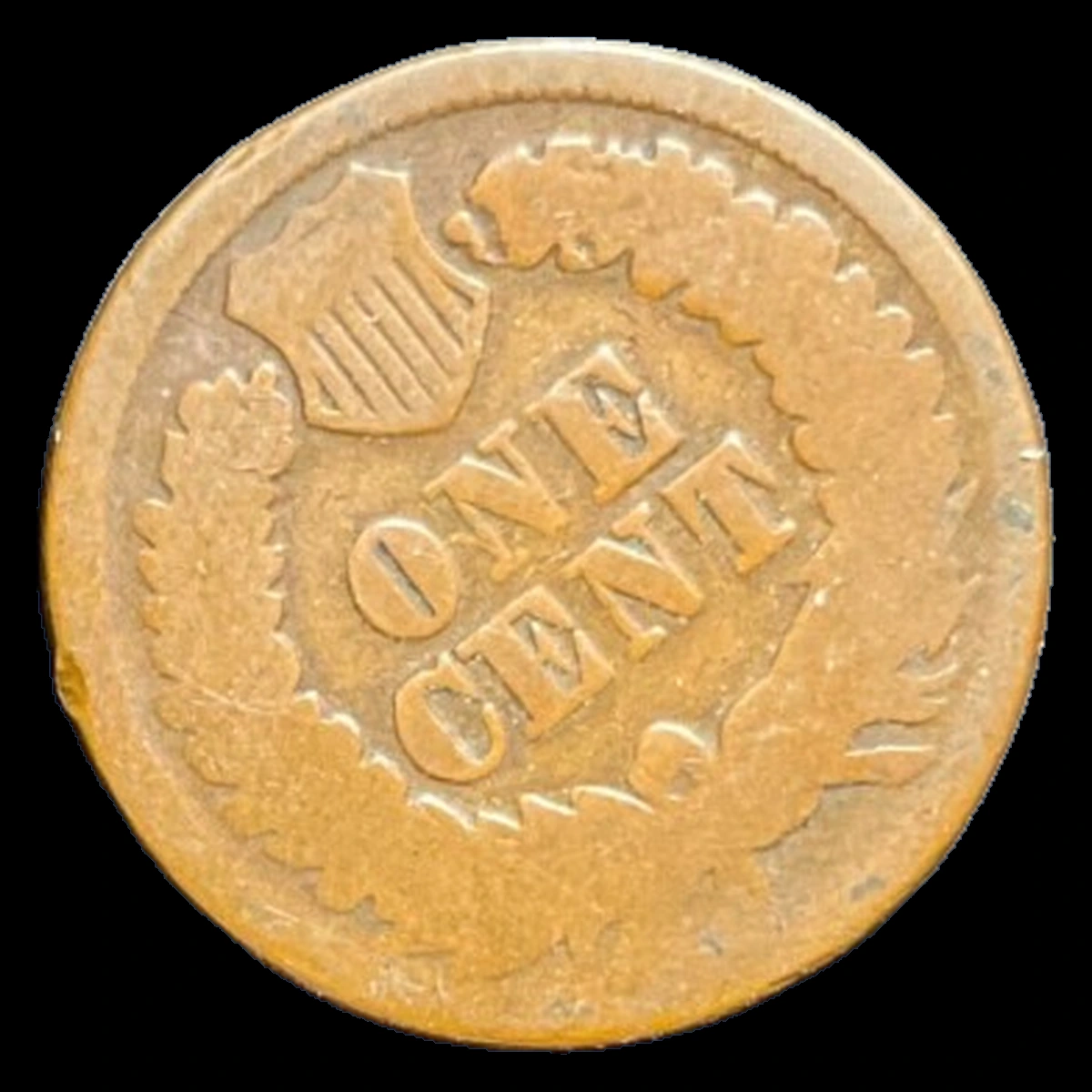
7. 1865 Penny The Back Ends Upside Down after a Flip: Rotated Dies Error
Plain 5 listings include a 180-degree die rotation and smaller angles. One die turned relative to the other, even though the individual designs could remain complete and centered.
How to Identify
Hold the portrait upright and flip the coin top to bottom without turning sideways. A 180-degree example leaves the back upside down after that controlled movement.
Repeat from the same starting position or use a continuous turning video. Two photographs rotated independently on a screen cannot demonstrate the coin’s alignment.
Inspect the edge for a join if the coin is accessible, and keep certified pieces sealed. The repeatable relationship between the faces is the essential observation.
What It’s Worth
$40–$1,200 is an estimated range for confirmed rotations. Large clearly demonstrated angles and better preservation offer stronger comparisons than a slight tilt.
No sale is assigned here to the cataloged 180-degree example. If repunched digits occur on the same coin, they remain part of one overall valuation.
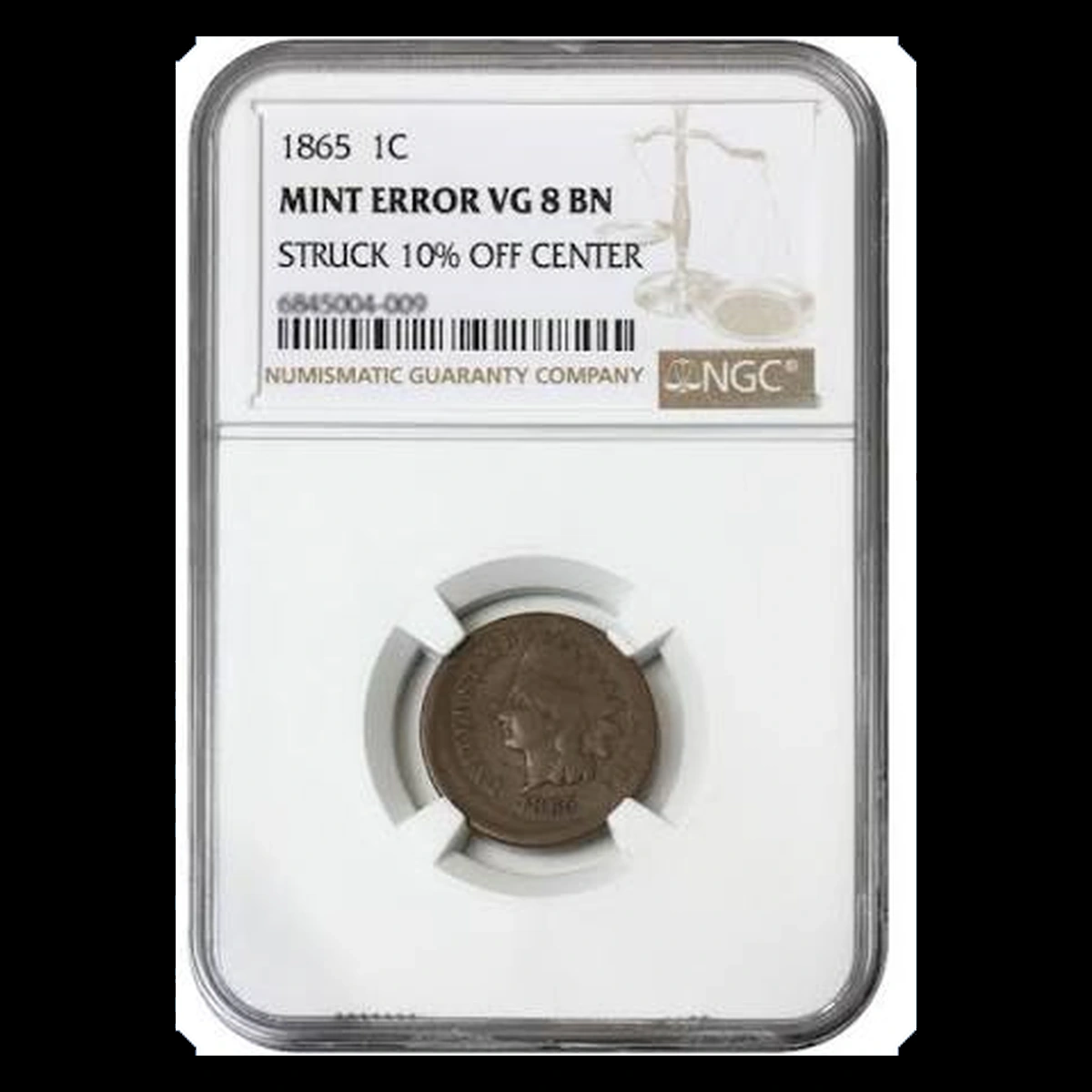
8. 1865 Penny Unused Metal Sits beside a Shifted Picture: Off-Center Strike Error
The reported NGC MS64 Brown example is about 20% off center toward eleven o’clock. The blank was out of position, leaving a plain crescent opposite the shifted design.
How to Identify
Compare both faces and look for one consistent misplaced strike. A shifted front with a centered back suggests a different alignment issue.
A single displaced picture also differs from a second off-center strike laid over an earlier design. Check for another portrait or border before selecting the category.
What It’s Worth
$150–$3,500 is an estimate for genuine dated 1865 off-center cents. Readable dates, original surfaces, and condition help determine the closest comparison.
A 1984 catalog asked $85 for a different lightly worn coin 20% off center toward nine o’clock. Its historical asking price, direction, and condition do not belong to the separate MS64 Brown example.
9. 1865 Penny All the Design Fits within a Wider Border: Broadstrike Error
The collar failed to contain the blank normally, letting metal spread around the complete design. The documented Plain 5 example is graded MS66 Red and Brown by NGC.
How to Identify
The 2011 cataloged coin combines clear central detail with spreading on both faces. Follow the outer lettering through the whole border to confirm that the intended design remains on the metal.
Later flattening can widen a coin but may crush existing letters or fold the edge. Neither a large diameter nor attractive red color alone establishes a broadstrike.
What It’s Worth
$150–$4,000 is a working estimate across worn through unusually well-preserved examples. The 2011 catalog appearance does not supply an adopted realized price for its MS66 coin.
An 1893 broadstrike graded AU58+ by PCGS sold for $414.80 in March 2026. Its different date and slight wear make it a related comparison rather than the value of the unworn 1865 specimen.
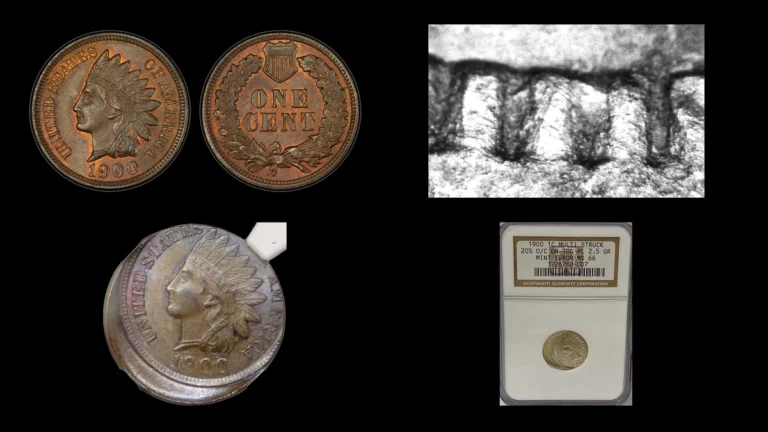
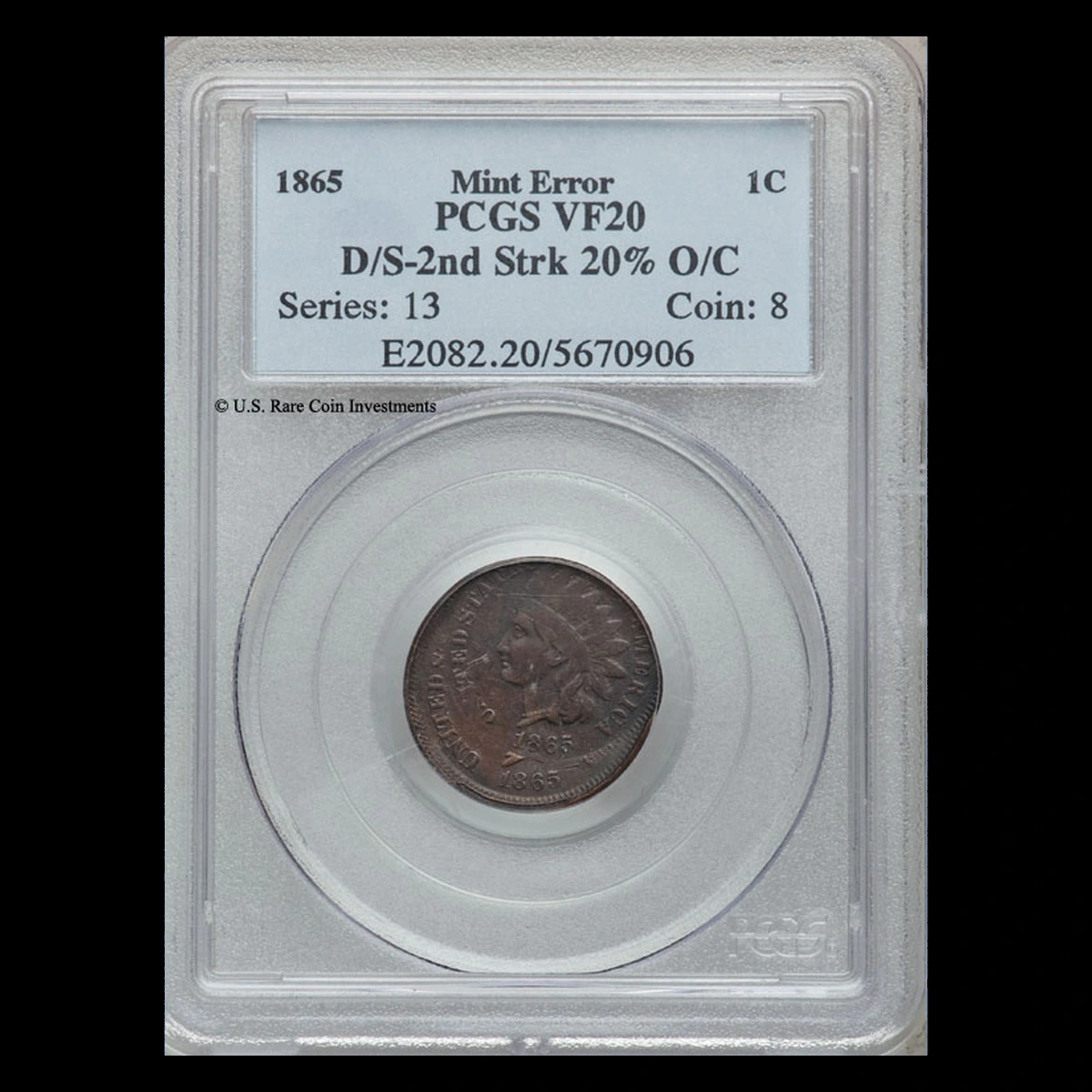
10. 1865 Penny Two Impressions Cross the Same Coin: Double Strike Error
A cent can remain in the press, move, and receive another blow. Earlier and later design fragments then survive in overlapping positions.
How to Identify
One Fancy 5 example graded VF20 by PCGS has a second strike about 20% off center toward one o’clock. A separate NGC MS62 Brown coin has two dates and a 20% second strike toward two o’clock.
Trace each date into its own portrait and letters, then inspect the overlap on the back. These are two specimens, not three strikes combined into one sequence.
A small extra date-punch stroke without another surrounding design is a different mechanism. Check the edge for a joined piece before interpreting a complicated outline.
What It’s Worth
$600–$6,000 is an estimate for genuine double strikes with differing wear and overlap. A third Fancy 5 specimen, PCGS VG8 with a 25% off-center second strike, sold for $1,080 on January 2, 2023.
That heavily worn coin is neither of the two 20% examples. Readable earlier detail and a clear two-strike arrangement matter as much as the percentage.
Conclusion
Sort the normal Plain 5 and Fancy 5 styles before comparing small varieties. A correctly matched date or back pattern is more useful than an unfamiliar curve by itself.
For the larger errors, use a controlled flip or full views of both faces and the edge. Keep every percentage, grade, and listed price attached to its actual specimen, especially the three separate double strikes.