Rare 1917 Penny Errors (List & Pictures)
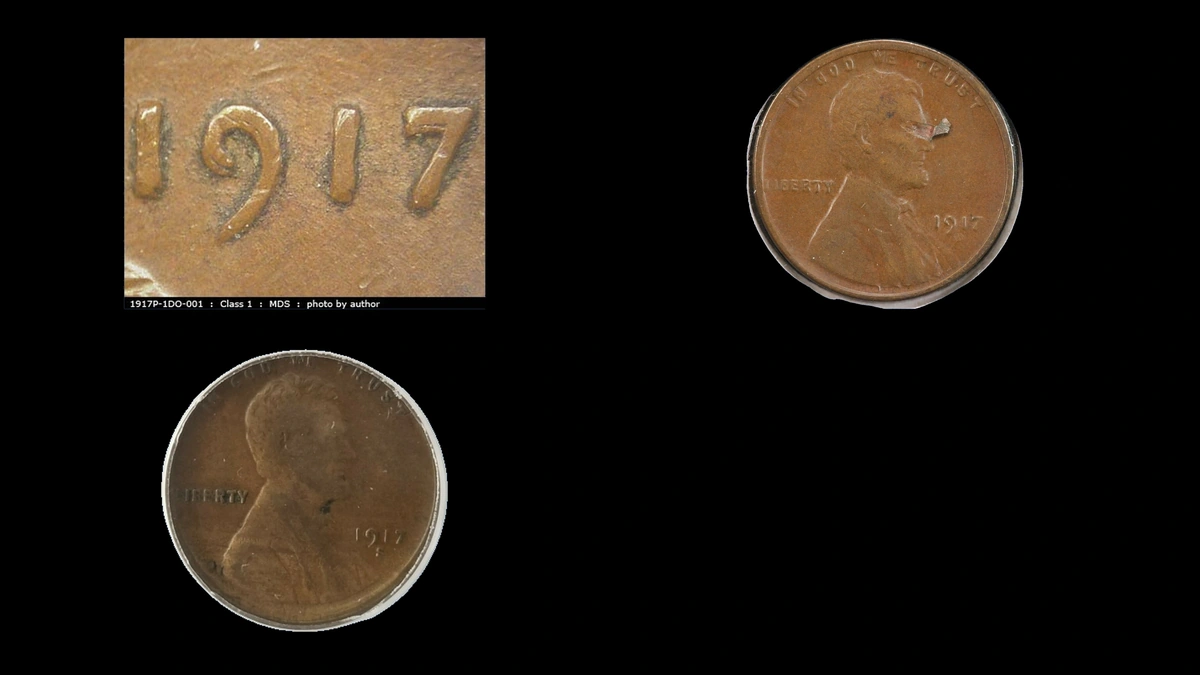
The major FS-101 anchors the high end of 1917 penny errors, with an exceptional red example selling for $120,000 in March 2019. Estimated ranges across this guide begin at $3 for small cracks and extend to that exceptional-variety level.
Check the date and motto for the famous doubling, then use the mintmark, surface layers, rim, and strike position to distinguish the other reported types.
| Visible clue | Possible error | Estimated range |
|---|---|---|
| Repeated date and motto outlines | Philadelphia FS-101 doubled die | $150–$120,000 |
| Earlier D or S stroke | Repunched mintmark | $5–$300 |
| Raised line or rim-connected mound | Die crack or cud | $3–$500 |
| Loose layer or rough exposed patch | Lamination | $10–$300 |
| Plain metal beside missing design | Off-center strike | $40–$1,500 |
The bronze cent contains 95% copper, with tin and zinc making up the rest, and normally weighs 3.11 grams at 19.05 millimeters across its plain edge. Measurements can support a physical assessment, but they cannot identify a doubled die or repunched mintmark.
Use clear enlarged images and changing light for those small features. Preserve original surfaces and leave any attached metal layer undisturbed.
1. 1917 Penny Matching extra outlines in the date and motto: FS-101 Doubled Die Error
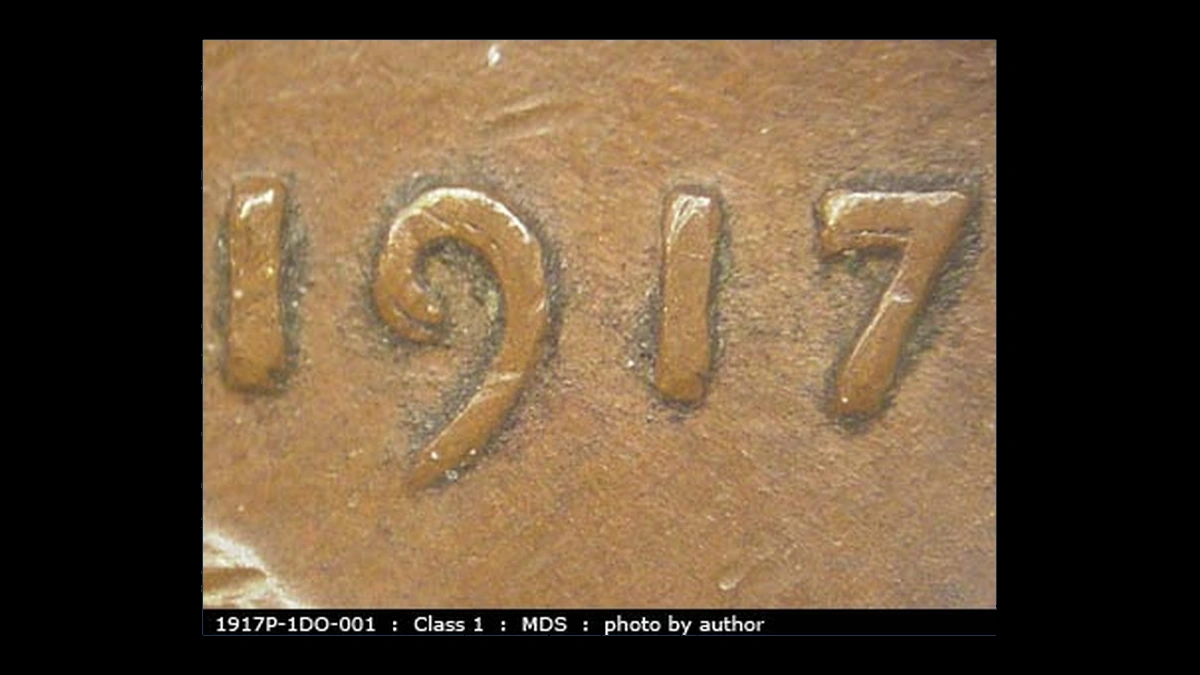
The Philadelphia FS-101 shows distinct repeated detail in 1917 and GOD WE TRUST. The die carried the doubled pattern before the coin received its normal strike.
Several corresponding features therefore support the attribution together. One flattened edge on a digit does not establish the variety.
How to Identify
Compare the full date, then follow the matching extra outlines through the motto. The normal absence of a mintmark agrees with Philadelphia production.
Move the light across the letters to distinguish the fuller repeated design from a low flat shelf caused by strike movement. Wear can soften the pattern, so use references of a similar preservation level when possible.
Several letters should support the same FS-101 match before condition or price becomes the main question. A normal weight alone cannot authenticate those details.
What It’s Worth
Circulated examples are estimated at $150–$3,000, while unworn coins span approximately $3,000–$120,000 across very different grades and colors. The highest figure represents exceptional preservation.
The PCGS auction record lists $120,000 for an MS67+ Red FS-101 at Stack’s Bowers in March 2019. A worn brown coin needs comparison with similarly worn examples rather than that nearly mark-free original-red specimen.
2. 1917 Penny Part of another D or S surrounds the mintmark: Repunched Mintmark Error
Mintmarks were applied to dies with a hand punch. Repeating the punch at a changed position could leave a remnant of the earlier letter on subsequent coins.
The Denver report describes a tilted D/D, while San Francisco accounts place an extra S beneath the main letter. These are distinct patterns requiring their own comparisons.
How to Identify
Keep the complete letter and date in view as you trace the extra curve. For the Denver candidate, relate it to the D’s upright and outer curve rather than focusing on an isolated bump.
For the reported San Francisco pattern, examine the lower S area under changing light. A genuine stroke remains part of the metal while a shadow changes with the lamp.
Repunching happened during die preparation. It does not mean the finished coin passed through the press twice.
What It’s Worth
Clearly matched 1917-D and 1917-S repunches are estimated at $5–$300. Strong earlier-letter structure and preserved surfaces support better comparisons than a worn, uncertain projection.
These are estimates for the reported patterns, without confirmed sales of specific numbered specimens supplied here. Damage, shadows, or ordinary lumps do not establish the premium.
3. 1917 Penny Raised cracks lead to rim-connected patches: Die Cracks and Cuds Error
A crack in a die allows coin metal to enter it, leaving a raised line. When a larger piece at the die’s edge breaks away, raised metal can replace normal design and join the rim as a cud.
The 1917 reports establish these categories without one fixed location for every specimen. Size, shape, and rim connection must be read from the actual coin.
How to Identify
Trace a proposed cud to the rim and examine where normal design disappears inside it. A small interior bump cannot become a rim cud merely by being conspicuous.
Change the lighting to separate a raised die-crack ridge from a cut with displaced metal beside it. Around a larger mound, inspect for a join, solder, or contrasting material.
Check the opposite face and edge for squeezing or hammering. Later pressure can push up metal without a broken die being involved.
What It’s Worth
Small cracks on circulated examples are estimated at $3–$50, with larger genuine cuds around $40–$500. Amount of replaced design and condition guide the comparison.
A 1946-S Wheat cent with a major break sold for $288 in March 2021. That substantial later-year break is a comparison, not a transaction for a named 1917 variety.
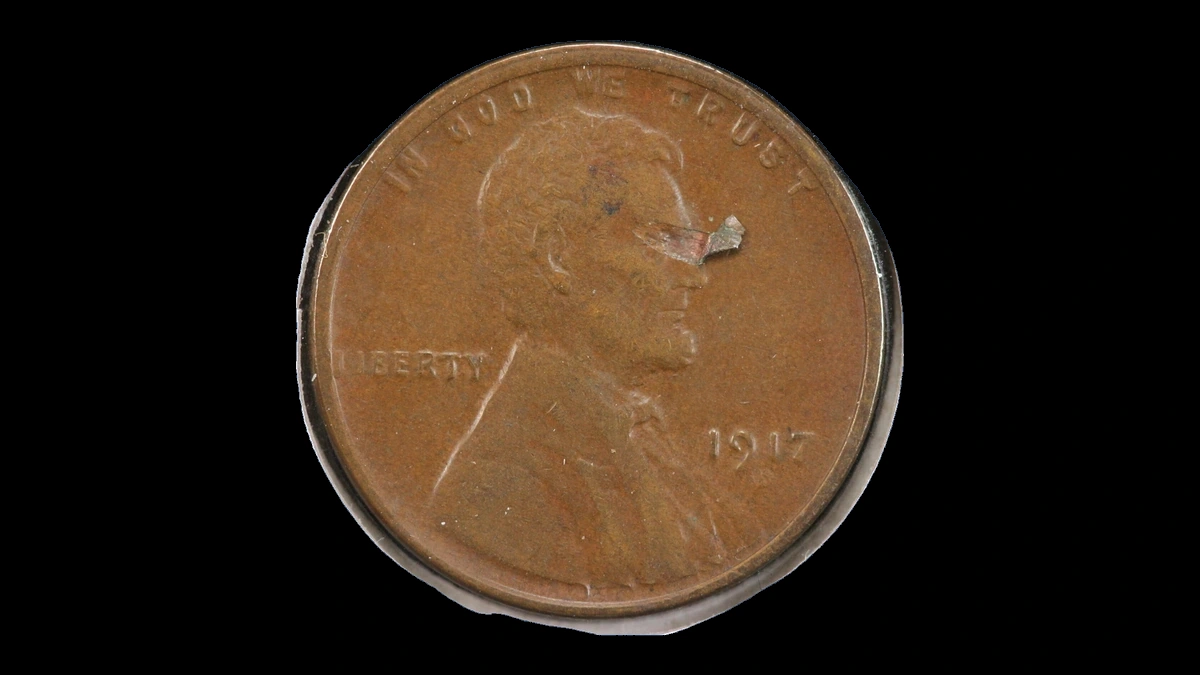
4. 1917 Penny A layer peels away from the bronze: Lamination Error
A weak boundary within the alloy can leave an attached flap or expose a rough surface where a layer detached. Denver and San Francisco laminations are reported, with different locations reflecting individual blank weaknesses.
A discussed 1917-S candidate has disputed marks near the 7 that may be later damage. That uncertainty should not be converted into confirmation of either that specimen or every 1917-S lamination report.
How to Identify
Look sideways along an already exposed layer boundary without lifting it. The coin is bronze throughout, so modern zinc-cent plating explanations do not apply.
Near the date, follow whether a thin layer separates beneath existing detail or a later cut crosses the finished digit. Roughness alone is insufficient.
A detached flake may lower weight, while an attached flap can leave it nearly unchanged. Keep measuring tools away from the fragile edge.
What It’s Worth
Genuine laminations are estimated at $10–$300. Clear attached structure on an attractive coin is generally a stronger comparison than a tiny worn patch.
A 1941-S retained reverse lamination graded PCGS MS66 Red sold for $69 in April 2020. That unworn later-date example supplies context, while a 1917 coin’s mint, wear, and possible damage require separate assessment.
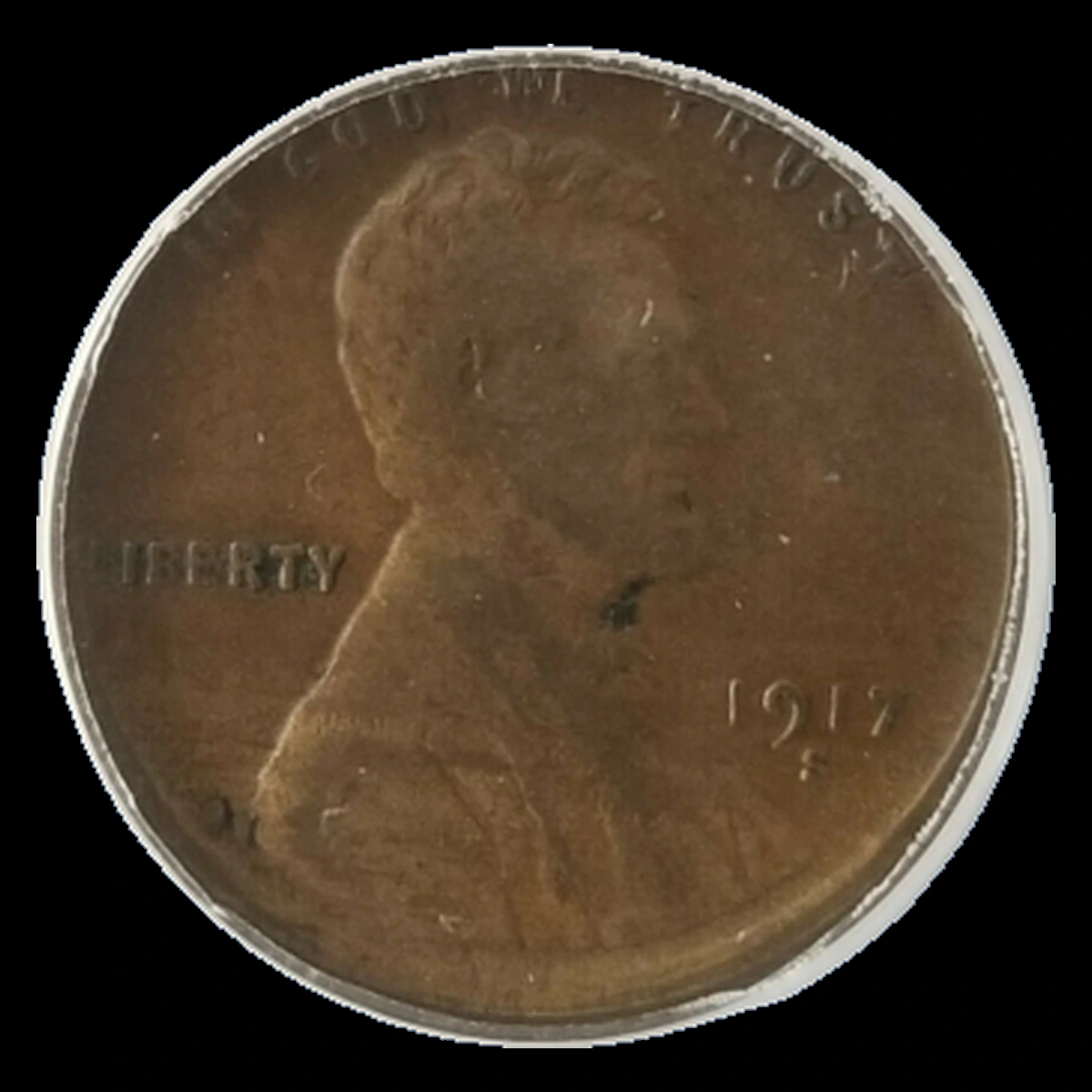
5. 1917 Penny An incomplete image borders unused metal: Off-Center Strike Error
A blank partly outside the dies can retain a bare crescent while intended design falls beyond its opposite edge. The reported Denver example is 35% off center, and a separate San Francisco example is 25%.
Philadelphia off-center cents also appear in year reports without one fixed percentage. The surviving date and mintmark determine which individual comparison is usable.
How to Identify
Read 1917 and any mintmark together before judging the size of the blank area. The D and S reports describe different coins, not stages of one strike.
Compare both faces for design loss consistent with a single displaced blank. A photograph of one face can hide a different die-alignment problem.
Inspect the bare metal for sanding or erased detail. A simple displacement does not itself remove copper, so full-blank weight can remain near normal.
What It’s Worth
Genuine dated examples are estimated at $40–$1,500. Readable identity and surfaces matter along with displacement.
The supplied year guide reports $960 for a Denver 35% example graded PCGS MS64 Brown in September 2019 and $360 for a separate San Francisco 25% example graded AU55. These remain guide-reported figures for different mints and conditions, rather than independently matched auction records here.
The Denver grade describes an unworn coin, while AU55 indicates light wear. Missing date digits or later cleaning can weaken a comparison even on a genuine off-center strike.
Conclusion
The famous 1917 FS-101 requires agreement between its date and motto, while a repunched mintmark, peeling alloy, or displaced strike needs different evidence. Begin with the specific visible feature rather than the highest price associated with the year.
Preserve the surfaces, keep separate specimens’ mints and percentages apart, and distinguish documented auction records from guide-reported figures. Those details make a value comparison useful after the error is identified.