Rare 1870 Penny Errors (List & Pictures)
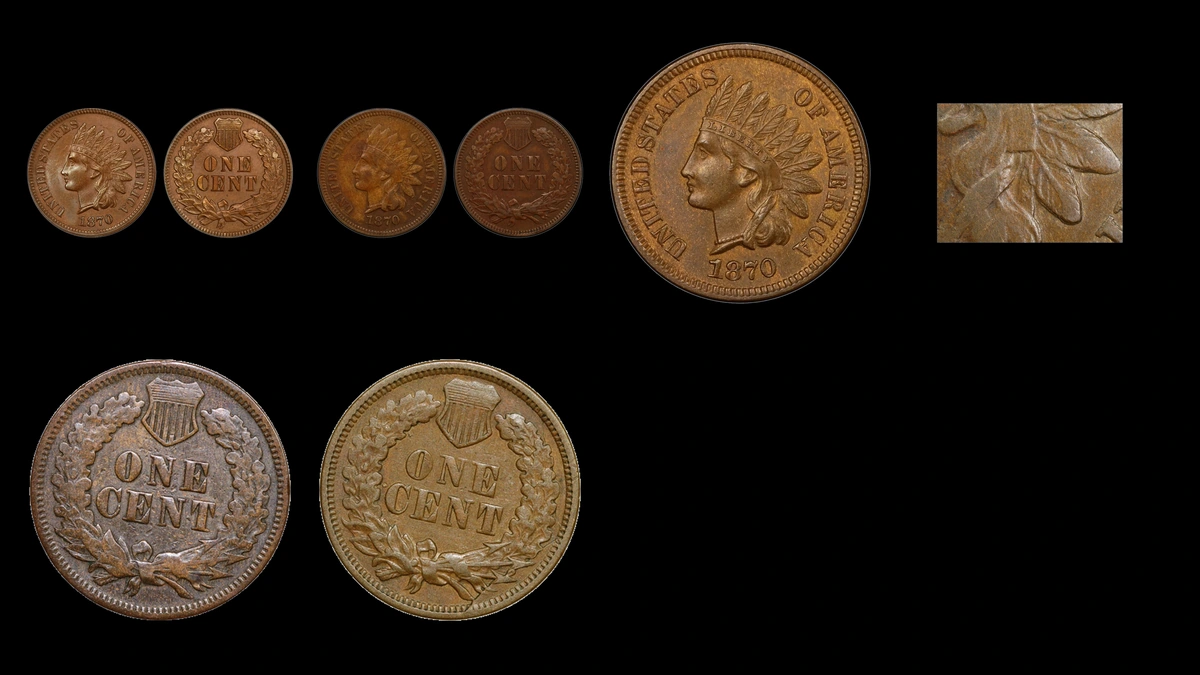
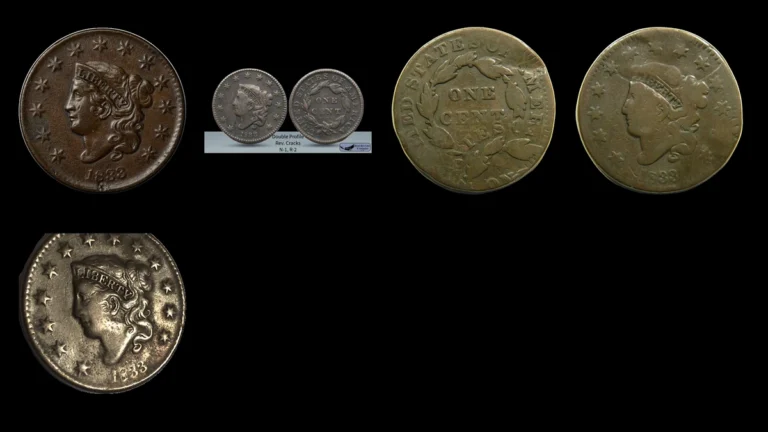
A cent combining front doubling and a misplaced date sold for $780 in May 2022. That one specimen illustrates why several 1870 penny errors can require separate explanations but share a single price.
Estimated whole-coin values span $40–$5,000. Identify the normal reverse style first, then follow date fragments, doubled detail, clash marks, rim features, and any change in orientation.
| Visible clue | Possible category | Estimated value |
|---|---|---|
| Extra strokes beside date | Repunched date | $75–$2,000 |
| Digit fragments below date | Misplaced date | $100–$3,000 |
| Repeated headband or reverse detail | Doubled die | $100–$5,000 |
| Opposite-face traces near eye and C | Die clash | $40–$500 |
| Raised line or rim patch | Die crack or break | $40–$1,500 |
| Gap in the outline | Clip | $100–$1,500 |
| Small repeatable reverse tilt | Rotated die | $40–$300 |
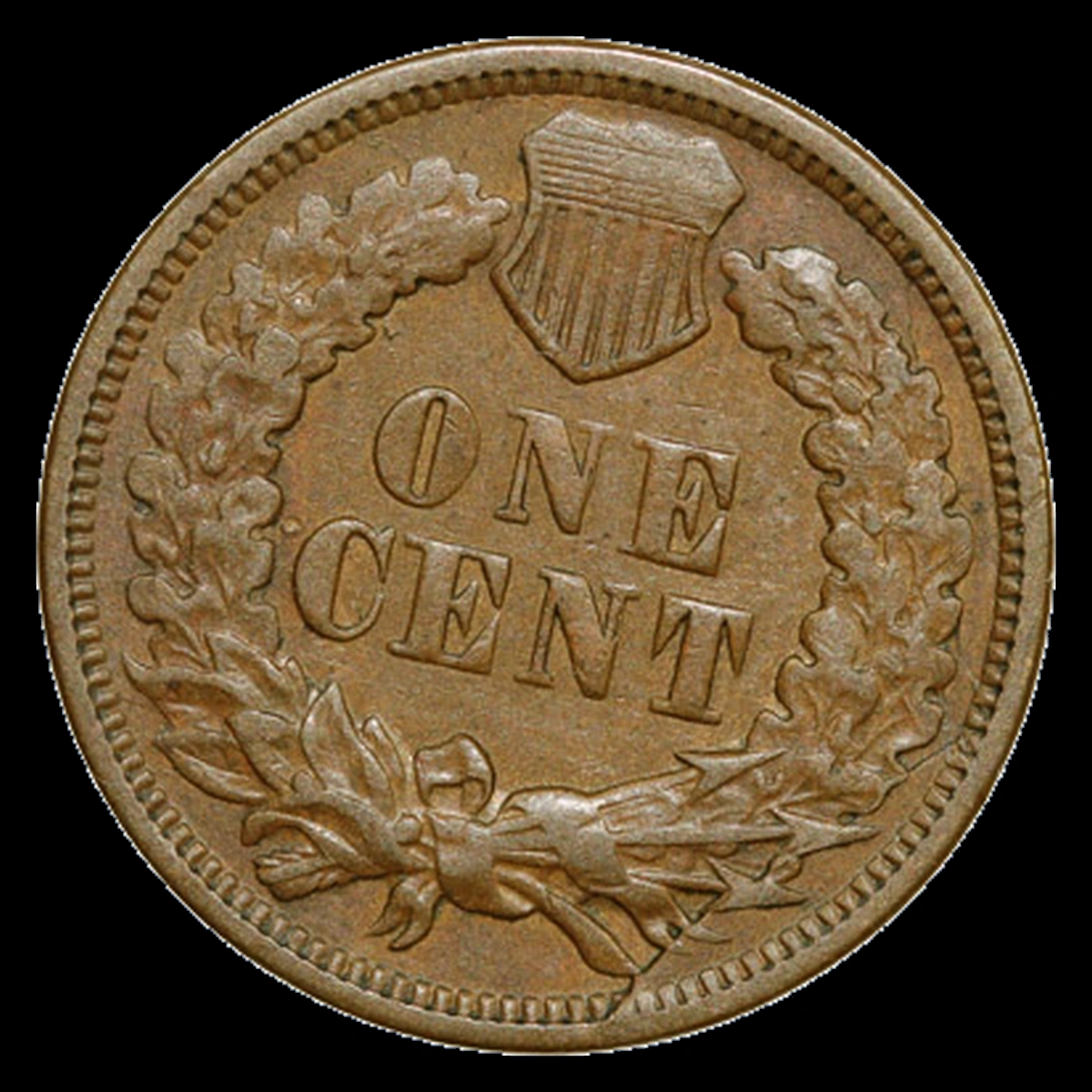
The normal bronze cent is 3.11 grams and 19.05 millimeters across, with a plain edge. Type I and Type II describe normal reverse designs, including lettering differences; those design styles are not errors by themselves.
1. 1870 Penny Earlier Numeral Strokes Remain beside the Date: Repunched Date Error
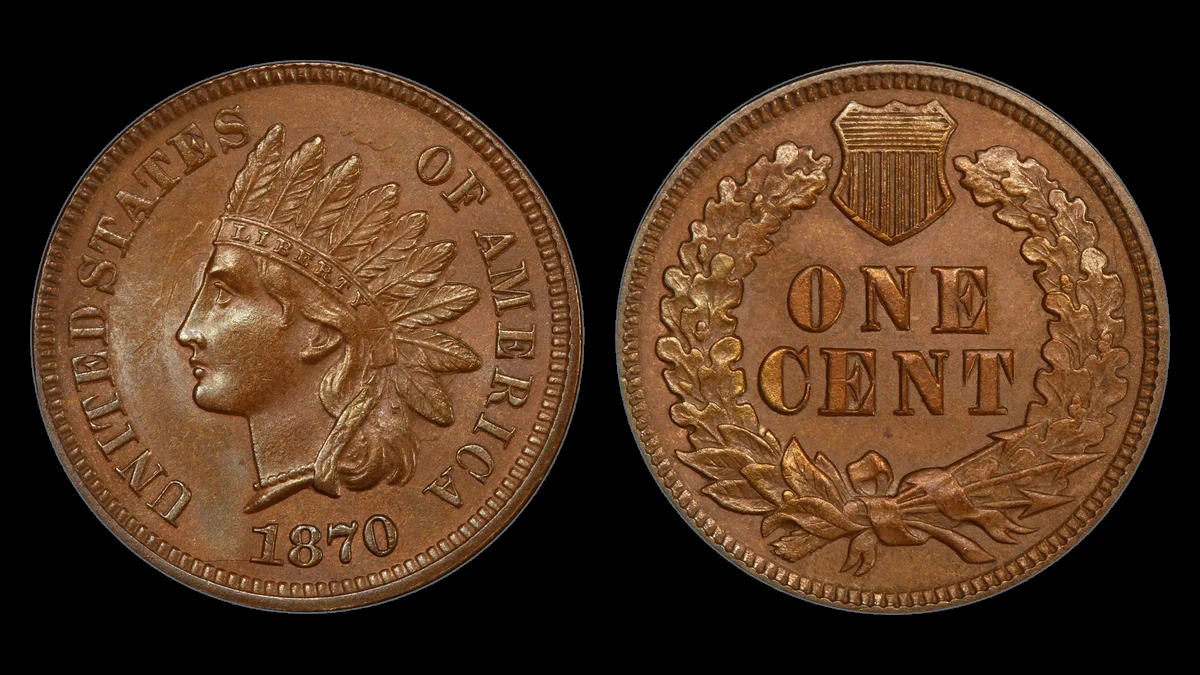
A second date-punch placement in the die may not cover every part of the first. The resulting cent can show small earlier curves and straight strokes beside its normal numerals.
How to Identify
One Type I pattern has traces beneath the base of 1 and parts of 8, with an earlier 0 higher; another repeats 1 and 8 toward the upper left. The cited Type II pattern has detail above 1 and inside both loops of 8.
Select the correct reverse style and compare the entire date pattern. A thick digit or one remnant in the wrong direction does not complete the match.
What It’s Worth
Identified repunched dates are estimated at $75–$2,000. Clear remnants, original surfaces, and remaining condition support stronger comparisons.
An older dealer advertisement asked $300 for a Snow-4 graded ANACS VF30. That circulated coin’s asking price is not a completed auction result or a current offer.
2. 1870 Penny An Extra Digit Top Appears below 7: Misplaced Date Error
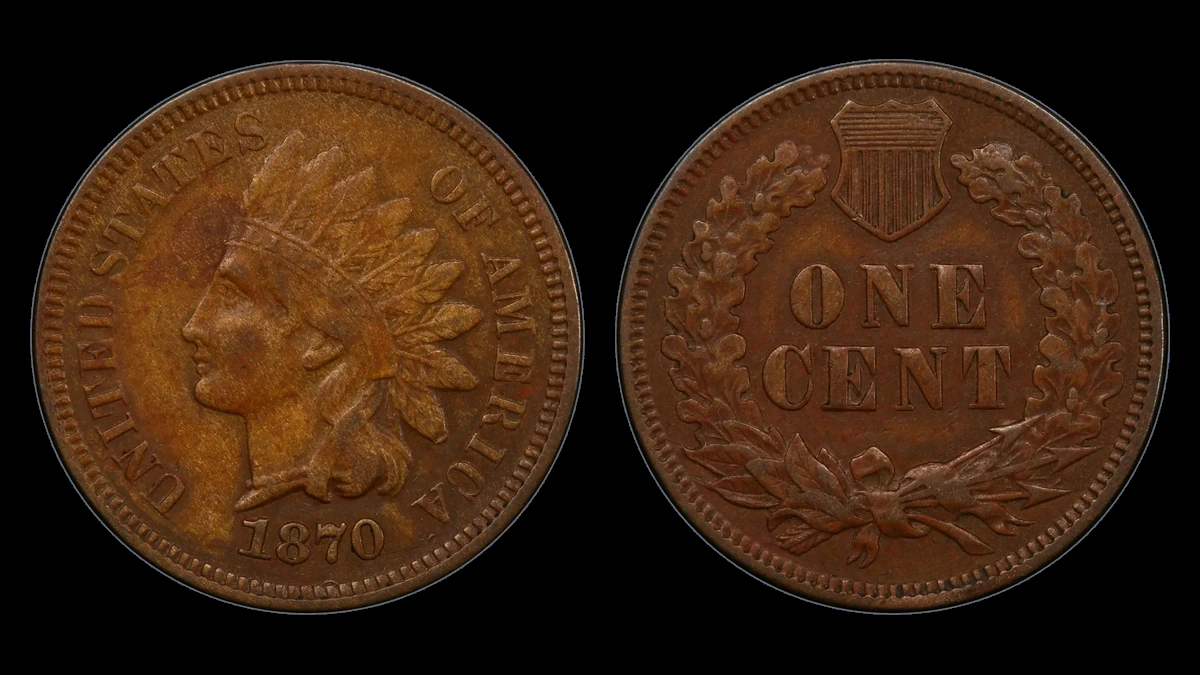
On Type II Snow-5, the top of an extra 0 appears among the border teeth beneath the normal 7. The date punch touched the die too low before the final date was added.
How to Identify
Keep the normal 7 and neighboring teeth in the same view while tracing the actual 0 fragment. Do not extend a small bump into an imagined complete numeral.
Type I examples have different groups of lower-border fragments. Some front dies were used with different reverse dies, so match the misplaced marks before using the back to identify the specific pairing.
What It’s Worth
Identified misplaced-date varieties are estimated at $100–$3,000 as whole coins. The actual pattern, preservation, and associated features matter.
The Snow-5 combination with front doubling sold for $780 in May 2022. That amount bought both recognizable features on one coin rather than a low 0 priced by itself.
3. 1870 Penny LIBERTY or the Reverse Has Repeated Edges: Doubled Die Error
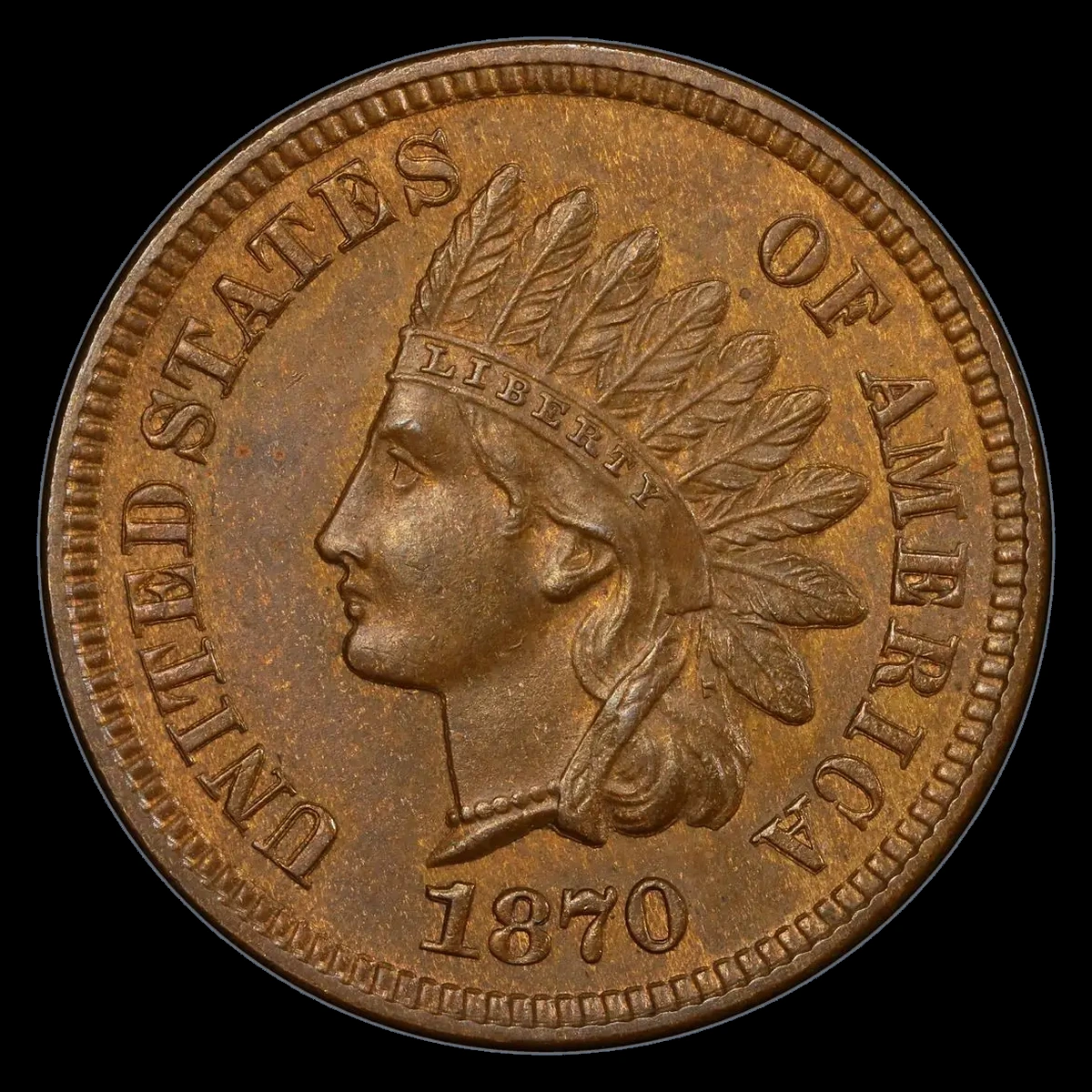
Different front varieties repeat TY or the longer IBERTY section of the headband. Reverse varieties can affect N or EN in ONE CENT, with other patterns reaching the shield, wreath, and border teeth.
How to Identify
Compare with a normal reverse of the same style before judging its lettering. The year’s ordinary shallow and bold N forms are not evidence of doubling.
Trace repeated raised outlines at the exact positions shown for the variety. A flat shelf beside one narrowed letter can result from movement during striking instead of a doubled die.
What It’s Worth
The estimated range is $100–$5,000 for identified doubled-design varieties. Front-only, reverse-only, and combined forms need their own grade and pattern comparisons.
The Snow-5 PCGS AU50 Brown combination sold for $780 at Heritage in May 2022. It is the same transaction discussed for misplaced digits and must not be counted twice.
4. 1870 Penny Unfamiliar Outlines Appear by the Eye and C: Die Clash Error
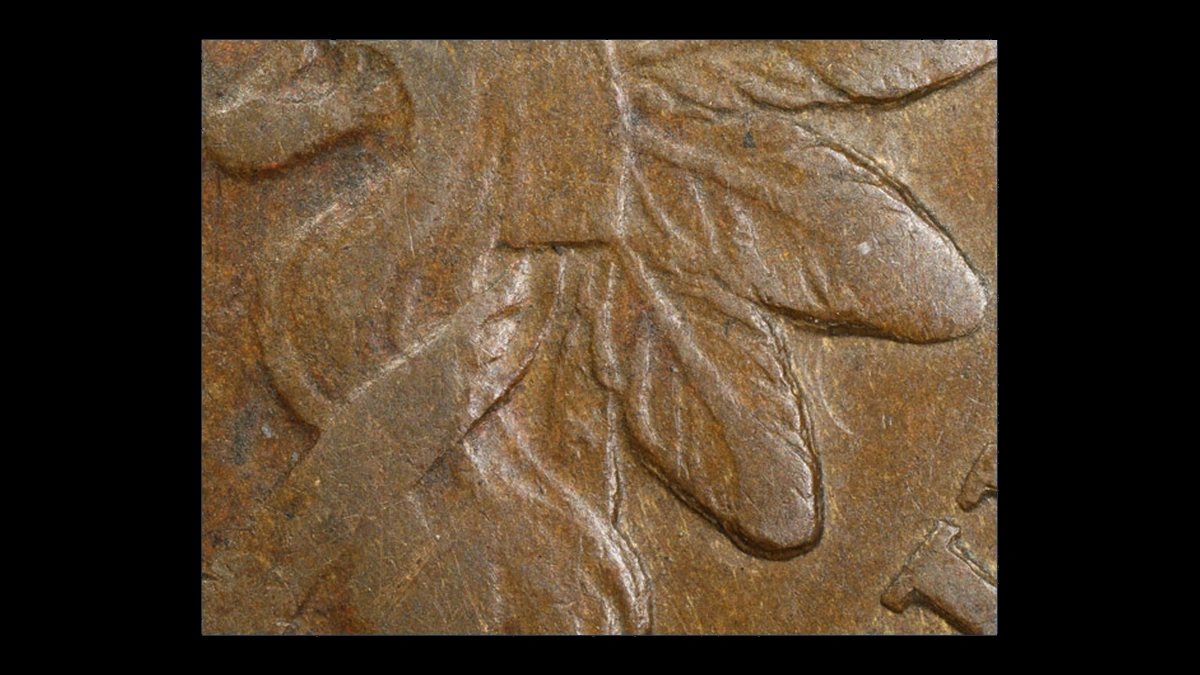
The recorded Type I Variety 4 has a trace before the eye and another through C in CENT. They resulted from the dies touching without a blank and later transferring their acquired marks to coins.
How to Identify
Compare both traces with the Type I Variety 4 photographs. The shapes should match opposite-face design rather than resemble random scratches.
The same pairing also has reverse doubling, misplaced date fragments, cracks, and a small rotation. A normal deep N is not a clash, and the unrelated features must each be checked on the same coin.
What It’s Worth
Recognizable clashes on circulated to moderately preserved 1870 cents are estimated at $40–$500. The underlying date and any identified combination contribute to that whole-coin range.
No final auction price is assigned to the catalog illustration. A faint unmatched line does not justify the same attribution.
5. 1870 Penny A Raised Line Joins the Date or Reverse Rim: Die Cracks and Breaks Error
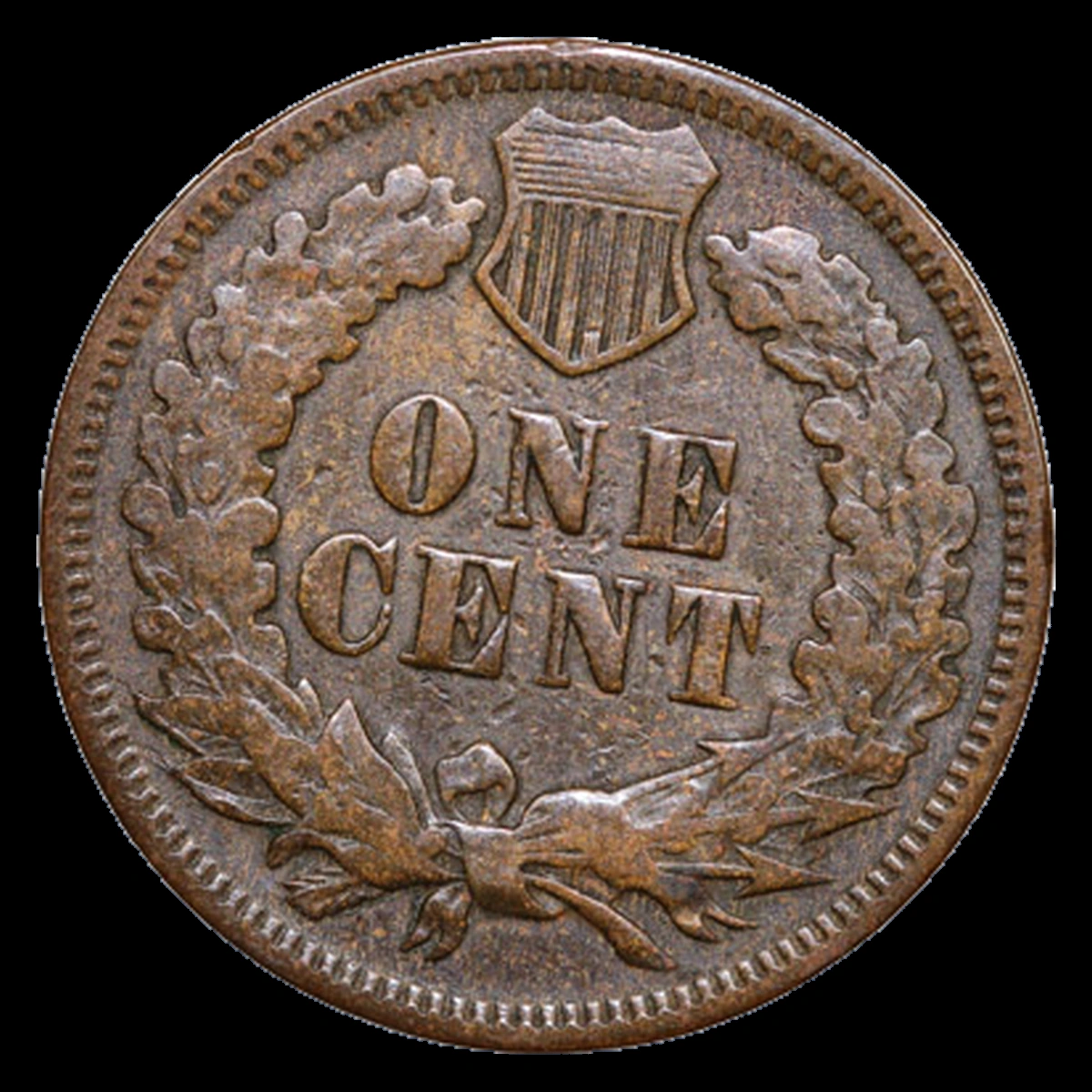
One crack crosses the bottoms of the date digits from about five to seven o’clock. Larger Type I reverse failures include a cud from 3:30 to five and a separate retained break from 3:45 to 5:15.
How to Identify
Follow the line under moving light to distinguish an original raised ridge from a scratched groove. Inspect a rim patch for a folded edge or added metal.
Look for design surviving within the retained section, as opposed to the raised design-free area of a fully missing die piece. Another reverse crack from 3:15 to five belongs to its own recorded example.
What It’s Worth
Estimated whole-coin values run $40–$1,500: minor circulated cracks about $40–$200, and clearer cuds or retained breaks about $100–$1,500. The date’s collectible value is included.
No realized sale is supplied for each die-break pattern. Several lines on the same cent remain features of one coin.
6. 1870 Penny Part of the Original Disc Is Absent: Clipped Blank Error
A blank can be incomplete when its cutting punch overlaps a previous hole or the edge of the metal sheet. The finished cent then carries design around the pre-existing gap.
How to Identify
Examine both ends of the gap and how the rim approaches them. Cutting or grinding grooves through finished detail point toward later removal.
A lower weight can support missing metal without establishing its cause. Check any opposite-rim weakness together with the gap itself, keeping the date and full outline in photographs.
What It’s Worth
Genuine 1870 clips are estimated at $100–$1,500. Shape, remaining condition, and convincing original formation affect the assessment.
A May 2006 Coin World advertisement offered a PCGS EF40 clipped cent at $375. That dealer asking price supplies neither a completed result nor a verified clip percentage here.
7. 1870 Penny The Reverse Returns at a Small Angle: Rotated Die Error
Type I Variety 4 has a recorded thirteen-degree clockwise reverse rotation. It is a small orientation difference between the dies rather than a sideways or upside-down reverse.
How to Identify
Hold the front upright and flip top to bottom around a fixed horizontal axis. Repeat against a straight reference line and measure whether the same thirteen-degree tilt returns.
A casually angled photograph cannot establish rotation. The catalog’s worn F15 example also has misplaced digits, reverse doubling, cracks, and clashes, all belonging to that one specimen.
What It’s Worth
Circulated 1870 cents with a comparable small rotation are estimated at $40–$300 as whole coins. Much of their value may come from the date and condition.
A thirteen-degree turn should not inherit prices for ninety-degree or half-turn errors. Assess the documented coin’s combination once rather than treating the small tilt as another independently priced coin.
Conclusion
For 1870 cents, normal reverse style is a useful reference point, especially when a bold N seems different from another coin’s lettering. Genuine added outlines and transferred traces need their own precise matches.
The $40–$5,000 estimates cover several combinations of small features. Keep the shared $780 Snow-5 transaction attached to one complete coin, and verify a small rotation with a controlled flip rather than a tilted photograph.