Rare 1871 Nickel Errors (List & Pictures)
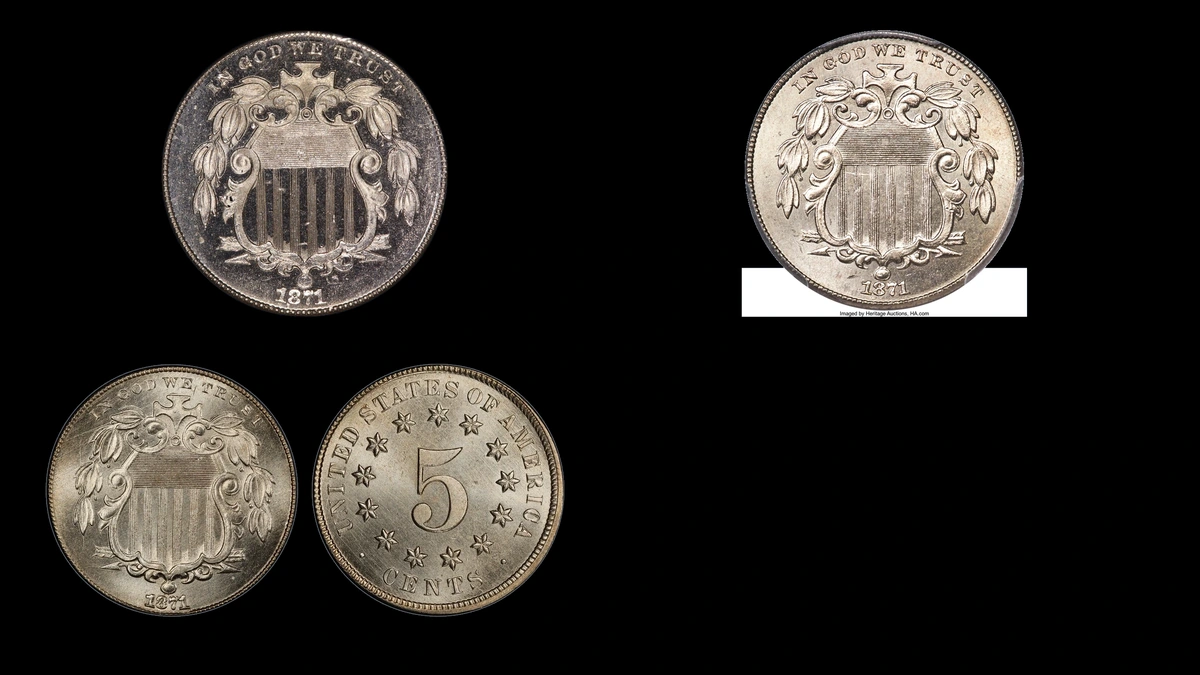
A repunched-date 1871 nickel brought $4,440 in August 2021, while another MS66 example sold for $4,148 in July 2026. Estimated whole-coin values for 1871 Shield nickel errors range from $50–$5,500.
Examine the surface and rim, then decide whether an extra mark follows a crack, an opposite-face design, a letter or a date numeral.
| Feature | Identification to consider | Estimated whole-coin range |
|---|---|---|
| Small original rim irregularities on a high-grade reflective coin | Planchet flaws | $1,000–$5,000 |
| Raised lines near the left arrow | Die cracks | $50–$750 |
| Traces matching the opposite design | Die clash | $100–$1,500 |
| Repeated letter or design outlines | Doubled die | $150–$2,500 |
| Extra partial date digits | Repunched date | $100–$5,500 |
The normal Shield nickel weighs about 5 grams and measures 20.5 millimeters across a plain edge. A Proof is a specially made collector coin; a prooflike circulation strike merely has unusually reflective surfaces and needs a different comparison.
1. 1871 Nickel Small Rim Irregularities on a Reflective Coin: Planchet Flaws Error
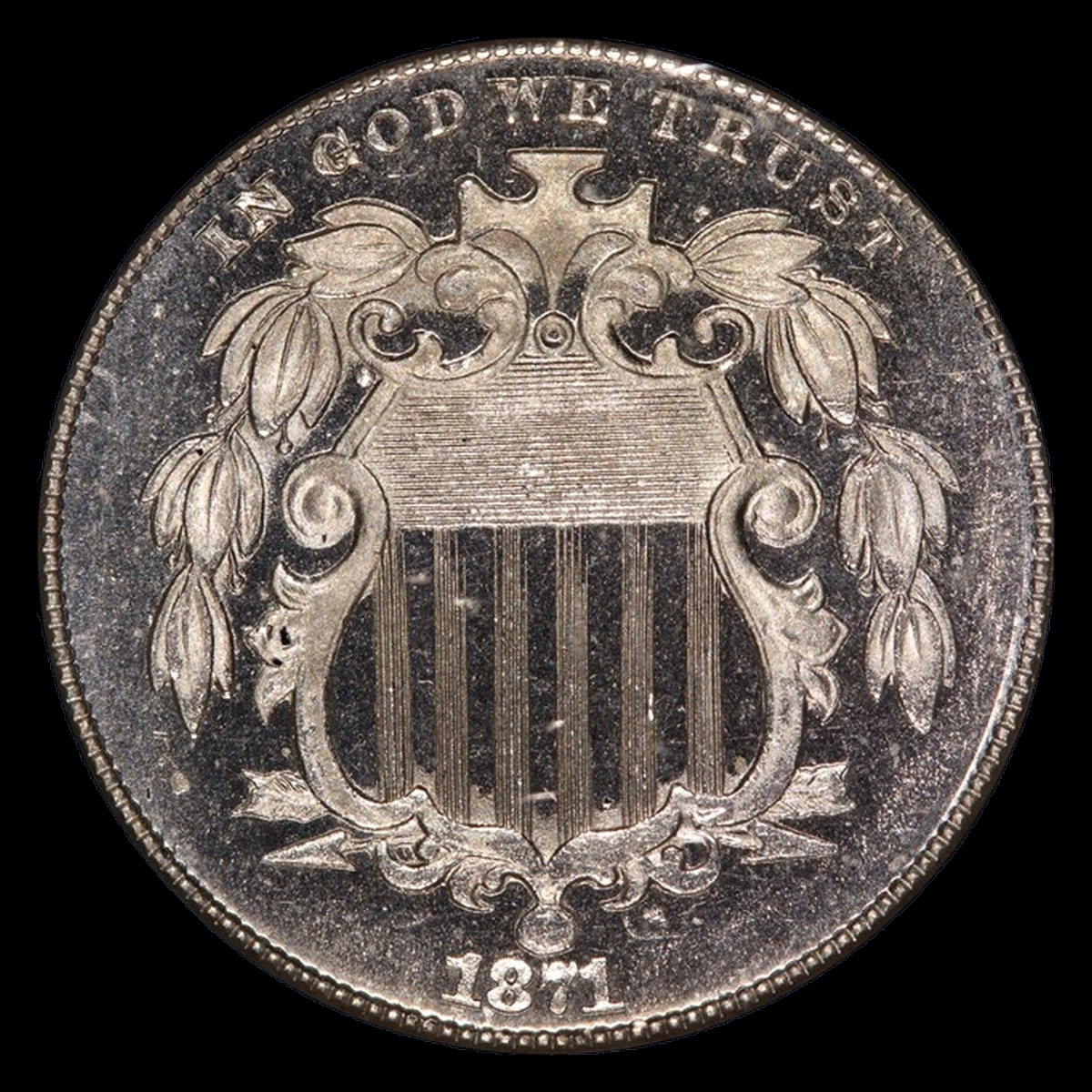
The Poe Collection includes an ordinary-strike 1871 nickel with minor irregularities near its rims. The collector identifies them as flaws in the planchet, the metal blank used for the coin.
Its mirrorlike surfaces are described as prooflike. The reported defects do not establish peeling layers or a disk split through its thickness.
How to Identify
Inspect each irregularity together with the neighboring struck surface. A fresh rim knock may push up a lip, while corrosion can leave rough pits rather than an original blank flaw.
Compare the specific areas with the Poe Collection coin. Its description cannot establish the origin of every dark spot on another 1871 nickel.
Use gentle side lighting without wiping the mirrors. Minor original flaws may cause no measurable weight loss.
What It’s Worth
A similarly preserved authenticated example has an estimated whole-coin range of $1,000–$5,000. This mainly reflects the reported MS65 grade and prooflike surfaces.
The estimate is not an extra charge for small rim defects. A separate repunched-date MS66 sale at $4,148 provides same-year high-grade context without supplying a sale price for the Poe coin.
2. 1871 Nickel Raised Lines Near the Left Arrow: Die Cracks Error
Reported lines in the upper-left obverse and beside the left arrow can come from cracks in a die. Metal entering an opening in that stamping tool leaves a ridge on the coin.
The crack is in the die, not necessarily through the coin itself. Darkness or brightness in a photograph does not establish the line’s relief.
How to Identify
Locate the left arrow and move a light across the nearby lines. Inspect the center under magnification to determine whether the feature rises above the original surface.
A scratch can have raised sides around a recessed cut. Keep rough corrosion patches and metal pushed upward by an edge blow separate from a continuous die-crack ridge.
What It’s Worth
A worn 1871 nickel with a small genuine crack has an estimated whole-coin value of $50–$750. The date and preservation account for much of that range.
No crack-only auction record is established here. A fine ridge does not justify assigning the price of an exceptional repunched-date MS66 coin.
3. 1871 Nickel Unexpected Shapes from the Other Face: Die Clash Error
The two dies can collide when no blank lies between them. Damage from that contact may then appear as traces of the opposite design on later coins.
An 1871 example is reported with extensive unusual marks on both faces. Recognizable design relationships are more useful than simply calling every extra line a clash.
How to Identify
Take straight-on photographs of both sides and compare each suspect shape with the opposite design. Allow for the way the two dies faced one another in the press.
Look for more than an isolated shadow, separating scratches and parallel polishing lines from transferred shapes. A faint unexplained mark cannot establish a second strike either.
What It’s Worth
Genuine 1871 clashes are estimated at $100–$1,500 for the complete coin. Wear, surface condition and the visibility of the transferred forms affect the comparison.
The range is not a documented sale of the reported specimen. A clash does not automatically carry the value of a doubled die or a coin struck twice.
4. 1871 Nickel Extra Outlines in the Design: Doubled Die Error
Some reported reverse letters show outward separation and small split ends. Obverse doubling is also listed, but it belongs to a separate variety.
These repeated features were built into the die and could reach the coin in one blow. Proof reports involving stars or letters require their own finish and pattern comparisons.
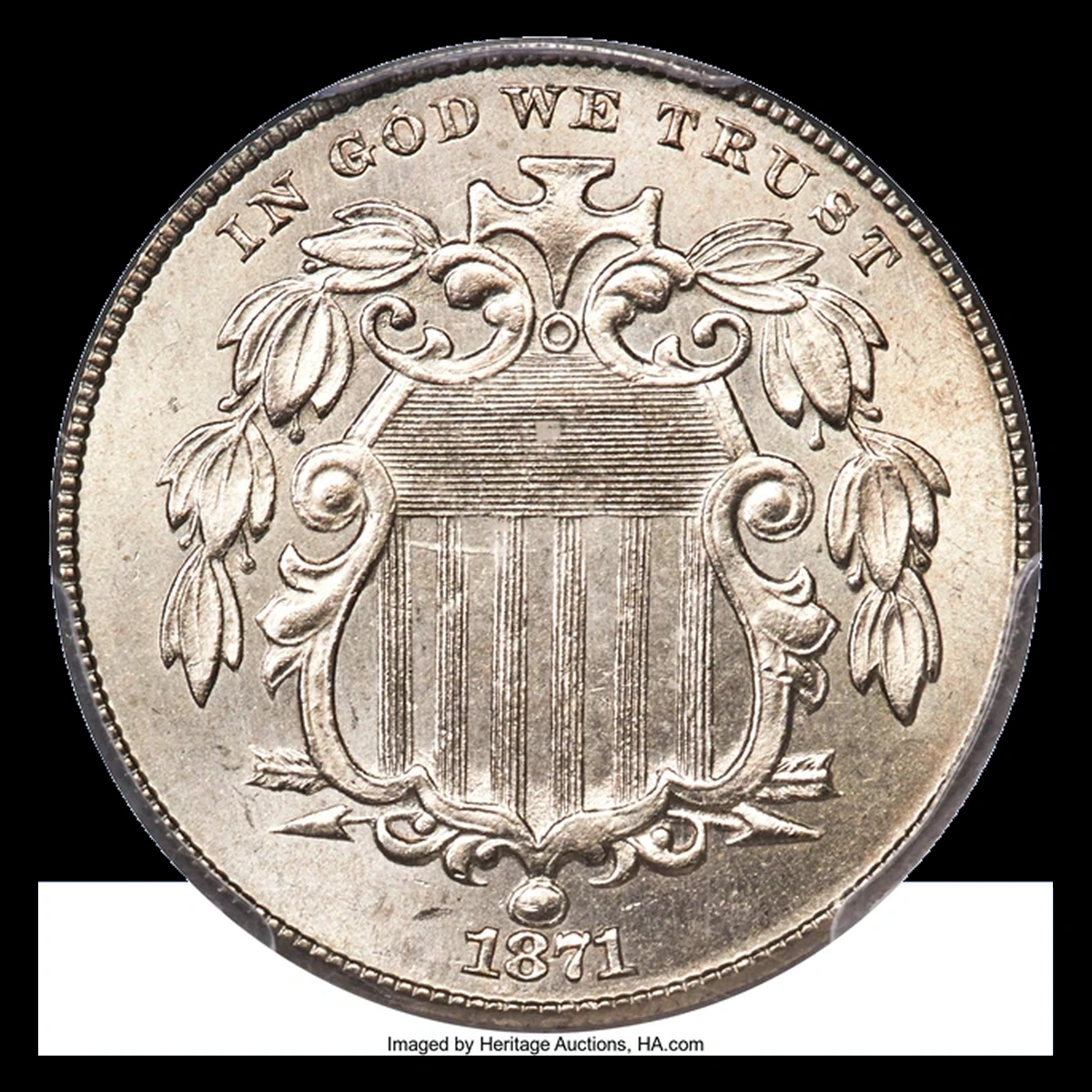
How to Identify
Choose the correct face and ordinary-strike or Proof example before using magnification. On the reverse, follow several letters for the same outward spread rather than relying on one thick stroke.
For the obverse, match an identified variety photograph. Flat shelves from movement during striking differ from a consistent pattern of rounded extra outlines or split ends.
What It’s Worth
Identified doubled designs are estimated at $150–$2,500 across worn through attractive unworn examples. Proofs need separate comparisons with similar Proof condition.
The 1871 doubled-obverse catalog entry supplies no auction record. An 1875 doubled obverse in MS63 brought $780 in August 2021 as a different-year comparison.
5. 1871 Nickel Earlier Numeral Strokes Above the Date: Repunched Date Error
An earlier date-punch position can survive beside the final numerals in a die. Reported ordinary-strike arrangements include traces above 871 or above 187.
Those are different patterns rather than two required features of every example. A separate Proof report describes a low initial date corrected during die preparation.
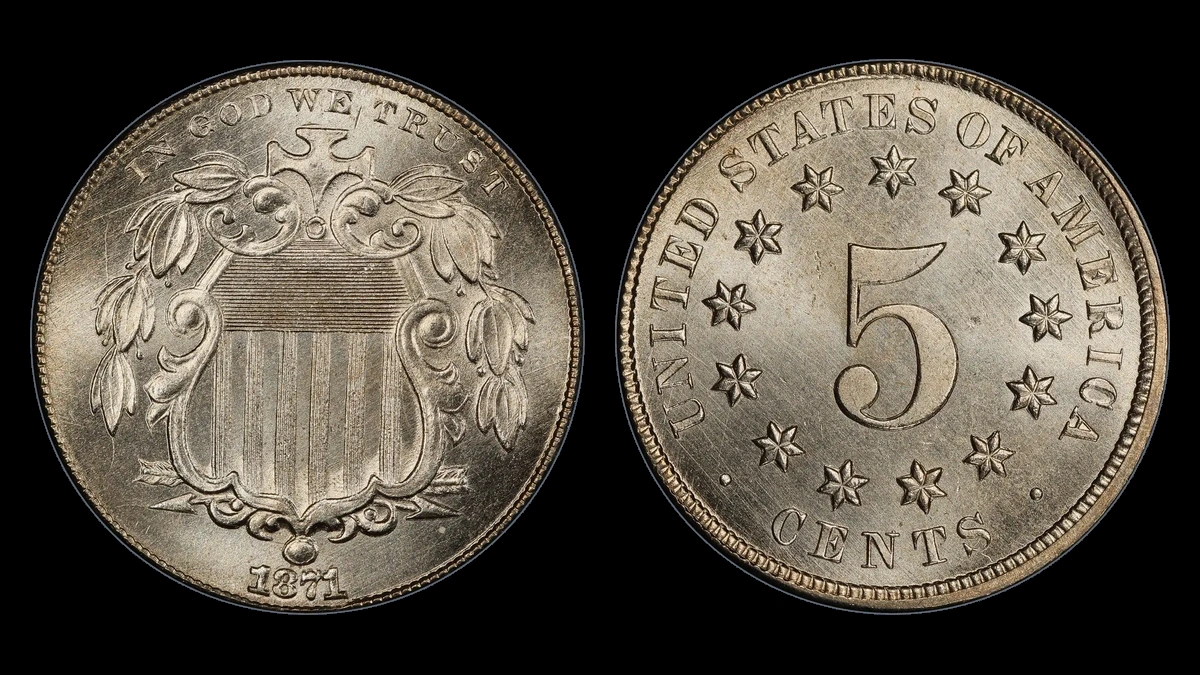
How to Identify
Inspect the date without cleaning dark material from its recesses. Trace a raised remnant into a recognizable part of a numeral.
Compare the location with the appropriate photographed arrangement instead of combining patterns. Confirm any Proof attribution separately before applying the low-date report.
Repeated date punches differ from doubling elsewhere in the design. A generally thick date or an unrelated scratch cannot establish a match.
What It’s Worth
Identified examples are estimated at $100–$5,500. Exceptionally clean unworn coins occupy the higher portion; the range values the entire 1871 nickel.
A PCGS MS66 repunched-date coin sold for $4,148 on July 17, 2026. Another MS66 example brought $4,440 at Stack’s Bowers in August 2021.
Those prices are not appropriate for every worn coin with visible repunching. Proof pieces likewise require matching Proof evidence.
Conclusion
An 1871 nickel’s extra mark becomes easier to identify when you ask what it follows. A continuous ridge, an opposite-face shape, a repeated letter and an earlier date stroke point toward different causes.
Keep the finish and condition in view throughout the comparison. Small flaws can coexist with valuable high-grade surfaces, but the complete coin’s price should not be described as a premium paid solely for a minor defect.