Rare 1998 Nickel Errors (List & Pictures)
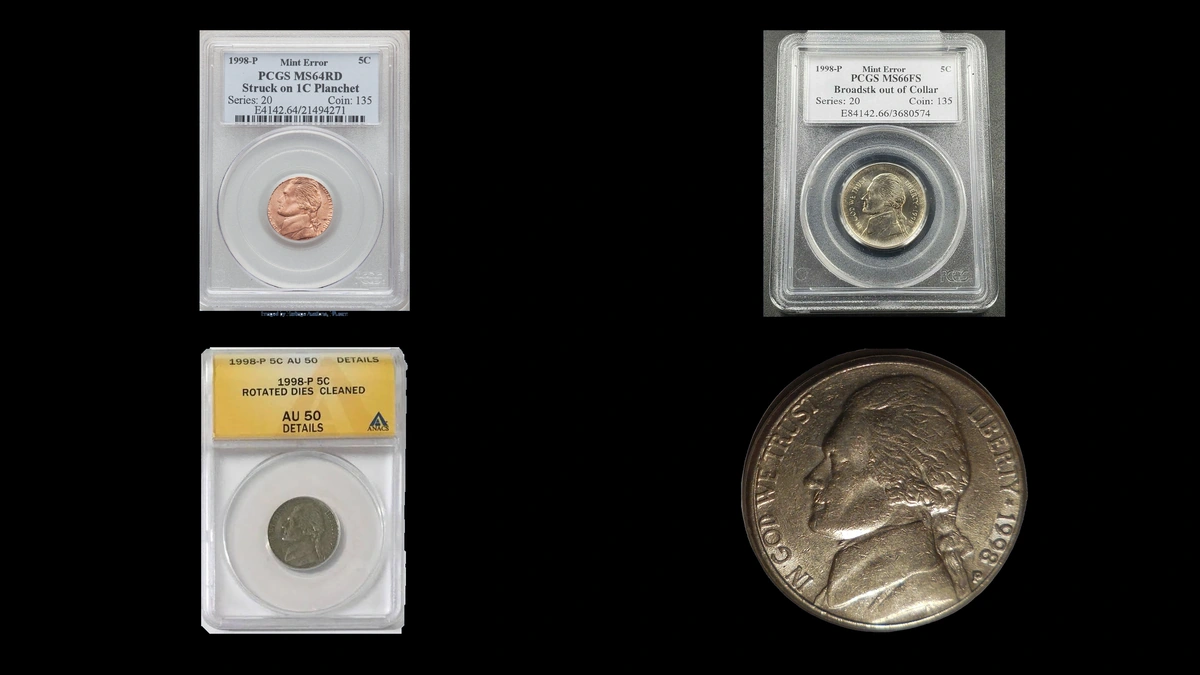
Metal, outline, and design each offer a different way to spot 1998 Jefferson Nickel errors. Estimated values run from $5–$5,000, with a 2.5-gram nickel on a cent blank bringing $2,875 in August 2010.
Begin with the coin’s overall appearance, then follow the sections toward smaller surface details. A normal nickel weighs 5 grams, measures 21.21 millimeters, and has a plain edge.
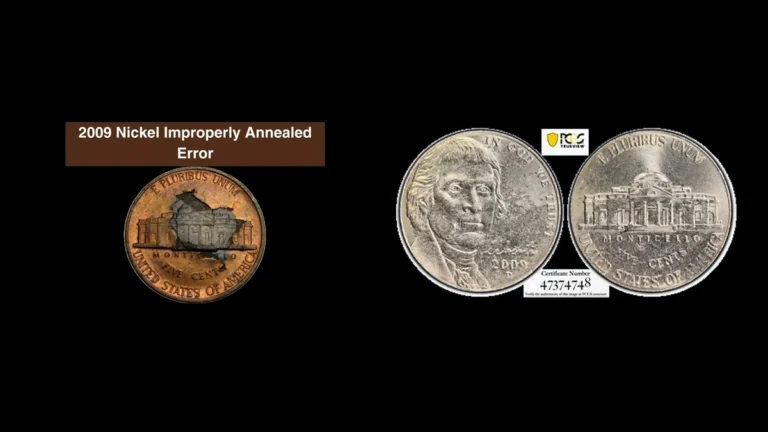
1. 1998 Nickel Copper Color or a Smaller Disc: Wrong Planchet Error
Jefferson on copper-colored metal deserves a closer look at the blank beneath the design. A planchet is the prepared blank, and a cent or dime planchet can occasionally enter the nickel press.
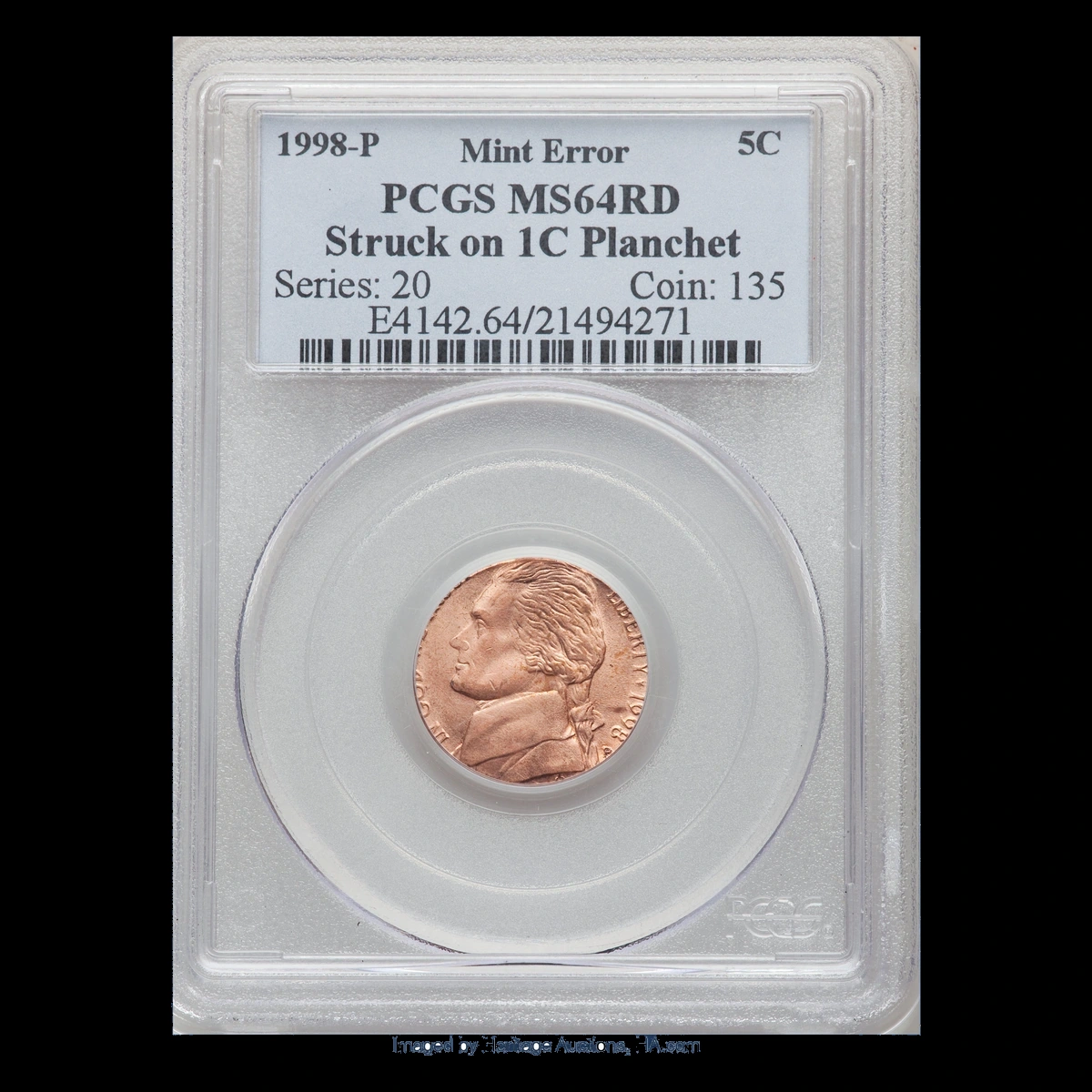
The recorded 1998-P cent-blank nickel weighs 2.5 grams and carries an NGC MS67 Red grade. Its metal is modern copper-plated zinc, while a separate PCGS MS65 Philadelphia example was struck on a dime blank.
How to Identify
Compare weight and the way the outer lettering fits the smaller surface; color alone could reflect a later coating. Cent blanks begin at 19.05 millimeters and dime blanks at 17.91 millimeters, although striking can enlarge them.
A modern dime normally weighs 2.27 grams, but the listed dime-blank specimen has no published measurement here. Neither unused blank needs to show an earlier cent or dime design.
What It’s Worth
Cent-blank examples are estimated at $300–$3,000; dime-blank pieces at $300–$1,500. The NGC MS67 Red cent-blank coin realized $2,875 in August 2010.
The PCGS MS65 dime-blank nickel appeared in a two-coin lot with a 1997-P dime-blank nickel that brought $630 in August 2023. That total does not establish a separate price for either coin.
2. 1998 Nickel Lincoln beneath Jefferson: Double Denomination Error
A remnant of Lincoln or the Lincoln Memorial changes the explanation for a copper-colored nickel. Here the nickel press struck an already finished cent, leaving parts of two denominations on one object.
Reported Philadelphia examples include a 1998 nickel over a 1998 cent and another over a 1997 cent. Both were described as NGC MS66 Red, but they are separate coins.
How to Identify
Find a recognizable cent feature and follow it beneath the newer nickel impression. Original surviving cent details differ from the recessed, reversed marks made by squeezing two finished coins together.
Read whatever remains of the cent’s date on the actual coin. A matching grade does not tell you whether the starting cent was dated 1997 or 1998.
What It’s Worth
An authenticated example is estimated at $600–$3,500, with legible remnants of both designs helping collector interest. No individual sale is assigned here to either reported MS66 Red piece.
A 1999-D nickel struck over a 1999-D cent brought $1,320 in September 2024. That other-year result offers context for the combined error, rather than a price for either 1998 specimen.
3. 1998 Nickel A Curved Gap in the Edge: Clipped Planchet Error
If part of the disc is actually absent, examine the boundary of the opening. A blanking punch that overlaps an earlier hole in the metal strip produces a curved clip before the nickel is struck.
A collector display records this feature on a 1998-P nickel. It supplies neither a standard missing percentage nor a clock position that other examples must match.
How to Identify
Look for the struck rim changing naturally as it approaches the opening. File lines, saw marks, or a sharp displaced lip would suggest removal after minting.
Weakness in the rim opposite the gap can support a genuine clip. Its absence alone does not rule one out, and the amount of missing metal must be judged from the individual coin.
What It’s Worth
A genuine curved clip falls around $15–$200, depending on size, preservation, and readable identity. The supplied 1998-P display has no completed sale attached.
A 1997-P nickel with a 20% clip sold for $124 in March 2025. Both that percentage and that price belong to the comparison coin.
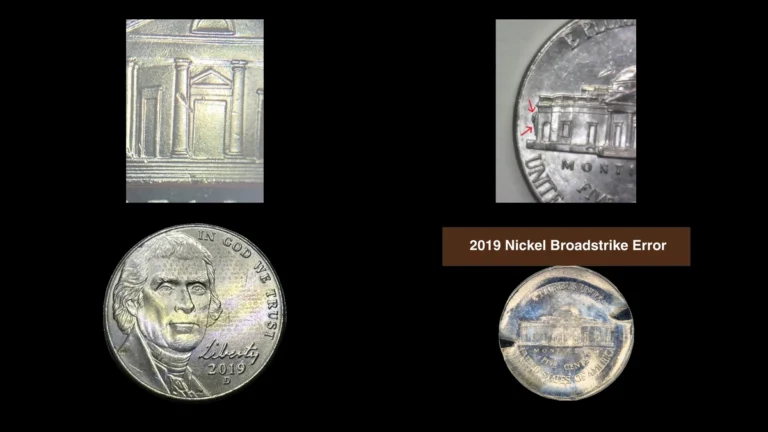
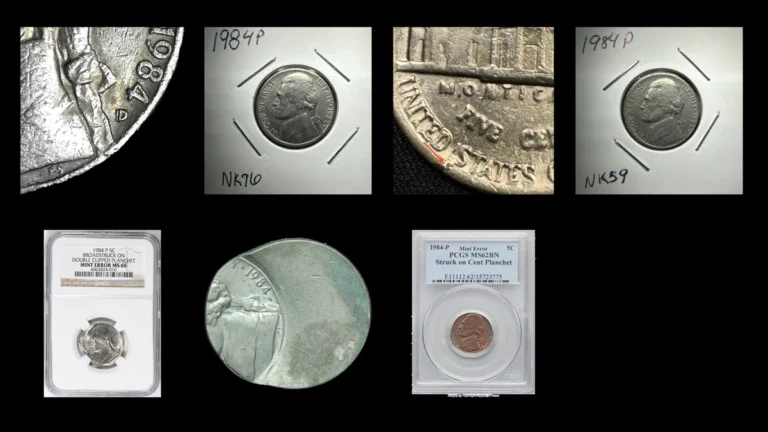
4. 1998 Nickel Full Lettering inside a Wide Border: Broadstrike Error
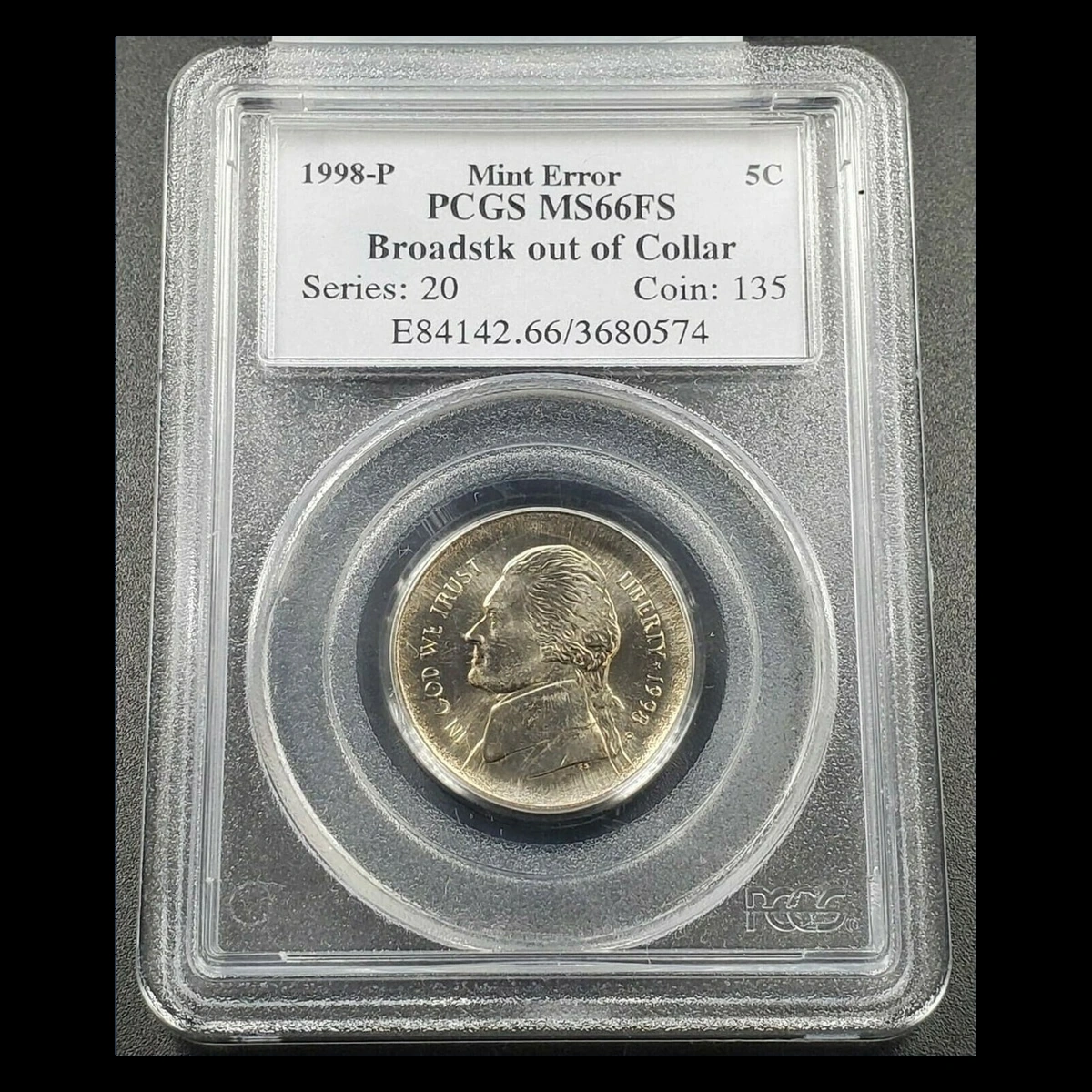
A complete design surrounded by extra metal can indicate that the collar failed to contain the strike. The collar normally limits expansion; without it, a nickel can spread outward into a broadstrike.
One 1998-P example graded PCGS MS66 Full Steps spread evenly in all directions. Full Steps describes well-defined Monticello stairs, not an additional error.
How to Identify
Read the outer words on both faces to confirm the design fits within the enlarged disc. Later hammering often flattens those details and leaves impact marks instead of a naturally expanded border.
A separate collector example was described as quarter-sized. That description does not supply an exact diameter for the evenly spread auction coin.
What It’s Worth
The estimated range is $30–$250. The PCGS MS66 Full Steps piece brought $57.50 in July 2002, while a different-year 1999-P broadstrike sold for $89 in March 2025.
Surface quality and the appearance of the expanded border help explain differences within the range. A wide coin with damaged lettering needs a different assessment.
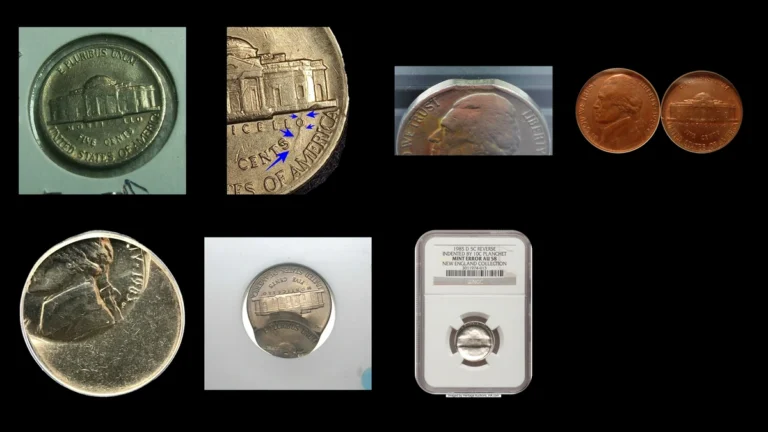
5. 1998 Nickel Solid Blank Metal beside a Partial Design: Off-Center Strike Error
An unused crescent with metal still present points toward misplacement in the press. When the blank lies partly outside the striking area, both designs can miss part of the disc.
A 1998-D nickel graded ANACS MS64 was cataloged as 60% off center toward 11:30. Philadelphia examples are reported separately.
How to Identify
Check that the shift affects both faces and corresponds to the same unused area. A displaced design on only one side may instead involve one misaligned die.
Keep the surviving date and mint letter visible in photographs. The Denver coin’s direction and percentage should not be assigned to a Philadelphia coin without measuring its own design.
What It’s Worth
Genuine dated examples are estimated at $25–$500. The 60% off-center Denver piece brought $75 in January 2022.
A large displacement alone does not guarantee a large price. The result also reflects preservation, readable identity, and how clearly the unusual strike presents itself.
6. 1998 Nickel Monticello Tilts after a Vertical Flip: Rotated Dies Error
Some alignment mistakes leave the outline and both designs complete. The clue appears only when you compare the orientation of one face with the other.
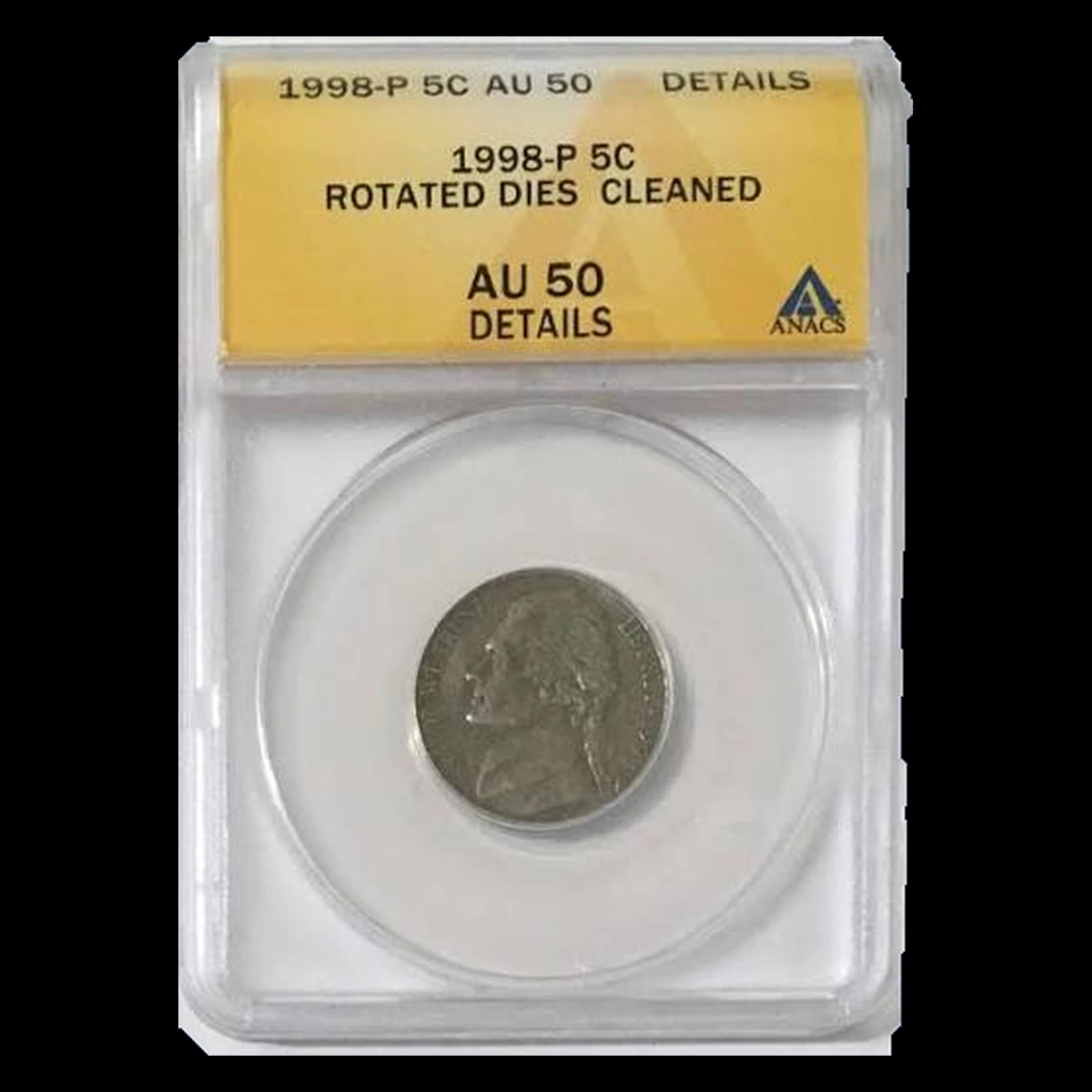
A 1998-P report describes approximately 45 degrees of rotation between the dies, the tools that stamp the designs. The report does not establish a direction.
How to Identify
Hold Jefferson upright, then flip the coin from top to bottom while keeping its sides aligned with a straight background reference. Monticello should normally finish upright.
Repeat the motion to distinguish a stable tilt from a change in your grip. A sideways turn is a different test, and an edge seam could indicate pieces joined after minting.
What It’s Worth
A clearly established rotation is estimated at $25–$200. More obvious turns generally make stronger comparisons than a small, difficult-to-measure tilt.
A 2015-D nickel rotated 90 degrees counterclockwise brought $79 in October 2021. That is an other-year sale and supplies neither the direction nor a price for the reported 1998-P piece.
7. 1998 Nickel A Smooth Depression in Expanded Metal: Indent Error
A curved hollow area can form when another blank overlaps the nickel during the blow. The overlapping metal blocks the design and presses an indent into the receiving blank.
The reported 1998-P ANACS MS65 example also has a broadstrike. Its description does not establish the indent’s face, size, or direction.
How to Identify
Study the depression’s border and the interrupted lettering around it. A plain overlapping blank should not leave recessed mirror-image letters; those would suggest contact with an already struck coin.
The expanded outline and the indent must fit a plausible strike together. Fresh tool marks or scraped metal around the hollow may instead reveal later damage.
What It’s Worth
A clear indent combined with a broadstrike is estimated at $100–$750. There is no completed price supplied for the collector’s 1998-P piece.
Related 1964 broadstruck indents sold individually for $150, $216, and $312 in July 2021. Each result prices a whole coin with combined features, rather than two premiums to add together.
8. 1998 Nickel The Design Appears in Several Positions: Multiple Strikes Error
Large overlapping portraits or dates can record a coin moving between blows before it left the press. Later impressions may partly erase earlier ones, so the visible sequence matters more than simply counting doubled letters.
A 1998-P NGC MS64 coin was identified as struck four times. A different Philadelphia piece carried an ANACS MS65 identification of 100 strikes.
How to Identify
Locate separate design centers and trace how the impressions cross each other on both faces. A thin shelf beside one letter is not comparable to a portrait struck in another position.
Use the documented attribution for the 100-strike piece. That description does not promise 100 individually countable portraits in a photograph.
What It’s Worth
Recognizable multiple strikes are estimated at $150–$1,500. The four-strike MS64 example brought $940 in August 2014.
No selling price is adopted for the separate 100-strike coin. A greater recorded strike count cannot be used as a simple multiplier of the four-strike result.
9. 1998 Nickel A Shared Design Bridges Two Pieces: Bonded Pair Error
Two blanks can remain together in the press and become bonded by further strikes. On the cataloged 1998-P PCGS MS66 pair, the final clear strike on both faces crosses the junction between the pieces.
The Stack’s Bowers catalog describes blocked fronts on the first two strikes, with the second greatly off center. The final impression was centered over their meeting point.
How to Identify
Photograph the intact junction from each face and from the side. A design that continues across the join offers stronger evidence than two pieces merely touching.
Check visually for glue, solder, or later pressure marks without pulling, flexing, or cleaning the connection. No actual weight is supplied, so two starting blanks should not become an assumed published measurement.
What It’s Worth
The estimated value is $1,500–$5,000 for the entire bonded object. No completed selling price is adopted here for the cataloged 1998 pair.
A related 1999-P multiply struck bonded error, also involving a split reverse die, brought $2,645 in August 2010. Its added features and different date limit the comparison.
10. 1998 Nickel The Coin Has Curved Walls: Die Cap Error
A nickel that sticks to a die can gradually wrap around it as further blanks are struck. This cup-shaped coin is the die cap itself.
The described 1998-P NGC MS68 front cap had a sharp front, a soft Monticello reverse, and enough depth to require a thick holder. A separate collector display shows a Philadelphia reverse cap.
How to Identify
A side view should show how the walls rise and how the design stretches into them. Abrupt folds or vise marks cutting through finished detail suggest a coin bent later.
Determine which face the cap curves around rather than transferring the front-cap description to the reverse cap. Leave the walls in their original shape.
What It’s Worth
A genuine example is estimated at $300–$2,000, with depth and preservation affecting its appeal. MS68 describes the exceptional condition of one specimen, not the expected grade of every cap.
A 1977-D front cap sold for $487.20 in July 2021. That comparison is not a sale of either reported 1998 piece.
11. 1998 Nickel A Blocked Front Opposes Sharp Stairs: Capped-Die Strike Error
The next blank struck beneath a stuck coin can look very different from the cup-shaped cap. This receiving coin gets pressure through the obstruction, which prevents direct contact with the die’s design.
A 1998-P receiver was cataloged as front struck through a capped die and graded PCGS MS64 Full Steps. Its reverse retained clear stair detail.
How to Identify
Compare the affected front with the sharply struck reverse. General circulation wear tends to affect exposed details on both sides and does not by itself explain that contrast.
The description does not establish a full backward portrait or a specific thinning stage of the cap. Use the actual receiver’s surface rather than expecting either feature.
What It’s Worth
Comparable receivers are estimated at $75–$600. The supplied 1998 catalog identifies the error without an adopted sale price.
A 1964-D capped-die receiver sold for $360 in July 2021, but its reverse was affected. The opposite face and different year should stay explicit in any price comparison.
12. 1998 Nickel Raised Lines or a Rim Patch: Die Crack and Cud Error
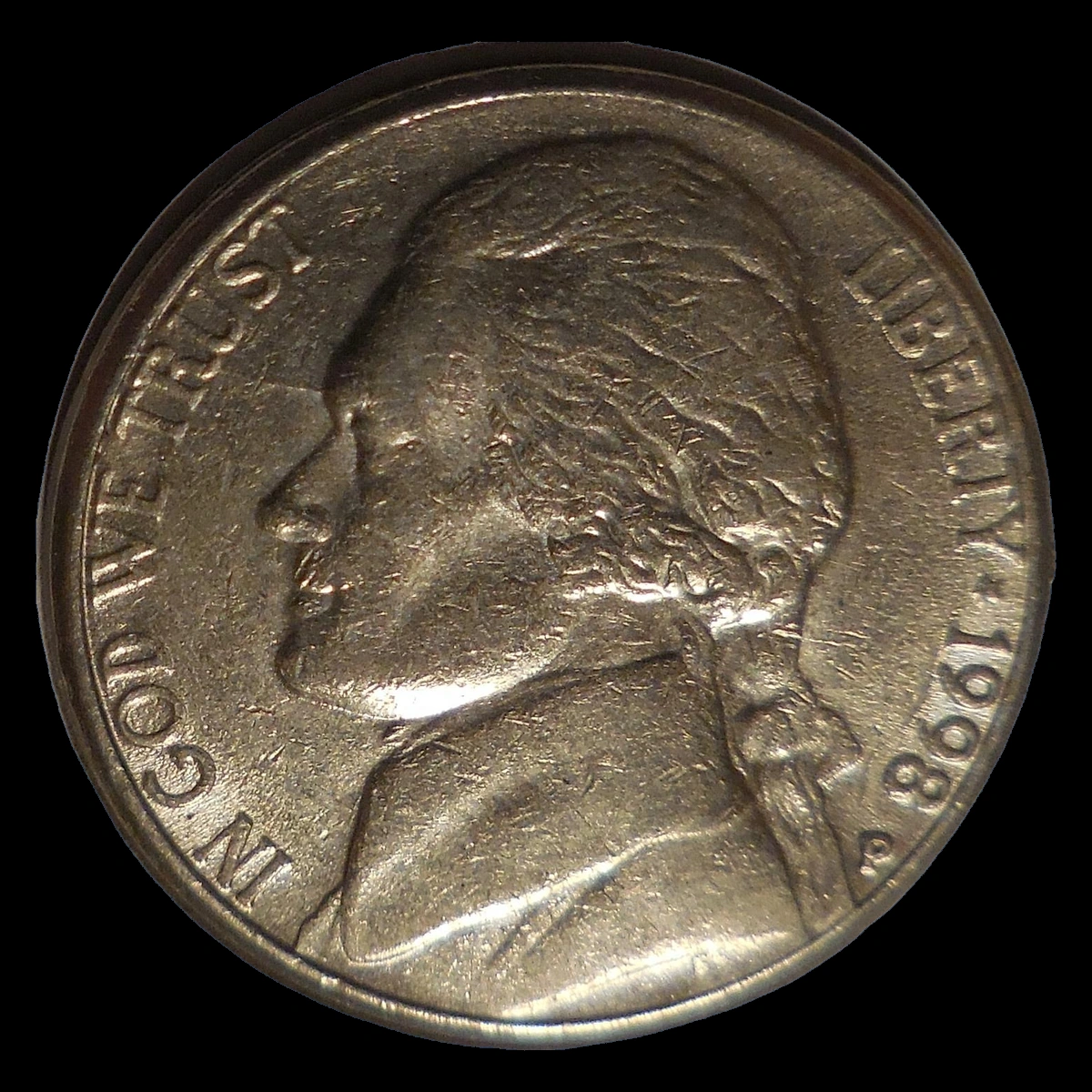
A narrow ridge can trace a crack in the die because coin metal enters the opening under pressure. A reported Philadelphia example has a head crack extending from the hair toward the rim.
Larger reported breaks include cuds, raised areas that connect to the rim where part of the die edge has broken away. No single cud position is established for all 1998 nickels.
How to Identify
Use side lighting to see whether a line rises above the surface or contains a central groove. A scratch can have raised lips on either side of its cut.
For a suspected cud, show the connection between the raised patch and the rim. Dirt, added metal, or a lump pushed up by an edge impact needs a different explanation.
What It’s Worth
Small die cracks are estimated at $5–$40, while stronger cuds may bring $40–$350. Visibility and the size of the break matter alongside the coin’s condition.
A worn 1983-P cud sold for $63 in July 2022. It is context for the broader error type, not a recorded sale of the 1998 head crack.
13. 1998 Nickel Extra Raised Outlines on the Reverse: Doubled Die Error
Close inspection of Monticello, UNUM, and FIVE CENTS may reveal repeated outlines reported in 1998 year lists. A doubled die carries repetition in the tool itself, so the coin need not have been struck twice.
The reports do not identify one pattern shared by Philadelphia, Denver, and San Francisco coins. Match the mint and finish, including the distinction between ordinary coins and S Proof collector pieces.
How to Identify
Follow a rounded secondary outline around several parts of a letter or design. A flat shelf that reduces the original letter’s width is a different form of doubling.
Change the light while leaving the coin still. Reflections move, whereas a genuine raised outline remains part of the same surface.
What It’s Worth
Identified minor doubled designs are estimated at $10–$50, with stronger examples around $50–$150. No specific numbered 1998 variety sale supports those ranges here.
Generally thick lettering or a worn-looking building is insufficient. The repeated shape must remain clear enough to compare with an identified variety.
14. 1998 Nickel A Local Patch of Detail Is Absent: Struck Through Error
A small obstruction can leave a weak patch or a shaped depression within an otherwise normal strike. Grease or debris between the die and blank prevents direct contact in that area.
The 1998 reports do not establish one object or location. Incomplete Monticello steps alone are especially weak evidence because ordinary nickels often lack clear stair lines.
How to Identify
Examine the transition from strong design to the affected patch and compare nearby high points for wear. Scraping may leave cuts through already formed details.
A cloth attribution needs a recognizable woven impression. A smooth patch does not identify the material that blocked the strike.
What It’s Worth
Small, clearly identified blocked areas are estimated at $5–$40; distinctive larger impressions at $40–$175. These are estimates for original striking obstructions.
No supplied sale identifies a particular 1998 cloth or wire impression. The clearest shapes support better comparisons than unexplained general weakness.
Conclusion
A useful examination of a 1998 nickel starts with what the metal actually shows: an absent piece, an expanded border, overlapping designs, or a small surface feature. Each observation leads to different evidence and a different price range.
Keep documented single-coin sales separate from lot totals and other-year comparisons. Preserve unusual shapes and joins, and record both faces so that the proposed error explains the entire coin.