Rare 1965 Quarter Errors (List & Pictures)
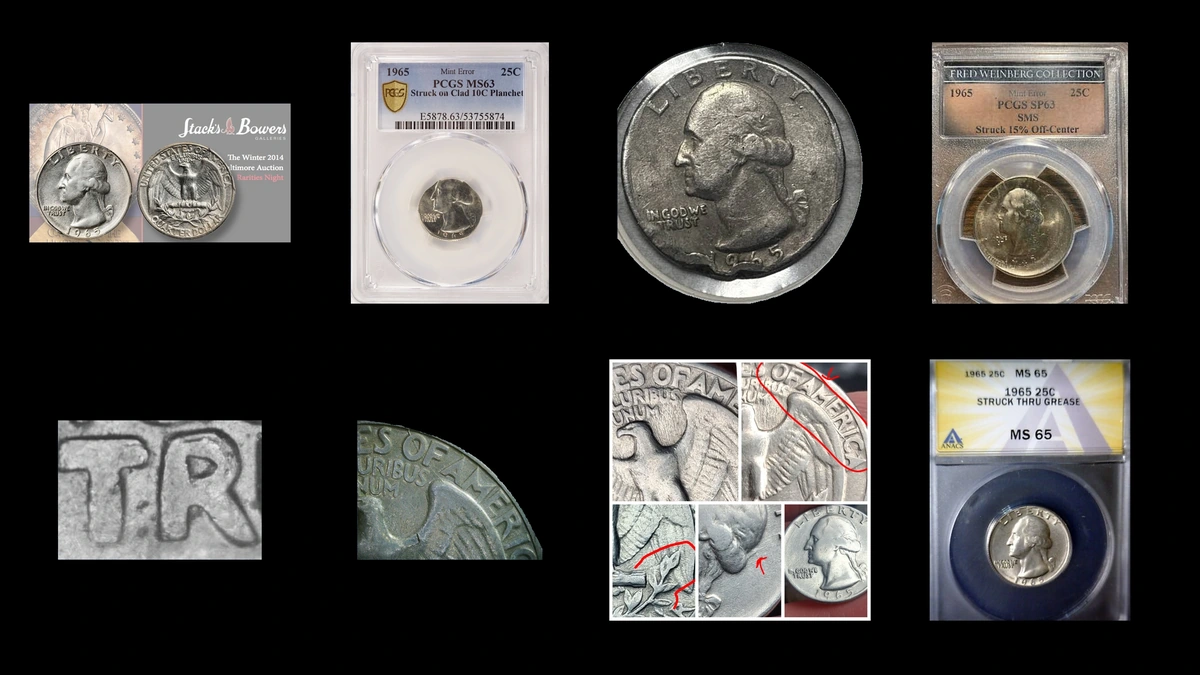
The change from silver to clad metal makes composition especially useful when identifying 1965 quarter errors. A coin struck on an older silver quarter blank sold for $9,300 in July 2022.
Estimates range from $5–$15,000, including small tool faults and errors on Special Mint Set coins. Compare metal and design coverage first, then examine the exact raised or missing details.
1. 1965 Quarter Normal Size but Silver Metal: Transitional Silver-Blank Error
A leftover 90% silver quarter blank could receive the new 1965 date after ordinary production changed to copper-nickel clad metal. The resulting error retains a full-sized quarter design, so its composition is more revealing than its outline.
How to Identify
Confirm the original 1965 date before studying the edge. Altered digits or nearby tool marks require attention even if the metal appears silver.
A silver blank starts near 6.25 grams, compared with 5.67 grams for a normal clad quarter. Both are about 24.26 mm across, and circulation wear can affect weight.
Inspect the grooved edge for the copper center found in clad construction. Plating can hide that center, so color or sound alone cannot authenticate a silver transition error.
A nondestructive composition test by a qualified coin specialist can establish the metal without filing away the surface. The recorded PCGS XF45 example shows circulation wear.
What It’s Worth
Comparable authenticated examples are estimated at $5,000–$15,000. The PCGS XF45 silver-blank quarter brought $9,300 in July 2022.
That is the whole rare coin’s price, not merely its metal value. A plated ordinary quarter does not acquire the same premium.
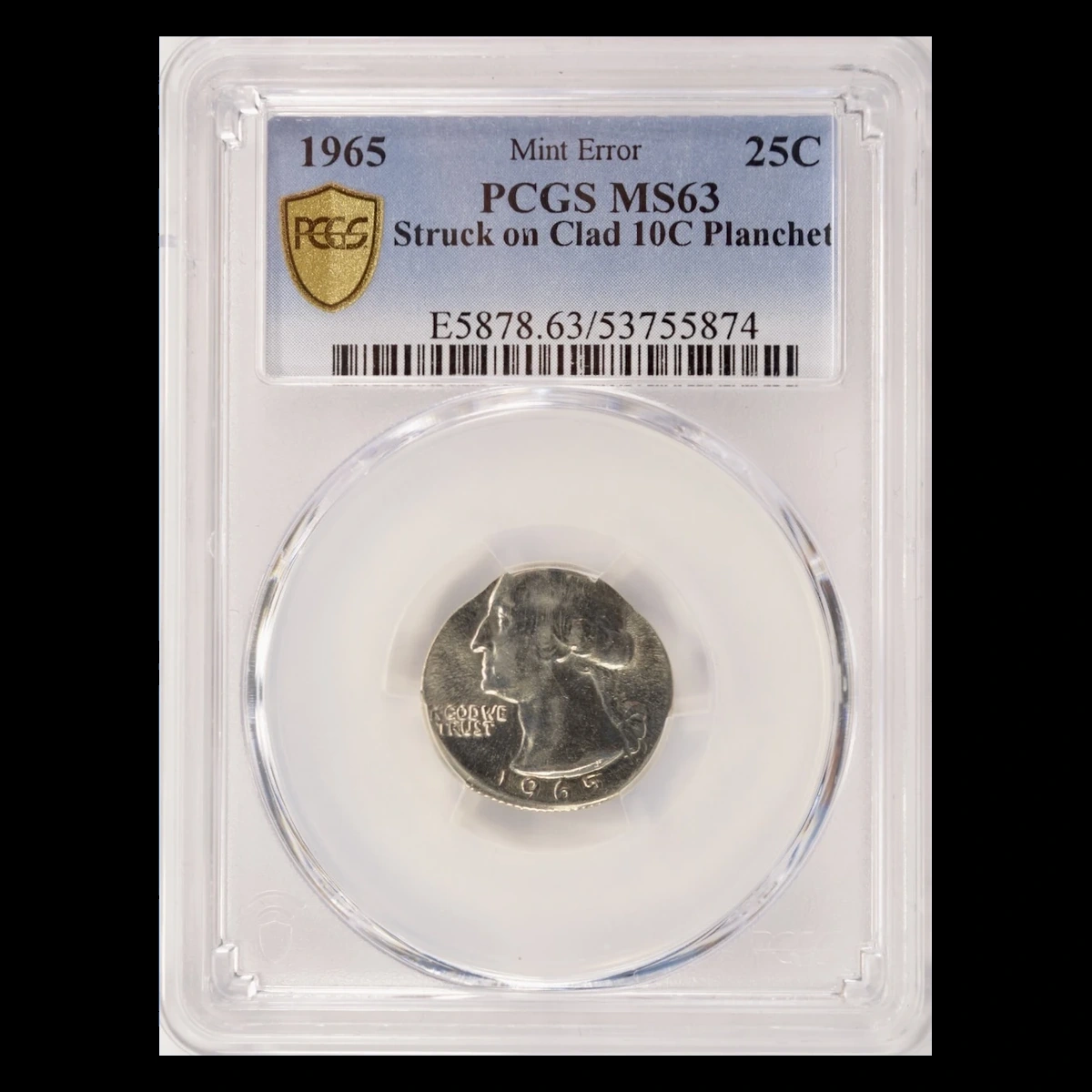
2. 1965 Quarter A Smaller Blank with Cropped Lettering: Wrong Denomination Blank Error
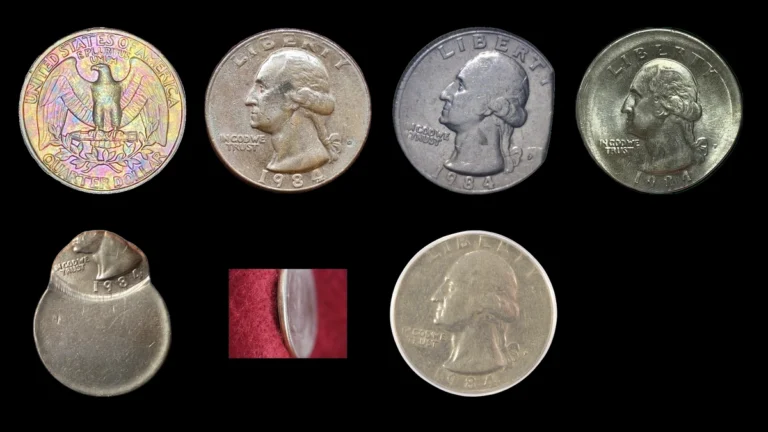
Some 1965 quarter designs landed on blanks intended for other denominations. Recorded types include clad dime and nickel blanks, with cent and silver-dime blanks also reported.
Special Mint Set examples require separate identification. One nickel-blank coin was found in an original set, while another SMS nickel-blank specimen also has a 3% clip.
How to Identify
The recorded clad-dime example weighs 2.2 grams and retains only the tops of the date. The ordinary nickel-blank example weighs 5.0 grams and keeps a readable year.
A period cent blank starts around 3.11 grams and a silver-dime blank around 2.5 grams. Those standards are comparison figures, not supplied actual measurements for the reported cent and silver-dime coins.
Examine the naturally cropped design together with the metal and edge. Filing or plating can imitate small size or different color without creating a wrong-blank strike.
Keep set provenance and the 3% clip with their own specimens. No mintmark proves SMS status: all 1965 quarters lack mint letters, and that absence alone cannot assign a mint.
What It’s Worth
Ordinary and SMS wrong-blank examples span an estimated $150–$7,000. The ordinary clad-dime AU58 coin sold for $431.25 in April 2006, while the ordinary nickel-blank MS62 brought $373.75.
A separate SMS nickel-blank ANACS MS63 coin sold for $5,175 in January 2006. Its collector-set identity does not make that price applicable to every undersized quarter.
3. 1965 Quarter Copper across the Eagle Side: Missing Reverse Clad Layer Error
The recorded NGC MS63 example has an exposed copper reverse and an actual weight of 4.7 grams. Loss of the outer layer reveals the center of the normally bonded clad structure.
How to Identify
Compare both faces and trace the remaining layer at the edge. The eagle’s design should be naturally struck into exposed copper rather than scraped down to it later.
The documented weight supports the loss on that particular coin. Other candidates need their own readings instead of a required target of exactly 4.7 grams.
Look for coatings, chemical pitting, and removal scratches. Brown color alone is compatible with several causes besides an originally absent layer.
What It’s Worth
Comparable missing-layer coins are estimated at $80–$500. The recorded reverse-layer example sold for $159 in December 2022.
Clear struck copper and original boundaries make the error easier to appreciate. A later scraped face does not receive that comparison.
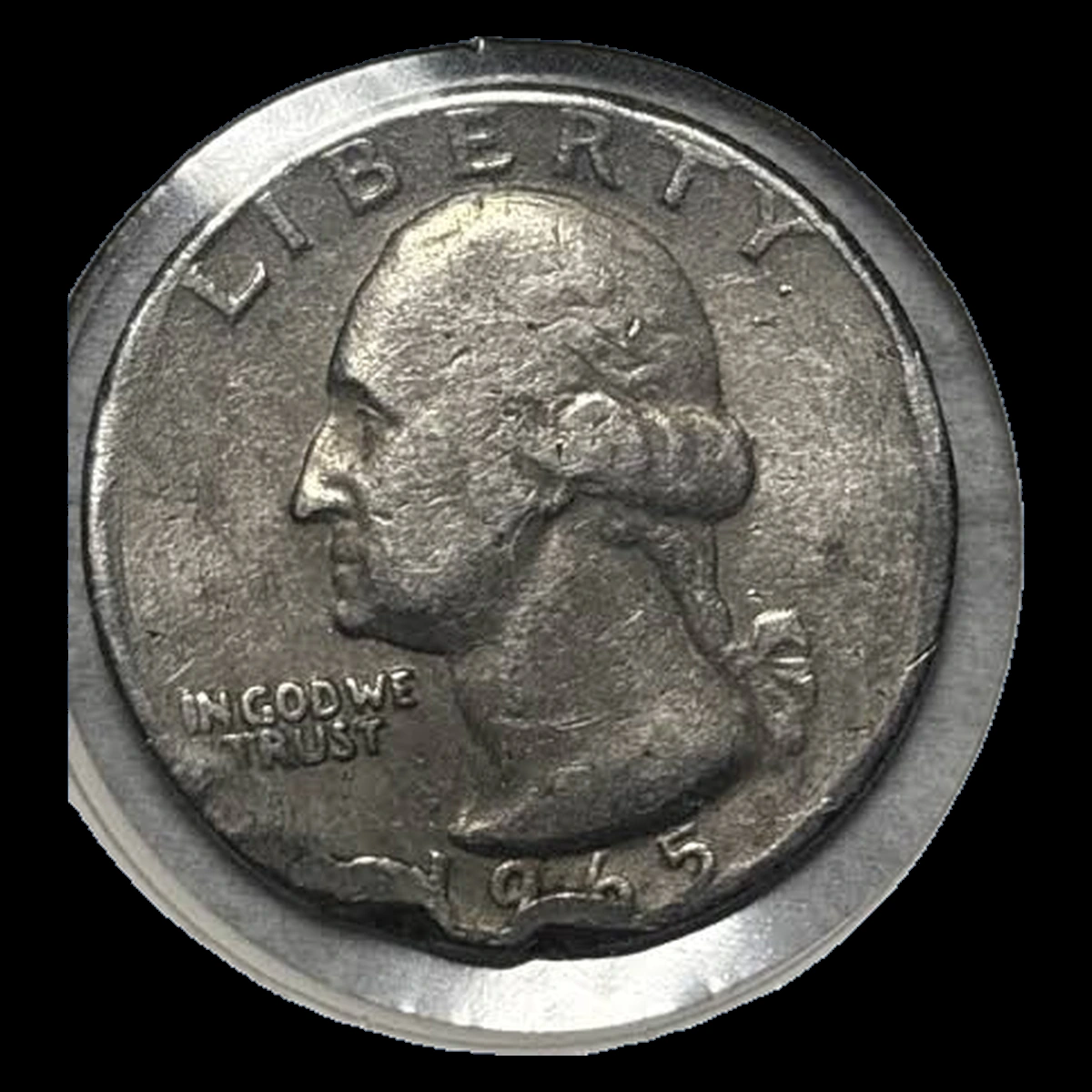
4. 1965 Quarter A Curved or Straight Gap in the Outline: Clipped Blank Error
An incomplete blank can result when cutting overlaps an earlier hole or reaches the metal strip’s edge. Striking then places the design around the absent section.
How to Identify
Inspect both endpoints for natural rounding or design drawn toward the opening. Saw marks through finished letters or fresh burrs suggest later removal.
Reduced weight documents missing metal but cannot determine when it disappeared. Examine the surviving grooves and any opposite-rim weakness as supporting evidence.
Curved and straight clips are forms of the same general blank-making error. The actual shape and struck boundary matter more than attaching another category to each opening.
What It’s Worth
Confirmed ordinary clips are estimated at $20–$250. A 1978 quarter with three curved clips sold for $180 in March 2025.
That later multiple-clip coin offers a different outline for comparison. Tiny clips on worn examples generally belong below larger clear openings with readable dates.
5. 1965 Quarter Complete Design inside Extra Width: Broadstrike Error
A collar normally restrains the blank during striking. When it fails to contain the metal, the coin can spread outward while retaining its complete design.
The ordinary Type One example began on a blank without normal raised edge preparation. A separate Special Mint Set example is an uncentered broadstrike.
How to Identify
Follow the outside design on both faces before judging an uneven border. A broadstrike can be off to one side within its expanded outline without losing part of the intended image.
Inspect the spread metal and edge for original striking rather than flattened letters or hammer marks. The Type One claim needs its own blank-edge evidence; expansion alone is insufficient.
SMS denotes specially made collector coins, so preserve original set or grading identification. The uncentered SMS broadstrike is separate from the SMS coin that is also 10% off center.
What It’s Worth
Comparable broadstrikes are estimated at $60–$800. The ordinary Type One PCGS MS61 coin sold for $192 in June 2024.
The separate SMS uncentered broadstrike, PCGS SP64, brought $504 in December 2025. Finish, spread, and preservation help explain why the two results differ.
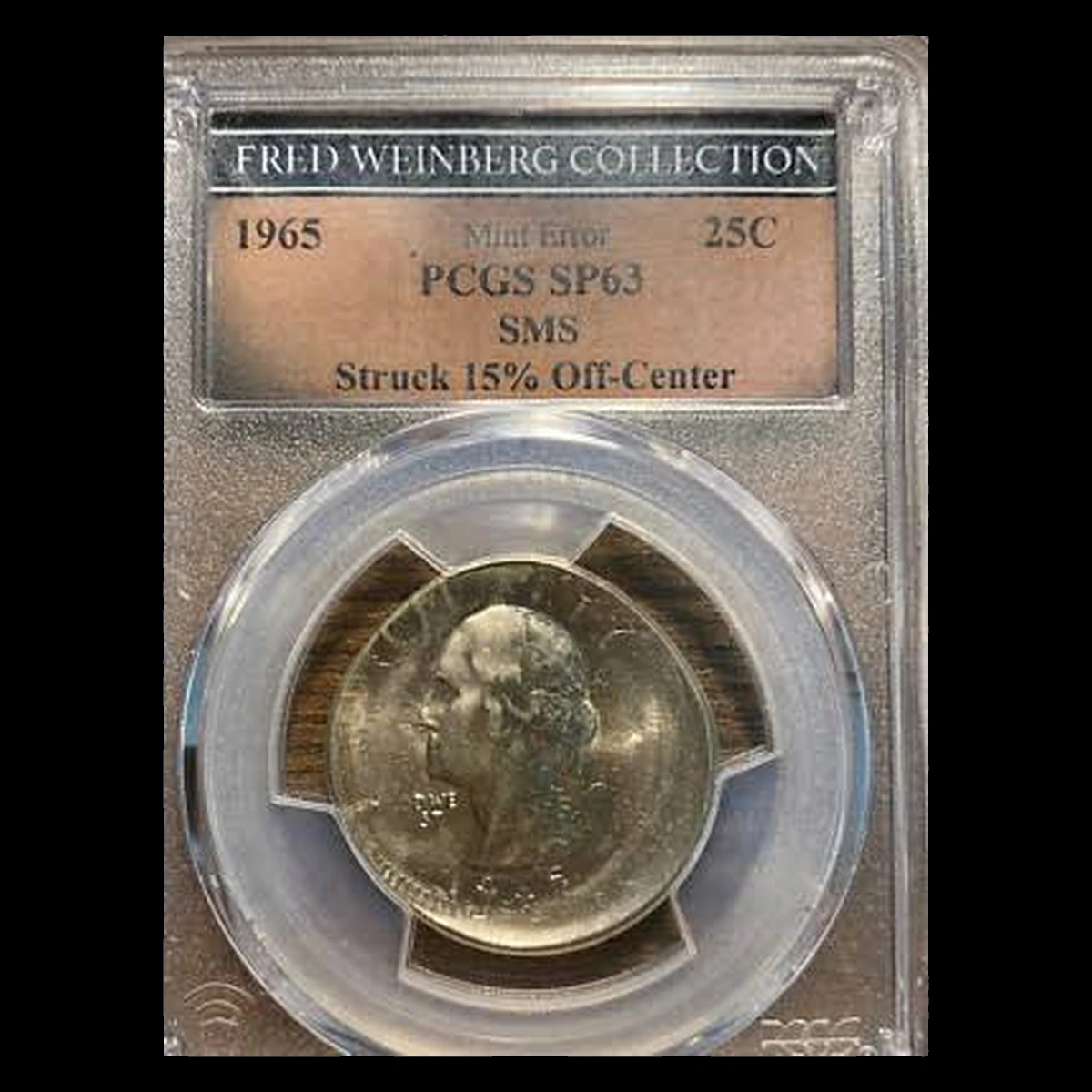
6. 1965 Quarter A Blank Crescent beside Cut-Off Design: Off-Center Strike Error
A misplaced blank receives incomplete designs, leaving an untouched crescent. The recorded SMS example is 10% off center and also spread outside the collar; a separate ordinary example is 25% off center.
How to Identify
Compare the corresponding blank areas and missing designs on both faces. A rim imbalance confined to one side can reflect one tool’s alignment rather than the entire blank’s position.
Check the transition between untouched metal and struck detail. The SMS coin’s extra width has an additional collar-related cause that should remain tied to that example.
Confirm SMS identity through finish and original set or grading history, not merely shine or the normal absence of a mintmark. No clock direction is supplied for either percentage.
What It’s Worth
The estimated range is $50–$1,000. The SMS 10% PCGS SP63 example sold for $312 in April 2020, and the ordinary 25% NGC MS65 piece brought $180 in December 2025.
These results show why the percentage alone is not a price scale. A separately produced collector coin needs a different comparison from an ordinary circulation strike.
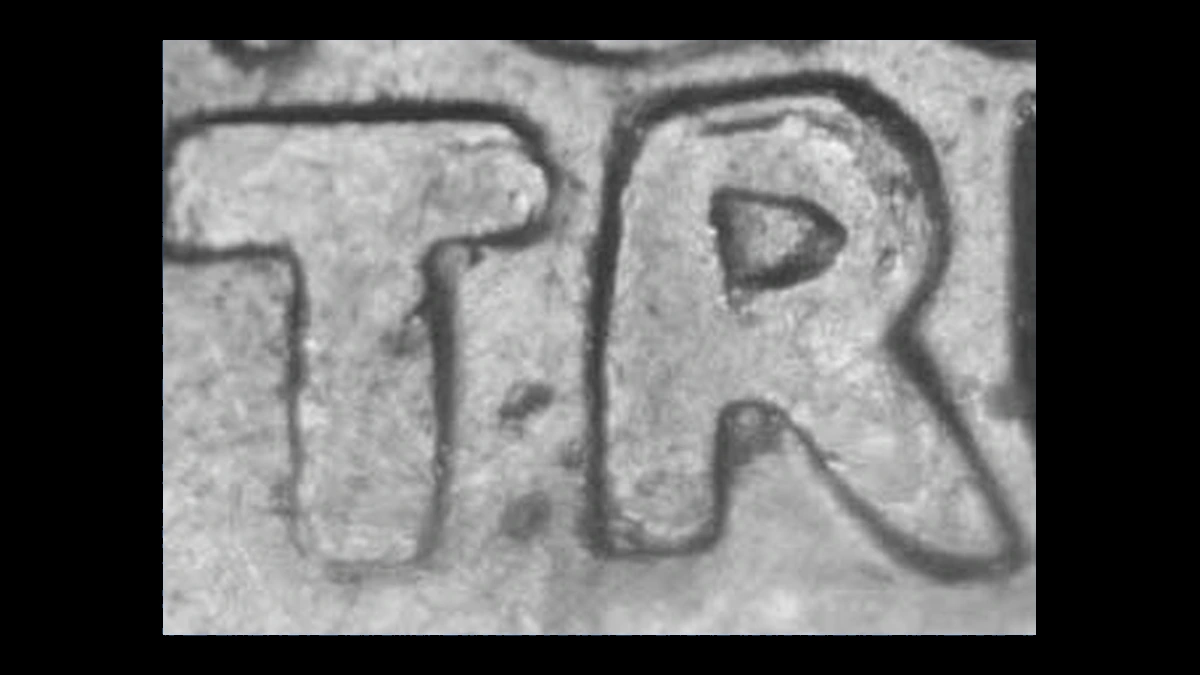
7. 1965 Quarter Rounded Extra Outlines in the Design: Doubled Dies Error
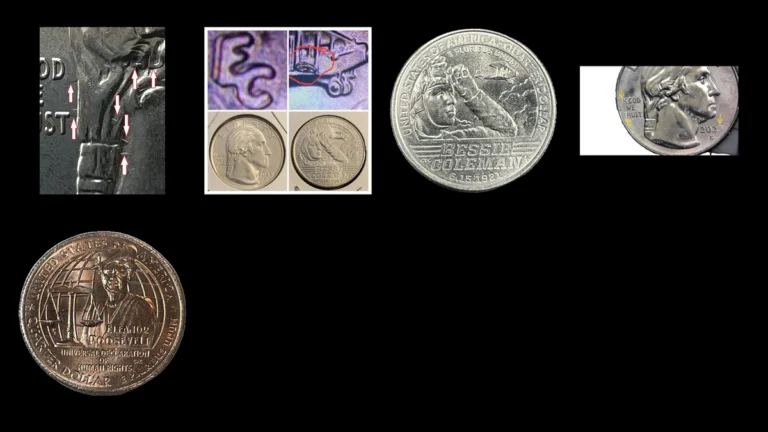
The front WDDO-001, also called FS-101, shows downward separation. On the reverse, WDDR-001 spreads inward and WDDR-002 shows counterclockwise doubling around lettering and leaves.
These patterns came from different tools. WDDR-001’s former FS-801 number was removed from a later guide edition, but that catalog change does not erase its documented physical doubling.
How to Identify
For FS-101, compare LIBERTY, IN GOD WE TRUST, the date, and Washington’s head. A short raised line below the nose and a crack through the E and R of AMERICA can provide supporting matches.
Those marks should support the doubled outline rather than replace it as evidence. A random crack is not enough to identify FS-101.
Use Wexler’s individual variety photographs for the inward and counterclockwise reverse patterns. Flat shelves should not be mistaken for rounded secondary design, and the separate patterns should not be combined into one supposed coin.
What It’s Worth
Confirmed doubled dies are estimated at $40–$2,000. GreatCollections records a PCGS MS64 FS-101 sale of $1,518.75.
That amount belongs to the front variety and its grade. It cannot automatically price either reverse pattern or a faintly doubled-looking worn quarter.
8. 1965 Quarter A Ridge or Lump Joined to the Rim: Die Cracks and Cuds Error
Coin metal filling a crack in the tool leaves a raised line. A larger missing edge section can instead produce a raised rim-connected patch known as a cud.
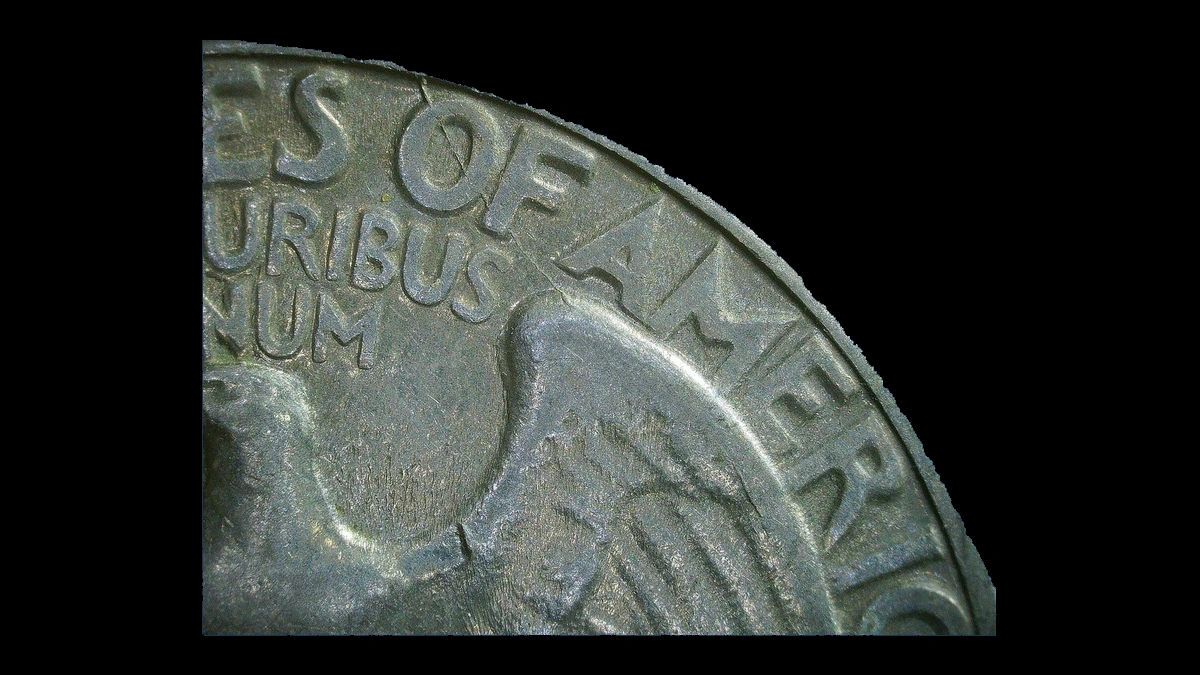
How to Identify
Follow the feature across nearby design under side lighting. A scratch’s central cut and pushed-up lip differ from a ridge formed as part of the strike.
For a suspected cud, confirm that the raised area reaches the rim. Inspect the other face and edge for a later impact that might explain displaced metal.
The reports do not supply one fixed location. Match the actual feature instead of assigning a clock position from a different example.
What It’s Worth
Modest cracks and small cuds are estimated at $5–$100. A 1970-D nickel with two cuds sold for $63 in October 2022, a different-denomination comparison.
Visibility, size, and original condition guide the quarter’s own value. A fine line that is hard to see usually belongs toward the lower end.
9. 1965 Quarter Faint Fragments from the Other Face: Die Clash Error
An unexpected opposite-design outline can result when the tools collide without a blank. Their new marks can then be copied onto subsequent coins.
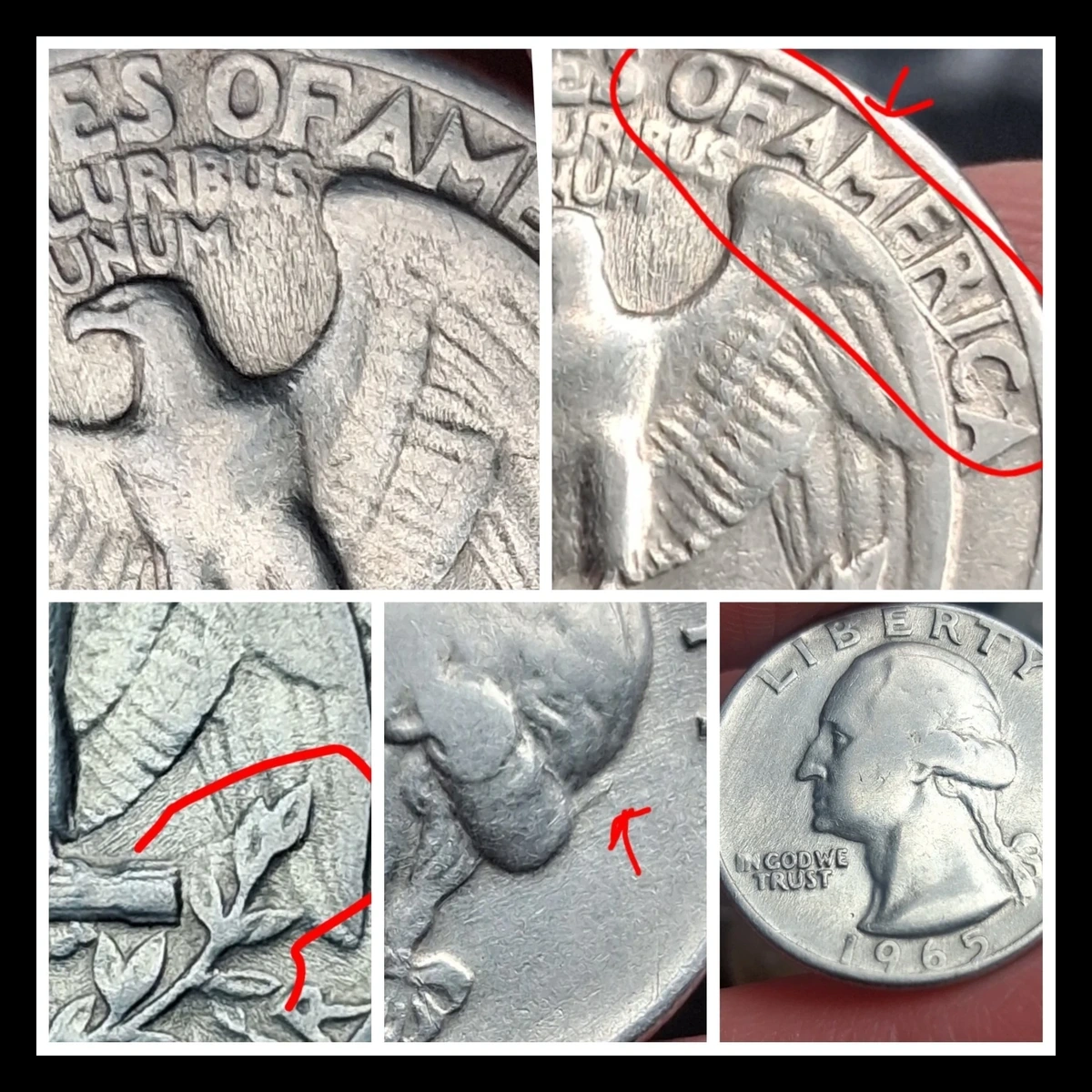
How to Identify
Compare a photograph of the opposite design with the extra outline, turning or reversing it as appropriate. Several connected fragments provide a stronger match than one straight line.
The 1965 reports establish no common location for all examples. A scratch, rubbed area, or mark pressed in by another finished coin needs a different explanation.
A faint transferred fragment within original struck surface is the relevant evidence. A complete deep mirror image should not automatically be called an ordinary die clash.
What It’s Worth
Confirmed minor clashes are estimated at $10–$150. A clashed 1972-S nickel Proof graded PR64 sold for $51 in December 2020.
That different-denomination result supplies context only. Recognizable outlines and the quarter’s own preservation determine the closer comparison.
10. 1965 Quarter A Depression or Missing Local Detail: Struck Through Material Error
An obstruction between blank and tool can prevent part of the intended design from forming. Its shape depends on the material and how it lay during the blow.
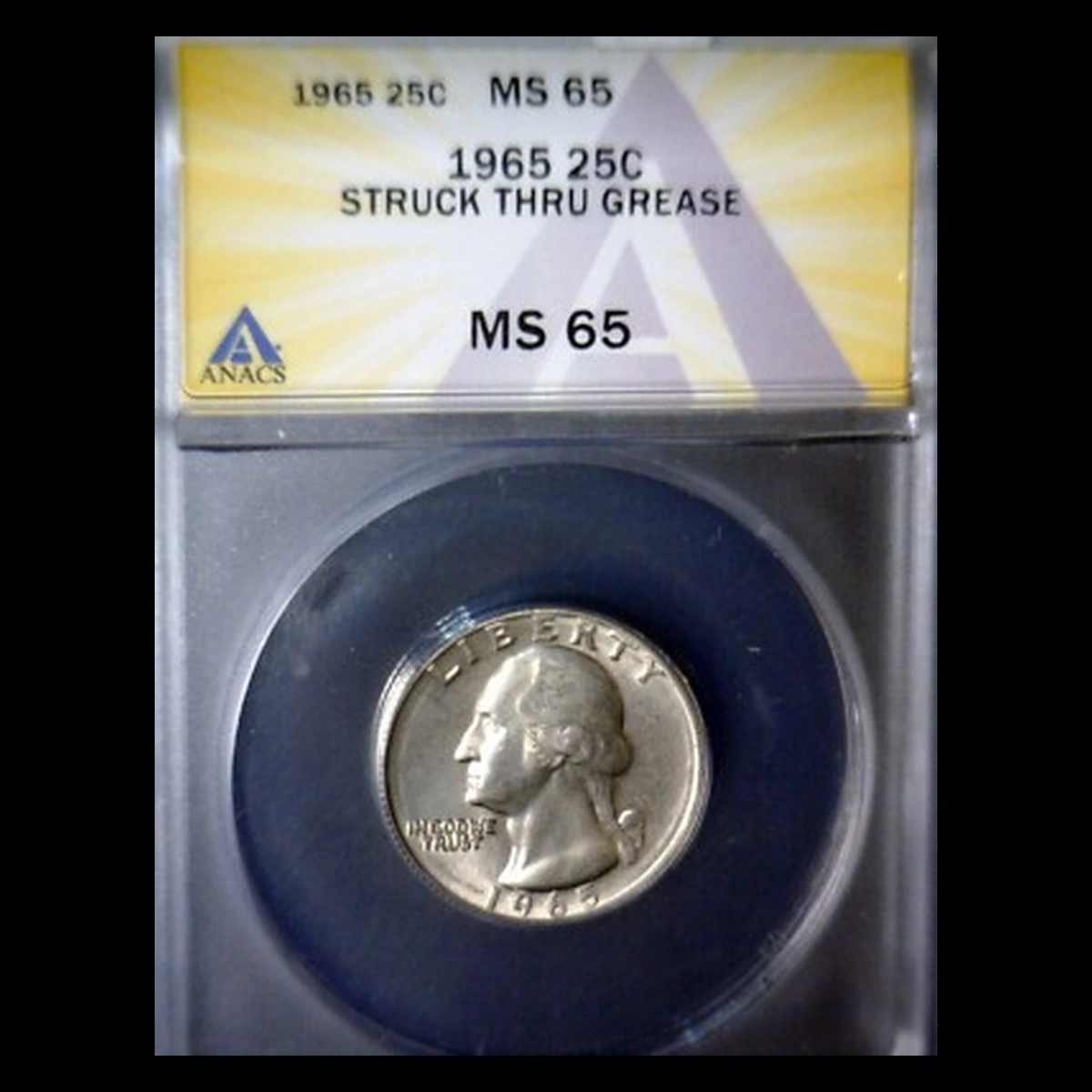
How to Identify
Follow a letter or design line into the affected patch. Observe whether the strike stops naturally there or finished detail has been cut away afterward.
Compare adjacent high points and surface texture for wear, corrosion, or impact damage. Do not clean the patch in an attempt to reveal an assumed pattern.
No specific substance or fixed location is established in the report. Naming a wire, grease deposit, or retained object requires actual supporting evidence.
What It’s Worth
Confirmed examples are estimated at $15–$400. A 1986-P nickel struck through material sold for $204 in June 2023, providing a different-year and different-denomination comparison.
A distinct impression on an original surface is easier to explain than an indistinct smooth patch. The supplied report does not establish an individual 1965 sale.
Conclusion
Separate metal identity from finish when examining a 1965 quarter. The transitional silver blank, smaller denomination blanks, and Special Mint Set coins each need their own evidence, and the normal absence of a mintmark does not resolve those questions.
For surface varieties, match a specific doubled pattern or a recognizable original defect. Keep every specimen’s grade, measurements, and combined features together before comparing its value with a documented sale.