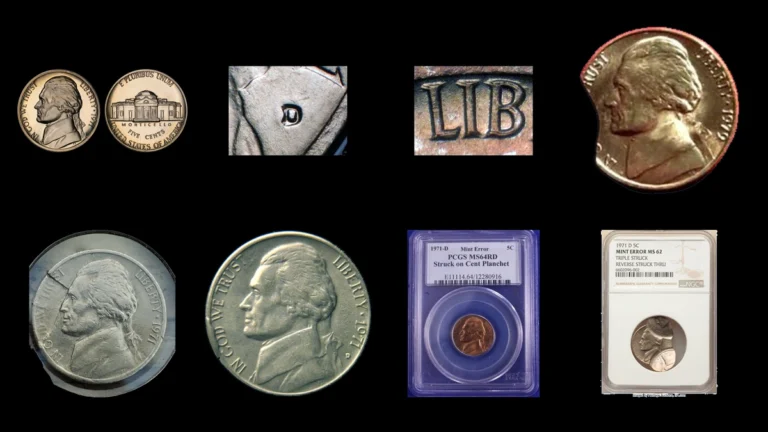
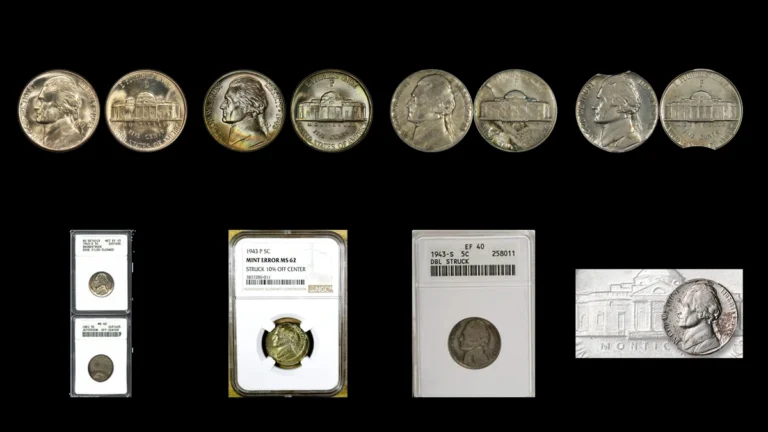
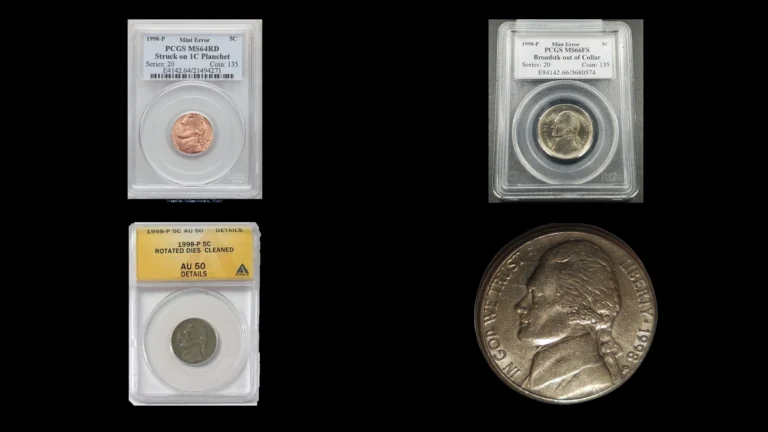
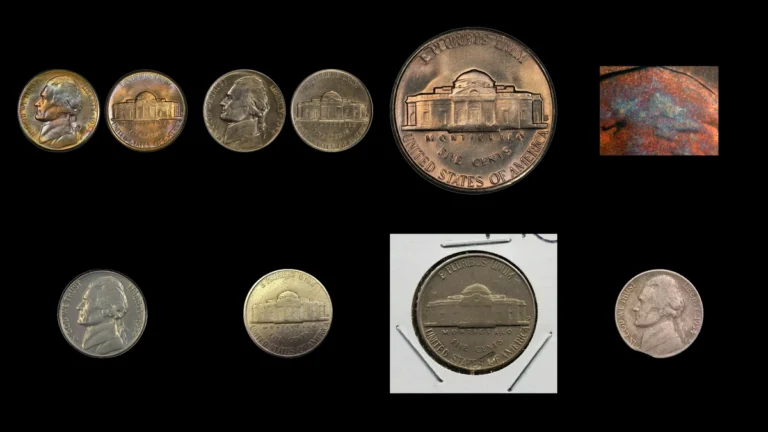
Rare 1870 Nickel Errors (List & Pictures)
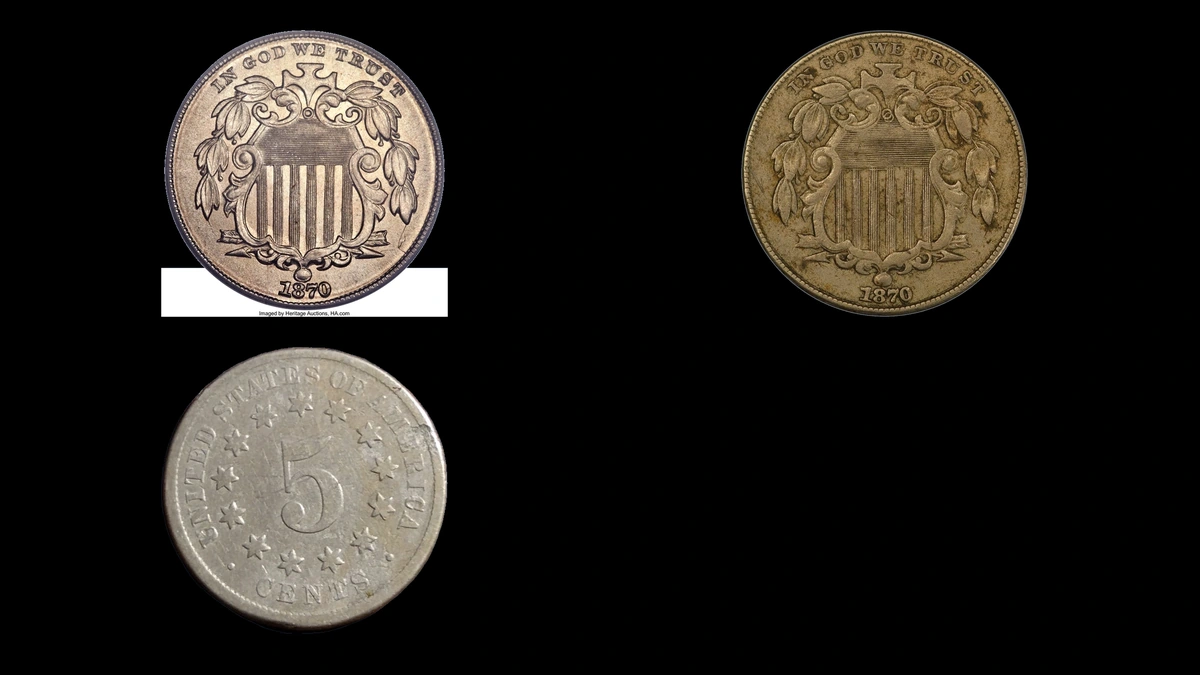
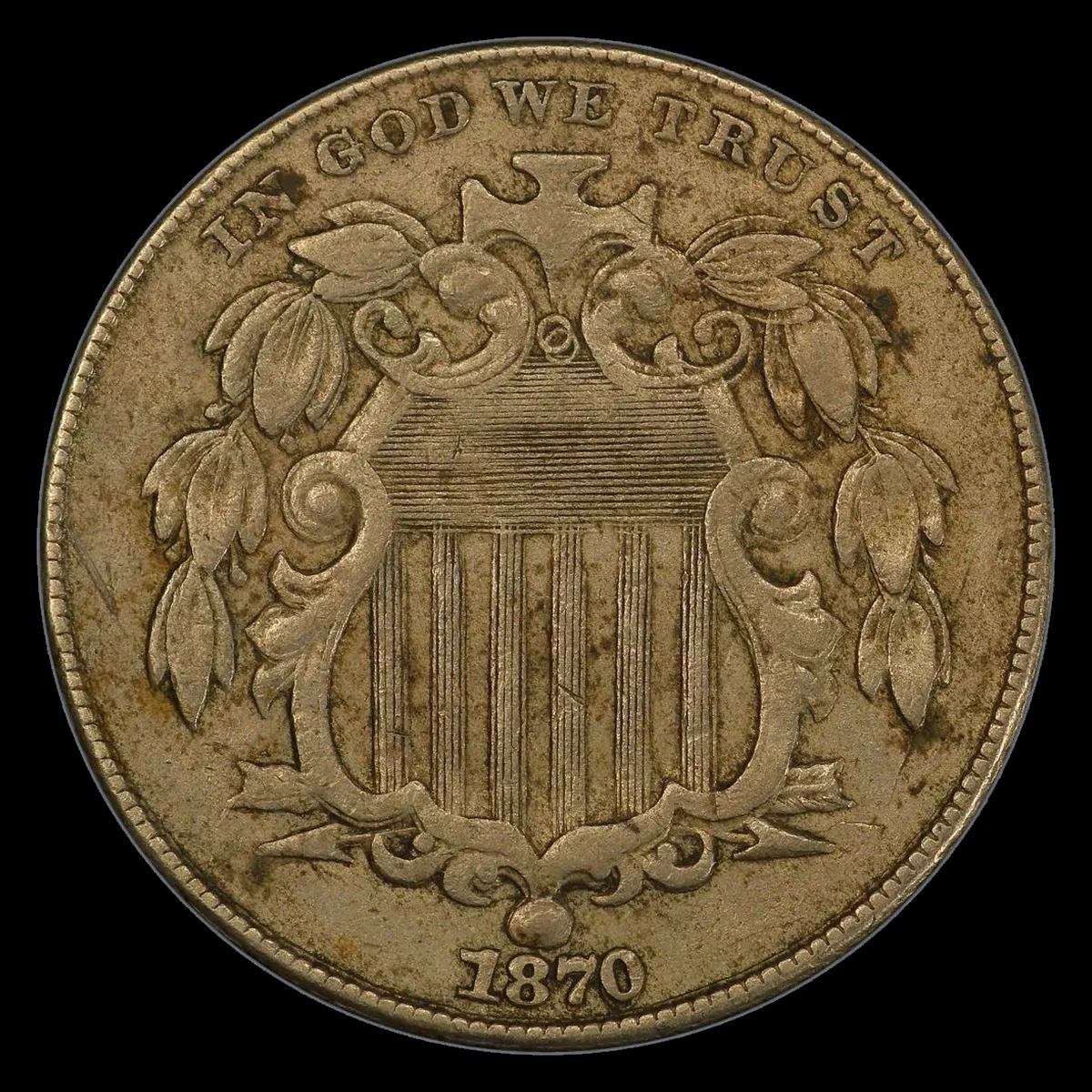
The most interesting part of an 1870 Shield nickel may be a small line that seems out of place. One recognized variety with unusual shield-area marks and extra date traces sold for $646.25 in February 2016.
The 1870 nickel errors here have estimated whole-coin values of $20–$2,000. These ordinary Philadelphia coins have no mintmark; start at the date and shield, then check the reverse alignment and surface metal.
1. 1870 Nickel Extra Numeral Strokes around the Date — Repunched or Misplaced Date Error
A date punch entering a die again from a slightly different position can leave parts of the earlier digits. Reported 1870 patterns include lower-left traces of 1, 7, and 0, a 70 below the date, and separate extra 0 outlines.
Another feature is the top of a 1 above the border teeth, to the right of the normal 1. That trace lies outside the usual date position and is described as a misplaced date.
How to Identify
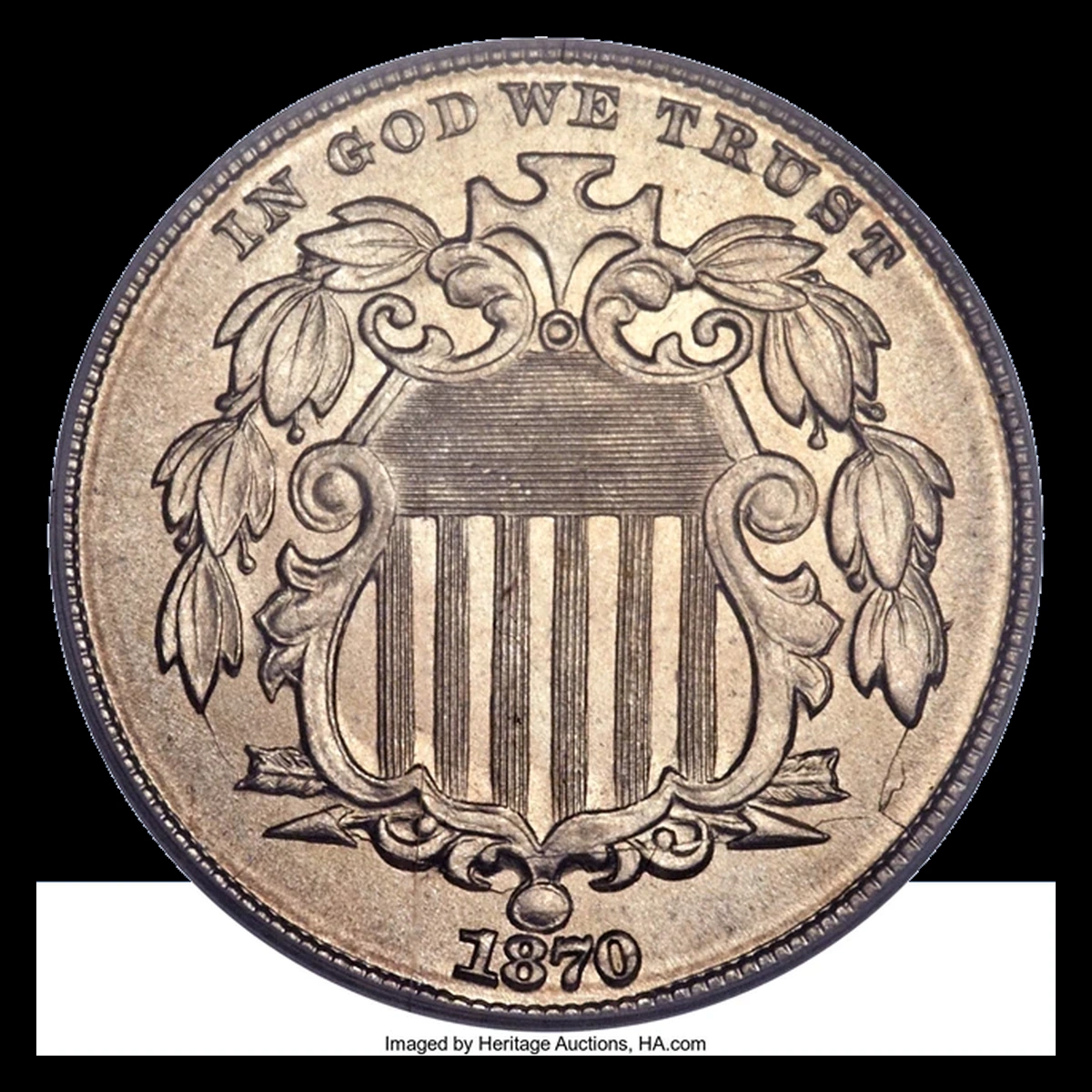
Photograph the full date with the border teeth included. For the misplaced 1, inspect the space to the right of the normal digit rather than looking only inside the date.
Extra strokes should fit portions of shifted numerals. Match their full arrangement, because the listed directions describe separate varieties rather than all appearing on one coin.
What It’s Worth
$50–$1,000 is an estimated range for recognizable date-punch varieties. Clear traces, original surfaces, and a good photograph match help place a coin within it.
The $646.25 FS-301 sale discussed below includes both date traces and unusual front lines. It is one complete-coin result, not a separate value for the date alone.
2. 1870 Nickel Rounded Extra Edges on the Shield or Letters — Doubled Die Error
Some 1870 nickels show repeated edges on the shield ornaments or arrows. Other examples have doubling in reverse lettering such as UNITED or STATES.
These features were in the dies before striking. The Shield nickel variety catalog also describes reverse patterns combining details from two tool designs.
A design called 1867 in that discussion identifies a tool style. It does not mean the nickel carries a second date.
How to Identify
Choose a reference for the correct face first. On the front, compare the upper ornament, shield lines, and lower arrows; on the back, follow the lettering shown by the matching variety.
Change the lamp angle to see whether the raised extra outline stays fixed. A low flat shelf or general letter thickness needs a different explanation from a consistent doubled pattern.
What It’s Worth
$75–$1,500 is an estimated range for matched doubled dies. Strong separation and attractive preservation generally make the better examples.
The front and reverse varieties do not all have the same demand. Cleaning or scratches can lower a coin’s appeal even when the doubling remains visible.
3. 1870 Nickel Unfamiliar Lines inside the Shield — Indian Cent Design-Transfer Variety Error
The marks on this recognized variety have been compared with an Indian cent portrait. Reported lines extend below a ball-shaped ornament toward the left, with feather-like shapes toward the right.
The traditional explanation is a clash with an Indian cent die, but researchers have proposed other origins. It is not a complete cent design struck over the nickel.
How to Identify
Begin with the whole shield to keep the marks in context. Locate the ornament, then compare the lines below it and to either side with an identified FS-301 specimen.
Check the date traces as part of the same pattern. One short curve resembling a face under one light does not establish the variety.
What It’s Worth
$300–$2,000 is an estimated range for correctly matched examples. A PCGS VF20 FS-301 coin sold for $646.25 in February 2016.
VF20 indicates a worn coin with clear major details. Its price includes the date traces, so a second full repunched-date valuation should not be added.
4. 1870 Nickel A Raised Line Crossing the Design — Die Crack Error
A crack in the die leaves room for metal to rise into a narrow ridge. The coin copies the broken tool without necessarily developing a crack through its own body.
Reported 1870 paths involve the lower shield, date, ball-shaped ornaments, cross, or tops of reverse letters. Those locations belong to different examples.
How to Identify
Use a full-face image to follow the complete path and any branches. Then inspect whether the ridge continues naturally across nearby design.
A scratch can leave metal raised beside its cut, so check both sides of the line. A date-area ridge should not be matched to an unrelated crack above reverse lettering.
What It’s Worth
$20–$200 is an estimate for ordinary coins with visible narrow die cracks. The underlying nickel’s preservation may account for more of the price than the crack itself.
Branching, easy-to-follow ridges usually display better than faint lines obscured by corrosion or wear.
5. 1870 Nickel A Rough Patch or Lifting Layer — Blank Flaw Error
An owner’s 2022 sale listing described an 1870 nickel with a defective blank or possible lamination. A lamination is a thin layer separating because of weakness within the original metal.
The description does not establish a face, shape, or exact location. Roughness alone can also come from corrosion, scraping, or a later gouge.
How to Identify
Leave any attached metal in place and follow its boundary into the surrounding design. Original details continuing onto a lifted strip can help show that the separation belongs to the coin’s metal.
A normal complete nickel weighs 5 grams. A fallen piece may lower that reading, while an attached layer may leave it nearly unchanged.
Look for sharp cuts through finished features or a tool-entry point. Those signs can explain a rough patch without an original blank flaw.
What It’s Worth
$30–$300 is an estimate for a modest authenticated blank flaw. A 1911 Liberty Head nickel with front peeling sold for $51 in January 2023.
That later-year comparison concerns a local flaw, not a known shape or location on the reported 1870 coin.
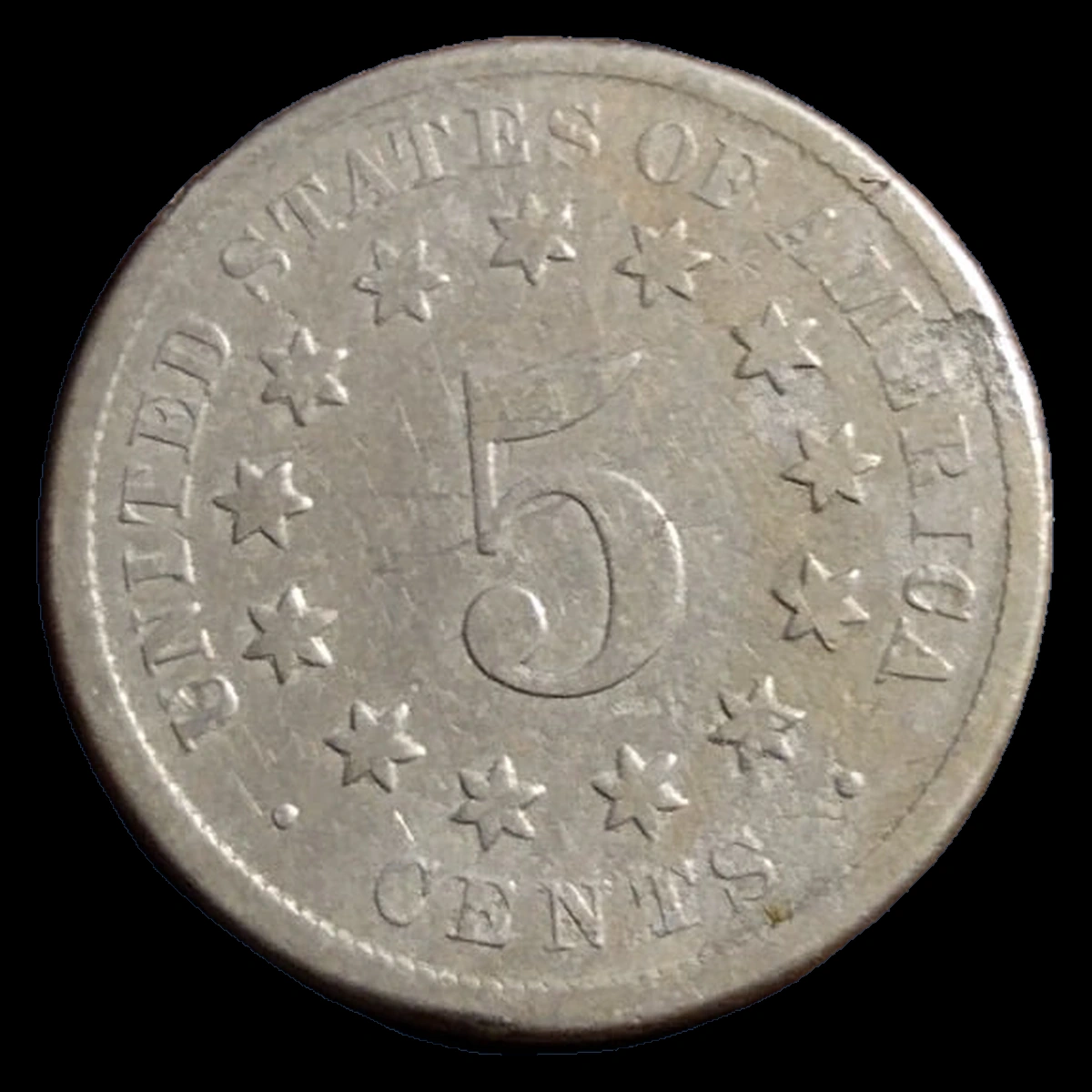
6. 1870 Nickel The Reverse 5 Points Sideways or Down — Rotated Dies Error
The 1870 variety catalog includes rotations of about 90 degrees and about 180 degrees. The reverse die sat a quarter turn or half turn away from its normal relationship with the front die.
These angles describe separate coins. Two photographs independently turned upright cannot demonstrate the error.
How to Identify
Hold the shield upright with the date at the bottom, then flip the coin top to bottom without twisting it sideways. A normally aligned reverse should finish upright.
A 90-degree rotation leaves the 5 sideways, while a 180-degree rotation leaves it upside down. Repeat the controlled movement and record the actual angle of your coin.
What It’s Worth
$75–$600 is an estimated range for recognizable large rotations. The angle can remain easy to demonstrate even on a worn but readable nickel.
Condition still matters: polished faces or damaged edges do not become less important because the reverse is dramatically turned.
Conclusion
Keep the full date, shield, and border visible when comparing an 1870 nickel. A small extra digit, a rounded doubled edge, and an unfamiliar design-transfer line each require their own pattern match.
Use a controlled flip for rotation and preserve any fragile metal at a blank flaw. If several features occur on the same specimen, compare its complete identity and condition rather than adding a separate price for every mark.