Rare 1881 Morgan Dollar Errors (List & Pictures)
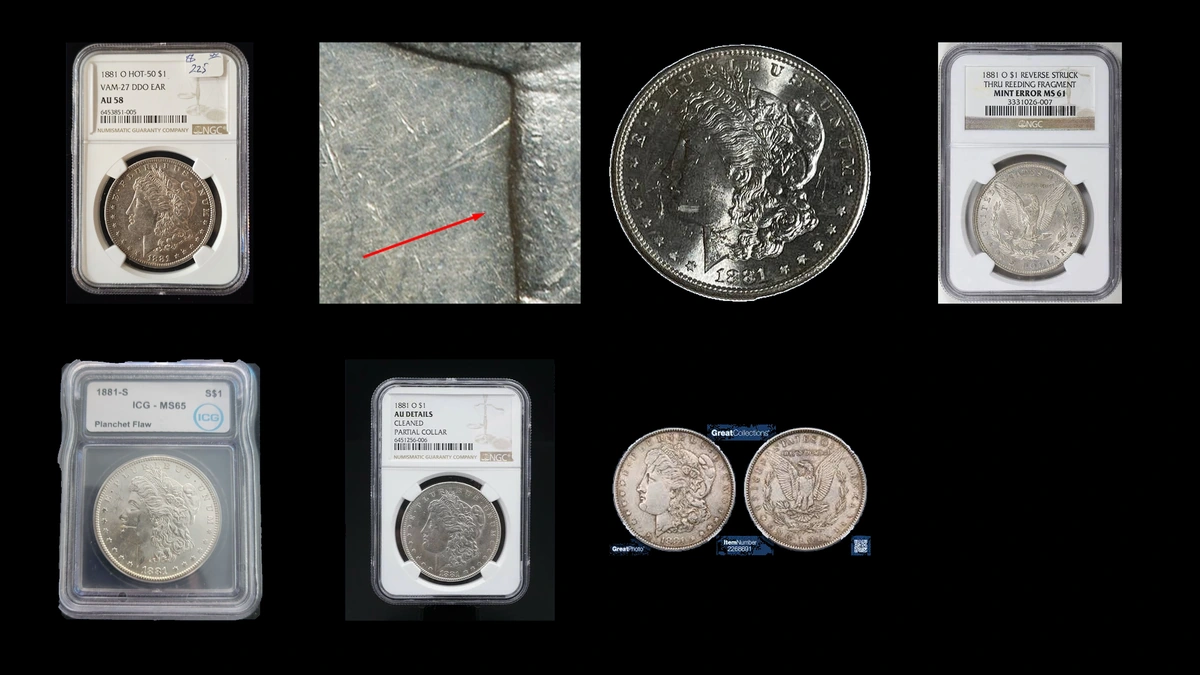
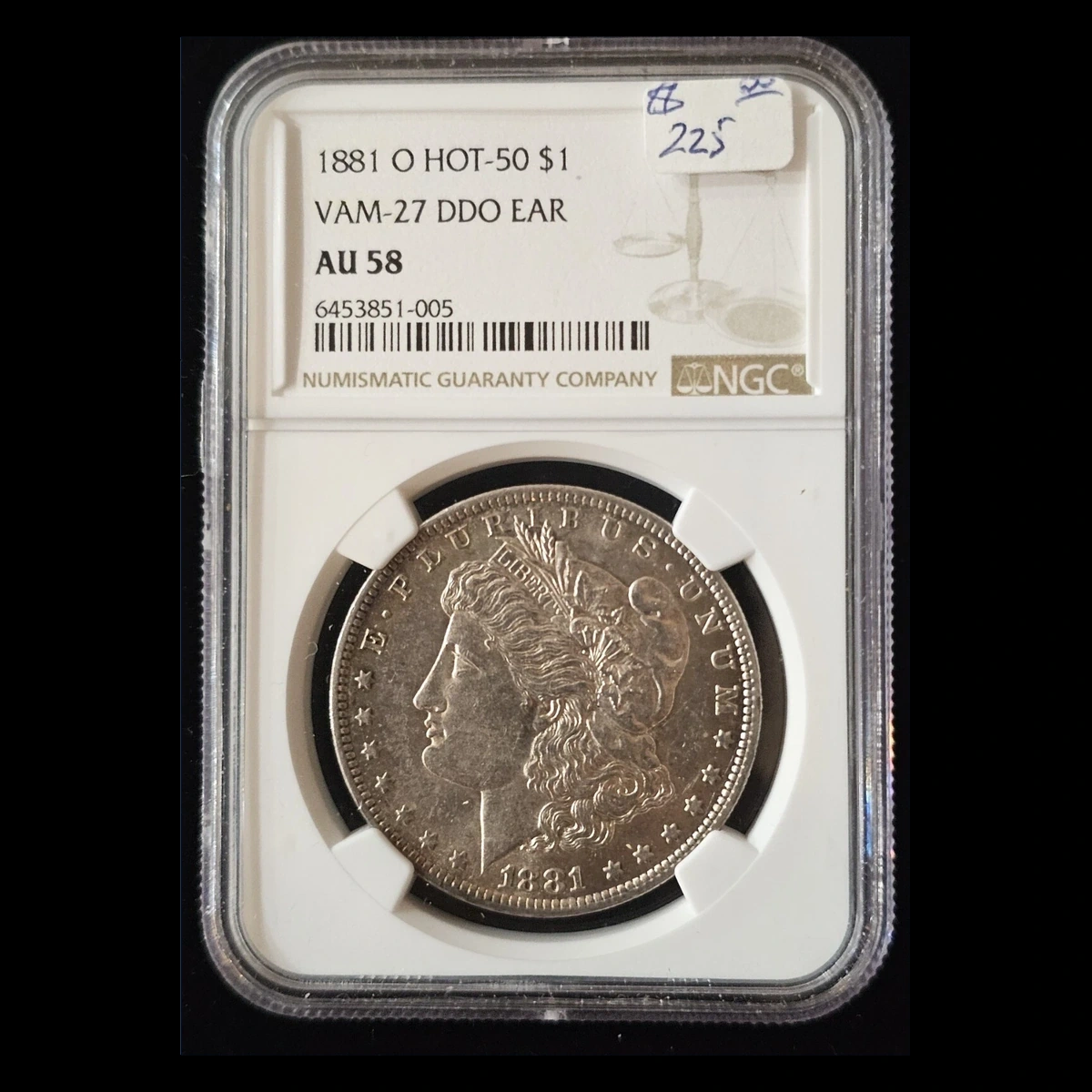
An 1881-O doubled-ear dollar graded MS64 brought $5,750 in May 2021. Estimated whole-coin values for 1881 Morgan dollar errors span $60–$25,000, from small die features to major repeated strikes.
Begin with the portrait and mintmark, inspect unusual surface and edge features, then follow any displaced images. Each comparison needs the correct mint and variety; a doubled ear is not the same event as a coin struck twice.
1. 1881 Dollar A Second Ear Outline: Doubled Dies Error
The New Orleans VAM-27 variety has repeated curved detail in Liberty’s ear. The die itself carried the duplication and passed it onto coins.
Other O-mint patterns affect the profile or reverse lettering, motto, and left wreath. Philadelphia and San Francisco front doubling is also reported, but these observations do not describe one universal pattern.
How to Identify
Confirm the mint before selecting a close-up. For VAM-27, follow the ear’s raised curves and distinguish them from short, flat shelves produced by movement during striking.
A reverse variety needs its own lettering or wreath comparison, and P or S candidates need their own mint’s reference. Extra date strokes do not prove that the entire front is doubled.
What It’s Worth
$75–$6,500 is the estimated range across the supplied doubled-design varieties and grades. PCGS records $5,750 for an MS64 VAM-27 on eBay in May 2021.
That result belongs to an identified unworn New Orleans doubled ear. It should not price an uncertain Philadelphia mark or minor reverse thickening.
2. 1881 Dollar Unusual Eye Texture: Pummeled Eye Die Damage Error
Pummeled Eye and Flaky Eye are names for the same New Orleans variety, VAM-1D. Its distinctive rough eye reproduces tool damage rather than a separate blow to each finished dollar.
The rough pattern differs from the smooth repeated outline of the doubled ear. A battered eye still needs attribution before receiving the nickname.
How to Identify
Compare the shape and spread of the texture with an identified VAM-1D photograph, keeping the full face available. Under angled light, inspect for a recent dent or pushed-up ridge.
Look across the forehead and cheek for damage connected to the same impact. The variety’s eye pattern should recur in the same place on other coins, allowing for wear.
What It’s Worth
$100–$1,500 is an estimated whole-coin range for recognizable VAM-1D examples. PCGS records an MS64 at $1,250 on eBay in December 2018.
Surrounding portrait preservation helps make the diagnostic texture readable. An unexplained rough eye does not establish that recorded comparison.
3. 1881 Dollar Letter Fragments beside Liberty: Die Clashes Error
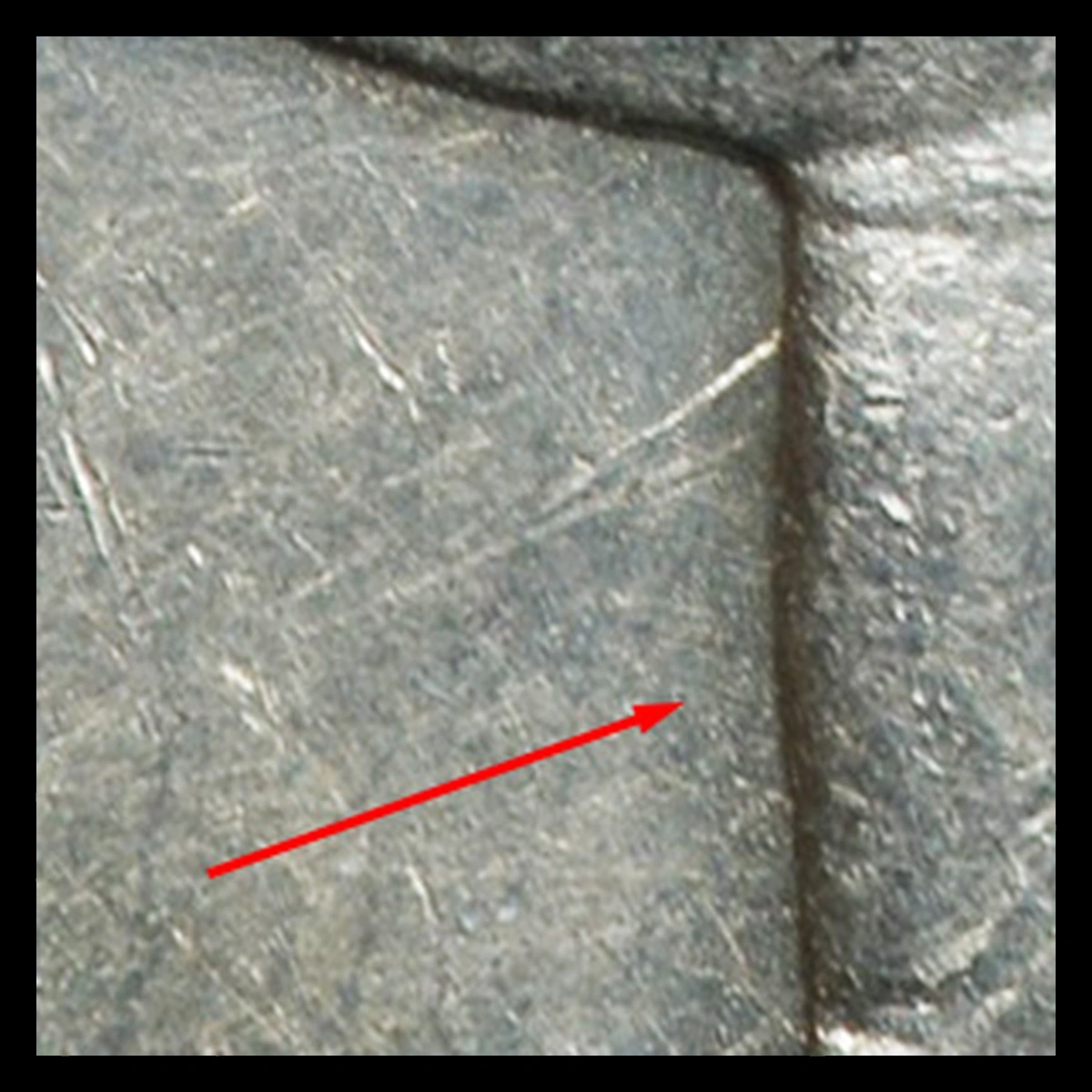
Parts of reverse lettering can appear on the front after the two dies collide without a blank. Later strikes reproduce the transferred marks left on the tools.
The 1881-O collection includes front n and st traces among several clash patterns. Their exact placement depends on the particular dies, not merely the year and mint.
How to Identify
Use the 1881-O variety collection to match the letter shape and surrounding design. A recognizable connection to the opposite face is stronger evidence than an isolated line.
Where the pattern includes both n and st, compare both groups. Scratches crossing the surface do not reproduce a coherent transferred letter sequence.
What It’s Worth
$60–$500 is the estimated range for identifiable clashes in worn through modest unworn condition. Letter strength and surface clarity affect the complete dollar’s appeal.
Several transferred fragments may identify one variety. They are not separately priced features to add together.
4. 1881 Dollar Another Arc beside O: Repunched Mintmark Error
An earlier mintmark-punch position can survive around the final O below the wreath. The tool carried both impressions, producing the feature commonly written O/O.
Cataloged patterns have remnants lower, higher, or to the side. A single O that is simply tilted or displaced does not necessarily show repunching.
How to Identify
Trace both the inner opening and outer curve with magnification. Seek a separate arc that fits another O, not a nick, dark border, or broad shadow.
Match direction and spacing to the correct attributed pattern. Inspect the surrounding silver for recent disturbance or evidence of an added mintmark.
What It’s Worth
$75–$750 is the estimated range for ordinary circulated through modest unworn O/O dollars. Clear separation helps attribution, while wear and cleaning continue to affect the complete coin.
5. 1881 Dollar A Patch Where a Layer Detached: Lamination Error
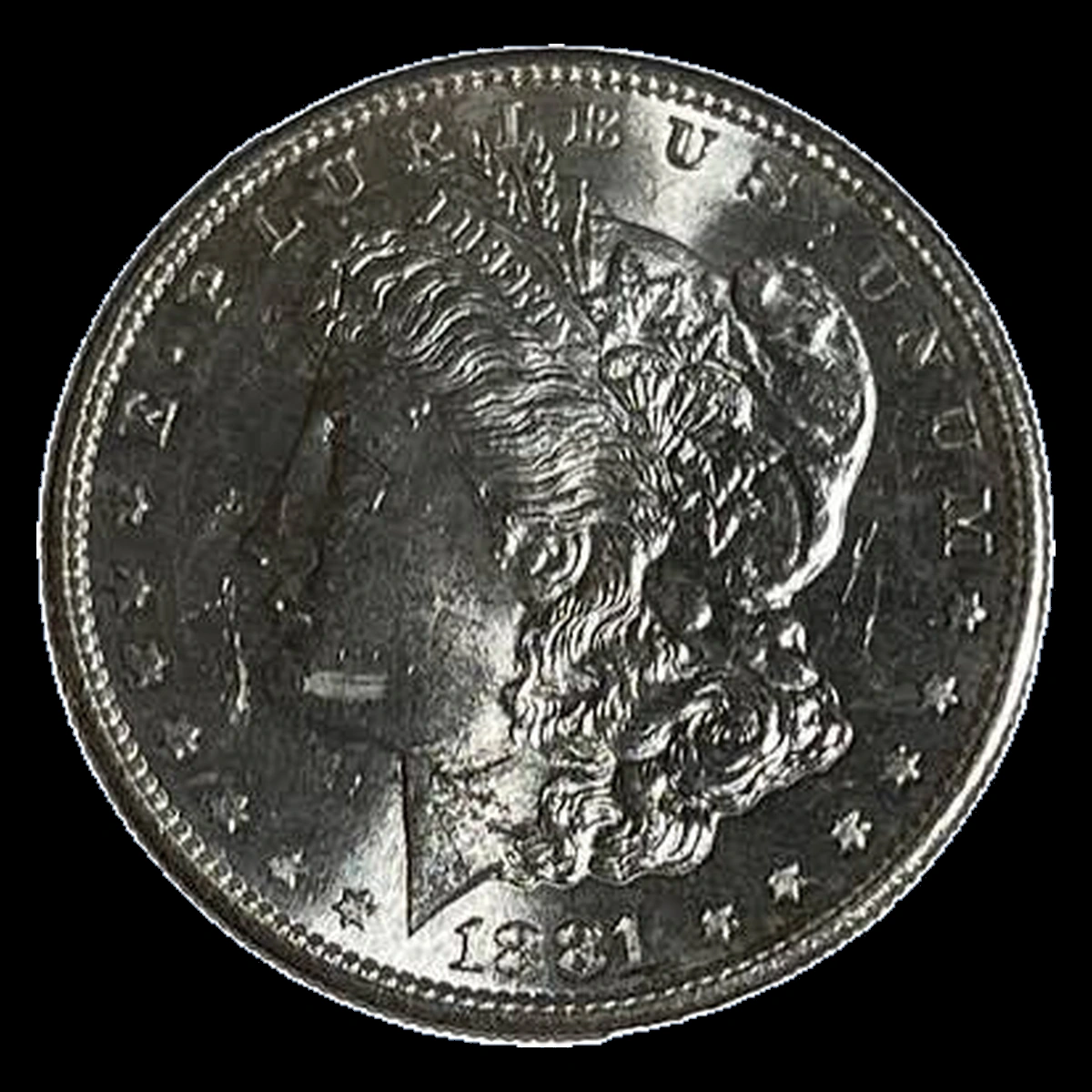
An 1881-S graded MS62 appeared in a 2014 Stack’s Bowers group with a detached lamination. The description does not assign the missing patch to a specific face.
A weakness within the blank allowed a thin portion to separate, leaving a layered boundary. This is different from a scraped or corroded area with no evidence of separation.
How to Identify
Follow the irregular meeting of intact struck metal and the exposed patch under side lighting. Keep nearby design in the photograph to show how the surface changed.
Look for parallel scraping, tool cuts, or corrosion instead of assuming every rough patch was a layer. Do not scrape the area to investigate it.
What It’s Worth
$75–$650 is the estimated range for genuine detached laminations, depending on size and preservation. The MS62 specimen was one coin in a mixed group, so the group total cannot supply its individual price.
6. 1881 Dollar Detail Blocked by Foreign Material: Debris Strike-Through Error
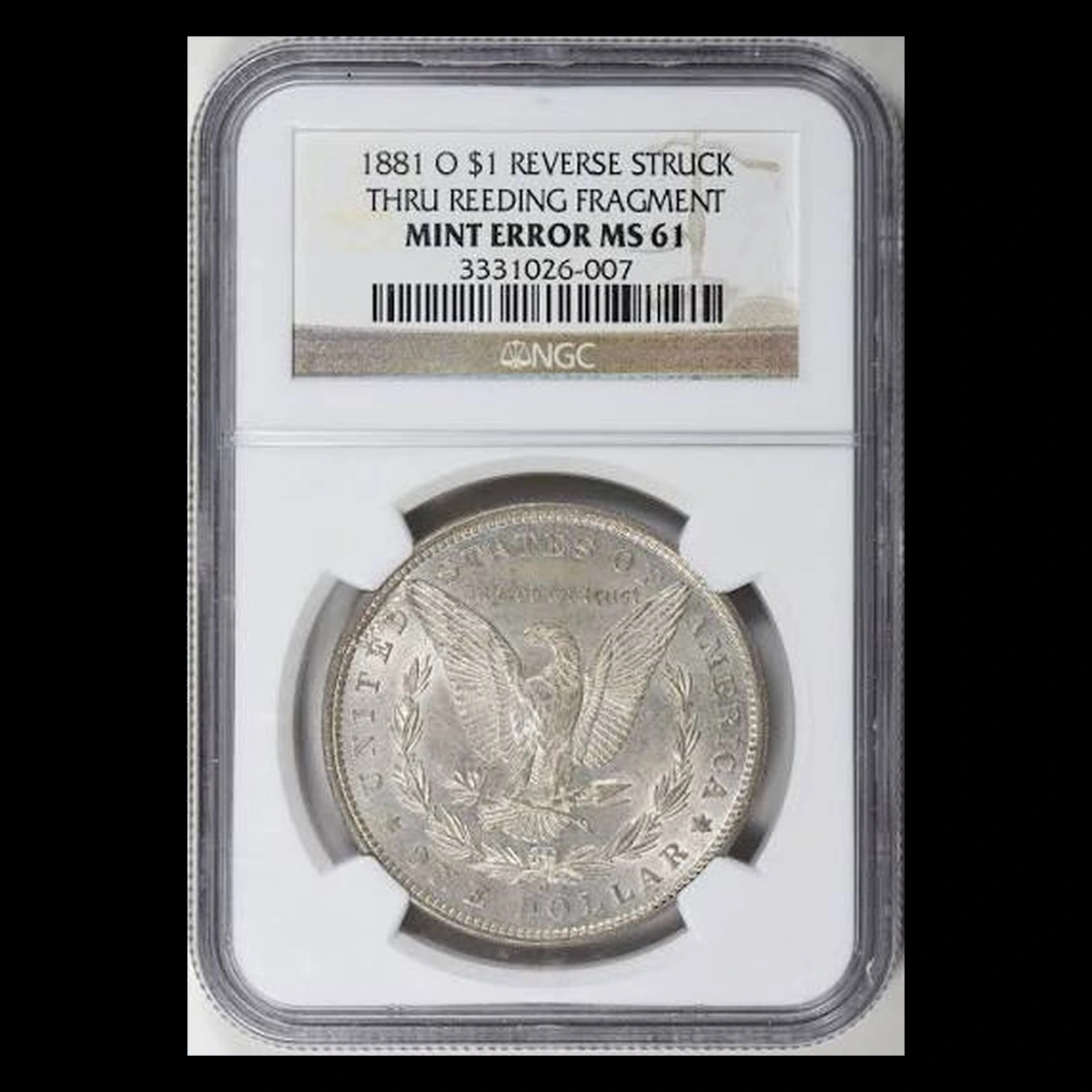
A separate 1881-S MS62 in a 2014 Stack’s Bowers group was described as struck through debris. Material between the blank and die interrupted the forming design.
The catalog does not identify the material, exact position, or any retained object. Those details should remain unspecified without the actual photographic evidence.
How to Identify
Inspect where normal design stops at the depression. A later blow or scrape may instead flatten completed detail and leave pushed ridges or cut marks.
Use the specimen’s own photographs rather than assigning a familiar wire or cloth shape. If material appears attached, its retention needs independent confirmation and it should remain untouched.
What It’s Worth
$100–$1,000 is an estimated range for genuine debris impressions. The grouped 1881-S has no separately quoted sale amount.
An 1885-O reverse impression graded MS61 sold for $159 in June 2026 as a different-date and different-mint comparison. Its specific mark cannot be transferred to the 1881-S.
7. 1881 Dollar A Defect near the Lower Rim: Carson City Blank Flaw Error
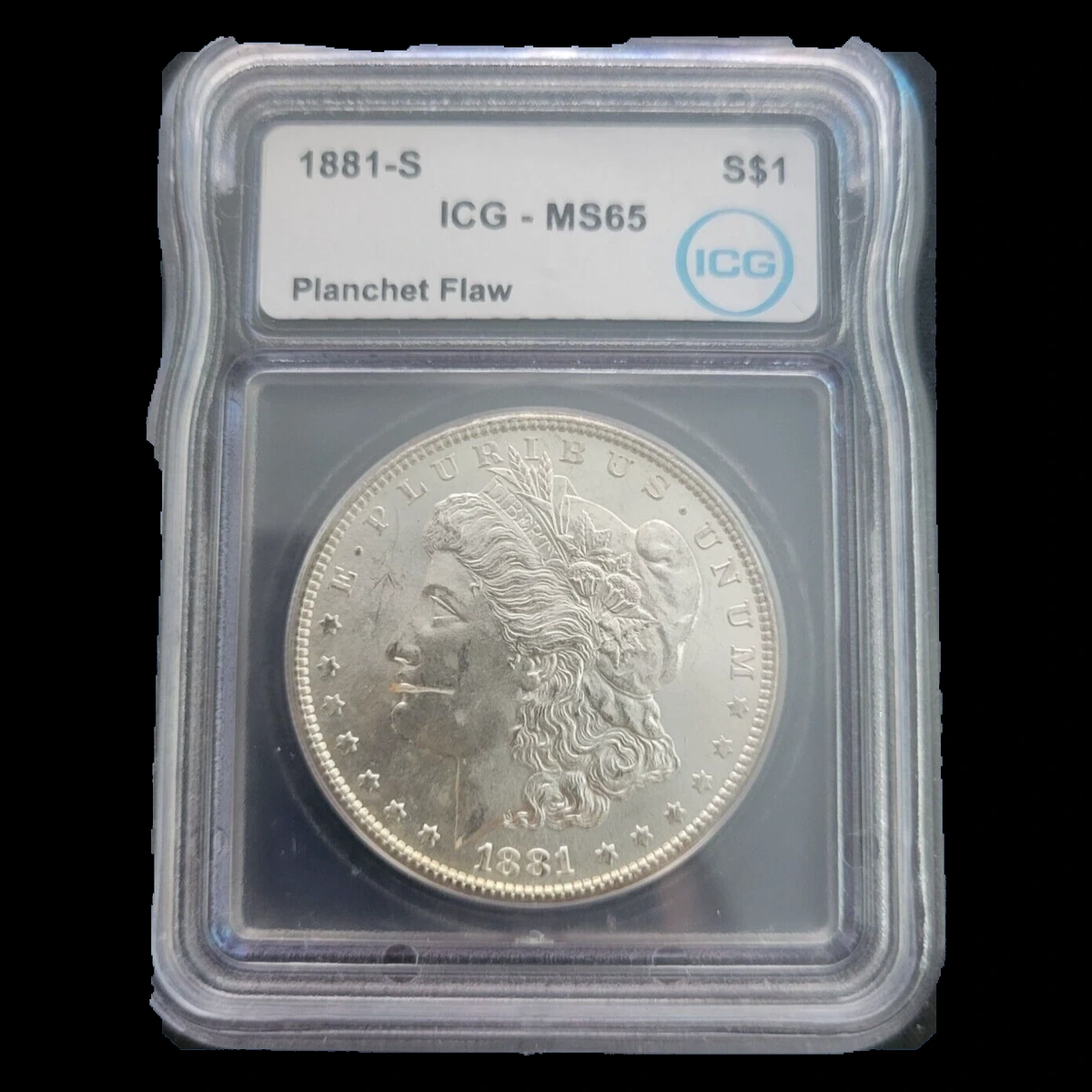
Northern Nevada Coin identifies an 1881-CC PCGS MS63 as struck on a defective blank, with a flaw near 6:30 in the illustrated orientation. The description locates the problem in the original metal.
It does not establish a curved clip. The actual boundary needs to determine which more specific explanation, if any, is justified.
How to Identify
Orient the coin against the image in Northern Nevada Coin’s error gallery. Include the rim and neighboring design when examining the lower defect.
Inspect how struck detail meets the flawed metal and look for cutting or filing that occurred later. The normal 26.73 g weight is a reference for a loose coin, but the boundary carries the main identification evidence.
What It’s Worth
$500–$3,000 is a whole-coin estimate for a comparable authenticated 1881-CC blank flaw. The mint and condition contribute substantially, and no specific sale amount is supplied for the MS63 example.
8. 1881 Dollar A Grooved Band beside an Expanded Band: Partial Collar Error
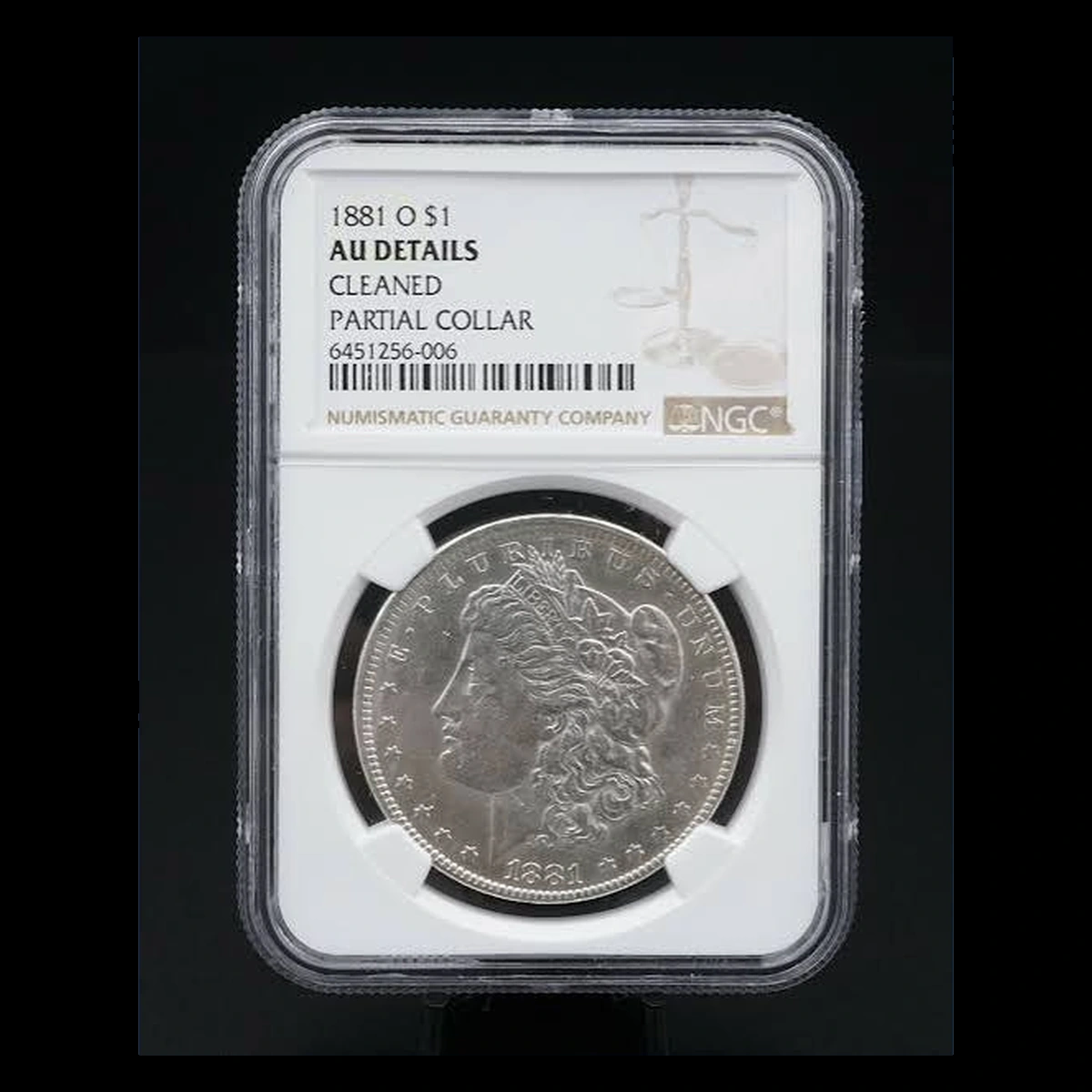
A Philadelphia dollar graded PCGS Fine-15 shows the edge step left when only part of the blank was contained by the collar. Its main design has substantial circulation wear.
A separate New Orleans example is reported as ANACS XF40 Details. That label includes an additional condition problem that is not specified in the supplied account.
How to Identify
Follow the junction between edge grooves and the widened band through several side views. Filing or jewelry-mount dents can create unusual edge areas without collar failure.
Compare several widths with the normal 38.1 mm diameter only when the coin is loose. A continuous struck step is more useful than a wide face border alone.
What It’s Worth
$125–$1,250 is the estimated range for genuine partial collars in varying condition. PCGS records $264 for the Philadelphia Fine-15 at Stack’s Bowers in June 2024.
The worn portrait did not prevent its edge feature from being collectible. The New Orleans Details coin needs a separate condition comparison.
9. 1881 Dollar A Broad Blank Band below the Date: Shifted Strike Error
A documented 1881-S PCGS MS62 has its design shifted toward 11:30, leaving a broad untouched band below the date. Heritage describes it as 5% off center while also stating that all lettering remains complete.
Complete lettering and stretched outer detail overlap the appearance of an uncentered broadstrike. Preserve that catalog distinction rather than treating the percentage as the full diagnosis.
How to Identify
Trace the blank band beneath the date and check the outer lettering on both faces. Missing intended design supports the usual off-center definition; a complete design within expanded metal points toward broadstriking.
Compare the upward shift and stretched details of this exact coin. Test scratches on the jaw and beside the olive branch are later marks, not evidence of the original displacement.
What It’s Worth
$1,500–$6,000 is the estimated range for comparably clear shifted 1881-S strikes. The cataloged PCGS MS62 coin brought $4,270 on January 15, 2026.
Its complete lettering, substantial blank band, and later test marks belong in the comparison. The stated 5% alone does not explain its appearance or price.
10. 1881 Dollar Overlapping Designs at Different Angles: Rotated Double Strike Error
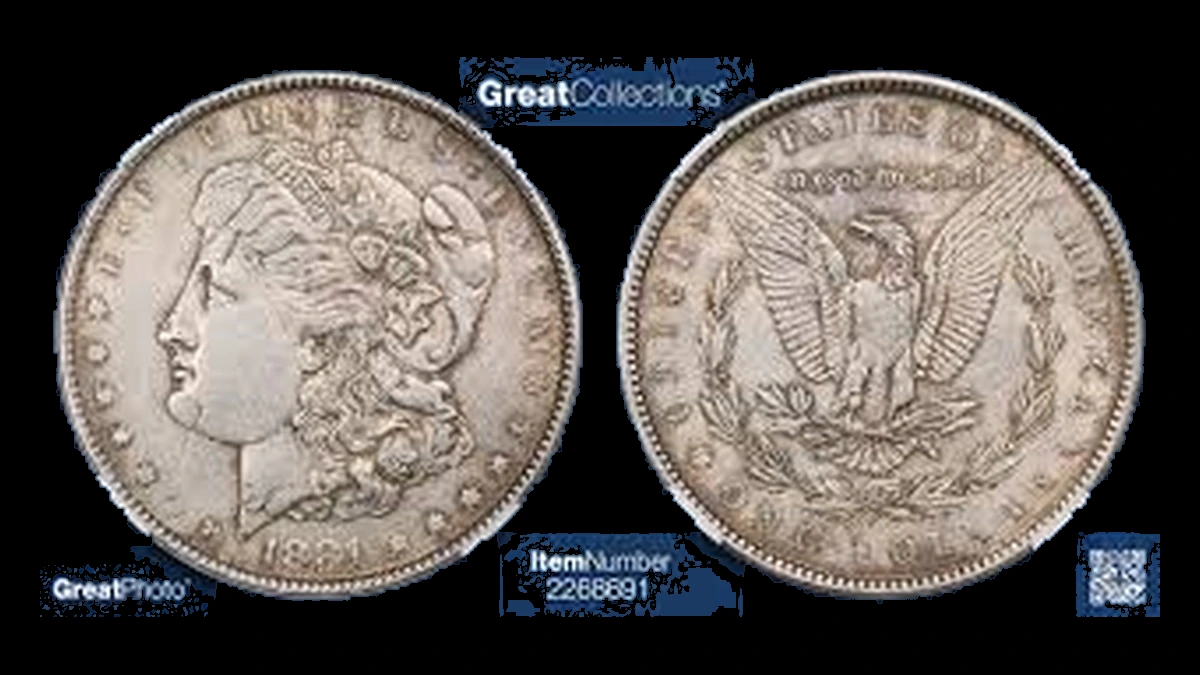
A Philadelphia dollar listed by GreatCollections as NGC AU58 was double struck after turning within the collar. The ring still limited its width, so a large blank crescent is not required.
The surviving images need to establish the actual rotation angle. The supplied description gives no exact number to assign.
How to Identify
Trace two coherent groups of lettering, stars, or portrait outlines on the same face. Repeated features in several areas should explain the same turn between blows.
Examine the other face and edge for agreement with collar restraint. A simple reverse tilt after flipping the coin is different from two overlapping designs on one face.
What It’s Worth
$8,000–$25,000 is an estimate for clearly authenticated rotated double strikes. The NGC AU58 listing shows a $17,500 starting bid before buyer’s fees for an October 2026 auction.
That is a starting threshold, not a completed sale. Visible overlapping images and slight wear provide a different comparison from an ordinary AU58 dollar.
Conclusion
An 1881 Morgan dollar needs a feature-specific comparison: repeated ear curves, damaged eye texture, transferred letters, surface separation, or two coherent strikes. The mint and surrounding design keep those identifications tied to the correct variety.
The $60–$25,000 estimates concern whole coins. Preserve group-lot limitations, uncertain descriptions, and the difference between a starting bid and a realized result when choosing a price for the feature actually present.